
In the complex ecosystem of power distribution, distribution transformers serve as the unsung heroes—quietly converting voltage levels to ensure electricity reaches homes, businesses, and industrial facilities reliably. Yet, their performance directly impacts the stability of entire power grids. Comprehensive testing and diagnostics are not just best practices; they are critical safeguards that identify latent issues before they escalate into costly failures, extend asset lifespans, and minimize unplanned outages that disrupt operations and erode customer trust.
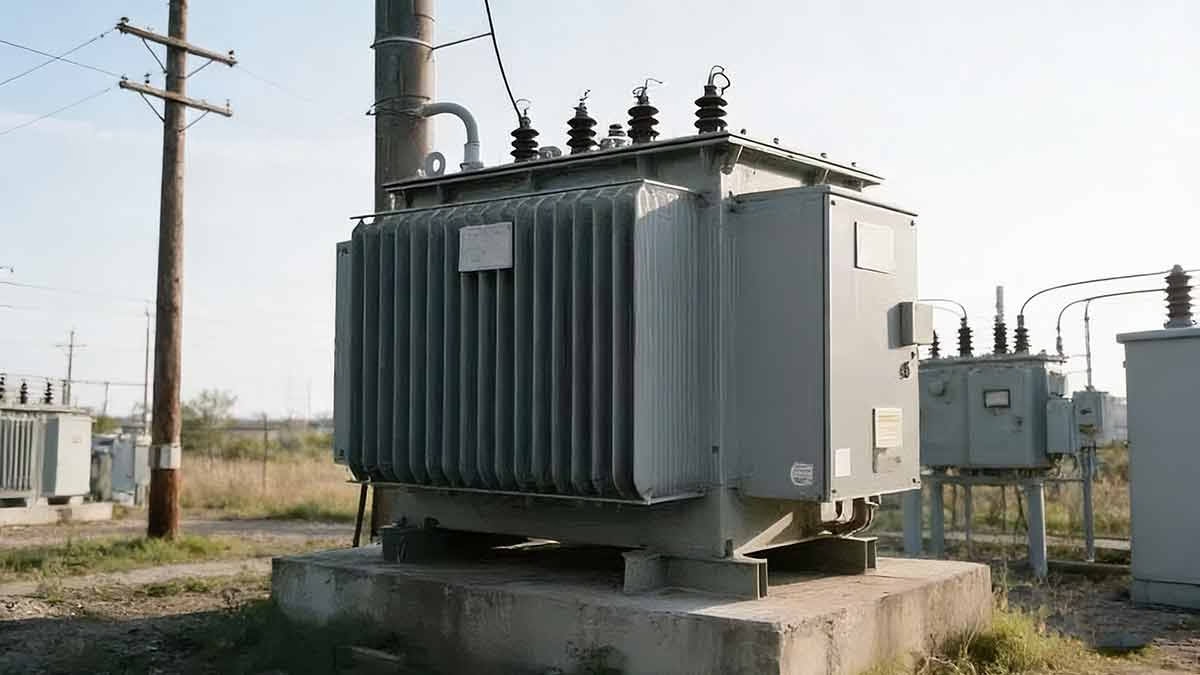
As a veteran in the transformer manufacturing and testing sector, I’ve witnessed firsthand how rigorous diagnostic protocols can transform grid resilience. Over decades of collaborating with utilities, industrial clients, and maintenance teams, I’ve seen transformers fail due to overlooked defects—and I’ve also seen how proactive testing can prevent these crises. In this article, we’ll explore the evolving landscape of distribution transformer testing, from cutting-edge diagnostic techniques to data-driven maintenance strategies that are redefining industry standards.
Contents
hide
Advanced Diagnostic Techniques: Raising the Bar for Distribution Transformer Reliability
Traditional testing methodologies frequently overlooked latent issues that could escalate into costly failures. Today, advanced diagnostic techniques leverage state-of-the-art technology to detect even the most subtle anomalies, predict potential breakdowns, and deliver a holistic view of a transformer’s health. These innovations have transformed transformer maintenance from a reactive process to a proactive strategy.
My experience working with utilities across diverse climates and operational conditions has shown that modern diagnostics are not just about identifying problems—they’re about empowering teams to act with precision. Below are the most impactful advanced techniques reshaping the industry:
Dissolved Gas Analysis (DGA)
DGA is a cornerstone of transformer diagnostics, analyzing the gases dissolved in insulating oil to uncover internal faults. Transformer oil acts as both a coolant and insulator, and when faults occur (such as overheating or arcing), it breaks down into specific gases—each indicating a distinct issue.
- Real-Time Online DGA Monitoring: Unlike periodic offline testing, online DGA systems provide 24/7 data streams, enabling continuous visibility into transformer health. This is particularly valuable for critical assets in high-demand areas.
- Gas Ratio Interpretation: By analyzing the ratios of key gases (e.g., methane, ethane, ethylene), technicians can pinpoint fault types—whether thermal degradation, partial discharge, or arcing.
- Long-Term Trend Analysis: Tracking gas concentrations over months or years reveals gradual deterioration patterns, allowing for predictive maintenance scheduling.
A memorable project involved a 25-year-old transformer powering a manufacturing plant in the Southeast. Our online DGA system detected a steady rise in ethylene and acetylene—clear indicators of winding overheating. We recommended urgent maintenance, and upon inspection, technicians found a loose connection that would have caused a catastrophic failure within weeks. The proactive repair saved the client over $2 million in downtime and replacement costs.
Frequency Response Analysis (FRA)
FRA is a non-destructive technique that assesses a transformer’s mechanical integrity by measuring how it responds to a wide range of frequencies. Changes in the frequency response signature indicate physical damage that may not be visible through visual inspections.
- Core Deformation: FRA identifies shifts in the transformer’s magnetic core, often caused by seismic activity, transportation damage, or thermal stress.
- Winding Displacement: Loose windings or movement due to short-circuit forces can be detected through deviations in the response curve.
- Structural Clamping Issues: Problems with internal supports or clamping systems—common in older units—are revealed by inconsistent frequency responses.
After a magnitude 5.2 earthquake in a rural distribution network, we used FRA to inspect 12 transformers in the affected area. Traditional visual and electrical tests showed no issues, but FRA uncovered subtle core shifts in three units. Repairs were completed within days, preventing future failures that could have left thousands without power during peak winter demand.
Partial Discharge (PD) Detection
Partial discharge—small electrical arcs within insulation—signals early-stage insulation degradation. If left unaddressed, PD can lead to complete insulation breakdown and transformer failure. Modern PD detection uses multi-modal techniques to capture these elusive signals.
- Acoustic PD Monitoring: Sensitive microphones detect the ultrasonic sound waves emitted during partial discharges, even in noisy substation environments.
- UHF PD Sensing: Ultra-high frequency sensors capture electromagnetic radiation from PD events, enabling precise localization of faults.
- Optical PD Detection: Fiber optic cables detect the faint light emitted during discharges, ideal for internal inspections in high-voltage transformers.
During factory acceptance testing for a utility client, our multi-modal PD system detected a minor insulation flaw in a 15MVA transformer. The flaw was so small that it escaped standard dielectric tests, but PD measurements revealed its location. The manufacturer repaired the issue before shipment, avoiding costly field repairs and ensuring the transformer met reliability standards.
Thermal Imaging & Temperature Monitoring
Overheating is a leading cause of transformer failure, especially in regions with extreme temperatures or high load demands. Thermal diagnostics provide real-time visibility into heat distribution, enabling proactive load management.
- Infrared Thermal Imaging: High-resolution cameras generate heat maps that highlight external hot spots, such as loose connections or cooling system inefficiencies.
- Fiber Optic Temperature Sensors: Embedded within windings and oil, these sensors provide accurate internal temperature data—critical for assessing load capacity.
- Dynamic Thermal Rating (DTR) Systems: These AI-powered tools adjust transformer load limits based on real-time temperature, ambient conditions, and cooling efficiency.
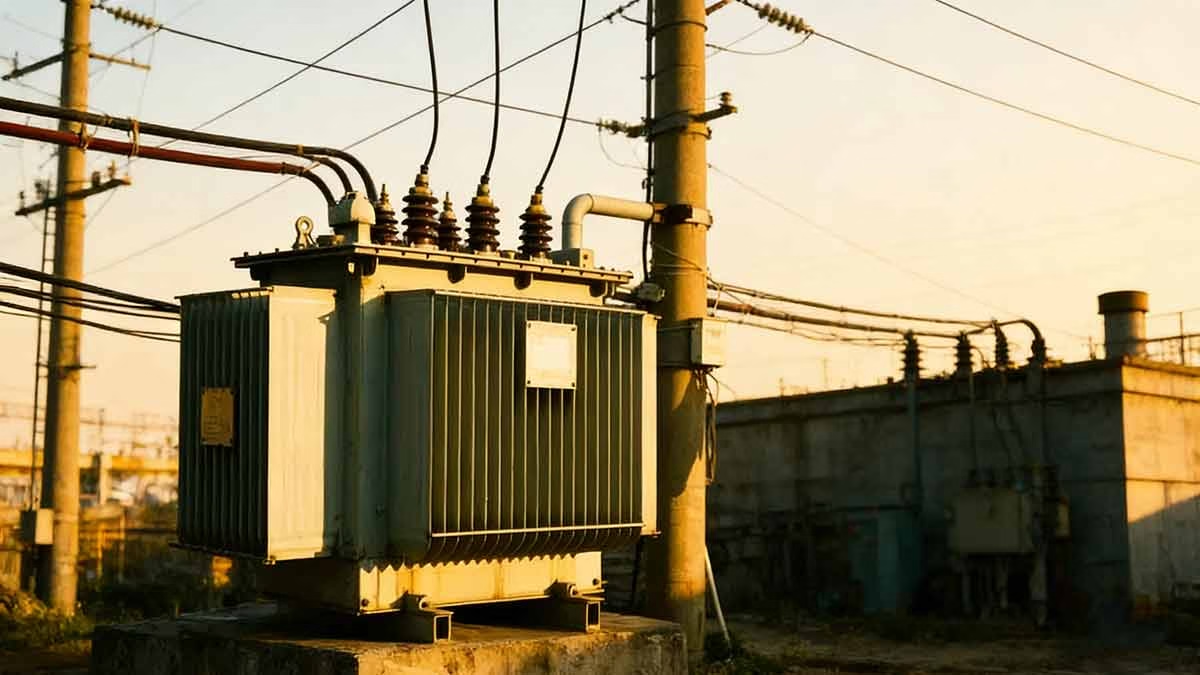
During a record-breaking summer heatwave in the Southwest, our DTR system identified three transformers in a residential area operating at 92% of their thermal capacity. By temporarily redistributing load to adjacent transformers, we prevented overheating and avoided a potential outage that would have affected 500+ homes.
Key Performance Indicators: Critical Metrics for Transformer Health Assessment
With a wide range of diagnostic tools available, focusing on the right performance indicators (KPIs) is essential to avoid data overload and prioritize critical issues. The most impactful KPIs directly correlate to transformer reliability, efficiency, and lifespan—providing actionable insights for maintenance teams.
Over years of refining testing protocols, I’ve identified four core KPIs that serve as the foundation of effective transformer health assessment:
Insulation Integrity
The insulation system is a transformer’s first line of defense against electrical breakdown. Deterioration due to moisture, heat, or chemical contamination can lead to catastrophic failures.
- Megger Testing: Measures the insulation’s resistance to leakage current, providing a baseline for overall health. Low resistance values indicate moisture ingress or degradation.
- Polarization Index (PI) Testing: Compares insulation resistance at 1 minute and 10 minutes to assess long-term insulation quality. A PI value below 1.5 signals potential issues.
- Dielectric Dissipation Factor (DDF) Testing: Measures energy loss in the insulation system, indicating contamination or aging. Higher DDF values suggest deteriorating insulation.
A routine inspection of a 30-year-old transformer in an industrial park revealed a PI value of 1.2—well below the recommended threshold. Further testing uncovered moisture in the insulation, likely from a damaged breather. We dried the insulation and replaced the breather, extending the transformer’s life by an estimated 8 years.
Transformer Oil Quality
Insulating oil plays dual roles: cooling the transformer and insulating electrical components. Its quality directly impacts performance and lifespan.
| Test Parameter | What It Indicates | Critical Thresholds |
|---|---|---|
| Acidity Level | Oil degradation due to oxidation | >0.2 mg KOH/g indicates significant degradation |
| Interfacial Tension (IFT) | Presence of contaminants (e.g., sludge, moisture) | <18 mN/m suggests contamination |
| Water Content | Risk of insulation breakdown and corrosion | >30 ppm (for mineral oil) increases failure risk |
| Dissolved Metals | Wear of internal components (e.g., windings, core) | Elevated copper/iron levels signal mechanical stress |
During a routine maintenance cycle for a municipal utility, oil analysis revealed high acidity (0.35 mg KOH/g) in a 10MVA transformer. Instead of replacing the transformer—a $200,000 expense—we performed oil reconditioning and installed an oil purification system. Subsequent tests showed acidity levels dropped to 0.08 mg KOH/g, extending the transformer’s operational life by 5+ years.
Electrical Performance Characteristics
Electrical tests verify that the transformer operates within design specifications, ensuring efficient voltage transformation and fault tolerance.
- Turn Ratio Testing: Verifies the ratio of primary to secondary windings, ensuring accurate voltage output. Deviations can cause under/over-voltage issues for end users.
- Winding Resistance Measurement: Detects loose connections, corrosion, or winding damage. Uneven resistance values indicate potential hot spots.
- Short Circuit Impedance Testing: Assesses the transformer’s ability to withstand fault currents. Abnormal impedance values suggest winding deformation or connection issues.
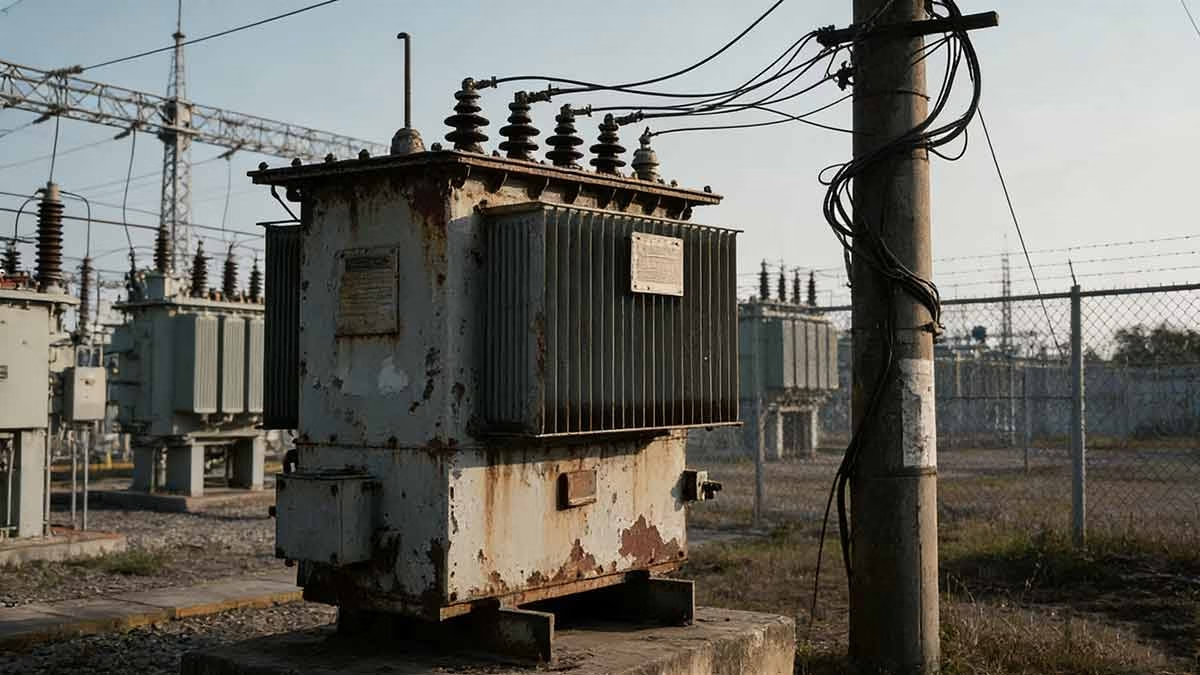
During commissioning of a new substation, turn ratio testing revealed a 2% deviation in a critical transformer. Further inspection found a manufacturing error in the winding configuration. The issue was corrected before the transformer went into service, preventing voltage fluctuations that could have damaged sensitive industrial equipment.
Thermal Performance Efficiency
Transformers generate heat during operation, and effective heat dissipation is critical to preventing insulation degradation and extending lifespan.
- Heat Run Testing: Simulates full-load conditions to measure temperature rise and cooling system efficiency. Excessive temperature rise indicates cooling system faults.
- Winding Temperature Indicator (WTI) Monitoring: Tracks internal winding temperatures, providing early warnings of overheating.
- Cooling System Performance Testing: Evaluates the efficiency of radiators, fans, or oil pumps. Clogged radiators or faulty fans are common causes of overheating.
A heat run test on a 20MVA transformer at a data center revealed a 15°C temperature rise above design limits. Investigation found that 30% of the cooling fans were inoperative due to electrical faults. Replacing the fans and cleaning the radiators reduced temperature rise to within specifications, improving the transformer’s efficiency by 8% and reducing long-term wear.
Emerging Technologies Reshaping Transformer Diagnostics
The transformer industry is undergoing a digital transformation, with emerging technologies enhancing diagnostic accuracy, efficiency, and accessibility. These innovations are not just incremental improvements—they’re revolutionizing how we monitor, test, and maintain transformers.
As someone who has embraced technological advancements throughout my career, I’ve seen firsthand how these tools are reducing downtime, lowering costs, and improving grid reliability. Below are the most impactful emerging technologies:
Artificial Intelligence (AI) & Machine Learning (ML)
AI and ML are transforming transformer diagnostics by turning raw data into actionable insights. These technologies analyze vast datasets from sensors, tests, and historical records to identify patterns that human analysts might miss.
- Anomaly Detection Algorithms: Continuously monitor real-time data to identify unusual behavior (e.g., sudden temperature spikes, gas concentration changes) that signals developing faults.
- Failure Mode Prediction: ML models trained on historical failure data can forecast specific fault types (e.g., insulation breakdown, winding failure) and their likely timing.
- Remaining Useful Life (RUL) Estimation: Predict how long a transformer will operate reliably, enabling proactive replacement planning and avoiding unplanned outages.
A large utility in the Northeast implemented an AI-powered diagnostic platform to monitor 500+ transformers. The system analyzed data from DGA sensors, thermal monitors, and electrical tests, and predicted a winding failure in a critical 30MVA transformer three months before traditional tests showed any issues. The utility scheduled a planned outage during low-demand hours, replacing the transformer at a fraction of the cost of an emergency repair.
Internet of Things (IoT) Sensor Networks
IoT sensors are enabling continuous, remote monitoring of transformers—even in remote or hard-to-access locations. These sensors collect real-time data on key parameters, eliminating the need for manual inspections and providing instant alerts for critical issues.
| Sensor Type | Key Monitoring Capabilities | Industry Application |
|---|---|---|
| Smart Bushings | Partial discharge, temperature, humidity | High-voltage transformers in substations |
| Oil Quality Sensors | Acidity, water content, dissolved gases | Remote distribution transformers |
| Load & Temperature Sensors | Current load, ambient temperature, internal temperature | Residential and commercial distribution networks |
| Vibration Sensors | Mechanical stress, winding movement, core deformation | Industrial transformers with high load variability |
We installed IoT sensors on 20 transformers in a remote rural network, where manual inspections required 4-hour round trips. The sensors provided real-time data on oil quality and temperature, and alerted the utility to a developing oil leak in one unit. Technicians were dispatched with the correct parts, resolving the issue in a single visit—saving 8 hours of travel time and preventing a potential outage.
Advanced Imaging & Non-Destructive Testing (NDT)
New imaging technologies are providing unprecedented visibility into transformer internal components, enabling precise fault localization without disassembling the unit.
- X-Ray & CT Scanning: High-resolution X-ray and computed tomography (CT) scans reveal internal structural damage, such as winding displacement or core cracks, that is invisible to visual inspections.
- Ultrasonic Imaging: Uses sound waves to detect internal defects, such as oil leaks, insulation gaps, or loose connections.
- 3D Digital Twin Modeling: Creates virtual replicas of transformers, integrating real-time data to simulate performance under different conditions and identify potential issues.
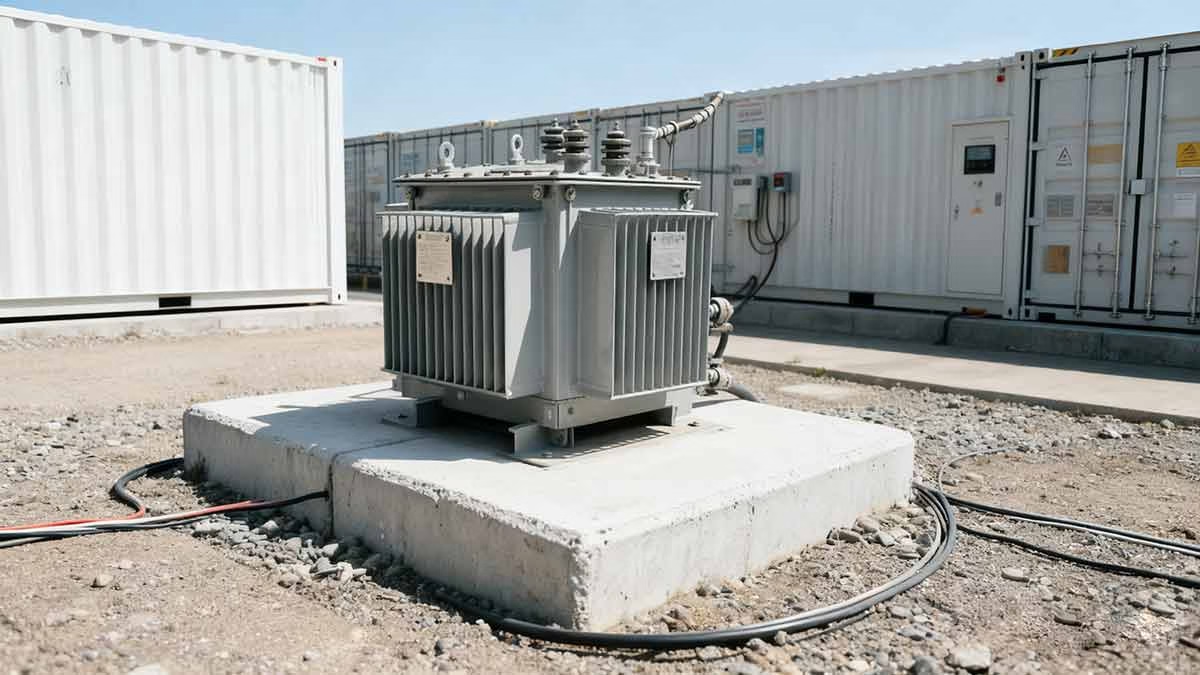
During a factory inspection of a custom 50MVA transformer, 3D digital twin modeling revealed a minor design flaw in the cooling system that would have reduced efficiency by 10%. The manufacturer adjusted the design before production, saving the client $50,000 in long-term energy costs.
Drone-Assisted Inspections
Drones are making external transformer inspections safer, faster, and more thorough—especially for transformers in high-risk or hard-to-reach locations (e.g., rooftop units, remote substations).
- Thermal Drone Imaging: Equipped with infrared cameras, drones can quickly identify external hot spots, corrosion, or cooling system issues.
- High-Resolution Visual Inspections: Capture detailed images of bushings, radiators, and connections, enabling technicians to spot cracks, leaks, or loose components.
- Corona Detection: Specialized sensors detect electrical discharges (corona) around high-voltage components, indicating insulation degradation.
After a severe thunderstorm, we used drones to inspect 15 transformers in a coastal substation. The drones identified corrosion on three transformer bushings that was not visible from the ground. Repairs were completed within 48 hours, preventing water ingress that could have led to insulation failure.
Balancing Thoroughness & Efficiency: Optimizing Transformer Testing Protocols
While comprehensive testing is critical, excessive or poorly planned testing can lead to unnecessary downtime, increased costs, and resource waste. The key is to develop optimized testing protocols that balance thoroughness with efficiency—focusing resources on high-risk assets and critical parameters.
Over the years, I’ve helped utilities and industrial clients design testing programs that reduce costs by 20-40% while improving fault detection rates. Below are the core strategies for optimizing transformer testing:
Risk-Based Testing (RBT)
Risk-based testing prioritizes assets based on their criticality to the grid, age, condition, and operating environment. This ensures that high-risk transformers receive more frequent, in-depth testing, while low-risk units are tested less frequently.
- Criticality Assessment: Evaluate how essential the transformer is to operations (e.g., a hospital’s backup transformer vs. a residential distribution unit).
- Age & Condition Profiling: Older transformers or those with a history of issues require more frequent testing.
- Environmental Risk Analysis: Transformers in harsh conditions (e.g., coastal areas with salt spray, industrial zones with pollution) face higher degradation rates and need enhanced testing.
A large industrial client implemented a risk-based testing program for their 300+ transformer fleet. By focusing on critical assets and high-risk units, they reduced overall testing time by 35% and cut costs by $300,000 annually—while improving fault detection by 25%.
Automated Testing Systems
Automation streamlines testing processes, reduces human error, and speeds up data collection and analysis. Automated systems are particularly valuable for high-volume testing (e.g., factory acceptance testing, routine maintenance for large fleets).
- Robotic Test Connections: Automate the process of connecting test equipment to transformers, reducing setup time and ensuring consistent connections.
- Automated Test Sequences: Pre-programmed test workflows eliminate manual intervention, enabling technicians to run multiple tests simultaneously.
- Integrated Data Management: Automatically store and analyze test results, generating reports and alerts for abnormal values.
A transformer manufacturing plant installed an automated testing system for their production line. The system reduced testing time per unit by 50%, eliminated human error in data recording, and improved the consistency of test results—enabling the plant to increase production by 20% while maintaining quality standards.
Integrated Testing Workflows
Instead of conducting separate tests for insulation, oil quality, and electrical performance, integrated workflows combine complementary tests to maximize data collection while minimizing downtime.
- Insulation & Oil Quality Bundling: Conduct megger testing, PI testing, and oil analysis during a single maintenance visit, as these tests address related aspects of transformer health.
- Electrical & Thermal Testing Integration: Combine turn ratio testing, winding resistance measurement, and heat run testing to evaluate overall performance.
- Online & Offline Test Synergy: Use continuous online monitoring data to trigger targeted offline tests, reducing the need for routine offline inspections.
A municipal utility adopted integrated testing workflows for their substation transformers. By combining multiple tests into a single visit, they reduced downtime per transformer by 40% and improved data correlation—enabling technicians to identify root causes of issues more quickly.
Continuous Monitoring & Condition-Based Maintenance (CBM)
Condition-based maintenance replaces fixed-interval testing with a dynamic approach, where testing and maintenance are triggered by real-time data and asset condition. This ensures that maintenance is performed only when needed, reducing unnecessary interventions.
- Real-Time Monitoring Triggers: Set thresholds for key parameters (e.g., gas concentrations, temperature, partial discharge) that trigger targeted testing when exceeded.
- Dynamic Maintenance Intervals: Adjust testing frequency based on asset condition—extending intervals for well-performing transformers and shortening them for units showing signs of degradation.
- Predictive Spare Parts Management: Use condition data to forecast when parts (e.g., bushings, oil filters) will need replacement, ensuring inventory is available when needed.
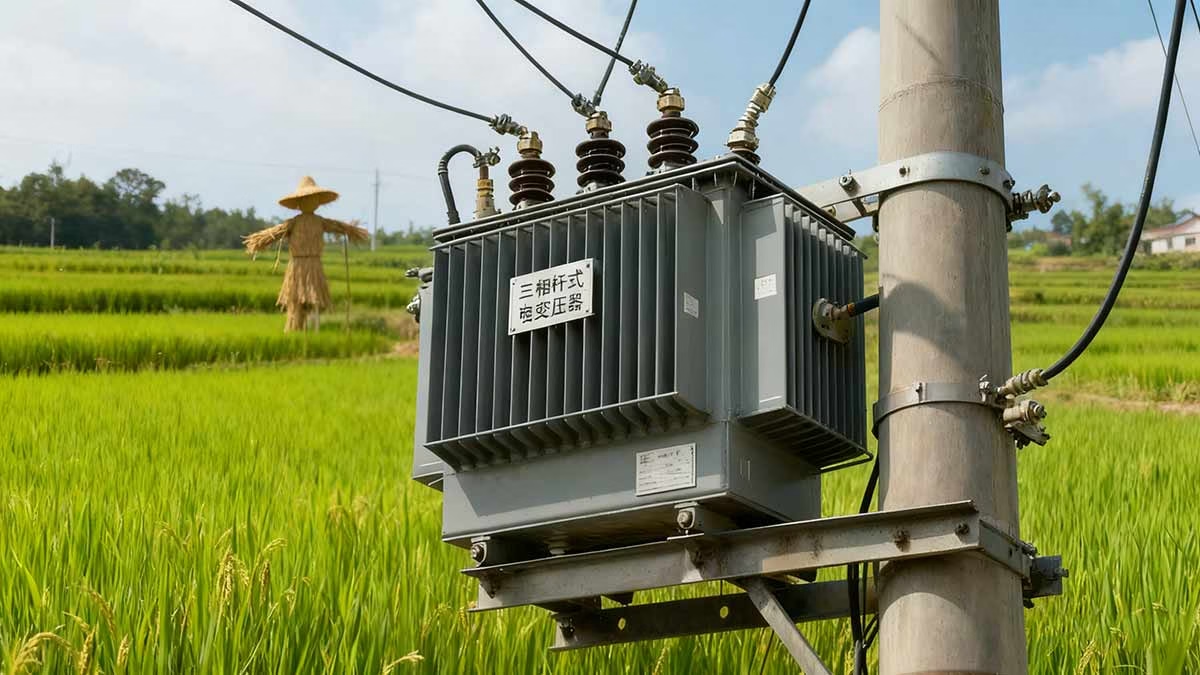
A renewable energy client implemented condition-based maintenance for their wind farm transformers. By using real-time data to guide maintenance, they reduced unnecessary inspections by 45% and cut spare parts costs by 30%—while improving transformer reliability by 22%.
Predictive Diagnostics: Transforming Transformer Maintenance Strategies
Reactive maintenance—waiting for a transformer to fail before taking action—is costly, risky, and disruptive. Predictive diagnostics flips this paradigm, using advanced analytics and real-time data to forecast issues before they cause outages. This proactive approach not only improves reliability but also reduces maintenance costs and extends asset lifespans.
As a pioneer in adopting predictive maintenance strategies, I’ve seen how this approach can transform a utility’s operations. Below are the key components of effective predictive diagnostics:
Multi-Source Data Integration
Predictive diagnostics relies on combining data from multiple sources to get a complete picture of transformer health. This includes:
- Real-Time Sensor Data: From IoT sensors, DGA monitors, thermal cameras, and PD detectors.
- Historical Test Records: Results from previous inspections, factory tests, and maintenance activities.
- Environmental Data: Ambient temperature, humidity, pollution levels, and weather events.
- Operational Data: Load profiles, voltage fluctuations, and switching events.
A large utility integrated data from 12 different sources into a centralized predictive analytics platform. By correlating this data, the platform identified a pattern: transformers in coastal areas with high humidity and frequent load changes had a 30% higher risk of insulation failure. The utility adjusted maintenance protocols for these units, reducing failures by 28%.
Machine Learning-Powered Forecasting
ML algorithms are the backbone of predictive diagnostics, analyzing historical and real-time data to identify patterns and forecast future issues.
- Anomaly Detection: ML models learn normal operating behavior and alert technicians to deviations that indicate developing faults.
- Failure Mode Classification: Classify potential faults by type (e.g., thermal, mechanical, electrical) to guide targeted maintenance.
- Remaining Useful Life (RUL) Prediction: Estimate how long a transformer will operate reliably, enabling proactive replacement planning.
A utility in the Pacific Northwest used ML to analyze 10 years of transformer data. The model predicted a 70% chance of a cooling system failure in a critical substation transformer within 6 months. The utility replaced the cooling system during a planned outage, avoiding an estimated $1.5 million in downtime costs.
Digital Twin Technology
Digital twins—virtual replicas of physical transformers—enable simulation and predictive analysis, helping teams optimize maintenance and operation.
- Performance Simulation: Test how changes in load, temperature, or maintenance activities will affect transformer performance.
- What-If Scenario Planning: Evaluate the impact of potential failures (e.g., “What if the cooling system fails during peak load?”) to develop contingency plans.
- Aging Modeling: Simulate how the transformer will degrade over time, enabling long-term maintenance planning.
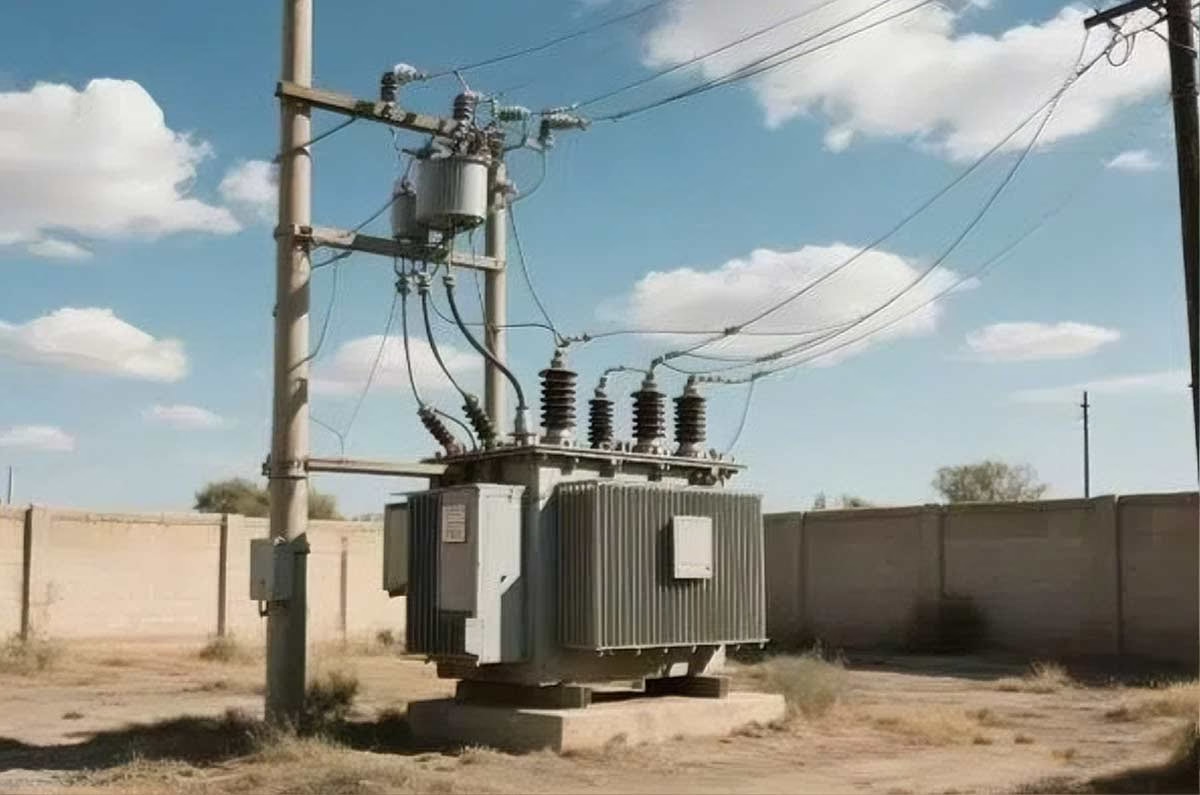
A petrochemical plant created a digital twin for their main 100MVA transformer. The twin was used to simulate the impact of increasing production (and thus load) on the transformer. The simulation revealed that the cooling system would need an upgrade to handle the higher load, and the plant completed the upgrade before increasing production—avoiding a potential outage.
Condition-Based Maintenance Planning
Predictive diagnostics enables condition-based maintenance (CBM), where maintenance activities are tailored to each transformer’s unique condition. This approach eliminates unnecessary maintenance and ensures resources are focused on high-priority issues.
- Dynamic Maintenance Scheduling: Adjust maintenance intervals based on real-time condition data, not just calendar dates.
- Prioritized Repair Workflows: Rank maintenance tasks by urgency and impact, ensuring critical issues are addressed first.
- Spare Parts Optimization: Use predictive data to ensure spare parts are available when needed, reducing lead times for repairs.
A distribution utility implemented condition-based maintenance for their 800+ transformer fleet. The program reduced maintenance costs by 35%, cut downtime by 40%, and extended the average transformer lifespan by 6 years—delivering significant ROI within 18 months.
Conclusion
Distribution transformer testing is the foundation of reliable, efficient power distribution. From advanced diagnostic techniques like DGA and FRA to emerging technologies such as AI and digital twins, the tools available to monitor and maintain transformers have never been more powerful. By focusing on key performance indicators, optimizing testing protocols, and embracing predictive diagnostics, utilities and industrial clients can significantly improve grid reliability, reduce costs, and extend asset lifespans.
As the transformer industry continues to evolve, the importance of proactive testing will only grow. By investing in the right technologies, developing data-driven testing protocols, and prioritizing maintenance based on risk and condition, organizations can ensure their transformers operate reliably for decades—supporting the growing demand for electricity while minimizing disruptions.
The key takeaway is clear: comprehensive, predictive diagnostics are not just a cost center—they’re an investment in the resilience and sustainability of power systems. By staying ahead of potential issues, we can build a more reliable, efficient, and cost-effective power grid for the future.