
The stability of modern power grids hinges on reimagining transformer maintenance—where traditional diagnostic practices converge with AI-driven analytics and real-time monitoring. For utilities navigating an increasingly electrified world, this integration isn’t just innovative; it’s transformative. By forecasting potential failures before they disrupt service, organizations can safeguard uninterrupted power delivery while extending the operational lifespan of transformers.
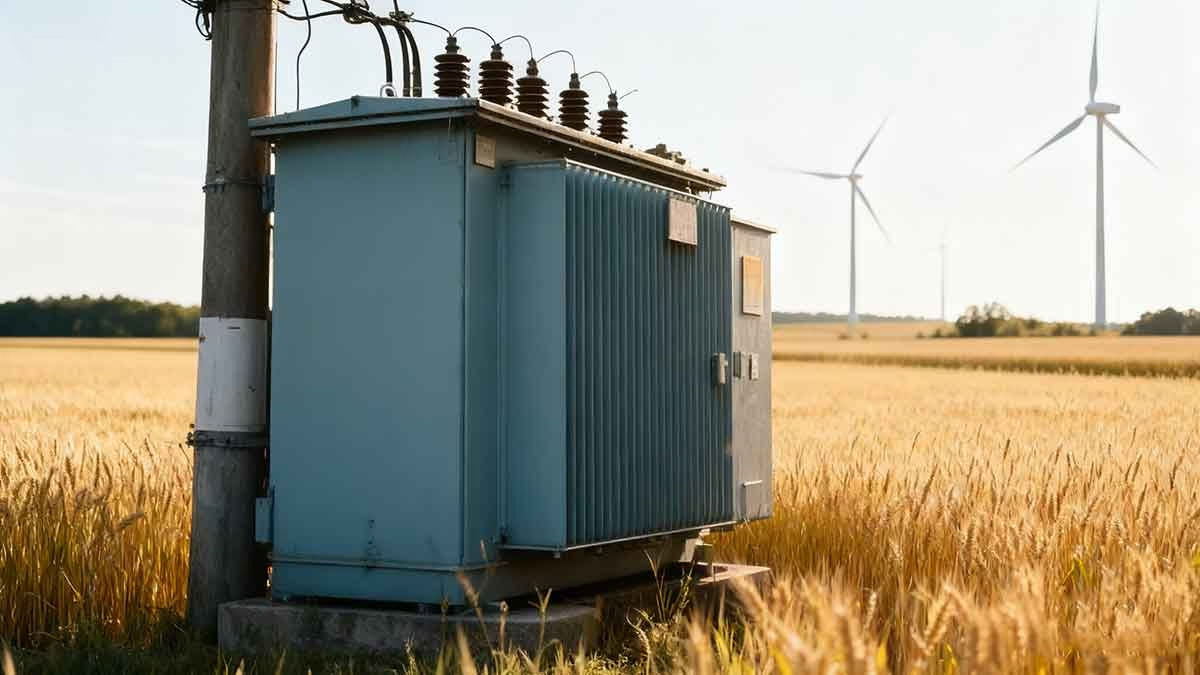
In this piece, we’ll explore the evolving landscape of transformer maintenance, uncovering how cutting-edge tools are redefining predictive care and ensuring grids remain resilient amid growing energy demands.
Contents
hide
Transformer Health Metrics: The Foundation of Reliable Power Distribution
What defines a “healthy” transformer, and how do engineers measure its performance over time? Much like medical professionals track vital signs, transformer technicians monitor key indicators that reveal equipment condition—but the methods and metrics have evolved dramatically.
Today’s transformer health assessments go beyond basic checks, encompassing insulation integrity, oil chemistry, thermal behavior, and partial discharge activity. Advanced diagnostic techniques such as dissolved gas analysis (DGA), frequency response analysis (FRA), and infrared thermography provide a holistic view of equipment health, enabling proactive maintenance rather than reactive repairs.
Core Diagnostic Categories for Transformer Health
Oil Analysis: The Window to Internal Condition
Transformer oil serves dual purposes—cooling and insulation—but its chemical composition tells a story about internal health.
Key Oil-Based Tests:
- Dissolved Gas Analysis (DGA): Detects gases released by internal faults (e.g., arcing, overheating)
- Acidity and moisture level measurements: Indicates oil degradation and insulation risk
- Breakdown voltage testing: Assesses dielectric strength
Electrical Diagnostics: Verifying Operational Efficiency
Electrical tests validate a transformer’s ability to handle load and maintain voltage stability.
Critical Electrical Assessments:
- Insulation resistance testing: Identifies leakage current and insulation degradation
- Turn ratio verification: Ensures proper voltage transformation
- Winding resistance analysis: Detects loose connections or corrosion
Thermal Imaging: Identifying Hidden Hotspots
Overheating is a leading cause of transformer failure—thermal imaging reveals issues invisible to the naked eye.
Thermal Diagnostic Tools:
- High-resolution infrared camera inspections
- Long-term temperature trend analysis
- Hot spot localization in windings and connections
| Diagnostic Method | Testing Interval | Key Insights Revealed |
|---|---|---|
| Oil Analysis | 6–12 months | Internal faults, material aging, moisture ingress |
| Electrical Tests | 1–3 years | Winding damage, insulation deterioration, connection issues |
| Thermal Imaging | 3–6 months | Overheating components, poor conductivity, load imbalances |
A recent project with a major manufacturing facility highlights the impact of comprehensive testing. The client faced recurring, unexplained transformer failures despite following standard maintenance schedules. Our team implemented a multi-layered diagnostic approach: DGA revealed elevated ethylene and acetylene levels (signaling internal arcing) in several units, while electrical tests uncovered declining insulation resistance. However, infrared thermography delivered the breakthrough—high-resolution scans identified loose connections creating hot spots that conventional sensors missed. These hot spots were slowly degrading insulation, leading to premature failures.
We designed a custom testing protocol: monthly DGA sampling, real-time electrical parameter monitoring, and on-site thermal scans by the client’s maintenance team using portable infrared tools. Within 12 months, five potential failures were averted, reducing unscheduled downtime by 70% and extending transformer lifespan by 30%. Unexpectedly, the data collected enabled predictive models that forecast issues up to six months in advance, streamlining maintenance planning and resource allocation.
The takeaway? Effective transformer testing isn’t about rigid schedules—it’s about integrating diverse diagnostic methods and leveraging data to create adaptive, predictive maintenance strategies. For utility and industrial operators, investing in comprehensive testing (beyond basic compliance) delivers long-term savings by preventing costly outages and maximizing equipment value.
Predictive Maintenance: Turning Data into Proactive Action
Imagine eliminating surprise outages and emergency repairs—this is the promise of predictive maintenance for transformers. By harnessing data and analytics, utilities can shift from reactive “break-fix” models to proactive strategies that anticipate issues weeks or months in advance.
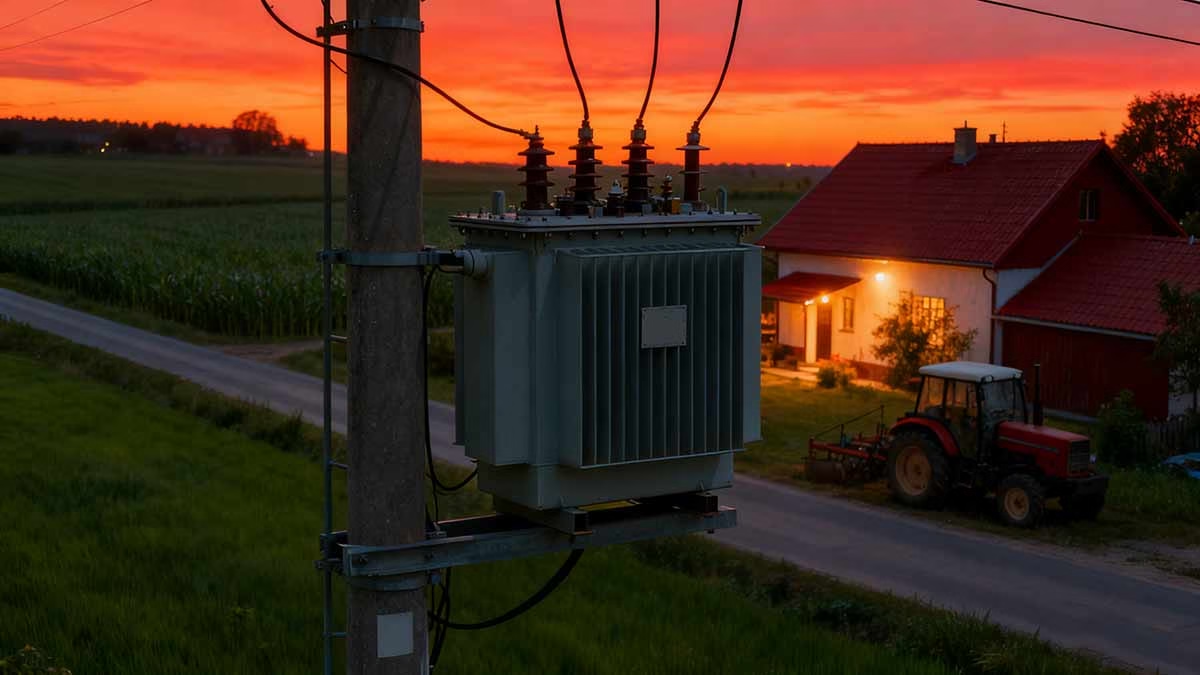
Predictive maintenance relies on advanced analytics and machine learning to process historical data, real-time sensor readings, and environmental factors. These systems identify patterns that precede failure, enabling scheduled maintenance during off-peak hours and minimizing disruption.
How Predictive Maintenance Works for Transformers
Data Integration: Combining Multiple Information Sources
Predictive models thrive on diverse data—here’s what feeds them:
- Historical maintenance and failure records
- Real-time sensor data (temperature, pressure, load)
- Environmental conditions (humidity, ambient temperature)
- Grid load patterns and usage trends
Pattern Recognition: Detecting Subtle Anomalies
Machine learning algorithms excel at identifying trends human analysts might overlook:
- Anomaly detection for unusual sensor readings
- Trend forecasting to predict degradation rates
- Cross-parameter correlation (e.g., linking temperature spikes to oil chemistry changes)
Risk Prioritization: Focusing on Critical Assets
Not all potential issues carry equal risk—predictive systems prioritize actions based on:
- Failure Mode and Effects Analysis (FMEA)
- Probabilistic risk assessment (likelihood of failure × impact)
- Cost-benefit analysis of preventive interventions
| Predictive Technique | Required Data | Prediction Timeframe |
|---|---|---|
| Trend Analysis | Historical sensor data | Weeks to months |
| Machine Learning Models | Multi-parameter datasets | Days to weeks |
| Physics-Based Simulations | Equipment specifications | Hours to days |
A partnership with a regional utility company illustrates the power of this approach. The utility struggled with unplanned transformer failures in its distribution network, leading to customer dissatisfaction and high repair costs. Our team implemented a predictive maintenance platform that integrated historical maintenance logs, real-time sensor data, and even weather forecasts (to anticipate load spikes during extreme temperatures).
The core of the system was a machine learning algorithm trained on years of failure data, which learned to recognize subtle pre-failure patterns. We also added a risk assessment module that prioritized maintenance based on transformer criticality—e.g., a unit powering a hospital was flagged for immediate attention if a minor issue was detected.
The results were transformative: a 60% reduction in unexpected failures within the first year. The utility shifted to proactive maintenance, scheduling repairs during low-demand periods and reducing customer outages. An unexpected bonus? The system identified design flaws in specific transformer batches, enabling the utility to collaborate with manufacturers on quality improvements.
For maintenance teams, the key lesson is clear: predictive maintenance isn’t just about technology—it’s about creating a system that learns from experience and delivers actionable insights. Investing in these tools pays off in reliability, cost savings, and customer trust.
AI-Powered Testing: The Future of Smart Grid Maintenance
As power grids evolve to handle renewable energy integration, electric vehicle charging, and digital loads, traditional maintenance methods fall short. The solution? Artificial intelligence (AI) that transforms how we test, monitor, and maintain transformers—creating smarter, more resilient grids.
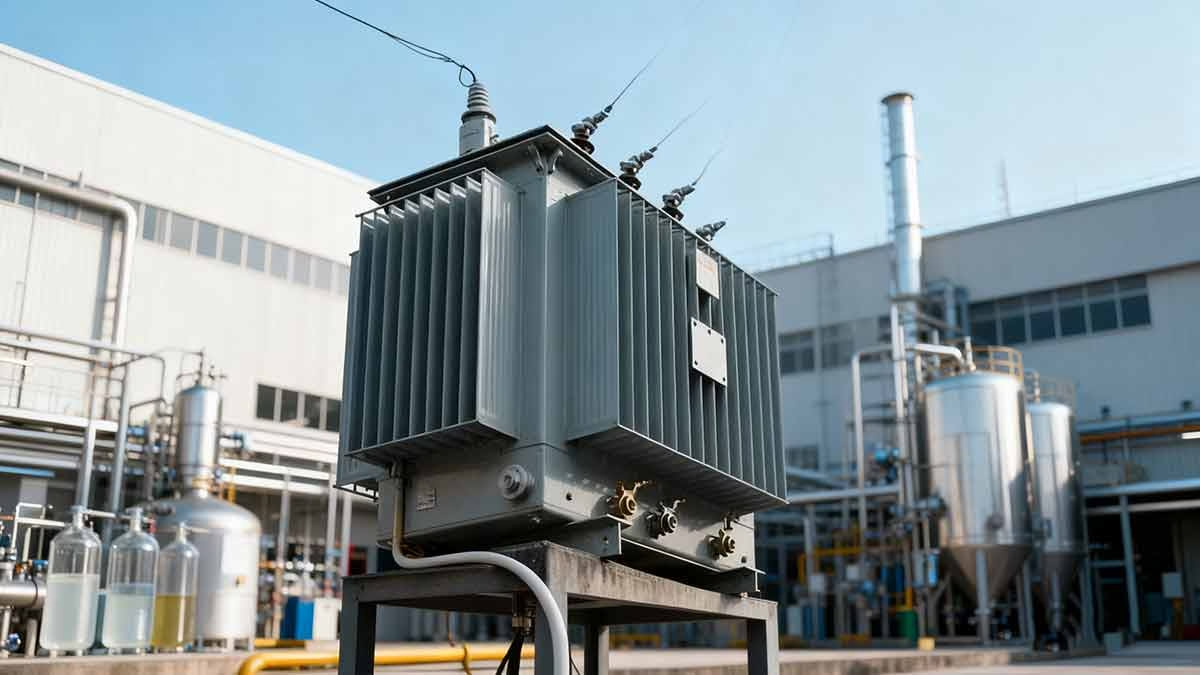
AI revolutionizes transformer testing by enabling autonomous diagnostics, adaptive maintenance, and real-time optimization. Machine learning algorithms process vast amounts of sensor data to identify anomalies, refine maintenance schedules, and even adjust transformer operations on the fly—reducing human error and improving efficiency.
Key AI Applications in Transformer Maintenance
Autonomous Diagnostics: Self-Monitoring Transformers
AI enables transformers to “self-assess” their health:
- Self-diagnostic algorithms that flag issues without human input
- Machine learning-driven anomaly detection for subtle, pre-failure signs
- Automated test sequences that adapt to equipment condition
Adaptive Maintenance: Learning from Experience
AI systems continuously improve based on real-world data:
- Reinforcement learning to optimize maintenance timing and type
- Pattern recognition for recurring issues (e.g., seasonal load-related stress)
- Dynamic model updates as new data becomes available
Real-Time Optimization: Maximizing Performance and Lifespan
AI makes split-second decisions to protect transformers:
- Intelligent load balancing across grid assets
- Voltage regulation based on real-time demand
- Predictive fault prevention (e.g., reducing load before overheating occurs)
| AI Technique | Application | Core Benefit |
|---|---|---|
| Deep Learning | Fault Classification | Faster, more accurate diagnosis of complex issues |
| Reinforcement Learning | Maintenance Scheduling | Optimized resource allocation and minimal downtime |
| Natural Language Processing (NLP) | Maintenance Log Analysis | Uncovers insights from unstructured data (e.g., technician notes) |
A groundbreaking project with a national utility company demonstrates AI’s transformative potential. The utility managed a geographically dispersed transformer fleet, making consistent manual testing logistically challenging and costly. Our solution: an AI-driven autonomous monitoring system.
Each transformer was equipped with advanced sensors (measuring oil chemistry, acoustic emissions, and vibration) connected to a central AI platform via low-latency networks. The system’s deep learning model—trained on millions of data points from healthy and faulty transformers—detected anomalies weeks before traditional methods would have flagged them.
The adaptive maintenance scheduler was a game-changer: it learned from past maintenance outcomes, factoring in weather, load forecasts, and crew availability to create optimal schedules. For example, it rescheduled non-critical tests during storms and prioritized high-risk transformers during peak demand.
Real-time optimization further enhanced reliability: the AI dynamically balanced load across transformers during peak hours, preventing overstress and extending equipment life. Within a year, the utility saw an 80% reduction in unexpected failures and a 60% improvement in maintenance efficiency—crews focused only on transformers needing attention, not just those due for scheduled checks.
NLP added unexpected value: the AI analyzed years of maintenance logs and repair reports, identifying failure patterns linked to specific operating conditions. This insight informed design improvements for new transformers and refined maintenance protocols for existing assets.
For organizations adopting AI, the key is to start small (e.g., pilot projects on critical assets) and scale gradually. Invest in high-quality data collection—AI is only as good as its training data—and involve maintenance teams in system design. AI isn’t about replacing human expertise; it’s about augmenting it to build smarter, more resilient grids.
Real-Time Monitoring: The 24/7 Guardian of Grid Stability
How do power companies ensure uninterrupted electricity in a world of fluctuating demand and aging infrastructure? The answer lies in real-time transformer monitoring—a system that provides constant visibility into equipment health and enables instant action when issues arise.
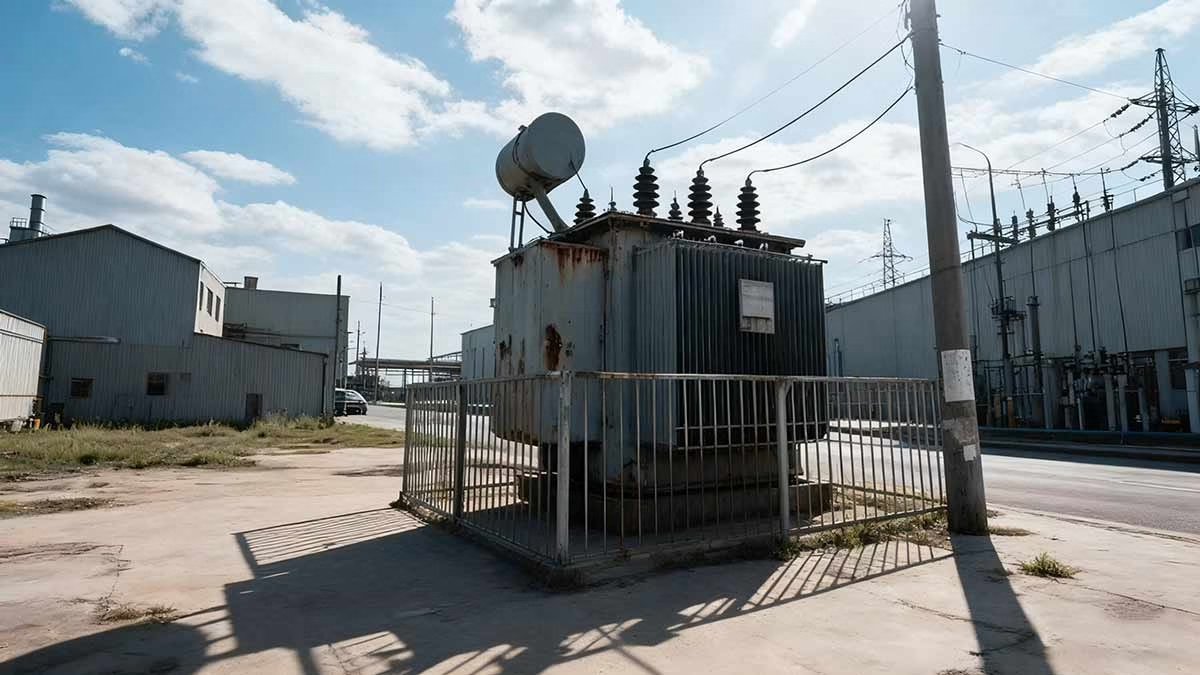
Real-time monitoring uses advanced sensors and IoT technology to collect continuous data on temperature, oil condition, electrical performance, and partial discharge. This data is analyzed instantly, with anomalies triggering alerts or automated responses—preventing small issues from escalating into major failures.
The Components of Effective Real-Time Monitoring
Continuous Data Collection: Sensors That Never Sleep
Modern transformers are equipped with sensors tracking critical parameters:
- Oil temperature and level
- Winding temperature (via fiber optic or resistance sensors)
- Dissolved gas concentrations (real-time DGA)
- Partial discharge activity (acoustic and electrical sensors)
Instant Analysis: Turning Data into Action
Real-time data is useless without rapid processing:
- Threshold-based alarming (customized for each transformer)
- Trend analysis to detect gradual degradation
- Cross-parameter correlation (e.g., linking gas spikes to temperature increases)
Rapid Response: Mitigating Risks in Real Time
The true power of real-time monitoring is immediate action:
- Automated load reduction for overstressed transformers
- Remote tap changing to adjust voltage
- Instant dispatch of maintenance crews for critical issues
| Monitored Parameter | Normal Operating Range | Response to Exceedances |
|---|---|---|
| Oil Temperature | 60–80°C | Activate auxiliary cooling; alert operators |
| Dissolved Gases | Variable by gas type | Trigger targeted diagnostics (e.g., DGA follow-up) |
| Partial Discharge | <100 pC | Conduct acoustic localization; schedule inspection |
A project with a city’s central substation (powering a dense urban area) underscores the impact of real-time monitoring. The utility had experienced near-failures, with transformers narrowly avoiding catastrophic breakdowns. Our team installed a comprehensive monitoring system: fiber optic sensors embedded in windings (for precise temperature tracking), online DGA analyzers, and partial discharge monitors—all connected to a central dashboard via secure, high-speed networks.
The system’s real-time analytics engine processed data streams instantly, applying algorithms to detect anomalies. We implemented adaptive alarming: thresholds adjusted based on operating conditions (e.g., higher temperatures allowed during peak load without false alerts). A machine learning module learned from past events, refining predictions over time.
Within six months, the system prevented three major failures. In one case, it detected a rapidly deteriorating bushing—alerting operators to take the transformer offline before it failed. This avoided a multi-day outage affecting thousands of residents and businesses.
Beyond failure prevention, the data revealed operational insights: load pattern analysis enabled the utility to optimize asset management, making data-driven decisions about transformer upgrades and replacements. This led to significant cost savings and improved long-term grid planning.
For utilities implementing real-time monitoring, integration is key. The system should connect seamlessly with existing SCADA and asset management platforms. User-friendly dashboards ensure operators can act quickly, while robust cybersecurity protects sensitive data and control systems. In power distribution, every second counts—real-time monitoring ensures utilities stay one step ahead of failures.
Modernizing Testing for Aging Transformers: Extending Lifespan Without Compromise
Many power grids rely on transformers that have been in service for 50+ years—venerable workhorses that face increasing demands in a modern energy landscape. How do we keep these aging assets reliable without risking damage during testing? The solution lies in adapted, non-invasive diagnostic techniques that honor older designs while leveraging modern technology.
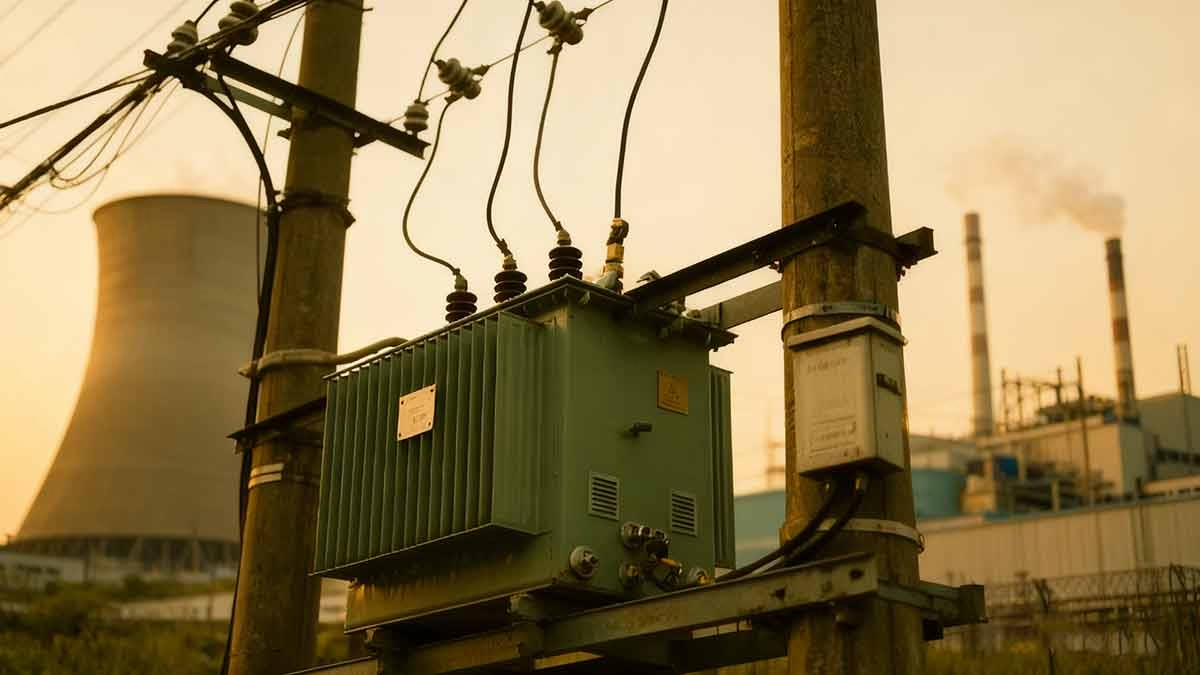
Modernizing aging transformer testing involves three core principles: using non-invasive methods to avoid equipment stress, retrofitting sensors for enhanced data collection, and applying advanced analytics to maximize insights from limited data. This approach enables utilities to assess condition accurately, predict remaining lifespan, and optimize maintenance—extending service life while minimizing risk.
Key Strategies for Aging Transformer Testing
Non-Invasive Diagnostics: Gentle Yet Effective
Older transformers often have delicate insulation and wiring—non-invasive tests eliminate disruption:
- Frequency Response Analysis (FRA): Detects winding deformation without opening the unit
- Acoustic Partial Discharge Detection: Locates insulation issues using sound waves
- Infrared Thermography: Identifies hot spots without physical contact
Sensor Retrofitting: Adding Intelligence to Vintage Equipment
Modern sensors can be installed without modifying internal components:
- Clip-on current transformers for load monitoring
- External fiber optic temperature sensors
- Portable, temporary DGA analyzers for periodic checks
Advanced Data Analysis: Making the Most of Limited Information
Older transformers lack the sensor suites of new models—analytics fills the gaps:
- Bayesian inference: Assesses condition with incomplete data
- Fuzzy logic systems: Improves decision-making with uncertain inputs
- Historical data mining: Compares performance to similar aging transformers
| Test Method | Suitability for Aging Transformers | Primary Advantage |
|---|---|---|
| FRA | Excellent | Detects winding damage without disassembly |
| Acoustic PD | Good | Real-time localization of insulation issues |
| Thermography | Very Good | Non-contact hot spot detection |
A project with a rural utility company highlights these strategies in action. The utility operated 30+ transformers aged 40–60 years, facing rising failure rates and uncertainty about their remaining lifespan. Conventional testing risked damaging delicate components, so we designed a tailored approach.
Non-invasive tests were foundational: FRA revealed subtle winding deformation in three units, while acoustic PD sensors detected insulation breakdown in two others. We retrofitted external sensors—clip-on current transformers and surface-mounted temperature monitors—to collect real-time data without internal modifications. For oil analysis, we used a portable DGA unit that connected temporarily to each transformer, avoiding the need for permanent installation.
Our data analysis system used Bayesian inference to assess condition with limited historical data, combining test results with industry benchmarks for aging transformers. This approach identified critical issues in 15% of the fleet that conventional testing had missed—enabling the utility to prioritize replacements and targeted maintenance.
The outcome? Many transformers had their safe operating life extended by 5–10 years, while high-risk units were replaced proactively. The data collected also provided valuable insights into long-term material degradation—information now used to improve the design of new transformers for extended service life.
For utilities managing aging fleets, the key is balance: respect the limitations of older equipment while leveraging modern diagnostics. Non-invasive tests, thoughtful sensor retrofits, and advanced analytics turn aging transformers from liabilities into reliable assets—proving that age doesn’t equal obsolescence.
Conclusion
In an era of growing energy demand and aging infrastructure, advanced transformer testing and monitoring are non-negotiable for grid stability. By blending traditional diagnostic wisdom with AI, real-time data, and non-invasive technologies, utilities can extend equipment lifespan, predict failures before they occur, and deliver reliable power to communities worldwide.
The future of transformer maintenance isn’t just about better tools—it’s about a holistic approach that prioritizes data-driven decision-making and adaptability. Whether managing new smart transformers or extending the life of vintage units, the goal remains the same: to build grids that are resilient, efficient, and ready for the challenges of tomorrow.
For utility leaders and maintenance teams, investing in these advanced strategies isn’t just a cost—it’s an investment in reliability, sustainability, and long-term operational success. As the energy landscape evolves, those who embrace innovative transformer testing will lead the way in building a more resilient power grid.