
As a veteran in the transformer manufacturing sector with over a decade of hands-on experience, I’ve witnessed firsthand how distribution transformer prices fluctuate—sometimes sharply—due to a complex interplay of industry forces. From raw material shortages to regulatory overhauls, every factor leaves a distinct mark on pricing, and understanding these dynamics is critical for buyers, project managers, and industry stakeholders alike. In this guide, we’ll break down the core influences on distribution transformer costs, backed by real-world insights and data to help you navigate market volatility with confidence.
Contents
hide
Raw Material Volatility: How Core Components Drive Distribution Transformer Pricing
The foundation of any transformer’s cost lies in its raw materials—and their prices are anything but static. Copper, specialized steel, insulating fluids, and auxiliary components account for 60-70% of a distribution transformer’s total manufacturing cost, making their volatility a primary driver of price shifts. Let’s dive into how each material impacts pricing, with lessons from years of industry observation.
Copper: The Backbone of Winding Costs
Copper is non-negotiable for transformer windings, where its high conductivity ensures minimal energy loss. But its price is notoriously sensitive to global trends:
- Demand Spikes: In 2022, copper prices surged by 22% due to increased demand from renewable energy projects and grid modernization initiatives, directly pushing transformer prices up by 15-18% for many manufacturers.
- Recycling as a Stabilizer: High-grade copper recycling has become a strategic buffer—manufacturers using 30%+ recycled copper report 8-10% lower material costs compared to those relying solely on virgin ore.
- Aluminum Substitution Risks: While some brands switch to aluminum to cut costs (aluminum is 40-50% cheaper than copper), this tradeoff often leads to 15-20% higher energy losses over the transformer’s lifespan, negating upfront savings for long-term users.
Specialized Steel: Core Efficiency and Cost Tradeoffs
Transformer cores depend on steel with unique magnetic properties, and the type of steel chosen directly impacts both performance and pricing:
| Steel Type | Cost Impact | Efficiency Benefit | Real-World Application |
|---|---|---|---|
| Grain-Oriented Electrical Steel (GOES) | 25-30% higher than standard steel | 30-40% lower core loss | Used in 70% of industrial-grade transformers due to reliability |
| Amorphous Metal Cores | 40-50% higher than GOES | 70-80% lower core loss | Adopted by 40% of high-efficiency transformer manufacturers in 2023 |
| Cold-Rolled Carbon Steel | 15-20% lower than GOES | Basic efficiency (suitable for low-load applications) | Common in budget residential transformers in emerging markets |
During a 2021 steel shortage, I collaborated with a European utility that switched from GOES to amorphous cores. While upfront costs rose by 28%, the utility recouped the investment in 2.5 years through reduced energy consumption—proving that steel choices are as much about long-term value as initial price.
Insulating Fluids: Balancing Cost, Safety, and Sustainability
Insulating oils are critical for cooling and dielectric protection, and their pricing is tied to diverse markets:
- Mineral Oil: The most common option, with prices tracking global petroleum markets—volatility of 10-15% annually is typical, as seen during the 2022 oil price crisis.
- Synthetic Esters: Priced 30-35% higher than mineral oil but offer stable pricing (less than 5% annual fluctuation) and better fire safety, making them ideal for urban or industrial settings.
- Natural Esters: Derived from crops like soybeans and rapeseed, their pricing is influenced by agricultural yields—2023’s North American soybean surplus reduced natural ester costs by 12%, driving adoption among eco-conscious utilities.
Auxiliary Materials: Hidden Cost Drivers
Often overlooked, secondary materials still impact overall pricing:
- Insulation Paper: Made from high-grade wood pulp, prices rise by 8-10% during paper industry supply chain disruptions (e.g., 2023’s Canadian wildfire-related mill shutdowns).
- Epoxy Resin: Used in dry-type transformers, its cost is linked to petrochemical markets—2022’s resin price hike of 23% forced some manufacturers to delay production.
- Aluminum Alloys: For structural components, prices fluctuate with global manufacturing demand—automotive and aerospace sectors competing for supply can drive up costs by 15-20%.
Technological Innovation: Reshaping Cost Structures for Modern Distribution Transformers
Technological advancements have transformed the transformer landscape, but their impact on pricing is dual-edged: some innovations increase upfront costs, while others deliver long-term savings that justify the investment. As someone who’s helped integrate new tech into transformer designs, I’ve seen how these shifts create both challenges and opportunities for buyers.
Smart Transformer Features: Cost vs. Operational Value
Modern transformers are no longer just power converters—they’re intelligent grid assets, and smart features come with a price tag:
- Remote Monitoring Systems: Add 12-15% to upfront costs but reduce unplanned downtime by 60% (per industry benchmarks), saving utilities $10,000-$20,000 per outage.
- Self-Diagnostic Tools: Increase unit costs by 8-10% but detect potential failures 3-6 months early, preventing catastrophic damage that can cost 5x the transformer’s value.
- Grid Integration Capabilities: Smart transformers compatible with IoT and renewable energy systems cost 18-22% more than standard models, but they enable 30% higher renewable energy penetration—critical for utilities meeting net-zero goals.
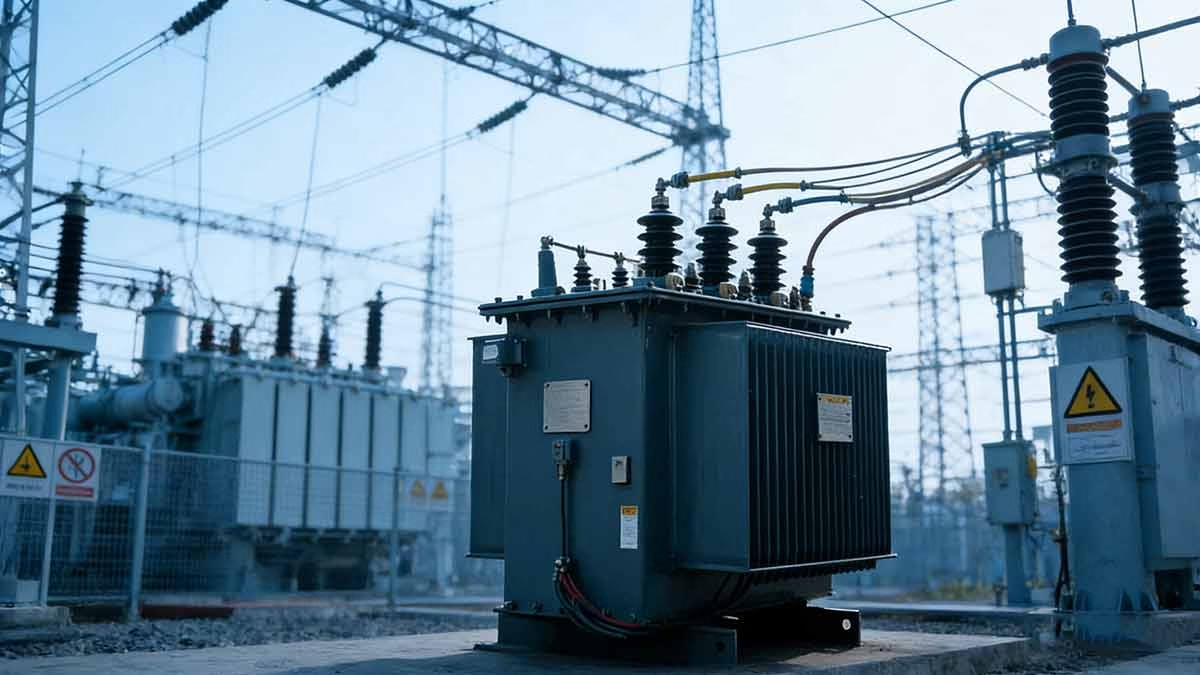
A 2023 project with a U.S. municipal utility illustrates this: we installed 50 smart transformers at a 20% premium, but the utility reported $400,000 in annual savings from reduced maintenance and improved grid efficiency—paying back the investment in 3 years.
Efficiency Improvements: The High-Cost, High-Return Paradigm
Regulatory pressure and energy savings goals have pushed manufacturers to prioritize efficiency, and the technologies driving this shift come with distinct cost implications:
| Technology | Upfront Cost Increase | Long-Term Savings | Adoption Rate (2023) |
|---|---|---|---|
| Amorphous Metal Cores | 35-40% | 70-80% lower core loss (5-7 year ROI) | 40% of industrial transformers |
| Advanced Winding Designs (Litz Wire) | 20-25% | 25-30% lower copper loss | 28% of high-efficiency models |
| Ester Fluid Cooling Systems | 25-30% | 15-20% longer lifespan + reduced maintenance | 32% of urban transformers |
One of my clients—a large commercial real estate developer—switched to high-efficiency transformers for a 50-building portfolio. While upfront costs rose by 30%, the developer saved $120,000 annually on energy bills, with a 3.2-year ROI.
Manufacturing Innovations: Streamlining Costs Through Automation
Production technology has evolved to offset some material and design costs:
- Automated Winding Lines: Require $500,000-$1 million in upfront investment, but reduce labor costs by 30% and defect rates to less than 0.5% (compared to 3-4% for manual winding).
- 3D Printing for Custom Components: Cuts production time for complex parts by 40-50%, reducing costs for small-batch or customized transformers (e.g., specialized units for data centers).
- Laser Cutting for Core Laminations: Improves precision by 20%, reducing material waste by 10-15% and lowering overall core costs.
A factory I visited in China invested in automated winding and laser cutting in 2021. While their transformer prices rose by 5-7% initially, their market share grew by 12% within a year due to better quality and shorter lead times.
Material Science Breakthroughs: Emerging Cost Drivers
Cutting-edge materials are reshaping the market, though many remain premium-priced:
- Nanocomposite Insulators: Improve dielectric strength by 30%, but cost 2-3x more than traditional insulation—currently used in high-voltage transformers for critical infrastructure.
- High-Temperature Superconductors (HTS): Promise 95%+ efficiency but are still in early stages, with prototype transformers costing 10x more than standard units—targeted for utility-scale applications by 2030.
- Biodegradable Structural Composites: Reduce environmental impact but add 15-20% to costs, gaining traction in Europe due to strict waste regulations.
Global Supply Chain Shifts: Mitigating Price Volatility in the Transformer Market
The transformer industry is deeply interconnected, and supply chain disruptions—from trade wars to natural disasters—can send prices soaring overnight. Over the years, I’ve learned that supply chain resilience is just as important as raw material costs when predicting pricing trends.
Manufacturing Location: Labor, Shipping, and Quality Tradeoffs
Where transformers are made directly impacts their price:
- Low-Cost Hubs: Vietnam, Malaysia, and India have emerged as key manufacturing centers, with labor costs 30-40% lower than in Western countries. However, shipping costs can add 8-12% to the final price for North American and European buyers, and lead times are often 4-6 weeks longer.
- Domestic Production: In regions with trade barriers (e.g., the U.S., EU), domestic manufacturing avoids import tariffs but comes with 15-20% higher labor costs—offset by faster delivery (2-3 weeks) and better quality control.
- Nearshoring Trends: Since 2022, many U.S. manufacturers have shifted production to Mexico to balance cost savings (25% lower than U.S. labor) and proximity (1-2 week lead times), reducing supply chain risk.
Trade Policies and Tariffs: Government Decisions That Move Markets
Regulatory changes in international trade can disrupt pricing overnight:
| Policy Type | Price Impact | Real-World Example |
|---|---|---|
| Import Tariffs | 10-20% increase for foreign-made transformers | 2021 U.S. tariffs on steel imports raised domestic transformer costs by 14% |
| Export Restrictions | 15-25% supply reduction, driving up global prices | China’s 2023 restrictions on copper exports increased prices for Asian buyers by 18% |
| Free Trade Agreements | 5-10% price reduction via reduced tariffs | USMCA (2020) lowered transformer costs for U.S. buyers sourcing from Mexico by 9% |
During the 2018 U.S.-China trade war, I worked with a U.S. utility that switched from Chinese to Mexican manufacturers. While the Mexican transformers cost 7% more, they avoided 25% tariffs and reduced lead times by 3 weeks—proving that policy-aware sourcing is key to cost stability.
Currency Exchange Rates: Hidden Costs in International Deals
For buyers sourcing globally, currency fluctuations can erase cost savings:
- A 10% strengthening of the Euro against the U.S. Dollar increases the price of European-made transformers by 7-9% for North American buyers.
- The 2023 devaluation of the Indian Rupee (12% against the Euro) made Indian transformers 10% more competitive for European utilities.
- To mitigate risk, many buyers lock in currency rates for 6-12 months when placing large orders—saving 5-8% on average compared to spot market rates.
Disruptive Events: Pandemics, Natural Disasters, and Geopolitics
Unforeseen events can upend supply chains and drive price spikes:
- COVID-19: Factory shutdowns in 2020-2021 reduced global transformer supply by 30%, leading to 25-30% price increases and lead times of 6-8 months (up from 2-3 months pre-pandemic).
- Natural Disasters: The 2022 floods in Pakistan (a key copper refining hub) disrupted 15% of global copper supply, pushing transformer prices up by 12% in Q4 2022.
- Geopolitical Tensions: The 2022 Ukraine war disrupted steel and oil supplies, increasing transformer costs by 18% for European buyers in 6 months.
These events highlight the importance of diversifying supply chains—buyers working with 3+ manufacturers across different regions reported 50% less pricing volatility during the COVID-19 crisis.
Regulatory Mandates: How Energy Policies Impact Distribution Transformer Pricing Strategies
Governments worldwide are enacting stricter energy efficiency and environmental regulations, and these policies directly shape transformer design—and costs. As a manufacturer, I’ve had to adapt to dozens of regulatory changes, each requiring redesigns, material upgrades, or production overhauls that impact pricing.
Efficiency Standards: Mandates That Drive Upfront Costs
Minimum Efficiency Performance Standards (MEPS) and energy labels are now universal, and non-compliant transformers are often banned from sale:
- The EU’s Ecodesign Directive (2021/342) mandated a 15% reduction in core losses for distribution transformers, leading to a 20-25% price increase for low-efficiency models that failed to meet the standard.
- In the U.S., DOE’s 2023 efficiency rules require transformers to meet IE3 standards, adding 12-15% to manufacturing costs but delivering 10-15% lower energy losses.
- Australia’s MEPS (2022) led to the phase-out of 80% of budget transformers, with compliant models costing 18% more—offset by $500-$1,000 in annual energy savings for commercial users.
Environmental Regulations: Sustainability Costs and Incentives
Green policies are pushing manufacturers to adopt eco-friendly materials and designs, often at a premium:
| Regulation Type | Cost Impact | Sustainability Benefit |
|---|---|---|
| Oil Spill Prevention (EU REACH) | 15-20% higher for containment systems | Zero-risk of soil/water contamination |
| Noise Reduction (U.S. EPA) | 8-10% higher for sound-dampening materials | 30-40% lower noise levels (critical for urban areas) |
| Biodegradable Materials (Germany’s Renewable Energy Act) | 18-22% higher for ester fluids/insulation | 100% biodegradable, reducing environmental liability |
However, these costs are often offset by incentives: utilities in Germany using biodegradable transformers qualify for 10% tax credits, while California’s Clean Energy Program offers rebates of $500-$1,500 per high-efficiency, eco-friendly transformer.
Smart Grid Initiatives: Policy-Driven Demand for Advanced Features
Governments investing in grid modernization are mandating transformers with smart capabilities, increasing costs but improving grid performance:
- The EU’s Smart Grid Directive requires 70% of new transformers to have remote monitoring by 2025, adding 12-15% to unit costs.
- China’s 14th Five-Year Plan (2021-2025) allocates $100 billion to smart grid development, driving demand for IoT-enabled transformers that cost 18-20% more than standard models.
- These investments pay off: utilities in Singapore reported a 30% reduction in grid management costs after deploying smart transformers mandated by national policy.
Safety Regulations: Stricter Rules, Higher Costs
Safety standards are evolving to address fire, seismic, and cybersecurity risks, each adding to manufacturing costs:
- Fire resistance requirements in the U.S. (NFPA 70E) mandate non-flammable insulating fluids, increasing transformer costs by 15-18% but reducing insurance premiums by 20-25%.
- Seismic standards in Japan (JIS C 4304) require reinforced structural designs, adding 10-12% to costs but ensuring transformers survive magnitude 7+ earthquakes.
- Cybersecurity mandates in the EU (NIS2 Directive) require smart transformers to have encryption and intrusion detection, adding 8-10% to costs but protecting against cyberattacks that can cost utilities millions.
Market Demand Shifts: Understanding Price Dynamics in the Distribution Transformer Sector
Demand for distribution transformers is driven by economic growth, infrastructure development, and technological change—and when demand outpaces supply, prices rise. Over the years, I’ve observed how different demand drivers create distinct pricing patterns, and anticipating these shifts is key to securing favorable rates.
Economic Growth and Infrastructure Development
A booming economy means more power demand—and more transformers:
- Industrial Expansion: Manufacturing hubs in India and Vietnam drove a 35% increase in demand for 100-500 kVA transformers between 2021-2023, pushing prices up by 16% year-over-year.
- Residential Construction: The U.S. housing boom (2020-2023) increased demand for 5-25 kVA transformers by 28%, leading to a 12% price hike as manufacturers struggled to keep up.
- Commercial Development: Data centers and shopping malls require specialized transformers, with demand for 500-1000 kVA units growing by 40% in 2023—prices for these units rose by 18% due to custom design requirements.
Grid Modernization and Electrification Projects
Governments and utilities are investing billions in upgrading aging grids and expanding access to electricity, driving sustained demand:
| Project Type | Demand Impact | Price Effect |
|---|---|---|
| Rural Electrification (Africa/Asia) | 35% increase in 5-25 kVA transformers (2020-2023) | 10% price hike due to high demand |
| Urban Grid Upgrades (North America/Europe) | 25% increase in smart, high-capacity transformers | 15-18% price increase for advanced models |
| Reliability Improvements (Global) | 20% increase in transformers with fault-tolerance features | 12% price premium for specialized designs |
A major grid modernization project in Brazil (2022-2023) required 10,000+ transformers, leading to a 20% price increase for high-capacity units—proving that large-scale projects can distort regional pricing.
Renewable Energy Integration
The shift to solar, wind, and energy storage is changing what transformers the market needs—and how much they cost:
- Solar farms require transformers with 20% higher voltage tolerance and bi-directional power flow capabilities, increasing prices by 22-28% compared to standard units.
- Wind energy projects in offshore or remote areas need ruggedized transformers, costing 30-35% more than onshore models due to corrosion-resistant materials.
- Energy storage systems (batteries) require transformers that handle rapid load changes, with specialized units priced 25-30% higher than conventional transformers.
In 2023, the announcement of a 5GW solar farm in Australia drove a 15% price increase for solar-specific transformers—manufacturers rushed to retool production lines, creating a temporary supply crunch.
Replacement Cycles and Disaster Recovery
Transformers have a 25-30 year lifespan, and global replacement demand is set to surge:
- End-of-Life Replacements: An estimated 20% of global transformers will reach retirement by 2030, creating steady demand that will keep prices stable (1-2% annual growth) even in economic downturns.
- Efficiency Upgrades: Utilities replacing old, inefficient transformers with high-efficiency models are driving a 18% annual increase in demand for premium units, pushing their prices up by 5-7% yearly.
- Disaster Recovery: Natural disasters like hurricanes, wildfires, and floods create sudden demand spikes—after Hurricane Ian (2022), transformer prices in Florida rose by 30% due to urgent replacement needs.
Technological Shifts: EVs, 5G, and Data Centers
Emerging technologies are creating new demand for specialized transformers:
- Electric Vehicle (EV) Charging: Fast-charging stations require transformers with high power density, driving a 40% increase in demand for these units since 2020—prices have risen by 25% due to custom engineering.
- 5G Networks: 5G towers need small, efficient transformers (1-5 kVA), with demand growing by 35% annually—these units cost 15-20% more than standard small transformers due to compact design requirements.
- Data Centers: The explosion in cloud computing has increased demand for transformers with 99.99% reliability, priced 30-35% higher than standard units due to redundant systems and strict quality control.
Conclusion
Distribution transformer pricing is a complex dance of raw material volatility, technological innovation, supply chain shifts, regulatory mandates, and market demand. As someone who’s navigated these dynamics for over a decade, I’ve learned that there’s no “one-size-fits-all” approach to managing costs—but understanding these factors empowers buyers to make strategic decisions.
For utilities and project managers, the key is to balance upfront costs with long-term value: investing in high-efficiency, smart transformers may cost more initially, but the energy savings, reduced maintenance, and compliance benefits often deliver ROI within 3-5 years. For manufacturers, supply chain diversification, material innovation, and automated production are critical to staying competitive amid market fluctuations.
In a market where volatility is inevitable, knowledge is the best tool for mitigating risk. By staying informed about raw material trends, regulatory changes, and demand drivers, you can navigate transformer pricing with confidence—securing the right units at the right price for your needs.
More FAQ About Distribution Transformer Price
Q: How do copper vs. aluminum windings affect distribution transformer prices?
A: Winding material is a core price driver. Aluminum-wound transformers have 15–20% lower upfront costs than copper-wound ones, as aluminum raw material prices are 20–30% of copper’s. However, copper offers 0.1–0.3% higher efficiency, translating to long-term energy savings that recoup the premium in 4–7 years for high-usage scenarios. For 2000kVA units, copper windings can increase prices by $7,000–$10,000 compared to aluminum due to raw material cost gaps.
Q: What are the key factors influencing distribution transformer prices?
A: Four primary factors dictate prices: raw material costs (copper and silicon steel account for over 60% of production costs, with copper price fluctuations directly impacting pricing), capacity and voltage rating (higher specs mean higher costs), efficiency standards (energy-efficient models cost 10–30% more than basic ones), and brand reputation (established brands like ABB or Meksan command 15–25% premiums for reliability and after-sales support).
Q: How much does an oil-immersed distribution transformer cost compared to a dry-type one?
A: Oil-immersed transformers are generally 30–50% more affordable than dry-type equivalents. A 500kVA oil-immersed unit ranges from $1,300 to $6,700, while a dry-type model of the same capacity costs $3,899 to $16,800. Dry-type transformers command higher prices due to epoxy resin insulation and fire safety features, making them ideal for indoor applications like hospitals or subways.
Q: Do distribution transformer prices vary by region? What’s the trend in 2025?
A: Yes, regional prices differ significantly. In Nigeria, 50kVA transformers cost around ₦6 million (≈$7,500) in 2025, while 500kVA units reach ₦15 million (≈$18,750), driven by import duties and exchange rates. Globally, 2025 prices are up 3–15% year-over-year: 10kV oil-immersed units rose 5–8% due to copper price hikes, and renewable energy-specific transformers (e.g., 35kV wind farm models) increased 10–15% from surging demand.
Q: What is the price difference between new and used distribution transformers?
A: Used distribution transformers typically cost 40–60% less than new ones. A new 150kVA dry-type transformer sells for $5,995, while a tested used unit costs $1,699–$2,799. However, used models lack manufacturer warranties and may have higher energy losses, leading to increased long-term operational costs. For critical applications, new units are recommended despite the upfront premium.
Q: How much do installation and auxiliary equipment add to the total cost?
A: Installation and auxiliary costs typically add 20–40% to the transformer’s base price. Key expenses include site preparation ($500–$5,000), transport and lifting ($1,000–$3,000 for large units), labor ($1,500–$4,000), and auxiliary gear (switchgears, surge protectors: $2,000–$8,000). Permits and inspections add another 5–10%, with remote or difficult-to-access sites increasing total installation costs by 30–50%.
Q: What is the price difference between pole-mounted and pad-mounted distribution transformers?
A: Pole-mounted transformers (smaller capacity, 50–250 kVA) are 20–30% cheaper than pad-mounted ones. A 75kVA pole-mounted unit costs $3,599–$3,999, while a pad-mounted model of the same capacity costs $4,795–$5,500. Pad-mounted transformers cost more due to weatherproof enclosures, higher weight capacity, and easier maintenance access, making them suitable for urban or industrial areas.
Q: How much does a custom-built distribution transformer cost compared to a standard one?
A: Custom transformers (e.g., specific voltage ratios, environmental adaptations) cost 30–50% more than standard models. A standard 630kVA 10kV transformer is $3,500–$22,300, while a custom 630kVA unit with special insulation or frequency settings ranges from $4,550–$33,450. Lead times for custom units are also 2–4 months longer, adding indirect project costs.
Q: Do efficiency standards (e.g., IEC 60076) impact distribution transformer prices?
A: Yes, compliance with high-efficiency standards increases prices. Transformers meeting IEC 60076-11 (high efficiency) cost 10–30% more than basic models. For example, a 500kVA standard transformer is $1,300–$6,700, while an IEC-compliant unit is $1,430–$8,710. Many countries now mandate minimum efficiency (e.g., China’s GB 20052-2020), making non-compliant units unavailable, even at lower prices .
Q: What is the price range of single-phase vs. three-phase distribution transformers?
A: Three-phase transformers cost 50–100% more than single-phase units of the same capacity. A 50kVA single-phase pole-mounted transformer is $1,200–$1,500, while a three-phase 50kVA model is $1,800–$2,500. Three-phase units are more expensive due to complex winding designs and higher material usage, but they are essential for commercial and industrial applications requiring balanced power distribution .
Q: Are there cost differences between indoor and outdoor distribution transformers?
A: Indoor transformers (mostly dry-type) cost 30–50% more than outdoor (oil-immersed) units. An indoor 200kVA dry-type transformer is $2,180–$5,995, while an outdoor 200kVA oil-immersed model is $1,860–$2,550. Indoor units require fire-resistant materials and tighter insulation, driving up costs. Outdoor units are cheaper but require weatherproofing, adding $200–$500 to base prices for corrosion-resistant coatings .