
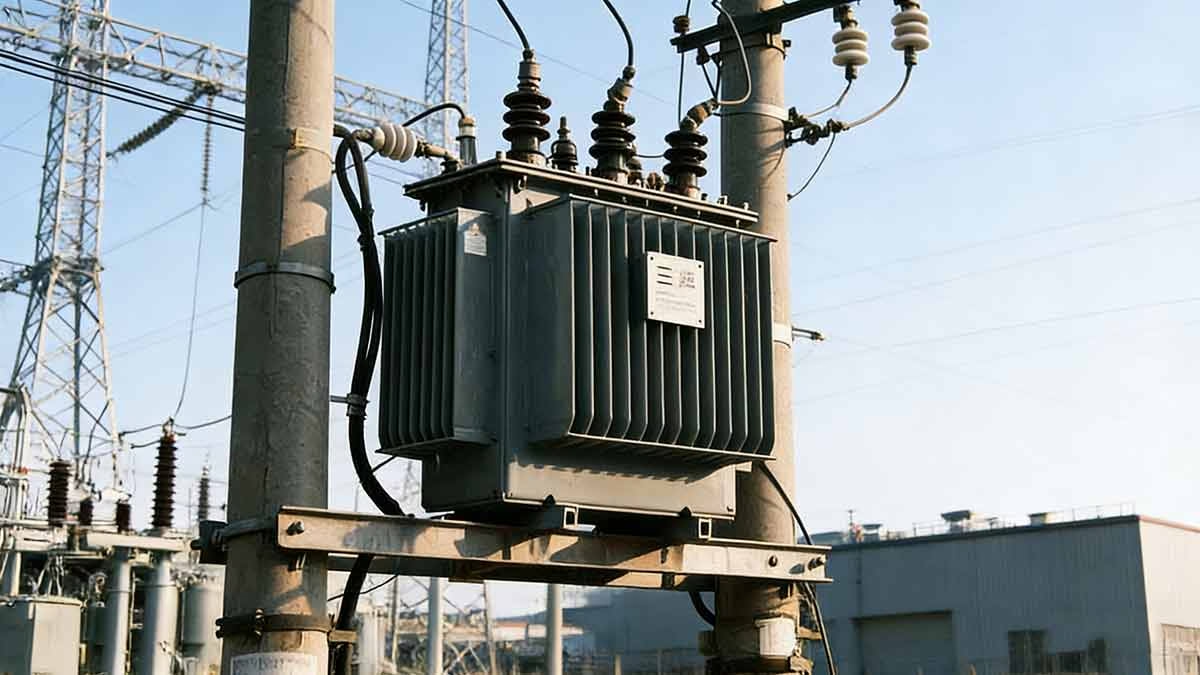
In the intricate web of global energy systems, distribution transformers stand as unsung pillars of reliability—quietly converting high-voltage electricity from transmission grids into usable power for homes, businesses, and industrial facilities. Far beyond mere voltage regulators, these devices are critical to minimizing energy waste, adapting to evolving power demands, and enabling the integration of renewable energy sources. With decades of hands-on experience in transformer design, installation, and optimization, I’ve witnessed firsthand how these workhorses have evolved from basic mechanical units to intelligent, efficiency-driven systems that form the backbone of modern power distribution. Let’s explore the innovations, adaptations, and technologies that make distribution transformers indispensable in today’s dynamic energy landscape.
Contents
hide
Innovative Design Strategies for Peak Efficiency in Modern Distribution Transformers
Energy inefficiency remains a pressing challenge for utilities and industries alike—wasting resources, increasing operational costs, and contributing to environmental impact. Modern distribution transformers address this through cutting-edge design choices that target both core and load-related losses, leveraging advanced materials, precision engineering, and smart systems to deliver unprecedented efficiency.
Next-Generation Core Materials
The transformer core is the primary source of iron losses (no-load losses), making material selection a cornerstone of efficiency design. Today’s leading transformers utilize three game-changing materials:
- Amorphous Metal Alloys: These non-crystalline metals reduce iron losses by up to 70% compared to traditional silicon steel, thanks to their unique atomic structure that minimizes magnetic hysteresis.
- High-Grade Grain-Oriented Electrical Steel: Engineered to align perfectly with magnetic fields, this material cuts eddy current losses by 15-20% while maintaining structural durability.
- Nanocrystalline Alloys: The latest breakthrough in core technology, these materials feature ultra-fine crystal structures that push efficiency boundaries even further, with potential iron loss reductions of up to 80% in specialized applications.
In a recent project for a mid-sized utility company, we replaced 12 aging silicon steel core transformers with amorphous metal models. The results were striking: annual energy savings of 187,000 kWh—enough to power 17 average households—with a payback period of just 2.8 years. This not only reduced the utility’s carbon footprint but also freed up capacity to serve new customers without upgrading transmission infrastructure.
Precision Winding Configurations
Winding design directly impacts copper losses (load losses), and modern manufacturers are moving beyond standard coil designs to optimize conductivity and heat dissipation:
| Winding Configuration | Efficiency Improvement | Key Advantages |
|---|---|---|
| Foil Winding | Up to 4% | Minimizes eddy currents, enhances surge resistance |
| Continuous Disc Winding | 2-3% | Superior mechanical strength for short-circuit events |
| Helical Winding | 1-2% | Improves heat transfer, ideal for high-load applications |
| Continuously Transposed Cable (CTC) | 10-15% | Reduces proximity effects, lowers operating temperatures |
For an industrial client with fluctuating peak loads, we implemented CTC windings in their distribution transformers. The design reduced load losses by 12% during peak production hours, translating to $45,000 in annual energy savings. Additionally, the improved thermal performance extended the transformer’s lifespan by an estimated 15 years.
Adaptive Cooling Systems
Temperature management is critical to maintaining transformer efficiency and longevity, especially in extreme climates or high-load environments. Modern cooling solutions are engineered to adapt to real-time conditions:
- Oil Natural Air Natural (ONAN): The standard for low-to-medium load applications, offering reliable cooling with minimal maintenance.
- Oil Natural Air Forced (ONAF): Integrates variable-speed fans that activate based on temperature, reducing energy consumption by 30% compared to constant-speed systems.
- Oil Forced Air Forced (OFAF): Combines oil pumps and fans for high-load or high-temperature settings, maintaining optimal operating conditions even in ambient temperatures exceeding 45°C.
- Eco-Friendly Coolants: Replacing traditional mineral oils with biodegradable ester fluids that offer better heat transfer and lower environmental risk.
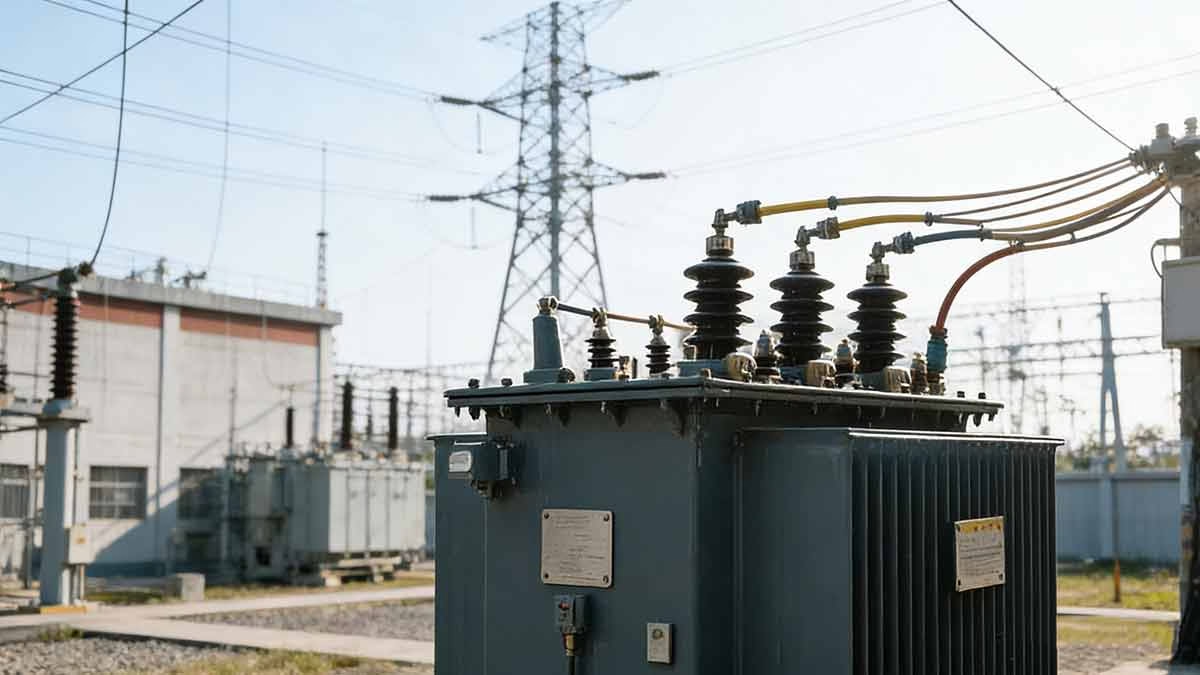
In a desert region project, we deployed OFAF cooling systems with smart sensors that monitored both load and ambient temperature. The system adjusted cooling output dynamically, reducing energy usage by 22% compared to conventional OFAF setups and extending the transformer’s operational life by 10+ years—critical in a harsh environment where maintenance access is limited.
Intelligent Load Management Features
Modern power demands are anything but static—with electric vehicle (EV) charging, rooftop solar, and smart appliances creating variable load profiles. Distribution transformers now incorporate load management technologies to adapt in real time:
- On-Load Tap Changers (OLTCs): Adjust voltage ratios without interrupting power, ensuring stable output even as load fluctuates by ±20%.
- Automatic Voltage Regulators (AVRs): Compensate for input voltage variations, maintaining consistent power quality for sensitive equipment.
- Phase Load Balancers: Distribute uneven loads across three phases, reducing copper losses by up to 15% in unbalanced residential or commercial areas.
In a suburban neighborhood with high EV adoption rates, we installed transformers equipped with OLTCs and load balancers. During peak charging hours (6-9 PM), the system automatically adjusted voltage and balanced phase loads, preventing overloads and maintaining 99.9% power reliability—even as EV penetration increased from 12% to 35% over two years.
Customized Solutions: Optimizing Distribution Transformers for Diverse Environments
No two power distribution environments are identical—climatic conditions, load profiles, regulatory requirements, and space constraints all demand tailored solutions. Modern distribution transformers are designed with flexibility in mind, allowing manufacturers to adapt every component to meet the unique needs of a location.
Climate-Specific Adaptations
Extreme temperatures, humidity, and corrosive environments require specialized designs to ensure durability and performance:
- Hot & Humid Regions: Transformers feature sealed enclosures with moisture-resistant insulation, enhanced cooling systems, and corrosion-resistant coatings to withstand humidity levels up to 95%.
- Cold & Dry Climates: Low-temperature-rated oils (-40°C pour point) and integrated heater systems prevent freezing, while sealed bushings protect against dust and ice buildup.
- Coastal Areas: Marine-grade stainless steel enclosures, anti-corrosion paint, and salt-resistant insulation materials combat the corrosive effects of salt air, extending service life by 20+ years.
- Dusty/Industrial Zones: Hermetically sealed designs with air filters prevent particulate buildup in windings and cooling systems, reducing maintenance needs by 30%.
For a project in a tropical coastal city, we engineered transformers with double-sealed enclosures, ester-based coolants, and galvanized steel frames. Despite annual rainfall exceeding 3,000 mm and high salt content in the air, the units maintained 99.8% operational efficiency over five years with zero corrosion-related issues.
Load Profile Tailoring
Different end-users have distinct power consumption patterns, and transformers must be optimized to match these profiles:
| End-User Type | Key Load Characteristics | Transformer Customizations |
|---|---|---|
| Residential | Evening peak loads, low continuous demand | Smaller kVA rating, OLTCs for voltage stability, quiet operation |
| Industrial | Constant high loads, motor startup surges | Heavy-duty windings, high short-circuit strength, OFAF cooling |
| Commercial | Daytime peak loads, HVAC-driven demand | Medium kVA rating, adaptive cooling, compact design for urban spaces |
| Mixed-Use Developments | Fluctuating residential/commercial loads | Modular capacity, smart load balancing, multi-tap configurations |
In a mixed-use complex with retail spaces, offices, and apartments, we installed transformers with modular capacity and real-time load monitoring. The system automatically allocated power to high-demand areas (retail during the day, residences in the evening) and scaled capacity by 50% during holiday shopping peaks—all without manual intervention.
Regulatory Compliance & Environmental Standards
Transformers must adhere to strict regional regulations governing efficiency, noise, and environmental impact:
- Efficiency Benchmarks: Standards like IEEE C57.120 and IEC 60076 require modern transformers to meet IE2 (High Efficiency) or IE3 (Premium Efficiency) ratings, with some regions mandating IE4 (Super Premium) for new installations.
- Noise Reduction: Urban areas often enforce noise limits of 55 dB(A) or lower, achieved through low-vibration core designs, sound-dampening enclosures, and insulated bushings.
- Eco-Friendly Design: Many regions ban polychlorinated biphenyls (PCBs) and require biodegradable coolants, while some jurisdictions offer incentives for transformers with recyclable components (up to 95% recyclability in modern units).
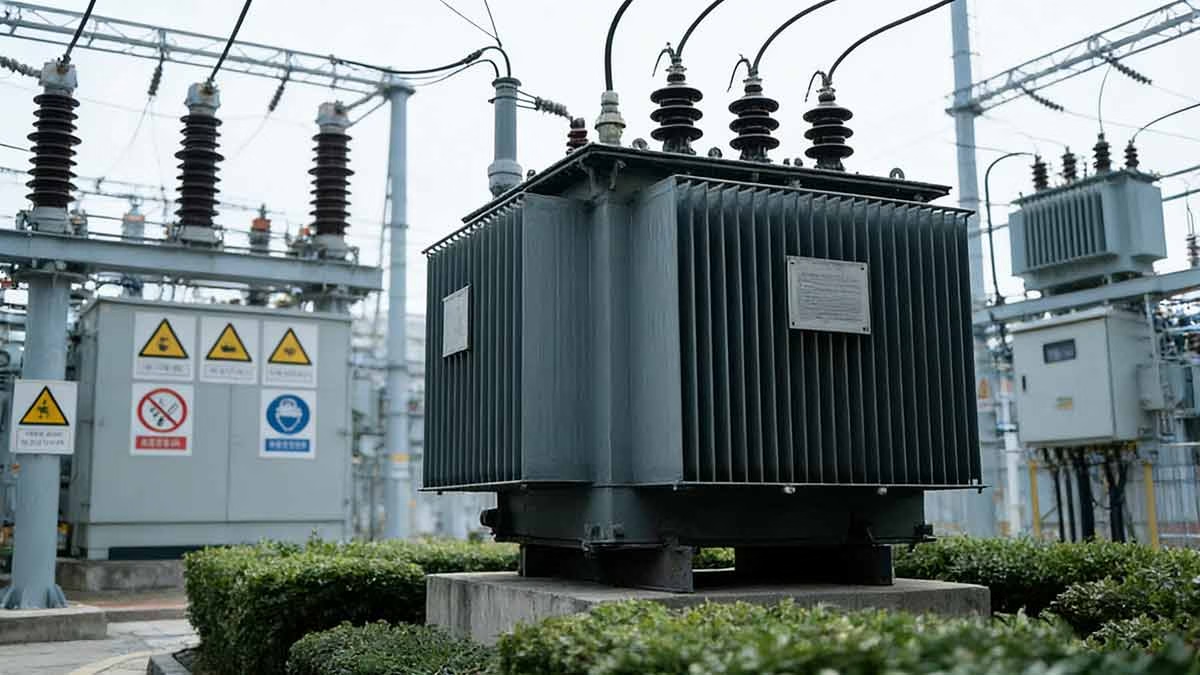
For a city-center project with strict noise regulations, we developed a low-noise transformer design that incorporated a laminated core with reduced magnetic vibration, sound-absorbing insulation, and a ventilated enclosure. The units operated at 48 dB(A)—well below the city’s 55 dB(A) limit—while still meeting IE3 efficiency standards.
Space-Efficient Installations
Urban areas and dense developments often face space constraints, driving demand for compact, versatile transformer designs:
- Compact Pad-Mounted Units: Designed for small footprints (as little as 1.5m x 2m), these transformers fit in tight urban spaces or residential yards.
- Underground Transformers: Installed below ground to free up surface space, ideal for city centers or historic districts where above-ground equipment is prohibited.
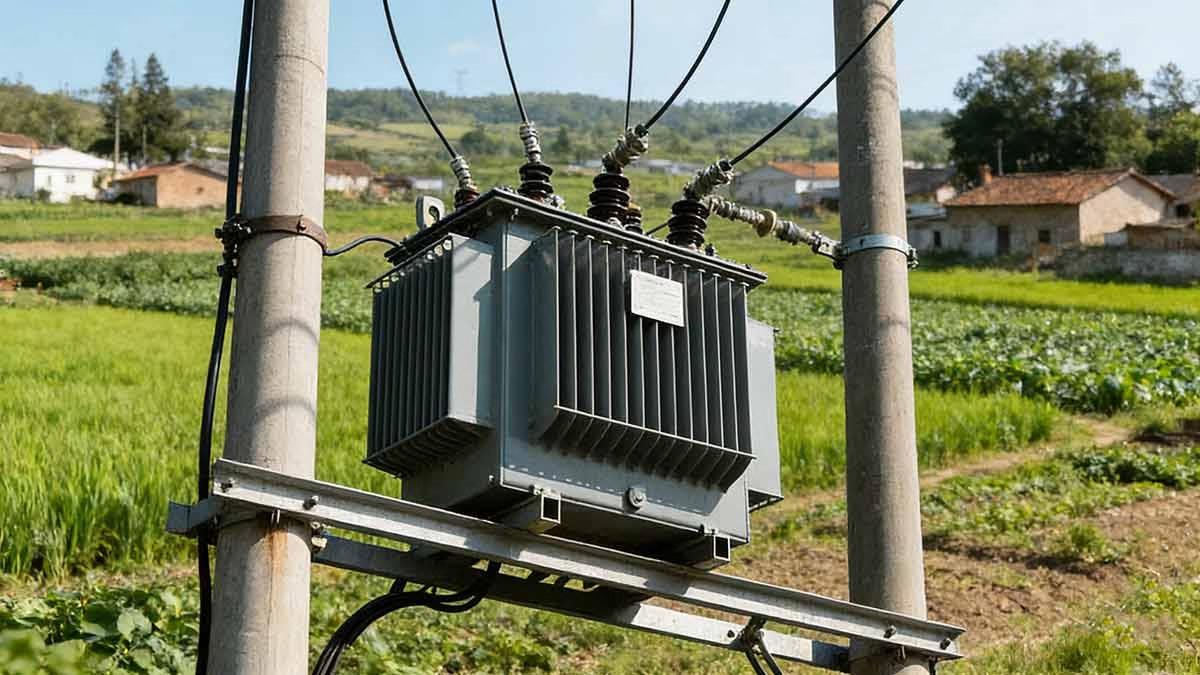
- Pole-Mounted Transformers: Lightweight designs (10-50 kVA) for rural or suburban areas with overhead power lines, eliminating the need for ground-level space.
- Stackable Modular Units: Allow vertical expansion of capacity without increasing footprint, perfect for growing developments.
In a crowded downtown area with zero ground-level space, we installed three underground transformers in a single 3m x 4m vault. The units delivered a combined 1,200 kVA capacity, powering a 10-story office building and adjacent retail spaces—all while remaining completely out of sight.
Smart Grid Integration: How Distribution Transformers Are Evolving for Intelligent Power Systems
The rise of smart grids—digitally connected, data-driven energy networks—has transformed the role of distribution transformers from passive components to active participants in grid management. Modern transformers now feature built-in sensors, communication capabilities, and advanced control systems that enable real-time monitoring, predictive maintenance, and seamless integration with renewable energy sources.
Integrated Sensing & Real-Time Monitoring
Today’s smart transformers are equipped with a suite of sensors that track critical operating parameters, providing utilities with unprecedented visibility into performance:
- Temperature Sensors: Monitor winding, core, and coolant temperatures to prevent overheating and trigger adaptive cooling.
- Oil Quality Sensors: Detect moisture, dissolved gases (e.g., methane, ethylene), and acid levels to identify insulation degradation or internal faults.
- Load & Voltage Sensors: Track power flow, voltage fluctuations, and phase balance to optimize distribution and prevent overloads.
- Vibration & Partial Discharge Sensors: Identify mechanical issues or insulation breakdowns before they lead to failures.
In a smart city project spanning 50 square kilometers, we deployed transformers with integrated sensor suites connected to a central monitoring platform. The system detected a potential winding fault in one unit—indicated by elevated ethylene gas levels and abnormal vibration—allowing maintenance teams to address the issue during a scheduled outage, avoiding an estimated 4-hour blackout for 2,000 residents.
Advanced Communication Protocols
Smart transformers rely on robust communication networks to share data with grid management systems, enabling remote control and coordination:
| Communication Protocol | Key Advantages | Typical Use Cases |
|---|---|---|
| Power Line Communication (PLC) | Uses existing power lines, no additional wiring | Rural areas with limited infrastructure |
| Cellular (4G/5G) | High-speed, real-time data transmission | Urban smart grids requiring low latency |
| Fiber Optic | Secure, high-bandwidth communication | Critical infrastructure (hospitals, data centers) |
| LoRaWAN | Low-power, long-range connectivity | Wide-area rural grid monitoring |
| NB-IoT | Low-cost, low-data-rate communication | Large-scale transformer networks |
For a suburban utility network, we implemented a 5G-enabled transformer communication system that transmitted real-time load data, temperature readings, and fault alerts to a cloud-based management platform. Utilities could remotely adjust voltage levels, balance loads, and schedule maintenance—reducing operational costs by 25% and improving grid reliability by 18%.
Proactive Control & Grid Optimization
Smart transformers are no longer just passive voltage converters—they actively participate in grid management through advanced control systems:
- Dynamic Voltage Regulation: Adjusts output voltage in real time to compensate for fluctuations, ensuring stable power quality for sensitive equipment (e.g., computers, medical devices).
- Fault Detection & Isolation: Identifies faults (e.g., short circuits, ground faults) and automatically isolates affected areas, minimizing outage 范围 and reducing restoration time.
- Power Flow Management: Optimizes the direction and magnitude of power flow, critical for integrating distributed energy resources (DERs) like solar panels and wind turbines.
- Demand Response Integration: Communicates with utility demand response programs to reduce load during peak hours, lowering strain on the grid and cutting costs for end-users.

In a community with 40% solar penetration, we installed smart transformers with power flow management capabilities. During midday solar peaks, the transformers redirected excess energy from residential solar systems to commercial buildings and storage facilities, reducing grid congestion and maximizing the use of renewable energy. This integration increased solar self-consumption by 35% and reduced the community’s reliance on fossil fuel-generated power.
Data Analytics & Predictive Maintenance
The data generated by smart transformers is a goldmine for utilities, enabling data-driven decision-making and predictive maintenance:
- Predictive Fault Detection: Machine learning algorithms analyze sensor data to identify early warning signs of failures (e.g., rising temperatures, abnormal oil chemistry), allowing maintenance to be scheduled before outages occur.
- Load Forecasting: Historical and real-time load data is used to predict future demand, helping utilities plan capacity upgrades and avoid overloading.
- Efficiency Optimization: Analytics tools identify opportunities to reduce losses (e.g., adjusting voltage levels, balancing loads), improving overall grid efficiency.
- Lifecycle Management: Track component wear and performance over time to optimize replacement schedules and extend transformer lifespan.
A large utility company implemented a data analytics platform for its 2,000+ smart transformers. The system reduced unplanned outages by 65% through predictive maintenance, extended average transformer lifespan from 25 to 32 years, and improved grid efficiency by 8%—resulting in annual savings of $2.3 million.
Minimizing Energy Losses: Advanced Technologies Shaping Transformer Design
Energy losses in distribution transformers—both iron losses (no-load losses) and copper losses (load losses)—represent a significant waste of resources. Modern transformer design focuses on minimizing these losses through a combination of advanced materials, precision engineering, and smart operational strategies, delivering tangible economic and environmental benefits.
Iron Loss Reduction: Reimagining Core Design
Iron losses occur when the transformer core is magnetized and demagnetized, even when no load is connected. Advanced core technologies target these losses through material innovation and design optimization:
- Amorphous Metal Cores: As mentioned earlier, these materials reduce iron losses by up to 70% compared to traditional silicon steel, making them ideal for low-load or standby applications.
- Grain-Oriented Silicon Steel with Laser Etching: Precision laser etching creates micro-grooves in the steel, reducing eddy current losses by 10-15% by breaking up magnetic pathways.
- Stacked Core Designs: Layered core laminations with insulated surfaces minimize eddy currents, while optimized core geometry (e.g., circular vs. rectangular) reduces magnetic flux leakage.
In a rural utility project, we replaced 50 aging transformers with amorphous metal core units. The total reduction in iron losses was 12,000 kWh per month—enough to power 10 rural households—with a cumulative carbon footprint reduction of 85 tons per year.
Copper Loss Reduction: Optimizing Conductivity & Design
Copper losses occur due to resistance in the transformer windings when current flows through them. Modern designs address these losses through:
- High-Conductivity Copper Alloys: Advanced copper alloys (e.g., oxygen-free copper) reduce winding resistance by up to 5% compared to standard copper.
- Optimized Winding Geometry: Precision winding techniques (e.g., foil windings, CTC) reduce conductor length and improve current distribution, lowering resistance.
- Temperature-Compensated Design: Winding materials and insulation are selected to maintain conductivity even at high operating temperatures, preventing resistance from increasing.
For an industrial client with 24/7 operations, we installed transformers with high-conductivity copper windings and foil winding configurations. The design reduced copper losses by 18% during continuous operation, translating to $60,000 in annual energy savings and a 20% reduction in cooling requirements.
Next-Generation Insulation Systems
Insulation plays a critical role in minimizing losses and ensuring transformer safety, with modern materials offering improved thermal performance and durability:
- Nomex® Paper Insulation: A high-temperature-resistant material that allows transformers to operate at temperatures up to 220°C, reducing the need for excessive cooling and improving efficiency.
- Biodegradable Ester Fluids: Replace traditional mineral oils with fluids that offer better heat transfer (reducing losses by 5-8%) and are non-toxic, biodegradable, and fire-resistant.
- Gas-Insulated Systems (GIS): Use sulfur hexafluoride (SF6) or dry air as insulation, eliminating the need for liquid coolants and reducing losses in high-voltage applications.
- Vacuum-Pressure Impregnation (VPI): A manufacturing process that ensures uniform insulation coverage, reducing partial discharges and improving long-term reliability.
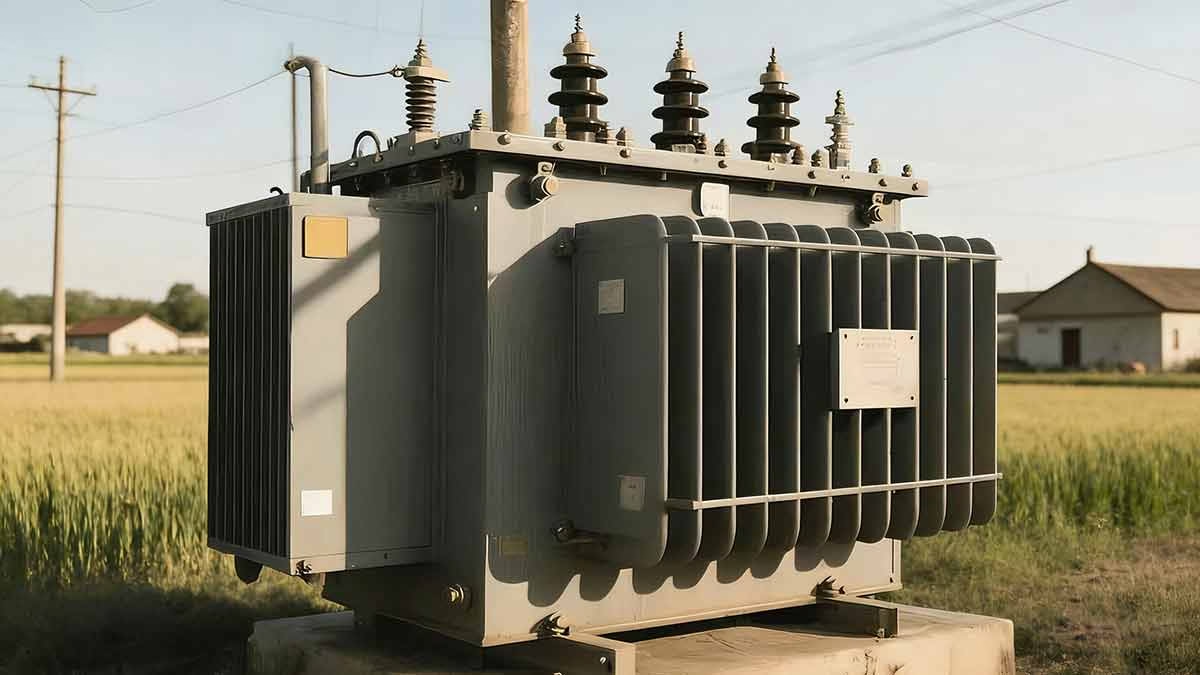
In a transformer installation near a sensitive wetland, we used ester fluid as a coolant. The fluid not only reduced losses by 7% but also eliminated the risk of environmental contamination—biodegrading completely within 30 days if released, compared to mineral oils which can persist for decades.
Smart Operational Strategies for Loss Reduction
Beyond design, operational practices play a key role in minimizing transformer losses:
- Dynamic Rating Systems: Use real-time data (temperature, load, ambient conditions) to adjust transformer capacity, allowing safe operation at higher loads when conditions permit and reducing losses at low loads.
- Load Balancing: Distribute power evenly across three phases to avoid overloading single phases, which increases copper losses.
- Optimal Voltage Tap Setting: Adjust voltage taps to match load conditions, minimizing iron losses at low loads and copper losses at high loads.
- Parallel Transformer Operation: Coordinate multiple transformers to operate at peak efficiency, shutting down or reducing load on underutilized units.
A commercial office park with variable daily loads implemented dynamic rating and load balancing systems for its transformers. The strategies reduced total losses by 22% annually, with the greatest savings achieved during off-hours (35% reduction) when loads were low and iron losses dominated.
Adapting to Dynamic Power Needs: Flexible Distribution Transformer Solutions
The energy landscape is evolving at an unprecedented pace—driven by urbanization, electrification of transportation, and the growth of renewable energy. Distribution transformers must now adapt to fluctuating loads, changing voltage requirements, and the integration of diverse energy sources. Flexible transformer solutions address these challenges through modular design, multi-purpose configurations, and smart adaptability.
Multi-Tap & Voltage-Flexible Designs
Voltage requirements can change over time due to grid upgrades, new connections, or shifts in power sources. Multi-tap transformers eliminate the need for full replacement by offering adjustable voltage ratios:
- On-Load Tap Changers (OLTCs): Allow voltage adjustments while the transformer is in operation, with tap positions ranging from 5 to 32+ settings, enabling precise voltage control for varying loads.
- Off-Load Tap Changers: Provide cost-effective voltage adjustment for applications with infrequent load changes, requiring the transformer to be de-energized during adjustment.
- Wide-Range Voltage Transformers: Designed to handle input voltages spanning 10-25% above or below nominal, ideal for regions with unstable grid voltage or growing power demands.
In a rapidly expanding industrial park, we installed wide-range transformers with OLTCs. As new factories moved in and connected to the grid, the transformers adjusted to voltage changes from 11kV to 13.8kV without replacement—saving the park $150,000 in equipment costs and avoiding 12 hours of downtime per upgrade.
Modular & Scalable Transformer Systems
Modular transformers offer unparalleled flexibility for growing communities and dynamic load profiles, allowing capacity to be added or modified without disrupting service:
| Modular Feature | Key Benefit | Application Example |
|---|---|---|
| Scalable Capacity Modules | Add kVA capacity incrementally (e.g., 250kVA, 500kVA, 750kVA) as demand grows | Residential subdivisions, expanding industrial zones |
| Interchangeable Components | Replace or upgrade parts (windings, cores, cooling systems) without replacing the entire unit | Utilities seeking to improve efficiency without full replacement |
| Configurable Voltage Ratings | Adjust voltage settings by swapping modular tap units | Regions with evolving grid standards |
| Hot-Swappable Modules | Replace faulty components while the transformer remains operational | Critical infrastructure (hospitals, data centers) |
For a suburban community expecting 50% population growth over 10 years, we installed a modular transformer system with 250kVA capacity modules. As new homes were built, we added modules during scheduled maintenance windows—avoiding power outages and ensuring the transformer capacity always matched demand. After 10 years, the system had scaled from 500kVA to 1,250kVA, with zero disruptions to existing residents.
Renewable Energy & Storage Integration
The rise of distributed renewable energy (solar, wind) and energy storage systems has created new challenges for transformers, which must now handle bidirectional power flow, variable output, and power quality issues:
- Bidirectional Power Flow Capability: Enables power to flow from the grid to end-users and back (e.g., excess solar energy fed into the grid), a critical feature for net-zero communities.
- Harmonic Mitigation: Incorporates filters to reduce harmonic distortion caused by inverter-based renewable systems, ensuring power quality meets IEEE 519 standards.
- Energy Storage Compatibility: Designed to work seamlessly with battery storage systems, providing stable power during renewable energy lulls and reducing peak load stress.
- Microgrid Readiness: Enables transformers to operate in standalone microgrid mode, critical for remote areas or communities seeking energy resilience.
In a net-zero neighborhood with 100% solar-powered homes and battery storage, we installed transformers with bidirectional power flow and harmonic mitigation. The units managed variable solar output (from 0 to 100% capacity) and stored excess energy in batteries, delivering stable power to all homes even during extended periods of cloud cover. The transformers also supported microgrid operation, allowing the neighborhood to remain powered during a 6-hour grid outage.
Future-Proof Smart Features
To adapt to ongoing energy transitions, modern transformers are equipped with features that prepare them for future technologies and grid upgrades:
- Open Communication Protocols: Support integration with emerging smart grid technologies (e.g., AI-driven grid management, blockchain-based energy trading).
- Over-The-Air (OTA) Updates: Allow firmware and software upgrades without physical access, ensuring transformers remain compatible with new systems.
- Cybersecurity Measures: Protect against cyber threats with encrypted communication, access controls, and intrusion detection systems—critical as grids become more connected.
- Carbon Footprint Tracking: Monitor and report on energy use and emissions, helping utilities and end-users meet sustainability goals.
A forward-thinking utility company installed future-proof transformers across its service territory, featuring OTA updates and open communication protocols. When the utility adopted an AI-driven grid optimization platform two years later, the transformers were seamlessly integrated without hardware modifications—saving $200,000 in upgrade costs and reducing grid losses by an additional 5%.
Conclusion
Distribution transformers are far more than mere voltage converters—they are the critical link between power generation and end-users, enabling efficient, reliable, and sustainable energy distribution. From advanced core materials and precision winding to smart grid integration and modular design, today’s transformers are engineered to meet the demands of a dynamic energy landscape. As we move toward a more electrified, renewable-powered future, these quiet workhorses will continue to evolve—playing an increasingly vital role in reducing energy waste, enhancing grid resilience, and supporting global sustainability goals. For utilities, industries, and communities alike, investing in modern distribution transformers isn’t just a technical decision—it’s a strategic step toward a more efficient, reliable, and sustainable energy future.
More FAQ About Distribution Transformer
Q: What is a Distribution Transformer and its Core Function in Power Grids?
A: A distribution transformer is a critical electrical component that steps down high-voltage electricity from transmission lines to lower, user-safe voltages (typically 120/240V for residential or 480V for commercial use) for end consumption. Positioned close to users—either pole-mounted, pad-mounted, or in substations—it ensures stable power delivery by minimizing energy losses (operating at over 98% efficiency) and adapting to fluctuating load demands. Its core role bridges the gap between bulk power generation and localized use, making it indispensable for grid reliability and energy accessibility.
Q: Oil-Immersed vs. Dry-Type Distribution Transformers: Which to Choose?
A: The selection hinges on application requirements. Oil-immersed transformers use insulating oil for cooling and insulation, excelling in outdoor, high-capacity settings (e.g., industrial areas) due to superior heat dissipation and durability. Dry-type (cast resin) models, by contrast, are fire-safe and low-maintenance, ideal for indoor installations, data centers, or fire-sensitive environments like hospitals. Key tradeoffs include cost (oil-immersed is more economical for large capacities) and environmental impact (dry-type avoids oil leakage risks, aligning with green building standards).
Q: How to Calculate the Correct kVA Rating for a Distribution Transformer?
A: Sizing a transformer’s kVA (kilovolt-ampere) rating requires assessing total connected load, future expansion needs, and efficiency losses. The formula involves dividing the total expected power demand (in watts) by 1000 and adjusting for a load factor (typically 0.8 for residential/commercial use) to avoid overheating or inefficiency. For example, a 100kW load with a 0.8 load factor requires a 125kVA transformer. Utilities also consider peak demand periods (e.g., summer AC use) to ensure stable voltage output.
Q: What Role Do Distribution Transformers Play in Renewable Energy Integration?
A: As distributed energy resources (solar, wind) proliferate, distribution transformers must enable bidirectional energy flow—critical for feeding excess renewable power back to the grid. Modern models are designed for smart grid compatibility, integrating sensors to monitor voltage fluctuations and prevent grid instability from intermittent renewable generation. In Europe, transformers are a cornerstone of climate goals, with grid expansion projects relying on advanced transformers to handle increased renewable penetration.
Q: What Are Smart Distribution Transformers and Their Key Benefits?
A: Smart distribution transformers integrate IoT sensors, digital twins, and AI-driven monitoring to enable real-time load tracking, predictive maintenance, and remote control. Digital twins simulate operating conditions to detect faults (e.g., winding overheating) before they cause outages, reducing maintenance costs by up to 30%. These technologies also optimize grid efficiency by adjusting voltage based on demand, supporting the transition to a more flexible, decentralized power system.
Q: What Is the Global Distribution Transformer Market Outlook (2025-2030)?
A: The market is projected to grow from $21.4 billion (2025) to $29.6 billion (2030) at a CAGR of 6.7%. Key drivers include grid modernization in North America/Europe, rural electrification in emerging economies (Asia Pacific, Africa), and renewable energy integration. Asia Pacific dominates demand due to rapid urbanization and industrialization, while manufacturers like Hitachi and JST are expanding production capacity (e.g., Hitachi’s $22.5M Virginia plant) to meet U.S. electrification needs.
Q: What Maintenance Practices Extend the Lifespan of Distribution Transformers?
A: Proactive maintenance includes regular oil analysis (for oil-immersed models) to detect contamination, temperature monitoring to prevent overheating, and insulation testing to avoid breakdowns. Smart transformers use predictive AI to alert operators to potential issues (e.g., abnormal vibration) before failures occur. Following manufacturer guidelines, utilities typically replace transformers every 25-30 years, though aging infrastructure in developed countries is accelerating replacement cycles.
Q: What Are the Key IEC Standards for Distribution Transformers?
A: The International Electrotechnical Commission (IEC) sets global standards for distribution transformer safety, efficiency, and performance. Key standards include IEC 60076 (for oil-immersed transformers) and IEC 60076-11 (for dry-type models), covering insulation levels, temperature rise limits, and test methods. European regulations also mandate compliance with eco-design directives, requiring transformers to minimize environmental impact throughout their lifecycle—from raw material sourcing to end-of-life recycling.
Q: How Do Distribution Transformers Impact Energy Costs for Utilities and Consumers?
A: High-efficiency transformers reduce no-load and load losses, directly lowering electricity costs. The DOE’s 2024 standards are expected to save U.S. utilities $824 million annually, with these savings often passed to consumers via lower rates. Conversely, undersized or inefficient transformers waste energy as heat, increasing operational costs and raising consumer bills. Investing in high-efficiency models (e.g., amorphous alloy cores) yields long-term savings despite higher upfront costs.
Q: What Are Pad-Mounted vs. Pole-Mounted Distribution Transformers?
A: Pad-mounted transformers are ground-installed in weatherproof enclosures, common in urban areas, commercial zones, and industrial parks. They handle higher capacities (up to 5000 kVA) and are safer for populated areas. Pole-mounted transformers are mounted on utility poles, used for rural or low-load residential areas due to lower installation costs and space efficiency. Selection depends on load density, space availability, and safety requirements (e.g., pad-mounted for fire-sensitive locations).
Q: What Are the Key Materials Used in Modern Distribution Transformers?
A: Core materials include grain-oriented electrical steel (GOES) for traditional high-efficiency models and amorphous alloy for ultra-low-loss designs. Windings use copper alloys for enhanced conductivity and mechanical strength, with nanotechnology-based insulation materials that self-repair minor damage. Insulating oils (for oil-immersed models) are increasingly biodegradable, reducing environmental risk. Material innovation is critical for improving efficiency and sustainability.
Q: What Is the Role of Distribution Transformers in Data Centers?
A: Data centers—“energy hogs” due to AI and cloud computing—rely on dry-type distribution transformers for fire safety and reliability. These transformers deliver stable, low-voltage power to servers and cooling systems, with high-efficiency designs (e.g., amorphous cores) reducing energy waste. Smart monitoring ensures real-time load adjustment, preventing outages that could disrupt critical digital services. The surge in data center construction is a key driver of dry-type transformer demand.