
Pad mounted transformer box enclosures that truly excel marry practical performance with urban visual harmony. They shield critical electrical infrastructure while integrating so seamlessly into cityscapes that they feel like natural components of the environment. Exceptional design prioritizes safety, long-term durability, easy maintenance access, and visual charm—all working together to elevate urban living spaces.
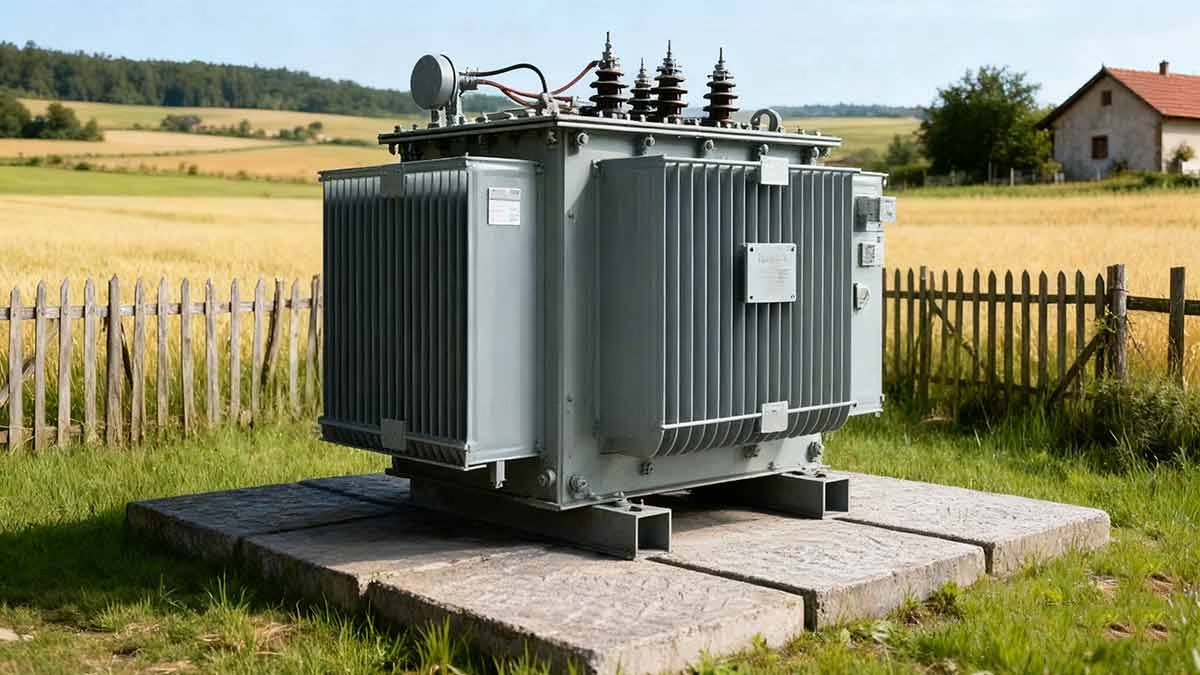
Have you ever paused to notice how transformer boxes are evolving beyond their utilitarian roots? Today’s enclosures are redefining urban infrastructure, balancing technical rigor with aesthetic appeal to meet the demands of modern cities. Let’s dive into the innovative world of transformer enclosure design and explore how these essential units are enhancing our urban landscapes.
Contents
hide
Urban-Harmonized Power: The Seamless Integration of Transformer Enclosures in Cityscapes
We’ve all walked past an unsightly electrical box and thought, “Why does this have to ruin the view?” But what if these necessary structures could actually enhance city streets rather than detract from them?
Modern transformer enclosure design centers on urban integration, leveraging creative camouflage, artistic flourishes, and cutting-edge materials to blend with their surroundings. This approach doesn’t just boost city aesthetics—it also fosters greater public acceptance of essential infrastructure.
Let’s explore the key strategies making transformer boxes more city-friendly:
Camouflage Engineering: Hiding in Plain Sight
Designers are reimagining how to minimize the visual footprint of transformer enclosures without compromising functionality.
Core Tactics:
- Hue matching with adjacent buildings and landscapes
- Textured surfaces that mirror nearby architectural elements
- Light-reflective materials that soften visibility in different lighting
- Contoured shapes that complement urban geometry
Artistic Transformation: From Functional to Fabulous
Cities worldwide are turning transformer enclosures into canvases for creativity, turning mundane boxes into community landmarks.
Creative Directions:
- Murals celebrating local traditions, landmarks, or cultural narratives
- 3D sculptural elements that redefine the enclosure’s shape
- Interactive installations that engage pedestrians (e.g., light-responsive surfaces)
- Collaborative art projects with local artists and residents
Green Integration: Nature-Infused Designs
Incorporating natural elements helps transformer boxes blend effortlessly into parks, greenways, and tree-lined streets.
Eco-Friendly Approaches:
- Vertical gardens with native climbing plants (selected for low maintenance)
- Enclosures shaped to resemble natural boulders or tree stumps
- Integration with existing landscaping (e.g., nestled among shrubs or flower beds)
- Living roofs that provide insulation while adding greenery
Multifunctional Innovation: Beyond Housing Transformers
Forward-thinking designs are 赋予 transformer enclosures additional purposes, maximizing their value in space-constrained cities.
Dual-Use Solutions:
- Built-in bench seating for pedestrian areas
- Integrated bike racks for urban commuters
- Information hubs with QR codes linking to local attractions or city services
- Small-scale planters for urban gardening initiatives
| Design Strategy | City Impact | Engineering Requirement |
|---|---|---|
| Camouflage Engineering | Reduced visual intrusion | Preserving ventilation and heat dissipation |
| Artistic Transformation | Enhanced public spaces and community pride | Ensuring safety labels remain visible |
| Green Integration | Improved air quality and biodiversity | Managing plant growth around access points |
| Multifunctional Innovation | Optimized use of urban space | Balancing additional features with structural integrity |
I recently led a project in a vibrant downtown area where local businesses initially pushed back against new transformer installations—they feared the boxes would harm their storefront visibility. This challenge prompted a complete rethink of our design approach.
We partnered with a local muralist to create custom enclosures that reflected the neighborhood’s unique character. One enclosure was designed as a miniaturized tribute to a historic theater that once stood on the block, while another featured a vibrant scene of the city’s riverfront at sunset. The results exceeded expectations: businesses not only withdrew their objections but the enclosures became unexpected tourist attractions. I spotted visitors taking photos with them, and local tour guides even added them to their routes as examples of innovative urban design.
Another memorable project was in a city park where we needed to install a large transformer. Instead of the standard industrial green box, we crafted an enclosure that resembled a weathered sandstone boulder. Using a specialized textured concrete mix and adding small crevices for moss growth, the unit blended so naturally that park-goers often sat on it for picnics or let their kids climb around it—completely unaware of the critical equipment inside.

Of course, these creative designs require careful balancing. When adding plants, we must ensure they don’t block ventilation or access panels. With artistic designs, maintenance crews need clear visibility of safety markings and easy access to controls. For multifunctional units, we rigorously test weight distribution, heat management, and safety to ensure both the transformer and additional features perform reliably.
As cities grow denser, the need for such integrated designs will only increase. The future of transformer enclosures lies in solutions that don’t just “hide” infrastructure but actively contribute to the urban fabric—proving that functionality and beauty can coexist seamlessly.
Safety Meets Style: The Craft of Designing Protective Transformer Enclosures
Have you ever wondered how transformer boxes safeguard our power supply while withstanding curious children, accidental impacts, and deliberate vandalism? It’s a delicate dance between robust protection and aesthetic appeal—one that modern design is mastering with remarkable ingenuity.
Today’s top-tier transformer enclosures combine rugged security features with thoughtful design elements that complement urban environments. They use durable materials, tamper-resistant mechanisms, and clever engineering to protect vital equipment—all while avoiding the “fortress” look that clashes with cityscapes.
Let’s explore how safety and style converge in contemporary transformer enclosure design:
Material Innovation: Strong Yet Visually Pleasing
The choice of materials is foundational to balancing protection and aesthetics.
Top Selections:
- High-tensile aluminum alloys (lightweight yet impact-resistant)
- Fiber-reinforced polymer composites (corrosion-proof and customizable)
- Brushed stainless steel (sleek finish with natural resistance to wear)
- Textured thermoplastics (moldable into diverse shapes and colors)
Tamper-Resistant Design: Secure Without Being Intrusive
Modern enclosures prevent unauthorized access while maintaining a clean, unobtrusive appearance.
Key Security Features:
- Concealed hinge systems and flush-mount locks
- Smooth, non-climbable surfaces (discouraging vandalism)
- Scratch-resistant and graffiti-proof coatings
- Break-resistant viewing windows (for monitoring without opening)
Ventilation Solutions: Cool and Discreet
Proper airflow is critical for transformer performance, but vents can be security vulnerabilities—so designers are reimagining how to integrate them.
Innovative Approaches:
- Baffled vent systems (preventing debris and tampering while allowing airflow)
- Integrated heat sinks (dispersing heat without visible vents)
- Smart breathable membranes (blocking moisture and dust while enabling air exchange)
- Thermally responsive louvers (opening only when cooling is needed)
Modular Customization: Adapting to Diverse Settings
One-size-fits-all designs don’t work in cities with varied architectural styles—modular systems offer flexibility.
Customization Options:
- Interchangeable exterior panels (easily updated for design consistency)
- Scalable dimensions (adapting to different transformer sizes)
- Versatile mounting systems (for sidewalks, parks, or building exteriors)
- Color-matching to local design guidelines
| Design Aspect | Safety Benefit | Aesthetic Consideration |
|---|---|---|
| Material Innovation | Longevity and resistance to damage | Customizable textures and finishes |
| Tamper-Resistant Design | Prevention of unauthorized access | Sleek, unobtrusive profiles |
| Ventilation Solutions | Protection from overheating | Hidden or integrated airflow systems |
| Modular Customization | Adaptability to diverse environments | Consistency with local architecture |
A few years ago, we worked on a project in a historic district where preserving the 19th-century aesthetic was non-negotiable—yet the area needed upgraded transformers to meet growing power demands. The local preservation society rejected our initial industrial designs, so we went back to the drawing board.
Our solution? Enclosures modeled after Victorian-era gas lamps. We used modern, corrosion-resistant materials but crafted them to mimic cast iron, adding ornate detailing typical of the period. The “lamp” tops concealed ventilation systems, while the base housed the transformer. The result was a design that met all safety and performance standards while blending seamlessly with the district’s historic charm—local historians even praised it for enhancing the area’s authenticity.
Another challenging project was a beachfront promenade where enclosures needed to withstand saltwater corrosion, strong winds, and late-night vandalism. We developed a custom composite material that repels salt and resists impact, then shaped the enclosures to resemble large seashells. The spiral patterns weren’t just decorative—they made climbing difficult and dispersed heat naturally. Beachgoers often mistook them for art installations, which was a testament to their successful integration.
Recent innovations have included embedding smart security features into enclosure designs. In a university campus project, we created enclosures that double as interactive kiosks—displaying campus maps and event info on touchscreens while housing transformers. The screens also serve as alarm triggers: any attempt to tamper with the enclosure sends an immediate alert to campus security.
The key lesson? Safety always comes first, but aesthetics don’t have to be an afterthought. By approaching design as a holistic challenge—balancing protection, functionality, and visual appeal—we can create transformer enclosures that serve cities while enhancing them.
Weather-Proof Champions: Safeguarding Urban Power Through Every Season
Have you ever stopped to admire how transformer boxes endure scorching heatwaves, freezing blizzards, torrential rains, and hurricane-force winds—all while keeping our power on? These unsung heroes of the electrical grid are engineered to withstand Mother Nature’s worst, thanks to advanced weather-proofing technologies and design.

Weather-resistant transformer enclosures use cutting-edge materials and engineering to protect critical equipment in extreme conditions. They incorporate superior insulation, water-tight seals, and adaptive temperature regulation systems—ensuring reliable power distribution no matter what the weather brings.
Let’s explore the technologies that make these weather-proof champions so resilient:
Heat Management: Staying Cool When Temperatures Rise
Urban heat islands can push temperatures well above rural areas, making effective cooling essential for transformer performance.
Cooling Solutions:
- Passive thermal regulation (double-wall construction with air gaps)
- Reflective exterior coatings that reduce solar heat absorption
- Low-energy active cooling systems (activated only during extreme heat)
- Heat-dissipating fins integrated into the enclosure’s design
Water and Moisture Protection: Keeping the Elements Out
Water damage is one of the biggest threats to electrical equipment—modern enclosures are engineered to stay dry in even the wettest conditions.
Waterproofing Technologies:
- Elevated foundations that prevent floodwater ingress
- Hermetic sealing systems for critical access points
- Pressure-equalizing valves that block moisture while allowing air flow
- Drainage channels that redirect rainwater away from the enclosure
Cold Weather Resilience: Performing in the Freeze
Sub-zero temperatures, ice, and snow can cripple unprotected transformers—weather-proof enclosures are designed to thrive in cold climates.
Cold-Proof Features:
- High-performance insulation that maintains optimal operating temperatures
- Energy-efficient heating elements for critical components (activated on demand)
- Materials resistant to thermal shock and contraction
- Ice-shedding surfaces that prevent buildup on vents and access panels
Long-Term Durability: Built to Withstand the Test of Time
Weather-proofing isn’t just about surviving extreme events—it’s about enduring years of daily exposure to the elements.
Durability Enhancements:
- UV-resistant materials that prevent fading and degradation
- Corrosion-proof coatings for high-humidity or coastal environments
- Impact-resistant exteriors that withstand hail and debris
- Self-healing surface treatments that repair minor scratches and cracks
| Weather Challenge | Protection Strategy | Urban Benefit |
|---|---|---|
| Extreme Heat | Passive cooling + reflective coatings | Uninterrupted power during heatwaves |
| Heavy Rain/Flooding | Elevated design + hermetic seals | Reduced outages during storms |
| Freezing Temperatures | Insulation + on-demand heating | Reliable service in winter months |
| Long-Term Exposure | UV/corrosion-resistant materials | Lower maintenance costs over time |
I led a project in a coastal city that faced a trifecta of weather challenges: sweltering summers, hurricane-force winds and rain, and saltwater corrosion. The city needed transformer enclosures that could withstand all three—without compromising on aesthetics.
We designed a double-wall enclosure with an air gap for passive cooling, reducing the need for energy-consuming fans. The exterior was coated with a reflective, salt-resistant finish that bounced sunlight and repelled corrosion. For hurricane protection, we added reinforced hinges and a raised base with drainage channels that directed water away from critical components. We even tested the design in a wind tunnel to simulate category 3 hurricane conditions—with impressive results.
During a particularly severe hurricane season, the city experienced widespread flooding and power outages—except in the neighborhoods with our new enclosures. One unit was submerged for over six hours when a nearby levee breached, but the hermetic seals kept the internal components dry. The transformers continued operating, providing power to emergency services and homes in the area.
In a northern city prone to brutal winters, we tackled a different challenge: ensuring transformers functioned reliably in temperatures as low as -30°C (-22°F). We developed an enclosure with aerogel insulation (one of the most efficient insulators available) and a smart heating system that activated only when internal temperatures dropped below a critical threshold. This not only kept the transformers running but also minimized energy waste.
During a record-breaking cold snap, our enclosures outperformed older units—keeping power flowing while hundreds of other transformers across the city failed. The local fire department, which relied on the power for their stations, praised the design for enabling them to respond to emergencies without interruption.
As climate change brings more extreme and unpredictable weather, the importance of weather-proof transformer enclosures continues to grow. We’re now experimenting with adaptive materials that change properties based on conditions—e.g., polymers that become more insulating in cold weather and more heat-dissipating in hot weather. These innovations are helping cities build more resilient power grids that can withstand whatever Mother Nature throws their way.
Disguised in Plain Sight: Creative Ways Cities Camouflage Transformer Enclosures
Have you ever walked past a piece of street art, a decorative rock, or a vintage-style kiosk—only to realize later it was actually a transformer enclosure? Cities are getting clever with hiding essential infrastructure, turning once-unsightly boxes into assets that enhance public spaces.
From artistic transformations to functional 伪装,urban planners and designers are reimagining transformer enclosures as integral parts of the cityscape. These creative approaches don’t just hide infrastructure—they add value, character, and utility to urban environments.
Let’s explore some of the most innovative camouflage techniques being used today:
Artistic Makeovers: Transforming Boxes into Masterpieces
Turning transformer enclosures into art is one of the most popular and effective camouflage strategies—benefiting both cities and local artists.
Creative Approaches:
- Murals depicting local history, wildlife, or community stories
- 3D optical illusions that make the box appear to blend into its surroundings
- Collaborative art projects where residents contribute to the design
- Rotating art installations that keep the enclosure fresh and engaging
Nature-Inspired Camouflage: Blending with the Outdoors
In parks, greenways, and residential areas, enclosures are being designed to look like natural elements—disappearing into the landscape.
Eco-Friendly Disguises:
- Vertical gardens with low-maintenance native plants
- Artificial rock formations (crafted to match local geology)
- Tree trunk or stump-shaped enclosures for wooded areas
- Integration with planters or flower beds in urban plazas
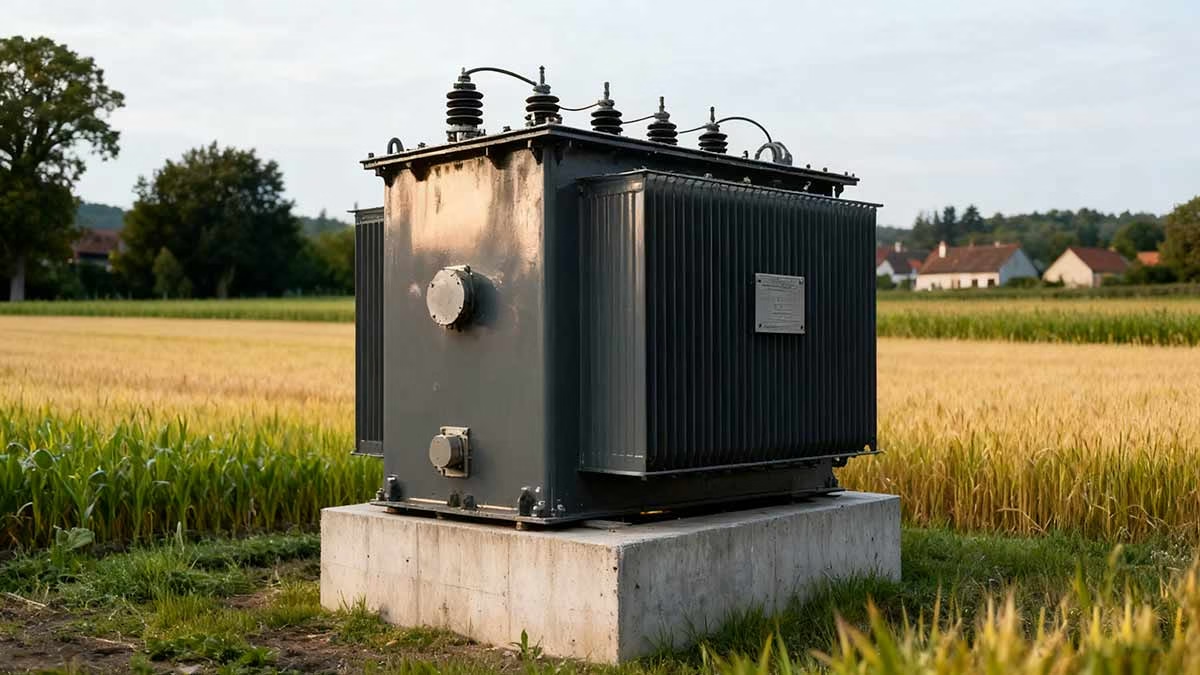
Functional Camouflage: Disguising as Useful Street Furniture
Why hide a transformer box when you can make it serve a second purpose? Functional camouflage maximizes space while minimizing visual impact.
Multifunctional Designs:
- Information kiosks with maps, event calendars, or public Wi-Fi access
- Bike repair stations with integrated tools and air pumps
- Public seating with weather-resistant cushions
- Dog waste bag dispensers or recycling bins attached to the enclosure
Historical and Thematic Camouflage: Matching Local Character
In historic districts or areas with distinct themes, enclosures are designed to reflect the neighborhood’s unique identity.
Thematic Approaches:
- Vintage-style designs (e.g., 1950s diner-inspired boxes, colonial-era post office replicas)
- Cultural motifs that honor the area’s heritage (e.g., ethnic patterns, traditional art styles)
- Industry-inspired designs for former factory districts (e.g., gear-shaped enclosures, metal textures)
- Coastal-themed designs (e.g., lighthouse replicas, wave-patterned surfaces)
| Disguise Method | Urban Benefit | Engineering Consideration |
|---|---|---|
| Artistic Makeovers | Fosters community pride and cultural expression | Ensuring safety warnings remain visible |
| Nature-Inspired Camouflage | Enhances green spaces and biodiversity | Managing plant growth around vents |
| Functional Camouflage | Maximizes utility of urban space | Balancing additional features with equipment access |
| Historical/Thematic Camouflage | Preserves neighborhood character | Meeting modern safety standards while maintaining aesthetic |
I worked on a project in a historic downtown area where the city wanted to upgrade its power grid without disrupting the 1800s-era architecture. The challenge was installing high-capacity transformers in a district where even minor changes to the streetscape required approval from a preservation board.
Our solution? Enclosures designed to look like vintage newspaper stands from the early 1900s. We used modern, durable materials but added details like faux wood grain, metal accents, and small “display windows” that showcased local event flyers. The transformer’s ventilation system was hidden behind a decorative lattice, and access panels were disguised as drawer fronts. The preservation board approved the design unanimously, and the enclosures quickly became beloved features of the district—tourists often stop to take photos, unaware they’re looking at critical electrical infrastructure.
In a newly developed eco-park, we faced a different challenge: hiding large transformers in a space designed to feel “wild” and natural. We created custom enclosures shaped like boulders, using a concrete mix that mimicked the texture and color of the park’s native rock formations. We added small crevices for moss and lichen growth, and positioned the “boulders” among real rocks and shrubs. The result was so convincing that park rangers reported visitors sitting on them, climbing around them, and even using them as landmarks—completely oblivious to the transformers inside.
Another innovative project was in a tech-focused city that wanted to integrate smart features into public spaces. We designed transformer enclosures that doubled as interactive information hubs: touchscreens displayed real-time transit updates, air quality data, and local news, while the enclosure itself housed the transformer. The design balanced public access (for using the touchscreen) with security (for protecting the equipment) by using a dual-layer system—an outer shell for the kiosk and a locked inner compartment for the transformer.
These creative camouflage strategies prove that infrastructure doesn’t have to be eyesores. By thinking outside the box (pun intended), designers and engineers can turn necessary equipment into assets that enhance urban life—showing that functionality and creativity can go hand in hand.
The Silent Protectors: How Modern Transformer Enclosures Safeguard Urban Power
What keeps our cities powered through storms, accidents, and vandalism? It’s the transformer enclosures we walk past every day—unassuming, yet engineered to protect the critical equipment that keeps our lights on, our homes heated, and our businesses running.
Modern transformer enclosures are far more than metal boxes—they’re sophisticated systems integrating advanced materials, smart technology, and innovative design to shield electrical equipment from threats. They operate quietly in the background, ensuring reliable power while remaining largely invisible to the public.
Let’s explore the features that make these silent protectors so effective:
Smart Monitoring Systems: 24/7 Surveillance for Equipment Health
Today’s enclosures are equipped with intelligent sensors that provide real-time data on operating conditions, enabling proactive maintenance and rapid response to issues.
Key Monitoring Features:
- Temperature and humidity sensors that alert to abnormal conditions
- Vibration detectors that identify tampering or equipment wear
- Power usage monitors that optimize performance
- Remote access capabilities for technicians to check status without on-site visits
Advanced Material Science: Protection That Lasts
The materials used in modern enclosures are engineered for maximum durability, resistance to damage, and long-term performance.
Material Innovations:
- Impact-resistant composites that withstand collisions and vandalism
- Fire-retardant coatings that slow flame spread
- Self-healing polymers that repair minor scratches and cracks
- Corrosion-resistant alloys for harsh environments (coastal, industrial)
Environmental Control: Creating the Ideal Operating Environment
Maintaining stable internal conditions is critical for transformer longevity—enclosures are designed to regulate temperature, humidity, and air quality.
Control Mechanisms:
- Precision cooling systems that adjust to load and ambient temperature
- Dehumidifiers that prevent moisture buildup and corrosion
- Positive pressure systems that keep dust and contaminants out
- Air filtration that removes pollutants in industrial areas
Modular and Adaptable Design: Ready for the Future
As power needs evolve, enclosures must be able to adapt—modular designs allow for easy upgrades, expansions, and maintenance.
Adaptable Features:
- Interchangeable components that simplify repairs
- Scalable designs that accommodate larger transformers or additional equipment
- Quick-access panels that reduce maintenance time and disruption
- Universal mounting systems that work in diverse locations
| Protection Aspect | Benefit to Power Supply | Urban Impact |
|---|---|---|
| Smart Monitoring | Early detection of issues prevents outages | Fewer unexpected power disruptions for residents |
| Advanced Materials | Longer equipment lifespan and reduced damage | Lower maintenance costs and less street disruption |
| Environmental Control | Consistent performance in all conditions | Reliable power regardless of external environment |
| Modular Design | Easy upgrades to meet growing demand | Infrastructure that evolves with city needs |
I led a project in a flood-prone urban district where frequent power outages were caused by water damage to transformers. The city needed a solution that could withstand rising water while keeping the power on—even during severe storms.
Our team designed an “amphibious” transformer enclosure with a watertight seal that activated automatically when water levels rose. The enclosure’s base featured a floating platform that lifted the transformer as water levels increased, keeping critical components dry. We also added drainage channels and a pressure-equalizing valve to prevent water from being forced inside.
The design was put to the test during a major storm that flooded much of the district. While other areas lost power for days, the neighborhood with our enclosures maintained a steady supply. The transformers continued operating even when submerged for over eight hours, and the local drainage system—powered by the same grid—was able to pump water out more quickly. Our enclosure had inadvertently become part of the city’s flood resilience strategy.
In a high-crime neighborhood plagued by transformer vandalism and theft, we developed a security-focused enclosure that combined toughness with deterrence. The exterior was made of a composite material so strong it could withstand sledgehammer blows, and the surface was treated with a non-toxic, unpleasant-to-touch coating that discouraged climbing. We added motion sensors, hidden cameras, and a DNA spray system that marked intruders with an invisible, traceable code.
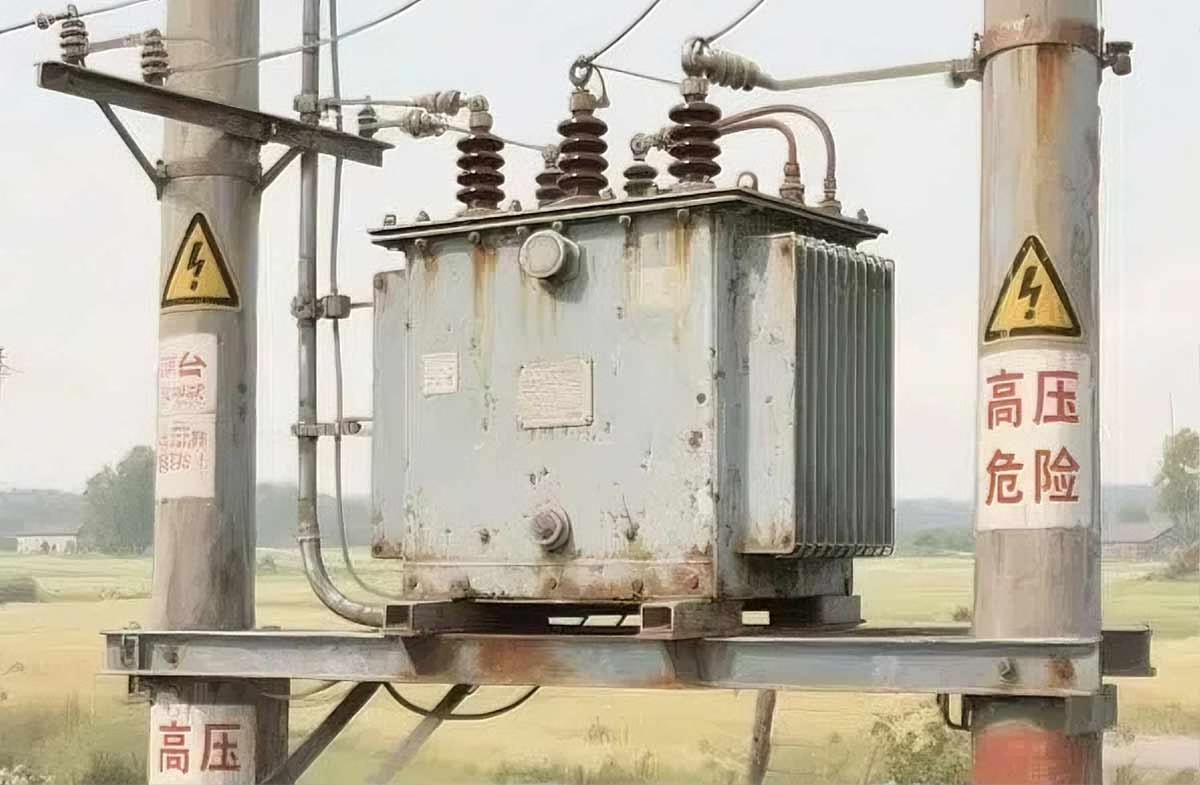
The results were dramatic: vandalism incidents dropped by 92% in the first six months. The enclosures not only protected the transformers but also contributed to a safer neighborhood—residents reported feeling more secure knowing the infrastructure was protected, and crime rates in the immediate area decreased.
Recent innovations have focused on integrating enclosures with smart city initiatives. In one project, we designed enclosures that double as air quality monitoring stations, collecting data on pollutants and particulate matter. The information is shared with the city’s environmental department, helping to identify pollution hotspots and improve public health. The enclosures also display real-time air quality ratings on a small screen, empowering residents to make informed decisions about outdoor activities.
Looking ahead, we’re exploring self-diagnosing enclosures that can detect potential issues, order replacement parts automatically, and guide technicians through repairs—minimizing downtime. We’re also researching AI-powered systems that analyze weather data, power usage patterns, and equipment performance to predict and prevent failures before they occur.
These silent protectors are evolving from passive boxes to active participants in urban infrastructure. They’re not just protecting power—they’re enhancing the quality of life in cities by ensuring reliability, safety, and sustainability.
Conclusion
Transformer enclosures play a critical role in modern urban environments—far beyond simply housing electrical equipment. The most effective designs balance uncompromising functionality with thoughtful aesthetics, integrating seamlessly into cityscapes while protecting vital infrastructure. By prioritizing safety, weather resilience, creative camouflage, and community value, these enclosures enhance urban spaces rather than detracting from them.
As cities grow and evolve, the demand for transformer enclosures that meet both technical and aesthetic needs will only increase. The future lies in designs that are smarter, more adaptable, and more integrated—turning necessary infrastructure into assets that contribute to safer, more beautiful, and more functional urban environments. Whether disguised as art, integrated with nature, or serving dual purposes, modern transformer enclosures prove that utility and beauty can coexist harmoniously in our cities.