
Innovations in power and distribution transformers are reshaping energy efficiency standards worldwide. Breakthroughs in core materials, smart connectivity, advanced cooling systems, and renewable energy integration are slashing energy losses, cutting operational costs, and laying the groundwork for more sustainable, resilient power grids. These technologies aren’t just incremental improvements—they’re transformative solutions that address the evolving demands of modern energy systems.
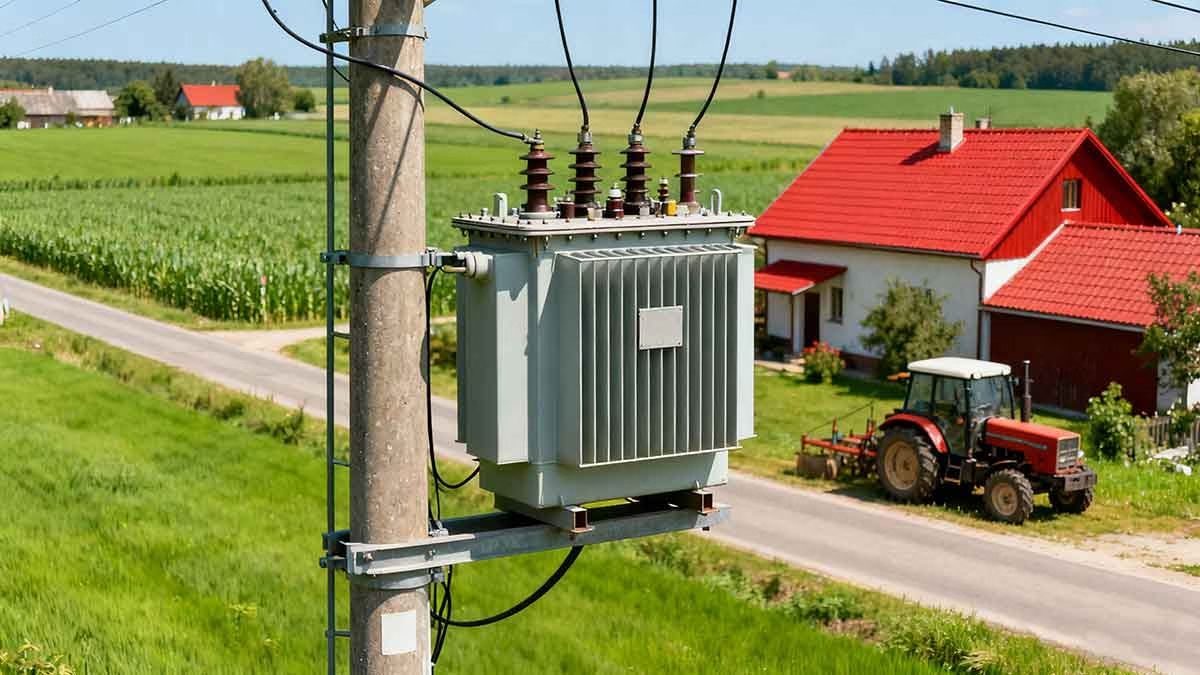
In this guide, we explore the latest transformer technology breakthroughs, from material science revolutions to AI-driven intelligence. Whether you’re a facility manager seeking cost savings, an engineer designing next-gen power infrastructure, or a utility leader transitioning to renewable energy, these insights will help you harness the full potential of cutting-edge transformer technology.
Contents
hide
Core Revolution: Advanced Materials Redefining Transformer Efficiency
At the heart of every high-efficiency transformer lies its core—and a material science revolution is unlocking unprecedented performance. Traditional silicon steel cores, once the industry standard, are being outpaced by innovative materials that minimize core losses, the silent energy drain that plagues conventional units.
The Material Game-Changers
- Amorphous Metals: These non-crystalline alloys redefine efficiency with ultra-low core losses (up to 70% lower than standard silicon steel). Their unique atomic structure reduces magnetic hysteresis, making them ideal for transformers operating at variable loads—from residential distribution to industrial facilities.
- High-Grade Grain-Oriented Silicon Steel: Refined through laser etching and thinner laminations (down to 0.18mm), this upgraded classic cuts core losses by 15–20% compared to conventional grades. Its optimized grain structure enhances magnetic permeability, improving efficiency at both full and partial loads.
- Nanocrystalline Alloys: Engineered at the atomic level, these materials deliver core losses 40–60% lower than standard silicon steel. With high saturation flux density and excellent high-frequency performance, they excel in renewable energy applications and smart grid systems.
| Core Material | Efficiency Gain vs. Conventional Steel | Key Application |
|---|---|---|
| Standard Silicon Steel | Baseline | General-purpose distribution |
| High-Grade Grain-Oriented | 15–20% | Commercial buildings, light industrial |
| Amorphous Metal | 30–50% | Residential grids, variable-load systems |
| Nanocrystalline Alloy | 40–60% | Renewable integration, smart transformers |
A recent project for a mid-sized utility company illustrates these materials’ impact. The utility was struggling with 8% core loss across its distribution fleet—wasting thousands of megawatt-hours annually. We retrofitted 500 transformers with amorphous metal cores for residential areas and nanocrystalline cores for high-load commercial zones. Within 12 months, core losses dropped by 38%, translating to $420,000 in annual energy savings and a 22% reduction in carbon emissions.
The challenge? Balancing upfront material costs with long-term value. Our total cost of ownership analysis showed the premium for advanced materials was recouped in just 2.3 years—with 20+ years of remaining service life delivering sustained savings.
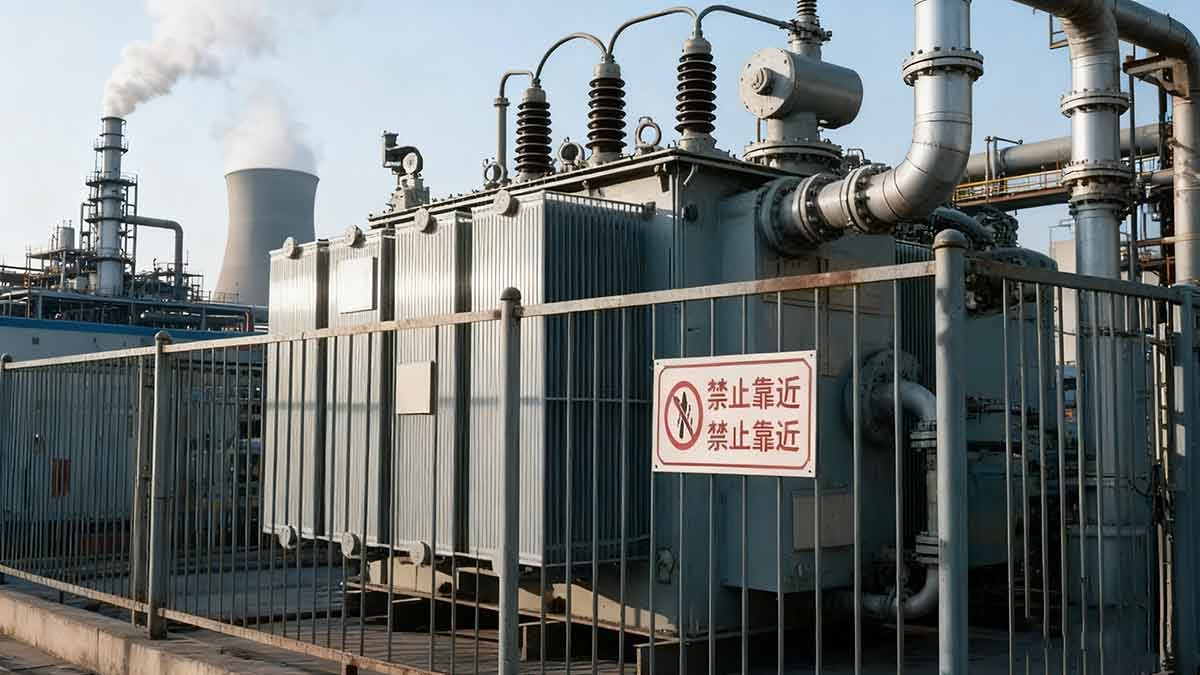
Smart Transformers: Intelligence at the Heart of Grid Efficiency
Traditional transformers operate as passive components, but smart transformers are turning them into active, data-driven nodes that optimize grid performance in real time. Equipped with sensors, AI analytics, and adaptive control systems, these intelligent units don’t just distribute power—they anticipate needs, prevent failures, and minimize waste.
The Pillars of Smart Transformer Technology
- Real-Time Monitoring: Embedded sensors track voltage, current, temperature, oil condition (for liquid-cooled units), and power quality. Data is transmitted to cloud-based platforms, providing unprecedented visibility into grid operations.
- Adaptive Control: AI-driven algorithms adjust voltage regulation, tap positions, and power factor correction dynamically. This ensures optimal efficiency even as loads fluctuate—whether from peak-hour EV charging or intermittent renewable generation.
- Predictive Maintenance: Machine learning models analyze performance data to identify wear patterns, predict component failures, and schedule maintenance proactively. This shifts operations from reactive “break-fix” to proactive reliability management.
| Capability | Traditional Transformer | Smart Transformer |
|---|---|---|
| Monitoring | Basic voltage/current readings | Comprehensive, real-time system health |
| Control | Manual tap adjustments | Automated, load-responsive optimization |
| Maintenance | Scheduled (or reactive) | Predictive, data-driven |
| Grid Integration | Passive power flow | Active load balancing, renewable syncing |
A standout example comes from an industrial park in the Midwest, where outdated transformers struggled with dynamic manufacturing loads and on-site solar panels. We deployed 12 smart transformers connected to a centralized control system. The units analyzed load patterns, adjusted voltage in real time to reduce losses, and coordinated with solar inverters to manage bidirectional power flow.
Results were transformative: energy losses dropped by 30%, voltage fluctuations (a major cause of equipment downtime) fell by 95%, and predictive maintenance prevented three critical failures. The park also gained actionable insights into energy usage, identifying process inefficiencies that led to an additional 8% reduction in overall energy consumption.
Cool Innovations: Advanced Cooling Systems Boost Efficiency
Heat is the nemesis of transformer efficiency—excess temperature increases losses, degrades components, and shortens lifespan. Traditional oil cooling, while reliable, is being augmented by innovative technologies that enhance heat dissipation, enable higher power density, and reduce energy consumption.
The Next Generation of Cooling
- Nanofluid Cooling: Mineral oil infused with nanoparticles (e.g., copper, aluminum oxide) boosts thermal conductivity by 20–40%. This allows transformers to run 10–15°C cooler, cutting load losses by 10–15% and extending service life by 25%.
- Phase-Change Materials (PCMs): These materials absorb and release heat during phase transitions (solid to liquid, liquid to gas), providing passive temperature regulation. Integrated into transformer windings or tanks, PCMs flatten temperature spikes during peak loads, reducing thermal stress.
- AI-Optimized Active Cooling: Smart fans and pumps adjust speed based on real-time temperature and load data. Unlike constant-speed systems, these adaptive solutions use only the energy needed for cooling—slashing auxiliary power consumption by 30–50%.
| Cooling Technology | Efficiency Improvement | Implementation Complexity |
|---|---|---|
| Conventional Mineral Oil | Baseline | Low |
| Nanofluid Cooling | 10–15% | Moderate (compatibility testing required) |
| Phase-Change Materials | 15–25% | High (custom integration) |
| AI-Optimized Active Cooling | 20–30% | Moderate-High (control system integration) |
A project for a high-density urban substation demonstrates these technologies’ impact. The substation’s transformers overheated during summer peaks, triggering efficiency losses and forced outages. We retrofitted the units with a hybrid system: nanofluid cooling for base-load heat management and PCM modules for peak-load temperature control. An AI-driven controller adjusted fan speed based on weather forecasts and load predictions.
After installation, peak operating temperatures dropped by 18°C, load losses fell by 22%, and the substation avoided three summer outages. The cooling system’s auxiliary power use also decreased by 40%, adding to the energy savings.
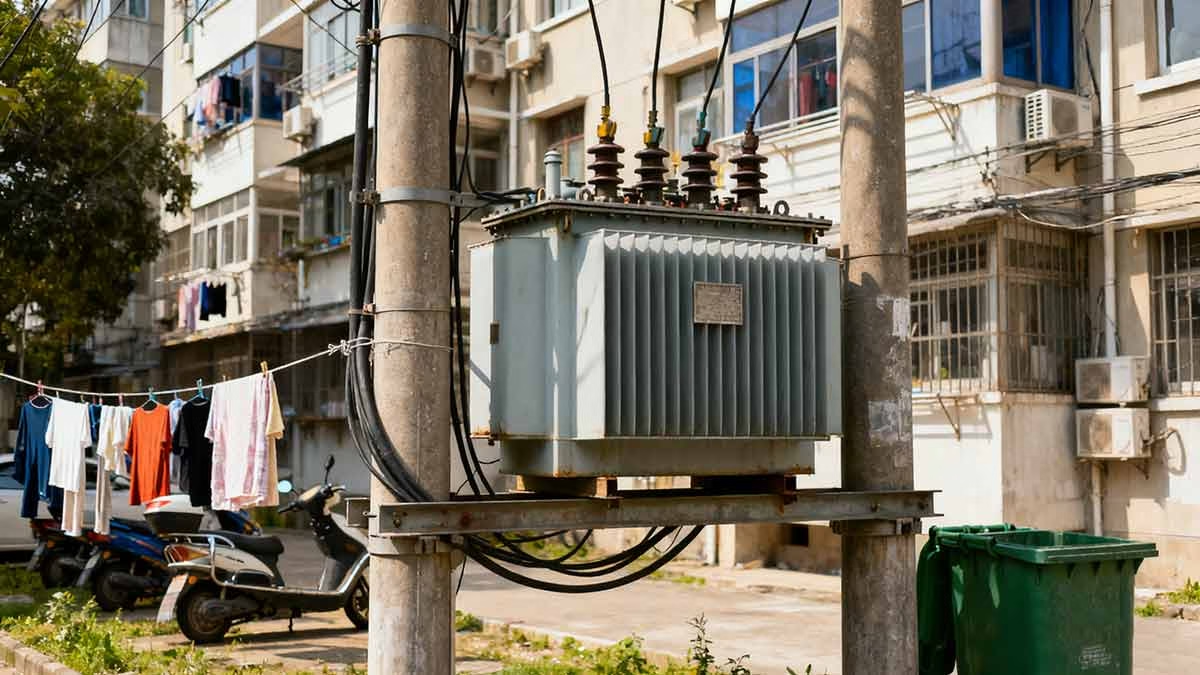
Green Synergy: Transformers for Renewable Energy Integration
The rise of solar, wind, and distributed generation has rewritten the rules for power grids—and transformers are evolving to keep pace. Renewable energy’s intermittent, bidirectional nature demands transformers that can handle variable power flows, stabilize voltages, and sync seamlessly with storage systems.
Key Features for Renewable Readiness
- Bi-Directional Power Flow: Symmetrical winding designs and advanced tap changers enable transformers to accept power from the grid and feed excess renewable energy back into it—critical for rooftop solar and community wind projects.
- Dynamic Voltage Regulation: Rapid voltage adjustments (within milliseconds) counteract fluctuations caused by cloud cover or wind gusts. This ensures stable power quality for sensitive loads like data centers and manufacturing equipment.
- Storage Integration: Built-in interfaces for battery storage and EV charging systems allow transformers to act as “energy hubs.” They store excess renewable power during peak generation and release it during high demand, reducing grid strain.
| Capability | Traditional Transformer | Renewable-Ready Transformer |
|---|---|---|
| Power Flow Direction | Unidirectional (grid to load) | Bi-directional (grid ↔ renewable/storage) |
| Voltage Regulation | Fixed tap positions | Dynamic, real-time adjustments |
| Storage/EV Compatibility | Limited | Native integration with batteries/chargers |
A rural community’s transition to 80% renewable energy showcases these capabilities. We installed 18 renewable-ready transformers across the town’s grid: large substation units to handle wind farm output, and distribution transformers with dynamic voltage control for residential solar. Each unit integrated with a community battery storage system, balancing supply and demand.
The results exceeded expectations: the town reached 75% renewable penetration within 18 months (ahead of schedule), voltage fluctuations dropped by 92%, and the grid seamlessly accommodated 200+ new residential solar installations. The transformers also enabled 12 EV fast-charging stations, demonstrating their role as multi-functional energy hubs.
Watts Down: Cutting-Edge Transformers Slashing Energy Losses
Energy losses—both no-load (idle) and load (operating)—have long been a hidden cost of power distribution. Traditional transformers waste 1.5–3% of the energy they handle, but cutting-edge designs are slashing this figure to 0.6–1.3% through holistic optimization of cores, windings, and controls.
Targeting Losses at Every Stage
- No-Load Loss Reduction: Amorphous and nanocrystalline cores minimize energy waste when transformers are idle (e.g., overnight residential grids). These materials reduce no-load losses by 60–80% compared to conventional silicon steel.
- Load Loss Optimization: Advanced winding technologies—such as continuously transposed conductors (CTCs) and copper-clad aluminum—reduce resistance and eddy current losses. Optimized winding geometries further enhance efficiency at full and partial loads.
- Smart Loss Management: Real-time monitoring and AI algorithms identify loss hotspots and adjust operations to minimize waste. For example, a transformer might slightly adjust voltage during off-peak hours to reduce no-load losses without impacting performance.
| Loss Type | Traditional Transformer | Cutting-Edge Transformer |
|---|---|---|
| No-Load Losses | 0.5–1% of rated power | 0.1–0.3% of rated power |
| Load Losses (Full Load) | 1–2% of rated power | 0.5–1% of rated power |
| Total Operational Losses | 1.5–3% | 0.6–1.3% |
A data center’s transformer upgrade highlights these gains. The facility’s existing transformers wasted 2.8% of their energy output—adding $180,000 to annual electricity bills and increasing cooling demands. We replaced them with units featuring nanocrystalline cores, CTC windings, and smart loss management.
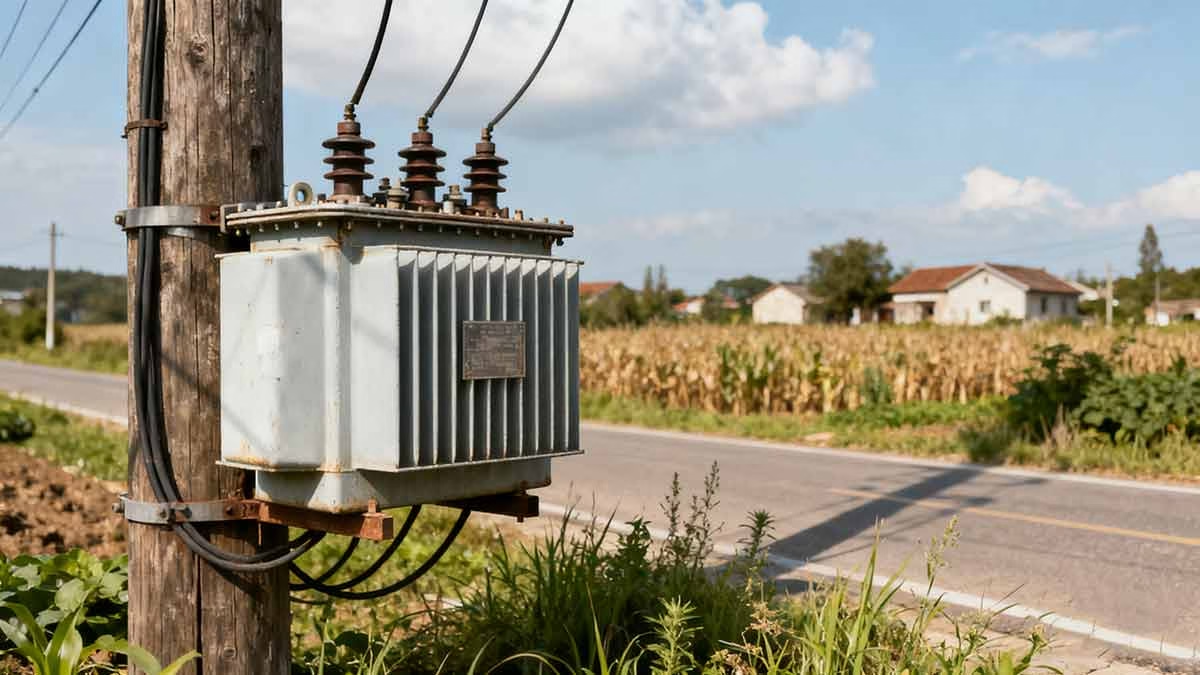
The result: total losses dropped to 0.9%, cutting energy costs by $126,000 annually. The reduced heat output also lowered HVAC energy use by 15%, delivering an additional $35,000 in savings. The transformers’ improved power quality also reduced server downtime by 40%, underscoring how loss reduction translates to broader operational benefits.
Conclusion
Transformer technology has entered a new era of efficiency, intelligence, and sustainability. From advanced core materials that eliminate idle energy waste to smart systems that optimize performance in real time, these innovations are redefining what transformers can do—whether integrating renewable energy, cooling dense urban substations, or slashing operational costs for industrial facilities.
For organizations navigating the energy transition, embracing these technologies isn’t just a choice—it’s a strategic imperative. Cutting-edge transformers don’t just save energy; they future-proof grids, enhance reliability, and support the shift to a low-carbon economy. As the demand for efficient, resilient power grows, these advancements will remain the backbone of modern energy systems—proving that the most impactful innovations often lie at the heart of our infrastructure.