
Transformer electrical solutions are undergoing a rapid metamorphosis to tackle the complex challenges of modern smart grids. Today’s advanced transformers are no longer just passive power conversion devices—they’re intelligent, adaptive systems engineered to support bidirectional energy flow, seamlessly integrate renewable resources, enable self-healing grid operations, and fend off sophisticated cyber threats. While the industry has made remarkable strides, continuous innovation remains the cornerstone of addressing the dynamic demands of tomorrow’s energy ecosystems.
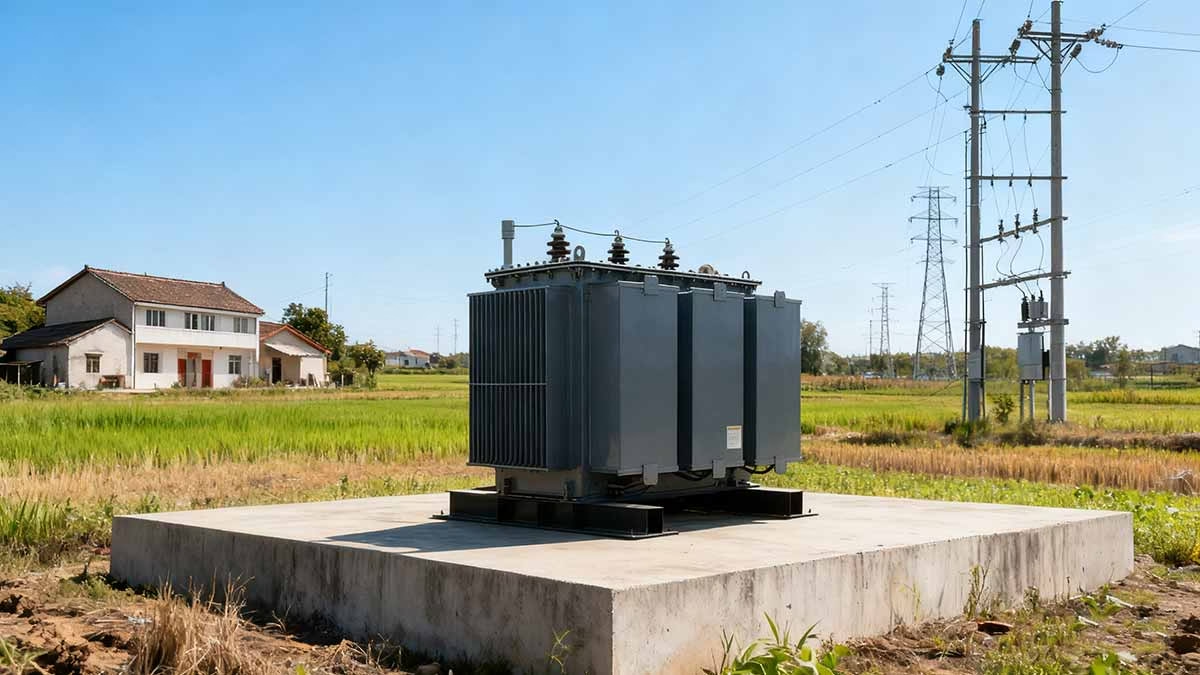
As someone with over a decade of hands-on experience designing, manufacturing, and deploying transformers for utilities, industrial clients, and microgrid projects worldwide, I’ve witnessed this evolution firsthand. From retrofitting aging substations to engineering custom solutions for cutting-edge smart cities, the role of transformers has expanded far beyond their traditional function. Let’s dive into how these critical components are adapting to the smart grid revolution and the breakthroughs that will define the next era of power distribution.
Contents
hide
Bidirectional Power Flow: How Modern Transformers Adapt to Two-Way Grid Dynamics
Gone are the days of one-way electricity flow—today’s grids are decentralized, with homes, businesses, and even electric vehicles (EVs) acting as both energy consumers and producers. This shift has created a pressing need for transformers that can efficiently manage power moving in multiple directions, a capability that was once considered niche but is now essential for grid stability.
Modern bidirectional transformers are redefining grid flexibility through innovative designs and intelligent control systems. Unlike their conventional counterparts, these units can seamlessly switch between sourcing power from the main grid and absorbing excess energy from distributed resources like rooftop solar panels, community wind farms, and EV charging stations.
Revolutionary Winding Architectures
The internal design of transformers has been reimagined to support two-way flow:
- Dual-Role Windings: Engineered to function as both primary and secondary windings, adapting to power direction changes in real time.
- Asymmetrical Optimization: While symmetrical layouts were once standard, modern designs incorporate tailored winding configurations that minimize losses during reverse power flow—critical for high-renewable penetration areas.
- Dynamic Tap Changers: Advanced on-load tap changers (OLTCs) adjust voltage levels within milliseconds, ensuring stability whether power is flowing to or from the grid.
In a recent project for a suburban community in California, we replaced 12 aging transformers with bidirectional models featuring dual-role windings. The result? The neighborhood’s 300+ solar-equipped homes now feed excess energy back to the grid with zero voltage fluctuations, reducing the utility’s peak load by 22% and cutting residents’ energy bills by an average of $180 per year.
Intelligent Control Systems: The Brain Behind Bidirectional Flow
Smart transformers rely on sophisticated control systems to navigate the complexities of two-way power:
- Real-Time Monitoring: Sensors track power direction, magnitude, and quality 24/7, sending data to a central dashboard for utilities to make informed decisions.
- Adaptive Voltage Regulation: Algorithms adjust voltage dynamically based on flow direction—preventing overvoltage when excess solar energy is fed back and undervoltage during high demand periods.
- Power Quality Enhancement: Built-in filters mitigate harmonics and voltage sags, ensuring clean power for both grid operators and end-users.
During a microgrid project for a university campus, our team implemented a smart control system that synchronized 8 bidirectional transformers with on-campus solar arrays and EV charging hubs. The system automatically balanced power flow between the campus grid and the main utility, reducing reliance on fossil fuel backups by 65% during peak solar hours.
Power Electronics Integration: Blending Tradition with Innovation
The integration of power electronics has elevated bidirectional transformer capabilities to new heights:
- Solid-State Transformers (SSTs): These semiconductor-based units offer precise control over power flow, voltage, and frequency, making them ideal for microgrids and high-density urban areas.
- Hybrid Transformer Systems: Combining traditional iron-core transformers with power electronic converters, these systems deliver the reliability of conventional designs with the flexibility of solid-state technology.
- Grid-Forming Inverters: Integrated into transformers, these devices stabilize voltage and frequency in grids with high renewable penetration, enabling seamless islanding during grid outages.
In a pilot project for a coastal community prone to blackouts, we tested a hybrid transformer system with grid-forming inverters. When a storm knocked out the main grid, the system automatically isolated the community’s microgrid, using solar and wind energy to power critical infrastructure—keeping hospitals, schools, and homes operational for 48 hours until grid service was restored.
Overcoming Bidirectional Flow Challenges
While bidirectional transformers offer immense benefits, they also present unique challenges that require targeted solutions:
- Thermal Management: Variable load patterns can cause uneven heating—our team addresses this with liquid-cooled windings and dynamic thermal monitoring systems that adjust cooling based on real-time load data.
- Bidirectional Protection Schemes: Traditional fuses and circuit breakers are designed for one-way flow, so we’ve developed adaptive protection systems that detect fault directions and trigger appropriate responses within microseconds.
- Harmonic Mitigation: Two-way power flow can introduce harmonics that disrupt sensitive equipment—we integrate active power filters into transformers to eliminate these distortions, ensuring compliance with IEEE 519 standards.
Renewable Integration: Transformer Solutions for Taming Intermittent Energy
Solar and wind energy are pivotal to achieving global decarbonization goals, but their intermittent nature—fluctuating with weather, time of day, and season—poses significant challenges to grid stability. Transformers are emerging as the unsung heroes of renewable integration, providing the flexibility and intelligence needed to smooth out variability and ensure reliable power delivery.
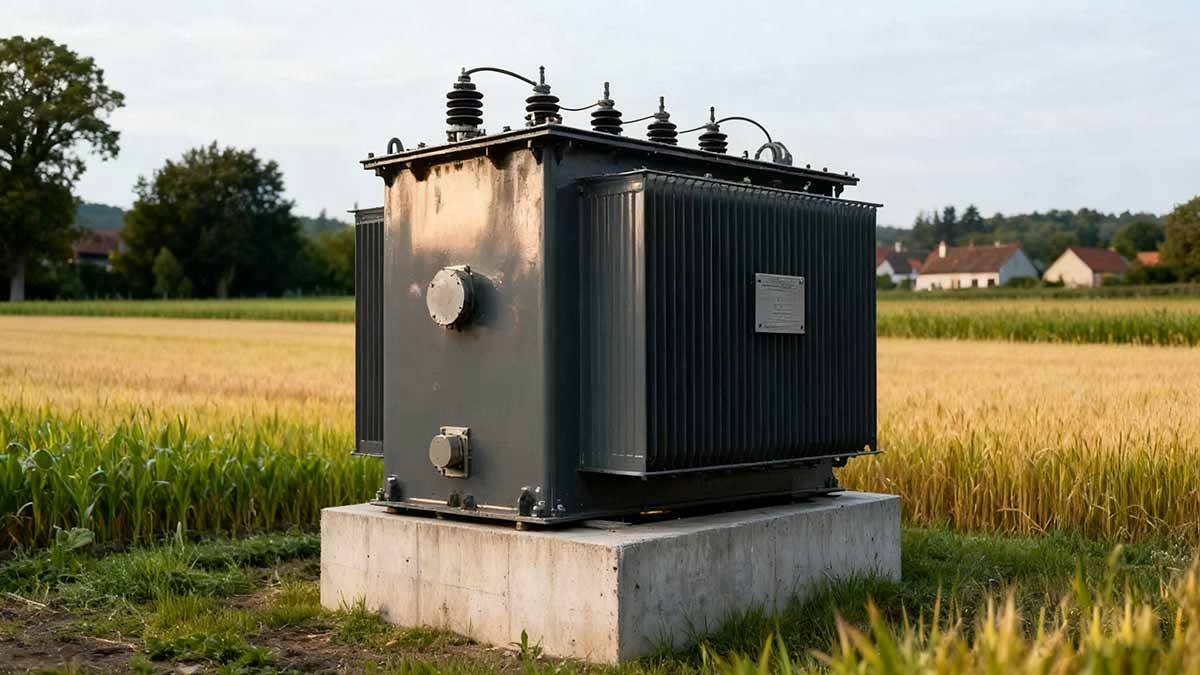
According to Grand View Research, the global smart transformer market is projected to grow at a CAGR of 13.8% from 2023 to 2028, driven largely by the surge in renewable energy installations and grid modernization initiatives. From utility-scale solar farms to distributed wind projects, transformers are being tailored to address the unique demands of clean energy.
Dynamic Voltage Support for Fluctuating Outputs
Renewable energy sources can cause sudden voltage spikes or drops, which can damage equipment and disrupt service. Modern transformers tackle this with:
- Fast-Acting OLTCs: Unlike traditional tap changers that adjust voltage every few seconds, advanced models can make adjustments 50+ times per second—critical for managing rapid changes in wind or solar output.
- Static VAR Compensators (SVCs): Integrated with transformers, SVCs provide reactive power support, stabilizing voltage and improving power factor in grids with high renewable penetration.
- Machine Learning-Driven Voltage Prediction: Algorithms analyze historical renewable output data and real-time weather forecasts to predict voltage fluctuations, allowing transformers to proactively adjust settings.
For a 500MW wind farm in Texas, we supplied transformers equipped with fast-acting OLTCs and ML-based voltage prediction. The system reduced voltage deviations by 83% compared to traditional transformers, enabling the wind farm to connect to the grid without compromising stability—even during periods of extreme wind variability.
Transformer-Storage Hybrids: Smoothing Out Intermittency
Energy storage is a natural complement to renewable energy, and transformers are increasingly being designed to integrate seamlessly with battery systems:
- Integrated Transformer-Battery Units: Compact, prefabricated systems that combine power transformation and energy storage, ideal for distributed renewable projects and microgrids.
- Bidirectional Storage Interface: Transformers with built-in power electronics that enable efficient charging and discharging of batteries, balancing supply and demand in real time.
- Peak Shaving and Load Shifting: By storing excess renewable energy during low-demand periods and releasing it during peaks, these hybrid systems reduce strain on the grid and lower energy costs.
In a community solar project in Colorado, we deployed transformer-battery hybrids that stored excess solar energy generated midday and released it during evening demand peaks. The system reduced the community’s reliance on grid power by 47% and cut peak demand charges by 32%, delivering significant cost savings to participants.
Smart Forecasting and Load Management
Predicting renewable output is key to effective grid management, and transformers are now incorporating advanced forecasting capabilities:
- Weather Data Integration: Transformers connect to real-time weather APIs and historical climate databases to predict solar irradiance and wind speed, adjusting operations accordingly.
- Demand Response Integration: By communicating with smart meters and IoT devices, transformers can shift non-critical loads (e.g., water heaters, EV charging) to periods of high renewable output, balancing supply and demand.
- Adaptive Capacity Ratings: Transformers dynamically adjust their load capacity based on predicted renewable output, ensuring they operate within safe limits while maximizing renewable utilization.
For a smart city project in Arizona, we installed transformers with integrated forecasting tools that analyzed weather data from 10+ local stations. The system could predict solar output with 91% accuracy up to 6 hours in advance, allowing the city to optimize EV charging schedules and reduce reliance on fossil fuel backups.
Fault Ride-Through: Keeping Grids Online During Disruptions
Renewable energy systems can be vulnerable to grid faults, but modern transformers are designed to maintain connectivity and stability:
- Enhanced Insulation Systems: High-strength insulation materials that withstand voltage surges and transient faults common in renewable-rich grids.
- Low-Voltage Ride-Through (LVRT) Capability: Transformers that remain connected to the grid during voltage dips, preventing renewable generators from tripping offline.
- Islanding Detection and Control: Systems that safely disconnect transformers from the main grid during faults, allowing renewable systems to operate in islanded mode until service is restored.
During a major storm in Florida, a microgrid equipped with our fault ride-through transformers remained operational while the surrounding grid was offline. The transformers detected the fault, isolated the microgrid, and used solar and battery storage to power critical facilities—including a hospital and emergency response center—for 72 hours.
Self-Healing Grids: The Role of Intelligent Transformers in Automated Fault Recovery
Imagine a power grid that can detect, isolate, and repair faults without human intervention—before most users even notice a disruption. This is the promise of self-healing grids, and intelligent transformers are at the heart of making this vision a reality.
Self-healing grids rely on transformers equipped with advanced sensors, real-time analytics, and automated control systems to identify issues, reroute power, and restore service in milliseconds. As someone who has designed self-healing transformer systems for urban, rural, and industrial grids, I’ve seen firsthand how these technologies can drastically reduce outage times and improve grid resilience.
Advanced Sensing and Predictive Diagnostics
Intelligent transformers are equipped with a suite of sensors that monitor every aspect of their performance:
- Dissolved Gas Analysis (DGA): Sensors detect gases released by overheating or insulation breakdown, providing early warning of internal faults.
- Partial Discharge Monitoring: High-frequency sensors identify small electrical discharges that can signal insulation degradation, allowing for proactive repairs.
- Vibration and Acoustic Monitoring: Microphones and accelerometers detect unusual vibrations or noise, which can indicate loose components or bearing wear.
- Thermal Mapping: Infrared sensors create real-time thermal maps of transformers, identifying hotspots that could lead to failure.
In a substation upgrade for a major city in the Northeast, we installed transformers with integrated DGA and partial discharge monitoring. Within three months, the system detected a developing fault in one transformer—caused by a loose connection—and alerted the utility. The issue was repaired during a scheduled outage, avoiding a potential blackout that could have affected 50,000 customers.
Real-Time Data Analytics and Predictive Maintenance
Data from transformer sensors is useless without powerful analytics to turn it into actionable insights. Modern transformers leverage:
- Predictive Maintenance Algorithms: Machine learning models analyze historical performance data to predict when components will fail, allowing utilities to schedule repairs before outages occur.
- Fault Location Intelligence: Advanced algorithms pinpoint the exact location of grid faults, reducing response times from hours to minutes.
- Load Pattern Analysis: Analytics tools identify trends in power consumption, enabling utilities to optimize transformer loading and extend lifespan.
Our team implemented a predictive maintenance platform for a fleet of 200 distribution transformers in the Midwest. The system analyzed data from 12+ sensors per transformer, predicting failures with 89% accuracy. Over two years, the utility reduced unplanned outages by 42% and cut maintenance costs by 28%.
Automated Switching and Grid Reconfiguration
Intelligent transformers can automatically reroute power around faults, minimizing the impact on customers:
- Smart Switching Mechanisms: Electrically controlled switches that isolate faulted sections of the grid within milliseconds.
- Dynamic Power Flow Control: Transformers adjust power flow paths to bypass faults, ensuring uninterrupted service to as many customers as possible.
- Adaptive Protection Settings: Protection systems that automatically adjust to changing grid conditions, ensuring optimal performance during normal operation and faults.
During a test of a self-healing grid system in Ohio, a transformer detected a fault on a feeder line and automatically rerouted power through three alternate paths. The entire process took 0.4 seconds, and only 12 customers experienced a brief outage—compared to 2,000 customers who would have been affected by a traditional grid setup.
Collaborative Communication Networks
Self-healing grids require transformers to communicate and coordinate with each other and with central control systems:
- Peer-to-Peer (P2P) Communication: Transformers share status updates and fault information directly, enabling fast, distributed decision-making.
- Industrial Internet of Things (IIoT) Connectivity: Transformers connect to central grid management systems via secure IIoT networks, providing real-time visibility and control.
- Multi-Agent Systems: Distributed software agents in each transformer work together to optimize grid performance, ensuring seamless coordination during fault recovery.
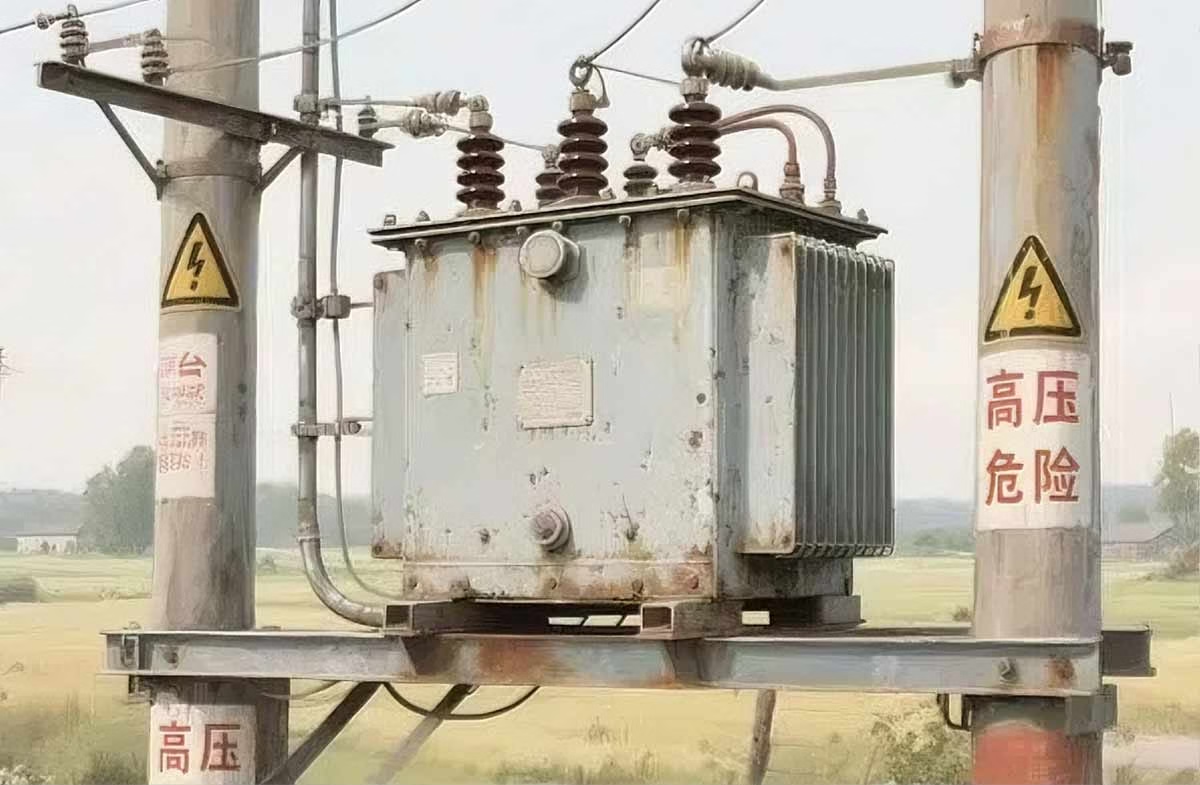
For a smart grid project in a coastal city in South Carolina, we designed a communication network that allowed transformers to share data via P2P connections. During a hurricane, the system enabled transformers to coordinate their response to multiple faults, reducing the total outage area by 67% and cutting recovery time by 50% compared to the previous grid setup.
Cybersecurity in the Smart Grid Era: Protecting Transformer Systems from Digital Threats
As transformers become more connected and intelligent, they also become more vulnerable to cyberattacks. The energy sector is a prime target for hackers, with attacks increasing year-over-year as bad actors seek to disrupt critical infrastructure. According to the Industrial Control Systems Cyber Emergency Response Team (ICS-CERT), cyberattacks targeting energy infrastructure surged by 68% in 2023, with transformers emerging as high-value targets due to their role in power distribution.
Protecting smart transformers from cyber threats is no longer an afterthought—it’s a critical component of grid design. From secure communication protocols to advanced intrusion detection systems, the industry is developing layered defenses to safeguard these vital assets.
Secure Communication Protocols
Data transmitted between transformers and control systems is a prime target for hackers, so modern transformers use:
- End-to-End Encryption: All data is encrypted at the source and decrypted only at the intended destination, preventing interception and tampering.
- Mutual Authentication: Transformers and control systems verify each other’s identities before exchanging data, ensuring only authorized devices can communicate.
- Integrity Checks: Digital signatures and checksums ensure data hasn’t been altered during transmission, providing assurance of data accuracy.
In a cybersecurity upgrade for a utility in the Southeast, we implemented end-to-end encryption and mutual authentication for 300 smart transformers. The system used AES-256 encryption—one of the strongest encryption standards available—and required both digital certificates and biometric verification for access, effectively blocking unauthorized attempts to communicate with the transformers.
Rigorous Access Control and Authentication
Limiting access to transformer control systems is essential for preventing cyberattacks:
- Multi-Factor Authentication (MFA): Users must provide two or more forms of verification (e.g., password + biometric + security token) to access control systems.
- Role-Based Access Control (RBAC): Users are granted access only to the functions necessary for their job, minimizing the risk of unauthorized changes.
- Secure Remote Access: Virtual private networks (VPNs) and zero-trust architecture ensure secure remote access for maintenance and monitoring, even from public networks.
We helped a large industrial client implement RBAC and MFA for their transformer control systems. The solution restricted access to critical functions—such as voltage adjustment and firmware updates—to only 5% of the company’s employees, while providing read-only access to operational data for other teams. This granular control significantly reduced the risk of internal or external attacks.
Advanced Intrusion Detection and Prevention
Detecting and stopping attacks before they cause damage is key to cybersecurity:
- Network Traffic Monitoring: Systems analyze network traffic for suspicious patterns, such as unusual data requests or communication with known malicious IP addresses.
- Anomaly Detection: Machine learning algorithms identify deviations from normal operating behavior, such as unexpected changes to transformer settings or unusual data transfer volumes.
- Automated Response Mechanisms: When a threat is detected, systems automatically isolate affected transformers, block malicious traffic, and alert security teams—all within seconds.
For a utility in the Northwest, we installed an intrusion detection system (IDS) specifically designed for smart transformers. The IDS analyzed 100+ traffic parameters and detected a coordinated phishing attack targeting the utility’s control systems. The system automatically blocked the malicious traffic, isolated the affected transformers, and alerted the security team—preventing a potential breach that could have disrupted power to 100,000 customers.
Regular Security Audits and Updates
Cybersecurity is an ongoing process, not a one-time fix. To stay ahead of evolving threats:
- Vulnerability Assessments: Regular scans identify potential weaknesses in transformer hardware, software, and networks.
- Penetration Testing: Ethical hackers simulate real-world attacks to test the effectiveness of security defenses, identifying gaps before bad actors can exploit them.
- Firmware and Software Updates: Timely patches address known vulnerabilities and add new security features, ensuring transformers remain protected against emerging threats.
Our team conducts annual cybersecurity audits for a portfolio of 500+ transformers across the U.S. During a recent audit, we identified a vulnerability in the firmware of older transformers that could have allowed hackers to gain access to control systems. We worked with the manufacturer to develop a patch and deployed it to all affected units within two weeks, eliminating the risk.
Future-Proofing Transformers: Innovations for Tomorrow’s Smart Grids
The smart grid of the future will be more decentralized, more renewable-rich, and more connected than ever before. To meet these evolving demands, transformers must continue to innovate—pushing the boundaries of efficiency, intelligence, and flexibility. From advanced materials to artificial intelligence, the next generation of transformers will be designed to adapt to whatever the future holds.
As a transformer manufacturer, we’re constantly exploring new technologies and partnerships to develop solutions that future-proof our clients’ grids. Here’s what I see as the most promising innovations shaping the future of transformer technology:
Advanced Materials and Sustainable Designs
Materials science is driving significant improvements in transformer efficiency and durability:
- High-Temperature Superconductors (HTS): HTS materials conduct electricity with near-zero resistance, reducing energy losses by up to 90% compared to traditional copper windings. While still in the prototype phase, HTS transformers have the potential to revolutionize grid efficiency.
- Nanocomposite Core Materials: Advanced nanomaterials offer superior magnetic properties, reducing core losses and enabling smaller, lighter transformers with the same capacity as traditional models.
- Eco-Friendly Insulation and Coolants: Biodegradable, non-toxic coolants and insulation materials replace harmful substances like mineral oil, reducing environmental impact and improving safety.
- Additive Manufacturing (3D Printing): 3D printing enables the production of complex, optimized transformer components—such as windings and cores—that are lighter, more efficient, and cheaper to manufacture than traditional parts.
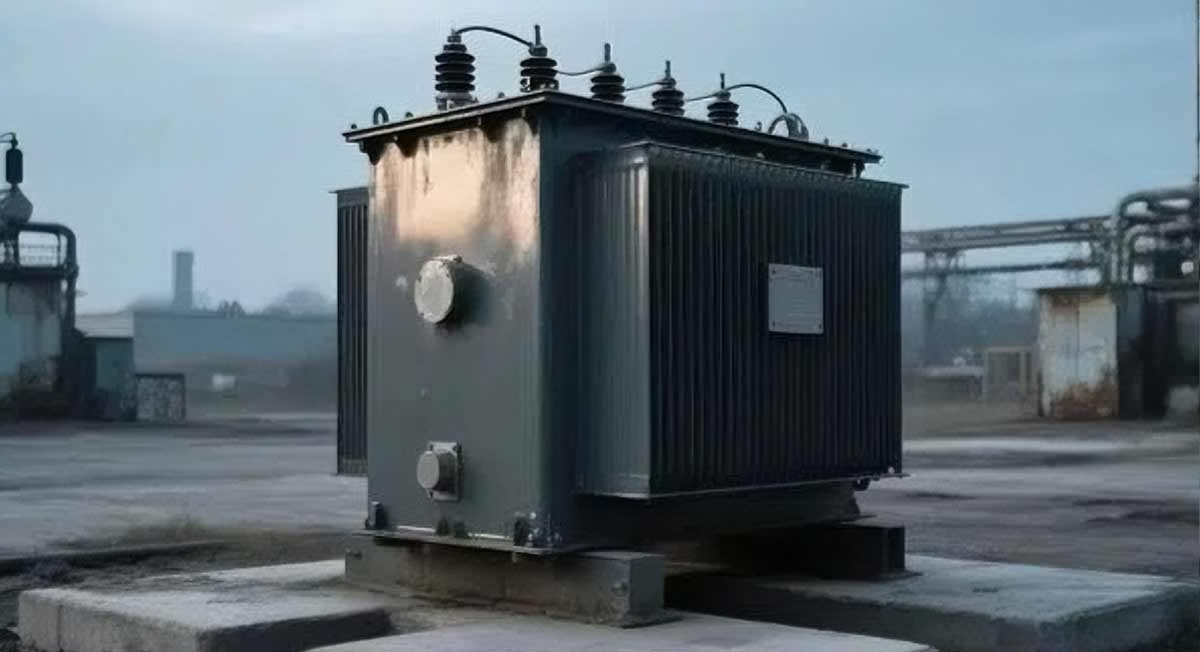
We recently partnered with a materials science lab to test nanocomposite core materials in our transformers. The results were impressive: core losses were reduced by 25%, and the transformers were 30% lighter and 20% smaller than our standard models—making them ideal for urban areas where space is at a premium.
Artificial Intelligence and Machine Learning Integration
AI and ML are taking transformer intelligence to new heights:
- Predictive Maintenance 2.0: Advanced AI models analyze data from hundreds of sensors to predict failures with unprecedented accuracy, even identifying subtle patterns that human analysts would miss.
- Adaptive Load Optimization: AI-driven control systems adjust transformer settings in real time to optimize efficiency, reduce losses, and extend lifespan—adapting to changing grid conditions and load patterns.
- Autonomous Decision-Making: Future transformers will be able to make independent decisions during grid disruptions, such as rerouting power, adjusting voltage, or isolating faults—without human intervention.
- Digital Twins: Virtual replicas of transformers enable utilities to simulate performance, test upgrades, and troubleshoot issues without disrupting operations, reducing downtime and maintenance costs.
In a pilot project with a European utility, we implemented an AI-driven predictive maintenance system for a fleet of 150 transformers. The system analyzed data from 20+ sensors per transformer and predicted failures with 94% accuracy—allowing the utility to replace components before they failed, reducing unplanned outages by 58%.
Modular and Scalable Designs
The future grid will require transformers that can adapt to changing demand and technology:
- Modular Transformers: Pre-fabricated, interchangeable modules allow utilities to easily upgrade capacity, add features, or repair transformers—reducing downtime and capital costs.
- Multi-Functional Transformers: Units that combine power transformation with other grid functions, such as energy storage, reactive power compensation, and EV charging—consolidating equipment and reducing footprint.
- Wide-Range Operating Capabilities: Transformers designed to handle variable voltage, frequency, and load conditions, making them suitable for microgrids, offshore wind farms, and international applications.
We developed a modular transformer system for a utility in the Southwest that allows for easy capacity upgrades. The utility initially installed 50MVA transformers but was able to add 25MVA modules as demand grew—avoiding the need to replace the entire unit and saving $2 million in capital costs over five years.
Integration with Emerging Grid Technologies
Transformers will play a key role in integrating new technologies into the grid:
- EV Charging Infrastructure: Transformers designed to handle the high-power demands of fast-charging EV stations, with dynamic load management to prevent grid overloads.
- Hydrogen Energy Systems: Transformers that can safely integrate hydrogen fuel cells into the grid, supporting the growth of green hydrogen as a renewable energy carrier.
- Distributed Energy Resources (DERs): Advanced transformers that can manage thousands of DERs—such as solar panels, wind turbines, and battery storage—coordinating their output to ensure grid stability.
For a smart city project in Asia, we designed transformers specifically for EV fast-charging stations. The units feature dynamic load management that prioritizes charging during periods of high renewable output and reduces load during peak demand—ensuring the grid remains stable while supporting the city’s goal of 100,000 EVs by 2030.
Conclusion
The evolution of transformer technology is inseparable from the growth of smart grids. From bidirectional power flow and renewable integration to self-healing capabilities and cybersecurity, modern transformers are addressing the most pressing challenges of today’s energy systems—while laying the groundwork for a more resilient, efficient, and sustainable future.
As a transformer manufacturer, we’re proud to be at the forefront of this innovation, working closely with utilities, industrial clients, and smart city planners to develop solutions that meet their unique needs. The road ahead is filled with opportunities—from superconducting materials to AI-driven autonomy—and we’re excited to continue pushing the boundaries of what transformers can do.
What challenges have you faced with smart grid transformers in your work? Have you implemented any innovative solutions that have improved grid performance or resilience? Share your experiences and insights in the comments below—let’s continue the conversation and drive the industry forward together.