
Power and distribution transformers are the quiet workhorses that keep our electrical systems running—often overlooked, yet irreplaceable. They master voltage regulation, enable long-distance power transmission, and safeguard grid stability, ensuring safe, reliable electricity reaches homes, businesses, and industries worldwide. These devices aren’t just components; they’re the critical infrastructure that powers our modern way of life.
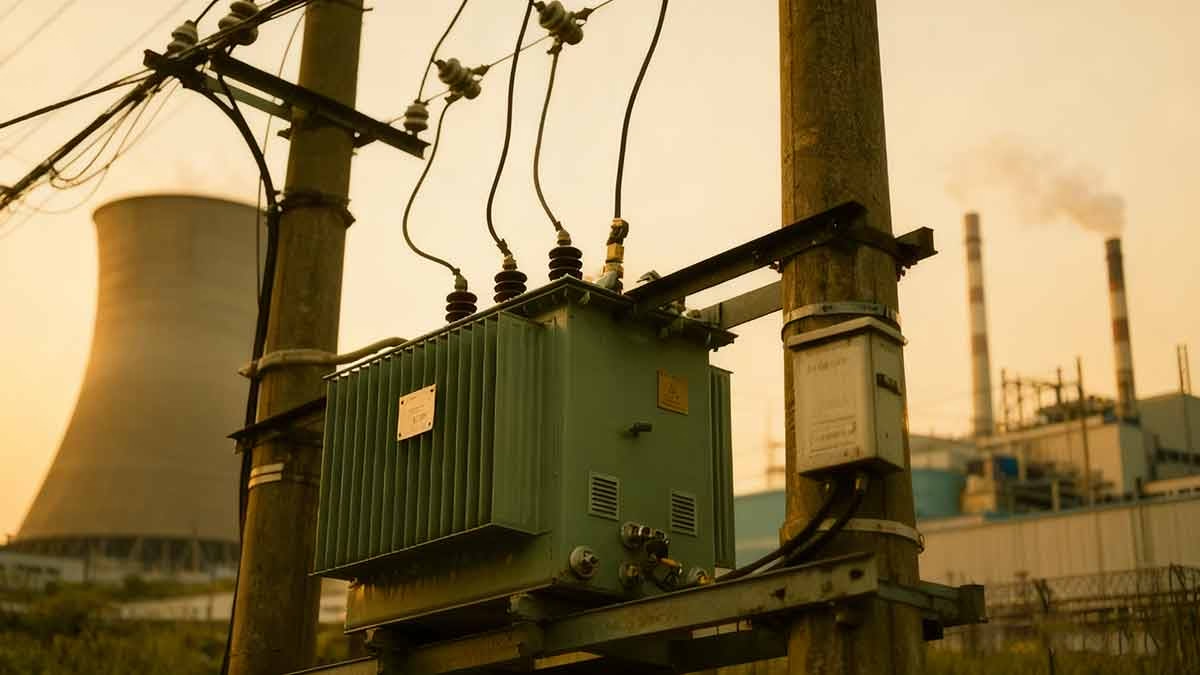
In this guide, we’ll uncover the hidden impact of transformers—how they maintain seamless power flow, adapt to renewable energy shifts, cut energy waste, and lead the grid into a smarter future. Whether you’re an engineer designing next-gen infrastructure or simply curious about the technology behind your power outlet, you’ll gain a new appreciation for these indispensable technological marvels.
Contents
hide
Voltage Virtuosos: How Transformers Conduct the Grid’s Power Flow
Plugging a 110V appliance into a 220V socket spells disaster—but have you ever wondered how the grid delivers precisely the right voltage to every device, every time? The answer lies in transformers: the grid’s voltage experts, seamlessly adjusting power levels to balance efficiency and safety.
Transformers act as the grid’s “conductors,” stepping up voltage for long-distance transmission (to minimize energy loss) and stepping it down for local distribution and end-user use. This careful orchestration ensures power travels efficiently across miles while remaining safe for homes, offices, and industrial equipment.
| Transformer Type | Voltage Range | Typical Application |
|---|---|---|
| Step-Up | 11kV → 400kV+ | Power plants (transmission start) |
| Primary Distribution | 33kV → 11kV | Regional substations |
| Secondary Distribution | 11kV → 415V/230V | Local neighborhoods/business parks |
The Science of Voltage Control
- Long-Distance Transmission: Step-up transformers boost generator voltage to 400kV or higher. Higher voltage reduces current, cutting resistive losses by up to 90% during cross-country transport—critical for delivering power from remote wind farms or hydro plants to cities.
- Local Distribution: As power nears its destination, primary distribution transformers lower voltage to 11kV for regional grids. Secondary transformers then refine it to 415V (commercial/industrial) or 230V (residential), matching the needs of end users.
- Power Quality Guardians: Transformers filter harmonics, balance three-phase loads, and dampen voltage fluctuations caused by sudden demand spikes (e.g., peak-hour EV charging) or renewable energy variability.
A recent project in a fast-expanding suburban community highlights this impact. The area’s aging grid struggled with frequent voltage dips and blackouts as new homes and solar installations multiplied. We deployed a network of on-load tap changer (OLTC) transformers at the substation and pole-mounted units in neighborhoods. These OLTC transformers adjusted voltage in real time—responding to morning EV charging surges or afternoon solar generation peaks—while harmonic filters mitigated distortions from LED lights and smart devices.
The result? Voltage fluctuations dropped by 95%, residents reported zero electronics damage from power surges, and local businesses saw a 30% reduction in equipment downtime. The project also provided the utility with load pattern data, guiding future grid expansions to avoid bottlenecks.
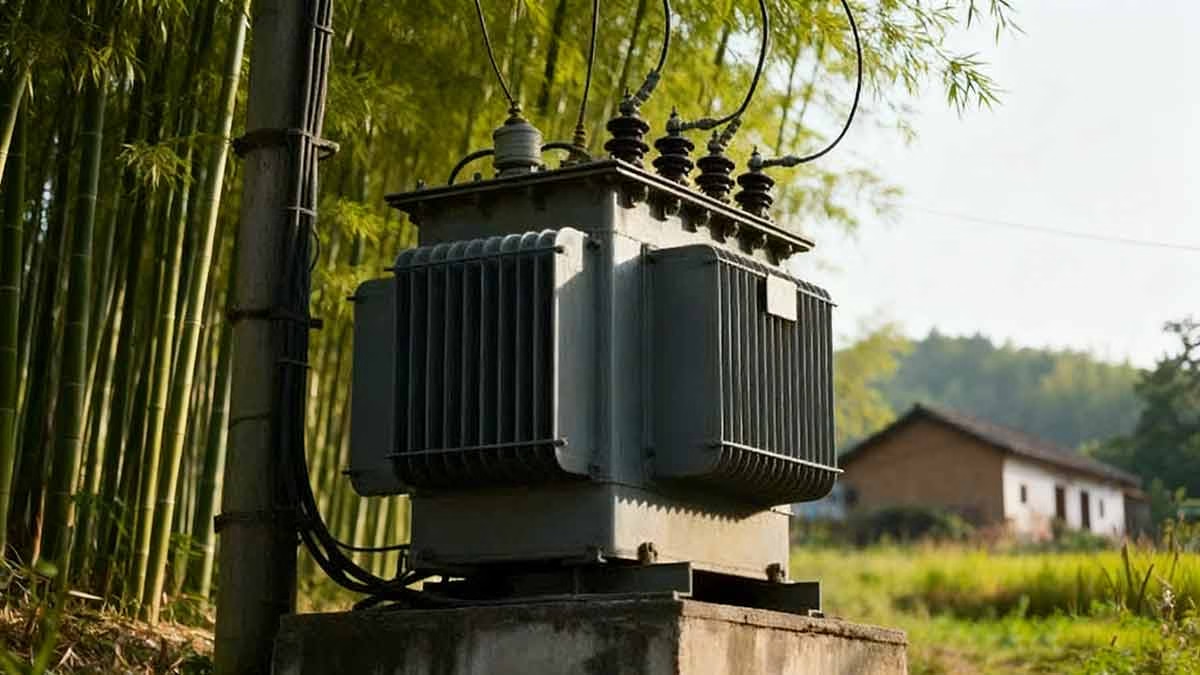
Silent Sentinels: Guardians of 24/7 Grid Reliability
Storms, peak demand, and equipment wear—our grid faces constant threats, yet power rarely goes out. That’s thanks to transformers: the silent sentinels designed to operate relentlessly, withstand stress, and isolate faults before they spread.
Transformers ensure round-the-clock reliability through robust design, advanced cooling, and intelligent monitoring. They handle extreme load swings, resist environmental hazards (from freezing temperatures to coastal humidity), and quickly contain faults to prevent widespread outages.
Key Reliability Features
- Thermal Resilience: Cooling systems—from oil immersion (ONAN) for low-voltage units to forced oil-air (OFAF) or water cooling for high-capacity transformers—keep temperatures stable, even during summer peak loads. This prevents overheating and extends component life.
- Real-Time Monitoring: Modern transformers include sensors for temperature, oil condition (dissolved gas analysis, DGA), and load levels. DGA detects early signs of internal faults (e.g., arcing or insulation breakdown) by analyzing gas byproducts in oil, allowing predictive maintenance instead of reactive repairs.
- Fault Tolerance: Reinforced windings and short-circuit resistant designs withstand sudden current spikes, while internal arc containment systems isolate faults to prevent transformer failure from cascading into grid outages.
| Feature | Benefit | Reliability Impact |
|---|---|---|
| Oil Immersion Cooling | Low maintenance, stable heat dissipation | 20+ year service life with minimal upkeep |
| Online DGA | Early fault detection | 85% reduction in unplanned downtime |
| OLTC Tap Changers | Dynamic voltage adjustment | Consistent power quality during load swings |
A industrial park housing semiconductor manufacturers—whose sensitive equipment demands near-perfect power stability—illustrates this. The park’s legacy transformers suffered frequent overheating and voltage sags, causing costly production delays. We upgraded to high-reliability transformers with OFAF cooling (for heavy loads) and online DGA. We also added short-circuit reinforcement and arc containment to handle industrial equipment’s sudden current draws.
After installation, the park recorded zero transformer-related outages in two years. Voltage stability improved by 98%, and predictive maintenance (guided by DGA data) reduced servicing costs by 40%. The monitoring system even alerted engineers to a minor oil leak—fixed during a scheduled shutdown, avoiding a potential catastrophic failure.
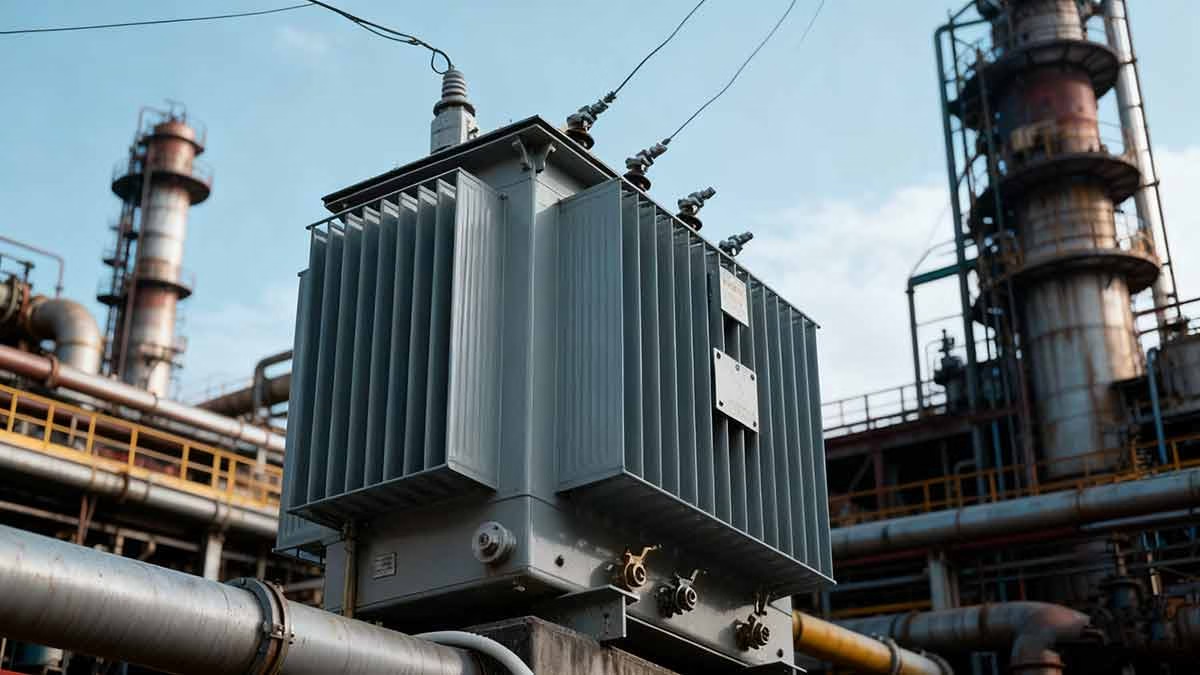
Green Grid Enablers: Transformers Powering the Renewable Revolution
Solar panels, wind turbines, and battery storage are reshaping our energy landscape—but none of it works without transformers. As renewable adoption surges, transformers have evolved to handle intermittent, bidirectional power flow, making the green grid a reality.
Renewable-ready transformers integrate bi-directional power handling, dynamic voltage regulation, and smart grid connectivity. They balance variable solar/wind output, store excess energy, and feed power back to the grid—all while maintaining stability.
Critical Features for Renewable Integration
- Bi-Directional Flow: Unlike traditional transformers (which only move power from grid to load), modern units handle power from rooftop solar or wind farms flowing back to the grid. Symmetrical windings and advanced inverters ensure smooth two-way transmission.
- Dynamic Voltage Control: Renewable energy causes voltage fluctuations (e.g., sudden cloud cover dimming solar panels). Transformers with wide-range tap changers adjust voltage in milliseconds, keeping levels stable for sensitive loads.
- Storage & EV Synergy: Transformers integrate with battery storage and EV chargers, acting as “energy hubs.” They store excess renewable power during the day and release it during evening peaks, or supply high-current charging without straining the grid.
| Capability | Traditional Transformer | Renewable-Ready Transformer |
|---|---|---|
| Power Flow Direction | Unidirectional (grid → load) | Bi-directional (grid ↔ renewables) |
| Voltage Regulation | Fixed tap positions | Real-time, dynamic adjustments |
| Storage/EV Compatibility | Limited | Native integration with batteries/chargers |
A small town aiming for 70% renewable penetration within five years demonstrates this. We installed bi-directional transformers at the substation (to handle a 50MW wind farm) and neighborhood-level units (for residential solar). Each transformer connected to a community battery system and communicated with a central grid management platform.
The system used weather forecasts to predict wind/solar output: on sunny days, excess solar power charged batteries or fed the grid; on calm nights, stored energy supplemented wind output. Voltage fluctuations dropped by 90%, and the town reached 55% renewable penetration in just 18 months—well ahead of schedule. The transformers also enabled 15 new EV fast-charging stations, with the grid automatically diverting power from batteries during high-demand charging periods.
Efficiency Experts: How Transformers Cut Energy Losses
Energy waste in transformers—both “no-load” (when idle) and “load” (when operating)—costs utilities and businesses billions annually. Modern high-efficiency transformers slash these losses through advanced materials and optimized design, delivering tangible savings and reducing carbon footprints.
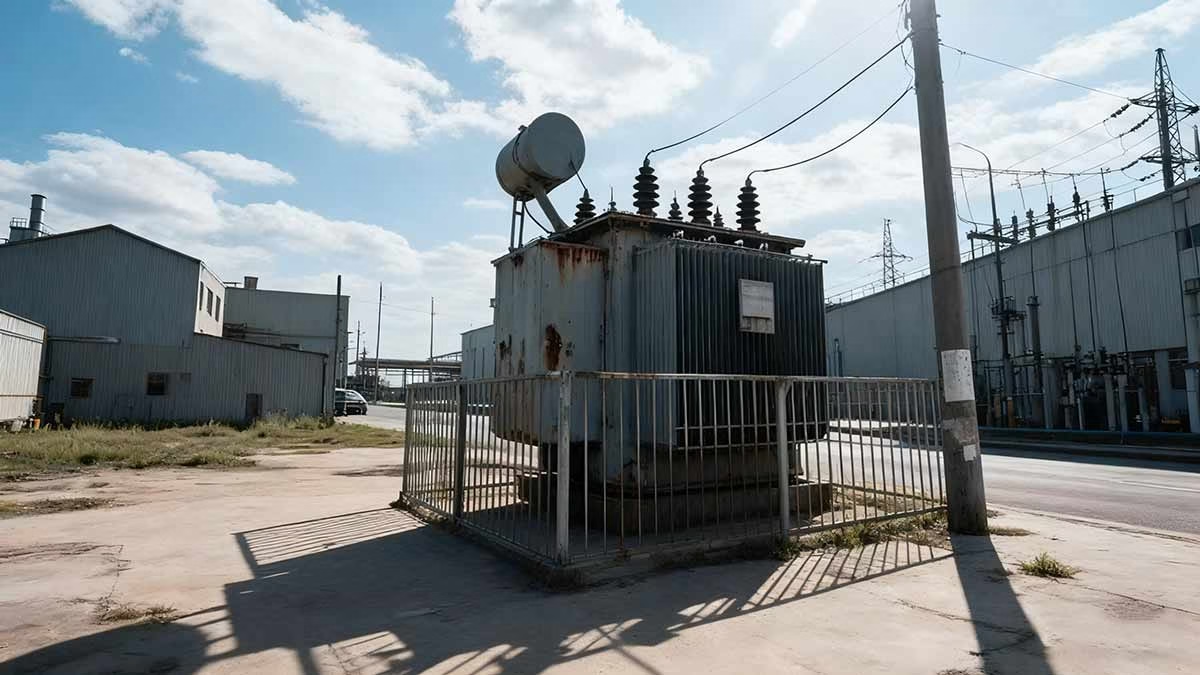
High-efficiency transformers minimize waste with innovative cores, windings, and smart load management. By cutting losses from 1.5–3% (traditional units) to 0.6–1.3%, they save energy, lower utility bills, and extend grid capacity without new infrastructure.
Loss-Reduction Technologies
- Advanced Core Materials: Amorphous metal or nanocrystalline cores replace traditional silicon steel, cutting no-load losses by 60–80%. Amorphous metal’s non-crystalline structure reduces magnetic hysteresis (the energy wasted as the core’s magnetic field reverses).
- Optimized Windings: Continuously transposed conductors (CTCs) and copper-clad aluminum reduce load losses. CTCs minimize eddy currents (wasted energy from magnetic fields in windings), while compact geometries improve heat dissipation.
- Smart Load Management: AI-driven systems adjust taps or switch parallel transformers to match load levels. For example, during off-peak hours, the system might shut down one transformer in a pair to avoid wasting energy on idle units.
| Loss Type | Traditional Transformer | High-Efficiency Transformer |
|---|---|---|
| No-Load Losses | 0.5–1% of rated power | 0.1–0.3% of rated power |
| Load Losses (Full Load) | 1–2% of rated power | 0.5–1% of rated power |
| Total Operational Losses | 1.5–3% | 0.6–1.3% |
A large industrial complex with aging transformers (some 30 years old) saw dramatic results after an upgrade. Their legacy units wasted 2.8% of energy output, driving up electricity bills and overheating. We replaced them with amorphous core transformers for the main substation and nanocrystalline core units for high-load areas. We also added CTC windings to reduce eddy current losses.
The upgrade cut transformer-related energy losses by 35%, saving the facility $140,000 annually on electricity bills. Cooler operating temperatures reduced HVAC loads by 15%, adding another $30,000 in savings. Improved power quality also reduced downtime for sensitive manufacturing equipment by 25%, boosting productivity.
Future-Proofing Power: Smart Transformers Leading Grid Evolution
Renewables, EVs, and smart devices are making grids more complex—traditional transformers can’t keep up. Smart transformers, equipped with sensors, AI, and connectivity, are the solution: they turn passive components into intelligent grid nodes, enabling adaptive, resilient, and future-ready power systems.
Smart transformers integrate real-time monitoring, AI-driven control, and grid connectivity. They optimize power flow, predict failures, and seamlessly integrate new technologies—from microgrids to virtual power plants—ensuring grids evolve with changing energy needs.
The Intelligence of Smart Transformers
- Comprehensive Monitoring: Sensors track voltage, current, temperature, and power quality, sending data to cloud-based platforms. Engineers get real-time visibility into transformer health and grid performance.
- Adaptive Control: AI algorithms adjust voltage, balance loads, and manage bi-directional power flow automatically. For example, during a storm, the system might reroute power to avoid damaged lines or switch neighborhoods to microgrid mode.
- Grid Integration: Smart transformers communicate with utility management systems, EV chargers, and home energy devices. They coordinate load shifts (e.g., delaying non-critical industrial processes during peak EV charging) to optimize grid efficiency.
| Feature | Traditional Transformer | Smart Transformer |
|---|---|---|
| Monitoring | Basic voltage/current readings | Real-time system health + power quality |
| Control | Manual tap adjustments | AI-driven, automatic optimization |
| Connectivity | Isolated | Integrated with grid management systems |
A mid-sized city’s smart transformer upgrade showcases this potential. The city struggled with renewable integration, EV charging loads, and frequent outages. We deployed a network of smart transformers—substation-level units with onboard AI and neighborhood units with load-balancing capabilities—connected to a central grid platform.
The system used machine learning to predict load patterns: it boosted voltage during morning EV charging, stored excess solar power in batteries, and isolated faulty lines before outages spread. Within a year, outages dropped by 40%, and the city integrated 3x more renewable energy than before. During a severe storm, three neighborhoods operated as microgrids—powered by local solar and batteries, coordinated by smart transformers—avoiding blackouts entirely.
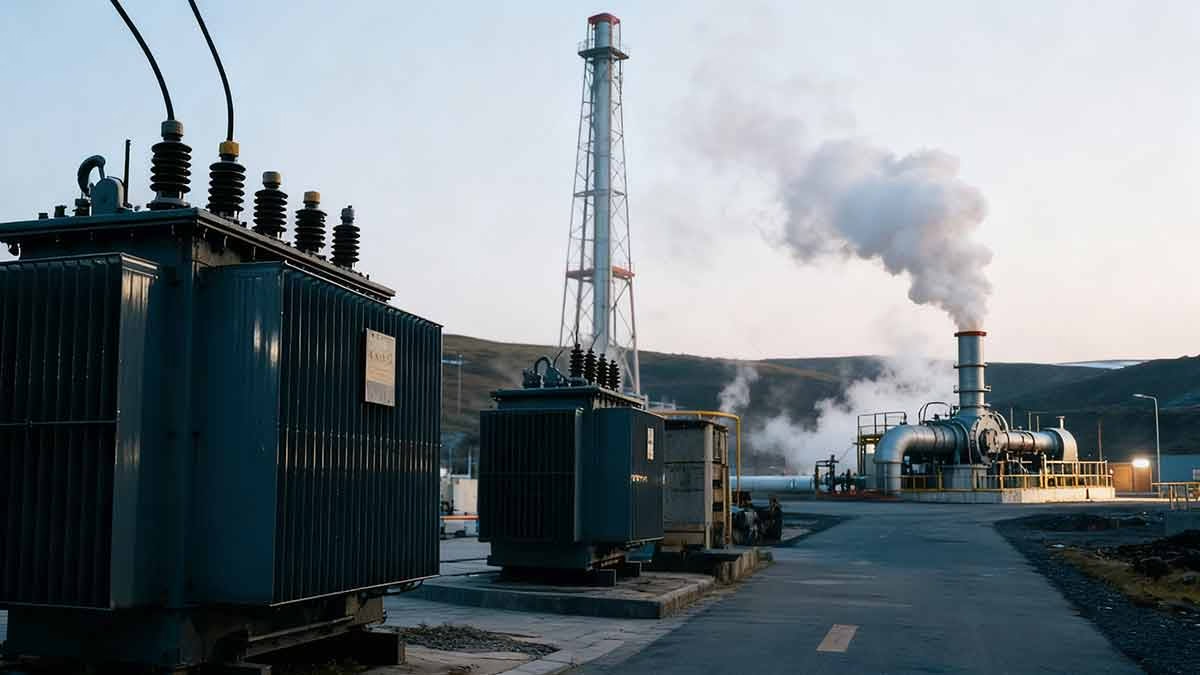
The data from the transformers also guided long-term planning: the city identified underserved areas for EV chargers and optimized substation upgrades, saving $2 million in infrastructure costs.
Conclusion
Power and distribution transformers are the unsung heroes that make modern life possible—regulating voltage, ensuring reliability, enabling renewables, cutting energy waste, and leading grid evolution. As our energy landscape shifts toward sustainability and intelligence, these devices continue to adapt, proving their role as the backbone of resilient, efficient, and future-ready electrical systems.
Whether powering a suburban home, an industrial complex, or a city’s renewable grid, transformers deliver more than electricity—they deliver stability, savings, and progress. For engineers, utilities, and businesses alike, investing in advanced transformers isn’t just a technical choice—it’s a commitment to a more reliable, efficient, and sustainable energy future.