
Power transformer ratings serve as the foundational specifications that dictate operational boundaries, performance capabilities, and long-term reliability of transformers. These critical metrics—encompassing voltage, current, kilovolt-ampere (kVA) capacity, impedance, efficiency, temperature rise, and insulation class—are non-negotiable considerations for proper selection, system integration, and safe operation. For engineering professionals, facility managers, and procurement teams, mastering these ratings isn’t just a technical necessity; it’s a strategic imperative to minimize downtime, optimize energy usage, and extend asset lifespan.
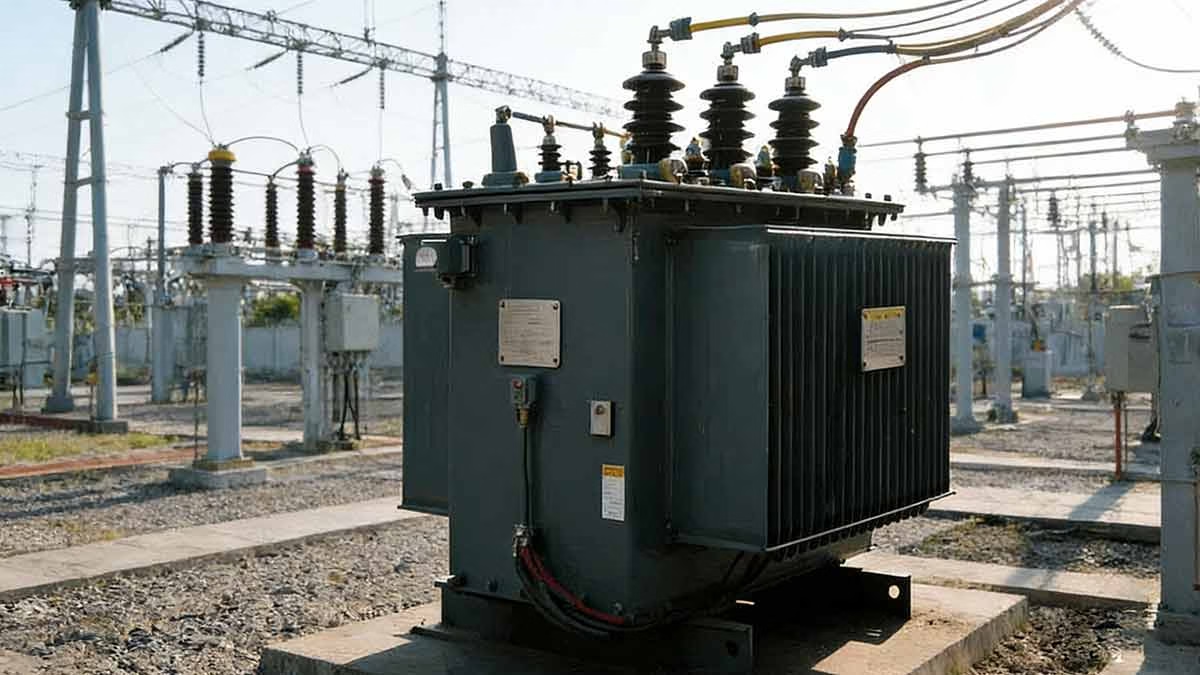
As a senior electrical engineer with over 15 years of experience in transformer manufacturing and system design, I’ve witnessed firsthand how misinterpreting or overlooking these ratings can lead to costly failures, inefficient operations, and compliance issues. In this guide, we’ll demystify each rating parameter, explore its real-world implications, and share actionable insights to help you make informed decisions for your industrial, commercial, or utility-scale projects.
Contents
hide
Key Power Transformer Rating Parameters: Definitions & Practical Importance
For anyone working with power transformers, the nameplate can initially appear overwhelming—filled with technical jargon and numerical values that seem disconnected from real-world application. However, each rating parameter is carefully calibrated to ensure the transformer operates within safe, efficient, and compliant limits.
These core parameters—voltage, current, kVA, impedance, efficiency, temperature rise, and insulation class—work in tandem to define:
- The transformer’s compatibility with your power system
- Its ability to handle expected and peak loads
- Energy efficiency and operating costs
- Lifespan and maintenance requirements
- Safety margins during fault conditions
Let’s break down each parameter with practical context, industry standards, and lessons learned from field experience:
Voltage Rating
Voltage rating is the most fundamental specification, defining the voltage levels the transformer is engineered to handle:
- Primary Voltage: The nominal input voltage that the transformer’s primary winding is designed to accept (e.g., 11kV, 33kV, 138kV for medium/high-voltage applications).
- Secondary Voltage: The nominal output voltage delivered to the load (e.g., 480V, 240V for low-voltage distribution).
- Basic Impulse Level (BIL): A critical safety rating indicating the transformer’s ability to withstand transient voltage surges (e.g., lightning strikes or switching transients). Typical BIL values range from 60kV for 11kV transformers to 350kV for 138kV units.
During a utility upgrade project in the southeastern U.S., a client opted for a transformer with a BIL rating of 95kV instead of the recommended 150kV to cut costs. Six months later, a lightning storm triggered a voltage surge that damaged the transformer’s insulation, causing a 12-hour outage and $200,000 in repair costs. This incident underscores why BIL ratings must align with regional weather patterns and system surge risks—not just initial budget constraints.
Current Rating
Current ratings specify the maximum electrical current the transformer can safely carry without overheating:
| Rating Type | Description | Practical Significance |
|---|---|---|
| Primary Current | The maximum current the primary winding can handle | Determines conductor gauge, terminal size, and primary-side protection (e.g., circuit breakers). |
| Secondary Current | The maximum current the secondary winding can deliver | Directly limits the total load the transformer can power (e.g., machinery, lighting, or HVAC systems). |
| Short-Circuit Current | The peak current the transformer can withstand during a fault | Critical for designing protective relaying systems to minimize damage during short circuits. |
In a manufacturing facility expansion, we encountered repeated tripping of the transformer’s protective fuse. Investigation revealed the facility’s new production line drew 15% more secondary current than the transformer’s rated value. By upgrading to a transformer with a higher secondary current rating (from 800A to 1000A), we eliminated the tripping issue while maintaining compliance with NEC (National Electrical Code) standards.
Power Rating (kVA)
The kVA rating is the transformer’s apparent power capacity, representing its ability to handle combined real and reactive power loads:
- Continuous kVA: The maximum load the transformer can carry indefinitely without exceeding temperature limits (typically specified at 30°C ambient temperature).
- Peak kVA: Short-term overload capacity (e.g., 110-125% of continuous rating for 30-60 minutes) during peak demand periods.
- Ambient-Adjusted kVA: Reduced capacity in high-temperature environments (e.g., a 1000kVA transformer may only deliver 850kVA at 45°C ambient).
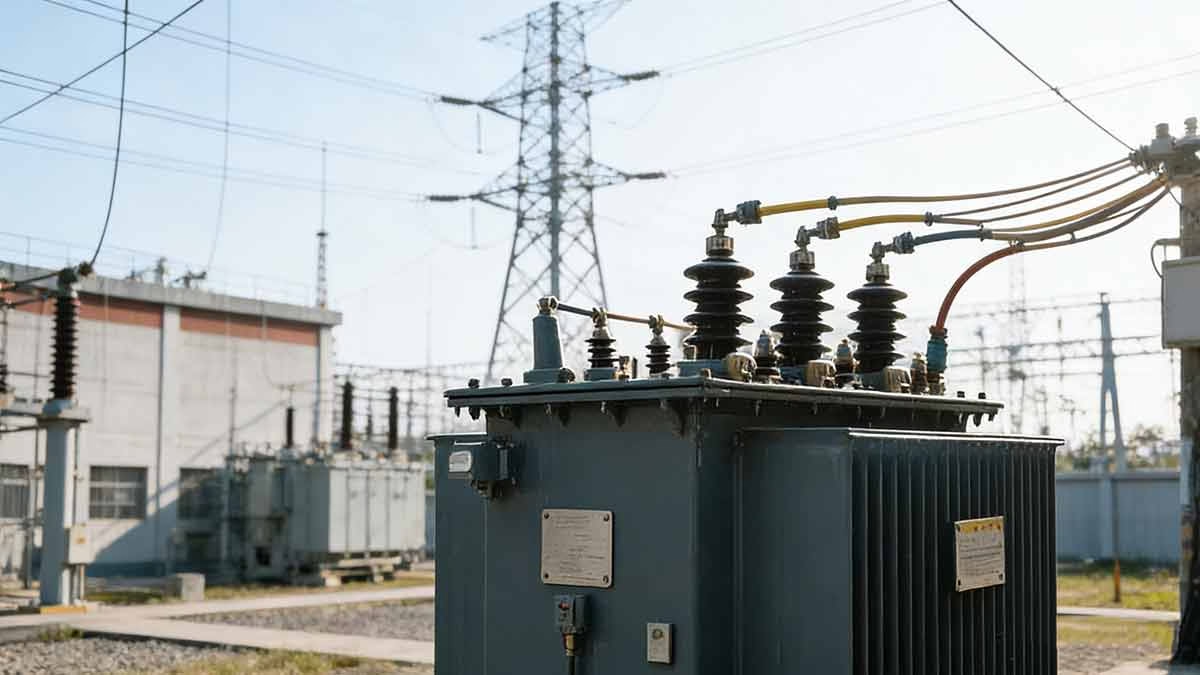
A common misconception is equating kVA directly to kilowatts (kW). For example, a 1000kVA transformer can only power an 800kW load at a 0.8 power factor (PF)—a critical distinction for facilities with inductive loads (e.g., motors, pumps). During a consultation with a data center, we corrected this misunderstanding by demonstrating how adding power factor correction capacitors could allow their existing 2000kVA transformers to support an additional 300kW of IT load, avoiding a $500,000 transformer upgrade.
Impedance Rating
Transformer impedance—expressed as a percentage—measures the total opposition to current flow, including resistance and reactance:
- Typical Values: 4-8% for distribution transformers (5-7% is industry standard) and 8-15% for power transformers.
- Fault Current Limitation: Higher impedance reduces the magnitude of short-circuit currents, simplifying protection system design.
- Parallel Operation: Transformers in parallel must have impedance ratings within ±10% of each other to ensure equal load sharing.
In a municipal power project, two 5000kVA transformers were installed in parallel with impedance ratings of 5% and 7%. Within weeks, the 5% impedance unit was overheating, carrying 65% of the load while the 7% unit carried only 35%. By replacing the 7% unit with a 5% impedance model, we achieved balanced load distribution and eliminated overheating—highlighting the importance of impedance matching for parallel applications.
Efficiency Rating
Transformer efficiency measures how effectively the unit converts input power to output power, calculated as (Output Power / Input Power) × 100%. Key efficiency-related metrics include:
- No-Load Losses (Core Losses): Constant losses from magnetic hysteresis and eddy currents in the core, present even when the transformer is energized but unloaded.
- Load Losses (Copper Losses): Variable losses from resistance in the windings, increasing with the square of the load current.
- Efficiency Standards: Mandatory minimums such as DOE 2016 (U.S.) and EU Ecodesign (EN 50581) for distribution transformers, with premium efficiency ratings (e.g., IE3, IE4) offering 15-30% lower losses than standard models.
For a food processing plant, we replaced three 1500kVA standard-efficiency transformers (97.5% efficiency) with premium-efficiency units (98.7% efficiency). The upgrade required a $75,000 upfront investment but reduced annual energy costs by $32,000—delivering a full return on investment in 2.3 years. This aligns with the growing trend toward energy-efficient transformers as corporations aim to meet sustainability goals and reduce operational expenses.
How Voltage and Current Ratings Shape Transformer Selection & Operation
Voltage and current ratings are the cornerstones of transformer selection, directly influencing system compatibility, design requirements, and long-term reliability. Misalignment between these ratings and your application’s needs can lead to insulation breakdown, overheating, or catastrophic failure.
- Insulation Design: Higher voltage ratings require thicker insulation (e.g., paper-oil insulation for medium-voltage transformers vs. PVC for low-voltage units) to prevent arcing. A 33kV transformer, for instance, uses insulation with a minimum thickness of 5mm, compared to 1mm for a 480V transformer.
- Tap Changers: Transformers with variable input/output voltages (e.g., ±5% or ±10% tap ranges) use tap changers to adjust voltage levels, critical for areas with unstable grid voltage.
- System Voltage Harmony: The transformer’s primary voltage must match the grid or source voltage, while the secondary voltage must align with load requirements (e.g., 208V for commercial buildings, 480V for industrial machinery).
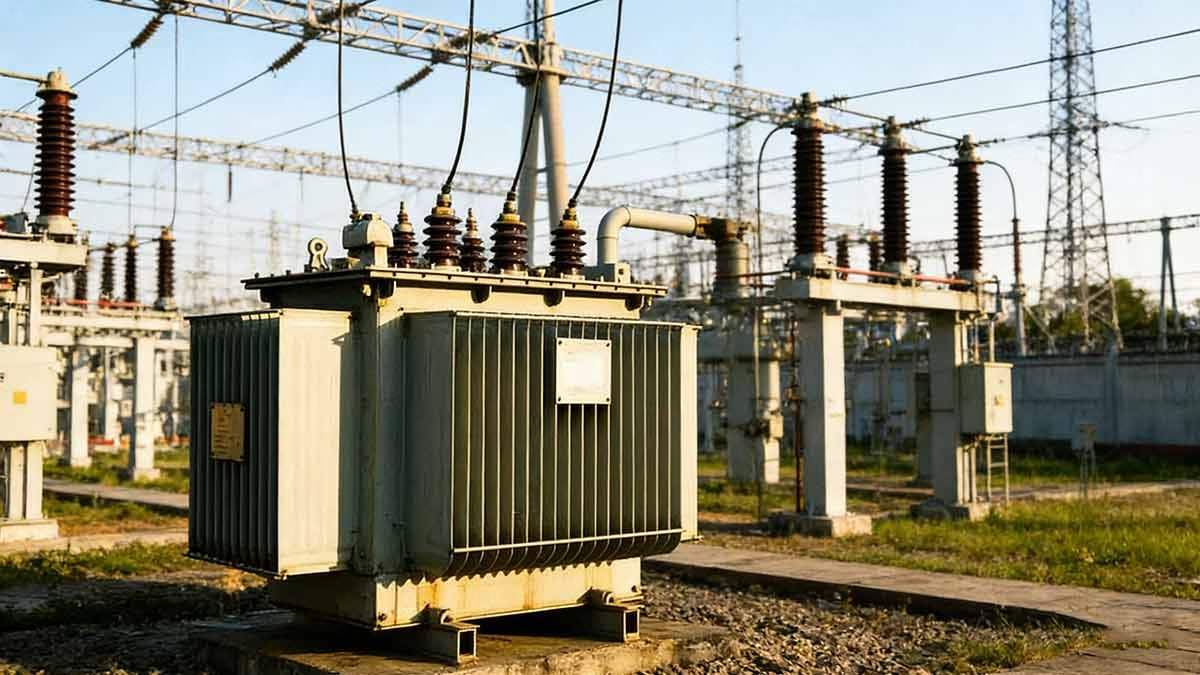
In a renewable energy project, a client incorrectly specified a 24kV primary voltage transformer for a 33kV solar farm output. The mismatch caused insulation degradation within 18 months, requiring a full transformer replacement. This error could have been avoided by conducting a pre-installation system voltage audit— a standard practice we recommend for all renewable energy integrations.
Current Rating Implications for Design & Performance
- Winding Configuration: Higher current ratings demand larger conductor cross-sections (e.g., 35mm² copper wire for 600A vs. 16mm² for 300A) to minimize resistance and heat generation.
- Thermal Management: Excessive current flow increases winding temperature, necessitating advanced cooling systems (e.g., forced air or liquid cooling) for high-current transformers.
- Protection System Coordination: Current ratings dictate the size of circuit breakers, fuses, and protective relays—ensuring these devices trip before current exceeds safe limits.
A warehouse expansion project required adding new refrigeration units, increasing the total load current from 700A to 950A. The existing 800A transformer was unable to handle the load, leading to weekly overheating incidents. By upgrading to a 1200A transformer with enhanced cooling, we not only resolved the overheating but also provided capacity for future growth.
Voltage Regulation: The Interplay of Voltage & Current
Voltage regulation—defined as the percentage change in secondary voltage from no-load to full-load—depends on both voltage and current ratings, as well as impedance:
- Formula: Voltage Regulation (%) = [(No-Load Secondary Voltage – Full-Load Secondary Voltage) / Full-Load Secondary Voltage] × 100
- Acceptable Ranges: Industrial transformers typically have voltage regulation of 2-5%, with tighter regulation (≤1%) required for sensitive loads like medical equipment or semiconductor manufacturing.
In a semiconductor facility, voltage fluctuations of more than 0.5% could disrupt production. By selecting a transformer with low impedance (4%) and a ±2.5% tap range, we achieved voltage regulation of 0.8%, ensuring stable power for critical manufacturing processes.
Short-Circuit Withstand Capability
Current ratings—specifically short-circuit current ratings—are vital for safety during fault conditions:
- Mechanical Strength: Windings must withstand electromagnetic forces during short circuits, which can be 10-20 times the rated current.
- Thermal Resilience: The transformer must dissipate heat generated during short circuits (typically lasting 1-3 seconds) without permanent damage.
- Protection Coordination: Short-circuit current ratings inform the design of the entire protection system, including relay settings and circuit breaker interrupting capacity.
Following a grid fault at a chemical plant, a transformer failed due to inadequate short-circuit withstand capability. The unit’s 25kA short-circuit rating was insufficient for the 35kA fault current, causing winding deformation. Upgrading to a transformer with a 40kA short-circuit rating and reinforcing the windings prevented future failures.
Inrush Current Mitigation
Energizing a transformer can trigger inrush current—typically 8-15 times the rated current—caused by core magnetization:
- Causes: Residual magnetism in the core and low initial impedance during energization.
- Impacts: Inrush current can trip protective devices, damage switches, or cause voltage sags.
- Solutions: Voltage rating selection (e.g., lower tap positions during energization), core design optimization (e.g., amorphous metal cores), or specialized switching devices (e.g., soft starters).
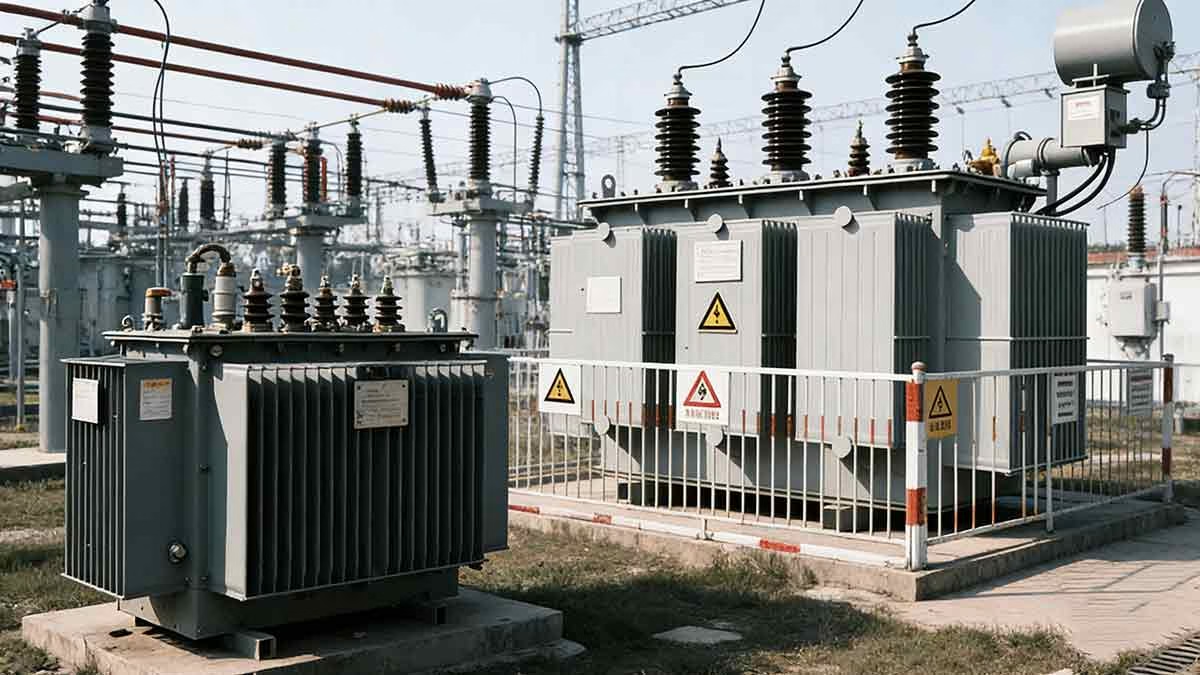
For a data center with critical uninterruptible power supply (UPS) systems, inrush current from a new 3000kVA transformer was causing UPS alarms. By implementing a pre-insertion resistor (PIR) switching scheme and selecting a transformer with a 6% impedance rating, we reduced inrush current to 3 times the rated value—eliminating the alarms and ensuring seamless UPS operation.
kVA Ratings Demystified: Capacity, Efficiency, and Sizing Best Practices
The kVA rating is often the first parameter considered when selecting a transformer, but its interpretation requires a nuanced understanding of apparent power, load characteristics, and operating conditions. Mis-sizing based solely on kVA can lead to inefficiency, premature failure, or unnecessary costs.
What kVA Actually Represents
- Apparent Power Definition: kVA combines real power (kW, used to perform work) and reactive power (kVAR, required for magnetic fields in motors and transformers). The relationship is defined by: kVA = kW / Power Factor (PF).
- Single-Phase Calculation: kVA = (Voltage × Current) / 1000
- Three-Phase Calculation: kVA = (√3 × Voltage × Current) / 1000 (√3 ≈ 1.732)
A common scenario: A facility with a 1000kW load and 0.7 PF requires a 1429kVA transformer (1000 / 0.7 ≈ 1429). Many clients mistakenly select a 1000kVA transformer, leading to overheating and load curtailment. Our team resolves this by either specifying a larger kVA transformer or recommending power factor correction to improve the power factor to 0.9, reducing the required kVA to 1111.
kVA’s Direct Impact on Load Capacity
- Continuous Load Limits: Exceeding the continuous kVA rating for extended periods increases winding temperature, accelerates insulation aging, and reducing transformer life.
- Overload Tolerance: Most transformers can handle 110-125% of rated kVA for 30-60 minutes (per ANSI/IEEE C57.12.00 standards), but repeated overloads shorten lifespan.
- Voltage-Current Tradeoff: For a given kVA rating, higher voltage reduces available current (e.g., a 1000kVA transformer at 480V delivers 1203A, while at 12.47kV it delivers 46.2A).
During a retail store expansion, the client added HVAC systems and lighting, increasing the total load from 800kVA to 1100kVA. The existing 1000kVA transformer could handle the load temporarily, but it overheated during peak hours. We recommended a 1500kVA transformer to accommodate current needs and future growth, avoiding costly downtime.
Efficiency vs. kVA Loading
Transformer efficiency is not constant—it varies with load level:
- No-Load Losses: Fixed losses (core losses) that account for 10-30% of total losses at full load.
- Load Losses: Variable losses (copper losses) that increase with the square of the load (e.g., 4x losses at 2x load).
- Optimal Efficiency Point: Typically occurs at 40-60% of rated kVA for standard transformers and 30-50% for high-efficiency models.
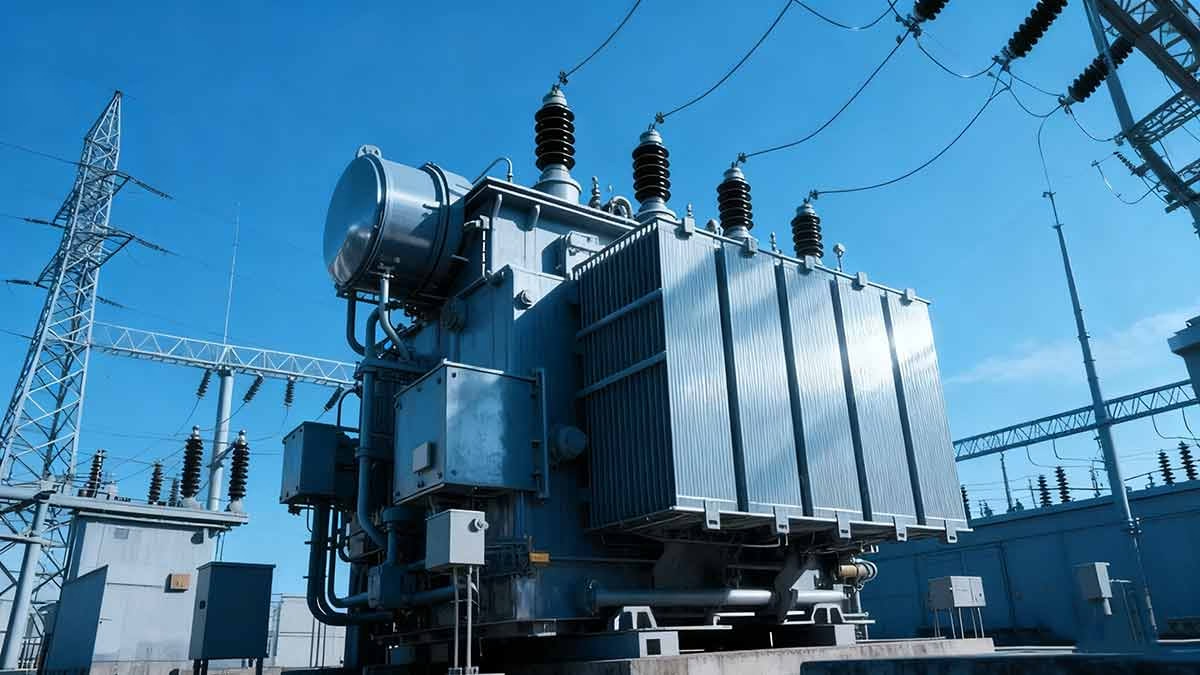
A manufacturing plant with three 500kVA transformers operating at 20% load (100kVA each) was experiencing low efficiency (92-93%). By replacing the three units with a single 300kVA transformer operating at 100% load, we increased efficiency to 98.5%, reducing annual energy costs by $28,000. This highlights the inefficiency of oversized transformers in lightly loaded applications.
Temperature Rise and kVA De-Rating
kVA ratings are specified at a standard ambient temperature (30°C for most regions). In higher ambient temperatures, the transformer’s effective kVA capacity decreases (de-rating):
- De-Rating Formula: Adjusted kVA = Rated kVA × √[(Maximum Allowable Temperature – Ambient Temperature) / (Maximum Allowable Temperature – Standard Ambient Temperature)]
- Example: A 1000kVA transformer with a 65°C temperature rise (maximum winding temperature = 95°C) operating at 45°C ambient: Adjusted kVA = 1000 × √[(95-45)/(95-30)] = 1000 × √(50/65) ≈ 877kVA.
In a desert-based solar farm with average ambient temperatures of 42°C, we de-rated 2000kVA transformers to 1750kVA to prevent overheating. Additionally, we installed shade structures and forced-air cooling to maintain optimal operating temperatures, ensuring full capacity during peak solar generation.
Sizing Transformers: Avoiding Common Pitfalls
- Undersizing Risks: Overheating, insulation degradation, load curtailment, and premature failure. A food processing plant that undersized a transformer by 20% experienced a catastrophic failure after 2 years, causing $500,000 in downtime costs.
- Oversizing Risks: Higher initial purchase costs, lower efficiency at light loads, and wasted space. A commercial building with an oversized 2000kVA transformer (operating at 30% load) wasted $15,000 annually in energy costs.
- Future Growth Planning: We recommend sizing transformers to accommodate 15-25% future load growth, balancing upfront costs with long-term flexibility.
For a data center expansion, we conducted a load analysis projecting 20% growth over 5 years. Instead of installing a 5000kVA transformer for current needs, we specified a 6000kVA unit—avoiding the need for a costly replacement in 3 years.
Impedance and Efficiency: Critical Ratings for Performance & Cost Savings
While voltage, current, and kVA ratings get the most attention, impedance and efficiency are equally critical for system performance, safety, and operating costs. These ratings influence fault current levels, voltage stability, and energy consumption—making them key considerations for both new installations and upgrades.
Transformer Impedance: Beyond the Percentage
- Definition: Impedance (%) is the voltage drop across the transformer at full load, expressed as a percentage of the rated voltage. It’s measured by short-circuiting the secondary winding and applying a low voltage to the primary until full-load current flows.
- Typical Ranges: 4-8% for distribution transformers (120V-480V), 8-15% for power transformers (11kV-138kV), and 15-20% for large utility transformers.
- Impedance Components: Resistance (R, causes copper losses) and reactance (X, caused by magnetic fields), with X typically accounting for 80-90% of total impedance.
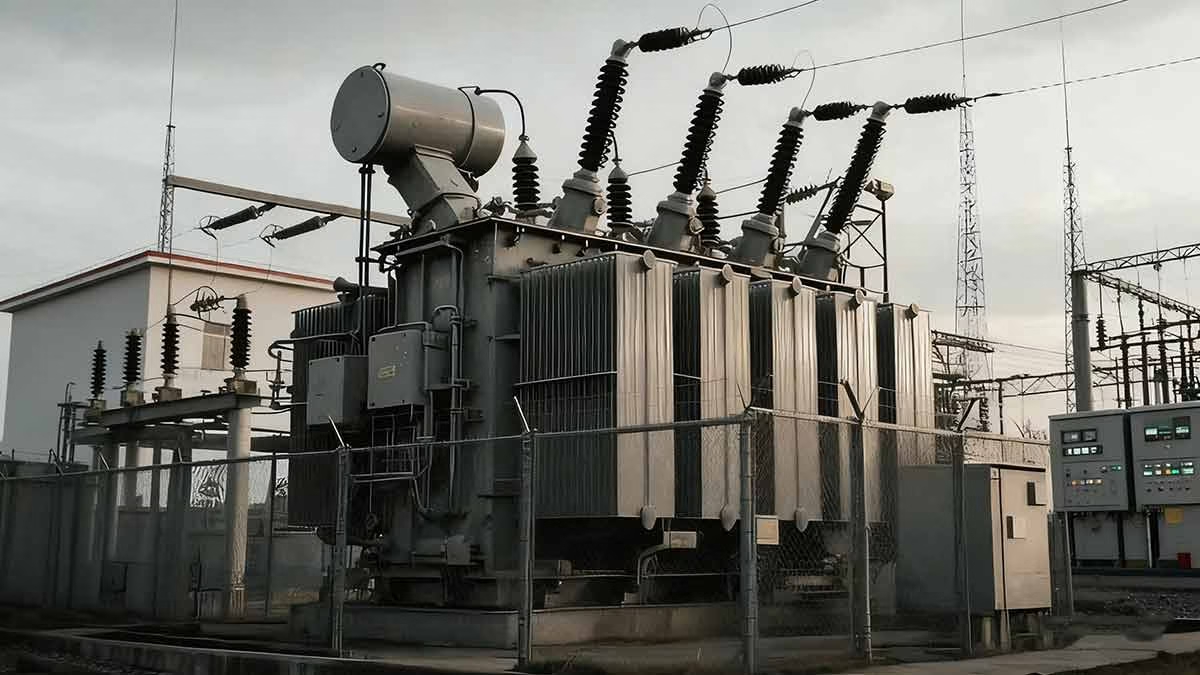
In an industrial plant with multiple parallel transformers, mismatched impedances (4% and 6%) caused unequal load sharing—one transformer carried 70% of the load, while the other carried 30%. By replacing the 6% impedance unit with a 4% model, we achieved balanced load distribution, reducing operating temperatures and extending transformer life.
Impedance’s Impact on System Performance
- Fault Current Limitation: Higher impedance reduces short-circuit current (e.g., a 5% impedance transformer limits fault current to 20x rated current, while a 10% impedance unit limits it to 10x). This simplifies protection system design and reduces stress on equipment.
- Voltage Regulation: Higher impedance increases voltage drop under load (e.g., a 6% impedance transformer may have 4% voltage regulation, while a 4% impedance unit has 2.5%). This is critical for sensitive loads requiring stable voltage.
- Parallel Operation: Transformers in parallel must have impedance ratings within ±10% of each other (per ANSI/IEEE C57.12.00) to ensure equal load sharing. Mismatched impedances can lead to overheating and premature failure.
For a utility substation upgrade, we needed to limit short-circuit current from 31.5kA to 20kA. By selecting transformers with 8% impedance instead of the standard 5%, we achieved the desired fault current reduction without adding external reactors—saving $120,000 in equipment costs.
Efficiency Ratings: From Standards to Savings
- Mandatory Standards: DOE 2016 (U.S.) requires distribution transformers (10-2500kVA) to meet minimum efficiency levels (e.g., 97.3% for 1000kVA, 12.47kV transformers). EU Ecodesign (EN 50581) sets similar requirements for the European market.
- Premium Efficiency: Transformers meeting IE3 or IE4 standards offer 15-30% lower losses than standard models. For example, an IE3 1000kVA transformer has no-load losses of 1.2kW and load losses of 6.5kW, compared to 1.8kW and 8.2kW for a standard model.
- Lifecycle Cost Analysis: While premium-efficiency transformers cost 10-20% more upfront, the energy savings often deliver a return on investment (ROI) within 2-5 years.
A municipal government upgraded 20 standard-efficiency transformers (97.0% efficiency) to IE3 models (98.5% efficiency) for a total investment of $300,000. The annual energy savings of $75,000 resulted in a 4-year ROI, aligning with the city’s sustainability goals and reducing carbon emissions by 350 tons per year.
Balancing Impedance and Efficiency
There’s a inherent tradeoff between impedance and efficiency:
- Lower Impedance: Typically improves efficiency (reduces copper losses) but allows higher fault currents, requiring more robust protection systems.
- Higher Impedance: Limits fault currents but increases copper losses, reducing efficiency.
- Modern Design Solutions: Advanced core materials (e.g., amorphous metal) and optimized winding configurations help balance these tradeoffs, delivering both low impedance and high efficiency.
For a data center requiring both low fault currents and high efficiency, we specified transformers with 5% impedance and IE3 efficiency ratings. The design used amorphous metal cores to minimize no-load losses and optimized winding geometry to reduce copper losses—achieving a 98.7% efficiency rating while limiting fault currents to 20x rated value.
Economic Implications of Impedance and Efficiency
- Initial Costs: Higher impedance transformers may cost 5-10% more due to additional winding material. Premium-efficiency transformers cost 10-20% more than standard models.
- Operating Costs: Efficiency directly impacts energy bills—each 1% increase in efficiency for a 1000kVA transformer operating 8760 hours/year at $0.15/kWh saves $1314 annually (1000kVA × 0.01 × 8760 × $0.15).
- Lifecycle Costs: The total cost of ownership (TCO) includes initial purchase, installation, energy, maintenance, and replacement costs. Premium-efficiency transformers often have 20-30% lower TCO over a 20-year lifespan.
We helped a manufacturing client conduct a TCO analysis comparing standard and premium-efficiency transformers. The premium model cost $25,000 more upfront but saved $18,000 annually in energy costs, resulting in a 1.4-year ROI and $285,000 in total savings over 20 years.
Temperature Rise and Insulation Class: Key to Transformer Longevity
Temperature rise and insulation class are often overlooked but are critical for transformer lifespan and reliability. These ratings define how much heat the transformer can safely dissipate and how well its insulation can withstand elevated temperatures.
Understanding Temperature Rise Ratings
- Definition: Temperature rise is the maximum allowable increase in winding temperature above ambient temperature (30°C for standard ratings) when the transformer is operating at full load.
- Standard Ratings: 55°C, 65°C, and 80°C for oil-immersed transformers; 115°C for dry-type transformers (per ANSI/IEEE C57.12.00 and NEMA ST-20).
- Measurement Methods: Average winding temperature rise is measured using the resistance method (calculating temperature from changes in winding resistance), while top-oil temperature rise is measured directly with thermometers.
In a chemical plant with high ambient temperatures (40°C), a transformer with a 65°C temperature rise had a maximum winding temperature of 105°C (40+65). This exceeded the insulation class’s maximum temperature, leading to premature insulation degradation. We recommended a transformer with a 55°C temperature rise, reducing the maximum winding temperature to 95°C and extending lifespan.
Insulation Class: Temperature Tolerance Limits
Insulation class is defined by the maximum temperature the insulation system can withstand continuously without significant degradation:
| Insulation Class | Maximum Continuous Temperature | Typical Applications |
|---|---|---|
| Class A | 105°C | Legacy transformers, low-temperature environments |
| Class B | 130°C | Standard oil-immersed transformers |
| Class F | 155°C | High-temperature environments, dry-type transformers |
| Class H | 180°C | Extreme-temperature applications (e.g., industrial furnaces) |
A client operating a steel mill required transformers for a high-temperature area (ambient temperature up to 50°C). We specified Class F insulation (155°C maximum) with a 65°C temperature rise, ensuring the maximum winding temperature (50+65=115°C) remained well below the insulation’s limit. This eliminated the frequent failures the client had experienced with Class B insulation transformers.
How These Ratings Impact Loading Capacity
- Continuous Loading: The transformer’s continuous kVA rating is based on its temperature rise and insulation class. Exceeding the temperature rise rating increases insulation aging.
- Overload Capacity: Short-term overloads increase temperature rise—e.g., a 10% overload increases temperature rise by ~20% (due to load losses increasing with the square of current).
- Ambient Temperature Adjustments: Higher ambient temperatures reduce allowable loading. For example, a Class B transformer with a 65°C temperature rise operating at 40°C ambient (10°C above standard) must be de-rated by ~15%.
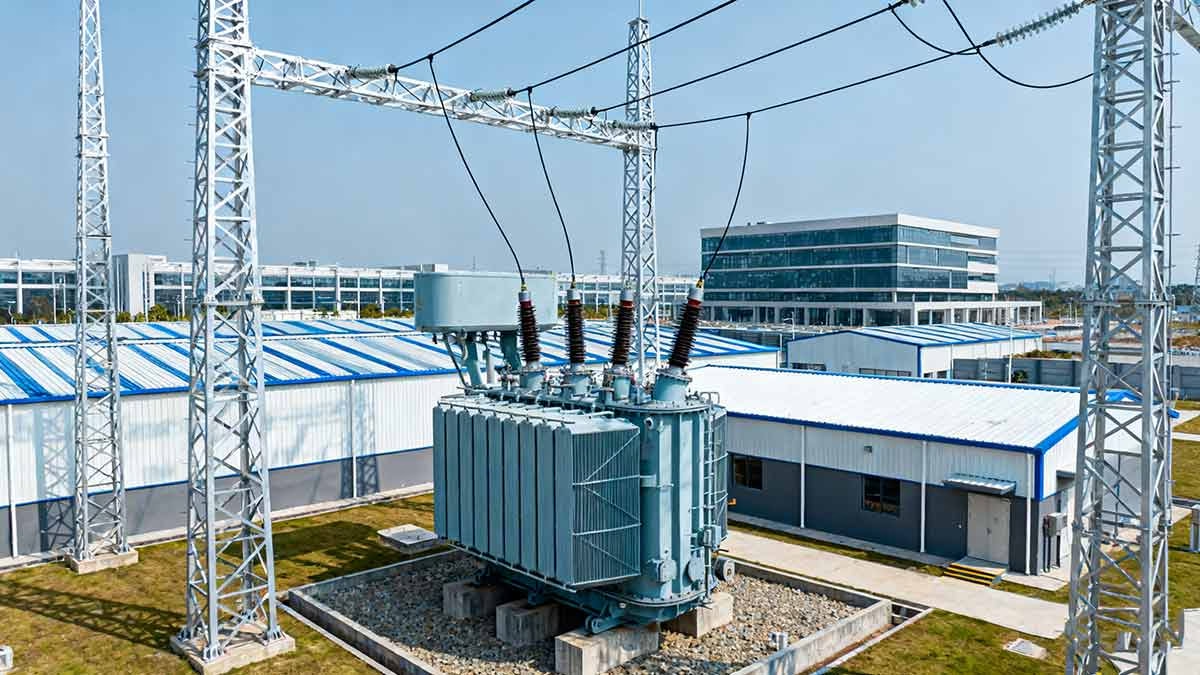
In a desert location with average ambient temperatures of 45°C, we de-rated a 2000kVA Class B transformer (65°C rise) to 1700kVA. We also installed oil coolers to maintain temperature rise within limits, ensuring the transformer could handle peak loads without overheating.
Extending Transformer Lifespan Through Temperature Management
- Insulation Aging Mechanism: High temperatures accelerate the breakdown of insulation materials (e.g., paper, oil). The “10°C Rule” states that insulation life halves for every 10°C increase above the rated temperature.
- Cumulative Damage: Even short periods of overheating can cause cumulative damage. For example, a 20°C over-temperature for 1 hour is equivalent to 2 hours of normal operation in terms of insulation aging.
- Preventive Measures: Regular temperature monitoring, proper ventilation, and avoiding prolonged overloads are key to extending lifespan.
A utility company experienced premature failures in transformers located in urban areas with poor ventilation. By installing temperature monitoring systems and improving airflow around the transformers, we reduced average winding temperatures by 15°C—extending the expected lifespan from 15 to 30 years.
Cooling Systems: Matching to Temperature Rise Ratings
Cooling systems are designed to maintain temperature rise within rated limits:
- ONAN (Oil Natural Air Natural): Passive cooling using natural convection of oil and air. Suitable for small transformers (≤500kVA) with low temperature rise ratings.
- ONAF (Oil Natural Air Forced): Natural oil convection with forced air cooling (fans). Increases capacity by 30-40% compared to ONAN.
- OFAF (Oil Forced Air Forced): Forced oil circulation (pumps) and forced air cooling. Increases capacity by 60-80% compared to ONAN.
- ODAF (Oil Directed Air Forced): Directed oil flow to critical components, used for large power transformers (≥10,000kVA).
A manufacturing plant needed to increase the capacity of an existing 1000kVA ONAN transformer. By adding fans to convert it to an ONAF cooling system, we increased its capacity to 1350kVA—avoiding the need for a full transformer replacement and saving $80,000.
Environmental and Sustainability Considerations
- Energy Efficiency: Lower temperature rise ratings correlate with higher efficiency, as reduced heat generation means fewer energy losses.
- Cooling System Energy Use: Forced cooling systems (ONAF, OFAF) consume energy, but the tradeoff is often justified by increased capacity and reduced insulation aging.
- Insulation Materials: Modern insulation materials (e.g., vacuum-dried paper, synthetic oils) offer better temperature resistance and environmental performance than traditional materials.
For a client focused on sustainability, we specified transformers with low temperature rise ratings (55°C) and Class F insulation made from recycled materials. The design reduced energy losses by 20% and eliminated the need for forced cooling, aligning with the client’s carbon neutrality goals.
Monitoring and Maintenance Best Practices
- Temperature Monitoring: Install temperature sensors (e.g., thermocouples, resistance temperature detectors) to track winding and oil temperatures in real-time.
- Insulation Testing: Regular dielectric tests (e.g., power factor, partial discharge) to assess insulation condition.
- Cooling System Maintenance: Clean fans and pumps, check oil levels, and replace filters to ensure optimal cooling performance.
We implemented a remote monitoring system for a client’s transformer fleet, providing real-time alerts for abnormal temperatures. This allowed the client to address cooling system failures and overloads before they caused damage—reducing unplanned downtime by 80%.
Conclusion
Power transformer ratings are the blueprint for safe, efficient, and reliable operation. From voltage and current to kVA, impedance, efficiency, temperature rise, and insulation class, each parameter plays a critical role in determining how well a transformer integrates with your system, handles load demands, and withstands operational stresses.
As a transformer manufacturer and system design expert, we’ve seen firsthand how mastering these ratings can prevent costly failures, optimize energy usage, and extend asset lifespan. Whether you’re selecting a transformer for a new industrial facility, upgrading a utility substation, or integrating renewable energy sources, the key is to align ratings with your specific application requirements—considering not just current needs but also future growth and environmental conditions.
By prioritizing proper rating selection, conducting thorough load analyses, and implementing proactive monitoring and maintenance, you can ensure your power transformers deliver consistent performance for decades. For personalized guidance on transformer ratings or to discuss your specific project needs, contact our team of experienced engineers—we’re here to help you make informed decisions that drive efficiency, reliability, and cost savings.
More FAQ About Power Transformer Rating
Q: What is Power Transformer Rating and Why Is It Expressed in kVA?
A: Power transformer rating refers to the maximum electrical power a transformer can handle continuously while maintaining safe operating temperatures and performance integrity. It is typically expressed in kilovolt-amperes (kVA) or megavolt-amperes (MVA) because transformers only transmit and distribute power rather than converting energy like motors. The kVA unit represents apparent power, which includes both active power (kW) and reactive power (kVAR) needed to maintain magnetic fields in inductive loads, making it a comprehensive measure of the transformer’s load-handling capacity. This rating is determined by manufacturers based on long-term reliable operation requirements, usually ensuring a service life of 17 to 20 years under rated conditions.
Q: How to Calculate the kVA Rating of a Single-Phase Power Transformer?
A: The kVA rating of a single-phase power transformer is calculated using the fundamental formula: S (kVA) = V (V) × I (A) / 1000, where V is the rated voltage in volts, and I is the rated current in amperes. For practical applications, this calculation must consider the actual load characteristics, including the power factor (cosφ) of the connected equipment. If only the active power (kW) of the load is known, the formula can be adjusted to S (kVA) = P (kW) / cosφ / η, where η is the transformer efficiency (usually above 95% for medium and large transformers, which can be approximated as 1 for preliminary estimation). It is crucial to ensure the calculated rating accounts for real operating conditions to avoid overloads.
Q: What Is the Calculation Method for Three-Phase Power Transformer Rating?
A: For three-phase power transformers, the kVA rating calculation incorporates the phase difference factor. The standard formula is: S (kVA) = √3 × V_line (kV) × I_line (A), where √3 (approximately 1.732) is the correction factor for three-phase systems, V_line is the line voltage in kilovolts, and I_line is the line current in amperes. When selecting a three-phase transformer, manufacturers may specify different winding capacity configurations, such as 100/100/100 (equal capacity for all windings) or 100/100/66.7 (third winding at 66.7% of rated capacity), which must be considered in the rating calculation and application.
Q: What Are the Key Factors Affecting Power Transformer Rating?
A: Several critical factors determine power transformer rating, with insulation temperature limits being the most fundamental—insulation materials have specific thermal tolerances, and exceeding these limits accelerates degradation and leads to failure. Core and copper losses also play a role: core losses (constant regardless of load) and copper losses (increasing with load current) generate heat that impacts thermal capacity. Cooling mechanisms are another key factor; enhanced cooling systems (e.g., forced air or oil cooling) can increase load capacity by 20–30% compared to natural cooling. Additionally, ambient temperature, installation altitude, load type (continuous, intermittent, or impact), and power factor all influence the actual achievable rating.
Q: What is the Difference Between the Power Transformer Rating in kVA and kW?
A: The core difference lies in the type of power measured: kVA (kilovolt-amperes) represents apparent power, which includes both active (useful) power (kW) and reactive (magnetizing) power (kVAR), while kW measures only active power. Transformers are rated in kVA because their capacity is limited by thermal constraints from total current flow (regardless of power factor), not just the useful power they transmit. For example, a 100 kVA transformer powering a load with a 0.8 power factor can only deliver 80 kW of active power. Confusing kVA and kW can lead to undersizing transformers, causing overloads and premature failure.
Q: How to Select the Correct Power Transformer Rating for a Commercial Building?
A: Selecting the right kVA rating for commercial buildings involves four key steps: first, conduct a comprehensive load analysis to list all electrical equipment (lighting, HVAC, servers, elevators) and classify their load types (continuous, intermittent, impact). Second, calculate total demand active power by applying demand factors (0.7–0.9 for industrial/commercial loads) and diversity factors (accounting for non-simultaneous peak loads). Third, determine the average power factor (typically 0.8–0.95 for commercial systems) and use the formula S (kVA) = Total Demand Power (kW) / Power Factor / Efficiency. Finally, add a 10–25% safety margin and 10–20% future expansion capacity, then select the nearest standard kVA rating (e.g., 100, 160, 250 kVA) from manufacturer specifications.
Q: What Happens When a Transformer Operates Beyond Its Rated Capacity?
A: Operating a transformer beyond its rated capacity causes a cascade of adverse effects. Increased current flow raises copper losses, leading to excessive heating that degrades insulation materials and reduces lifespan—insulation degradation increases the risk of internal short circuits and electrical breakdown. For oil-immersed transformers, overheating accelerates oil degradation, reducing its cooling and insulating properties and forming sludge deposits that further impair performance. Overloading also reduces efficiency, increases energy losses and operational costs, and causes voltage regulation issues (fluctuations that damage sensitive electronics). In extreme cases, excessive heat and mechanical stress (from increased magnetic flux) can lead to winding deformation, core damage, or even catastrophic explosions and fires.
Q: How to Adjust Power Transformer Rating for High-Altitude Installations?
A: High-altitude installations reduce air density, impairing heat convection and dielectric strength, requiring transformer rating adjustments. For every 1000-meter increase above sea level, air density decreases by approximately 10%, reducing heat dissipation efficiency. As a general rule, transformers require a 1–3% derating per 1000 meters above 1000 meters to maintain safe operating temperatures. Additionally, reduced air insulation strength may require voltage derating or enhanced insulation materials for high-voltage windings. Manufacturers typically provide altitude correction charts; for example, a 200 kVA transformer at 3000 meters may need to be derated to 185–190 kVA. Compliance with IEC 60076-1 and local standards is mandatory for high-altitude rating adjustments.
Q: What Are the Common Misconceptions About Power Transformer Rating?
A: One common misconception is equating kVA rating to kW output, ignoring power factor—this can lead to undersizing transformers for inductive loads. Another myth is that transformers can operate at rated capacity indefinitely regardless of ambient conditions; in reality, high temperatures require derating. Many also believe that dry-type transformers have the same overload capacity as liquid-immersed units, but their lower heat dissipation limits overloads significantly. Additionally, some assume that a transformer’s rating is fixed, but it can be dynamically adjusted with cooling upgrades or ambient temperature changes. Finally, there is a misunderstanding that higher kVA ratings are always better; oversizing leads to higher initial costs, lower efficiency at partial loads, and wasted energy.