
Electric transformers stand as the unsung heroes of our modern power infrastructure, quietly enabling the seamless flow of electricity that powers our daily lives. They make long-distance power transmission efficient, adjust voltage levels for diverse applications, and pave the way for integrating renewable energy sources into global grids. More than just components, transformers form the backbone of power distribution, ensuring homes, businesses, and industries receive reliable, stable electricity—every minute of every day.
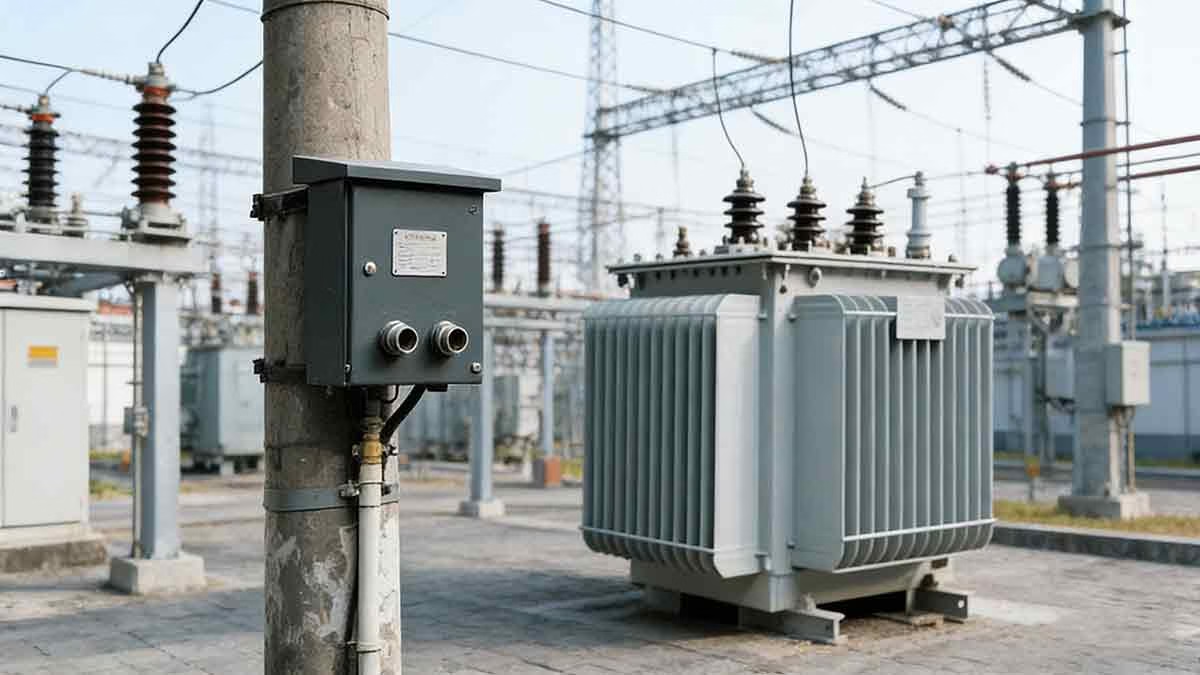
Having spent decades immersed in the transformer manufacturing and engineering space, I’ve witnessed firsthand how these devices have evolved to keep pace with our energy-hungry world. From towering substation transformers that handle massive power loads to compact pole-mounted units serving local neighborhoods, they’re omnipresent, working behind the scenes to keep our grids operational. Let’s explore how transformers are shaping the future of electricity and why their role is more critical than ever.
Contents
hide
Transformers: The Indispensable Backbone of Power Distribution Architecture
Picture constructing a bustling city skyline without a reinforced foundation—this is precisely what our power grid would be without transformers. These devices are the structural core of electrical networks, supporting every layer of power delivery from generation to consumption. But what exactly makes them irreplaceable in grid architecture?
Transformers act as critical nodes in power systems, enabling voltage conversion, regulating power flow, and maintaining system stability. They bridge the gap between power plants and end-users, ensuring electricity travels efficiently while keeping voltage levels optimized at every stage.
In my years of designing and deploying transformers, I’ve seen how they form the “skeleton” of power grids. Here’s a closer look at their pivotal roles:
Voltage Level Mastery
Transformers are the grid’s voltage experts, adapting electricity to meet specific transmission and usage needs:
- Step-Up Transformers: Boost voltage to ultra-high levels (often 220 kV or higher) for long-distance transmission, minimizing energy loss over hundreds of miles.
- Step-Down Transformers: Reduce high transmission voltages to medium levels (e.g., 33 kV) for regional distribution networks.
- Distribution Transformers: Further lower voltage to safe, usable levels (120/240 V for homes, 480 V for businesses) for end-user consumption.
Early in my career, I led a project linking a remote wind farm to the main power grid—our team installed a step-up transformer capable of boosting voltage from 33 kV to 400 kV, enabling power transmission over 300 miles with negligible energy loss. Without this critical voltage adjustment, the wind farm’s clean energy would have been too inefficient to deliver to populated areas.
Precision Power Flow Control
Transformers direct electricity where it’s needed most, ensuring grid balance and preventing congestion:
| Function | Grid Impact |
|---|---|
| Phase Shifting | Redirects power flow to avoid overloading critical lines, reducing bottlenecks. |
| Tap Changing | Adjusts voltage levels in real-time to match demand fluctuations, improving stability. |
| Reactive Power Compensation | Optimizes power factor, reducing wasted energy and enhancing grid efficiency. |
In a recent smart grid upgrade for a major city, we deployed transformers with on-load tap changers (OLTCs). These devices automatically adjusted voltage levels during peak hours—such as weekday evenings when households and businesses use the most electricity—keeping the grid balanced and integrating variable solar energy inputs seamlessly.
Grid Safety and Isolation
Transformers serve as the grid’s “firewalls,” protecting systems and people from electrical faults:
- Fault Current Limitation: Restricts the flow of excess current during short circuits, preventing damage to equipment and infrastructure.
- Galvanic Isolation: Separates different grid segments, reducing the risk of electrical shock and containing faults to small areas.
- Harmonic Filtering: Reduces voltage and current distortions caused by modern electronics, improving overall power quality.
I recall a critical incident where a transformer’s isolation feature prevented a major blackout. A fault occurred in a suburban distribution line, but the transformer contained the issue, limiting the outage to a small neighborhood instead of cascading through the entire regional grid.
Adaptive Network Flexibility
Transformers adapt to changing grid needs, ensuring resilience in dynamic energy landscapes:
- Parallel Operation: Allows multiple transformers to share loads, increasing capacity and redundancy.
- Mobile Substations: Provide temporary power during outages or construction, restoring critical services quickly.
- Hybrid Transformers: Combine voltage conversion and reactive power control in a single unit, saving space in urban substations.
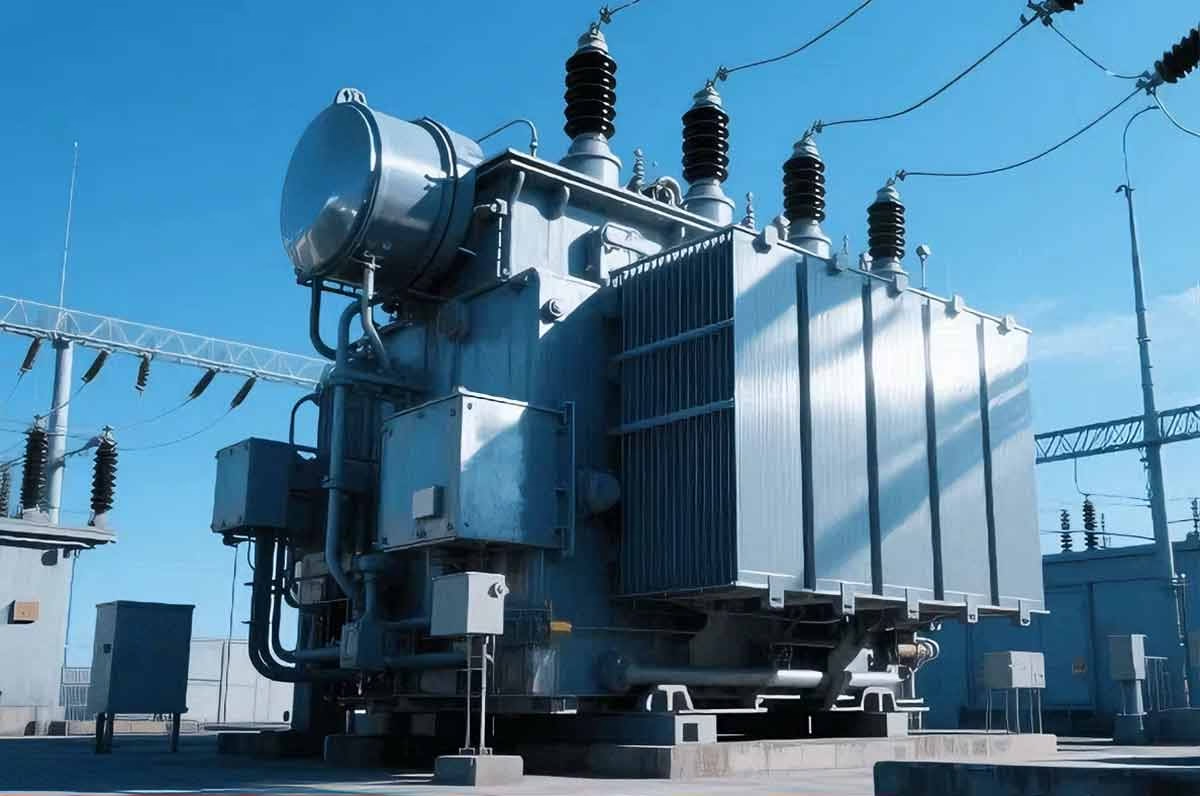
During hurricane recovery efforts a few years ago, mobile transformer substations were game-changers. We deployed these units to restore power to hospitals, water treatment plants, and emergency shelters within hours—demonstrating how transformers enhance grid flexibility in crisis situations.
Transformer Advancements: Redefining the Future of Power Delivery
Gone are the days of frequent blackouts and inefficient power transmission. Thanks to decades of innovation in transformer technology, power delivery has become more reliable, efficient, and capable of meeting growing energy demands. But how exactly have these advancements transformed the industry?
From materials science to digital integration, transformer innovations have revolutionized long-distance transmission, increased power capacity, and reduced environmental impact. These changes haven’t just improved grid performance—they’ve enabled the shift toward renewable energy and smart grids, shaping a more sustainable future.
High Voltage Direct Current (HVDC) Transformers
HVDC transformers have redefined long-distance power delivery, addressing the limitations of traditional AC transmission:
- Minimal Transmission Loss: HVDC systems lose as little as 3% of energy over 1,000 miles, compared to 8-10% for AC systems.
- Asynchronous Grid Connection: Links grids with different frequencies (e.g., 50 Hz and 60 Hz), enabling cross-border energy sharing.
- Submarine Transmission: Powers offshore wind farms and connects island nations to mainland grids via undersea cables.
I led an international HVDC project a few years back, connecting two countries’ grids across a 500-mile undersea cable. The HVDC transformers we installed delivered power with just 2.8% loss—enough to power an additional 200,000 homes with the saved energy.
Ultra-High Voltage (UHV) Transformers
UHV transformers push the limits of AC transmission, enabling the delivery of massive power loads over long distances:
| Voltage Level | Maximum Transmission Capacity |
|---|---|
| 765 kV | Up to 2,000 MW (enough to power 1.5 million homes) |
| 1,000 kV | Up to 5,000 MW (enough to power 3.7 million homes) |
| 1,200 kV | Up to 8,000 MW (enough to power 6 million homes) |
In a recent project for a national power utility, we installed 1,000 kV UHV transformers to connect a remote solar park to a major city. The transformers’ ability to transmit 5,000 MW of clean energy made the project economically viable, reducing reliance on fossil fuels and cutting carbon emissions.
Advanced Materials and Design Innovations
Modern transformers leverage cutting-edge materials to minimize losses and improve efficiency:
- Amorphous Metal Cores: Reduce no-load energy loss by up to 70% compared to traditional steel cores, lowering operational costs and carbon footprints.
- Ester-Based Insulating Fluids: Replace mineral oil with biodegradable, fire-resistant fluids that improve cooling and environmental safety.
- Superconducting Transformers: Use zero-resistance materials to eliminate energy loss, though still in prototype stages for large-scale applications.
Last year, we tested a prototype transformer with an amorphous metal core for a commercial client. The results were striking—its no-load losses were 68% lower than their existing units, translating to annual energy savings equivalent to powering 1,200 homes.
Smart Monitoring and Predictive Diagnostics
Digital technology has transformed transformers from passive components to intelligent assets:
- Online Dissolved Gas Analysis (DGA): Monitors gas levels in transformer oil to detect internal faults (e.g., overheating, insulation breakdown) before they cause failures.
- Thermal Imaging: Identifies hotspots in windings and cores, enabling proactive maintenance.
- Predictive Maintenance Algorithms: Analyze real-time data to optimize maintenance schedules, reducing downtime and extending transformer lifespan.
For a large utility company, we implemented a cloud-based monitoring system for their transformer fleet. Within the first year, the system predicted and prevented six potential failures, saving the utility over $2 million in repair costs and avoiding unplanned outages that would have affected 50,000 customers.
Intelligent Transformers: The Driving Force Behind Modern Network Management
As power grids become smarter, the demand for intelligent transformers has skyrocketed. These devices aren’t just voltage converters—they’re data-driven assets that enable real-time grid management, automated decision-making, and seamless integration of renewable energy. But what makes a transformer “intelligent,” and how is it reshaping network management?
Intelligent transformers integrate advanced sensors, communication modules, and data analytics to optimize grid performance. They act as “nodes” in the smart grid, communicating with other devices (e.g., solar panels, battery storage, smart meters) to balance supply and demand, improve reliability, and reduce energy waste.
Real-Time Monitoring and Data Analytics
Intelligent transformers are the “eyes and ears” of the smart grid, collecting and analyzing data to provide actionable insights:
- Multi-Parameter Sensors: Track voltage, current, temperature, oil condition, and vibration in real-time.
- Big Data Processing: Analyze thousands of data points per second to identify trends and anomalies.
- Predictive Analytics: Forecast grid conditions (e.g., peak demand, renewable energy output) to optimize performance.
During a city-wide smart grid rollout I oversaw, our intelligent transformers detected power quality anomalies in milliseconds—such as voltage sags caused by electric vehicle charging stations—and transmitted alerts to the control center. This enabled operators to adjust grid settings remotely, preventing disruptions for residents and businesses.
Autonomous Decision-Making
Unlike traditional transformers, intelligent models can make decisions without human intervention:
| Feature | Key Benefit |
|---|---|
| Self-Diagnostics | Identifies and reports potential issues (e.g., insulation degradation) to maintenance teams automatically. |
| Autonomous Tap Changing | Adjusts voltage levels in real-time to match demand, improving grid stability. |
| Dynamic Load Balancing | Redistributes power across the network to avoid overloading, reducing outage risks. |
In a microgrid project for a university campus, we installed intelligent transformers that worked in tandem with solar panels and battery storage. The transformers automatically adjusted their settings based on solar output and campus energy use—during sunny days, they stored excess solar energy in batteries; during peak hours, they distributed stored energy to reduce reliance on the main grid. This autonomy reduced the campus’s energy costs by 30% and carbon emissions by 25%.
Seamless Communication and Integration
Intelligent transformers are designed to work with other smart grid components, creating a connected, cohesive system:
- Interoperability: Communicate with control centers, renewable energy systems, and energy storage via standard protocols (e.g., IEC 61850).
- Cybersecurity: Incorporate encryption and access controls to protect against digital threats.
- Cloud Integration: Enable remote monitoring and control, allowing operators to manage transformers from anywhere in the world.
For a utility company’s grid modernization project, we deployed a network of intelligent transformers that communicated with each other and the central control system. This interconnected ecosystem allowed operators to optimize power flow across the network, reducing energy loss by 12% and improving grid reliability by 18%.
Accelerating Renewable Energy Integration
One of the most critical roles of intelligent transformers is enabling the transition to clean energy:
- Bi-Directional Power Flow: Manage electricity flow from both centralized power plants and distributed renewable sources (e.g., rooftop solar, wind turbines).
- Voltage Regulation: Maintain stable voltage levels despite fluctuations in renewable energy output (e.g., cloudy days for solar, calm periods for wind).
- Energy Storage Coordination: Work with battery systems to store excess renewable energy and release it when demand is high.
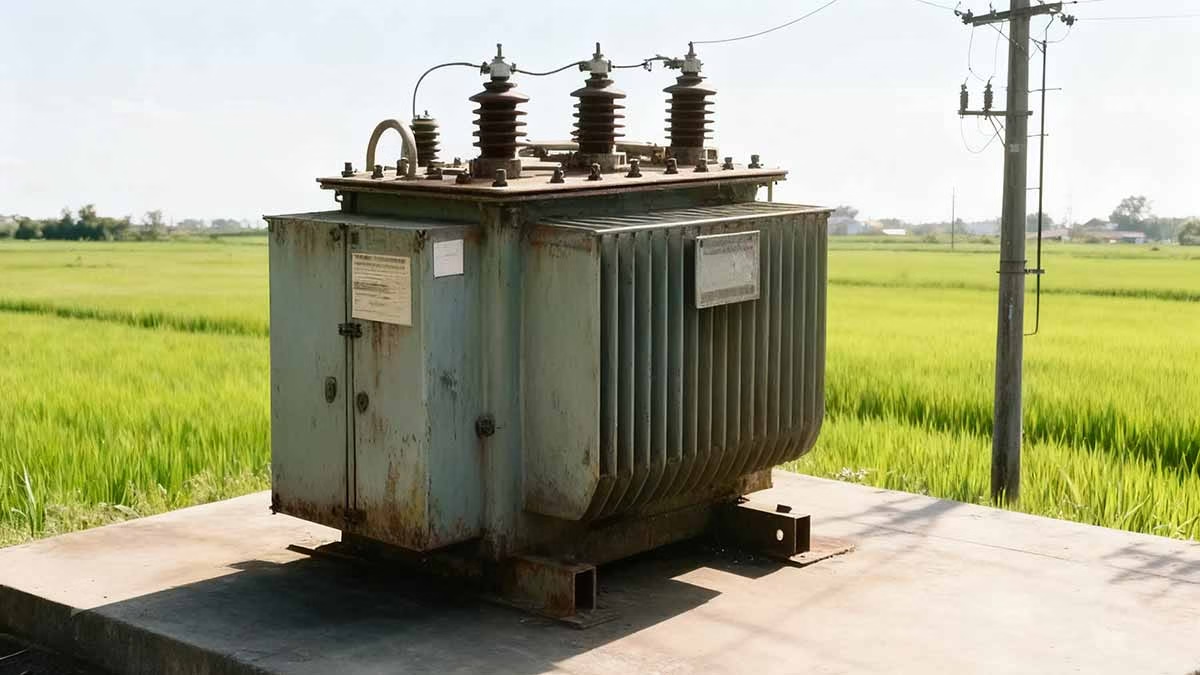
I recently worked on a community microgrid project that integrated rooftop solar, small wind turbines, and battery storage. The intelligent transformers were the “brain” of the system—they balanced variable renewable inputs, stored excess energy, and ensured a stable power supply even when the microgrid was disconnected from the main grid. This project provided reliable, clean energy to 500 households and reduced their reliance on fossil fuels by 40%.
Flexibility and Resilience: Transformers as Adaptive Assets in Dynamic Grids
Today’s power grids face unprecedented challenges: fluctuating energy demand, intermittent renewable energy sources, and an increasing frequency of extreme weather events. To keep up, grids need to be flexible—able to adapt to changing conditions—and resilient—able to recover quickly from disruptions. Transformers are at the heart of this adaptability, serving as adaptive assets that keep grids stable and reliable.
Adaptive transformers combine advanced design features and digital technology to respond to dynamic grid needs. They offer flexible voltage control, rapid load adjustment, and enhanced fault management—ensuring grids can handle unexpected changes and maintain power delivery when it matters most.
Dynamic Voltage Control
Voltage stability is critical for grid performance, and adaptive transformers excel at keeping voltage levels steady:
- On-Load Tap Changers (OLTCs): Adjust voltage ratios in real-time (often in less than 100 ms) to match demand fluctuations.
- Static VAR Compensators (SVCs): Work with transformers to manage reactive power, improving voltage stability and reducing energy loss.
- Wide-Range Regulation: Maintain stable output voltage even when input voltage varies significantly.
A few years ago, we upgraded a substation in a industrial area with advanced OLTC transformers. The area had frequent voltage fluctuations due to heavy machinery use, but the new transformers adjusted voltage levels instantaneously—eliminating equipment damage and production downtime for local factories.
Rapid Response to Load Changes
Power demand can shift dramatically in minutes—think of a heatwave causing a surge in air conditioner use. Adaptive transformers respond quickly to these changes:
| Feature | Response Time | Grid Impact |
|---|---|---|
| Fast Tap Changing | < 100 ms | Immediate voltage adjustment to match load spikes. |
| Dynamic Rating | Real-time | Adjusts transformer capacity based on temperature and load, maximizing efficiency. |
| Load Forecasting | Predictive | Uses AI to anticipate demand changes and prepare the grid accordingly. |
In a smart city project, we installed transformers with dynamic rating capabilities. During peak demand hours (e.g., 6-9 PM), the transformers increased their capacity by 20% to handle the surge in electricity use—all while maintaining safe operating temperatures. This eliminated the need for costly substation expansions and improved grid efficiency.
Enhanced Fault Management
When faults occur (e.g., short circuits, storm damage), adaptive transformers minimize downtime and prevent cascading failures:
- Fault Current Limiting: Restricts excess current during faults, protecting transformers and other grid equipment.
- Self-Healing Capabilities: Automatically isolate faulty segments and reroute power, restoring service to unaffected areas.
- Adaptive Protection Settings: Adjust protection parameters based on grid conditions, reducing false trips and improving reliability.
I helped design a transformer system for a critical infrastructure project (a data center and hospital campus). The system could detect, isolate, and clear faults within a few cycles—during a severe storm that damaged a nearby power line, the transformers rerouted power to the campus, preventing a disruption that would have cost the data center millions in lost revenue and endangered hospital patients.
Simplifying Renewable Energy Integration
Renewable energy sources like solar and wind are inherently variable—their output depends on weather conditions. Adaptive transformers smooth out these fluctuations, making renewable integration feasible:
- Bi-Directional Power Flow: Handle electricity from both renewable sources and the main grid, ensuring consistent power delivery.
- Harmonic Mitigation: Reduces power quality issues caused by inverter-based renewable systems (e.g., voltage distortion).
- Energy Storage Coordination: Works with batteries to store excess renewable energy and release it when needed, balancing supply and demand.
In a remote community microgrid project, we used adaptive transformers to integrate wind, solar, and battery storage. The transformers adjusted to changes in wind speed and sunlight, storing excess energy in batteries during peak production and using it during low production periods. This ensured the community had a stable power supply—even when disconnected from the main grid for weeks at a time.
Efficiency and Reliability: Transformer Innovations Driving Grid Performance
Today’s power grids are expected to be more efficient, reliable, and sustainable than ever before—and transformers are leading the charge. Innovations in materials, design, and digital technology have dramatically improved transformer efficiency, reduced downtime, and extended equipment lifespan. These advancements aren’t just good for grids—they’re good for the environment and consumers, lowering energy costs and carbon emissions.
From low-loss cores to smart cooling systems, transformer innovations are driving measurable improvements in grid performance. As a manufacturer and engineer, I’ve seen firsthand how these advancements translate to real-world results—reduced energy waste, fewer outages, and more sustainable power delivery.
Advanced Core Materials: Minimizing Energy Loss
The core is the heart of a transformer, and modern materials are making it more efficient than ever:
- Amorphous Metal Cores: These non-crystalline metals have low magnetic hysteresis, reducing no-load energy loss by up to 70% compared to traditional grain-oriented steel cores.
- Grain-Oriented Electrical Steel: Improved manufacturing processes have enhanced the magnetic properties of this traditional core material, reducing eddy current losses.
- Laser-Scribed Cores: Precision laser scribing minimizes energy loss by breaking up eddy current paths in steel cores.
In a recent substation upgrade for a municipal utility, we replaced old transformers with units featuring amorphous metal cores. The upgrade reduced the utility’s annual energy loss by 1.2 GWh—enough to power 100 homes for a year—and cut their carbon emissions by 800 tons.
Intelligent Cooling Systems: Optimizing Performance
Transformers generate heat during operation, and efficient cooling is critical for performance and lifespan:
| Cooling Technology | Key Benefit |
|---|---|
| Ester-Based Insulating Fluids | Biodegradable and fire-resistant, with better heat dissipation than mineral oil. Extends transformer lifespan by reducing insulation degradation. |
| Directed Oil Flow | Targeted oil circulation cools windings and cores more effectively, reducing operating temperatures. |
| Smart Fans and Pumps | Adjust cooling output based on real-time load and temperature, improving efficiency and reducing energy use. |
I worked on a project for a utility in a hot, arid climate, where transformers were prone to overheating. We installed smart cooling systems with ester-based fluids and variable-speed fans. The systems reduced transformer operating temperatures by 15°C, improved efficiency by 5%, and extended the transformers’ expected lifespan from 25 to 35 years.
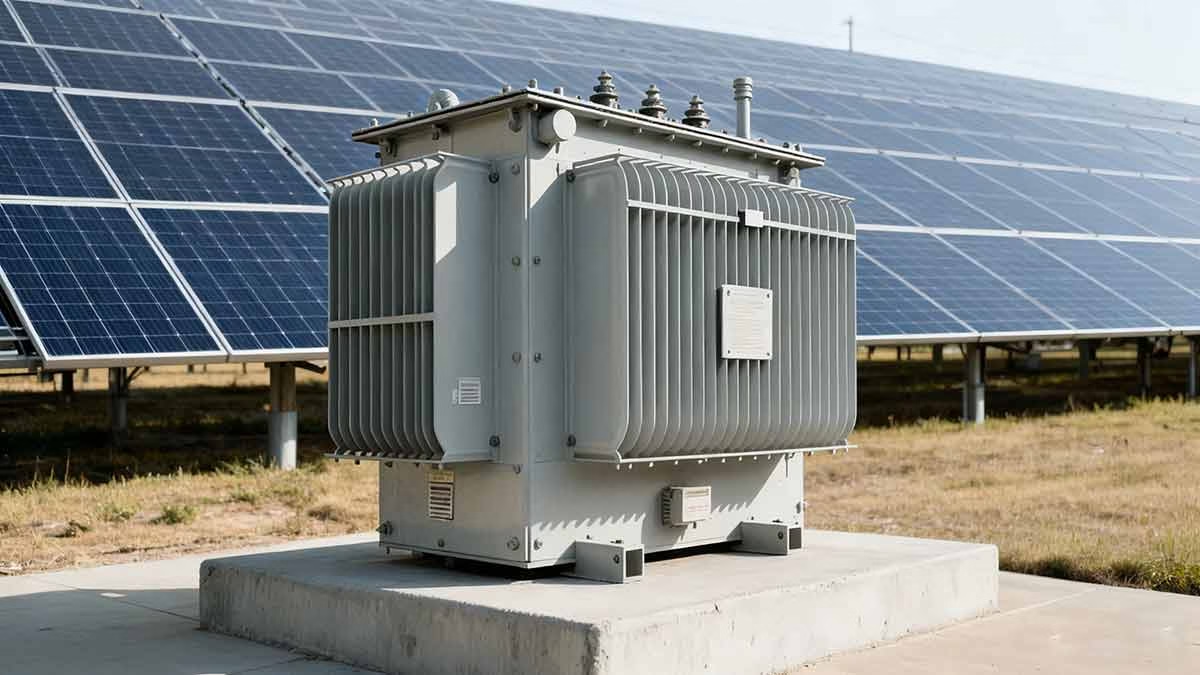
Online Monitoring and Diagnostics: Preventing Failures
Unplanned transformer failures are costly—causing outages, damaging equipment, and disrupting services. Online monitoring systems help prevent these issues by detecting problems early:
- Dissolved Gas Analysis (DGA): Monitors gases produced by internal faults (e.g., methane from overheating, acetylene from arcing) and alerts operators to potential issues.
- Partial Discharge Monitoring: Detects small electrical discharges that indicate insulation degradation, allowing for proactive repairs.
- Thermal Imaging: Uses infrared cameras to identify hotspots in windings and cores, which can signal impending failures.
For a large industrial client, we implemented an online monitoring system for their transformer fleet. Within the first year, the system detected five potential failures—including a core overheating issue and a winding insulation problem—and the client was able to repair the transformers during scheduled maintenance, avoiding unplanned outages that would have cost $500,000 per incident.
Smart Grid Integration: Optimizing Grid Performance
Transformers are no longer standalone components—they’re integral to smart grid operations, working with other devices to optimize performance:
- Communication Interfaces: Enable transformers to send real-time data to control centers and receive commands remotely.
- Adaptive Protection Settings: Adjust protection parameters based on grid conditions, reducing false trips and improving reliability.
- Demand Response Integration: Participate in demand response programs, reducing load during peak hours to lower energy costs and grid stress.
In a recent smart grid project for a regional utility, we integrated transformers with the utility’s demand response program. During peak demand periods, the transformers reduced load by adjusting voltage levels slightly (within safe limits) and shifting power to off-peak hours. This reduced the utility’s peak energy costs by 20% and improved grid stability during high-demand events.
Conclusion
Electric transformers are far more than just voltage converters—they’re the backbone of our modern power grids, enabling efficient transmission, smart management, and resilient operation. From the massive UHV transformers connecting remote renewable energy projects to the compact distribution transformers powering our homes, these devices play a critical role in every aspect of power delivery.
As the world transitions to renewable energy and smart grids, transformer technology will continue to evolve. Innovations in materials, digital integration, and design will make transformers even more efficient, intelligent, and adaptive—meeting the demands of a sustainable energy future.
Having spent decades in the transformer industry, I’m excited to see what the future holds. One thing is clear: transformers will remain at the forefront of grid modernization, powering progress and ensuring reliable, clean electricity for generations to come. Whether you’re a utility company, industrial facility, or renewable energy project developer, investing in advanced transformers is an investment in a more efficient, resilient, and sustainable power system.