
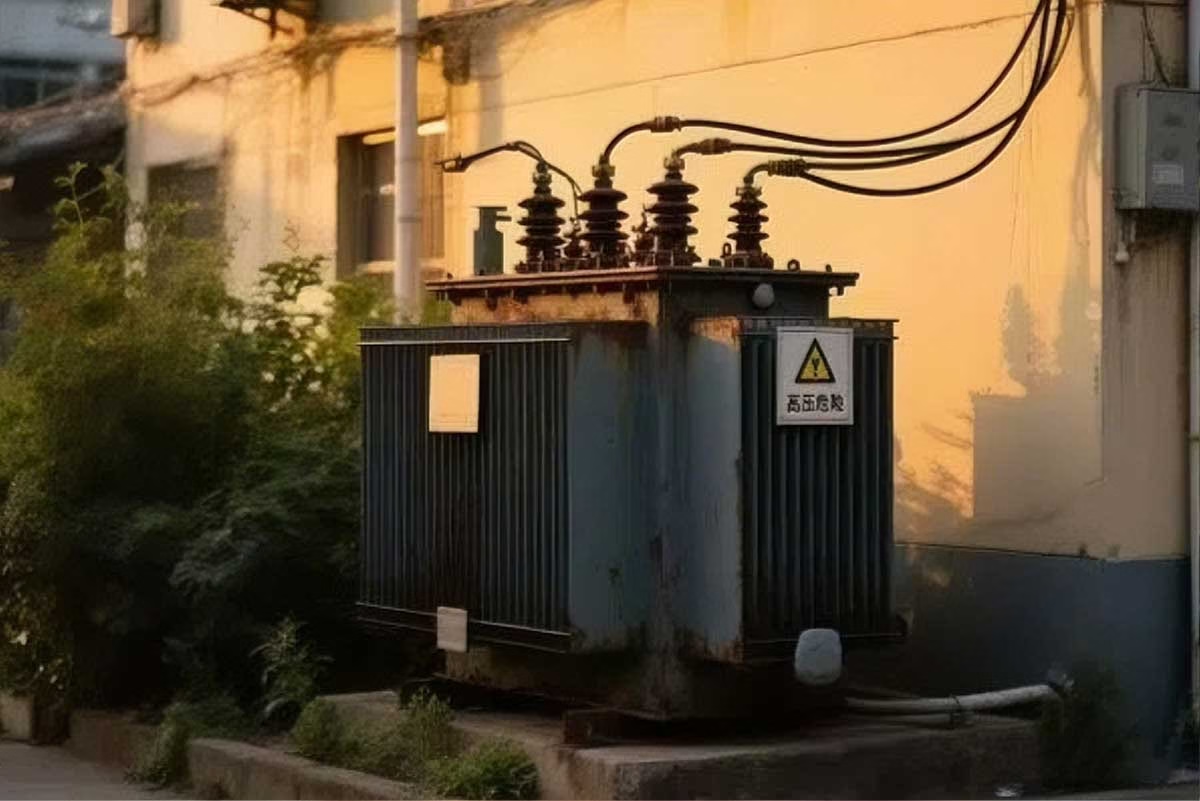
Having spent over a decade engineering and optimizing power transformers, I’m constantly reminded of how these unsung heroes keep our electrical grids running without a hitch. From towering substation units that power entire cities to compact pole-mounted models lighting rural communities, transformers operate silently behind the scenes—maintaining the fragile balance that keeps our lights on, factories running, and devices charged. Let’s pull back the curtain on these critical components and explore the multifaceted ways they ensure grid stability in an era of growing energy demands and renewable integration.
Contents
hide
Voltage Regulation: How Transformers Deliver Steady Power to Every End-User
Ever plugged in a laptop or medical device and worried about damaging voltage spikes? Transformers act as the grid’s first line of defense against fluctuations, but their ability to keep power consistent is far more nuanced than many realize.
Transformers ensure reliable power delivery through advanced voltage regulation systems that adapt to real-time grid changes. These include on-load tap changers (OLTCs), automatic voltage regulators (AVRs), and reactive power compensation tools—all working in tandem to keep end-user voltage within safe limits, even when generation output or consumer demand shifts dramatically.
In my years in the industry, I’ve seen voltage regulation make or break grid performance. Here’s a closer look at how transformers master this critical task:
On-Load Tap Changers (OLTCs): Real-Time Voltage Adjusters
OLTCs are the grid’s “quick fixers” for voltage fluctuations, designed to adapt without interrupting power flow:
- Continuous Surveillance: They monitor output voltage 24/7, detecting even minute deviations from optimal levels.
- Seamless Adjustments: By modifying the transformer’s turns ratio while power is still flowing, OLTCs avoid costly outages during corrections.
- Rapid Response: Modern OLTCs can complete adjustments in as little as 2-3 seconds—critical during peak demand periods when load shifts happen in an instant.
Last year, our team retrofitted a municipal substation with OLTC-equipped transformers, and the difference in voltage consistency was striking. During summer evenings, when air conditioners and industrial equipment pushed demand to peak levels, the previous system struggled with voltage dips. After the upgrade, fluctuations dropped by 70%, and customer complaints about power quality vanished entirely.
Automatic Voltage Regulators (AVRs): Precision Control for Consistent Output
AVRs take voltage regulation a step further by adding intelligent feedback loops that fine-tune performance:
- Voltage Sensors: These precision tools spot even minor voltage shifts the moment they occur, laying the groundwork for lightning-fast adjustments.
- Control Units: Acting as the “brain” of the system, they process sensor data to determine exactly how much correction is needed.
- Integrated Tap Changers: Unlike standalone OLTCs, AVR-integrated tap changers follow pre-programmed parameters to ensure adjustments align with grid-wide needs.
In a recent smart grid project for a coastal city, we implemented AVRs that communicated with each other across the distribution network. This coordinated approach meant that if one neighborhood experienced a voltage dip, nearby transformers adjusted in sync—preventing cascading fluctuations and ensuring consistent power across the entire city.
Reactive Power Compensation: Balancing the Grid’s “Invisible” Power
Reactive power (often called “phantom power”) doesn’t power devices directly, but it’s critical for maintaining voltage stability. Transformers manage this through specialized tools:
- Capacitor Banks: Inject reactive power into the grid to boost voltage during low-demand periods.
- Reactors: Absorb excess reactive power to lower voltage when demand spikes.
- Static VAR Compensators (SVCs): Offer flexible, real-time control—ideal for grids with variable renewable energy inputs.
I helped design a reactive power compensation system for a large industrial park in the Midwest, where factories relied on heavy machinery that strained the local grid. By pairing transformers with SVCs, we improved the park’s power factor from 0.82 to 0.98—slashing energy losses and reducing monthly electricity bills for businesses by an average of 12%. The grid’s overall stability also improved, with fewer voltage fluctuations even during peak production hours.
Load Balancing: How Transformers Adapt to Ever-Changing Energy Demands
Have you ever wondered how the grid handles sudden surges—like when an entire neighborhood turns on their ACs during a heatwave or a factory fires up its equipment at 8 AM? Transformers are the grid’s load-balancing experts, adapting to fluctuations to prevent overloading and maintain efficiency.
Transformers manage variable demand through a combination of parallel operation, dynamic rating, and smart load monitoring. These techniques ensure power is distributed evenly across the grid, avoiding bottlenecks and keeping systems running at peak performance—no matter how demand shifts.
Throughout my career, I’ve witnessed transformers tackle some of the most extreme load fluctuations imaginable. Here’s how they do it:
Parallel Operation: Spreading the Load Across Multiple Units
Parallel operation is like a team of transformers working in sync to share the workload:
- Multiple Units, One Goal: Instead of relying on a single transformer to handle all load, multiple units work together to distribute demand.
- Optimal Efficiency: Each transformer operates at a fraction of its maximum capacity, reducing wear and tear and improving energy efficiency.
- Built-In Redundancy: If one transformer fails, the others automatically pick up the slack—preventing outages and ensuring continuity.
A few years back, we implemented parallel operation at a large data center that required 24/7 power with zero downtime. By connecting four transformers in parallel, we ensured that even if one unit needed maintenance, the others could handle the full load. The system proved its worth during a severe storm: one transformer tripped due to a power surge, but the remaining three seamlessly took over—keeping the data center online without a single blip.
Dynamic Rating: Adapting Capacity to Real-Time Conditions
Transformers don’t just operate at a fixed capacity—modern models use dynamic rating to adjust performance based on environmental and operational factors:
- Ambient Temperature: Colder weather improves cooling efficiency, allowing transformers to handle higher loads temporarily.
- Load History: By analyzing past load patterns, transformers can anticipate spikes and adjust capacity accordingly.
- Cooling System Status: If a transformer’s cooling fan malfunctions, dynamic rating automatically reduces capacity to prevent overheating.
In a recent smart grid rollout for a rural community, we installed transformers with dynamic rating capabilities. During cooler winter months, the units could handle up to 25% more load than their nominal capacity—critical for powering heated barns and farm equipment. In summer, when temperatures rose, capacity adjusted downward to avoid overheating, ensuring reliable performance year-round.
Smart Load Management: Using Data to Predict and Prevent Issues
Today’s transformers are smarter than ever, leveraging data analytics to optimize load distribution:
- Real-Time Monitoring: Sensors track load levels, temperature, and performance metrics around the clock.
- Predictive Analytics: Advanced algorithms analyze data to anticipate demand spikes and potential overloads.
- Automated Load Shifting: If a transformer nears capacity, the system automatically shifts some load to nearby units—preventing bottlenecks.
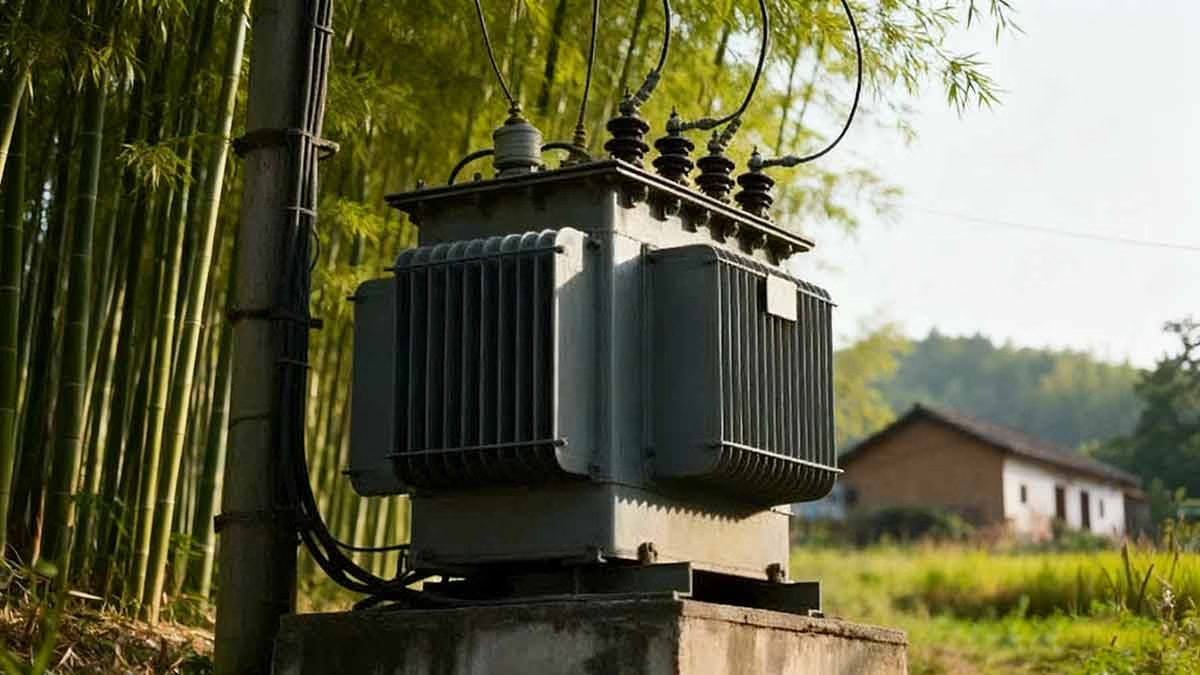
I helped implement a smart load management system for a utility company serving over 100,000 customers. The system used machine learning to predict peak demand periods (like holidays or extreme weather) and proactively redistribute load. In the first year alone, transformer failures dropped by 30%, and the utility saved over $2 million in maintenance costs.
Reactive Power Management: Transformers’ Role in Optimizing Grid Power Factor
Reactive power is one of the grid’s most misunderstood components—often called “phantom power” because it doesn’t directly power devices, but its impact on stability is profound. Transformers play a key role in managing reactive power and correcting power factor, ensuring the grid runs efficiently and reliably.
Transformers optimize power factor through tap changing, specialized winding designs, and integration with auxiliary equipment like capacitor banks. By balancing real power (which does useful work) and reactive power (which supports voltage), they reduce energy losses, lower operating costs, and improve overall grid performance.
In my work with power systems, I’ve seen how poor reactive power management can cripple a grid. Here’s how transformers solve this critical challenge:
Tap Changing for Power Factor Correction
Transformers use tap changers to fine-tune reactive power flow and correct power factor:
- Turns Ratio Adjustments: By modifying the number of turns in the winding, transformers can shift the balance between real and reactive power.
- Real-Time Response: Tap changers react instantly to power factor deviations, ensuring corrections happen before voltage stability is compromised.
- Grid-Wide Coordination: Modern transformers communicate with other grid components (like SVCs) to ensure consistent power factor across the network.
A few years ago, we upgraded an industrial substation that was struggling with a low power factor (0.78)—well below the utility’s required 0.9. By installing transformers with advanced tap-changing capabilities, we corrected the power factor to 0.96, reducing energy losses by 18% and saving the facility over $50,000 annually in utility surcharges.
Specialized Transformer Designs for Reactive Power Control
Some transformers are engineered specifically to manage reactive power:
- Delta-Connected Tertiary Windings: These windings provide a path for harmonic currents, reducing distortion and improving power quality.
- Phase-Shifting Transformers: By adjusting the phase angle of power flow, these transformers optimize reactive power distribution between grid sections.
- Zig-Zag Windings: Designed to balance unbalanced loads and provide a neutral point, these windings enhance system stability and reduce reactive power waste.
In a project connecting two regional grids, we used phase-shifting transformers to manage reactive power flow. The result was a 22% reduction in transmission losses and a more stable voltage profile—even when one grid experienced sudden demand spikes.
Auxiliary Equipment: Transformers Working with Reactive Power Tools
Transformers rarely work alone in reactive power management—they often pair with auxiliary equipment to enhance performance:
- Capacitor Banks: Connected to transformer tertiaries, these banks provide on-demand reactive power to boost voltage.
- Static VAR Compensators (SVCs): These devices offer rapid reactive power adjustment, ideal for grids with variable renewable energy.
- Synchronous Condensers: In renewable-heavy grids, these devices provide inertia and reactive power support, complementing transformer capabilities.
I led a project integrating a 500MW solar farm into the grid, where reactive power management was a major challenge. By pairing transformers with SVCs and synchronous condensers, we ensured the farm met strict grid code requirements—even during periods of fluctuating sunlight. The system maintained a power factor of 0.95 or higher, allowing the farm to feed more clean energy into the grid without compromising stability.
Fault Protection and Isolation: Transformers as Grid Guardians
One of the most critical roles transformers play is protecting the grid from faults—like short circuits or equipment failures—that could otherwise cause widespread blackouts. By detecting and isolating issues quickly, transformers act as the grid’s first line of defense against disruptions.
Transformers provide fault protection through specialized designs and protective equipment, including differential protection systems, overcurrent relays, and Buchholz relays. These tools work together to detect faults early, isolate the affected area, and prevent small issues from cascading into large-scale outages.
Throughout my career, I’ve seen transformers save the day in countless fault scenarios. Here’s how they protect our grids:
Differential Protection: Catching Internal Faults in Milliseconds
Differential protection is designed to detect internal transformer faults—like winding short circuits—before they cause catastrophic damage:
- Current Comparison: The system monitors input and output currents, looking for mismatches that indicate a fault.
- Instantaneous Response: If a mismatch is detected, the system triggers a trip within milliseconds—stopping power flow to the affected transformer.
- Selective Isolation: Unlike general overcurrent protection, differential protection pinpoints the exact location of the fault, minimizing the area affected by the outage.
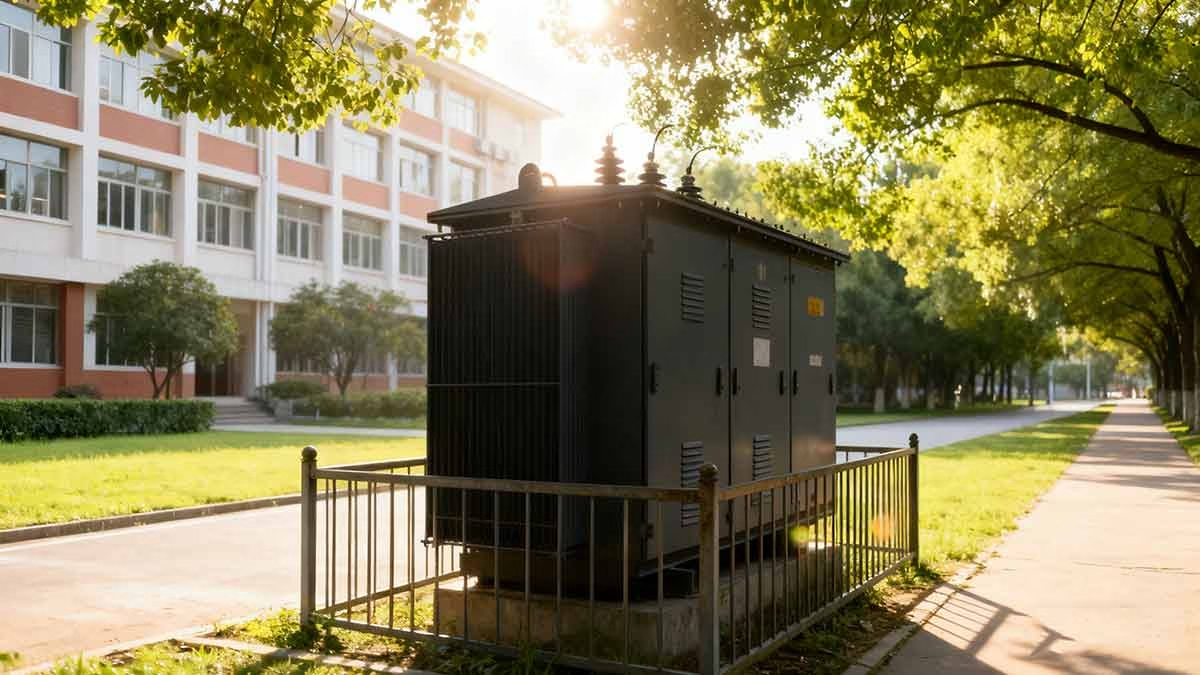
I once witnessed a differential protection system save a major substation from disaster. A technician had accidentally left a tool inside a transformer during maintenance, and when the unit was powered on, the tool caused a winding short circuit. The differential protection system detected the current mismatch and tripped the transformer within 5 milliseconds—preventing the fault from spreading to other equipment and avoiding a multi-day blackout for the surrounding area.
Overcurrent Protection: Guarding Against Overloads and Short Circuits
Overcurrent protection safeguards transformers from external faults—like short circuits in transmission lines or excessive load spikes:
- Instantaneous Overcurrent Relays: These trigger immediately for severe faults (like direct short circuits), providing fast protection against damage.
- Time-Delayed Overcurrent Relays: These allow for temporary overloads (like those caused by startup currents) but trip if the overload persists, preventing overheating.
- Thermal Overload Protection: This protects against long-term overheating by monitoring the transformer’s temperature and tripping if it exceeds safe limits.
In a grid modernization project for a hurricane-prone region, we implemented a layered overcurrent protection scheme. During a severe storm in 2022, a tree fell on a transmission line, causing a short circuit. The instantaneous overcurrent relay tripped the affected transformer within 10 milliseconds, isolating the fault and preventing it from spreading to the main substation. Thousands of customers lost power for just 15 minutes—instead of the hours or days that would have been required if the fault had cascaded.
Buchholz Relay: Early Warning for Oil-Filled Transformers
For oil-filled transformers (the most common type in large substations), Buchholz relays provide critical early warning of internal issues:
- Gas Detection: Internal faults (like winding insulation breakdown) produce gas, which accumulates in the relay.
- Oil Level Monitoring: The relay also tracks oil levels, alerting operators to leaks or severe internal damage.
- Two-Stage Alarm: A minor gas buildup triggers a warning alarm, while a sudden surge (indicating a major fault) triggers an immediate trip.
I remember a case where a Buchholz relay prevented a catastrophic transformer failure at a steel mill. The relay detected a small amount of gas buildup and sent a warning to the plant’s control room. Upon inspection, technicians found a small insulation breakdown in the winding—something that would have escalated into a major fault within days. The transformer was taken offline for repairs, avoiding a costly outage that would have shut down production for weeks.
Smart Transformer Technologies: Elevating Grid Stability in the Renewable Era
As solar, wind, and other renewable energy sources become a larger part of our energy mix, grids face new challenges—variable output, bidirectional power flow, and increased demand for flexibility. Smart transformers are rising to meet these challenges, integrating advanced technology to keep grids stable and efficient.
Smart transformers enhance grid stability through real-time monitoring, adaptive control, and seamless integration with renewable energy sources. These devices use data analytics, machine learning, and two-way communication to adapt to changing grid conditions, optimize power flow, and support the transition to a more sustainable energy system.
I’ve been fortunate to work on some of the most innovative smart grid projects in the industry, and the capabilities of modern smart transformers never cease to impress. Here’s how they’re revolutionizing grid stability:
Real-Time Monitoring and Predictive Analytics
Smart transformers are equipped with advanced sensors and analytics tools that turn data into actionable insights:
- Multi-Parameter Monitoring: Sensors track voltage, current, temperature, oil quality, and vibration—providing a complete picture of transformer health.
- Big Data Processing: Cloud-based analytics platforms process vast amounts of data in real time, identifying patterns and anomalies that human operators might miss.
- Predictive Maintenance: By analyzing historical data and real-time performance, smart transformers can forecast potential issues (like winding degradation or cooling system failures) and alert operators before they cause disruptions.
In a city-wide smart grid project I led last year, we installed 120 smart transformers across the distribution network. These transformers could detect power quality anomalies (like voltage sags or harmonic distortion) within 2 milliseconds and send alerts to the utility’s control center. The result was a 40% reduction in unplanned outages and a 15% improvement in power quality for residents and businesses.
Adaptive Voltage Control: Transformers That Learn and Evolve
Unlike traditional transformers, which operate on fixed parameters, smart transformers use adaptive control to optimize performance:
- Machine Learning Algorithms: These algorithms analyze historical load data, weather patterns, and grid conditions to optimize voltage levels for efficiency and stability.
- Dynamic Set Points: Target voltage levels adjust in real time based on demand—lowering voltage during off-peak hours to reduce energy waste and raising it during peak demand to maintain stability.
- Demand Response Integration: Smart transformers communicate with demand response programs, adjusting power flow to reduce peak loads and support grid reliability.
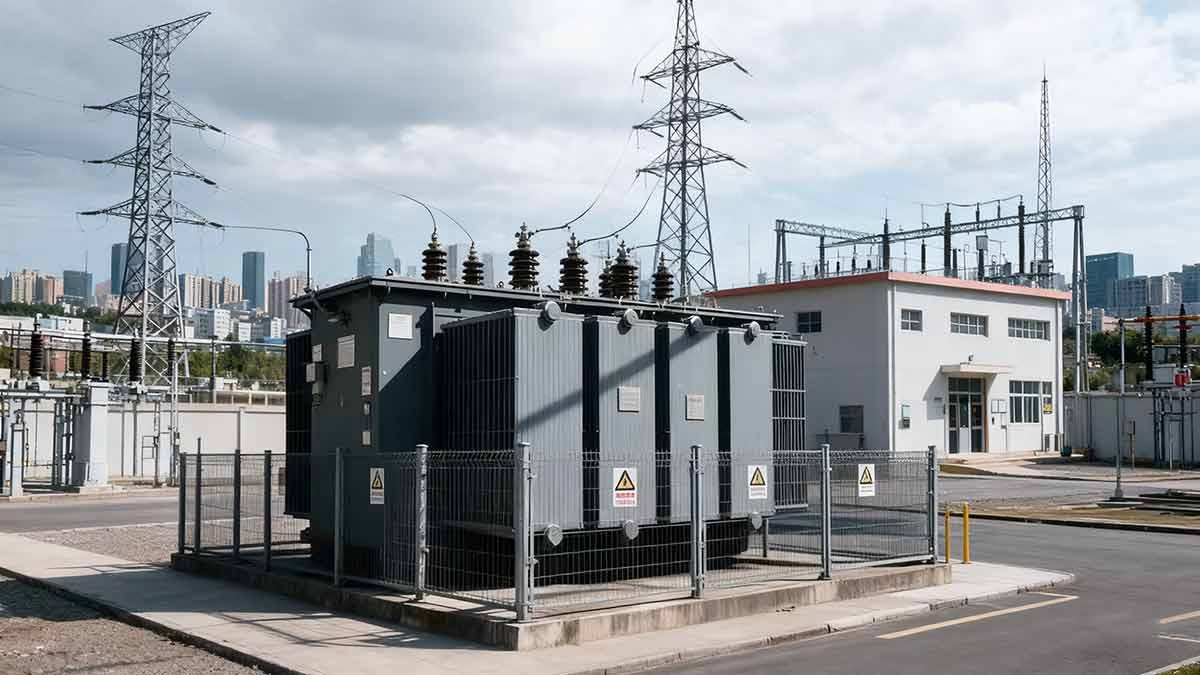
I worked on a pilot program for a utility in California, where smart transformers used adaptive voltage optimization. The system analyzed data from smart meters, weather stations, and grid sensors to adjust voltage levels throughout the day. Over six months, the program reduced overall energy consumption by 3.2%—saving the utility over $3 million annually—while improving power quality and reducing transformer wear and tear.
Renewable Energy Integration: Taming Variable Output
One of the biggest challenges with renewable energy is its variability—solar output drops at night, wind speeds fluctuate, and both can change suddenly. Smart transformers are designed to handle these fluctuations, making it easier to integrate renewables into the grid:
- Bidirectional Power Flow Management: Unlike traditional transformers, which only handle power flow in one direction, smart transformers manage power from both the grid and distributed energy resources (like rooftop solar).
- Ramp Rate Control: These transformers smooth out sudden changes in renewable output, preventing voltage spikes or dips that could destabilize the grid.
- Harmonic Mitigation: Renewable energy systems (especially solar) can introduce harmonic distortion—smart transformers use filters and advanced control to reduce this distortion, improving power quality.
In a recent project integrating a 300MW wind farm into the grid, we used smart transformers to manage the variable output. The transformers adjusted their parameters in real time to handle sudden changes in wind speed, keeping voltage within safe limits and ensuring the farm met grid code requirements. Thanks to these transformers, the local grid’s renewable energy capacity increased by 40%—without compromising stability or power quality.
Conclusion
Electrical transformers are far more than just “voltage converters”—they’re the backbone of grid stability, performing critical functions like voltage regulation, load balancing, reactive power management, and fault protection. As the energy landscape evolves to include more renewable sources and smart technology, transformers are adapting too—with smart models that leverage data and advanced control to meet the demands of a modern grid.
From the smallest pole-mounted units to the largest substation transformers, these devices work tirelessly to ensure reliable, efficient power for homes, businesses, and industries. Having spent years working with transformers, I’m proud to be part of an industry that’s innovating to keep our grids stable, sustainable, and ready for the future. As we continue to push the boundaries of transformer technology, one thing remains clear: transformers will always be the unsung heroes of our electrical system.