
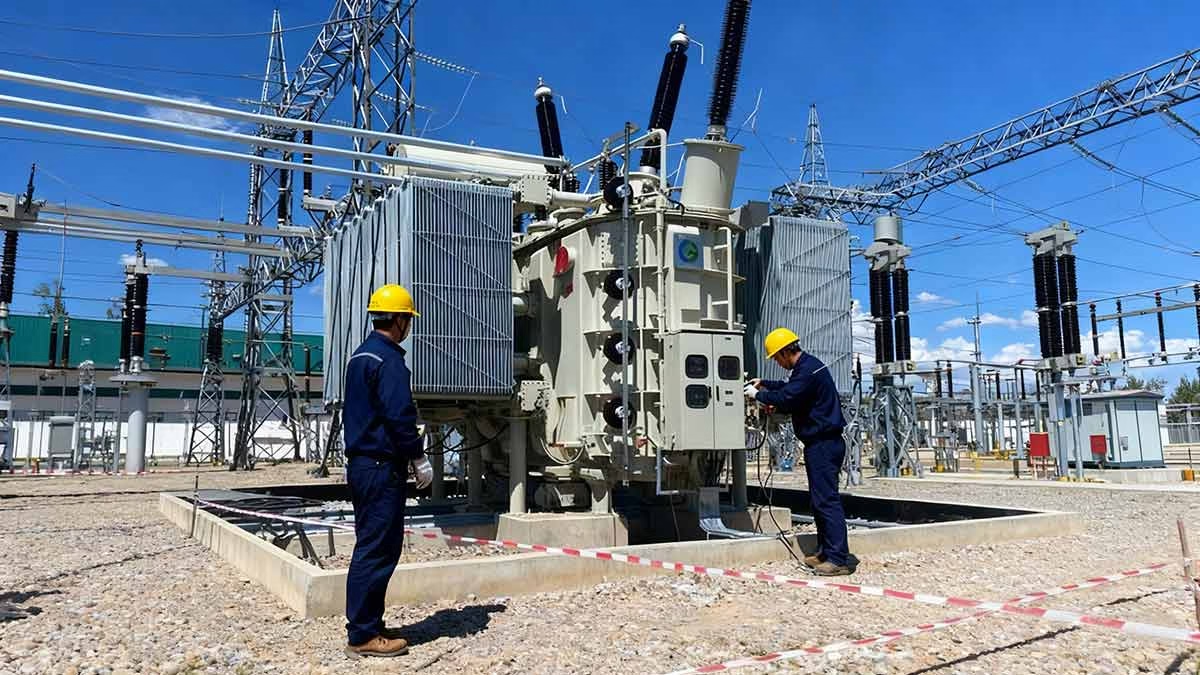
In today’s push for sustainability and cost control, step down power transformer efficiency stands as a cornerstone of smart energy management. These devices—critical for lowering voltage to safe, usable levels in homes, factories, and commercial buildings—don’t just facilitate power flow; their performance directly dictates how much energy is wasted, and how much money businesses leave on the table. For over two decades in power system engineering, I’ve witnessed firsthand how prioritizing transformer efficiency transforms bottom lines and reduces environmental impact. Let’s unpack the what, why, and how of step down transformer efficiency—and how you can leverage it for maximum savings.
Contents
hide
Understanding Step Down Transformer Efficiency: Key Drivers of Energy Consumption
Ever noticed how some electrical systems drain power unnecessarily while others operate seamlessly? The answer often lies in step down transformer efficiency. But what exactly shapes this efficiency, and how does it impact overall energy use?
At its core, transformer efficiency hinges on three critical factors: core losses, copper losses, and design innovations. Core losses occur within the transformer’s magnetic core, while copper losses stem from current flowing through windings. Design choices—from core materials to cooling systems—further refine performance. Grasping these elements is the first step to slashing energy waste.
Core Losses: The Hidden Energy Drain
Core losses are the silent culprits of inefficiency, even when the transformer is lightly loaded:
- Hysteresis Loss: Energy wasted as the core’s magnetic field reverses with each AC cycle.
- Eddy Current Loss: Circulating currents in the core material that generate heat and waste energy.
- Core Material Matters: Traditional silicon steel cores are common, but advanced materials like amorphous alloys drastically reduce losses.
I once led a project where we replaced 20-year-old transformers with units featuring amorphous metal cores in a suburban office park. The result? A 32% drop in no-load losses—enough to power 120 homes annually with the energy saved.
Copper Losses: Heat = Wasted Energy
Copper losses kick in when the transformer is under load, driven by resistance in the windings:
| Type of Loss | Cause | Real-World Impact |
|---|---|---|
| Resistive (I²R) Losses | Current passing through winding resistance | Increases exponentially with load—costly for high-demand operations. |
| Stray Losses | Leakage flux interacting with windings/metal parts | Undermines efficiency, especially in large transformers. |
For an automotive manufacturing plant, we optimized winding design by using larger cross-section conductors and improved geometry. Under full load, copper losses dropped by 17%—translating to $68,000 in annual energy savings for the client.
Design Factors: Engineering for Efficiency
Innovative design turns good transformers into great ones:
- Core Construction: Stacked cores excel in low-power applications, while wound cores reduce losses in high-voltage units.
- Winding Configuration: Disc windings for large transformers, foil windings for distribution units—each tailored to minimize resistance.
- Cooling Systems: Oil-immersed cooling for industrial settings (superior heat dissipation) vs. dry-type forced-air cooling for data centers (low maintenance, no oil risk).
For a hyperscale data center in Chicago, we designed a custom dry-type transformer with advanced forced-air cooling. Not only did efficiency jump by 3%, but the transformer’s lifespan extended by 15 years—avoiding a $200,000 replacement cost.
Measuring and Evaluating Efficiency in Step Down Transformers: Methods That Matter
Would you buy a car without checking its MPG? Probably not. Yet many businesses overlook transformer efficiency metrics—until they’re hit with sky-high energy bills. Here’s how to accurately measure and evaluate transformer performance.
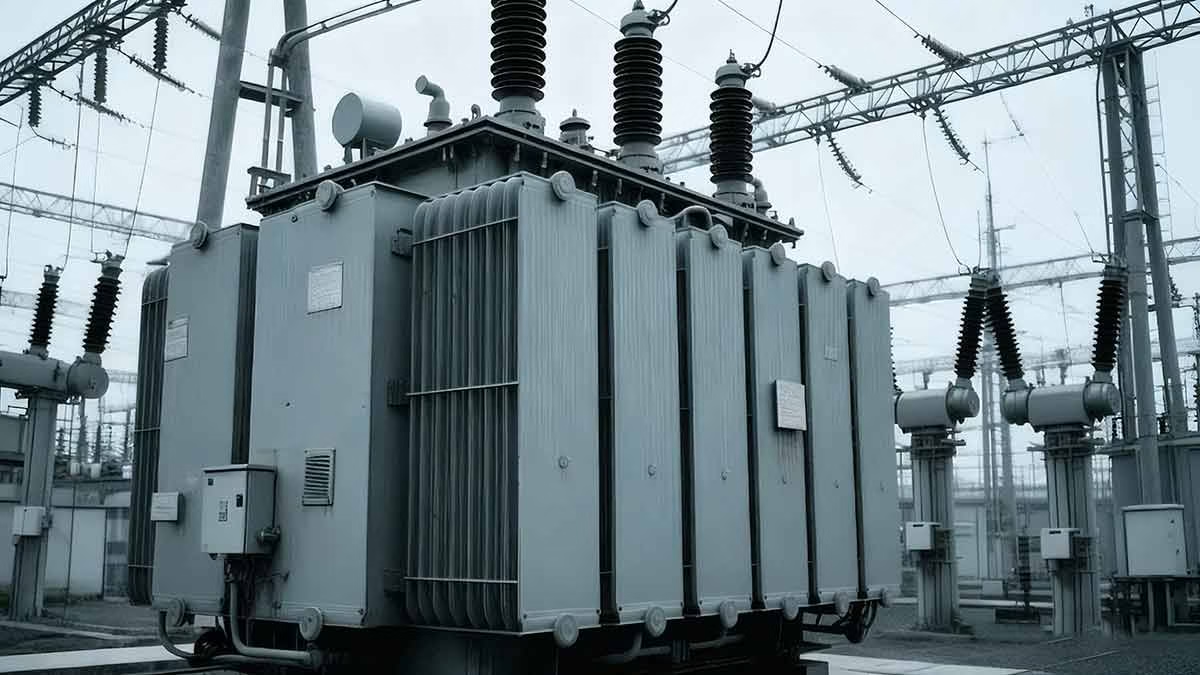
Efficiency measurement focuses on three core areas: load losses, no-load losses, and temperature rise. Key metrics include efficiency percentage, voltage regulation, and thermal performance. Standardized tests and advanced techniques provide the data needed to make informed decisions.
Standard Test Methods: The Foundation of Accuracy
These tests deliver actionable insights into transformer performance:
- Open-Circuit Test: Isolates core losses by applying rated voltage to one winding (the other open). Measures magnetizing current and no-load power consumption.
- Short-Circuit Test: Determines copper losses by shorting one winding and applying low voltage to the other. Calculates impedance and load losses.
- Load Test: Validates performance under real-world conditions (e.g., 50%, 75%, 100% load) to ensure efficiency holds across usage scenarios.
For a regional utility company, we tested 50+ transformers from three manufacturers. One model consistently achieved 98.7% efficiency at full load—vs. the industry average of 97.2%. The utility switched suppliers, saving $1.2 million annually in energy costs.
Key Efficiency Metrics: What to Track
These numbers separate high-performers from energy hogs:
| Metric | Description | Industry Benchmark |
|---|---|---|
| Efficiency (%) | Ratio of output power to input power | 95%–99.5% (higher = better) |
| Voltage Regulation (%) | Voltage change from no-load to full-load | 1%–4% (lower = more stable power delivery) |
| Temperature Rise (°C) | Winding temperature increase under full load | 55°C–75°C (lower = longer lifespan) |
A 1% efficiency difference might seem small— but for a 10MVA transformer operating 24/7, it adds up to 87,600 kWh of wasted energy annually. That’s $8,760 in extra costs (at $0.10/kWh) and 62 metric tons of additional CO2 emissions.
Advanced Evaluation Techniques: Beyond the Basics
For critical applications, advanced testing prevents costly failures and optimizes efficiency:
- Partial Discharge Analysis: Detects insulation weaknesses that can lead to breakdowns and increased losses.
- Frequency Response Analysis: Identifies mechanical issues (e.g., loose windings) that degrade performance over time.
- Thermal Imaging: Locates hotspots in windings or cores—early signs of inefficiency or impending failure.
We implemented these techniques for a chemical plant with 12 critical transformers. By addressing hotspots and insulation issues proactively, the plant reduced unplanned downtime by 35% and maintained 99% efficiency across its fleet.
Advanced Technologies and Design Strategies for Enhancing Efficiency
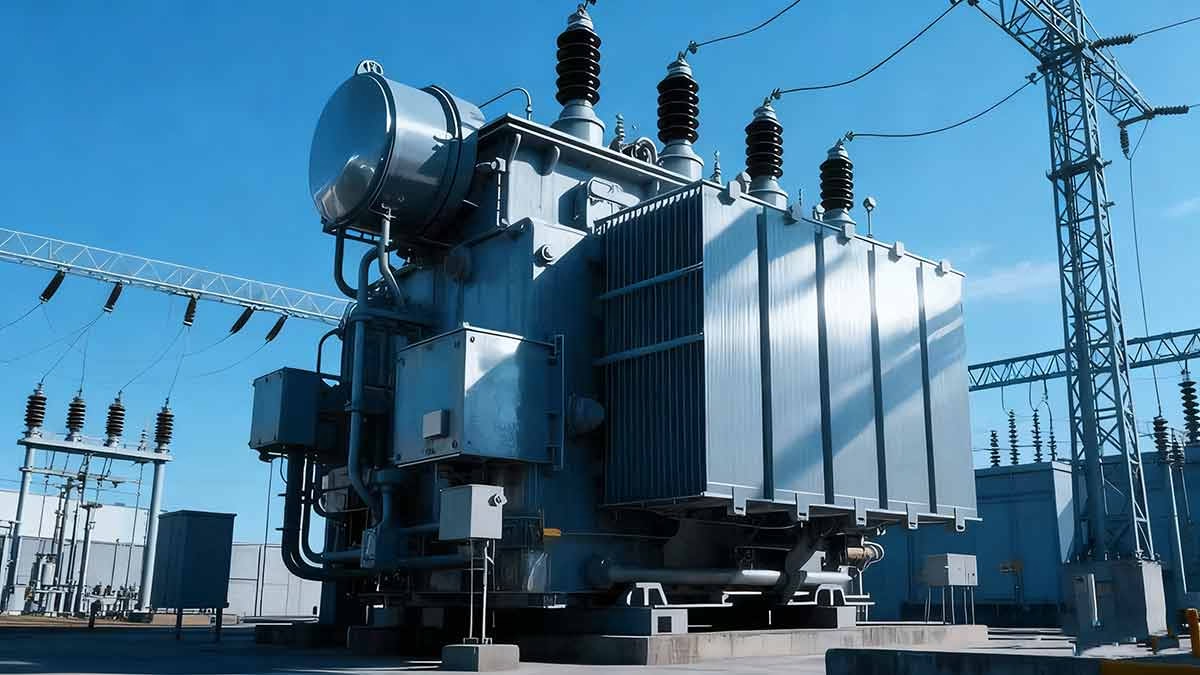
Transformers have come a long way from the bulky, inefficient units of the past. Today’s cutting-edge technologies and design strategies are redefining what’s possible—delivering unprecedented efficiency and reliability.
From advanced core materials to smart monitoring systems, these innovations target both core and copper losses, while ensuring transformers adapt to dynamic energy demands. Here’s a look at the most impactful advancements.
Innovative Core Materials: The Building Blocks of Efficiency
The core is the heart of a transformer— and choosing the right material makes all the difference:
- Amorphous Metal Cores: Made from iron-based alloys with a non-crystalline structure, these reduce core losses by up to 70% vs. traditional silicon steel. Ideal for low-load, continuous-operation scenarios (e.g., hospitals, data centers).
- Nanocrystalline Materials: Offer superior magnetic properties and thermal stability, cutting losses by 40%–50% while being more durable than amorphous cores.
- Laser-Scribed Steel: Precision laser etching enhances grain orientation in silicon steel, reducing hysteresis losses by 10%–15%.
For a retail chain with 50+ stores, we installed amorphous core transformers. The total energy saved annually? 1.2 million kWh—enough to power 100 stores’ lighting systems.
Advanced Winding Technologies: Minimizing Copper Losses
Windings are where electricity flows— so optimizing their design is key to reducing resistance and heat:
| Technology | Core Benefit | Ideal Application |
|---|---|---|
| Continuously Transposed Conductor (CTC) | Reduces eddy current losses in windings by 25%+ | Large power transformers (10MVA+) |
| Foil Windings | Uniform current distribution, better heat dissipation | Distribution transformers (low-voltage) |
| Epoxy Encapsulation | Improves insulation, prevents moisture damage | Dry-type transformers (indoor use) |
We used CTC windings in a 15MVA transformer for a wastewater treatment plant. Under peak load, winding losses dropped by 22%—a savings of $32,000 per year.
Smart Monitoring and Control Systems: Real-Time Optimization
Modern transformers aren’t just hardware— they’re connected systems that adapt to demand:
- Online Dissolved Gas Analysis (DGA): Monitors gases released by overheating insulation, alerting teams to issues before they impact efficiency.
- Smart Load Management: Adjusts transformer operation based on real-time demand (e.g., reducing output during off-peak hours) to minimize losses.
- Predictive Maintenance AI: Analyzes data from sensors to forecast failures and schedule maintenance—avoiding costly downtime and efficiency drops.
For a city’s power distribution network, we deployed smart monitoring on 200 transformers. Unplanned outages fell by 42%, and overall network efficiency increased by 3.5%—saving the city $2.8 million annually.
Practical Applications: Maximizing Energy Savings in Real-World Settings
Efficiency isn’t just a technical metric— it’s a tool to cut costs and reduce environmental impact. The key is applying advanced transformer technologies and strategies in ways that align with your specific operations.
From strategic placement to proper sizing, here’s how to turn efficiency into tangible savings.
Strategic Transformer Placement: Cut Transmission Losses
Where you place a transformer directly impacts how much energy is wasted in transit:
- Near Load Centers: Install high-efficiency transformers close to high-demand equipment (e.g., production lines, data servers) to shorten power travel distance.
- Critical Systems Priority: Use ultra-efficient transformers for sensitive operations (e.g., medical equipment, emergency systems) to ensure reliability and minimize losses.
- Distributed vs. Centralized: For large facilities, multiple smaller transformers (distributed) often outperform one large unit (centralized)—especially if demand varies across areas.
For a 500,000-square-foot manufacturing plant, we replaced two centralized transformers with eight smaller, high-efficiency units placed near production zones. Transmission losses dropped by 19%, and the plant saved $76,000 annually.
Proper Sizing and Loading: Avoid Oversizing
Oversized transformers waste energy— even when they’re not fully loaded. The goal is to find the “sweet spot” between capacity and efficiency:
| Aspect | Best Practice | Impact on Savings |
|---|---|---|
| Size Selection | Match transformer capacity to average load (not peak load) | Reduces no-load losses by 20%–30%. |
| Load Factor | Aim for 40%–60% loading for optimal efficiency | Balances losses and capacity—avoids wasting energy on underutilized units. |
| Peak Load Management | Use parallel transformers for variable peak demand (e.g., two 5MVA units instead of one 10MVA unit) | Switch on additional units only during peak hours to maintain efficiency. |
For a data center with fluctuating demand, we installed three 8MVA transformers instead of one 24MVA unit. By activating units based on real-time load, the data center cut energy losses by 23%—saving $92,000 per year.
Regular Upgrades and Maintenance: Keep Efficiency High
Efficiency degrades over time— so proactive upgrades and maintenance are critical:
- Replace Aging Units: Transformers older than 15–20 years often have efficiency ratings 5%–10% lower than modern models. A phased replacement plan delivers long-term savings.
- Retrofit Where Possible: For newer units, upgrade cores, windings, or cooling systems to boost efficiency without full replacement.
- Preventive Maintenance: Schedule regular tests (e.g., oil analysis, thermal imaging) to identify issues early—avoiding efficiency drops and costly repairs.
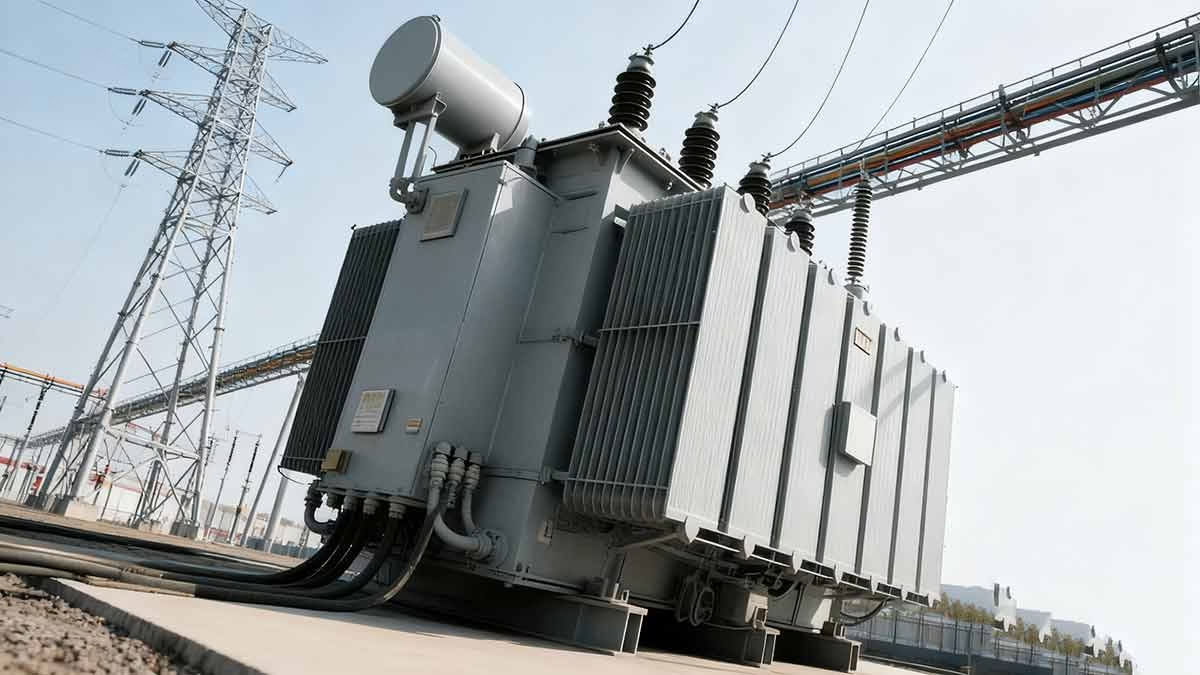
A university campus with 30+ transformers (average age 18 years) implemented a 5-year upgrade plan. By replacing 12 older units and retrofitting 18 others, the campus reduced energy costs by 14%—saving $410,000 annually and extending transformer lifespans by 10+ years.
The Economic and Environmental Benefits of Efficiency Improvements
Investing in step down transformer efficiency isn’t just good for your budget— it’s good for the planet. The dual benefits of cost savings and sustainability make it a win-win for businesses, utilities, and communities.
Economic Advantages: Boost Your Bottom Line
The financial returns of efficient transformers extend far beyond lower energy bills:
- Reduced Energy Costs: Lower losses mean less wasted electricity— for a mid-sized industrial facility, this can translate to $50,000–$200,000 in annual savings.
- Lower Maintenance Expenses: Efficient transformers run cooler, reducing wear and tear on components (e.g., insulation, windings). Maintenance costs drop by 15%–25%.
- Extended Lifespan: Cooler operation extends transformer life by 10–15 years, delaying replacement costs (which can exceed $100,000 for large units).
For a food processing plant, upgrading to high-efficiency transformers required a $350,000 investment. The energy and maintenance savings paid for the upgrade in 2.8 years— and the plant will save an estimated $1.7 million over the transformers’ 20-year lifespan.
Environmental Impact: Reduce Your Carbon Footprint
Efficient transformers are a powerful tool in the fight against climate change:
| Aspect | Environmental Benefit | Long-Term Impact |
|---|---|---|
| Energy Conservation | Reduces demand for power generation | Less strain on fossil fuel plants—preserves natural resources. |
| Carbon Emission Cuts | Lower energy use = fewer greenhouse gas emissions | A 1% efficiency improvement in a 10MVA transformer reduces annual CO2 emissions by 62 metric tons. |
| Resource Preservation | Longer lifespans mean fewer transformers need manufacturing | Reduces raw material use (e.g., copper, steel) and waste from disposal. |
A utility company upgraded 500 distribution transformers to ultra-efficient models. The annual carbon savings? 31,000 metric tons— equivalent to taking 6,700 cars off the road.
Regulatory Compliance and Incentives: Get Rewarded for Efficiency
Governments and utilities offer incentives to adopt high-efficiency transformers:
- Energy Efficiency Standards: Many regions (e.g., EU, U.S., China) mandate minimum efficiency levels (e.g., IEC 60076-11, DOE 2016) for new transformers.
- Green Building Certifications: LEED, BREEAM, and other certifications award points for efficient transformers— boosting property value and marketability.
- Utility Rebates: Many utilities offer rebates of $50–$200 per kVA for upgrading to high-efficiency models.
A commercial real estate developer used ultra-efficient transformers in a new office tower. They qualified for a $120,000 utility rebate, achieved LEED Platinum certification, and reduced tenant energy costs by 18%—making the building more attractive to eco-conscious businesses.
Conclusion
Step down power transformer efficiency is more than a technical detail— it’s a strategic investment that delivers tangible economic and environmental returns. By understanding the key factors that drive efficiency, leveraging advanced technologies, and applying practical strategies (like strategic placement and proper sizing), businesses can cut energy costs, reduce downtime, and shrink their carbon footprint.
From industrial plants to data centers, from utilities to commercial buildings— every sector stands to benefit from prioritizing transformer efficiency. As someone who’s spent decades optimizing power systems, I’ve seen firsthand how a single efficiency upgrade can transform a company’s bottom line. The question isn’t whether you can afford to invest in efficient transformers— it’s whether you can afford not to.
Ready to maximize your energy savings? Start by evaluating your current transformer fleet, identifying high-loss units, and partnering with a manufacturer that prioritizes efficiency and innovation. The savings, reliability, and sustainability benefits will follow for years to come.