
Choosing the right power transformer that aligns with your operational needs goes beyond basic capacity checks—it requires a holistic evaluation of technical fit, real-world application demands, energy efficiency, safety compliance, environmental responsibility, and long-term cost implications. When you take the time to weigh these critical elements, you’re not just buying equipment—you’re investing in a reliable power backbone that supports current operations and adapts to future growth.
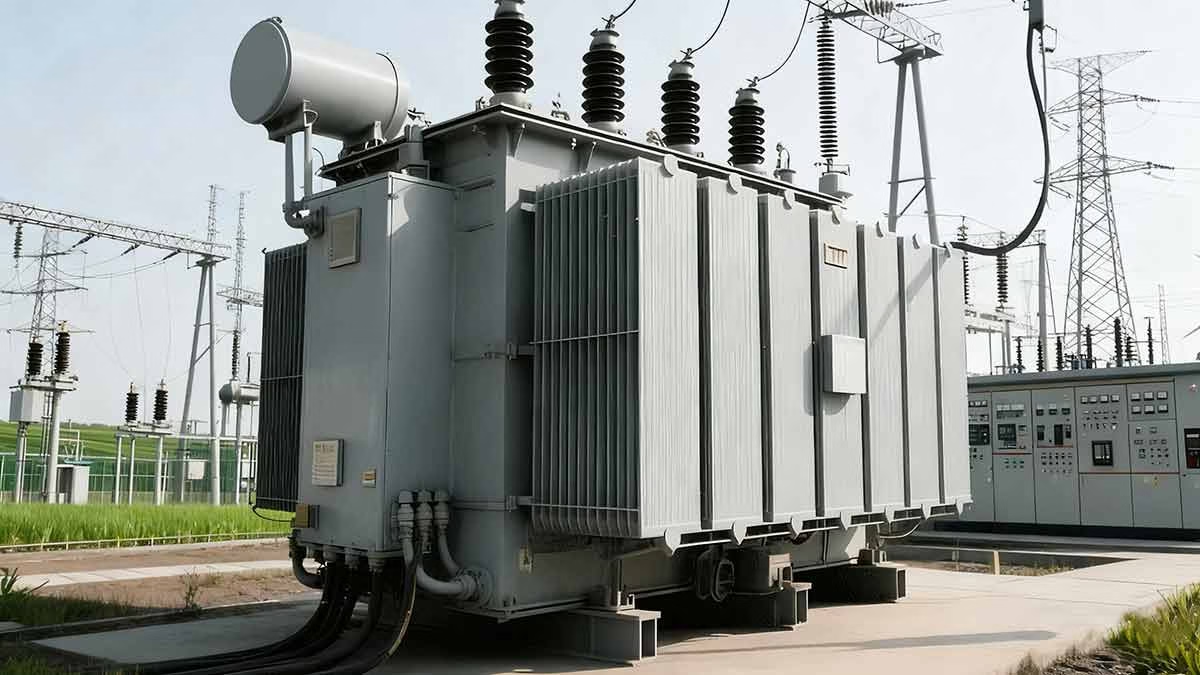
In my decades of working with power systems across industries, I’ve witnessed firsthand how this decision shapes project outcomes. A well-matched transformer boosts efficiency, minimizes downtime, and controls costs; a poor choice, however, can lead to energy waste, unexpected expenses, and even safety risks. Let’s explore the key considerations that will guide you to the right selection.
Contents
hide
Technical Specifications: Essential Parameters for Power Transformer Selection
Navigating transformer datasheets can feel like decoding a foreign language—you’re far from alone in this challenge. Yet understanding the core technical parameters is non-negotiable for ensuring the transformer integrates seamlessly with your system. What should you prioritize when sifting through specs?
The critical technical factors for power transformer selection include power rating (measured in kVA or MVA), voltage ratio, impedance, efficiency ratings, temperature rise limits, and insulation class. These details define the transformer’s capabilities, performance boundaries, and compatibility with your setup. Taking the time to evaluate each parameter ensures you’re not just meeting immediate power needs but also avoiding costly mismatches down the line.
Power Rating, Voltage Ratio, and Current Capacity
The foundational elements you can’t overlook:
- Power Rating: Expressed in kVA or MVA, this dictates the maximum load the transformer can handle.
- Voltage Ratio: The relationship between primary and secondary voltage—critical for ensuring compatibility with your existing electrical infrastructure.
- Current Capacity: Derived from power and voltage ratings, this impacts circuit protection design and long-term reliability.
I once collaborated with a manufacturing client that initially sized their transformer based on current production needs. Within 18 months, business expansion pushed their power demand beyond the unit’s capacity, forcing a costly mid-project replacement. Today, I always urge clients to factor in 20-30% future growth when selecting a power rating—an upfront consideration that saves significant time and money later.
Impedance and Efficiency: Performance-Driving Factors
Key indicators of how the transformer will operate in your system:
| Parameter | Why It Matters | Common Values |
|---|---|---|
| Impedance | Influences short-circuit current levels and voltage stability under load | 4-8% for distribution transformers |
| Efficiency | Directly impacts energy losses and ongoing operational costs | >98% for modern, high-efficiency designs |
| No-Load Loss | Constant energy consumption even when the transformer is idle—critical for applications with light or intermittent loads | Varies based on design and power rating |
In a recent industrial project, we opted for a transformer with a slightly higher impedance rating than the client initially requested. This decision helped limit fault currents in their electrical system, reducing stress on downstream circuit breakers and enhancing overall safety—proving that small adjustments to technical specs can yield significant operational benefits.
Temperature Rise and Insulation: Sustained Reliability
Keeping the transformer operating within safe temperature limits is key to longevity:
- Temperature Rise: The amount the unit heats up under full load—excessive heat accelerates component wear.
- Insulation Class: Defines the maximum temperature the insulation can withstand (e.g., Class F, Class H).
- Cooling Method: Oil-immersed designs offer high efficiency for large loads, while dry-type transformers excel in indoor or environmentally sensitive settings.
I consulted on a project in a tropical region with high ambient temperatures and humidity. We selected a transformer with a Class H insulation system and enhanced forced-air cooling. This combination ensured reliable operation even during peak heatwaves, preventing the costly downtime that had plagued the client’s previous setup.
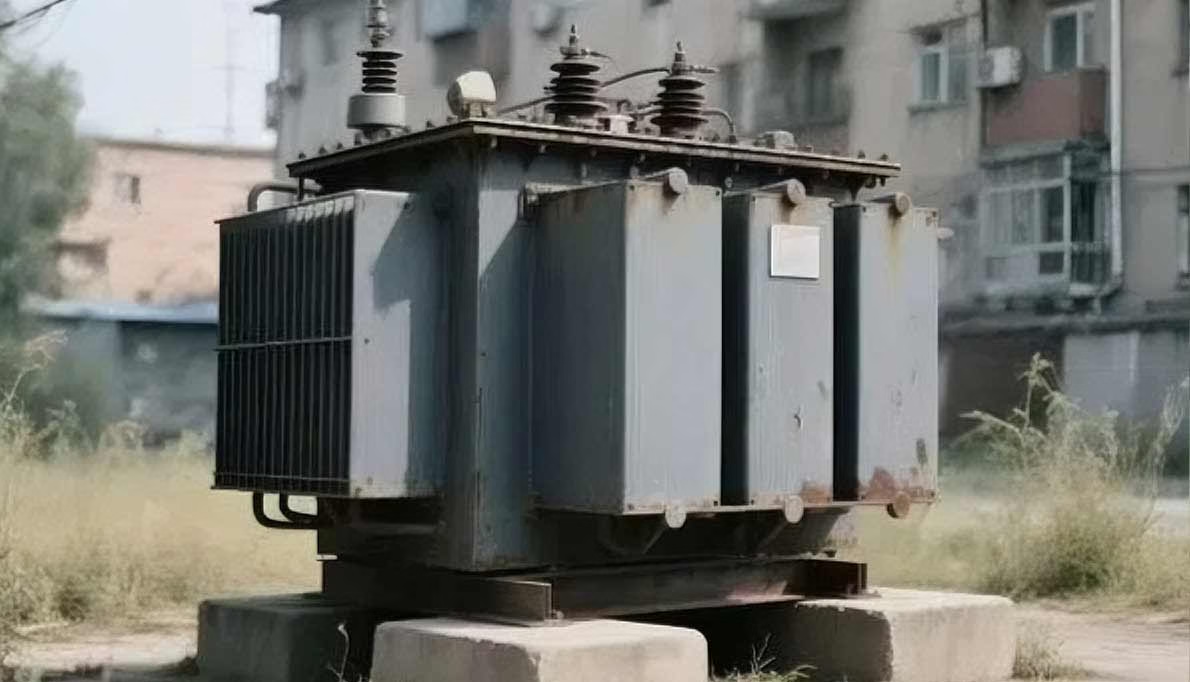
Application-Specific Considerations: Tailoring Transformers to Your Unique Needs
We’ve all purchased tools that looked perfect on paper but failed to deliver in real-world use. The same applies to power transformers—ignoring your specific application requirements can lead to underperformance or premature failure. How do you ensure the transformer you choose is built for your unique operating conditions?
Application-specific factors to prioritize include environmental conditions (indoor vs. outdoor, temperature, altitude), load profile (constant vs. variable), harmonic content, duty cycle (continuous vs. intermittent), and special requirements like overload capacity or noise constraints. Aligning these characteristics with the transformer’s design ensures optimal performance, extended lifespan, and minimal operational disruptions.
Environmental Adaptability: Matching Transformers to Their Surroundings
The environment where the transformer operates directly impacts its design needs:
- Installation Location: Indoor setups may require dry-type transformers with compact footprints, while outdoor units need weather-resistant enclosures (IP rating compliance).
- Ambient Temperature: Extreme cold or heat requires specialized cooling systems to maintain efficiency.
- Altitude: Higher elevations reduce air density, affecting cooling efficiency and insulation performance—adjustments may be needed for altitudes above 1,000 meters.
I worked with a mining company operating in a high-altitude, dusty region. We specified a transformer with reinforced cooling coils and high-efficiency air filters to prevent dust buildup. This customization ensured reliable operation in harsh conditions where standard units would have failed within months.
Load Profile and Duty Cycle: Understanding Power Demand Patterns
Your system’s load characteristics are just as important as total capacity:
| Factor | Key Consideration | Impact on Selection |
|---|---|---|
| Load Profile | Is demand constant, variable, or peak-heavy? | Variable loads require transformers optimized for partial-load efficiency. |
| Peak Demand | What’s the maximum load the system will experience? | Determines the transformer’s overload capacity needs. |
| Duty Cycle | Does the transformer operate continuously or intermittently? | Intermittent use may allow for smaller ratings, while continuous operation requires robust cooling. |
For a recent data center project, we analyzed the client’s load profile and discovered that power demand fluctuated between 30-70% throughout the day. We selected transformers optimized for efficiency at 50% load—aligning with their typical usage pattern and cutting annual energy costs by 12% compared to standard units.
Special Requirements: Addressing Unique Operational Needs
Certain applications demand specialized features to meet industry standards or operational goals:
- Harmonic Mitigation: K-factor rated transformers for non-linear loads (e.g., computers, variable frequency drives) that generate harmonic distortion.
- Noise Reduction: Low-noise designs (≤55 dB) for residential areas, offices, or healthcare facilities.
- Overload Capacity: Transformers capable of handling short-term load spikes (e.g., manufacturing plants during peak production).
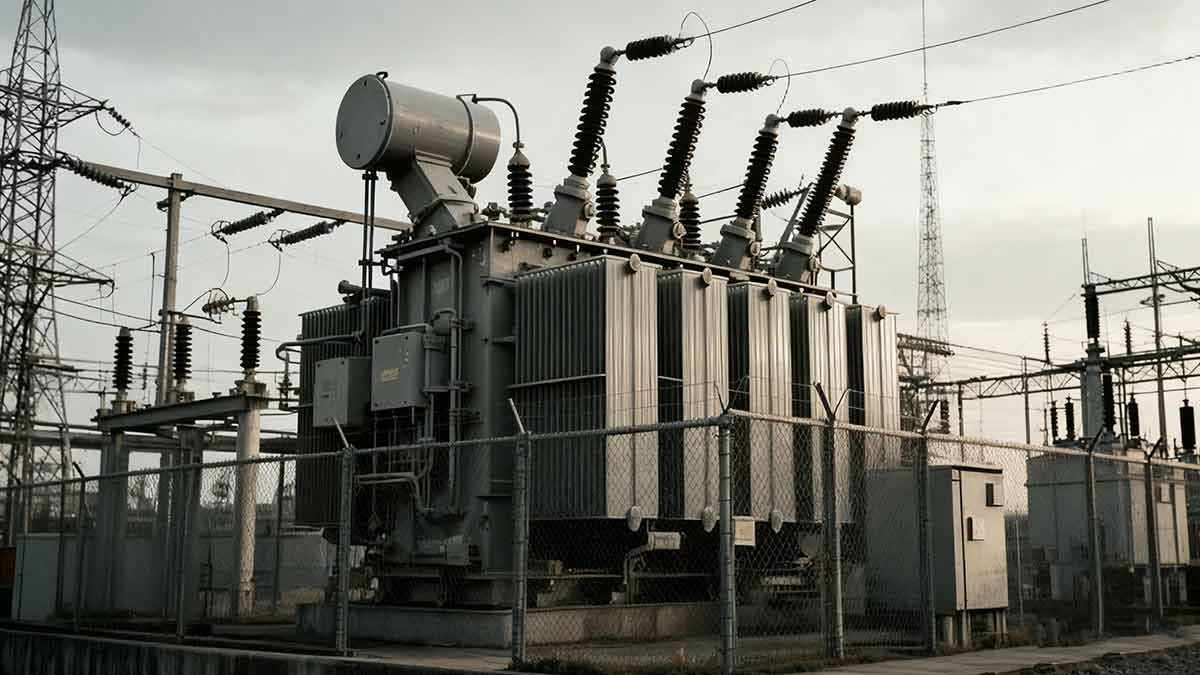
I helped design a power system for a hospital where reliability and quiet operation were critical. We selected dry-type transformers with enhanced overload capacity (125% for 60 minutes) and sound-dampening enclosures. This choice ensured the transformer could handle the demands of critical medical equipment while maintaining a quiet environment for patients and staff.
Efficiency and Performance Metrics: Maximizing Long-Term Value
It’s easy to fixate on upfront costs when selecting a transformer—but focusing solely on price can lead to higher expenses over the unit’s lifespan. How do you evaluate efficiency and performance to ensure you’re making a cost-effective investment that delivers lasting value?
Assessing transformer efficiency involves analyzing load losses, no-load losses, efficiency at different load levels, voltage regulation, and temperature stability. These metrics directly influence energy costs, operational reliability, and the transformer’s service life. By prioritizing performance alongside initial price, you can select a unit that delivers consistent value for 20+ years.
Load and No-Load Losses: The Hidden Cost of Inefficiency
Energy losses are a major ongoing expense—here’s what to watch for:
- No-Load Losses: Also known as core losses, these occur even when the transformer is idle (caused by magnetic hysteresis and eddy currents).
- Load Losses: Also called copper losses, these increase with the square of the load current (caused by resistance in the windings).
- Total Losses: The sum of no-load and load losses at rated capacity—this figure is used to calculate annual energy costs.
I helped a food processing plant upgrade its aging transformers to high-efficiency models. By reducing no-load losses by 35% and load losses by 20%, the client cut their annual energy bill by $45,000. Despite a 15% higher upfront investment, the payback period was just 2.8 years.
Efficiency Across Load Levels: Performance Beyond Full Capacity
Most transformers operate at partial load—here’s how to optimize for real-world use:
| Load Level | Why It Matters | Typical Efficiency Range |
|---|---|---|
| 25% Load | Common for applications with variable demand (e.g., retail stores, office buildings) | 97-98% for high-efficiency models |
| 50% Load | The “sweet spot” for many industrial and commercial applications | 98-99% for premium designs |
| 100% Load | Maximum capacity (rarely sustained for long periods) | 98-99% for modern transformers |
For a shopping mall project, we selected transformers with a “flat efficiency curve”—maintaining high performance (≥98.5%) between 40-80% load. This alignment with the mall’s typical usage pattern (peak demand during shopping hours, lower load overnight) resulted in 10% lower energy costs than standard transformers.
Voltage Regulation and Stability: Ensuring Consistent Power Delivery
Voltage stability is critical for sensitive equipment—here’s what to consider:
- Voltage Regulation: The difference in output voltage between no-load and full-load conditions (lower values mean more stable power).
- Tap Changers: On-load tap changers (OLTC) allow voltage adjustment without interrupting service—ideal for fluctuating loads.
- Dynamic Response: How quickly the transformer adapts to load changes (critical for data centers, manufacturing, and healthcare).
I advised a large data center on their power infrastructure and recommended transformers with OLTC and low voltage regulation (≤1.5%). This setup ensured consistent voltage levels despite rapid changes in server load, preventing data loss and equipment damage caused by voltage fluctuations.
Safety and Environmental Factors: Prioritizing Compliance and Sustainability
Safety and environmental responsibility are no longer optional—they’re integral to responsible transformer selection. How do you navigate the complex landscape of regulations and sustainability goals while ensuring operational safety?
Selecting a transformer with safety and sustainability in mind involves evaluating fire resistance, noise levels, environmental impact (e.g., oil containment for liquid-filled units), and compliance with global standards (IEC, IEEE, NEMA). It also means considering eco-friendly materials, energy efficiency, and end-of-life recyclability. Prioritizing these factors not only keeps your team and facility safe but also supports long-term environmental goals.
Safety Standards and Compliance: Protecting People and Property
Meeting safety regulations is non-negotiable—here’s what to focus on:
- Fire Safety: Dry-type transformers with F1 or F2 fire ratings are ideal for indoor installations (e.g., high-rises, hospitals).
- Electrical Safety: Compliance with IEC 60076 (transformer design) and IEEE C57 (performance standards) ensures safe operation.
- Seismic Compliance: Transformers in earthquake-prone regions require reinforced frames and base mounting to withstand seismic activity.
I worked on a project in a high-rise office building where fire safety was a top priority. We selected dry-type transformers with a UL 94 V-0 fire rating and self-extinguishing insulation. This choice not only met local building codes but also reduced the client’s insurance premiums by 18%—a tangible benefit of prioritizing safety.
Environmental Considerations: Reducing Your Carbon Footprint
Sustainability starts with the transformer’s design and operation:
| Factor | Key Consideration | Environmental Impact |
|---|---|---|
| Energy Efficiency | Compliance with NEMA TP-1 or IEC 60076-11 | Lower energy consumption = reduced carbon emissions |
| Coolant Type | Mineral oil vs. biodegradable fluids vs. dry-type | Biodegradable fluids and dry-type transformers minimize environmental risk |
| Noise Levels | Low-noise designs (≤60 dB) | Reduces noise pollution in urban or sensitive areas |
For an eco-conscious tech company’s new headquarters, we selected ultra-efficient dry-type transformers with noise levels ≤50 dB. This choice helped the building achieve LEED Platinum certification and reduced the company’s carbon footprint by 25% compared to standard transformers.
Sustainable Materials and End-of-Life Planning
Sustainability extends beyond operation to the entire lifecycle:
- Recyclable Materials: Transformers built with recyclable steel, copper, and insulation simplify end-of-life disposal.
- Biodegradable Fluids: Ester-based fluids offer a non-toxic alternative to mineral oil for liquid-filled transformers.
- Manufacturing Practices: Partnering with suppliers that use renewable energy and waste-reduction processes supports global sustainability goals.
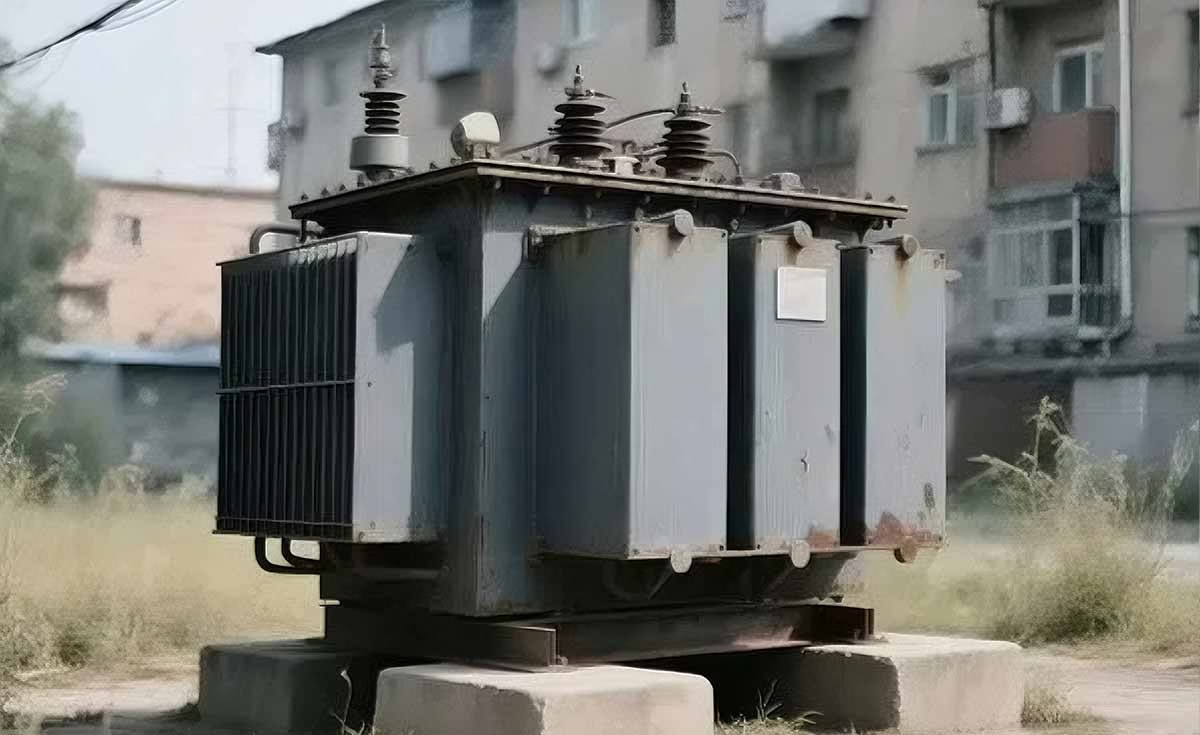
I advised a utility company on updating its transformer procurement policy. We added criteria for evaluating manufacturers’ sustainability practices, including the use of recycled materials and energy-efficient production. This led to partnerships with suppliers that aligned with the utility’s carbon-neutral goals and reduced the environmental impact of their entire fleet.
Total Cost of Ownership: Balancing Upfront Investment with Long-Term Value
It’s tempting to choose the cheapest transformer option—but the initial price tag is just one piece of the puzzle. How do you calculate the true cost of a transformer over its entire lifecycle to make a financially sound decision?
Total Cost of Ownership (TCO) includes the initial purchase price, installation costs, energy losses, maintenance expenses, replacement costs, and scalability. By evaluating TCO instead of just upfront price, you can select a transformer that balances short-term budget constraints with long-term operational efficiency and adaptability.
Upfront Costs vs. Ongoing Expenses: The True Cost Breakdown
Don’t let upfront price overshadow long-term savings:
- Purchase Price: The initial cost of the transformer (varies by rating, efficiency, and features).
- Installation Costs: Transportation, site preparation, wiring, and commissioning (can account for 15-25% of total cost).
- Energy Losses: The single largest long-term expense—high-efficiency transformers reduce this cost significantly.
I helped a client compare two transformer options: a standard unit with a lower upfront price and a high-efficiency model costing 20% more. Our TCO analysis showed that the high-efficiency transformer would save $30,000 annually in energy costs, offsetting the higher initial investment in just 4.5 years. Over the transformer’s 25-year lifespan, the total savings exceeded $500,000.
Maintenance and Reliability: Minimizing Downtime Costs
Unplanned downtime and frequent maintenance can inflate TCO—here’s how to avoid it:
| Aspect | Key Consideration | Impact on TCO |
|---|---|---|
| Maintenance Requirements | Frequency of inspections, oil changes (for liquid-filled units), and part replacements | Reduces ongoing labor and material costs |
| Expected Lifespan | High-quality transformers last 20-30 years vs. 10-15 years for budget models | Extends the replacement timeline and reduces capital expenditure |
| Reliability | Mean Time Between Failures (MTBF) rating | Fewer failures = less downtime and lost productivity |
For a manufacturing plant operating 24/7, we selected transformers with advanced monitoring systems and a 30-year design lifespan. The monitoring system allowed for predictive maintenance, identifying potential issues before they caused downtime. Over five years, this choice prevented three major failures, saving the client an estimated $200,000 in lost production.
Future Scalability: Adapting to Changing Needs
Your power needs will evolve—choose a transformer that can grow with you:
- Load Growth: Select a power rating that accommodates 20-30% future expansion.
- Modular Design: Modular transformers allow for easy capacity upgrades without replacing the entire unit.
- Technology Compatibility: Ensure the transformer works with smart grid technologies and future efficiency standards.
I advised a fast-growing tech startup on its power infrastructure. We opted for a modular transformer system that allowed them to add capacity in 500 kVA increments. When the company expanded two years later, it was able to increase its transformer capacity without disrupting operations or incurring the cost of a full replacement.
Conclusion
Selecting the right power transformer is a decision that requires balancing technical fit, application needs, efficiency, safety, sustainability, and total cost of ownership. There’s no one-size-fits-all solution—each factor must be weighed against your unique operational requirements and long-term goals.
By taking a holistic approach—looking beyond upfront costs to evaluate performance, reliability, and adaptability—you can choose a transformer that not only meets your current needs but also delivers consistent value for decades. Whether you’re operating in manufacturing, healthcare, data centers, or utilities, the right transformer is an investment in operational efficiency, safety, and future growth.
Remember: the best transformer isn’t always the cheapest—it’s the one that aligns perfectly with your system, your environment, and your long-term objectives.