
Wondering how to cut energy waste and operational costs in your industrial facility? Your three-phase pad-mounted transformer holds the key. Optimizing its performance isn’t just about technical tweaks—it’s about integrating smart sizing, proactive maintenance, and innovative energy-saving solutions into your daily operations. From load balancing to material upgrades, these strategies deliver tangible results that boost both your bottom line and sustainability credentials.
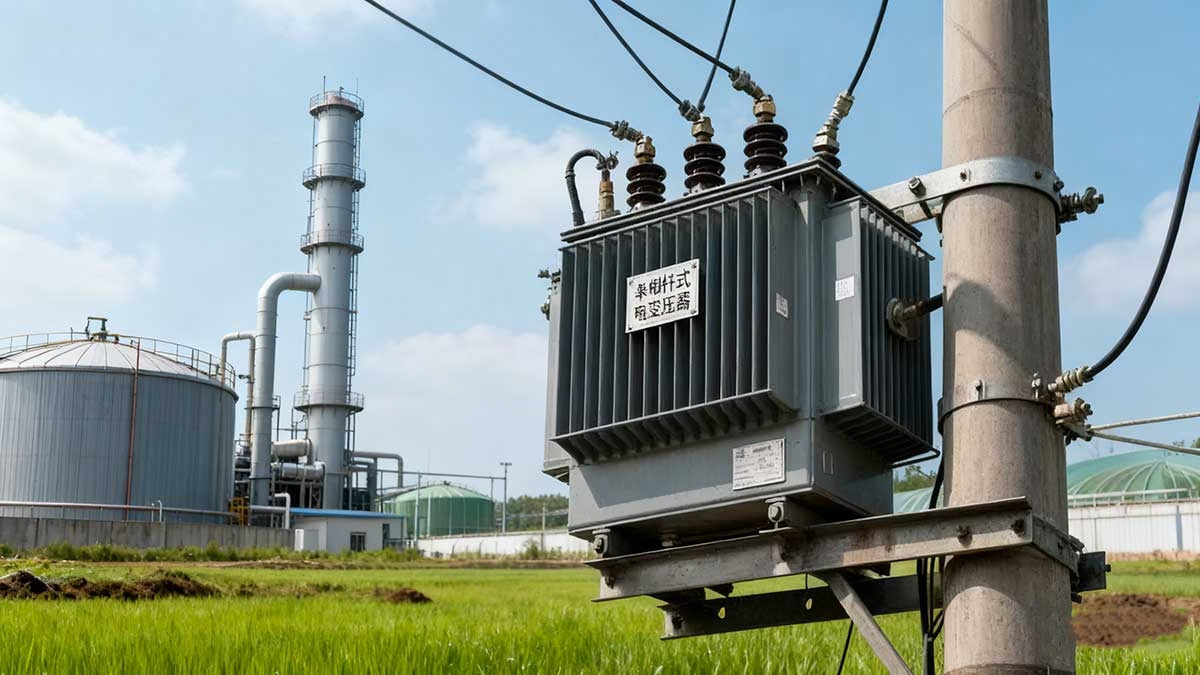
Whether you’re a plant manager overseeing production lines or an energy consultant refining power systems, the insights ahead will help you unlock your transformer’s full potential. Let’s dive into the essentials of making these workhorses more efficient, reliable, and eco-friendly.
Contents
hide
What Are Three Phase Pad Mounted Transformers? The Backbone of Industrial Power
Ever stopped to think about how your factory’s heavy machinery gets the stable power it needs to run? Those robust outdoor units—three-phase pad-mounted transformers—are the unsung heroes. But how do they turn high-voltage utility power into usable energy for your equipment?
These transformers are the cornerstone of industrial power distribution. By leveraging three separate power phases (each offset by 120 degrees), they deliver more efficient, consistent electricity than single-phase units—critical for high-demand settings where multiple machines operate simultaneously. Let’s unpack their key components and how they work together:
The Science Behind “Three-Phase” Power
Three-phase power is what makes industrial operations possible. Unlike single-phase systems, it uses three synchronized electrical waves that overlap, creating a continuous flow of energy. This design minimizes power fluctuations, reduces wiring costs, and enables the transformer to handle larger loads without compromising performance.
Core Components: Inside the Transformer
Every part of a three-phase pad-mounted transformer plays a role in efficiency—here’s what you need to know:
The Core: Where Magnetic Magic Happens
The transformer’s core is responsible for transferring magnetic flux between windings, and its design directly impacts energy loss. Typically made of laminated steel (to reduce eddy current losses), it features three legs—one for each phase—engineered to maximize flux transfer while minimizing waste.
Windings: Stepping Voltage Up or Down
Windings are the copper or aluminum coils wrapped around the core. The primary winding connects to high-voltage utility lines, while the secondary winding delivers low-voltage power to your equipment. Configurations like delta (for high-voltage inputs) or wye (for low-voltage outputs) are tailored to specific industrial needs, balancing voltage regulation and harmonic control.
Cooling Systems: Keeping Temperatures in Check
Overheating is a transformer’s worst enemy—efficient cooling extends lifespan and maintains performance. Common systems include oil-immersed designs (where oil acts as both insulator and heat dissipator), forced air cooling (using fans for moderate loads), and water cooling (for large transformers handling extreme demand).
Insulation: Protecting Performance
High-quality insulation prevents electrical arcing and extends the transformer’s life. While it has a smaller direct impact on efficiency, degraded insulation can lead to costly failures and unplanned downtime—making regular inspections a must.
| Component | Key Function | Efficiency Impact |
|---|---|---|
| Core | Magnetic flux transfer | High—core losses (hysteresis and eddy currents) are a top efficiency drain |
| Windings | Voltage transformation | Medium—copper losses occur due to electrical resistance |
| Cooling System | Heat dissipation | Medium—poor cooling increases operational stress and energy waste |
| Insulation | Electrical isolation | Low—premium insulation prevents failures but doesn’t directly boost efficiency |
I still recall my first hands-on experience with a three-phase pad-mounted transformer at a manufacturing plant early in my career as an electrical engineer. As I stood beside the unit, the plant manager pointed out its three top bushings—each corresponding to a power phase—and explained: “This transformer lets us run 10 machines at once without tripping circuits. It’s the heart of our operation.”
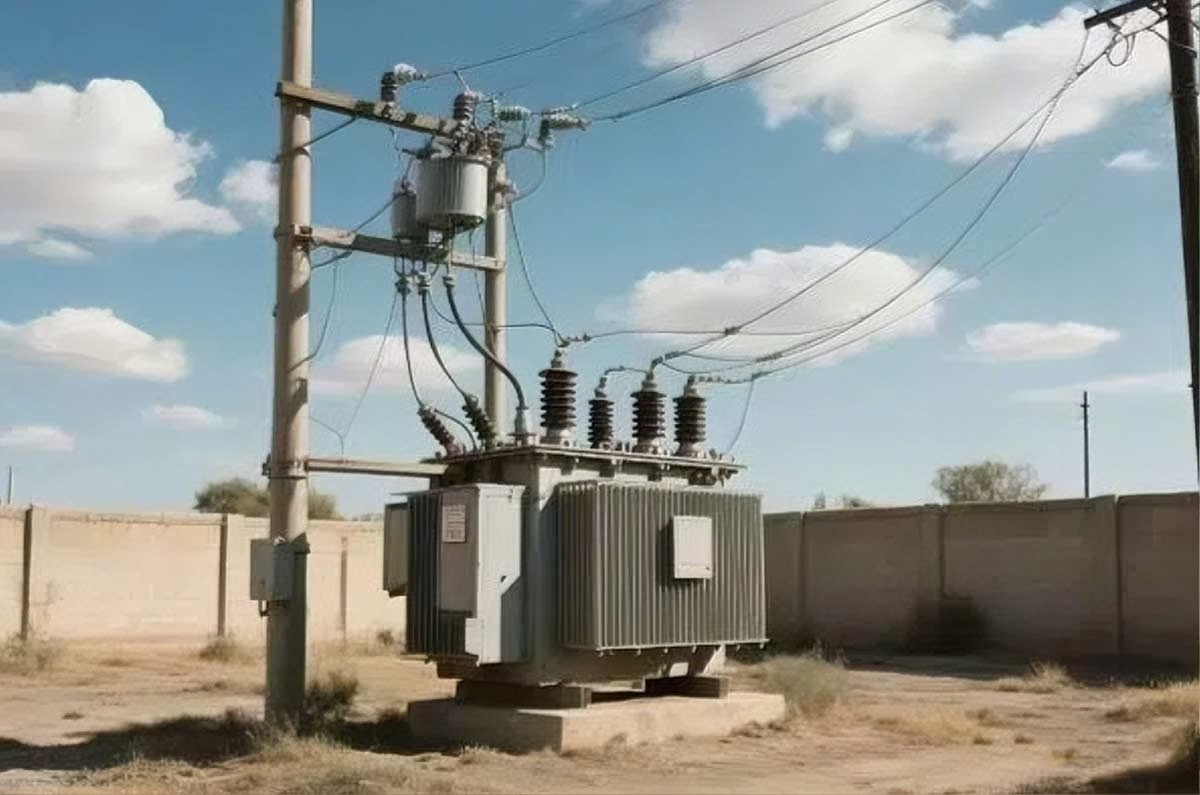
When we opened it for inspection, I was struck by the three-legged core design. The chief electrician showed me how this structure was far more efficient than using three separate single-phase transformers, as it shared magnetic flux between phases to reduce waste. We also checked the windings—delta-wye configured, which helped stabilize voltage for sensitive equipment—and the oil cooling system, where clean, properly leveled oil was keeping temperatures in check.
That day, I realized these transformers aren’t just metal boxes—they’re precision-engineered systems that require careful understanding to optimize. By grasping how their components work together, you can make smarter decisions about sizing, maintenance, and upgrades.
Energy Savings 101: Practical Hacks to Boost Transformer Efficiency
Tired of skyrocketing energy bills? Your transformer might be wasting power without you realizing it. The good news is that small, targeted changes can turn it into an efficiency champion—no major overhaul required. From load management to simple maintenance tweaks, these strategies deliver quick wins and long-term savings.
Load Management: Find Your Transformer’s “Sweet Spot”
Transformers are most efficient when operating at 70-80% of their rated capacity. Underloading (running below 30% capacity) wastes energy on core losses, while overloading strains components and increases copper losses. Here’s how to optimize:
- Balance loads across all three phases to avoid uneven stress
- Shift energy-intensive tasks to off-peak hours to reduce peak demand
- Use smart meters to track load patterns and adjust operations accordingly
Regular Maintenance: Preventative Care Pays Off
Neglecting maintenance is one of the biggest efficiency killers. A simple, consistent routine can reduce energy losses by 1-3% and extend your transformer’s life by years:
- Test and filter transformer oil quarterly—dirty oil increases friction and heat
- Tighten electrical connections annually to prevent resistance-related losses
- Clean cooling systems (radiators, fans) regularly to ensure proper heat dissipation
- Use thermal imaging to spot hotspots before they become major issues
Component Upgrades: Invest in Long-Term Savings
For bigger efficiency gains, consider upgrading key components. While these require upfront investment, they deliver significant returns:
- Swap standard silicon steel cores for amorphous metal cores—reduces no-load losses by up to 70%
- Install variable-speed cooling fans that adjust to temperature, cutting fan energy use
- Add smart monitoring systems to track efficiency in real time and alert you to issues
Insulation and Environmental Controls
Don’t overlook the basics:
- Inspect insulation regularly for signs of degradation (cracks, discoloration)
- Ensure proper ventilation around the transformer—clear debris and avoid blocking airflow
- Shield the unit from direct sunlight and extreme weather to stabilize operating temperatures
| Efficiency Measure | Potential Savings | How Hard Is It to Implement? |
|---|---|---|
| Load Balancing | 2-5% energy reduction | Medium—requires load analysis and operational adjustments |
| Routine Maintenance | 1-3% efficiency boost | Low—can be integrated into existing maintenance schedules |
| Core/Component Upgrades | 5-10% lower energy losses | High—requires upfront investment but delivers long-term ROI |
| Insulation Checks | 1-2% loss reduction | Medium—needs specialized inspection tools |
| Environmental Controls | 1-3% performance improvement | Low to Medium—depends on site layout |
I worked with a manufacturing plant last year that was struggling with high energy costs. After analyzing their transformer, we found it was operating at just 40% capacity during daytime shifts and 90% during peak production—way outside the efficient range. We implemented a load-shifting plan, moving some assembly line tasks to off-peak hours, and balanced the phases to reduce uneven stress.
Next, we tested the transformer oil and found it was contaminated—we filtered it and established a quarterly testing schedule. We also replaced the old, fixed-speed cooling fans with variable-speed models that only ran at full power when needed. Finally, we upgraded the core to amorphous metal, which cut no-load losses dramatically.
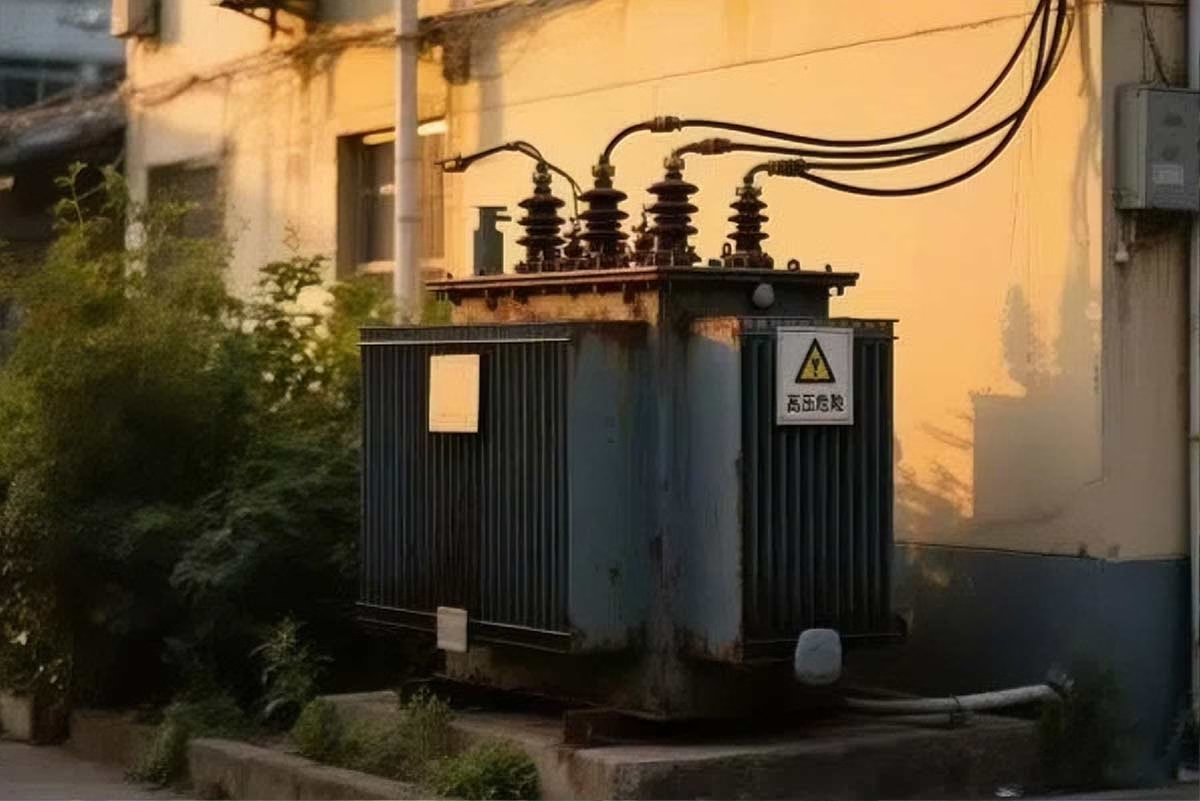
Within a year, the plant’s transformer-related energy costs dropped by 7%. The maintenance team was thrilled with the reduced downtime, and the finance department loved the savings. The key takeaway? Efficiency isn’t about one big fix—it’s about combining small, practical changes with strategic upgrades.
Warning Signs Your Transformer Is Struggling (And What to Do About It)
Transformers are built to be durable, but they’re not invincible. Ignoring subtle warning signs can lead to catastrophic failures, unplanned downtime, and costly repairs. As a plant manager or maintenance professional, knowing what to look (and listen) for can save you time, money, and headaches.
Unusual Noises: Your Transformer Is Trying to Tell You Something
Healthy transformers hum softly and consistently. Any change in sound is a red flag:
- Louder-than-normal humming: Could indicate overloading, loose windings, or core issues
- Crackling or popping sounds: May signal electrical arcing (a serious fire risk)
- Rattling: Often means loose components or cooling fan problems
If you hear these noises, stop non-essential operations and call a technician for an immediate inspection.
Oil Leaks: Don’t Ignore the Drips
Transformer oil is critical for insulation and cooling—leaks are never a good sign. Look for:
- Oil stains on the transformer body or base
- Puddles around the unit
- Dropping oil levels on the gauge
Even small leaks can lead to overheating and insulation breakdown. Address leaks promptly by replacing gaskets or repairing tank cracks, and top up oil with the manufacturer-recommended type.
Overheating: When Hot Spots Spell Trouble
Excessive heat shortens transformer life and reduces efficiency. Warning signs include:
- Hot spots on the case (use your hand or a thermal camera to check)
- Discolored or bubbling paint
- Tripped temperature alarms
Overheating is often caused by cooling system failures, overloading, or blocked airflow. Start by checking if the transformer is overloaded, then inspect cooling fans, radiators, or water lines for blockages or malfunctions.
Performance Issues: Voltage Fluctuations and Trips
If your equipment is acting up, your transformer might be the culprit:
- Voltage fluctuations (lights dimming, machinery stalling)
- Frequent circuit breaker trips
- Increased energy bills (a sign of rising losses)
These issues could stem from internal faults, aging components, or poor load management. Conduct electrical tests (like insulation resistance or dissolved gas analysis) to pinpoint the problem.
Abnormal Test Results: The Hidden Clues
Regular testing is the best way to catch issues early. Watch for:
- Spikes in dissolved gas analysis (DGA) results—ethylene and acetylene indicate arcing
- Declining insulation resistance
- Abnormal power factor readings
| Warning Sign | Likely Cause | Recommended Action |
|---|---|---|
| Unusual Noises | Loose windings, core damage, or overloading | Immediate electrical inspection |
| Oil Leaks | Gasket failure, tank cracks, or improper sealing | Repair leak, replace oil if contaminated |
| Overheating | Cooling system failure or overloading | Reduce load, inspect cooling components |
| Voltage Fluctuations | Internal faults or load imbalance | Conduct electrical testing and load analysis |
| Abnormal Test Results | Insulation degradation or internal damage | Detailed diagnostic assessment, possible repair |
Early in my career, I was called to a plant dealing with intermittent power outages. When I arrived, I noticed the transformer was humming louder than usual—almost a growl. Looking closer, I spotted small oil stains behind some nearby equipment, hidden from regular view. Using a thermal camera, we found hot spots around the top bushings, and DGA tests revealed elevated acetylene levels—clear signs of internal arcing.
We took the transformer offline immediately and discovered a combination of aging insulation, a loose winding, and a blocked cooling duct. If the plant had ignored the signs, the transformer likely would have failed catastrophically, causing a weeks-long shutdown. Instead, we repaired the issues, and the transformer returned to full efficiency.
The lesson? Don’t dismiss small changes in your transformer’s behavior. Regular walkthroughs, combined with scheduled testing, can catch problems early—saving you from costly downtime and repairs.
Green Power: How Efficient Transformers Benefit Your Factory and the Planet
Looking to reduce your carbon footprint while cutting costs? Your transformer is a powerful tool for sustainability. Efficient three-phase pad-mounted transformers don’t just save energy—they minimize environmental impact, help you meet green regulations, and even unlock financial incentives. It’s a win-win for your business and the planet.
Cutting Energy Losses = Reducing Emissions
Transformers lose energy through core losses (when idle) and copper losses (under load). High-efficiency models slash these losses by 30-70%, which translates to:
- Lower electricity consumption (and lower bills)
- Reduced demand on power plants, many of which burn fossil fuels
- Fewer greenhouse gas emissions (CO2, methane)
For example, a 10,000 kVA transformer operating 24/7 can save over 100,000 kWh annually with a 2% efficiency improvement—that’s equivalent to taking 15 cars off the road each year.
Sustainable Materials: Building Greener Transformers
Modern efficient transformers use eco-friendly materials that reduce environmental impact:
- Biodegradable ester fluids (instead of mineral oil) that are non-toxic and fire-resistant
- Recyclable core steel and copper windings
- Low-VOC (volatile organic compound) insulation materials
These choices minimize the environmental risk of leaks and make disposal/recycling easier at the end of the transformer’s life.
Extending Lifespan: Less Waste, More Value
Efficient transformers last longer—often 25-30 years compared to 15-20 years for standard models. This reduces:
- The need for frequent replacements (and the raw materials required to build new units)
- Waste sent to landfills
- The carbon footprint associated with manufacturing and transporting new transformers
Meeting Regulations and Unlocking Incentives
Many countries and regions have energy efficiency standards for industrial transformers (e.g., DOE Level II in the U.S., EC EcoDesign Directive in Europe). Upgrading to efficient models helps you comply with these regulations and avoid penalties. Additionally, many governments and utilities offer incentives—tax credits, rebates, or lower electricity rates—for installing energy-saving equipment.
| Efficiency Aspect | Environmental Benefit | Economic Benefit |
|---|---|---|
| Reduced Energy Losses | Lower CO2 emissions, less fossil fuel use | Lower electricity bills |
| Sustainable Materials | Reduced environmental risk, easier recycling | Potential insurance discounts (for fire-safe fluids) |
| Longer Lifespan | Less waste, fewer raw material needs | Lower replacement costs |
| Regulatory Compliance | Meets green standards | Avoids penalties, qualifies for incentives |
I worked with a large automotive plant a few years ago that wanted to improve its sustainability rating. Their existing transformers were 15 years old, operating at 95% efficiency—seemingly good, but those 5% losses added up to over 120,000 kWh of wasted energy annually.
We recommended upgrading to high-efficiency transformers with amorphous metal cores and biodegradable ester fluids. The upfront cost was significant, but the plant qualified for a 20% tax credit and a utility rebate that offset 15% of the expense. Within four years, the energy savings alone had paid for the upgrade.
A year later, the plant’s carbon footprint dropped by 8% (largely due to the transformer upgrade), and they earned a green manufacturing certification that opened up new business opportunities. The plant manager was surprised by how much of an impact a single equipment upgrade could have—he later told me it inspired them to audit other systems for efficiency gains.
The takeaway? Efficient transformers aren’t just about saving money—they’re about future-proofing your business in a world increasingly focused on sustainability. Every kilowatt-hour saved is a step toward a greener planet, and the financial benefits make the investment worthwhile.
From Installation to Operation: Maximizing Transformer Performance
Getting the most out of your three-phase pad-mounted transformer isn’t a one-time task—it requires attention from the moment you choose the unit to its daily operation. Many plant managers overlook critical steps in this process, leading to reduced efficiency, shorter lifespans, and unnecessary costs. Let’s walk through the key steps to ensure your transformer performs at its best for years to come.
Step 1: Proper Sizing—Don’t Guess, Calculate
Choosing the right size transformer is the foundation of efficiency. Too small, and it will be overloaded (causing excessive losses and wear). Too large, and it will be underloaded (wasting energy on core losses). Here’s how to get it right:
- Calculate current load: Add up the power requirements of all connected equipment (motors, pumps, machinery)
- Plan for growth: Factor in 10-20% extra capacity for future expansions or new equipment
- Analyze peak demand: Use historical data to determine your highest power needs (e.g., during production rushes)
A common mistake is sizing for peak demand year-round—instead, use load management strategies (like shifting tasks) to avoid over-sizing.
Step 2: Installation—Set It Up for Success
Even the best transformer will underperform if installed incorrectly. Key best practices:
- Foundation: Ensure the pad is level, stable, and can support the transformer’s weight (consult the manufacturer’s specs)
- Electrical connections: Use high-quality conductors, tighten connections properly, and follow wiring diagrams to avoid phase imbalances
- Ventilation: Leave at least 3 feet of clear space around the transformer for airflow—avoid placing it near heat sources or in enclosed areas
- Safety: Install proper grounding, surge protection, and access barriers to prevent accidents
Step 3: Maintenance—Keep It Running Smoothly
Consistent maintenance is the key to sustained performance. Create a schedule that includes:
- Monthly: Visual inspections (check for leaks, damage, or debris), listen for unusual noises
- Quarterly: Test transformer oil (for moisture, contamination, and dielectric strength), clean cooling systems
- Annually: Conduct thermal imaging inspections, tighten connections, test insulation resistance, check load balance
Train your maintenance team to recognize warning signs (like those we covered earlier) and act quickly.
Step 4: Operation—Optimize Daily Use
How you operate your transformer day-to-day has a big impact on efficiency:
- Balance loads: Use monitoring tools to ensure equal load distribution across all three phases
- Manage power factor: Install capacitors if power factor is below 0.9 (low power factor increases losses)
- Reduce idle time: If the transformer is underloaded for extended periods, consider shutting it down (if possible) or reconfiguring loads
- Avoid voltage spikes: Use surge protectors to shield the transformer from electrical disturbances
Step 5: Monitoring and Upgrades—Stay Ahead of the Curve
Technology evolves, and so should your transformer system:
- Install smart monitoring: Use IoT-enabled sensors to track temperature, load, oil quality, and efficiency in real time—set up alerts for anomalies
- Analyze performance data: Look for trends (e.g., increasing losses, frequent overheating) that indicate a need for repairs or upgrades
- Upgrade strategically: As components age (e.g., cooling fans, windings), replace them with more efficient models—you don’t have to replace the entire transformer to see gains
| Performance Aspect | Impact on Efficiency | Implementation Difficulty |
|---|---|---|
| Proper Sizing | High—sets the foundation for efficiency | Medium—requires load analysis and planning |
| Correct Installation | High—avoids long-term performance issues | Medium—needs skilled technicians |
| Regular Maintenance | Medium—prevents efficiency decline | Low—can be scheduled routinely |
| Optimal Operation | Medium—maximizes daily performance | Low—requires operational adjustments |
| Monitoring/Upgrades | High—ensures ongoing efficiency | Medium—needs ongoing investment in technology |
A food processing plant I worked with was struggling with frequent transformer failures and high energy costs. When we investigated, we found they’d installed a transformer that was too small for their expanded production line—operating at 110% capacity during peak hours. To make matters worse, the installation was rushed: the foundation was uneven, and cooling vents were blocked by equipment.
We started by sizing a new transformer to match their current load plus 15% growth capacity. During installation, we leveled the foundation, repositioned the unit for better ventilation, and upgraded the electrical connections to minimize resistance. We then set up a smart monitoring system that tracked load levels, temperature, and oil quality.
Next, we trained the plant’s operators to balance loads across phases and shift non-critical tasks to off-peak hours. We also established a monthly maintenance routine that included oil testing and cooling system cleaning.
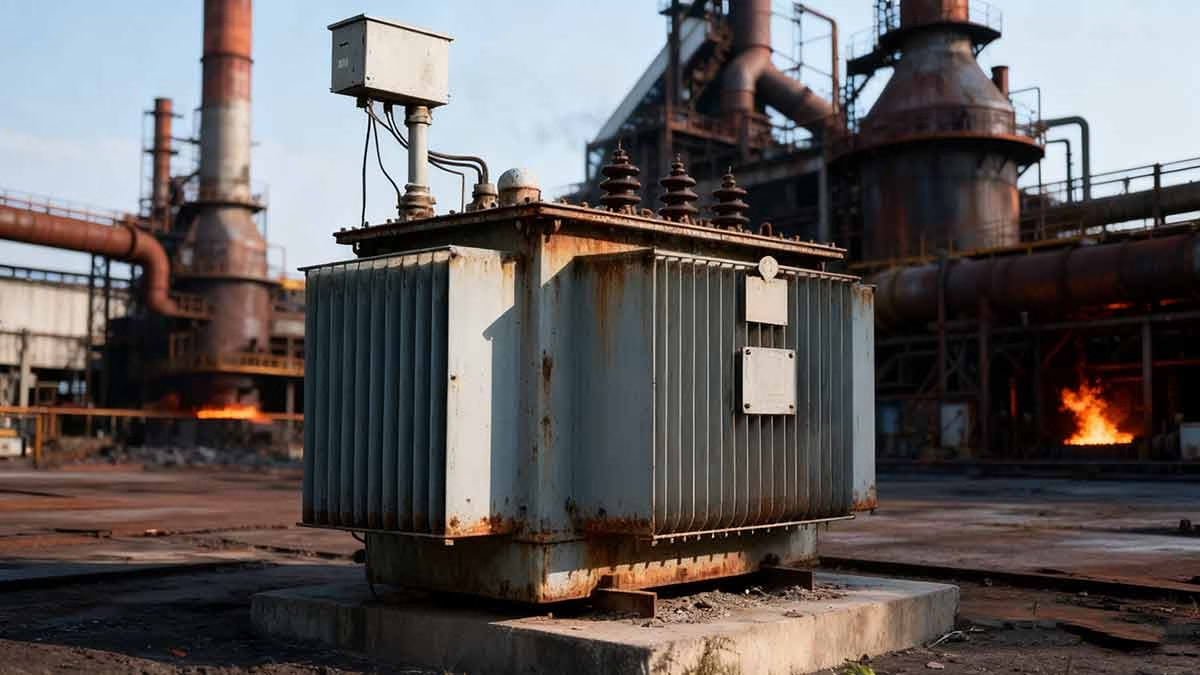
Six months later, the plant’s transformer-related downtime dropped by 80%, and energy costs fell by 15%. The maintenance team reported fewer issues, and the production line ran more smoothly without voltage fluctuations.
The key lesson? Transformer performance is a journey, not a destination. From sizing to operation, every step requires attention to detail—but the rewards (lower costs, higher reliability, longer lifespan) are well worth the effort.
Conclusion
Optimizing three-phase pad-mounted transformer efficiency in industrial settings is a strategic investment that pays dividends in cost savings, reliability, and sustainability. By understanding how these transformers work, recognizing warning signs of trouble, and implementing smart practices from installation to operation, you can unlock their full potential.
Whether you start with small changes (like load balancing or routine maintenance) or invest in larger upgrades (like high-efficiency cores or smart monitoring), every step toward efficiency reduces energy waste and strengthens your bottom line. And in an era where sustainability matters more than ever, efficient transformers help you meet environmental goals while staying competitive.
Remember, your transformer is more than just a piece of equipment—it’s a critical asset that powers your operation. By giving it the care and attention it deserves, you’re ensuring your facility runs smoothly, efficiently, and sustainably for years to come.