
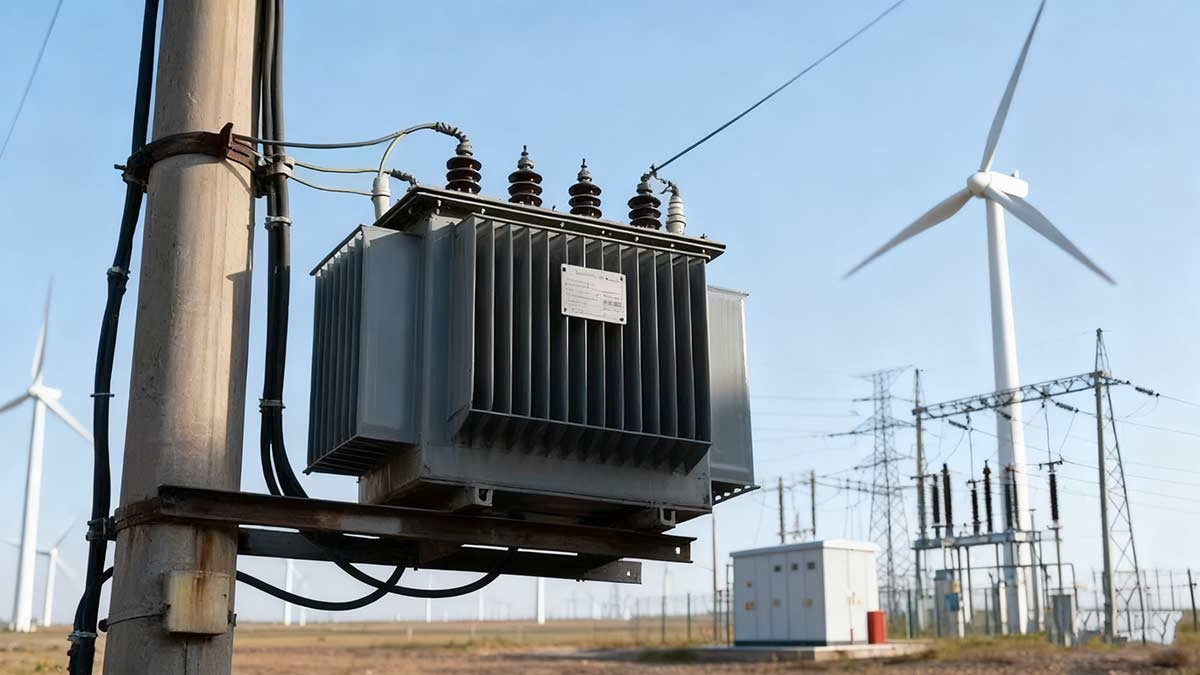
Pole distribution transformers are engineered to tackle a wide range of environmental hurdles, leveraging purpose-built materials, protective finishes, and cutting-edge thermal management systems. These design refinements enable consistent performance amid scorching heatwaves, frigid cold snaps, high-humidity zones, corrosive coastal air, and elevated terrains—ensuring uninterrupted power delivery regardless of climate conditions.
Contents
hide
Weatherproof Transformers: Thriving in Extreme Environments
Ever wondered how electricity stays reliable when temperatures swing to extremes or storms hit hard? Pole-mounted transformers are the unsung workhorses of our power grid, quietly overcoming nature’s toughest tests. Whether you’re a seasoned power industry professional or simply curious about the technology keeping your home powered, this deep dive offers actionable insights into their environmental resilience.
Beating Extreme Temperatures: Hot and Cold Climate Adaptations
How do pole transformers maintain functionality during sweltering heatwaves or bitter cold spells? The answer lies in thoughtful engineering that addresses the unique stressors of temperature extremes—from thermal regulation to material selection.
These transformers combat harsh temperatures through innovative cooling mechanisms, specialized insulation solutions, and temperature-tolerant components. For hot conditions, heat-dissipating fin arrays, real-time thermal tracking, and dynamic load adjustment systems prevent overheating. In cold climates, low-viscosity transformer oils and integrated heating elements preserve optimal operating conditions.
Staying Cool in High-Temperature Regions
In hot environments, preventing overheating is critical to avoiding efficiency drops and equipment failure.
Key Thermal Management Solutions:
- Expanded-surface radiator fins for enhanced heat dispersion
- Variable-speed forced-air cooling systems
- Oil-immersed configurations optimized for rapid heat transfer
Navigating Cold Climate Challenges
Cold weather introduces unique risks, including oil thickening and moisture buildup.
Cold-Weather Protective Measures:
- Low-pour-point transformer oils (maintaining fluidity in subzero temps)
- Automatic internal heating systems
- Hermetically sealed enclosures to block moisture intrusion
Intelligent Temperature Regulation
Modern transformers don’t just react to temperature shifts—they proactively manage them.
Smart Capabilities:
- Continuous temperature monitoring via embedded sensors
- Automated load reduction during extreme thermal stress
- Predictive maintenance alerts based on temperature trend analysis
| Key Adaptation | High-Temperature Regions | Cold-Climate Zones |
|---|---|---|
| Oil Specifications | Elevated flash point properties | Low-pour-point formulation |
| Cooling Approach | Active (variable-speed fans) | Passive (enhanced radiators) |
| Insulation Type | Heat-resistant composites | Moisture-repellent materials |
| Monitoring Tools | Thermal mapping sensors | Oil viscosity trackers |
One standout project comes to mind that put these temperature-resistant technologies to the test. We were tasked with deploying transformers in a region where summer highs regularly hit 40°C (104°F) and winter lows plummeted to -30°C (-22°F)—a true test of adaptability.
Our solution centered on an adaptable transformer design, starting with a custom-formulated oil that retained consistent viscosity across the extreme temperature range. This was foundational to ensuring reliable cooling and insulation in both hot and cold conditions.
For summer heat, we integrated an advanced thermal management system: oversized radiator fins paired with a smart fan setup that activated automatically at critical temperature thresholds. The fans featured redundant components to guarantee performance when needed most.
To counter winter’s chill, we added self-activating heating elements that kicked in when oil temperatures dropped below a set point, preventing thickening. A sealed tank design further safeguarded against moisture— a common culprit in cold-weather failures.
The most innovative element was the intelligent temperature monitoring system, which used a network of sensors to track not just overall temperature, but also localized hotspots within the unit. This data fed into a predictive algorithm that adjusted load in real time to avoid overheating.
The results were remarkable: over the first year of operation, despite record-breaking temperature swings, the transformers maintained peak efficiency with zero temperature-related outages— a significant improvement over the area’s previous infrastructure. An unexpected bonus? The smart management system reduced energy losses by 15% compared to traditional transformers in the same grid.
This project highlighted the value of a holistic approach to temperature resilience. It’s not just about handling heat or cold in isolation, but creating a system that adapts seamlessly to both. By combining advanced materials, smart tech, and innovative design, we’ve redefined what transformers can withstand in extreme weather.
For engineers and utility managers facing similar climate challenges, my advice is to look beyond conventional solutions. Explore how advancements in materials science and IoT can create more resilient, efficient transformers. The upfront investment in these systems often yields substantial returns through improved reliability and lower maintenance costs— especially as extreme weather events become more frequent.
Rust-Proof Reliability: Safeguarding Transformers in Wet Conditions
Is your power infrastructure prepared for heavy rains and high humidity? Moisture is one of the biggest threats to transformer longevity, but with targeted design choices, we can keep these critical assets dry and operational— even during monsoon seasons.
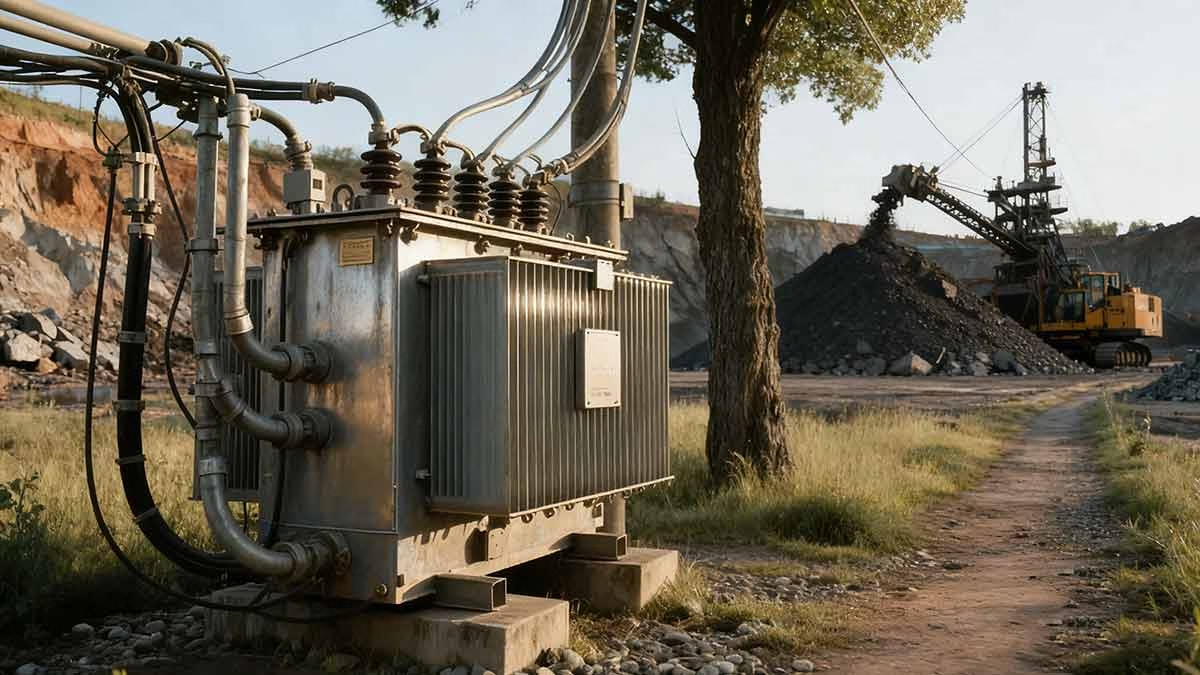
Transformers are shielded from moisture through advanced sealing technologies, humidity-resistant materials, and proactive dehumidification systems. These include airtight tank enclosures, desiccant breathers, and nitrogen gas blanketing. Regular condition monitoring and preventive maintenance also play key roles in mitigating moisture-related issues.
Blocking Moisture at the Source
The first line of defense against humidity is preventing water from entering the transformer.
Sealing Innovations:
- Hermetically sealed tank designs (eliminating air and water intrusion)
- High-performance elastomeric gaskets and seals (resistant to temperature swings)
- Weather-sealed bushings and connection points
Managing Inherent Humidity
Even with robust sealing, trace moisture can find its way in— so active management is essential.
Humidity Control Methods:
- Self-regenerating silica gel breathers (absorbing moisture without frequent replacement)
- Nitrogen gas blanketing (displacing moist air inside the tank)
- Energy-efficient active dehumidification systems (activating only when needed)
Smart Moisture Monitoring
Modern transformers use cutting-edge tech to detect moisture issues before they escalate.
Monitoring Solutions:
- Real-time humidity sensors (tracking internal moisture levels)
- Dissolved gas analysis (identifying water contamination early)
- AI-driven predictive maintenance (correlating moisture data with weather patterns)
| Key Feature | Primary Function | Maintenance Requirements |
|---|---|---|
| Hermetic Sealing | Prevents water entry | Minimal (long-term durability) |
| Self-Regenerating Breather | Absorbs and releases moisture | Occasional inspection |
| Nitrogen Blanketing | Displaces humid air | Periodic pressure checks |
| Active Dehumidifier | Removes excess moisture | Routine servicing |
One challenging project that showcased our moisture protection expertise involved installing transformers in a tropical region with intense monsoon seasons— annual rainfall exceeding 3,000mm and humidity levels consistently above 90%.
Our strategy combined prevention and active management. We started with a hermetically sealed tank design, using advanced elastomeric materials that maintain integrity despite extreme temperature fluctuations (common in tropical climates).
For unavoidable moisture intrusion, we implemented a dual-layer moisture control system. The primary component was an oversized self-regenerating silica gel breather, which absorbs moisture during humid periods and releases it when conditions dry out— extending service life significantly.
As a backup, we added an energy-efficient active dehumidifier: a compact compressor that circulates and dries internal air, activating only when humidity crosses a preset threshold to conserve energy.
The centerpiece was our smart moisture monitoring network— high-precision sensors placed throughout the transformer, feeding real-time data to a central system. This wasn’t just detection; we integrated AI predictive algorithms that analyzed moisture trends, correlated them with weather forecasts, and scheduled maintenance during dry periods to minimize downtime.
The results spoke for themselves: during the first monsoon season, despite record rainfall, the transformers operated flawlessly with zero moisture-related failures— a stark contrast to the previous infrastructure, which suffered frequent outages during heavy rains.
An unexpected benefit came from the data: we gained valuable insights into how ambient humidity, rainfall patterns, and transformer performance interact. This information refined our maintenance schedules and informed future designs for high-humidity environments.
The key takeaway? Moisture protection requires a comprehensive approach— not just sealing out water, but actively managing humidity and using smart tech to stay ahead of issues. For those dealing with wet climates, investing in advanced monitoring and predictive maintenance pays dividends in extended equipment life and reduced downtime.
Coastal Resilience: Shielding Transformers from Salt and Sea Spray
Coastal living offers many perks, but for transformers, salt-laden air is a persistent threat— causing rapid corrosion and component failure. How do we protect coastal power infrastructure from the relentless assault of salt and sea mist?
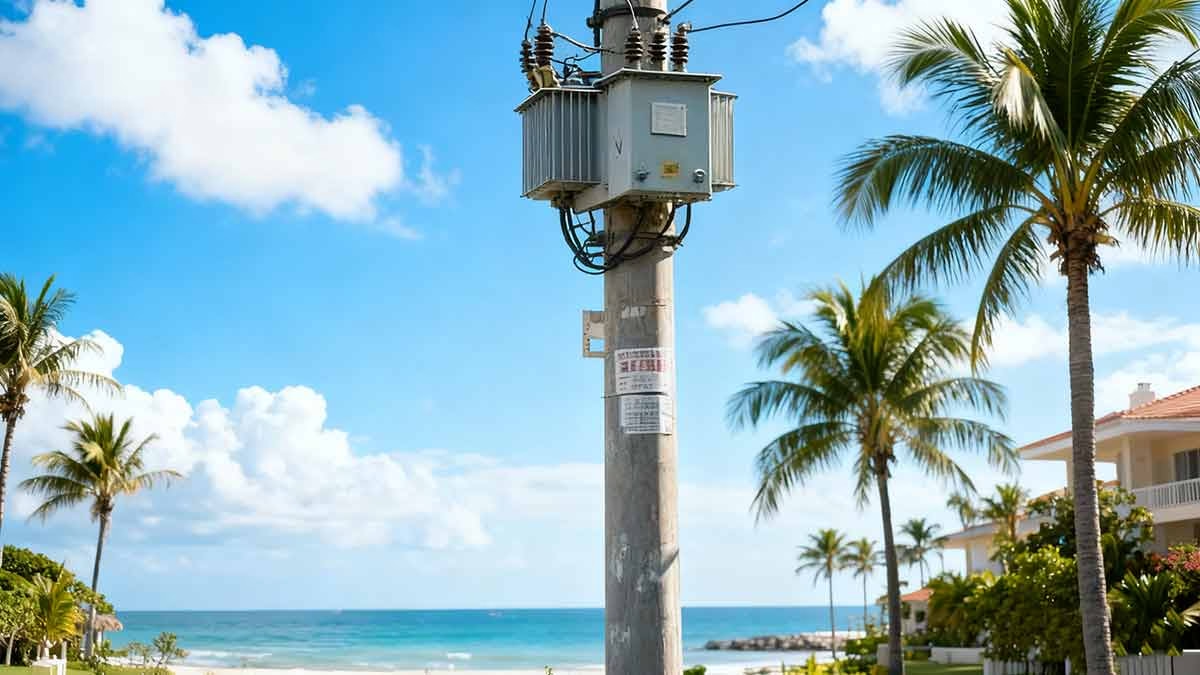
Coastal transformers are engineered with corrosion-resistant materials, specialized protective coatings, and enhanced sealing systems to fend off salt damage. Key features include marine-grade stainless steel components, epoxy-based protective layers, and pressurized enclosures that block salt ingress. Regular cleaning and maintenance further extend service life in these harsh environments.
Material Selection: The Foundation of Corrosion Resistance
Choosing the right materials is critical for coastal durability.
Corrosion-Resistant Components:
- Marine-grade stainless steel (high-molybdenum alloys for chloride resistance)
- Corrosion-resistant aluminum alloys
- Specialty polymers for non-metallic parts (resistant to salt degradation)
Protective Coatings: Invisible Barriers Against Salt
A robust coating system can significantly extend transformer life in coastal areas.
Coating Technologies:
- Zinc-rich epoxy primers (providing sacrificial corrosion protection)
- High-build epoxy intermediate layers (enhancing barrier protection)
- Fluoropolymer topcoats (chemical-resistant and easy to clean)
Sealing and Pressurization: Keeping Salt Out
Preventing salt-laden air from entering internal components is essential.
Sealing Strategies:
- Reinforced gasket materials (resistant to saltwater degradation)
- Positive-pressure tank designs (blocking air ingress)
- Breather systems with salt particle filters
Smart Coastal Monitoring
Modern transformers use advanced sensors to detect corrosion early.
Monitoring Tools:
- Embedded corrosion sensors (identifying early-stage degradation)
- Environmental monitoring systems (tracking salt deposition rates)
- Predictive maintenance algorithms (alerting to potential issues)
| Key Adaptation | Core Function | Maintenance Needs |
|---|---|---|
| Marine-Grade Stainless Steel | Resists chloride-induced corrosion | Low (minimal upkeep) |
| Multi-Layer Epoxy Coatings | Blocks salt contact with metal | Periodic inspection and touch-ups |
| Positive-Pressure Systems | Prevents salt air ingress | Regular pressure checks |
| Corrosion Sensors | Early detection of degradation | Occasional calibration |
One memorable project involved installing transformers on a remote island power station— where equipment faced constant salt spray and occasional flooding during storm surges.
Our approach was holistic: starting with material selection, we opted for high-molybdenum marine-grade stainless steel for all external components— a material renowned for resisting pitting corrosion in chloride-rich environments.
For added protection, we applied a three-layer coating system: a zinc-rich epoxy primer (sacrificially protecting the metal), a high-build epoxy intermediate layer (adding thickness and barrier protection), and a fluoropolymer topcoat (resistant to salt, UV, and easy to clean— critical for reducing salt buildup).
Our most innovative solution was the positive-pressure tank design: a small, reliable compressor maintained slight internal pressure, effectively blocking salt-laden air from entering even tiny gaps. The air intake featured a multi-stage filter system— including a desiccant to remove moisture and a fine particulate filter to trap salt particles.
We also installed corrosion sensors at key points, detecting early-stage degradation long before it became visible. Data from these sensors fed into a predictive maintenance system, alerting operators to potential issues and recommending interventions.
After two years of operation— including several major storms— the transformers showed minimal corrosion. Internal components remained pristine thanks to the pressurization system, extending expected lifespan by years compared to traditional designs in similar environments.
The data collected provided valuable insights into how weather patterns, salt deposition, and corrosion interact— refining our maintenance practices and future coastal transformer designs.
For engineers and utility managers dealing with coastal installations, the lesson is clear: coastal protection requires more than just corrosion-resistant materials. Combine robust materials, innovative sealing, and smart monitoring to create a system that actively resists the coastal environment. The investment pays off in lower maintenance costs and extended equipment life.
High-Altitude & Desert Resilience: Transformers for Extreme Landscapes
How do we keep power flowing in Earth’s most unforgiving environments— from snow-capped mountains to scorching deserts? These landscapes present unique challenges: thin air at high altitudes, extreme heat in deserts, and relentless UV radiation. The solution lies in specialized transformer designs tailored to these harsh conditions.
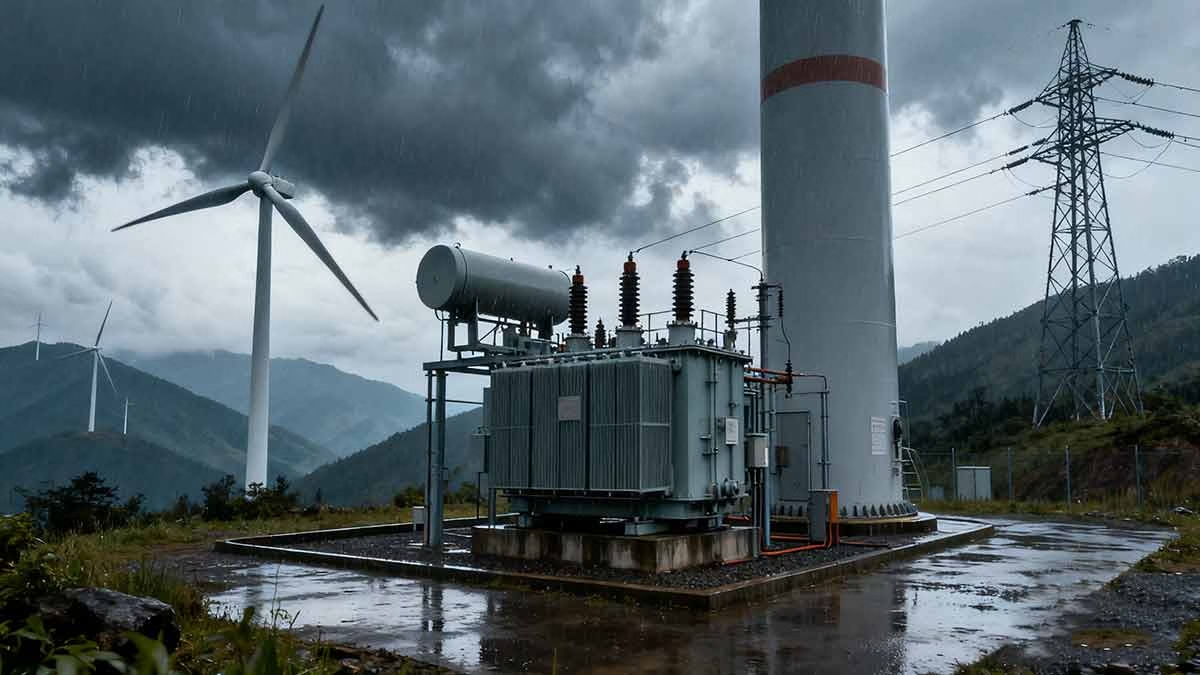
Transformers for mountain and desert use are engineered with enhanced cooling systems, specialized insulation, and UV/dust-resistant materials. Key adaptations include altitude-optimized bushings, advanced heat dissipation technologies, and components that withstand dramatic temperature swings— ensuring reliable operation in low air density and extreme heat.
High-Altitude Adaptations: Thriving in Thin Air
At elevations above 3,000 meters, thin air reduces cooling efficiency and insulation performance— requiring targeted design adjustments.
Altitude-Specific Solutions:
- Redesigned bushings (optimized for low air density insulation)
- Enhanced cooling systems (compensating for reduced air cooling)
- High-altitude-rated insulation materials (maintaining dielectric strength)
Desert Resilience: Beating the Heat
Desert environments bring extreme heat, rapid temperature fluctuations, and dust— all major threats to transformer performance.
Desert-Tailored Features:
- High-efficiency radiator designs (maximizing heat dissipation)
- Heat-resistant materials and coatings (withstanding extreme temps)
- Advanced oil circulation systems (ensuring consistent cooling)
UV & Dust Protection: Shielding Against Environmental Wear
Both mountain and desert environments expose transformers to intense UV radiation and dust— requiring robust protective measures.
Protective Strategies:
- UV-resistant coatings and materials (preventing degradation from sunlight)
- Enhanced sealing (blocking dust ingress)
- Specialized air intake filters (trapping particulate matter)
Smart Monitoring for Extreme Environments
Modern transformers use adaptive monitoring to maintain performance in harsh conditions.
Monitoring Technologies:
- Altitude-aware performance trackers (adjusting to air density changes)
- Temperature and dust accumulation sensors
- Extreme-environment-calibrated predictive maintenance systems
| Key Adaptation | Mountain Applications | Desert Applications |
|---|---|---|
| Cooling System | Optimized for low air density | Enhanced for extreme heat |
| Insulation | High-altitude-rated | Heat and UV-resistant |
| Sealing | Pressure-compensated | Dust-tight enclosures |
| Monitoring | Air density sensors | Heat/dust tracking systems |
One particularly challenging project involved installing transformers along a power line stretching from a 4,000-meter (13,000-foot) mountain pass down through an arid desert valley— a landscape with drastically varying conditions.
Our solution was an adaptable design that performed in both extremes. For the high-altitude section, we redesigned bushings using specialized materials that maintain insulation integrity in thin air. The cooling system featured a high-power oil circulation pump (compensating for reduced air cooling efficiency) and expanded-surface radiators (optimized for heat dissipation in low-density air).
As the power line descended into the desert, we shifted focus to extreme heat and temperature swings. We used a custom-formulated transformer oil that retains viscosity and cooling properties across a wide temperature range. Radiators were enhanced with a smart fan system— activating during peak heat to provide additional forced-air cooling.
To combat UV radiation and dust, we applied a dual-layer coating: a highly reflective base layer (reducing heat absorption) and a UV-resistant, self-cleaning topcoat (minimizing dust buildup).
Our adaptive sealing system was a standout innovation: at high altitudes, seals adjusted to lower air pressure to prevent oil leaks; as the transformers descended to lower elevations, they adapted to increasing pressure— maintaining integrity throughout the range.
The monitoring system was equally sophisticated: altitude-aware sensors in mountain sections adjusted cooling parameters based on air density, while desert sensors focused on temperature management and dust accumulation. All data fed into a central predictive maintenance system, anticipating issues based on location-specific environmental stressors.
After a year of operation— including record-breaking weather— the transformers performed flawlessly. No altitude-related failures in the mountains, no heat-related issues in the desert— a testament to the adaptability of the design.
The data collected provided invaluable insights into how transformer performance varies with altitude and temperature— refining future designs for extreme environments.
For those working in diverse, harsh landscapes, the key is flexible, adaptive design. Don’t just build for one extreme— create systems that adjust to changing conditions. Investing in adaptive technologies and smart monitoring delivers reliable performance and lower maintenance costs across a range of challenging environments.
Urban Hardiness: Protecting Transformers from City Pollution
How do transformers survive and thrive in the heart of bustling cities? Urban environments pose unique challenges: air pollution, electromagnetic interference (EMI), noise regulations, and dense infrastructure. The solution lies in transformer designs that adapt to the urban jungle— not just surviving, but contributing to smarter, more efficient cities.
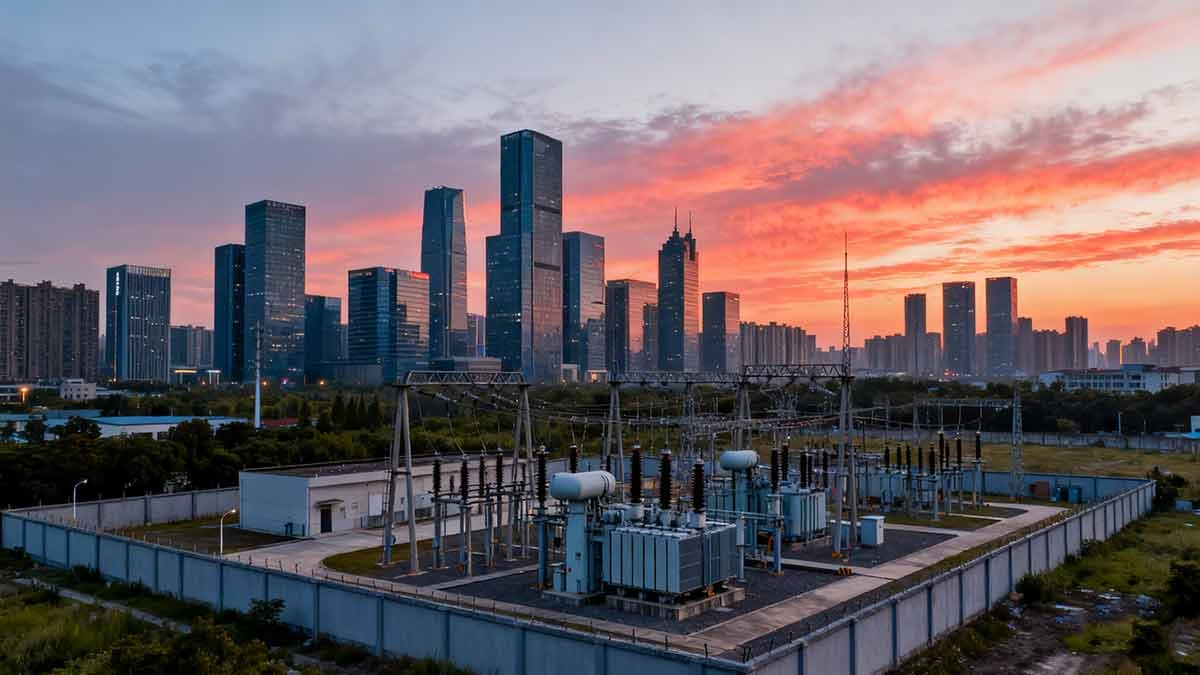
Urban transformers are protected against pollution through advanced filtration systems, corrosion-resistant materials, and EMI shielding. Key features include enhanced insulation (resisting chemical contaminants), noise-reduction technologies, and smart grid integration— ensuring reliable operation in polluted, high-EMI environments while meeting strict urban noise standards.
Clean Air Solutions: Mitigating Urban Pollution
Urban air pollution— from industrial emissions to vehicle exhaust— can degrade transformer components over time.
Pollution Mitigation Strategies:
- Multi-stage air filtration systems (removing particulates and corrosive gases)
- Self-cleaning surfaces (repelling dust and debris)
- Sealed enclosures (minimizing exposure to pollutants)
Quiet Operation: Meeting Urban Noise Standards
In dense cities, transformer noise is a major concern. Modern designs prioritize low-noise performance.
Noise Reduction Techniques:
- Sound-absorbing composite enclosures
- Vibration-dampening mounting systems
- Ultra-quiet cooling fans (inspired by biomimetic designs)
EMI Shielding: Overcoming Urban Interference
Cities are awash in electromagnetic signals— from cell towers to power lines— which can disrupt transformer performance.
EMI Protection Measures:
- Custom-engineered Faraday cages (redirecting electromagnetic fields)
- Advanced grounding systems (dissipating stray currents)
- EMI-absorbing materials (reducing interference)
Smart City Integration: Transformers as Urban Assets
Modern urban transformers are no longer passive components— they’re integral to smart city ecosystems.
Smart Features:
- Real-time load management (supporting demand response programs)
- IoT connectivity (integrating with urban grid networks)
- Activity-based predictive maintenance (aligning with urban energy patterns)
| Key Feature | Primary Function | Urban Benefit |
|---|---|---|
| Multi-Stage Filtration | Removes pollutants and corrosives | Extended component life |
| Noise-Reduction Design | Minimizes operational sound | Complies with city regulations |
| EMI Shielding | Blocks electromagnetic interference | Ensures reliable performance |
| Smart Grid Integration | Adapts to urban energy demands | Optimizes grid efficiency |
One fascinating project involved upgrading the transformer network in a dense city center— known for high pollution levels and strict noise regulations.
Our approach addressed each urban challenge head-on. For air quality, we designed a multi-stage filtration system for cooling intakes: an electrostatic precipitator (removing large particulates) followed by a chemical filter (neutralizing corrosive gases like sulfur dioxide and nitrogen oxides common in urban air).
To meet noise standards, we developed a novel enclosure using layered composite materials with high sound-absorbing properties— dampening a wide range of frequencies. Cooling fans (a major noise source) were replaced with biomimetic designs inspired by owl wings— efficient yet nearly silent.
EMI protection was critical in the dense urban environment. We encased each transformer in a custom Faraday cage (using a conductive mesh to redirect electromagnetic fields) and implemented advanced grounding techniques (safely dissipating stray currents from nearby power lines and electronic devices).
The most innovative element was smart city integration: each transformer was equipped with sensors monitoring not just its own performance, but local power demand, air quality, and even traffic patterns. This data fed into a central management system, allowing real-time load adjustments to match urban energy needs.
The results were impressive: after six months, maintenance needs dropped by 50% compared to the old network. The new transformers consistently met noise regulations— even during peak load times— and internal air quality sensors showed drastically lower pollutant levels than ambient city air.
An unexpected bonus: the data from our transformer network proved valuable for urban planners, revealing correlations between energy usage, traffic flow, and air quality. This informed the city’s overall energy strategy and future development decisions.
The lesson here is that urban transformer design requires holistic thinking. It’s not just about protecting equipment from the city— it’s about making transformers active contributors to urban life. By designing for pollution resistance, low noise, and smart integration, we ensure reliable power while enhancing quality of life in cities.
Wrapping Up
Pole-mounted distribution transformers face a diverse array of environmental challenges— from extreme temperatures and heavy rains to coastal salt, high altitudes, and urban pollution. Through innovative engineering, purpose-built materials, and smart technologies, we’re creating transformers that don’t just withstand these hurdles— they elevate power distribution efficiency and reliability in any setting.
Whether adapting to blistering heat, humid monsoons, corrosive coastal air, thin mountain atmospheres, or bustling cityscapes, the key lies in designing for resilience and adaptability. By combining advanced materials, proactive monitoring, and environment-specific features, we’re building a power grid that’s prepared for whatever nature or urban life throws its way— ensuring consistent, reliable electricity for communities worldwide.