
Choosing the right single phase power transformer requires careful evaluation of core factors that directly impact performance, efficiency, and longevity. From power capacity and voltage ratings to installation location and maintenance needs, the right choice aligns with your specific electrical demands while delivering reliability and cost savings over time.
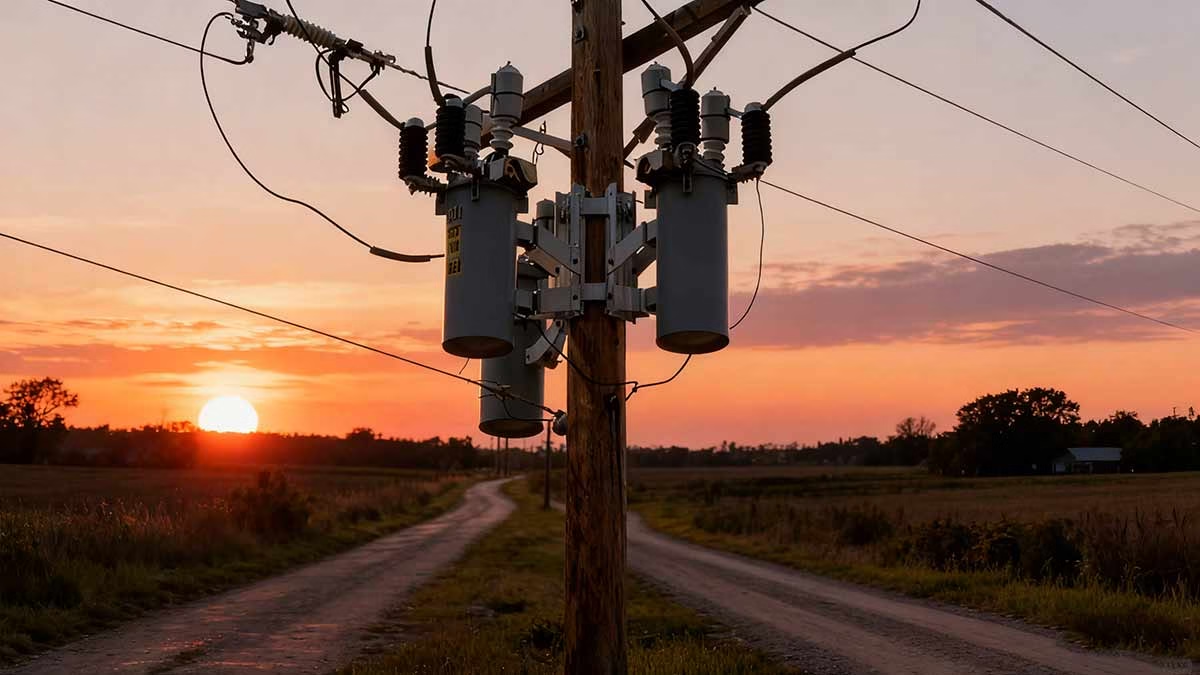
As experts with years of experience in electrical systems, we’ve witnessed how a well-chosen transformer eliminates downtime, reduces energy costs, and adapts to evolving needs. Below, we break down the critical considerations to help you make an informed decision—no technical jargon, just practical insights.
Contents
hide
Single Phase Transformers: What Makes Them Indispensable in Electrical Systems?
Why are single-phase transformers the backbone of residential and light commercial power? Their unique combination of simplicity, versatility, and cost-effectiveness makes them irreplaceable for everyday electrical needs. Unlike three-phase transformers (designed for heavy industrial use), single-phase units are engineered to power homes, small businesses, and light-duty equipment—delivering safe, stable voltage where it matters most.
The Basics of Single-Phase Power
Single-phase power operates on a two-wire AC circuit, typically supplying 120V or 240V (US standard) to end-users. Its design prioritizes simplicity:
- Circuit Structure: Two conductors (hot and neutral) deliver power, making installation straightforward.
- Voltage Compatibility: Ideal for most household appliances (refrigerators, HVAC, lighting) and small business equipment (printers, coffee machines, cash registers).
- Widespread Availability: The global standard for residential areas and light commercial spaces (e.g., cafes, small offices, retail stores).
Key Advantages of Single-Phase Transformers
What sets these transformers apart from their three-phase counterparts?
| Feature | Single-Phase Transformer | Three-Phase Transformer |
|---|---|---|
| Design Complexity | Simple (fewer windings, smaller core) | Complex (multiple windings, larger core) |
| Cost | Lower upfront and installation costs | Higher initial investment |
| Size | Compact, space-efficient | Bulky, requires more installation space |
| Ideal Applications | Homes, small businesses, light loads | Factories, large commercial buildings, heavy machinery |
Common Use Cases
Single-phase transformers power countless daily activities:
- Residential: Lighting, HVAC, EV chargers, home automation systems, and kitchen appliances.
- Small Commercial: Cafés, boutique stores, home offices, and dental clinics (powering drills, computers, and lighting).
- Specialized: Remote locations (e.g., rural homes, cabin retreats) and temporary setups (construction sites, event venues).
A recent project in a remote village relied on single-phase transformers to electrify 50+ homes—their compact size and easy maintenance made them the only practical choice for the area’s limited infrastructure.
How Single-Phase Transformers Work
At their core, these transformers use electromagnetic induction to convert voltage:
- Primary Winding: Receives high-voltage power from the grid (e.g., 7,200V).
- Laminated Steel Core: Transfers magnetic flux between windings, minimizing energy loss.
- Secondary Winding: Steps down voltage to a safe, usable level (e.g., 120/240V) for end-users.
Overcoming Limitations
While single-phase transformers excel in light-duty applications, they have constraints—with simple solutions:
- Limited Power Capacity: For loads exceeding 167kVA, three-phase transformers are necessary. For growing businesses, modular single-phase units can be added to scale capacity.
- Voltage Fluctuations: Heavy loads (e.g., starting a large AC unit) can cause dips. Tap changers (built into premium models) adjust voltage in real time to maintain stability.
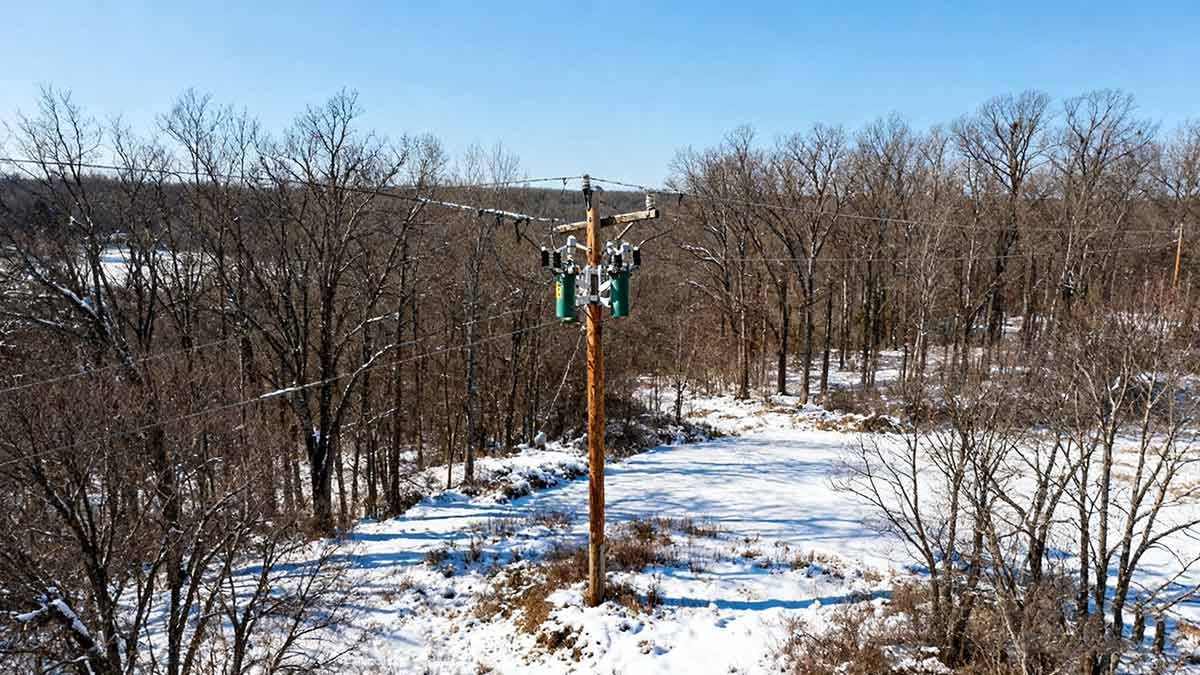
Sizing Single-Phase Transformers: How to Match Capacity to Your Needs
Choosing the right transformer size is like selecting a hose for a garden: too small, and you’ll struggle to meet demand; too large, and you’ll waste energy and money. The key is matching the transformer’s kVA rating to your actual power needs—accounting for current loads, future growth, and peak demand.
Understanding kVA Ratings
kVA (kilovolt-amperes) measures a transformer’s apparent power—the total energy it can deliver to connected loads. For most single-phase applications, kVA closely approximates usable kilowatts (kW) (assuming a power factor of 0.8–0.9). Common single-phase sizes range from 0.25kVA (for small electronics) to 167kVA (for large commercial spaces).
Step-by-Step Sizing Process
- List All Connected Loads: Document every device that will draw power (e.g., lights, computers, HVAC, motors).
- Calculate Total Wattage: Note the wattage of each device (found on labels or manuals) and sum them up.
- Convert to kVA: Divide total watts by 1000 (e.g., 2,200W = 2.2kVA).
- Add a Buffer: Account for peak demand (e.g., all devices running simultaneously) and future growth—add 20–30% to your calculated kVA.
Example: A small office has 500W of lighting, 200W of computers, and 1,500W of AC. Total wattage = 2,200W (2.2kVA). Adding a 30% buffer = 2.86kVA—choose a 3kVA transformer.
Critical Sizing Factors
- Peak Demand: Devices like motors or AC units draw more power at startup (2–3x their running wattage). For example, a 1,500W AC might need 3,000W to start—ensure your transformer can handle these surges.
- Future Growth: A café planning to add outdoor seating and extra refrigerators should size for 50% growth instead of current needs to avoid premature upgrades.
- Efficiency Sweet Spot: Transformers operate most efficiently (95–98%) when loaded to 50–70% of their capacity. An oversized 10kVA transformer powering a 3kVA load (30% capacity) will waste energy on “no-load losses.”
The Risks of Incorrect Sizing
| Sizing Issue | Consequences |
|---|---|
| Undersized (Too Small) | Overheating, shortened lifespan (50% less than rated), frequent power outages, and damage to sensitive electronics. |
| Oversized (Too Large) | Higher upfront costs, 10–15% more energy waste, and poor efficiency at low loads. |
Quick Sizing Guidelines
Use this chart to narrow down your options (add 20–30% buffer for safety):
| Total Load (kW) | Recommended Transformer Size (kVA) |
|---|---|
| 0–1.5 | 2–3 |
| 1.5–3 | 5 |
| 3–4.5 | 7.5 |
| 4.5–6 | 10 |
| 6–9 | 15 |
When to consult a professional: For complex loads (e.g., mixed motors and electronics), critical applications (e.g., medical equipment), or loads above 50kVA—expert analysis ensures precise sizing.
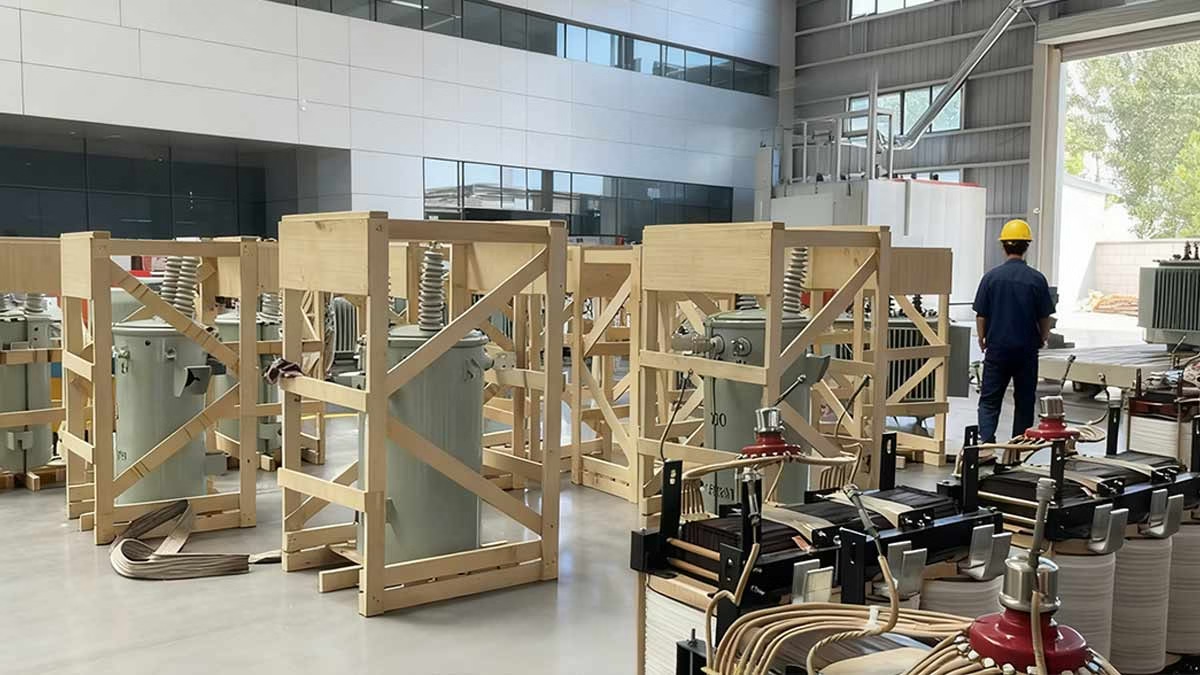
Maximizing Efficiency: Energy-Saving Secrets of Single-Phase Transformers
An inefficient transformer is like a leaky faucet—small losses add up to big energy bills over time. Modern single-phase transformers use advanced materials and designs to minimize waste, but choosing the right model (and optimizing its use) is key to unlocking savings.
Where Energy Is Lost
Transformer inefficiency stems from two main sources:
- No-Load Losses: Energy wasted when the transformer is energized but not supplying power (caused by magnetic flux in the core).
- Load Losses: Energy lost as heat when power flows through windings (increases with load).
Core Materials: The Foundation of Efficiency
The core material is the biggest driver of no-load losses. Here’s how options compare:
| Core Material | No-Load Loss Reduction | Best For |
|---|---|---|
| Silicon Steel (Traditional) | Baseline | Budget-conscious, low-use applications |
| Grain-Oriented Steel | Up to 30% | Balanced performance and cost |
| Amorphous Metal | Up to 70% | High-efficiency, 24/7 operation (e.g., data centers, hospitals) |
A client recently upgraded from silicon steel to amorphous metal transformers in their retail chain—saving $1,800 annually per store in energy costs.
Winding & Cooling: Boosting Efficiency Further
- Windings: Copper windings have lower resistance than aluminum, reducing load losses by 15–20%. Foil windings (used in premium models) minimize eddy current losses (another source of waste).
- Cooling Systems:
- Oil-filled transformers: Excellent heat dissipation for outdoor use, ideal for high loads.
- Dry-type transformers: Air-cooled, perfect for indoor applications (e.g., offices, basements) and eliminate oil leak risks.
Load Management: Operate in the Efficiency Zone
To maximize savings:
- Avoid operating transformers below 40% or above 80% of their capacity.
- For multiple loads, distribute power across smaller transformers instead of relying on one large unit (e.g., a warehouse with separate transformers for lighting and machinery).
Efficiency Standards to Look For
Global regulations ensure minimum efficiency levels—prioritize these certifications:
- DOE (US): 2016 standards require transformers to meet IE3 efficiency levels.
- EU Ecodesign Directive: Mandates minimum efficiency for transformers sold in Europe.
- Energy Star: Recognizes top-tier models with 10–15% higher efficiency than standard units.
Calculating Potential Savings
Let’s compare a standard vs. high-efficiency 100kVA transformer:
- Standard (97% efficient): Annual losses = 3,650 kWh → Cost = $365 (at $0.10/kWh).
- High-efficiency (98.5% efficient): Annual losses = 1,314 kWh → Cost = $131.
- Annual Savings: $234 → Payback period for the $1,200 premium: ~5 years.
Choosing the Perfect Installation Location for Your Single-Phase Transformer
The right location ensures your transformer operates safely, efficiently, and reliably for years. Key considerations include accessibility, environmental protection, and compliance with local codes—all while minimizing voltage drop and safety risks.
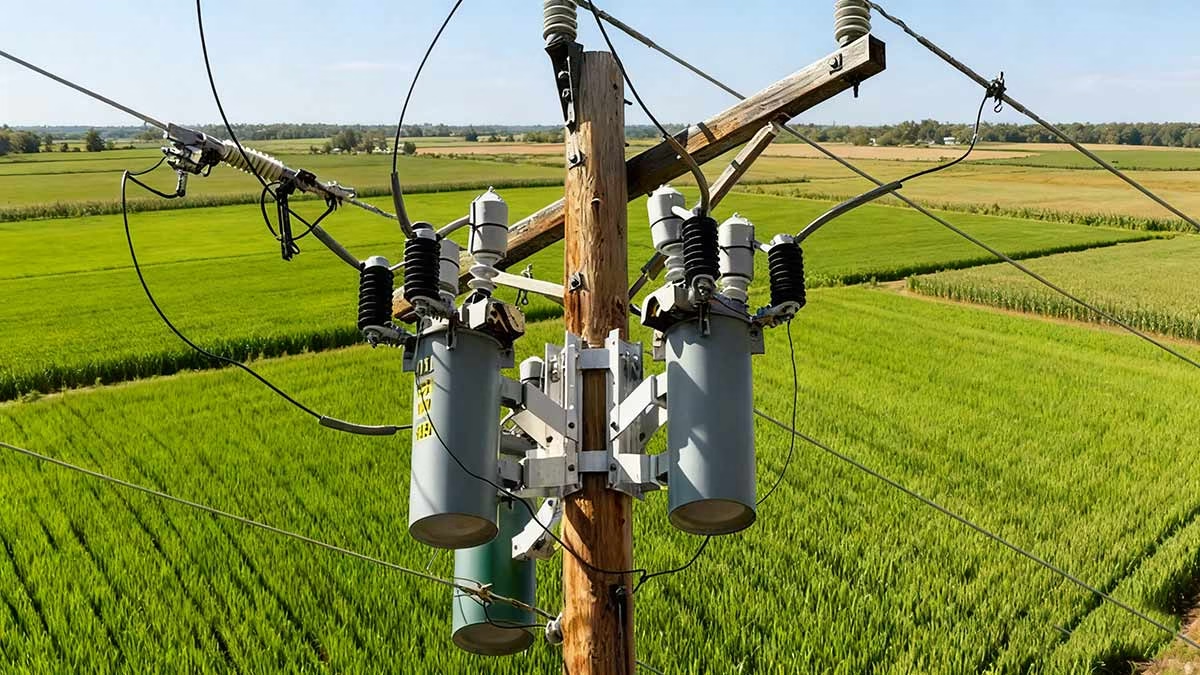
Indoor vs. Outdoor Installation
| Factor | Indoor Installation | Outdoor Installation |
|---|---|---|
| Weather Protection | Excellent (shielded from rain, snow, dust) | Requires weatherproof enclosures (pad-mounted or pole-mounted) |
| Space Requirements | Needs dedicated room/area (e.g., electrical closet, basement) | Saves indoor space; requires 10x10ft clearance around the unit |
| Cooling | May need forced-air ventilation (for dry-type units) | Natural air cooling (oil-filled units) or fan-assisted cooling |
| Noise | May require sound dampening (in offices/homes) | Less problematic (ambient noise dissipates outdoors) |
Key Location Guidelines
- Proximity to Loads: Install as close to the load center (e.g., breaker box) as possible to minimize voltage drop. For a home, this might be a basement or garage; for a café, near the kitchen (where most appliances are located).
- Accessibility: Ensure 3–4ft of clearance around the transformer for maintenance (e.g., cleaning, inspections). Avoid tight corners or blocked pathways.
- Environmental Protection:
- Coastal areas: Use corrosion-resistant enclosures (hot-dip galvanized steel) to withstand salt spray.
- Flood-prone regions: Elevate pad-mounted units 1m above the 100-year flood level.
- Dusty/industrial areas: Choose sealed dry-type units to prevent debris buildup.
- Safety Compliance:
- Keep away from flammable materials (e.g., gasoline, paper storage).
- Follow local electrical codes (e.g., 6ft minimum distance from windows/doors for outdoor units).
Installation Types by Application
- Pole-Mounted: Ideal for rural/residential areas with limited ground space. Mount 10–12ft high to avoid vandalism and flooding.
- Pad-Mounted: Common in urban commercial areas (e.g., parking lots, sidewalks). Install on a concrete pad with drainage to prevent water accumulation.
- Wall-Mounted: Space-saving option for indoor use (e.g., small offices, apartments). Ensure the wall can support the transformer’s weight (typically 50–200lbs).
A recent project in a historic district required pad-mounted transformers with custom brick enclosures—blending with the neighborhood’s architecture while meeting safety codes.
Maintaining Single-Phase Transformers: Tips for Longevity & Performance
Transformers don’t have moving parts, but they still need regular care to avoid premature failure. Simple maintenance tasks can extend lifespan by 15–20%, improve efficiency, and prevent costly outages.
Basic Maintenance Checklist
| Task | Frequency | What to Do |
|---|---|---|
| Visual Inspection | Monthly | Check for rust, loose connections, oil leaks (for oil-filled units), and debris buildup. |
| Cleaning | Quarterly | Vacuum dust from dry-type units; wipe down exterior of pad-mounted/pole-mounted units. |
| Connection Tightening | Annually | Use a torque wrench to tighten terminal connections (loose connections cause overheating). |
| Insulation Testing | Annually | Test insulation resistance with a megohmmeter (look for readings above 100MΩ). |
| Oil Testing (Oil-Filled) | Annually | Sample oil to check for moisture, acidity, and dissolved gases (indicators of internal damage). |
Specialized Care by Transformer Type
- Oil-Filled Units:
- Replace oil every 5–10 years (or if test results show degradation).
- Check oil levels monthly (top off with approved transformer oil if low).
- Inspect gaskets for leaks (replace if cracked or worn).
- Dry-Type Units:
- Ensure ventilation vents are unobstructed (blocked vents cause overheating).
- Use thermal imaging annually to detect hot spots (sign of winding damage).
Load Management for Longevity
- Avoid prolonged overloads (limit to 110% of capacity for no more than 2 hours).
- Balance loads across phases (for multi-winding units) to prevent uneven heating.
- Install surge protectors to shield against voltage spikes (common during storms).
Smart Monitoring Solutions
Modern transformers offer remote monitoring features that simplify maintenance:
- Real-time alerts for temperature spikes, voltage fluctuations, or oil leaks.
- Predictive analytics that identify potential issues (e.g., insulation degradation) before failure.
- Remote load management to adjust capacity without on-site visits.
A warehouse client implemented smart monitoring and reduced maintenance costs by 30%—catching a cooling fan failure early and avoiding overheating.
Safety First
Always follow these safety protocols during maintenance:
- De-energize the transformer and lock out/tag out the circuit before working.
- Wear PPE (gloves, safety glasses, insulated tools) to prevent electrical shock.
- For complex tasks (e.g., oil replacement, winding repairs), hire a certified electrician.

Conclusion
Choosing and maintaining the right single-phase power transformer is a long-term investment in reliability and efficiency. By focusing on size, efficiency, installation location, and regular care, you can ensure your transformer meets your current needs while adapting to future growth.
Whether you’re powering a home, small business, or specialized application, the key is to prioritize alignment with your unique load profile and environment. With the insights above, you’ll be equipped to select a transformer that delivers consistent performance, reduces energy costs, and stands the test of time.
For complex projects or custom requirements, consulting a qualified electrical engineer ensures precise sizing and installation—avoiding common pitfalls and maximizing value.