
Selecting an oil immersed transformer requires a strategic balance of technical performance, environmental responsibility, and long-term reliability. The ideal unit should align with your power capacity needs, deliver consistent cooling efficiency, minimize environmental impact, and stand the test of time—all while optimizing operational costs.

As industry experts with decades of experience in power distribution solutions, we’ve witnessed how the right oil immersed transformer can streamline operations, reduce downtime, and lower total cost of ownership. Below, we break down the critical factors to consider when selecting a unit that meets your unique requirements.
Contents
hide
Why Oil Immersed Transformers Rely on Insulating Oil: Beyond the “Bath”
Ever wondered why oil immersed transformers use oil as a core component? It’s not a passive design choice—insulating oil is a hardworking enabler of performance, safety, and longevity. Unlike dry-type alternatives, oil immersed transformers leverage specialized oils to deliver superior insulation, cooling, and protection, making them ideal for high-voltage and heavy-load applications.
The Science Behind Transformer Oil
Transformer oil is engineered for precision, with three non-negotiable properties:
- High Dielectric Strength: Prevents electrical arcing between components, even at extreme voltages.
- Superior Thermal Conductivity: Absorbs and dissipates heat from the core and windings, maintaining optimal operating temperatures.
- Chemical Stability: Resists degradation under high electrical stress and temperature fluctuations, ensuring long-term performance.
Core Functions of Insulating Oil
The oil in these transformers serves three critical roles that directly impact reliability:
- Cooling: As the transformer operates, oil circulates naturally (or via forced systems) to draw heat away from vital components, preventing overheating and insulation breakdown.
- Insulation: Creates a barrier between high-voltage parts, eliminating the risk of short circuits and electrical discharge.
- Protection: Shields internal windings and core from moisture, oxygen, and contaminants—common culprits of premature failure.
Oil Immersed vs. Dry-Type Transformers: Key Differences
| Feature | Oil Immersed Transformers | Dry-Type Transformers |
|---|---|---|
| Cooling Efficiency | High (oil transfers heat 3x faster than air) | Lower (relies on air circulation) |
| Voltage Capacity | Ideal for high-voltage applications (up to 765kV) | Limited to low-to-medium voltages (up to 35kV) |
| Footprint (Same Capacity) | Compact (oil cooling reduces size) | Larger (requires more space for air flow) |
| Maintenance Needs | Routine oil testing/filtering | Minimal (no fluid-related upkeep) |
| Installation Flexibility | Indoor/outdoor (with proper housing) | Primarily indoor (moisture-sensitive) |
Common Transformer Oil Types
Not all oils are created equal—selecting the right type depends on your application and environmental priorities:
- Mineral Oil: The industry standard, derived from petroleum. Offers excellent dielectric properties and cost-effectiveness for general applications.
- Silicone Oil: Premium option with high fire resistance. Ideal for high-temperature or safety-critical environments (e.g., data centers, hospitals).
- Vegetable-Based Oil: Biodegradable and eco-friendly. Perfect for environmentally sensitive areas (e.g., near waterways, wildlife habitats) or sustainable-focused projects.
Our team has supported clients in transitioning from mineral oil to vegetable-based alternatives for transformers near ecological reserves—reducing environmental risk without compromising performance. Proper maintenance (e.g., regular oil testing for moisture and acidity, filtering to remove contaminants) ensures the oil retains its properties for decades.
Sizing Matters: Finding the Optimal kVA Rating for Your Needs
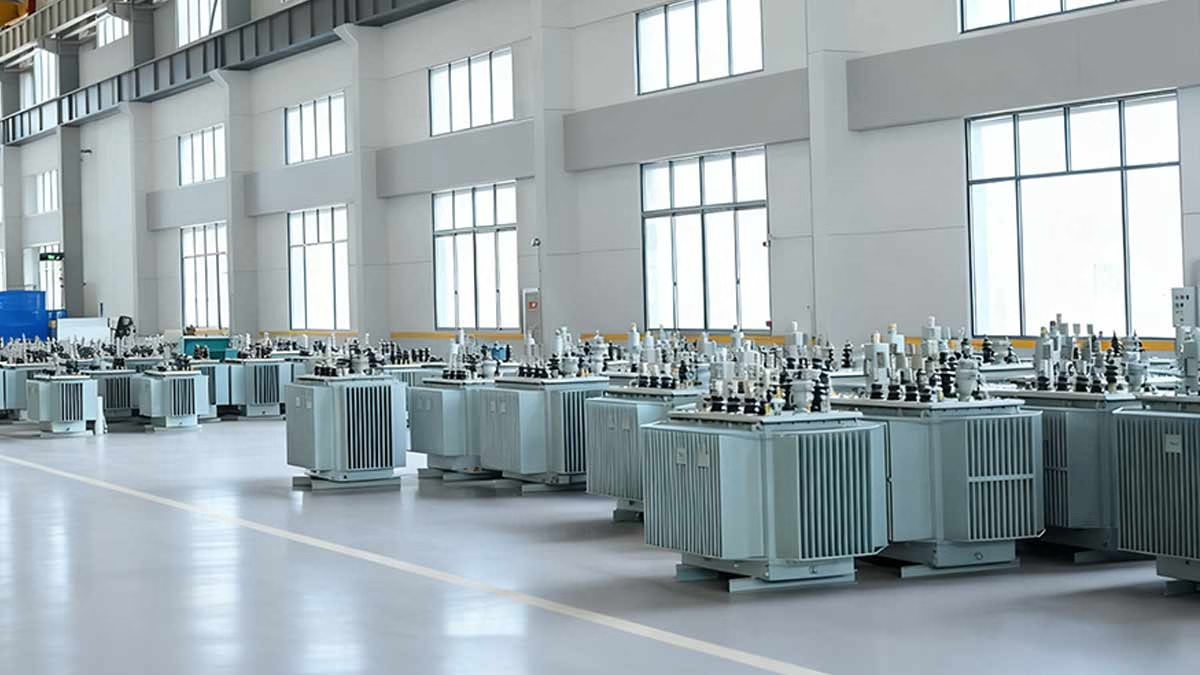
Choosing the right size oil immersed transformer is a balancing act—too small, and you risk overheating, inefficiency, and frequent outages; too large, and you waste capital on unused capacity and higher energy losses. The goal is to match the transformer’s kVA rating to your current load demands while accounting for future growth and peak usage.
Understanding Transformer Ratings
- kVA vs. kW: kVA (kilovolt-amperes) measures apparent power (total power supplied), while kW (kilowatts) measures real power (usable energy). For most industrial and commercial applications, assume a power factor of 0.8–0.9 (e.g., a 75kVA transformer delivers ~60–67.5kW of real power).
- Voltage Compatibility: Ensure the transformer’s primary (input) and secondary (output) voltage ratings align with your power grid and equipment requirements (e.g., 480V input / 240V output for commercial buildings).
Step-by-Step Load Calculation
To determine the right size:
- List All Connected Loads: Document every piece of equipment (motors, HVAC, lighting, machinery) that the transformer will power.
- Calculate Total Wattage: Sum the power consumption (in watts) of all equipment.
- Adjust for Power Factor: Divide total wattage by your system’s power factor (typically 0.8–0.9) to get apparent power (VA).
- Add a Safety Margin: Include 15–20% extra capacity to accommodate future expansion, peak demand (e.g., simultaneous equipment startup), and load fluctuations.
Example Calculation:
- Total equipment wattage: 24,500W
- Power factor: 0.85
- Safety margin: 20%
- Required kVA = (24,500 / 0.85) × 1.2 ≈ 34.6kVA → Select a 35kVA transformer
Risks of Incorrect Sizing
- Undersizing: Leads to overheating, insulation degradation, reduced lifespan, and costly downtime (e.g., a small factory with an undersized transformer may experience frequent tripping during peak production).
- Oversizing: Results in higher initial costs, lower efficiency (transformers operate most efficiently at 50–70% load), and wasted energy (core losses occur even when the unit is underutilized).
Sizing Guidelines for Common Applications
| Typical Load (kVA) | Recommended Transformer Size (kVA) | Ideal For |
|---|---|---|
| 0–25 | 25 | Small offices, retail stores, residential complexes |
| 25–50 | 50 | Medium-sized commercial buildings, light industrial workshops |
| 50–100 | 100 | Large warehouses, manufacturing facilities, small data centers |
| 100–167 | 167 | Industrial plants, mid-sized utility applications |
For complex loads (e.g., mixed motors, electronics, and critical equipment) or high-stakes applications (e.g., hospitals, data centers), consult a professional to conduct a detailed load analysis. Our team recently supported a tech startup with rapid expansion plans—selecting a 100kVA transformer instead of a 75kVA unit allowed them to add equipment without upgrading again within five years.

Cooling Systems: How Oil Keeps Your Transformer Running Cool Under Load
Transformers generate heat as a byproduct of operation—core losses (from magnetic fields) and copper losses (from electrical resistance). Without effective cooling, this heat can degrade insulation, reduce efficiency, and shorten lifespan. Oil immersed transformers use oil as a cooling medium to manage this heat, with systems tailored to the transformer’s size and application.
How Oil Cooling Works
Oil’s high thermal conductivity makes it ideal for heat transfer:
- As the transformer operates, the core and windings heat up, warming the surrounding oil.
- Warm oil rises (natural convection) or is pumped (forced circulation) to radiators or cooling fins.
- Heat dissipates from the radiators into the air, and cooled oil returns to the transformer to repeat the cycle.
Common Oil Cooling Systems
The right cooling system depends on the transformer’s size, load, and installation environment:
- ONAN (Oil Natural Air Natural):
- Oil circulates via natural convection; heat dissipates to the air via radiators.
- Ideal for small to medium transformers (up to 500kVA) in low-load environments.
- ONAF (Oil Natural Air Forced):
- Oil circulates naturally; fans blow air over radiators to boost cooling efficiency.
- Suitable for medium-sized transformers (500kVA–2MVA) with variable loads.
- OFAF (Oil Forced Air Forced):
- Oil is pumped through the transformer and radiators; fans force air over cooling fins.
- Used for large transformers (2MVA+) or high-load industrial applications.
- ODAF (Oil Directed Air Forced):
- Oil is pumped and directed to target hot spots (e.g., winding ends); fans enhance heat dissipation.
- Reserved for very large transformers (5MVA+) or extreme-load scenarios.
Maintaining Cooling Efficiency
To ensure your transformer’s cooling system operates optimally:
- Monitor Temperatures: Track oil and winding temperatures via built-in sensors to detect overheating.
- Keep Radiators Clean: Remove dust, debris, and vegetation from radiators to maintain air flow (critical for outdoor installations).
- Test Oil Quality: Contaminated oil (e.g., with water or sludge) reduces cooling efficiency—schedule regular oil testing and filtering.
- Inspect Fans/Pumps: For forced-cooling systems, check fan motors and pumps for wear or failure (our team once resolved a transformer overheating issue by replacing a faulty ONAF fan).
Innovations like nanofluid-enhanced oils (which improve thermal conductivity by 15–20%) and smart cooling systems (which adjust fan/pump speed based on real-time load) are revolutionizing transformer cooling—offering higher efficiency and longer lifespan for modern applications.

Eco-Friendly Oil Transformers: Choosing a Sustainable Solution
As environmental regulations tighten and sustainability becomes a business priority, selecting an eco-friendly oil immersed transformer is no longer optional—it’s a strategic investment. Modern sustainable transformers use biodegradable oils, high-efficiency designs, and recyclable materials to minimize environmental impact while delivering reliable performance.
Environmental Risks of Traditional Transformers
Traditional oil immersed transformers pose two key environmental challenges:
- Oil Spills: Mineral oil is non-biodegradable, so leaks can contaminate soil and waterways.
- Energy Inefficiency: Higher core and copper losses mean more power generation, increasing carbon emissions.
- End-of-Life Disposal: Hazardous materials (e.g., used mineral oil, non-recyclable components) create disposal challenges.
Features of Eco-Friendly Oil Transformers
Sustainable transformers address these issues with three core design elements:
- Biodegradable Oils: Vegetable-based oils (e.g., soybean, canola) or synthetic esters break down naturally in the environment, reducing spill risks. They also have higher flash points (~300°C vs. 160°C for mineral oil), improving fire safety.
- High-Efficiency Components: Amorphous metal cores and optimized windings reduce energy losses by 30–40% compared to standard transformers, lowering carbon footprints and operating costs.
- Recyclable Materials: Designs that use recyclable steel, copper, and insulation simplify end-of-life disposal and reduce waste.
Benefits of Sustainable Transformers
- Reduced Environmental Liability: Biodegradable oils minimize the cost and impact of potential spills (critical for installations near water or wildlife habitats).
- Lower Energy Costs: High-efficiency designs cut electricity bills—our clients have reported annual savings of 10–15% after switching to eco-friendly models.
- Regulatory Compliance: Meets strict environmental standards (e.g., EU REACH, US EPA guidelines) and avoids penalties for non-compliance.
- Brand Reputation: Demonstrates a commitment to sustainability, enhancing relationships with customers, investors, and communities.
Overcoming Barriers to Adoption
While eco-friendly transformers offer long-term benefits, they may have higher upfront costs (10–20% more than traditional models). To justify the investment:
- Calculate total cost of ownership (TCO): Energy savings and reduced maintenance often offset the initial price within 3–5 years.
- Select oil tailored to your climate: Synthetic esters perform better in extreme cold than vegetable-based oils, ensuring reliability in harsh environments.
- Plan for retrofits: For existing transformers, consider oil replacement (e.g., switching from mineral oil to biodegradable alternatives) as a cost-effective middle ground.
Longevity: Selecting an Oil Immersed Transformer Built to Last
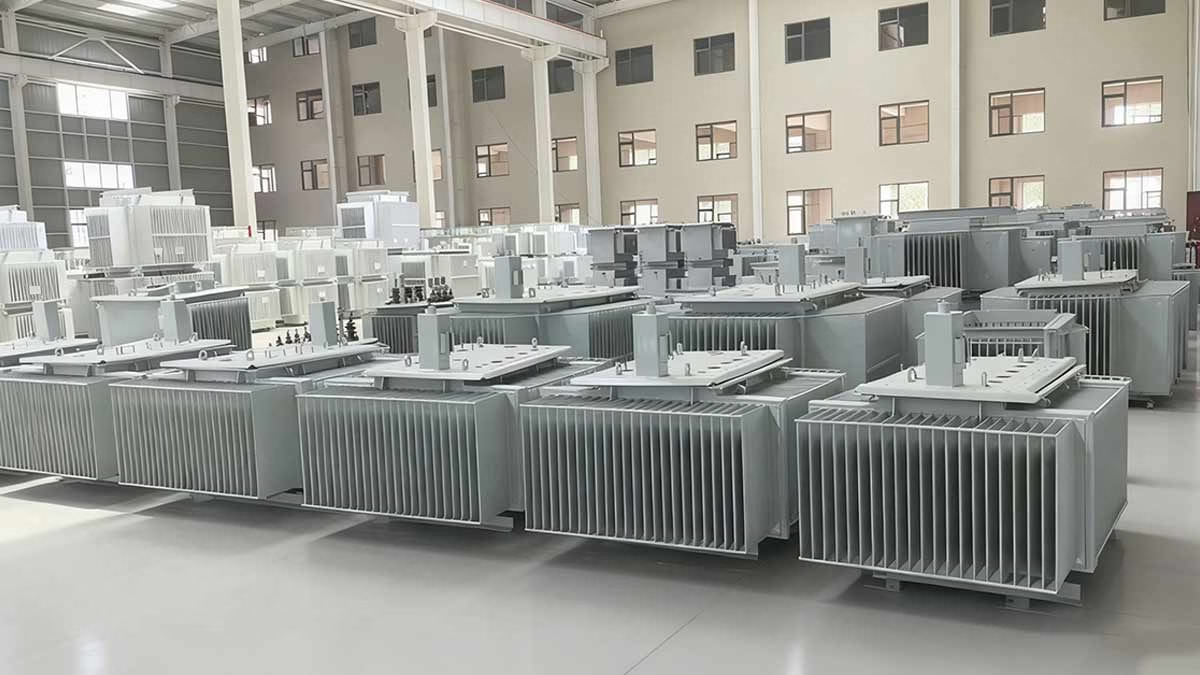
A transformer is a long-term investment—you need a unit that can withstand decades of electrical stress, environmental conditions, and load fluctuations. The key to longevity lies in build quality, material selection, cooling efficiency, and proactive maintenance.
Core Factors That Extend Transformer Lifespan
Insulation Quality:
The insulation system (oil + solid insulation) is the primary determinant of lifespan. High-grade insulating oil (e.g., synthetic esters) and cellulose-based solid insulation can last 50–60 years, while standard mineral oil may degrade after 30–40 years. Sealed tank designs prevent moisture and oxygen ingress, further protecting insulation.
Cooling System Efficiency:
Effective cooling reduces thermal stress on components. Transformers with properly sized radiators or forced-cooling systems maintain consistent temperatures, extending insulation life by 20–30%.
Mechanical Strength:
Robust design resists short-circuit forces, transportation damage, and seismic activity. Look for transformers with reinforced windings and tank structures—critical for industrial or earthquake-prone areas.
Load Management:
Avoid frequent overloading or extreme load cycling, which stress insulation and windings. Smart monitoring systems (e.g., load tracking, temperature alerts) help optimize usage and prevent premature wear.
Proactive Maintenance for Longevity
Even the most durable transformer requires regular care:
- Oil Testing: Conduct annual tests for moisture, acidity, and dissolved gases (to detect internal faults early).
- Dissolved Gas Analysis (DGA): Identifies potential issues (e.g., arcing, overheating) before they cause failure.
- Visual Inspections: Check for leaks, corrosion, and debris buildup on radiators.
- Component Checks: Inspect bushings, tap changers, and cooling fans/pumps for wear or damage.
Our team worked with a manufacturing client that implemented a rigorous maintenance program—their oil immersed transformers have operated reliably for 25 years, exceeding the industry average lifespan by 10 years.
TCO: The True Cost of Longevity
While durable transformers may have higher upfront costs, they deliver lower TCO by:
- Reducing replacement frequency (fewer capital expenditures over time).
- Minimizing downtime (fewer failures mean less lost productivity).
- Lowering maintenance costs (high-quality components require less frequent repairs).
Conclusion
Selecting the right oil immersed transformer requires a holistic approach—balancing power capacity, cooling efficiency, sustainability, and longevity. By focusing on these critical factors, you can choose a unit that meets your current needs, adapts to future growth, and delivers reliable performance for decades.
Whether you’re upgrading an existing system, expanding operations, or building a new facility, partnering with a trusted manufacturer that prioritizes quality and innovation ensures you get the most out of your investment. With the right transformer and proactive maintenance, you can optimize energy use, reduce environmental impact, and avoid costly downtime.