
Transformer technology is the invisible force that makes reliable electricity access possible—bridging the gap between high-voltage power plants and the low-voltage needs of homes, businesses, and industries worldwide. By adjusting voltage levels with remarkable efficiency, transformers enable long-distance power transmission with minimal energy loss while ensuring safety for everyday use.
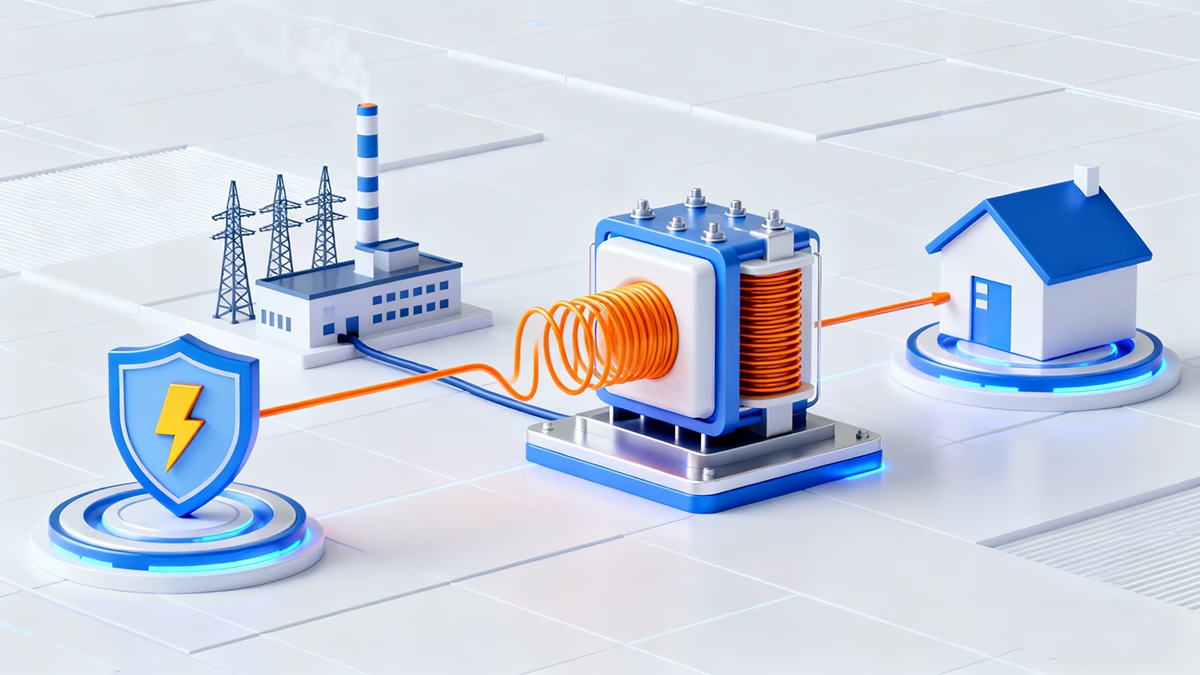
With years of immersion in the power sector, I’ve witnessed how transformers shape resilient, efficient electrical grids. In this guide, we’ll unpack the journey of electricity, the science behind voltage transformation, real-world applications, and how transformers are evolving to support renewable energy integration—demystifying a technology that powers our daily lives.
Contents
hide
Transformer Electricity: The Journey from Power Plants to Everyday Use
Imagine connecting a laptop directly to a power plant’s transmission lines: the result would be catastrophic. Transformers solve this critical mismatch, guiding electricity through a precisely calibrated voltage journey from generation to consumption. This process ensures efficiency, safety, and accessibility at every step.
Let’s trace this journey and explore why transformers are indispensable at each stage:
Step 1: Power Generation – The Starting Point
Power plants (fossil fuel, nuclear, renewable) generate electricity at 20kV–30kV—a voltage too low for cost-effective long-distance transmission. At this stage, electricity is only viable for nearby industrial use, not residential or commercial areas miles away.
Step 2: Step-Up Transformers – Preparing for Long-Haul Transmission
Before leaving the plant, electricity passes through step-up transformers, which boost voltage to 155kV–765kV (and even 1,100kV for ultra-long distances). This voltage surge is critical: higher voltage reduces current (per the power formula P=V×I), minimizing energy loss due to resistance in transmission lines.
Step 3: High-Voltage Transmission – Crossing Distances
Electricity travels hundreds of miles via overhead lines or underground cables at these elevated voltages. Without step-up transformers, up to 50% of energy would be lost as heat—making cross-regional power distribution economically and environmentally unfeasible.
Step 4: Substation Step-Down – Transitioning to Local Grids
Upon reaching urban or suburban areas, electricity enters substations equipped with step-down transformers. These reduce voltage to 4kV–69kV, a range suitable for local distribution to neighborhoods, business parks, and industrial zones.
Step 5: Distribution Transformers – The Final Adjustment
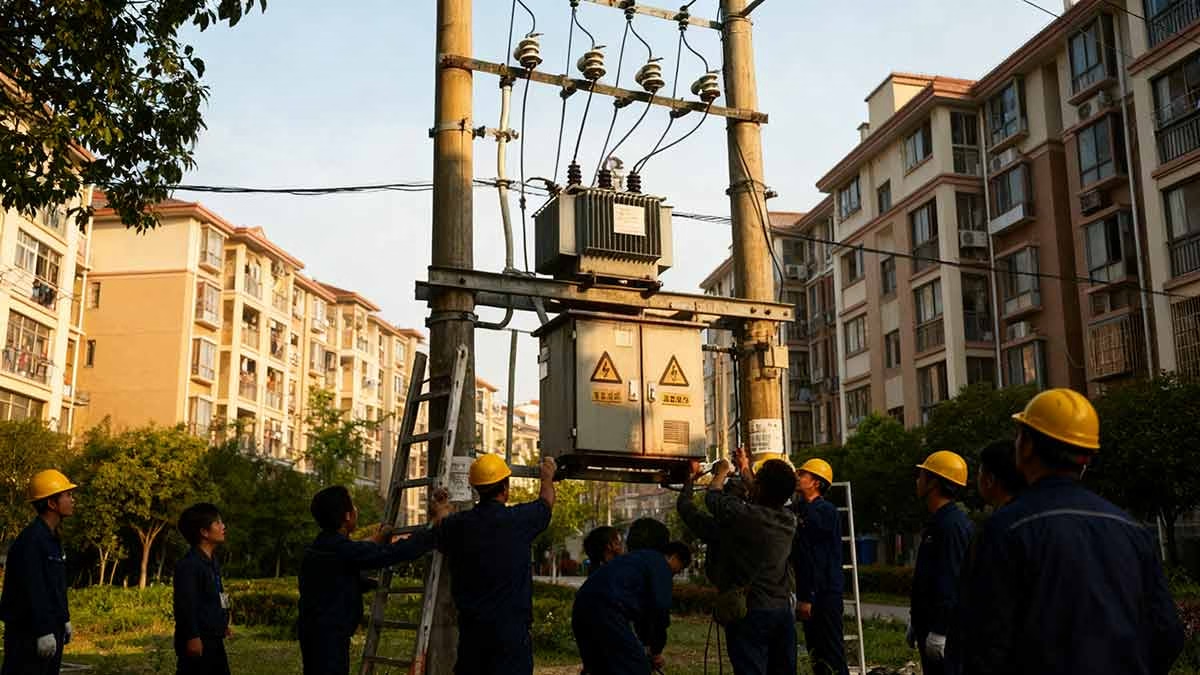
The last leg of the journey involves distribution transformers (pole-mounted, pad-mounted, or vault-type), which lower voltage to usable levels:
- 120/240V (single-phase) for U.S. homes, small businesses, and appliances.
- 208Y/127V (three-phase) for commercial buildings, office parks, and light industrial equipment.
| Stage | Voltage Range | Core Purpose |
|---|---|---|
| Generation | 20kV–30kV | Initial electricity production |
| Step-Up Transmission | 155kV–765kV | Minimize loss during long-distance travel |
| Substation Step-Down | 4kV–69kV | Prepare for local distribution |
| Final Distribution | 120/240V – 208Y/127V | Safe, usable voltage for end-users |
This seamless voltage transition—powered by transformers—ensures that electricity remains efficient during transmission and safe for everyday use.
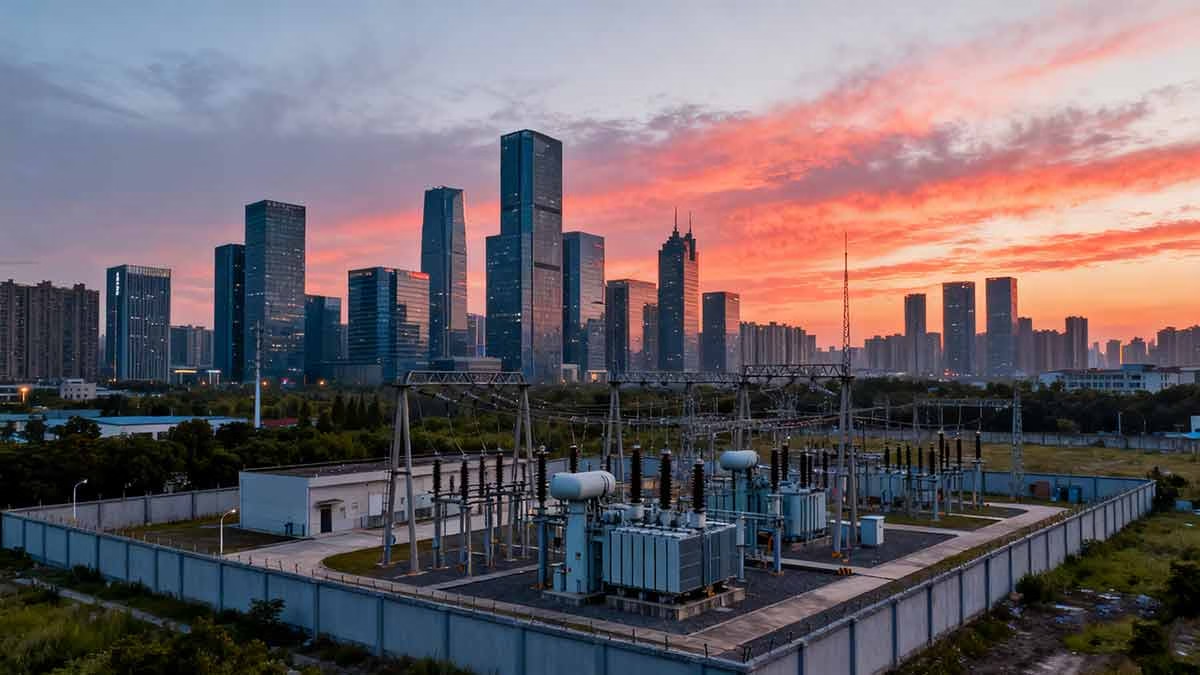
The Science of Voltage Transformation: How Transformers Operate
Transformers perform their voltage-adjusting magic through a elegant application of electromagnetic principles, requiring no moving parts. Their reliability stems from a simple yet precise design that leverages a discovery made over 190 years ago.
At their core, transformers operate on electromagnetic induction—a phenomenon discovered by Michael Faraday in 1831. Here’s a breakdown of their design and functionality:
Core Components
Every transformer relies on three foundational parts, engineered for optimal magnetic coupling:
- Primary Coil: A winding of insulated copper (or aluminum) wire that receives input voltage. The number of turns and wire gauge are calibrated to handle the incoming current.
- Secondary Coil: A separate winding of insulated wire that outputs the transformed voltage. Its turn count relative to the primary coil determines whether voltage is stepped up or down.
- Magnetic Core: Typically made of laminated silicon steel (or amorphous steel for high-efficiency models), this core concentrates and directs magnetic flux between the coils, minimizing energy loss.
How Induction Drives Voltage Change
- Magnetic Field Generation: Alternating current (AC) flows through the primary coil, creating a continuously changing magnetic field around the core.
- Flux Coupling: The magnetic core channels this fluctuating field to the secondary coil, ensuring maximum energy transfer between the windings.
- Voltage Induction: The changing magnetic field cuts through the secondary coil, inducing an alternating voltage. The voltage ratio directly matches the turn ratio of the two coils.
The Transformer Equation: Precision in Action
The relationship between input and output voltage is defined by the transformer equation:VpVs=NpNs
- Vs = Secondary (output) voltage
- Vp = Primary (input) voltage
- Ns = Number of turns in the secondary coil
- Np = Number of turns in the primary coil
For example:
- A step-up transformer with 100 primary turns and 1,000 secondary turns (1:10 ratio) converts 20kV to 200kV.
- A step-down transformer with 500 primary turns and 50 secondary turns (10:1 ratio) converts 12kV to 1.2kV.
Efficiency: A Hallmark of Modern Transformers
Ideal transformers achieve 100% energy transfer, but real-world models come remarkably close. Modern power transformers boast efficiencies of 99% or higher, thanks to:
- Low-loss core materials (amorphous steel reduces hysteresis and eddy current losses).
- High-conductivity copper windings (minimizing resistive losses).
- Advanced cooling systems (oil or air cooling to manage heat buildup).
This efficiency is critical: a 1% loss in a 1,000MVA transformer translates to 10MW of wasted energy annually—equivalent to powering 8,000 homes.
Transformers in Efficient Power Distribution: Conquering Distance Challenges
Long-distance power distribution is fraught with challenges—energy loss, voltage drop, and cost—but transformers address each one head-on. Their ability to adjust voltage levels is the reason we can access electricity from plants hundreds of miles away.
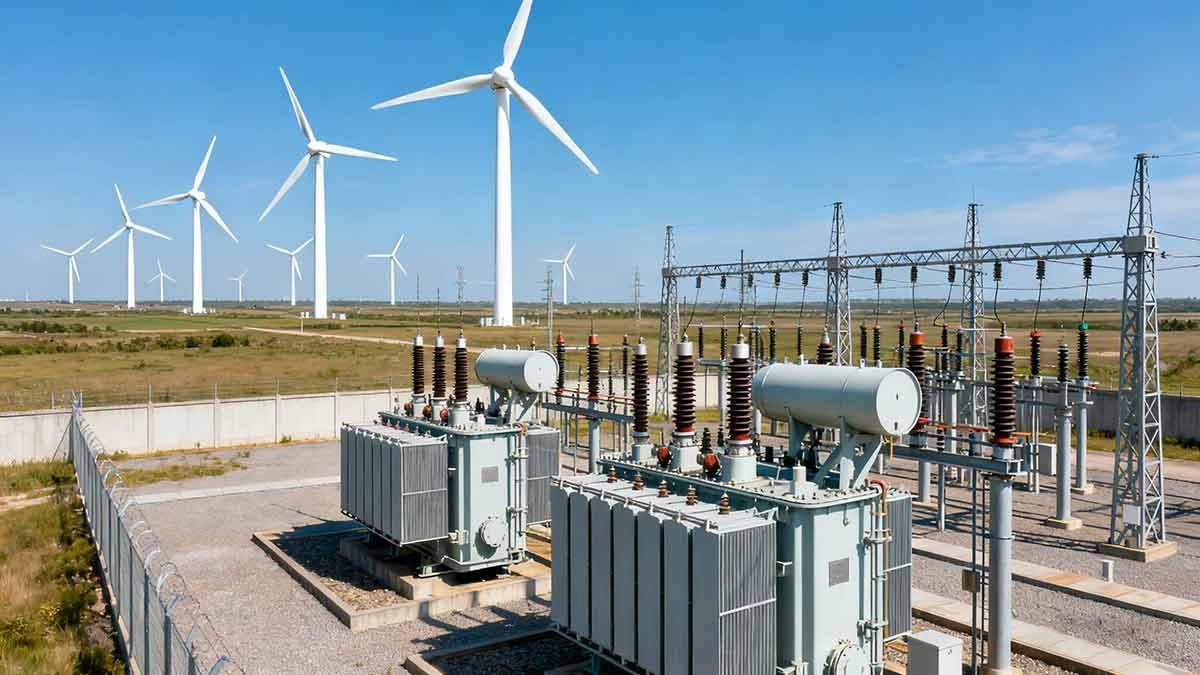
The Core Challenge: Energy Loss in Transmission
Electricity traveling through wires encounters resistance, which converts some energy into heat (Joule heating). This loss is proportional to the square of the current (Ploss=I2R), meaning even small reductions in current drastically cut waste.
How Transformers Solve This
By stepping up voltage at the power plant, transformers reduce current for transmission:
- Example: To transmit 100MW of power:
- At 10kV: Current = 10,000100,000,000=10,000A, resulting in significant losses.
- At 100kV: Current = 100,000100,000,000=1,000A, cutting losses by 90%.
This simple voltage adjustment turns cross-country power transmission from a technical challenge into a practical reality.
Balancing Transmission and Distribution Needs
Transformers create a flexible “voltage ladder” that adapts to different stages of the grid:
| Grid Stage | Voltage Range | Transformer Role |
|---|---|---|
| Long-Distance Transmission | 155kV–765kV | Step-up transformers minimize loss |
| Regional Substations | 4kV–69kV | Step-down transformers prepare for local use |
| Neighborhoods | 120/240V–208Y/127V | Distribution transformers deliver safe voltage |
Real-World Impact: A Case in Point
A 500-mile transmission line carrying 500MW of power:
- Without transformers (transmitting at 20kV): ~30% of energy is lost (150MW wasted).
- With transformers (transmitting at 500kV): ~0.5% of energy is lost (2.5MW wasted).
This efficiency not only reduces costs but also lowers carbon emissions—aligning with global sustainability goals.
Beyond Loss Reduction: Voltage Stability
Transformers also maintain voltage stability across the grid. Tap changers (mechanical or electronic) adjust the turn ratio in real time, compensating for voltage drops caused by distance or fluctuating demand. This ensures that a factory in a rural area receives the same stable voltage as a home in the city.
Everyday Transformer Applications: Beyond the Power Grid
When most people think of transformers, they picture large substation units—but transformer technology is woven into the fabric of daily life. From charging your phone to powering industrial machinery, these compact, specialized transformers play critical roles in countless devices.
Consumer Electronics
- Device Chargers: Smartphone, laptop, and tablet chargers contain miniature transformers that convert 120/240V AC from wall outlets to low-voltage DC (5V–20V), protecting sensitive electronics.
- Smart Home Devices: Thermostats, security cameras, and smart speakers rely on small transformers for safe, consistent power.
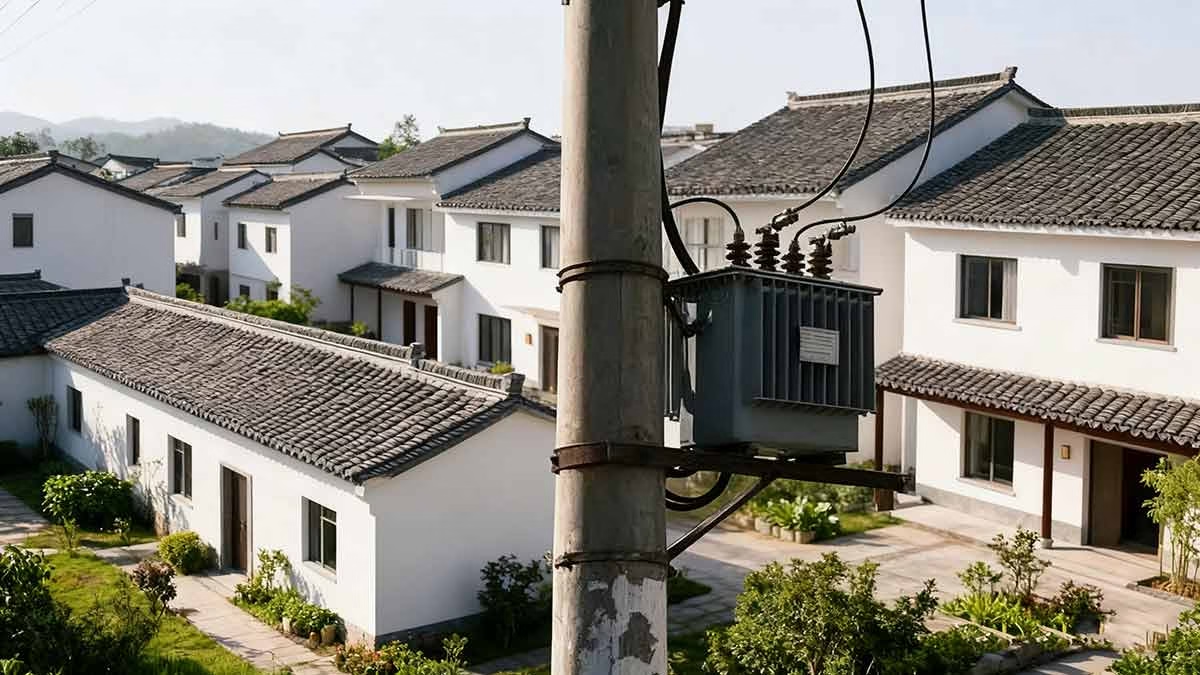
Lighting Systems
- Low-Voltage Outdoor Lighting: Garden, pathway, and landscape lights use transformers to step down voltage to 12V–24V, enhancing safety and reducing energy use.
- LED Drivers: LED bulbs and fixtures integrate transformers (drivers) to regulate current and voltage, extending bulb life and improving efficiency.
Home and Commercial Appliances
- Microwave Ovens: High-voltage transformers boost 120V to ~2,000V to power the magnetron that generates microwaves.
- Doorbells and Intercoms: Low-voltage transformers (16V–24V) ensure safe operation of doorbells, intercoms, and security systems.
- HVAC Systems: Air conditioners and heat pumps use transformers to power control circuits and motors.
Industrial and Specialized Uses
- Electric Vehicle (EV) Chargers: Level 2 and DC fast chargers use transformers to convert grid voltage to the high-voltage DC needed to charge EV batteries.
- Welding Equipment: Arc welders rely on transformers to produce high currents (20A–400A) at low voltages (10V–40V) for metal joining.
- Medical Devices: MRI machines, defibrillators, and diagnostic equipment use isolation transformers to prevent electric shock and reduce electromagnetic interference.
| Application | Input Voltage | Output Voltage | Key Benefit |
|---|---|---|---|
| Smartphone Charger | 120V AC | 5V DC | Protects sensitive battery and circuitry |
| Outdoor Lighting | 120V AC | 12V AC | Enhances safety in wet, accessible areas |
| EV Charger (Level 2) | 240V AC | 200V–450V DC | Rapid, efficient battery charging |
| Medical Isolation | 120V AC | 120V AC (isolated) | Prevents shock and reduces interference |
These applications highlight the versatility of transformer technology—scaling from microscopic components in chargers to large industrial units, all while adhering to the same core principles of electromagnetic induction.
The Future of Power: Transformers and Renewable Energy Integration
As the world shifts to renewable energy sources (solar, wind, hydro), transformers are evolving to meet the unique demands of modern grids. Intermittent power output, distributed generation, and bidirectional energy flow require a new generation of smart, flexible transformers.
Key Challenges of Renewable Integration
Renewable energy introduces grid challenges that traditional transformers struggle to address:
- Intermittency: Solar and wind output fluctuates with weather, causing voltage spikes and drops.
- Distributed Generation: Rooftop solar panels and small wind turbines turn homes and businesses into “prosumers” (both producers and consumers), creating bidirectional power flow.
- Power Quality: Non-linear loads (e.g., solar inverters) generate harmonics that can disrupt grid stability.
Smart Transformers: The Solution
Modern “smart” or “solid-state” transformers (SSTs) are designed to tackle these challenges:
- Bidirectional Power Flow: Unlike traditional transformers, SSTs handle energy flowing to and from the grid—critical for rooftop solar and EV-to-grid (V2G) systems.
- Real-Time Voltage Regulation: Advanced electronics adjust voltage instantaneously to compensate for renewable fluctuations, maintaining grid stability.
- Power Quality Management: Built-in filters mitigate harmonics and reactive power, ensuring clean energy delivery.
- Grid Connectivity: IoT-enabled smart transformers communicate with grid operators, providing real-time data on load, temperature, and performance for predictive maintenance.
Low-Loss Transformers for Sustainability
As renewable adoption grows, transformer efficiency becomes even more critical. Manufacturers are developing:
- Amorphous Core Transformers: Reduce core losses by 30–50% compared to traditional silicon steel cores, ideal for solar farms and wind parks.
- Dry-Type Transformers: Eliminate the risk of oil leaks (critical for eco-sensitive areas) and offer high efficiency in compact designs.
Microgrids and Transformers
Microgrids—small, self-contained power systems—are becoming essential for integrating renewables and enhancing grid resilience. Transformers play a key role:
- Isolation: Transformers isolate microgrids from the main grid during outages, ensuring critical facilities (hospitals, data centers) remain powered.
- Voltage Matching: They synchronize microgrid voltage with the main grid for seamless reconnection.
High-Voltage DC (HVDC) Transformers
For long-distance transmission of renewable energy (e.g., offshore wind farms to cities), HVDC systems are gaining traction. Specialized transformers:
- Convert AC power from wind turbines to DC for efficient long-distance transmission.
- Convert DC back to AC at the destination, integrating with local grids.
| Technology | Key Capabilities | Renewable Energy Benefit |
|---|---|---|
| Smart Transformers | Bidirectional flow, voltage regulation | Manages intermittent solar/wind output |
| Amorphous Core Units | Low core losses | Maximizes renewable energy utilization |
| HVDC Transformers | Long-distance DC transmission | Connects remote renewables to population centers |
The future of power distribution belongs to transformers that can adapt to dynamic, renewable-heavy grids. As these technologies advance, they’ll enable a more sustainable, resilient, and accessible energy system for generations to come.
Conclusion
Transformers are the unsung heroes of modern electrification—enabling efficient long-distance power transmission, safe everyday use, and the integration of renewable energy. From the massive step-up transformers at power plants to the tiny units in smartphone chargers, their impact is ubiquitous.
As the energy landscape evolves, transformers will remain at the forefront—adapting to the demands of smart grids, renewable integration, and electrification. Their ability to balance efficiency, safety, and flexibility makes them irreplaceable in building a sustainable energy future.
Whether you’re powering a home, a factory, or a city, transformers are the critical link that turns raw electricity into usable, reliable energy. Their simplicity of design, coupled with their profound impact on our lives, cements their status as one of the most important innovations in electrical engineering.