
Choosing an electronic transformer manufacturer that aligns with your project goals requires more than surface-level research. It demands a deep dive into their technical expertise, production capabilities, quality control rigor, customization flexibility, and post-purchase support. The right partner will not only deliver reliable components but also adapt to your unique application needs, adhere to global industry standards, and contribute to your project’s long-term success.
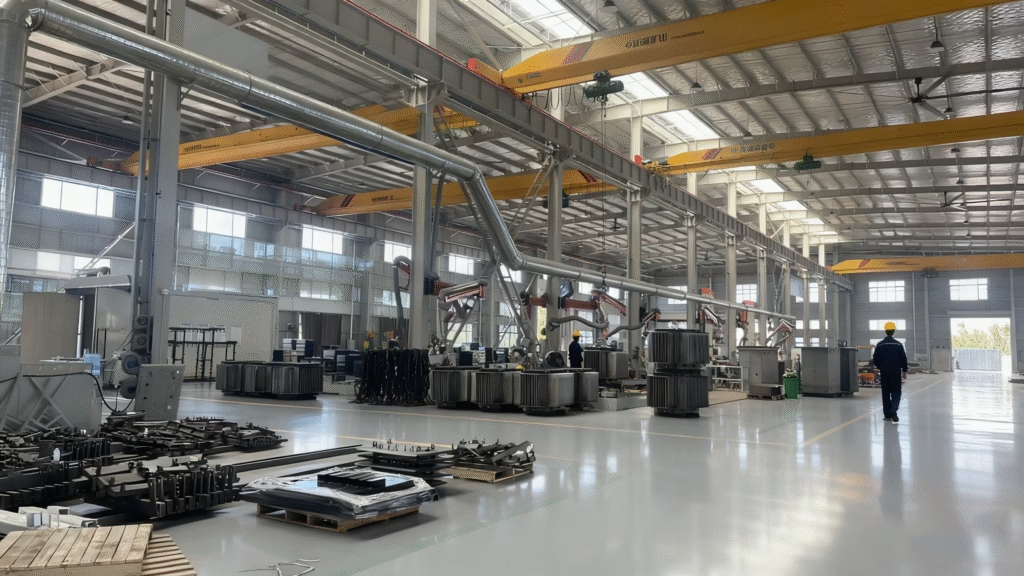
In decades of navigating the power electronics industry, I’ve witnessed how the wrong manufacturer can cause costly delays, quality issues, and missed deadlines—while the right one becomes an extension of your team. Below is a structured breakdown of what to prioritize when evaluating potential partners.
Contents
hide
Understanding Electronic Transformers: Types and Modern Applications
Ever wondered how the tiny components inside your devices deliver stable power or clear signals? Electronic transformers are the unsung heroes of modern electronics, but their versatility means choosing the right type (and manufacturer) depends entirely on your application.
Electronic transformers come in three core categories—power, audio, and RF—each engineered for specific functions. From powering smartphones to enabling 5G connectivity, their role varies drastically, and so do the manufacturer expertise required to produce them.
Core Transformer Types & Their Use Cases
- Power Transformers: The Workhorses of ElectronicsDesigned to convert voltage levels (step-up or step-down), power transformers are foundational in:
- Consumer electronics (laptops, TVs, smart home devices)
- Industrial machinery and power supplies
- Renewable energy systems (solar inverters, wind turbines)A recent project for a smart thermostat brand required ultra-compact power transformers that balanced efficiency with a slim form factor. The difference between success and failure lay in a manufacturer’s ability to optimize heat dissipation in a confined space—something only specialists in miniaturized power transformers could deliver.
- Audio Transformers: Precision for SoundThese transformers isolate signals and match impedance, critical for preserving audio quality in:
- High-fidelity speakers and amplifiers
- Professional audio equipment (mixers, microphones)
- Musical instruments (guitar amps, studio gear)While consulting for a boutique headphone company, we learned that generic audio transformers introduced unwanted distortion. Partnering with a manufacturer specializing in low-noise audio components transformed the product’s sound profile—turning a good design into a market standout.
- RF Transformers: Enabling Wireless ConnectivityEngineered for high-frequency circuits, RF transformers facilitate impedance matching and signal transmission in:
- 5G/4G devices (smartphones, tablets)
- Wi-Fi routers and satellite communication systems
- IoT sensors and wearablesA 5G infrastructure rollout I worked on relied on RF transformers with tight bandwidth tolerances. Choosing a manufacturer with advanced RF testing capabilities ensured consistent signal range and reduced interference—critical for network reliability.
Transformer Type Comparison
| Type | Primary Function | Key Applications | Critical Manufacturer Expertise |
|---|---|---|---|
| Power | Voltage conversion, power delivery | Consumer electronics, industrial gear | Efficiency optimization, heat management |
| Audio | Signal isolation, impedance matching | Hi-fi systems, professional audio | Low distortion, frequency response tuning |
| RF | High-frequency signal handling | Wireless devices, 5G/IoT infrastructure | Bandwidth precision, low insertion loss |
The key takeaway? A manufacturer excelling in power transformers may lack the specialized knowledge to produce high-performance RF units. Always align their core competency with your transformer type.
Key Factors to Evaluate Electronic Transformer Manufacturers
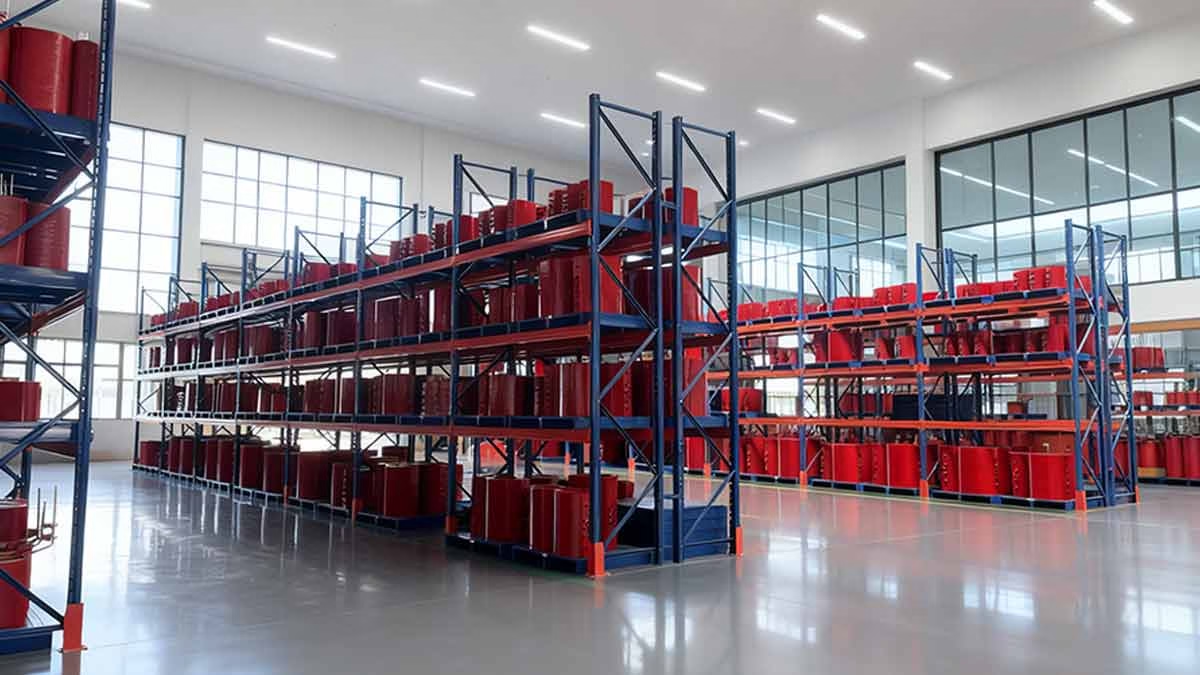
With countless manufacturers vying for your business, it’s easy to get overwhelmed by marketing claims. The best way to cut through the noise is to focus on five non-negotiable factors: industry experience, technical expertise, production flexibility, quality control, and customer collaboration.
These elements separate transactional suppliers from strategic partners—and they’re the difference between on-time, on-spec deliveries and project headaches.
What to Prioritize in Your Evaluation
- Proven Industry Experience & ReputationA manufacturer’s track record speaks louder than certifications. Look for:
- Case studies relevant to your application (e.g., medical devices vs. consumer electronics)
- Long-term client partnerships (5+ years with reputable brands)
- Transparent testimonials (not just generic praise, but specific results like “reduced failure rates by 30%”)A startup I advised once chose a low-cost manufacturer without verifying their experience in industrial transformers. The result? Transformers that failed under harsh operating temperatures—costing the company $200k in rework and delayed launches.
- Technical Expertise & InnovationThe best manufacturers don’t just follow standards—they push them. Evaluate:
- R&D investment (percentage of revenue, number of engineers)
- Proprietary technologies or patents (e.g., advanced core materials, winding techniques)
- Participation in industry standards (IEEE, IEC) to ensure compliance with global regulationsFor a renewable energy project, we partnered with a manufacturer that had developed a proprietary high-efficiency core material. This innovation reduced transformer losses by 15%—a critical advantage for solar systems where every watt counts.
- Production Capabilities & FlexibilityYour project’s needs can shift—your manufacturer should adapt. Confirm:
- Production capacity (can they scale from prototype to 100k+ units?)
- Lead time flexibility (accommodate rush orders or design tweaks?)
- Manufacturing location (proximity for faster communication, local compliance)A consumer electronics launch I managed required a last-minute design adjustment to meet regulatory standards. Our manufacturer’s ability to retool production within two weeks kept the project on track—something a rigid, high-volume supplier couldn’t have done.
- Rigorous Quality Control (QC) ProcessesQuality isn’t optional—especially for mission-critical applications. Insist on:
- ISO 9001 certification (minimum standard for quality management)
- In-house testing facilities (e.g., thermal cycling, voltage breakdown, signal analysis)
- Documented QC protocols (inspection at every production stage, not just final testing)For an aerospace project, we required transformers that met MIL-STD-810 standards for temperature and vibration. Only manufacturers with specialized aerospace QC processes could provide the traceability and reliability needed for flight-critical components.
- Collaborative Customer SupportLook for a partner that communicates proactively, not reactively. Key indicators:
- Responsive technical teams (reply within 24 hours for critical queries)
- Willingness to provide design feedback (e.g., “this material will improve durability”)
- Transparency about challenges (e.g., “lead times will extend by two weeks—here’s our mitigation plan”)
Quality Assurance and Production Capabilities: Ensuring Reliability
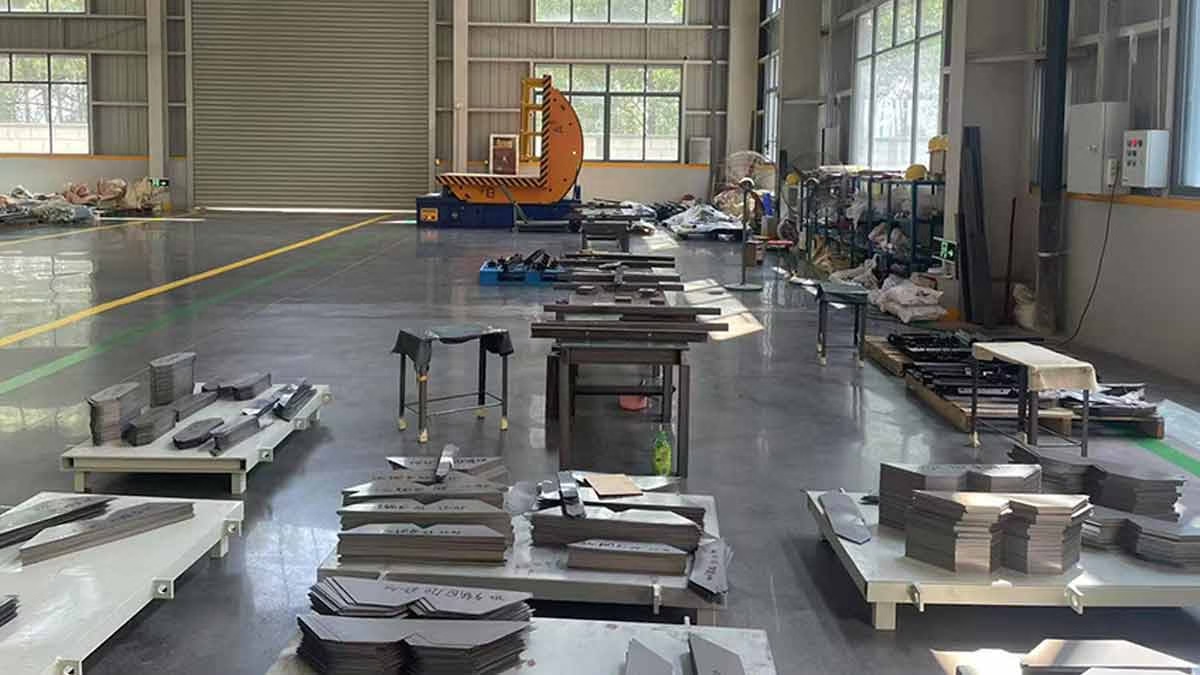
Why do some transformers last a decade while others fail within months? The answer lies in a manufacturer’s quality assurance (QA) systems and production infrastructure. Reliable transformers are built—not just assembled—and that requires rigorous processes, advanced equipment, and a culture of quality.
QA in transformer manufacturing is a holistic process: it starts with raw material inspection, continues through every production stage, and ends with comprehensive final testing. Similarly, production capabilities—from machinery to workforce expertise—directly impact consistency and performance.
What to Look for in QA & Production
- End-to-End Quality ProcessesA robust QA system leaves no room for error. Ask manufacturers to detail:
- Incoming material checks (e.g., core steel purity, copper wire conductivity)
- In-process inspections (winding tension, insulation thickness, solder joint quality)
- Final testing (electrical performance, thermal stability, durability)During a facility visit to a potential partner, I observed their QA team reject an entire batch of cores due to minor dimensional inconsistencies. While this delayed production temporarily, it demonstrated a commitment to quality that would have prevented costly field failures.
- Adherence to Global StandardsCompliance ensures your transformers meet regulatory and performance requirements worldwide. Prioritize manufacturers certified to:
- Safety standards (UL, CSA, CE)
- Industry-specific norms (IEEE for power transformers, AES for audio)
- Environmental regulations (RoHS, REACH)For a global electronics brand, we needed transformers that complied with both EU RoHS and US UL standards. A manufacturer with pre-certified designs simplified our product launch across markets—avoiding costly rework for regional compliance.
- State-of-the-Art Production EquipmentAdvanced machinery translates to precision and consistency. Key investments include:
- Automated winding machines (for uniform coil placement)
- Laser-based dimensional inspection tools
- Environmental testing chambers (temperature, humidity, vibration)A high-volume project for a laptop brand relied on a manufacturer’s automated testing line, which could validate 1,000 transformers per hour with 99.9% accuracy. This not only ensured quality but also kept costs in check for mass production.
- Skilled Workforce & Quality CultureEven the best equipment needs expert operators. Evaluate:
- Training programs (ongoing skill development for engineers and technicians)
- Employee retention rates (low turnover indicates a stable, experienced team)
- Quality incentives (e.g., bonuses for error-free production runs)I’ve found that manufacturers with a “quality-first” culture—where every employee feels responsible for output—consistently deliver more reliable products than those focused solely on speed or cost.
Custom vs. Standard Transformers: Navigating Options with Manufacturers
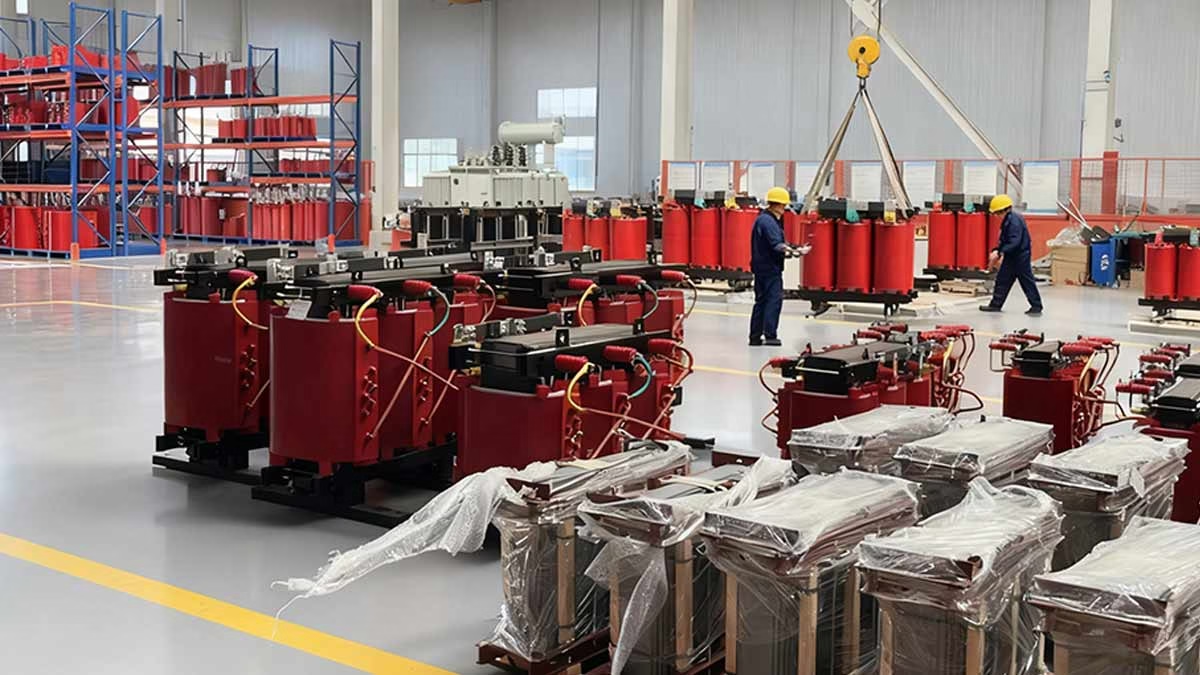
Choosing between a standard off-the-shelf transformer and a custom-designed solution is one of the most critical decisions in your project. The right choice balances cost, lead time, and performance—and it depends entirely on your application’s uniqueness.
Standard transformers offer speed and affordability for common needs, while custom solutions optimize performance for specialized requirements. The best manufacturers will help you navigate this trade-off, even offering “modified standard” options that bridge the gap.
Standard Transformers: Ideal for Common Applications
Standard transformers are mass-produced to meet widely used specifications. They’re the right choice if:
- Your requirements align with industry-standard voltage, size, and performance metrics
- You need fast lead times (often 2–4 weeks)
- Cost is a primary constraint (mass production reduces per-unit pricing)For a line of basic smart plugs, we chose standard power transformers. The application didn’t require unique specifications, and the 3-week lead time kept our product launch on schedule—saving 40% compared to custom alternatives.
Custom Transformers: Necessary for Specialized Needs
Custom transformers are engineered to your exact requirements. Opt for them if:
- Your application has unique constraints (e.g., ultra-small size, extreme temperatures)
- You need optimized performance (e.g., low noise, high efficiency)
- You’re developing proprietary technology (custom designs protect intellectual property)A medical device project required transformers that could operate in sterile environments with zero electromagnetic interference (EMI). No standard transformer met these requirements—so we partnered with a manufacturer to design a shielded, hermetically sealed unit that complied with medical safety standards.
Modified Standard Transformers: The Middle Ground
Many manufacturers offer modified standard options—taking an off-the-shelf design and adjusting key parameters (e.g., winding, insulation) to meet your needs. This is ideal if:
- Your requirements are 80–90% standard, with minor unique constraints
- You want to avoid the full cost and lead time of a custom design
- You need faster turnaround than full customization (4–6 weeks vs. 8–12)For an automotive infotainment system, we used a modified standard audio transformer. The manufacturer adjusted the impedance matching to reduce road noise—delivering the performance we needed without the expense of a fully custom design.
Custom vs. Standard: Key Trade-Offs
| Aspect | Standard Transformers | Custom Transformers | Modified Standard Transformers |
|---|---|---|---|
| Cost | Lowest (mass production economies) | Highest (design, tooling, testing costs) | Mid-range |
| Lead Time | 2–4 weeks | 8–12 weeks (or longer for complex designs) | 4–6 weeks |
| Performance | Optimized for common use cases | Tailored to your exact needs | Balanced (standard base + targeted tweaks) |
| Minimum Order Quantity (MOQ) | Low (often 100 units) | High (often 500+ units) | Mid-range (250+ units) |
The best approach? Start with a detailed conversation with your manufacturer. Share your application’s constraints, performance goals, and budget—and let their expertise guide the decision. In many cases, a modified standard transformer will deliver the best balance of cost, speed, and performance.
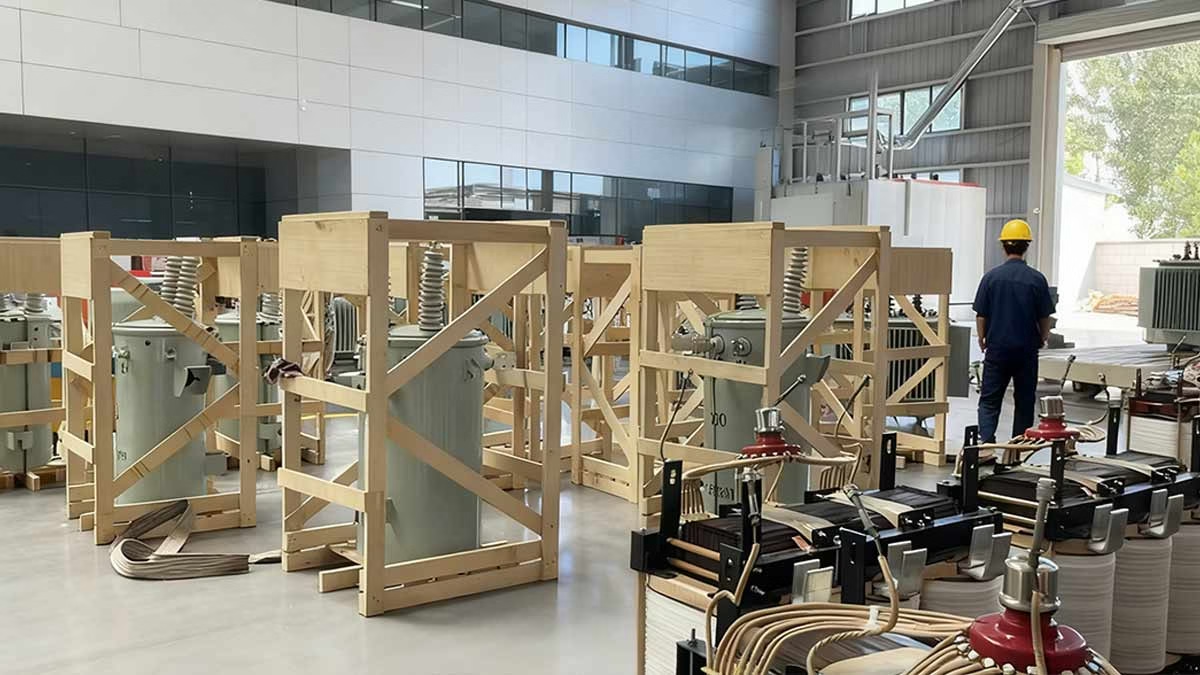
Beyond the Product: Technical Support, After-Sales Service, and Innovation
A transformer is only as valuable as the support behind it. The best manufacturers don’t just sell you a component—they partner with you to solve problems, resolve issues quickly, and keep your project ahead of the curve.
When evaluating manufacturers, prioritize technical support, after-sales service, and innovation. These factors ensure your project runs smoothly during development, minimizes downtime post-launch, and maintains a competitive edge long-term.
Why Support & Innovation Matter
- Technical Support: Your Problem-Solving PartnerLook for manufacturers that offer more than just troubleshooting—they should provide proactive design guidance. Key indicators:
- Dedicated technical engineers (not just customer service reps)
- Ability to review your schematics and suggest optimizations
- Fast response times (critical for tight deadlines)During a complex industrial automation project, our team encountered unexpected EMI issues with transformers. The manufacturer’s technical team flew on-site to conduct tests, redesigned the transformer’s shielding, and delivered revised samples within a week—saving us from a 3-month delay.
- After-Sales Service: Minimizing DowntimeEven the most reliable transformers may need support. Prioritize manufacturers with:
- Clear warranty policies (1–5 years, with no hidden exclusions)
- Ready availability of spare parts
- Responsive field service (for large-scale installations)A client’s factory experienced a transformer failure in a critical production line. Their manufacturer shipped a replacement within 48 hours and dispatched a technician to install it—minimizing downtime to just 8 hours. A lesser supplier would have taken weeks, costing the client $50k in lost production.
- Innovation: Staying Ahead of Industry TrendsThe electronics industry evolves rapidly—your manufacturer should too. Look for:
- Ongoing R&D investment (new materials, designs, or manufacturing processes)
- Early access to emerging technologies (e.g., wide-bandgap semiconductors for transformers)
- Collaboration on future product roadmapsWe partnered with a manufacturer that was developing transformers for next-gen EV charging systems. Their early-stage innovation allowed us to design a charging station with 20% higher efficiency than competitors—giving our client a first-mover advantage in the market.
Evaluating Support & Innovation
To separate talk from action:
- Ask for references from clients with similar projects (specifically about support experiences)
- Inquire about their R&D pipeline (what new technologies are they developing?)
- Test their technical support with a detailed question (e.g., “How would you optimize a transformer for high-humidity environments?”)
Conclusion
Selecting the right electronic transformer manufacturer is a decision that ripples through your entire project—from design and production to launch and long-term success. The best partners combine specialized expertise in your transformer type, rigorous quality control, flexible production capabilities, and ongoing support.
By prioritizing industry experience, technical collaboration, and a commitment to quality, you’ll avoid costly mistakes and gain a partner invested in your success. Remember: the cheapest or most well-known manufacturer isn’t always the best fit—look for the one that understands your unique needs and has the track record to back up their promises.
Whether you’re building consumer electronics, industrial machinery, or cutting-edge wireless systems, the right transformer manufacturer will turn a critical component into a competitive advantage.