
Selecting a reliable transformer electricity supplier for industrial projects is a decision that impacts long-term operational efficiency, project timelines, and bottom-line results. It requires balancing technical expertise, product quality, production scalability, cost-effectiveness, and after-sales support—not just choosing the lowest bid or most well-known brand.
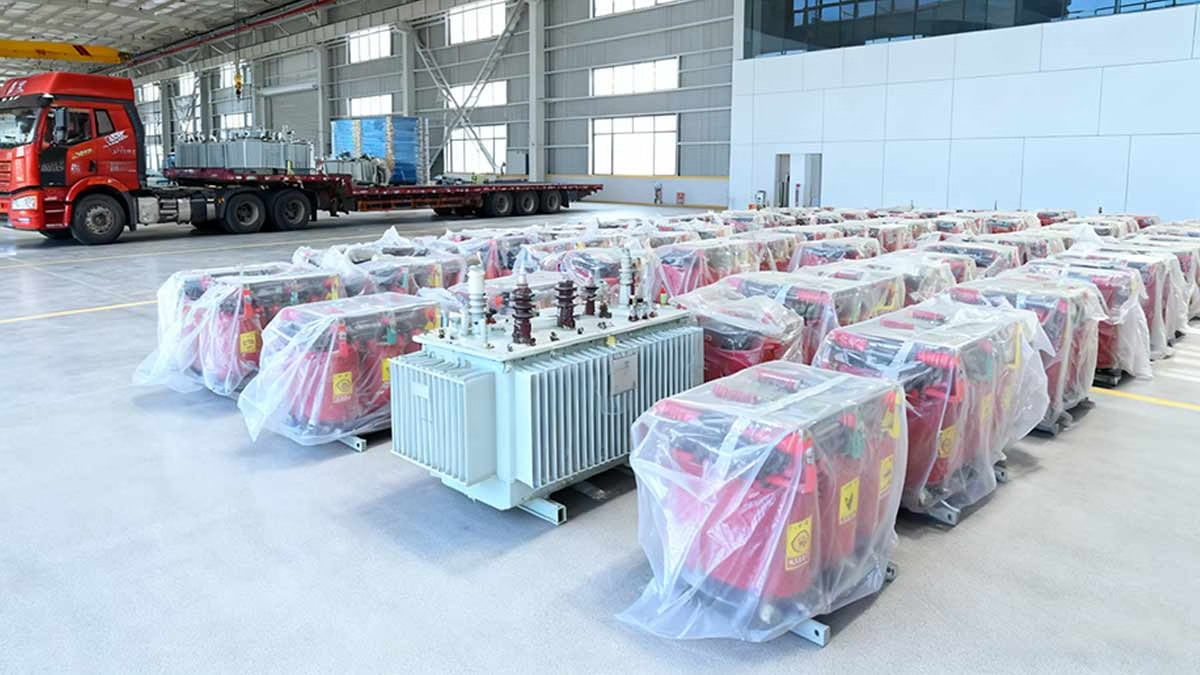
With over two decades of experience in industrial power systems, I’ve witnessed how the right supplier partnership can streamline projects, reduce downtime, and deliver lasting value. In contrast, a poor choice can lead to costly delays, subpar performance, and ongoing operational headaches. This guide breaks down the critical factors to evaluate, helping you make a strategic decision aligned with your project’s unique needs.
Contents
hide
Key Factors in Supplier Evaluation: A Holistic Approach
Overwhelmed by the endless list of potential suppliers and evaluation criteria? You’re not alone. The key to simplifying the process is adopting a holistic framework that prioritizes factors most critical to industrial success—avoiding the trap of focusing solely on price or surface-level credentials.
A robust supplier evaluation should encompass five core pillars: technical capabilities, manufacturing quality, production scalability, financial stability, and compliance with global standards. Each pillar interconnects to ensure the supplier can deliver on promises today and adapt to your needs tomorrow.
Breaking Down the Evaluation Framework
- Technical Capabilities: The foundation of reliable transformer solutions. Look for suppliers with dedicated R&D teams, a track record of innovation (e.g., efficiency improvements, smart technology integration), and the ability to customize designs for complex industrial applications. For example, a supplier I partnered with invested 12% of revenue in R&D, resulting in transformers with 18% lower energy losses—directly translating to annual savings for our industrial client.
- Manufacturing Quality: Consistent quality starts with modern facilities and rigorous quality control (QC) processes. Prioritize suppliers with ISO 9001 certification, six-sigma QC programs, and in-house testing labs capable of simulating extreme industrial conditions (e.g., high temperature, voltage fluctuations). A factory visit revealed how automated winding machines and real-time QC checks reduced defect rates to 0.02%—a stark contrast to suppliers relying on manual processes.
- Production Scalability: Industrial projects often require large volumes or tight timelines. Evaluate a supplier’s production capacity (e.g., units per year), supply chain resilience (diversified raw material sourcing), and ability to handle surge orders. I once switched suppliers mid-project due to a capacity bottleneck—costing the client 30% in additional expenses and a 10-week delay.
- Financial Stability: A supplier’s financial health directly impacts their ability to fulfill long-term contracts and invest in improvements. Look for companies with a 10+ year track record, strong balance sheets, and resistance to economic downturns. A supplier with stable cash flow avoided delays during a global copper shortage by maintaining strategic raw material stockpiles.
- Compliance & Certifications: Industrial transformers must meet strict international standards (IEC, IEEE, ANSI) and local regulations. Additionally, environmental certifications (ISO 14001) and safety accreditations (OHSAS 18001) indicate a commitment to sustainable, risk-free operations. Non-compliance once delayed a project by 8 weeks when customs rejected transformers lacking region-specific safety certifications.
| Evaluation Pillar | Key Indicators | Impact on Industrial Projects |
|---|---|---|
| Technical Capabilities | R&D investment, customization ability, innovation track record | Ensures transformers meet unique industrial demands |
| Manufacturing Quality | ISO 9001, six-sigma QC, in-house testing facilities | Reduces defects and unplanned downtime |
| Production Scalability | Capacity volume, supply chain diversity, surge order handling | Meets tight timelines and large-volume requirements |
| Financial Stability | 10+ year history, strong balance sheet, low debt-to-equity ratio | Mitigates risk of supplier default or production gaps |
| Compliance & Certifications | IEC/IEEE/ANSI compliance, ISO 14001, OHSAS 18001 | Avoids regulatory delays and safety liabilities |
Remember, the weight of each factor varies by project. For a remote mining operation, production scalability and supply chain resilience took priority over R&D. For a data center project, technical expertise in high-efficiency, low-noise transformers was non-negotiable. Always align your evaluation with your project’s unique constraints and goals.
Assessing Technical Expertise and Product Quality
Technical expertise and product quality are non-negotiable for industrial transformers—they directly impact operational reliability, energy efficiency, and safety. But how do you move beyond marketing claims to evaluate these factors objectively?
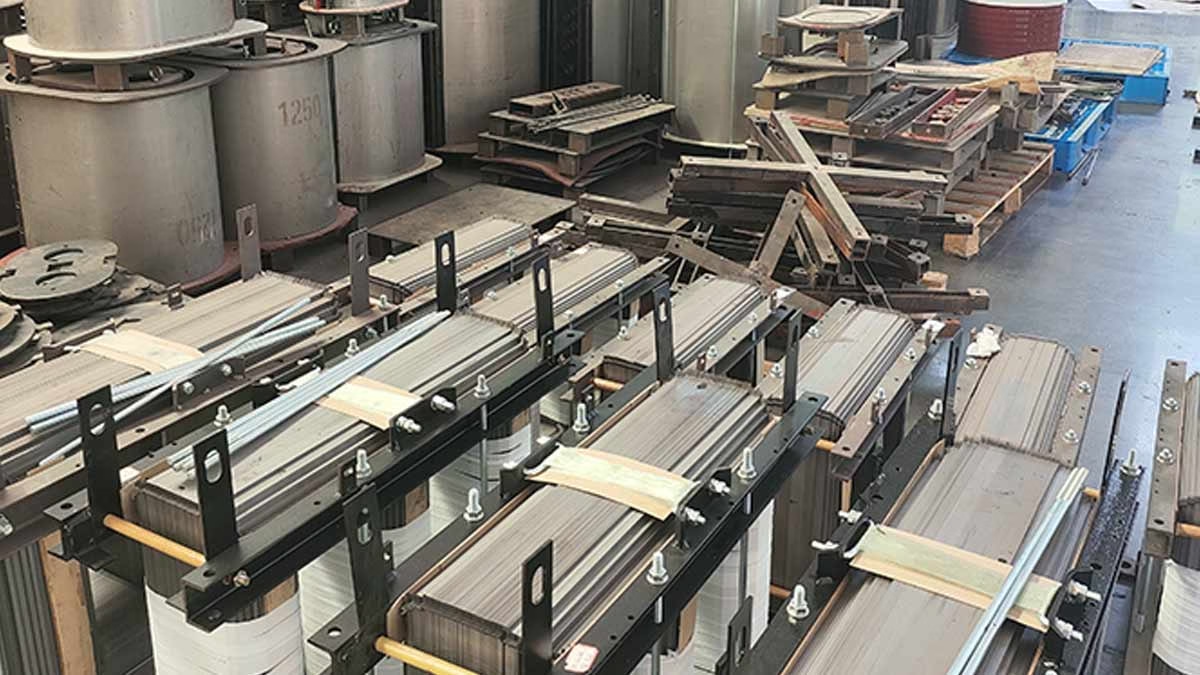
True technical expertise is demonstrated through R&D investment, engineering team credentials, and real-world performance. Product quality, meanwhile, is rooted in rigorous testing, consistent manufacturing processes, and compliance with industry standards. Together, these elements ensure your transformers can withstand harsh industrial environments and deliver peak performance for decades.
How to Evaluate Technical Expertise
- R&D Capabilities: Look for suppliers that allocate 5%+ of revenue to R&D, collaborate with engineering universities, or hold patents for industrial-specific innovations. A supplier partnering with a leading technical university developed advanced insulation technology that extended transformer lifespan by 25% in high-temperature industrial settings.
- Engineering Team Credentials: Assess the team’s average industry experience (10+ years is ideal), advanced degrees (e.g., electrical engineering PhDs), and ongoing training programs. A team with deep expertise in power electronics was able to customize a transformer’s cooling system for a high-altitude industrial plant—solving a problem standard units couldn’t address.
- Innovation Track Record: Review past product evolution and industry firsts. A supplier that pioneered smart transformers with IoT monitoring enabled a client to reduce maintenance costs by 30% through predictive diagnostics.
How to Verify Product Quality
- Testing Protocols: Insist on details about factory testing (e.g., load loss, voltage regulation, short-circuit withstand) and third-party certification. A supplier’s high-voltage test lab could simulate 2x the rated voltage—ensuring transformers survived power surges common in industrial facilities.
- Quality Control Processes: Six-sigma methodologies, real-time production monitoring, and batch traceability are hallmarks of consistent quality. A supplier with these processes achieved a 99.98% on-time delivery rate for defect-free units.
- Field Performance Data: Request case studies or references from industrial clients with similar applications. Long-term data from a chemical plant showed a supplier’s transformers maintained 98.5% efficiency after 15 years—outperforming competitors by 3%.
| Technical & Quality Indicators | What to Look For | Industrial Impact |
|---|---|---|
| R&D Investment | 5%+ of revenue, university partnerships, industrial-focused patents | Access to cutting-edge, application-specific solutions |
| Engineering Expertise | 10+ years average experience, advanced degrees, specialized training | Ability to solve complex industrial challenges |
| Testing & Certification | Third-party validated, short-circuit/overload testing, IEC/IEEE compliance | Reliability in harsh industrial conditions |
| Field Performance | 10+ year lifespan data, efficiency retention, low failure rates | Reduced total cost of ownership (TCO) |
Don’t underestimate the value of on-site factory visits. Touring a supplier’s facilities allows you to observe production processes, meet the engineering team, and verify claims about quality control—insights you can’t get from brochures or online research.
Production Capacity and Delivery Timelines
Industrial projects operate on tight timelines—delays in transformer delivery can derail construction, delay commissioning, and incur costly penalties. Choosing a supplier with the right production capacity and reliable logistics is critical to keeping your project on track.
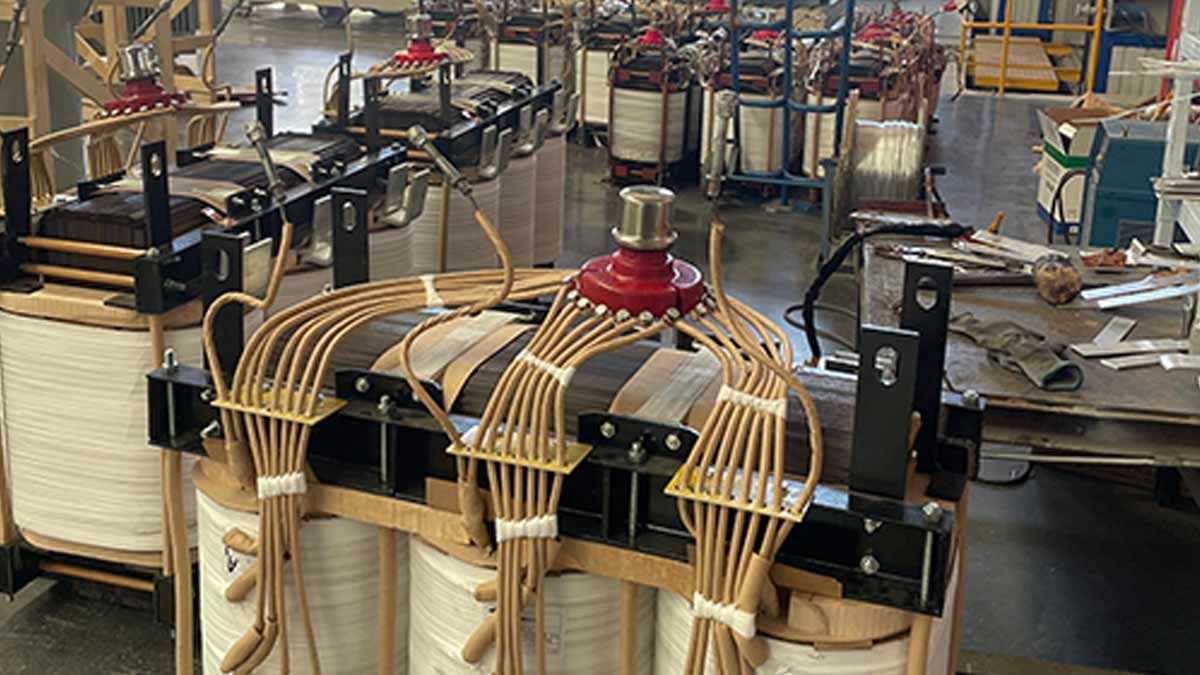
Production capacity isn’t just about how many units a supplier can build—it’s about scalability, supply chain resilience, and efficient delivery. A supplier may have the capacity for large orders but lack the flexibility to adjust for last-minute changes or urgent requests.
Key Factors in Production & Delivery Evaluation
- Manufacturing Infrastructure: Modern, automated production lines (e.g., robotic winding, vacuum drying) increase speed and consistency. A supplier’s automated facility reduced production time by 40% compared to manual processes—enabling a client to meet a tight commissioning deadline.
- Workforce Capabilities: Skilled workers with low turnover ensure consistent quality. A supplier with a comprehensive apprenticeship program maintained a 95% workforce retention rate, resulting in fewer production errors and faster turnaround.
- Supply Chain Management: Diversified raw material sourcing (e.g., multiple copper/aluminum suppliers) and strategic inventory management prevent delays during shortages. A supplier’s stockpiling of critical components allowed them to fulfill an urgent order during a global steel shortage.
- Production Planning: Optimal capacity utilization (70–85%) ensures the supplier can handle your order without overextending resources. A factory operating at 80% capacity accommodated a 20% increase in our order volume with no timeline changes.
- Logistics & Delivery: Global shipping partnerships, custom packaging, and experience with industrial-grade equipment transport are essential. A supplier’s dedicated logistics team handled the delivery of oversized transformers to a remote industrial site—navigating challenging terrain and customs efficiently.
| Production & Delivery Factors | Key Considerations | Industrial Impact |
|---|---|---|
| Manufacturing Infrastructure | Automated lines, vacuum drying, large-scale production bays | Faster turnaround, consistent quality |
| Workforce Stability | Low turnover, apprenticeship programs, specialized training | Reduced production errors |
| Supply Chain Resilience | Diversified suppliers, strategic inventory, raw material tracking | Protection against global shortages |
| Production Flexibility | Surge order handling, custom design accommodation, timeline adjustments | Adaptability to project changes |
| Logistics Expertise | Oversized/heavy cargo experience, custom packaging, global shipping partnerships | On-time delivery to remote or challenging sites |
Transparency is key here. Ask suppliers for their current order backlog, production lead times, and contingency plans for delays. A supplier that openly shared a 3-month backlog allowed us to adjust our project timeline proactively—avoiding last-minute crises.
Cost Analysis and Value Proposition: Beyond the Initial Price
It’s tempting to choose the lowest-priced transformer supplier, but industrial projects demand a longer view. The initial purchase price is just one component of the total cost of ownership (TCO)—energy efficiency, maintenance costs, lifespan, and downtime expenses often have a far greater impact on your bottom line.

A strategic cost analysis focuses on value, not just price. It balances upfront investment with long-term savings, ensuring you don’t sacrifice reliability or efficiency for short-term gains.
Key Components of a TCO Analysis
- Initial Purchase Price: Negotiate competitive rates, but consider volume discounts and flexible payment terms. A multi-year contract with a supplier resulted in a 12% discount on a 50-unit order—offsetting the higher initial price of their high-efficiency transformers.
- Energy Efficiency: Higher efficiency ratings (e.g., IE3/IE4) translate to significant annual savings. A transformer with 0.6% higher efficiency saved a manufacturing client $65,000 per year in energy costs—paying back the 15% higher initial price in just 2.5 years.
- Maintenance & Reliability: Low-maintenance designs and high mean time between failures (MTBF) reduce operational costs. A supplier’s transformers required maintenance only once every 5 years (vs. 2 years for competitors), saving $15,000 annually in service fees.
- Lifespan & Warranty: A longer lifespan (30–40 years vs. 20–25 years) and extended warranty (10+ years) reduce replacement costs. An extended warranty saved a client $120,000 when a transformer core failed after 8 years—covered fully by the supplier.
- Downtime Costs: Industrial downtime can cost $10,000–$100,000 per hour. Choosing a supplier with a 99.9% reliability rate prevented an estimated $500,000 in losses for a chemical plant during a critical production run.
| Cost Factor | Considerations | Impact on TCO |
|---|---|---|
| Initial Purchase Price | Competitive pricing, volume discounts, flexible payment terms | Short-term budget impact |
| Energy Efficiency | IE3/IE4 ratings, load/no-load loss reduction | Long-term operational savings (30–50% of TCO) |
| Maintenance & Reliability | MTBF, service interval frequency, spare parts availability | Ongoing operational costs |
| Lifespan & Warranty | 30+ year design life, extended warranty (10+ years) | Reduced replacement and repair costs |
| Downtime Costs | Reliability rate, failure response time | Avoids costly production interruptions |
For industrial projects, prioritize energy efficiency and reliability—these factors typically account for 60–70% of TCO. A low-cost transformer may save 10% upfront but cost 3x more in energy and maintenance over its lifespan.
Beyond the Purchase: After-Sales Support and Long-Term Partnership
The relationship with your transformer supplier doesn’t end at delivery. Industrial transformers operate for decades, so robust after-sales support and a commitment to long-term partnership are just as critical as the product itself.
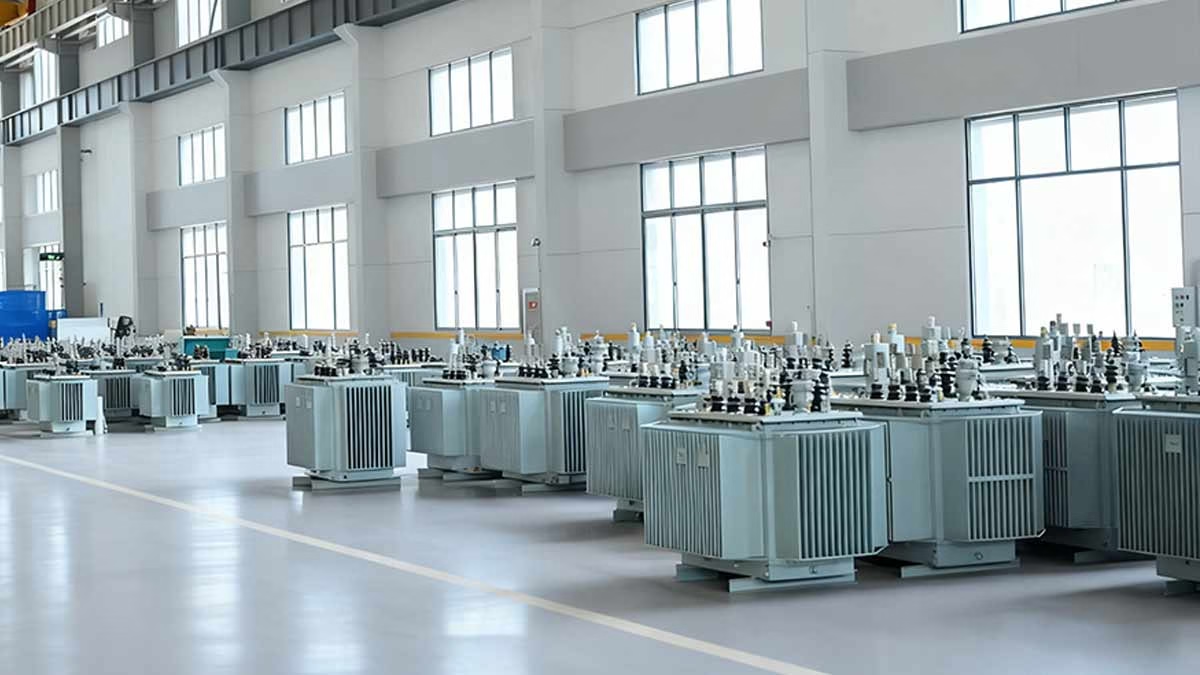
A true partner provides ongoing technical support, readily available spare parts, training, and proactive improvements—helping you maximize transformer performance and adapt to changing industrial needs.
Critical Aspects of After-Sales Support
- Technical Support: 24/7 access to expert engineers is non-negotiable for industrial facilities operating around the clock. A supplier’s support team resolved a critical voltage regulation issue within 4 hours—avoiding a 3-day production shutdown.
- Spare Parts Availability: A global spare parts network with 24–48 hour delivery ensures minimal downtime. A supplier’s local warehouse stocked hard-to-find components, reducing repair time from 2 weeks to 3 days.
- Training Programs: Comprehensive training for your maintenance team reduces dependence on external support. A supplier’s on-site training program improved our team’s troubleshooting skills—cutting support calls by 45%.
- Warranty & Service Agreements: Clear service level agreements (SLAs) and performance guarantees provide peace of mind. An SLA guaranteeing 48-hour on-site response saved a client $80,000 in downtime costs.
Evaluating Long-Term Partnership Potential
- Continuous Improvement: Suppliers that solicit customer feedback and iterate on products add ongoing value. Our suggestions led a supplier to develop a corrosion-resistant transformer coating—ideal for our coastal industrial facility.
- Industry Alignment: Partners that stay ahead of industrial trends (e.g., renewable energy integration, smart grid compatibility) help future-proof your investment. A supplier’s focus on bi-directional power flow prepared us for solar panel integration 5 years after initial purchase.
- Financial Stability: As mentioned earlier, a financially stable supplier can invest in after-sales infrastructure and long-term partnerships. A supplier that weathered economic downturns continued to provide support when competitors scaled back.
| After-Sales & Partnership Factors | Key Indicators | Industrial Impact |
|---|---|---|
| Technical Support | 24/7 availability, expert engineers, remote diagnostics | Minimizes downtime during critical failures |
| Spare Parts | Global network, 24–48 hour delivery, critical component stockpiling | Fast repairs and reduced operational disruptions |
| Training & Documentation | On-site training, detailed manuals, online knowledge bases | Empowers in-house maintenance teams |
| Continuous Improvement | Customer feedback integration, product upgrades, trend alignment | Future-proofs your investment |
When evaluating suppliers, ask for references from long-term industrial clients. These conversations often reveal insights into after-sales support that sales materials don’t—such as how a supplier handled a major failure or adapted to a client’s expanding needs.
Conclusion
Selecting the right transformer supplier for industrial projects is a strategic decision that requires balancing technical expertise, production capacity, cost, and long-term support. By adopting a holistic evaluation framework, focusing on value over price, and prioritizing partnership potential, you can ensure a reliable, efficient, and cost-effective power solution.
Remember, the best supplier isn’t just a vendor—they’re an extension of your team. They understand your industrial environment, anticipate your needs, and stand behind their products for decades. By investing time in a thorough evaluation, you’ll avoid costly mistakes and build a partnership that drives success for your project and your business.
Whether you’re building a new facility, upgrading existing infrastructure, or expanding operations, the right transformer supplier is key to unlocking long-term operational excellence.