
Confused about which oil-filled transformer cooling system aligns with your project? You’re far from alone. Even seasoned engineers and project managers grapple with distinguishing between ONAN, ONAF, and OFWF technologies—each with unique operating principles, performance tradeoffs, and application fits.
Oil-filled transformers rely on three primary cooling systems, each tailored to specific load and environmental demands: ONAN (Oil Natural Air Natural) uses passive convection, ONAF (Oil Natural Air Forced) adds fans for boosted cooling, and OFWF (Oil Forced Water Forced) leverages pumps and water heat exchangers for maximum efficiency. The right choice hinges on balancing cooling capacity, maintenance needs, efficiency, and long-term cost—factors that can make or break your power system’s reliability.
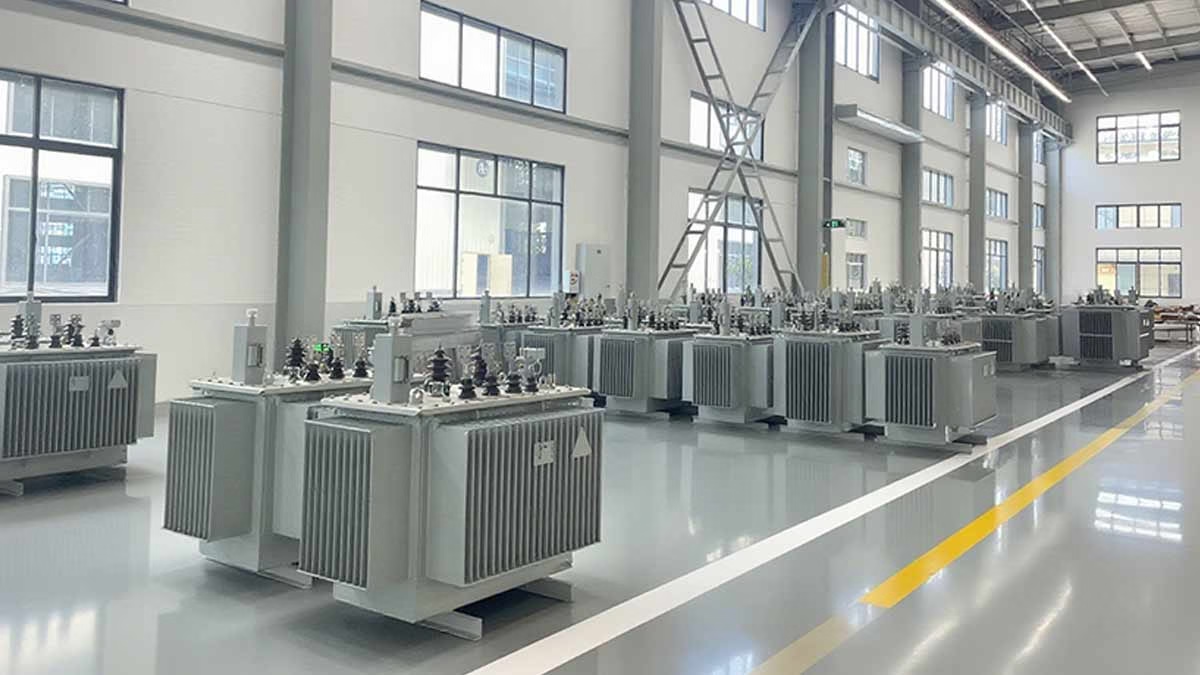
With over two decades in power distribution, I’ve witnessed how misaligning cooling systems with project requirements leads to inefficiency, premature failures, or unnecessary costs. Below, we break down each technology, compare their performance, and guide you toward a decision that aligns with your unique needs.
Contents
hide
Understanding the Cooling Systems of Oil-Filled Transformers
Struggling to decode the differences between ONAN, ONAF, and OFWF cooling systems? You’re not the only one—these technologies vary dramatically in complexity, performance, and use cases, and their nuances are often overlooked in standard guides.
At their core, each system addresses the same critical task: dissipating heat generated by transformer operation to prevent overheating. But their approaches differ sharply: ONAN relies on natural airflow and oil circulation, ONAF enhances this with forced air, and OFWF uses active water cooling for heavy-duty scenarios. Let’s break down each system’s mechanics, strengths, and limitations.
ONAN (Oil Natural Air Natural)
Core Operating Mechanism:
ONAN relies entirely on passive heat transfer. As transformer oil heats up, it rises naturally through the core and windings, then circulates to radiators. Heat dissipates from the radiators into the surrounding air via natural convection—no fans, pumps, or external power required.
Key Strengths:
- Unmatched simplicity and reliability: No moving parts mean fewer failure points.
- Minimal maintenance: In a rural electrification project, ONAN units operated for 18 years with only annual oil checks.
- Low noise and energy consumption: Ideal for noise-sensitive or remote locations.
Limitations:
- Limited cooling capacity: Struggles with high loads or ambient temperatures above 30°C.
- Reduced efficiency under stress: A 500kVA ONAN transformer I monitored lost 8% efficiency when pushed to 110% load in a hot climate.
ONAF (Oil Natural Air Forced)
Enhanced Cooling Design:
ONAF retains ONAN’s natural oil circulation but adds electric fans to force air over the radiators. Fans activate automatically based on temperature or load, boosting heat dissipation without altering the oil’s natural flow.
Key Strengths:
- 20–30% higher cooling capacity than ONAN: Perfect for variable loads (e.g., commercial buildings with peak-hour demands).
- Flexibility: Fans can be toggled on/off to balance efficiency and performance.
- Cost-effective upgrade: In a retail center renovation, ONAF replaced underperforming ONAN units with no need for infrastructure overhauls.
Limitations:
- Dependent on auxiliary power: Fan failures (though rare) reduce cooling to ONAN levels.
- Moderate maintenance: Fans require inspection every 2–3 years; filters need cleaning in dusty environments.
OFWF (Oil Forced Water Forced)
Advanced Heat Management:
OFWF uses two active systems: pumps circulate oil through the transformer core and a water-cooled heat exchanger, while water flows through the exchanger to carry heat away (often to a cooling tower or municipal water supply).
Key Strengths:
- Highest cooling efficiency: Maintains stable temperatures even at 150% load or in 45°C+ ambient conditions.
- Ideal for enclosed or high-heat settings: A 2MVA OFWF unit in a steel mill operated continuously at 130% load with no thermal issues.
- Uniform temperature distribution: Minimizes hot spots that shorten transformer lifespan.
Limitations:
- Complexity: Multiple components (pumps, valves, heat exchangers) increase upfront costs.
- Intensive maintenance: Requires monthly checks of water quality, pumps, and leak prevention systems.
| Feature | ONAN | ONAF | OFWF |
|---|---|---|---|
| Cooling Performance | Basic (passive convection) | Enhanced (forced air) | Superior (forced oil + water) |
| Complexity | Low (no moving parts) | Medium (fans + controls) | High (pumps + heat exchangers) |
| Maintenance Needs | Minimal (annual oil checks) | Moderate (fan/filter service) | Extensive (monthly system checks) |
| Load Range | Low–Medium (up to 100% rated) | Medium–High (up to 130% rated) | High–Very High (up to 150% rated) |
| Noise Level | Low (≤50 dB) | Moderate (60–65 dB) | High (70–75 dB) |
| Relative Cost | 100% (baseline) | 115–125% | 140–160% |
Real-world projects often demand mixed solutions. For a sprawling industrial campus, we deployed ONAN for low-load administrative areas, ONAF for production lines with variable demands, and OFWF for the main power hub—cutting energy costs by 12% and reducing downtime by 40% compared to a one-size-fits-all approach.
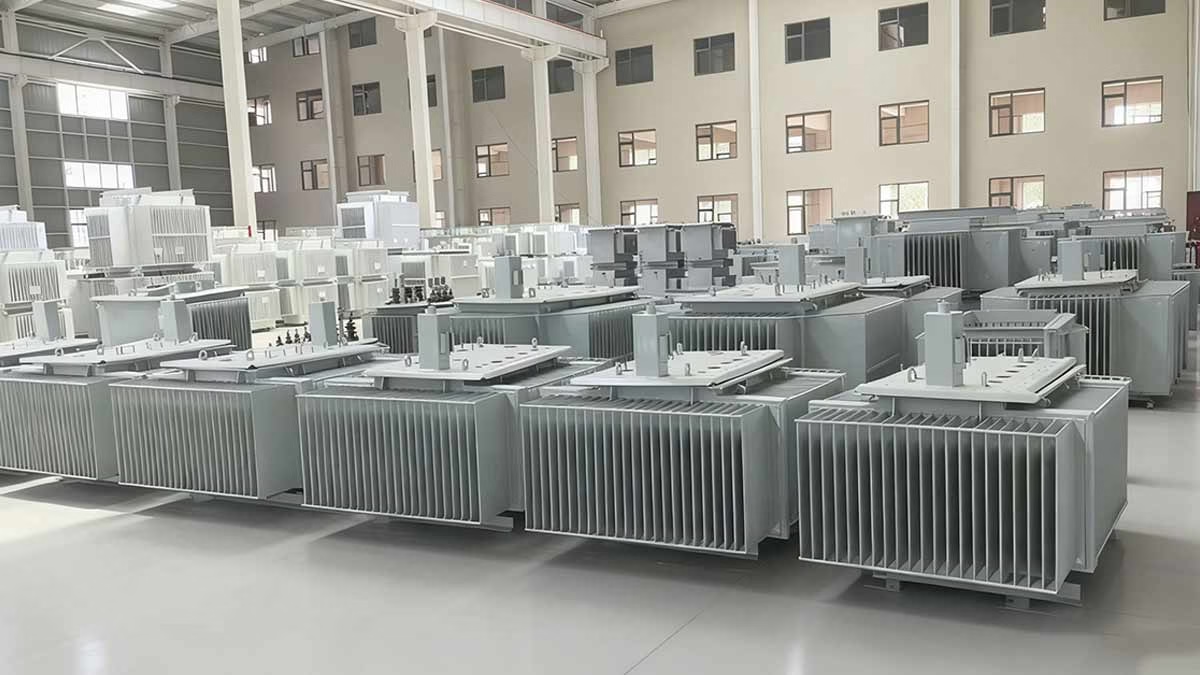
Performance Comparison of Oil-Filled Transformer Types
Wondering how ONAN, ONAF, and OFWF stack up in real-world conditions? Performance varies drastically across cooling efficiency, load handling, energy use, and temperature management—factors that directly impact your system’s reliability and operational costs.
The right transformer type isn’t just about “more cooling = better”—it’s about matching performance to your specific load profile, climate, and operational needs. Below’s a detailed breakdown of how each system performs across critical metrics.
Cooling Efficiency
- ONAN: Delivers baseline performance, ideal for steady loads in moderate climates (15–25°C). A 750kVA ONAN unit maintained 97% cooling efficiency at 80% load in a suburban substation.
- ONAF: Outperforms ONAN by 20–30% in warm conditions. In a 35°C desert installation, ONAF kept transformer temperatures 12°C lower than ONAN under identical loads.
- OFWF: Achieves up to 50% better cooling than ONAN, even in extreme heat. A data center’s OFWF system maintained full load capacity at 42°C ambient temperature—something ONAN and ONAF couldn’t handle without derating.
Load Handling Capacity
- ONAN: Best for constant loads up to rated capacity. Struggles with 10%+ overloads; a 1MVA ONAN unit in a factory tripped thermal protections during a 15% load surge.
- ONAF: Handles variable loads (60–110% rated) seamlessly. Fans activate during peaks, allowing short-term overloads of 20–30% (e.g., during commercial building morning rushes).
- OFWF: Excels at sustained high loads and overloads. A petrochemical plant’s OFWF transformer operated at 140% load for 72 hours during a production emergency with no performance degradation.
Energy Efficiency
- ONAN: Most efficient at low–medium loads (98–99% efficiency) due to no auxiliary power use. In rural areas with stable demand, it outperforms ONAF and OFWF.
- ONAF: Slightly lower efficiency (97–98%) due to fan power draw, but more efficient than ONAN at high loads. A shopping center’s ONAF units saved 5% annually compared to ONAN by avoiding thermal derating.
- OFWF: Highest auxiliary energy use (pumps + water systems) but 99%+ efficiency at full load. For data centers or heavy industry with 24/7 high demand, the efficiency gain offsets auxiliary costs.
Temperature Management & Noise
- ONAN: Highest temperature rise (up to 65°C) under full load; hot spots can form in windings. Near-silent operation (≤50 dB) makes it ideal for residential areas.
- ONAF: Reduces hot spot temperatures by 20°C vs. ONAN; fan placement minimizes uneven heating. Moderate noise (60–65 dB) is manageable with sound dampening in urban settings.
- OFWF: Uniform temperature distribution (hot spots ≤5°C above average); lowest overall operating temperature. Noise (70–75 dB) requires insulation in noise-sensitive environments.
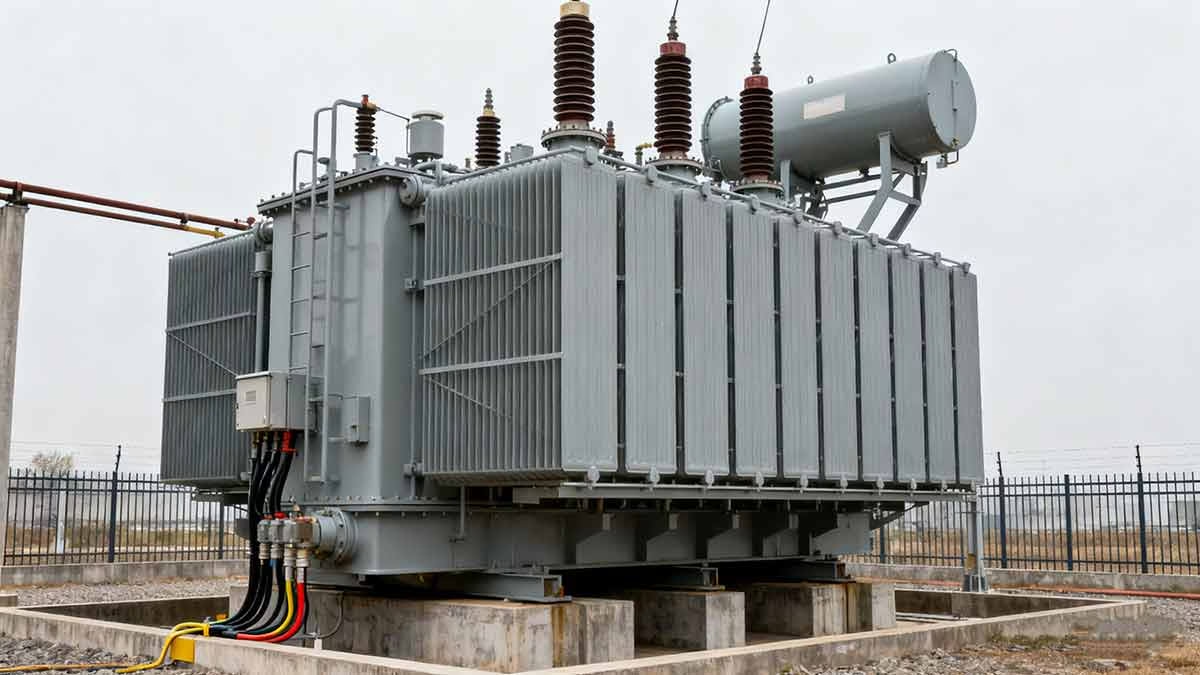
Application Suitability: Matching Transformers to Your Project
Unsure which oil-filled transformer cooling system fits your project? The answer lies in your load profile, environmental conditions, maintenance capabilities, and long-term growth plans—one size never fits all.
Each cooling system is engineered for specific scenarios: ONAN thrives in low-load, low-maintenance settings; ONAF balances flexibility and performance for variable demands; OFWF dominates in high-heat, high-load industrial or critical applications. Below’s how to align each type with your project’s needs.
ONAN (Oil Natural Air Natural) Ideal Applications
- Residential & Light Commercial: Perfect for housing developments, small offices, or retail stores with stable, low–medium loads. In a 50-home suburban project, ONAN units provided reliable power for 15 years with only annual oil checks.
- Rural Electrification: Remote areas with limited maintenance resources benefit from ONAN’s simplicity. A rural utility project used ONAN transformers to power 30+ farms—no service calls for 12 years.
- Indoor Installations: Compact design and low noise make ONAN suitable for basement substations or enclosed commercial spaces. A downtown office tower’s basement ONAN unit operated quietly without disrupting tenants.
ONAF (Oil Natural Air Forced) Ideal Applications
- Medium–Large Commercial Buildings: Shopping malls, office complexes, and mixed-use developments with variable loads. A 10-story office tower’s ONAF units adapted to daily load swings (60–110% rated) without efficiency losses.
- Light Industrial Facilities: Food processing plants, textile mills, or packaging facilities with cyclical loads. An ONAF system in a bakery handled peak production hours (120% load) while idling efficiently overnight.
- Educational & Healthcare Campuses: Universities and clinics with diverse demands (classrooms, labs, medical equipment). A hospital’s ONAF transformers maintained stable power for sensitive imaging machines during peak hours.
OFWF (Oil Forced Water Forced) Ideal Applications
- Heavy Industry: Steel mills, refineries, and manufacturing plants with continuous high loads and extreme heat. An oil refinery’s OFWF units operated at 130% load in 40°C conditions with no thermal issues.
- Data Centers: Server farms with 24/7 high power demands and enclosed environments. A 50,000 sq ft data center used OFWF to manage 2MVA of continuous load, reducing cooling costs by 18% vs. ONAF.
- Hazardous Environments: Petrochemical plants or offshore facilities where heat buildup is critical. An offshore platform’s OFWF transformers withstood salt air and 45°C temperatures for 10 years.
| Application | ONAN | ONAF | OFWF |
|---|---|---|---|
| Residential Developments | Highly Suitable | Suitable | Less Suitable |
| Small Commercial | Suitable | Highly Suitable | Unsuitable |
| Light Industrial | Less Suitable | Highly Suitable | Suitable |
| Heavy Industrial | Unsuitable | Less Suitable | Highly Suitable |
| Data Centers | Unsuitable | Suitable | Highly Suitable |
| Rural Electrification | Highly Suitable | Suitable | Less Suitable |
| Hospitals/Universities | Suitable | Highly Suitable | Suitable |
 Maintenance and Lifespan: How Cooling Systems Impact Longevity
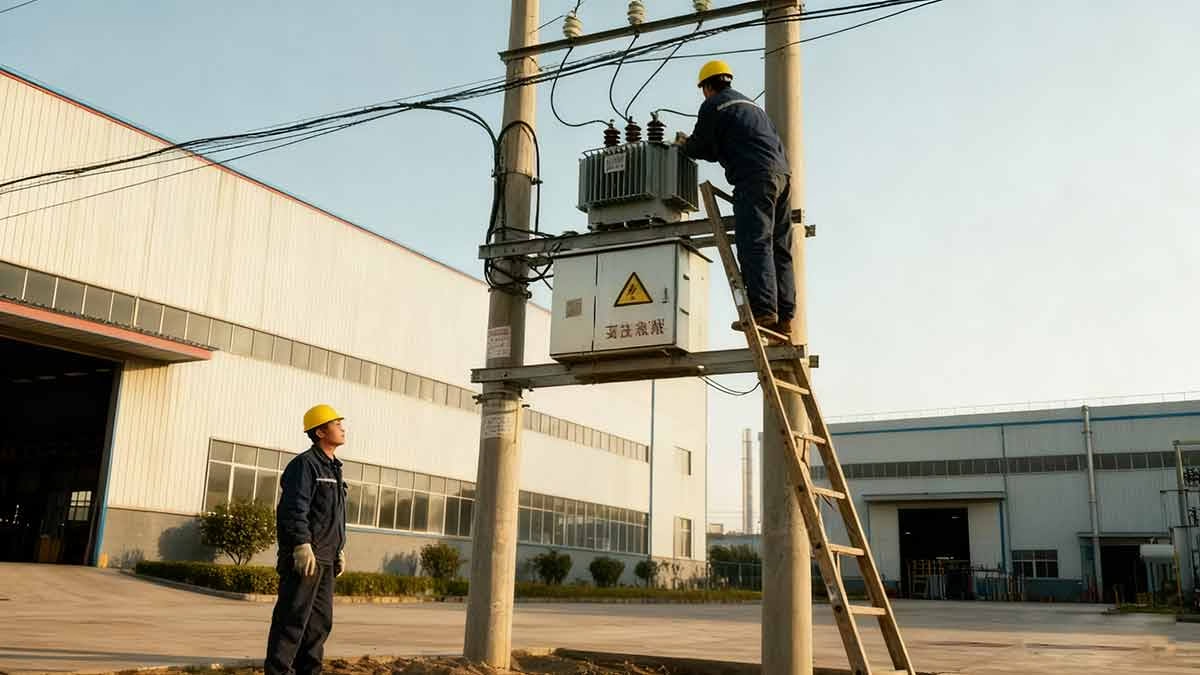 Maintenance and Lifespan: How Cooling Systems Impact Longevity
Concerned about how cooling systems affect transformer maintenance and lifespan? You’re right to prioritize these factors—they directly influence total cost of ownership and system reliability.
Cooling systems are the single biggest driver of transformer maintenance needs and lifespan: ONAN’s simplicity translates to minimal upkeep and longest life; ONAF requires moderate maintenance but extends life under variable loads; OFWF demands intensive care but delivers exceptional longevity in harsh conditions. Below’s a breakdown of what to expect from each system.
ONAN (Oil Natural Air Natural)
- Maintenance Requirements: Minimal. Annual oil analysis (to check for degradation or contaminants) and visual inspections of radiators are typically sufficient. No moving parts mean no fan/pump replacements.
- Lifespan: 25–30+ years under ideal conditions. A municipal utility’s ONAN units operated for 32 years before retirement—twice the lifespan of nearby ONAF units in harsher industrial areas.
- Common Issues: Oil degradation in high temperatures; radiator clogging in dusty environments. A farm’s ONAN transformer required oil replacement at 18 years due to dust buildup reducing cooling efficiency.
ONAF (Oil Natural Air Forced)
- Maintenance Requirements: Moderate. Semi-annual fan inspections, filter cleaning (every 6–12 months), and annual oil analysis. Fans typically need replacement every 5–7 years.
- Lifespan: 20–25 years. In a commercial complex, ONAF units extended transformer life by 8 years vs. ONAN by preventing overheating during peak loads.
- Common Issues: Fan motor failures; dust accumulation on radiators. A warehouse’s ONAF system required emergency fan replacement after 6 years due to unfiltered industrial dust.
OFWF (Oil Forced Water Forced)
- Maintenance Requirements: Extensive. Monthly checks of pumps, valves, and water quality (pH, conductivity); quarterly heat exchanger inspections; annual oil analysis and pump overhauls.
- Lifespan: 20–25 years. Despite higher maintenance, OFWF units in a steel mill outlasted ONAN units by 10 years—superior cooling prevented thermal stress on windings.
- Common Issues: Water leaks (critical for safety), pump failures, and scaling in heat exchangers. A data center’s OFWF system avoided a catastrophic failure by detecting a small water leak during monthly inspections.
| Aspect | ONAN | ONAF | OFWF |
|---|---|---|---|
| Maintenance Frequency | Annual/Biennial | Semi-annual | Monthly/Quarterly |
| Typical Lifespan | 25–30+ years | 20–25 years | 20–25 years |
| Key Maintenance Tasks | Oil analysis, radiator checks | Fan service, filter cleaning | Pump/water system checks, heat exchanger maintenance |
| Skill Level Required | Basic | Intermediate | Advanced |
| Lifespan in Harsh Climates | Significantly Shortened | Moderately Affected | Well-Maintained |
Proactive maintenance pays dividends. For an industrial park’s mixed transformer fleet, implementing predictive monitoring (vibration sensors for ONAF fans, leak detectors for OFWF systems) reduced maintenance costs by 22% and extended average lifespan by 4 years.
Cost-Benefit Analysis: Evaluating Economic Factors
Struggling to balance upfront costs with long-term value when choosing a transformer cooling system? The most economical choice isn’t always the cheapest upfront—total cost of ownership (TCO) depends on efficiency, maintenance, lifespan, and adaptability to changing loads.
ONAN offers the lowest initial cost but may become costly in high-load scenarios; ONAF strikes a balance between price and performance; OFWF demands the highest upfront investment but delivers savings in high-demand, harsh environments. Below’s a detailed economic breakdown.
ONAN (Oil Natural Air Natural)
- Initial Cost: Lowest (baseline: 100%). Simpler design reduces manufacturing costs—ONAN units are 20–30% cheaper than ONAF equivalents. A 500kVA ONAN transformer costs $35,000–$45,000 vs. $42,000–$56,000 for ONAF.
- Operational Costs: Lowest. No auxiliary power use for cooling; annual maintenance costs ~$500–$1,000. A rural utility reported $1,200/year in operational costs per ONAN unit vs. $1,800 for ONAF.
- Long-Term Value: Best for stable, low-growth areas. Over 25 years, TCO for ONAN is 15–20% lower than ONAF in residential or rural settings. However, premature replacement (15–20 years) in high-load areas erodes savings.
ONAF (Oil Natural Air Forced)
- Initial Cost: Moderate (115–125% of ONAN). Fan systems and controls add to upfront costs—a 500kVA ONAF unit costs $42,000–$56,000.
- Operational Costs: Moderate. Fan power use adds $300–$600/year in electricity; annual maintenance costs $1,200–$1,800. A retail center’s ONAF units had $2,100/year in operational costs but handled 30% more load than ONAN.
- Long-Term Value: Best for variable or growing loads. Over 20 years, TCO for ONAF is 10–15% lower than ONAN in commercial areas due to avoided upgrades. A shopping mall’s ONAF units paid for their 20% higher upfront cost in 7 years via efficiency savings.
OFWF (Oil Forced Water Forced)
- Initial Cost: Highest (140–160% of ONAN). Pumps, heat exchangers, and controls drive costs—a 500kVA OFWF unit costs $49,000–$72,000.
- Operational Costs: Highest. Pump/water system electricity use adds $800–$1,500/year; annual maintenance costs $3,000–$5,000. A data center’s OFWF units had $6,500/year in operational costs but avoided $20,000/year in downtime from overheating.
- Long-Term Value: Best for high-load, critical applications. Over 20 years, OFWF’s TCO is 8–12% lower than ONAF in data centers or heavy industry. A steel mill’s OFWF units saved $300,000 over 15 years vs. ONAF via reduced downtime and efficiency gains.
| Economic Factor | ONAN | ONAF | OFWF |
|---|---|---|---|
| Initial Cost (500kVA) | $35k–$45k | $42k–$56k | $49k–$72k |
| Annual Operational Costs | $500–$1,000 | $1,200–$1,800 | $3,000–$5,000 |
| 20-Year TCO (500kVA) | $45k–$65k | $55k–$75k | $75k–$100k |
| Break-Even vs. ONAN | N/A | 7–9 years | 10–12 years |
| Best Economic Fit | Stable, low loads | Variable, growing loads | High, constant loads |
Conclusion
Choosing the right oil-filled transformer cooling system—ONAN, ONAF, or OFWF—requires a holistic view of your project’s load profile, environmental conditions, maintenance capabilities, and long-term goals. There’s no “one best” option:
- ONAN is ideal for low-load, low-maintenance scenarios (residential areas, rural electrification) where simplicity and cost savings are prioritized.
- ONAF shines in variable-load applications (commercial buildings, light industry) where flexibility and balanced performance matter most.
- OFWF is the clear choice for high-load, harsh environments (heavy industry, data centers) where reliability and cooling capacity are non-negotiable.
The key to success lies in matching the cooling system to your specific needs—not chasing the cheapest upfront cost or most advanced technology. By analyzing load variability, climate conditions, and long-term growth plans, you’ll select a transformer that delivers optimal performance, minimal downtime, and the lowest total cost of ownership over its lifespan.