
Ever noticed the discreet green enclosures dotting residential streets, urban districts, and commercial areas? These unassuming pad mounted transformers are the backbone of modern power distribution—quietly converting high-voltage electricity into safe, usable energy for homes, businesses, and public spaces. While they often go unnoticed, their role in powering our daily lives is irreplaceable.
Pad mounted transformers are ground-installed electrical devices engineered to step down high-voltage power from transmission lines to lower voltages (typically 120/240V for residential use or 208/480V for commercial applications). Designed for safety, efficiency, and aesthetic integration, they’re the preferred choice for underground power grids in urban and suburban settings—combining reliability with minimal visual impact.

As a seasoned professional in power distribution engineering, I’ve witnessed firsthand how pad mounted transformers have transformed how cities deliver electricity. In this guide, we’ll unpack their design, functionality, advantages over traditional transformers, urban applications, smart grid integration, and maintenance best practices—equipping you with the insights to make informed decisions for your project.
Contents
hide
Understanding Pad Mounted Transformers: Structure and Core Function
What lies beneath the rugged exterior of a pad mounted transformer? These units are feats of engineered efficiency, with every component designed to prioritize safety, performance, and longevity. Unlike their exposed counterparts, pad mounted transformers encapsulate critical electrical components in a weathertight, tamper-resistant enclosure—making them ideal for public spaces.
Key Components and Their Roles
A pad mounted transformer’s design is a synergy of protective and functional elements, each serving a vital purpose:
External Enclosure: Protection Meets Versatility
- Materials: Constructed from 10-gauge galvanized steel or stainless steel (for corrosion resistance in coastal or industrial areas).
- Design Features: Tamper-proof locks, weather-sealed seams, and UV-resistant coatings to withstand extreme temperatures (-40°C to 55°C) and environmental stress.
- Aesthetic Adaptability: Available in custom colors (not just green) to blend with historic districts, landscaped areas, or modern urban developments.
- Real-World Example: For a historic downtown revitalization project, we specified transformers with brick-patterned enclosures that matched the neighborhood’s architecture—eliminating visual disruption while delivering 75kVA of power.
Internal Core and Windings: The Power Conversion Heart
- Transformer Core: Made of laminated silicon steel sheets to minimize energy loss (core losses account for just 1-2% of total energy consumption).
- Windings: High-grade copper (or aluminum for cost-sensitive projects) coils with precise turns ratios—primary windings for high-voltage input (4kV-35kV) and secondary windings for low-voltage output.
- Insulation: Oil-filled designs use mineral oil or biodegradable ester oil (for eco-sensitive areas) for insulation and cooling; dry-type models use epoxy resin to eliminate oil leakage risks.
Safety and Control Systems
- Compartmentalization: Separate chambers for high-voltage connections, low-voltage terminals, and the transformer core—allowing safe maintenance on low-voltage components without exposure to high voltage.
- Protective Devices: Internal fuses, circuit breakers, and pressure relief valves to prevent overcurrents, short circuits, and equipment damage.
- Grounding: Heavy-duty grounding lugs and equipotential bonding to minimize electrocution risks and ensure compliance with IEEE 80 standards.
| Compartment | Purpose | Access Level |
|---|---|---|
| High-Voltage Chamber | Houses primary bushings and fuses | Restricted (certified personnel only) |
| Low-Voltage Chamber | Contains secondary terminals and wiring | Limited (authorized staff) |
| Transformer Core | Encloses windings and insulation medium | Restricted |
How Pad Mounted Transformers Work
The core function is simple yet precise:
- High-voltage electricity (from underground transmission lines) enters the primary winding through insulated bushings.
- Electromagnetic induction between the primary and secondary windings steps down the voltage to a usable level.
- The low-voltage power exits through secondary terminals, feeding into local distribution lines for homes or businesses.
- Built-in cooling systems (natural convection for oil-filled models, forced air for dry-type) dissipate heat to maintain optimal operating temperatures.
Pad Mounted vs. Traditional Transformers: Key Distinctions and Use Cases
Why choose a pad mounted transformer over a traditional pole-mounted unit? The decision hinges on project requirements, safety priorities, aesthetics, and infrastructure type. Both have valid applications—but pad mounted transformers excel in modern urban and suburban environments.
Side-by-Side Comparison
| Aspect | Pad Mounted Transformers | Pole-Mounted Transformers |
|---|---|---|
| Installation | Ground-level (concrete pad or underground vault) | Elevated on utility poles |
| Infrastructure Type | Paired with underground power lines | Used with overhead power lines |
| Safety | Tamper-resistant enclosure; minimal public access | Exposed components; risk of contact with fallen lines |
| Aesthetics | Low-profile; customizable to blend with surroundings | Highly visible; can clutter skyline |
| Maintenance | Ground-level access; serviceable in all weather | Requires bucket trucks; challenging in storms |
| Capacity Range | 5kVA – 500kVA (ideal for medium-to-large loads) | 1kVA – 100kVA (best for small, scattered loads) |
| Environmental Impact | Oil containment systems; reduced wildlife risk | Vulnerable to weather damage; higher bird/animal interference |
Ideal Applications for Pad Mounted Transformers
- New Residential Developments: Underground utilities and low-profile design enhance curb appeal and property values.
- Urban and Suburban Areas: Eliminates overhead wire clutter, supporting walkable, aesthetically pleasing neighborhoods.
- Historic Districts: Custom enclosures preserve architectural integrity while delivering modern power capacity.
- Commercial/Industrial Parks: Handles higher loads (e.g., HVAC, machinery, EV charging) with safe, accessible maintenance.
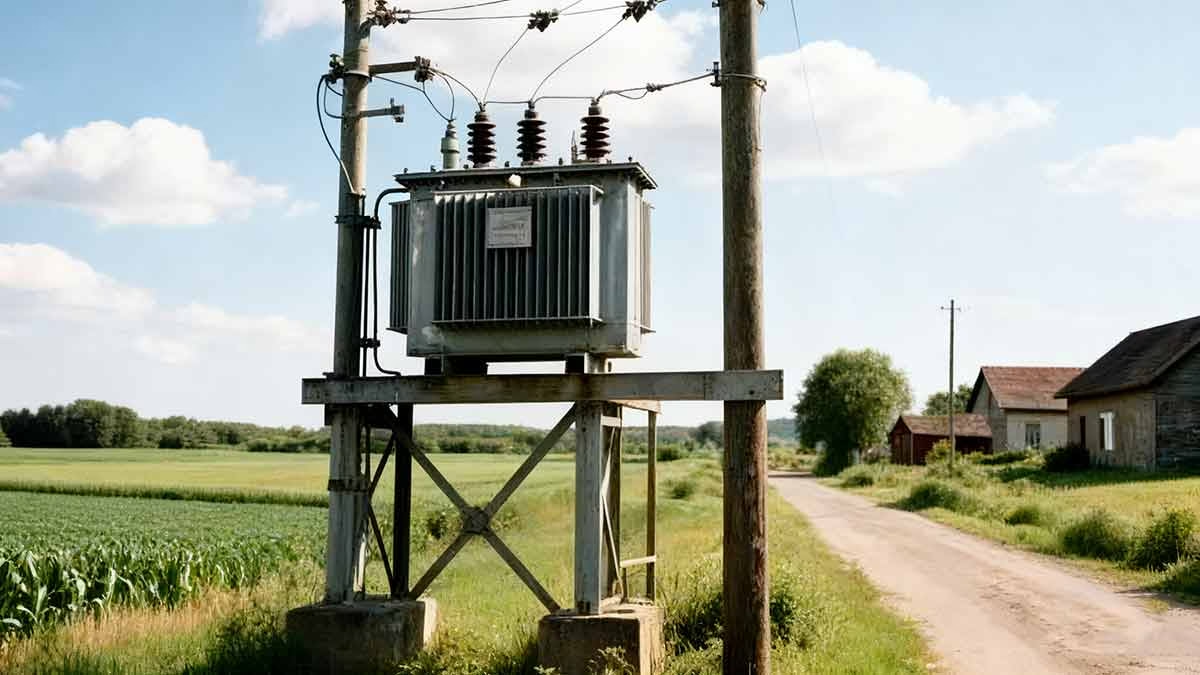
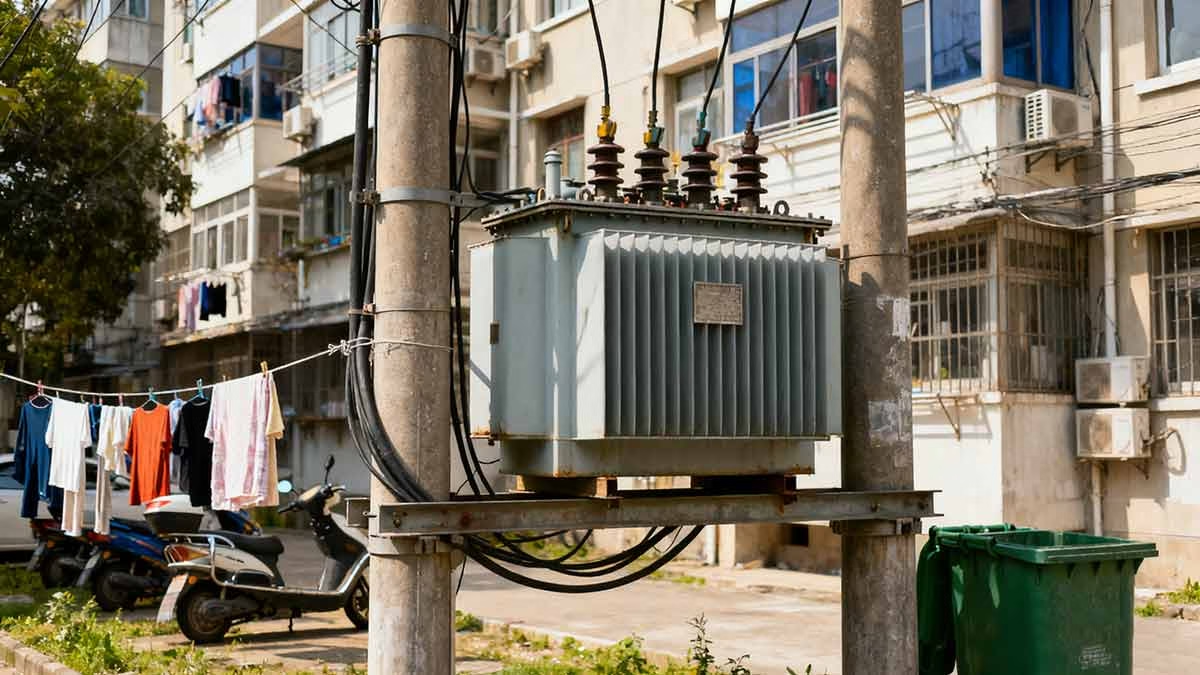
When to Choose Pole-Mounted Transformers
- Rural Areas: Lower installation costs for sparse populations with existing overhead infrastructure.
- Flood-Prone Zones: Elevated placement avoids water damage (pad mounted models can be elevated in these areas too).
- Temporary Installations: Faster setup for construction sites or emergency power needs.
Real-World Decision Example
For a suburban housing development with 50+ homes, we recommended pad mounted transformers for three key reasons:
- Underground utilities aligned with the developer’s “wire-free” aesthetic vision.
- Proximity to playgrounds and sidewalks required maximum public safety—enclosed design eliminated 触电 risks.
- The units could be placed in landscaped buffers, hidden from view while delivering 100kVA per neighborhood block.
In contrast, a rural farm expansion project opted for pole-mounted transformers: existing overhead lines reduced installation costs, and the scattered load (barns, irrigation pumps) didn’t require high-capacity units.
Urban Grid Solutions: How Pad Mounted Transformers Transform City Power Distribution
Modern cities demand power systems that are reliable, space-efficient, and visually unobtrusive—all areas where pad mounted transformers shine. They’re the foundation of underground distribution networks, enabling the clean, efficient power delivery that modern urban planning requires.
Core Urban Benefits
1. Aesthetic and Space Efficiency
- Low Profile: At just 3-4 feet tall, pad mounted transformers fit in sidewalk buffers, parking lot medians, or landscaped areas—no need for large substations.
- Visual Integration: Custom colors, decorative wraps, or green roof covers allow units to blend with parks, plazas, or historic streetscapes.
- Space Savings: A single 250kVA pad mounted transformer replaces the need for multiple pole-mounted units, freeing up utility pole space for streetlights or telecom equipment.
2. Enhanced Reliability and Resilience
- Weather Resistance: Enclosed design protects components from rain, snow, high winds, and debris—reducing outages by 30-40% compared to overhead systems.
- Fault Isolation: Underground networks with pad mounted transformers contain outages to smaller areas (e.g., one city block vs. an entire neighborhood).
- Flood Adaptability: Elevated concrete pads (1-2 feet above flood level) and waterproof enclosures make them suitable for coastal or low-lying urban areas.
3. Supporting Urban Electrification
- EV Charging Readiness: High-capacity pad mounted transformers (150kVA+) power multiple EV fast-charging stations in parking garages or street-side locations.
- Building Electrification: Handles the increased load from electric heat pumps, induction cooking, and smart building systems in net-zero developments.
- Dense Load Management: In high-rises and mixed-use buildings, pad mounted transformers deliver power to 50+ units from a single ground-level installation.
Case Study: Urban Revitalization Project
A former industrial district in a mid-sized city was converted to a mixed-use development (apartments, retail, offices) with pad mounted transformers as the backbone of its power system:
- 8 pad mounted transformers (75kVA-250kVA) replaced outdated overhead lines and substations.
- Result: 50% reduction in power outage duration, 20% lower maintenance costs, and a 15% increase in property values due to improved aesthetics.
- Bonus: The units integrated with rooftop solar panels on commercial buildings, handling bidirectional power flow to the grid.
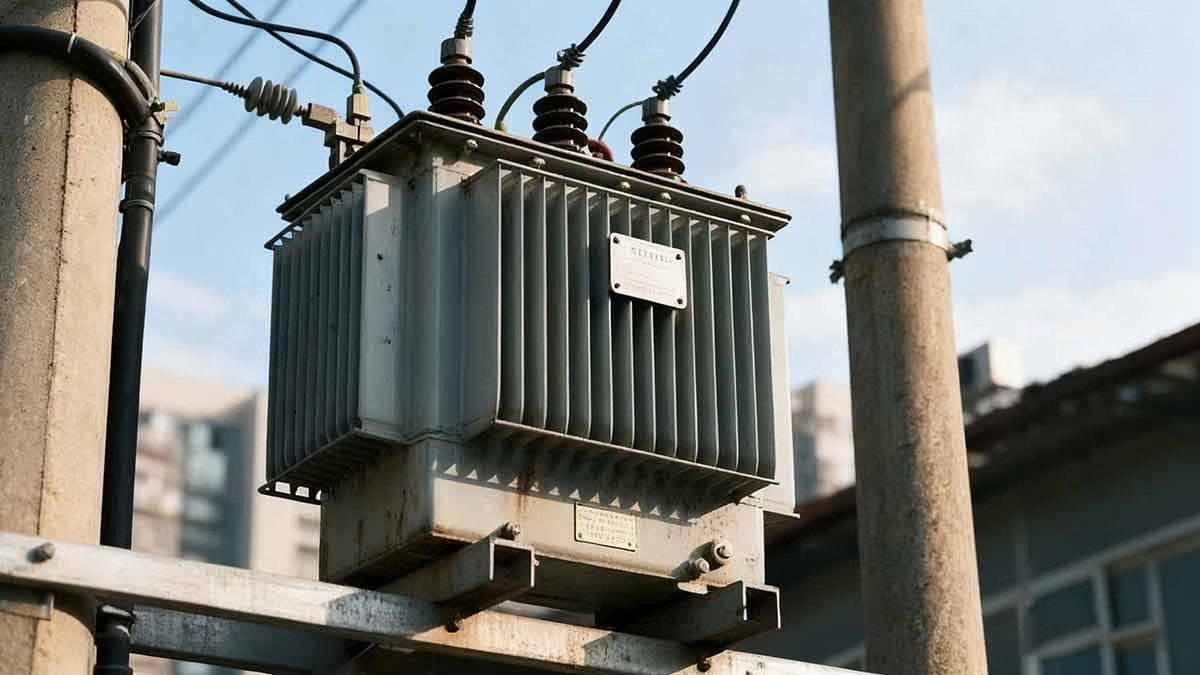
Smart Grid Integration: Pad Mounted Transformers as Intelligent Nodes
Pad mounted transformers are no longer just passive power converters—they’re evolving into intelligent nodes that power smart city ecosystems. By integrating sensors, communication technology, and automation, they enable data-driven grid management, renewable energy integration, and predictive maintenance.
Key Smart Features
1. Real-Time Monitoring and Data Analytics
- Sensors: Track voltage, current, temperature, oil condition (for oil-filled models), and load levels 24/7.
- Communication Modules: 4G/LTE or IoT connectivity transmits data to cloud-based management platforms (compatible with SCADA systems).
- Data Insights: Utilities use analytics to identify load patterns, detect inefficiencies, and predict equipment issues before failures occur.
2. Grid Automation
- Automatic Load Balancing: Adjusts power distribution dynamically to avoid overloading—critical for peak hours (e.g., evening EV charging, morning HVAC use).
- Voltage Regulation: Smart tap changers adjust output voltage in real time to maintain power quality, even with variable renewable inputs.
- Fault Detection and Isolation: Identifies faults (e.g., short circuits) and automatically disconnects affected areas, minimizing outage scope.
3. Renewable Energy and Storage Integration
- Bidirectional Power Flow: Manages power from rooftop solar panels or small wind turbines, feeding excess energy back to the grid.
- Energy Storage Compatibility: Works with battery storage systems to shift load from peak to off-peak hours, reducing strain on the grid.
- Inverter Coordination: Syncs with solar inverters to stabilize voltage fluctuations from intermittent renewable generation.
Real-World Smart Grid Impact
A major city’s smart grid upgrade included retrofitting 500+ pad mounted transformers with smart technology:
- 18% reduction in energy losses due to optimized load balancing.
- 40% faster outage response times (average restoration time dropped from 2 hours to 48 minutes).
- 25% increase in solar energy integration capacity, as transformers managed variable inputs more effectively.
Cybersecurity Considerations
With increased connectivity comes cybersecurity risks—smart pad mounted transformers include robust protections:
- Encrypted data transmission (AES-256) to prevent unauthorized access.
- Secure firmware updates and intrusion detection systems.
- Compliance with IEC 62351 standards for power system cybersecurity.
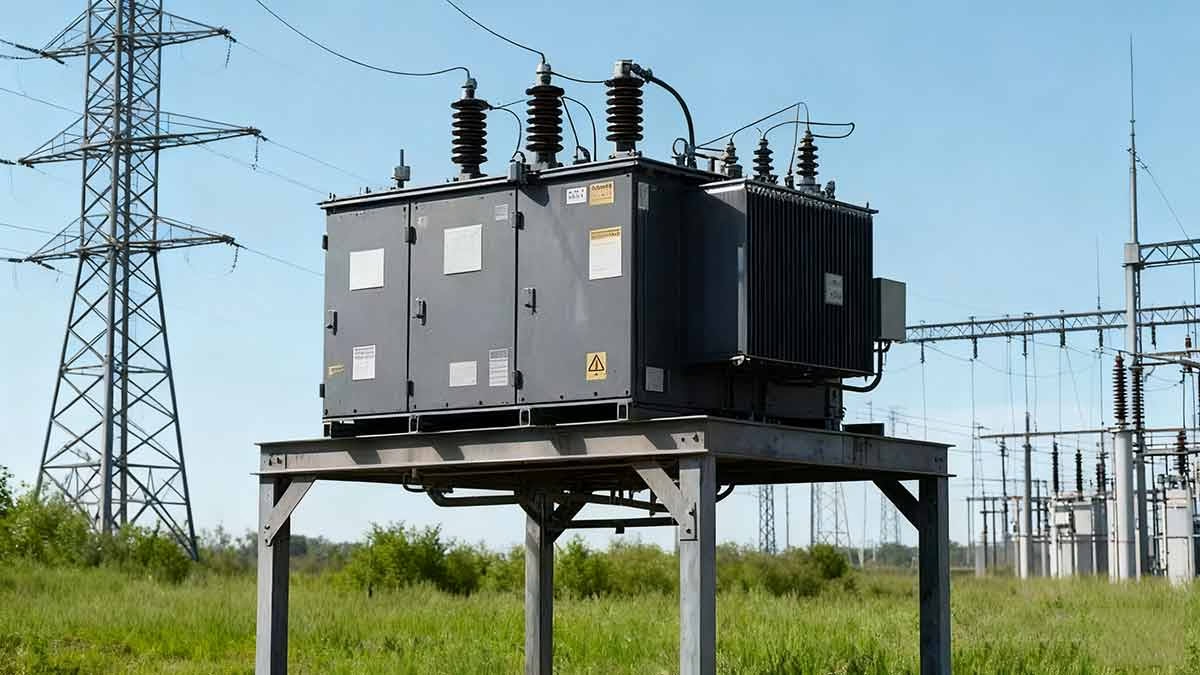
Safety and Efficiency: Design Features and Maintenance Best Practices
Pad mounted transformers are engineered for maximum safety and efficiency—but their performance depends on proper design, installation, and maintenance. Below are key features that prioritize safety, efficiency metrics to consider, and maintenance protocols to extend service life.
Safety Design Highlights
- Tamper Resistance: Locked enclosures with specialized keys (no standard tools can open them) prevent unauthorized access—critical for public areas.
- Impact Protection: Reinforced steel frames withstand vehicle collisions (common in parking lots or busy streets).
- Fire Safety: Dry-type models use fire-retardant epoxy resin; oil-filled units include secondary containment tanks to prevent oil spills and fires.
- Warning Signage: Durable, weather-resistant labels (in multiple languages for diverse areas) alert to high-voltage hazards.
Efficiency Metrics
- Efficiency Ratings: Modern pad mounted transformers meet DOE 2016 efficiency standards, with full-load efficiency above 98% and no-load efficiency above 97%.
- Loss Reduction: Amorphous steel cores reduce core losses by 30-50% compared to traditional silicon steel cores.
- Load Factor Optimization: Designed to operate most efficiently at 50-70% of rated capacity—ideal for urban load profiles (variable but consistent).
Maintenance Best Practices
Regular maintenance extends service life (typically 25-30 years) and prevents costly failures. Follow this schedule:
Monthly Visual Inspections
- Check for physical damage, corrosion, or vegetation growth around the unit.
- Verify enclosure locks are secure and gaskets are intact (no water intrusion).
- Ensure cooling vents (if applicable) are free of debris.
Annual Electrical and Mechanical Checks
- Test insulation resistance with a megohmmeter.
- Inspect high/low-voltage connections for tightness and corrosion.
- For oil-filled models: Sample and test oil for moisture, acidity, and dielectric strength.
5-Year Comprehensive Maintenance
- Perform turns ratio and load loss tests to verify voltage transformation accuracy.
- Replace worn gaskets, seals, and protective devices.
- Clean internal compartments (by certified personnel only).
Common Maintenance Challenges and Solutions
- Vegetation Overgrowth: Trim plants 3 feet around the unit to ensure proper cooling and access.
- Water Intrusion: Install drainage around the concrete pad; replace damaged gaskets immediately.
- Corrosion: Touch up paint on steel enclosures; use stainless steel or galvanized units in coastal areas.
- Pest Infestations: Seal entry points; install rodent guards to prevent wiring damage.
Conclusion
Pad mounted transformers are indispensable to modern power distribution—combining safety, efficiency, space-saving design, and smart technology to meet the demands of urban and suburban environments. Their ability to integrate with underground grids, blend with surroundings, and support smart city initiatives makes them the preferred choice for forward-thinking projects.
Whether you’re planning a new residential development, upgrading an urban grid, or retrofitting a historic district, pad mounted transformers offer a reliable, safe, and aesthetically pleasing solution. By prioritizing proper design, installation, and maintenance, you can ensure these workhorses deliver consistent power for decades—quietly supporting the daily lives of residents and businesses alike.
For project-specific recommendations or to learn more about selecting the right pad mounted transformer for your needs, consult with a certified power distribution engineer or utility partner.