
Ever paused to wonder what is an electric transformer? The answer lies in an unsung hero of modern infrastructure: the electric transformer. This indispensable device is the backbone of global power systems, enabling efficient energy transmission and safe usage—yet it often goes unnoticed until it’s time to select or maintain one.
At its core, a transformer adjusts electrical voltage without altering frequency, bridging the gap between high-voltage long-distance transmission and low-voltage consumer use. It’s the reason power can travel hundreds of miles with minimal loss and why your phone charger, HVAC system, and industrial machinery all receive the exact voltage they need to operate.
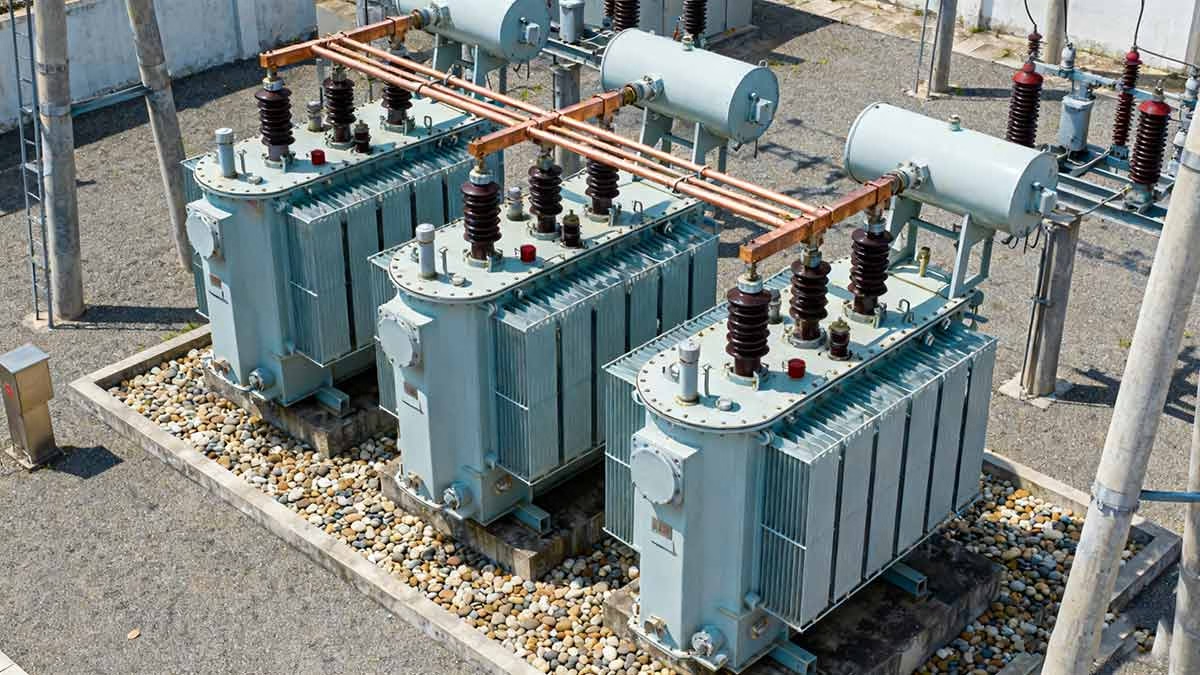
As an electrical engineer with decades of experience designing and optimizing power systems, I’ve witnessed firsthand how transformers shape our electrified world. In this guide, I’ll demystify transformer technology—breaking down how they work, their key components, voltage transformation processes, diverse types, and their evolving role in modern power grids. Whether you’re an industry professional, project manager, or simply curious about the technology powering your daily life, this resource delivers clear, actionable insights.
Contents
hide
How Transformers Work: The Science of Electromagnetic Induction
Ever questioned the “magic” behind transformers? It all boils down to electromagnetic induction—a fundamental physics principle that powers every voltage conversion. Far from being overly complex, this concept is elegant in its simplicity, and understanding it unlocks why transformers are irreplaceable in power systems.
Transformers operate exclusively on alternating current (AC) and rely on the mutual interaction between electricity and magnetism. When AC flows through a coil of wire, it generates a constantly changing magnetic field. This dynamic field then induces a voltage in a nearby coil, transferring electrical energy between the two coils without any physical contact.
The Physics Behind the Process
The relationship between electricity and magnetism is the foundation of transformer operation:
- Changing Current = Changing Magnetic Field: When AC passes through a wire, it creates a magnetic field that expands and contracts with the current’s alternating direction. Unlike direct current (DC), which produces a static field, AC’s constant variation is what makes induction possible.
- Changing Magnetic Field = Induced Voltage: When this fluctuating field passes through a second coil, it “pushes” electrons in the coil, creating an induced voltage. The strength of this voltage depends on how quickly the field changes and the number of turns in the coil.
Step-by-Step: How Transformers Harness Induction
- Primary Coil Excitation: AC power from the grid flows into the primary coil, generating a changing magnetic field around it.
- Magnetic Field Concentration: The transformer’s core—typically made of grain-oriented silicon steel or amorphous metal—directs and intensifies this magnetic field, ensuring minimal energy loss.
- Secondary Coil Induction: The concentrated magnetic field passes through the secondary coil, inducing a voltage. The ratio of primary to secondary turns determines whether voltage increases or decreases.
- Energy Transfer: Power (minus minimal losses) is transferred from the primary to the secondary coil, with voltage adjusted to the required level.
Why AC Is Non-Negotiable
Transformers cannot operate with DC because static magnetic fields fail to induce voltage in the secondary coil. This is why AC became the global standard for power distribution—its alternating nature enables the voltage transformation needed for efficient, long-distance energy delivery.
Factors That Boost Transformer Efficiency
- Core Material: Amorphous metal cores reduce hysteresis and eddy current losses by up to 70% compared to traditional silicon steel.
- Coil Design: Optimized winding geometry and high-conductivity copper minimize resistive losses (I²R losses) and improve heat dissipation.
- Frequency: Higher frequencies (e.g., 400 Hz in aerospace applications) allow for smaller, lighter transformers, though utility grids typically operate at 50 or 60 Hz.
From powering neighborhood grids to charging electric vehicles, electromagnetic induction in transformers is the invisible force that keeps our world running. Its simplicity belies its impact—every time you turn on a light or plug in a device, you’re benefiting from this foundational scientific principle.
Anatomy of an Electric Transformer: Key Components & Their Functions
Glance at a transformer, and you’ll see a rugged metal enclosure—but inside lies a precision-engineered assembly of components, each playing a critical role in voltage conversion and energy transfer. Understanding these parts reveals why transformers are both reliable and efficient, even in harsh operating conditions.
A transformer’s design is a study in functional elegance: core, coils, insulation, cooling systems, structural housing, and protective devices work in harmony to deliver stable power while withstanding heat, pressure, and environmental stress.
Core Components: The Heart of Voltage Transformation
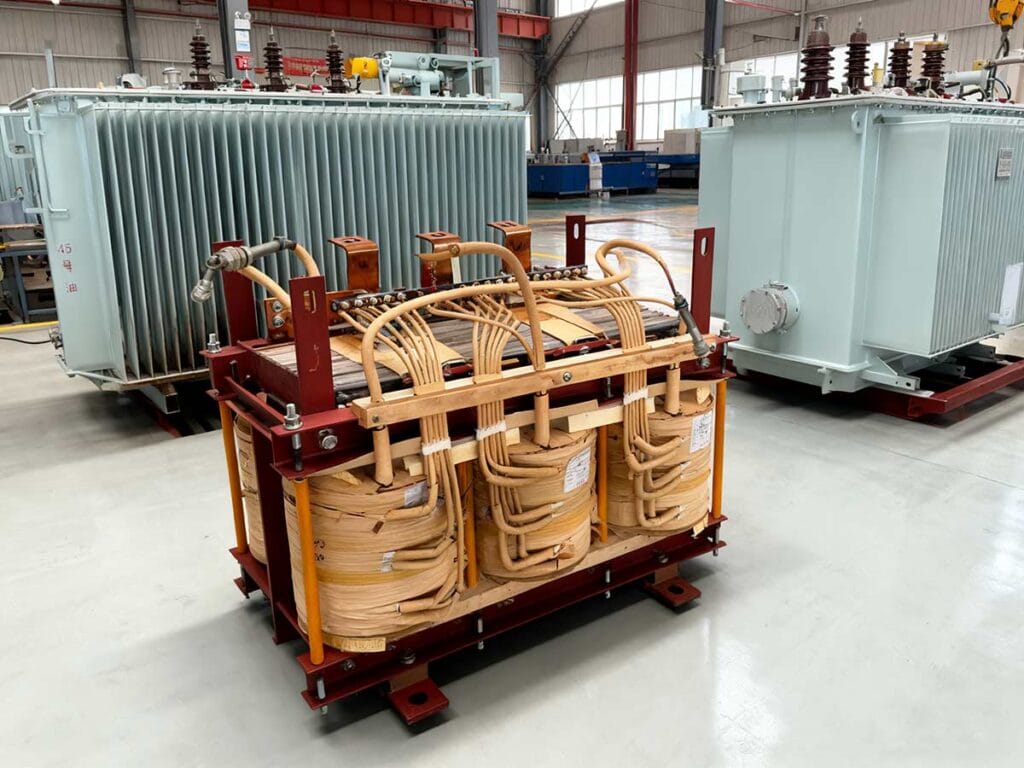
Coils (Primary & Secondary)
The coils are where energy transfer begins and ends:
- Primary Coil: Receives input power from the grid or source, generating the initial magnetic field. Its winding count dictates the input voltage compatibility.
- Secondary Coil: Induces voltage from the magnetic field, with its winding count determining the output voltage. The turns ratio (primary:secondary) directly controls voltage transformation (e.g., 10:1 turns ratio = 10x voltage step-up).
I once led a project where reconfiguring coil turns ratio reduced a transformer’s energy losses by 3%—a small number that translated to annual savings of $12,000 for a mid-sized industrial facility.
Core
The core acts as a “magnetic highway,” concentrating and directing the magnetic field between coils:
- Material: Grain-oriented silicon steel (most common) or amorphous metal (for high-efficiency models) minimizes energy loss.
- Design: Laminated construction reduces eddy currents—circulating currents that waste energy as heat.
- Shape: E-I or shell-type designs optimize magnetic flux distribution, ensuring efficient energy transfer.
Support Components: Safety, Cooling & Structural Integrity
Insulation Systems
Insulation prevents short circuits and ensures safe operation:
- Coil Insulation: Enameled wire, kraft paper, or synthetic polymers (e.g., Nomex) separate individual coil turns and layers.
- Oil Insulation: In large transformers, mineral oil or biodegradable esters provide both insulation and cooling.
- Bushings: Porcelain or composite insulators route high-voltage wires into/out of the enclosure, preventing flashovers.
Cooling Systems
Transformers generate heat during operation—managing it is critical for longevity:
| Cooling Method | Typical Application | Key Advantages |
|---|---|---|
| Air-Cooled (AN) | Small distribution transformers | Low maintenance, no leakage risk |
| Oil-Immersed (ONAN) | Medium-to-large power transformers | Excellent heat dissipation, long lifespan |
| Forced-Air (OFAF) | High-load industrial transformers | Handles peak demand without overheating |
| Dry-Type (CAST) | Indoor/sensitive environments (hospitals, data centers) | No oil, fire-resistant |
Structural & Protective Features
- Enclosure/Tank: Steel housing protects internal components from debris, weather, and unauthorized access. For outdoor units, it’s sealed to prevent moisture ingress.
- Tap Changers: Manual or automatic devices adjust coil turns to fine-tune voltage (critical for maintaining stability during load fluctuations).
- Pressure Relief Valves: Prevent tank rupture by releasing excess pressure from oil expansion (common in oil-immersed models).
- Buchholz Relay: Detects gas buildup or oil loss in oil-filled transformers, triggering alarms or shutdowns to avoid damage.
- Temperature Sensors: Monitor winding and oil temperatures, preventing overheating.
How Components Work Together
Power enters via primary bushings → primary coil generates a magnetic field → core concentrates the field → secondary coil induces voltage → insulation prevents short circuits → cooling system dissipates heat → protective devices monitor for faults. Every part is engineered to complement the others, ensuring reliable, efficient operation for 25–40 years.
Modern transformer design continues to evolve—with innovations like smart sensors for predictive maintenance and advanced core materials pushing efficiency levels above 99.5%. Yet the basic anatomy remains consistent, a testament to the timeless elegance of transformer technology.
Voltage Transformation: Step-Up & Step-Down Processes in Power Distribution
How does electricity travel 300 miles from a power plant to your home without losing most of its energy? The answer is voltage transformation—two critical processes (step-up and step-down) that make long-distance power distribution feasible and safe.
Transformers act as voltage “adjusters”: step-up transformers boost voltage for efficient transmission, while step-down transformers reduce it to levels suitable for homes, businesses, and industrial equipment. This dual role is the reason power grids can deliver electricity reliably across vast distances with minimal waste.
The Why Behind Voltage Transformation
Electricity loses energy as heat when flowing through transmission lines—this loss increases with current (P_loss = I²R). By increasing voltage, step-up transformers reduce current for the same power (P = V×I), cutting energy loss by up to 90% during long-distance travel. Conversely, high voltage is dangerous for direct use, so step-down transformers make it safe for consumer and industrial applications.
Step-Up Transformers: Powering Long-Distance Transmission
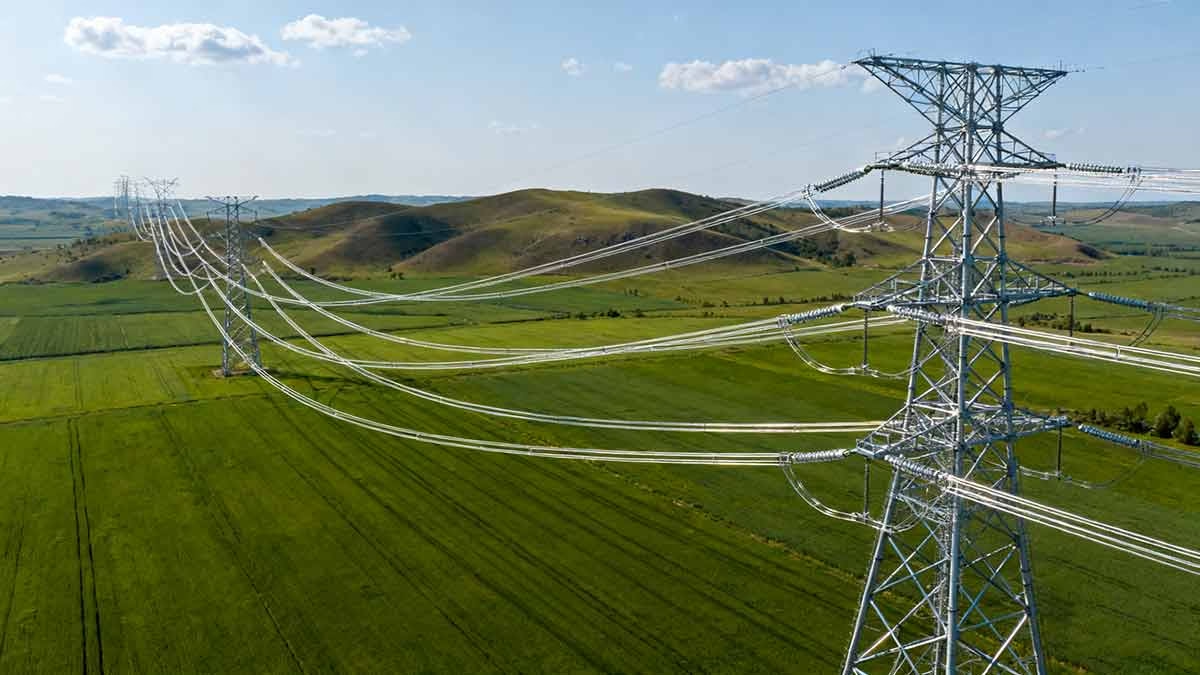
Step-up transformers are located at power plants or renewable energy facilities (solar farms, wind parks) and perform a critical first step:
- Input Voltage: 10–25 kV (typical output from generators).
- Output Voltage: 115–765 kV (depending on transmission distance).
- Key Benefit: Reduces current to minimize line losses. For example, a 500 kV transmission line loses 75% less energy than a 138 kV line carrying the same power.
I worked on a wind farm project where a 225 kV step-up transformer enabled power to travel 200 miles to the grid—cutting transmission losses from 15% to 3% compared to the original 69 kV design.
Step-Down Transformers: Delivering Safe, Usable Power
As electricity nears end-users, step-down transformers reduce voltage in a series of stages:
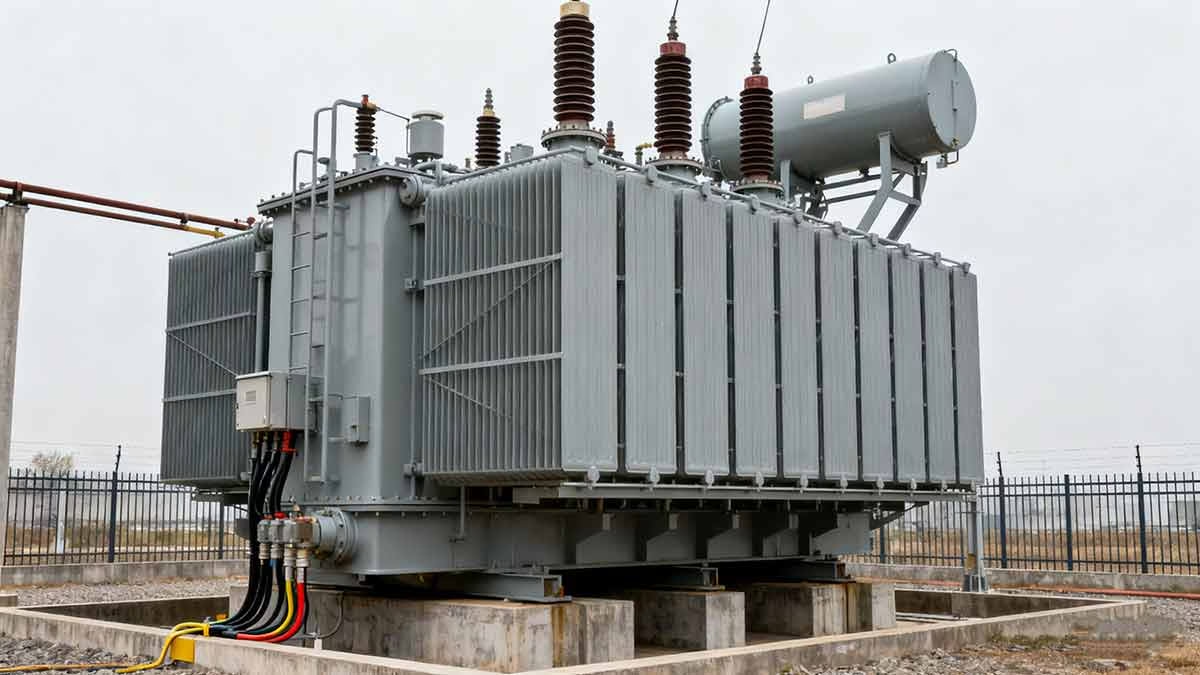
- Substation Transformers: Reduce transmission voltage (115–765 kV) to distribution voltage (4–35 kV). These large units are equipped with tap changers to maintain stability across wide load variations.
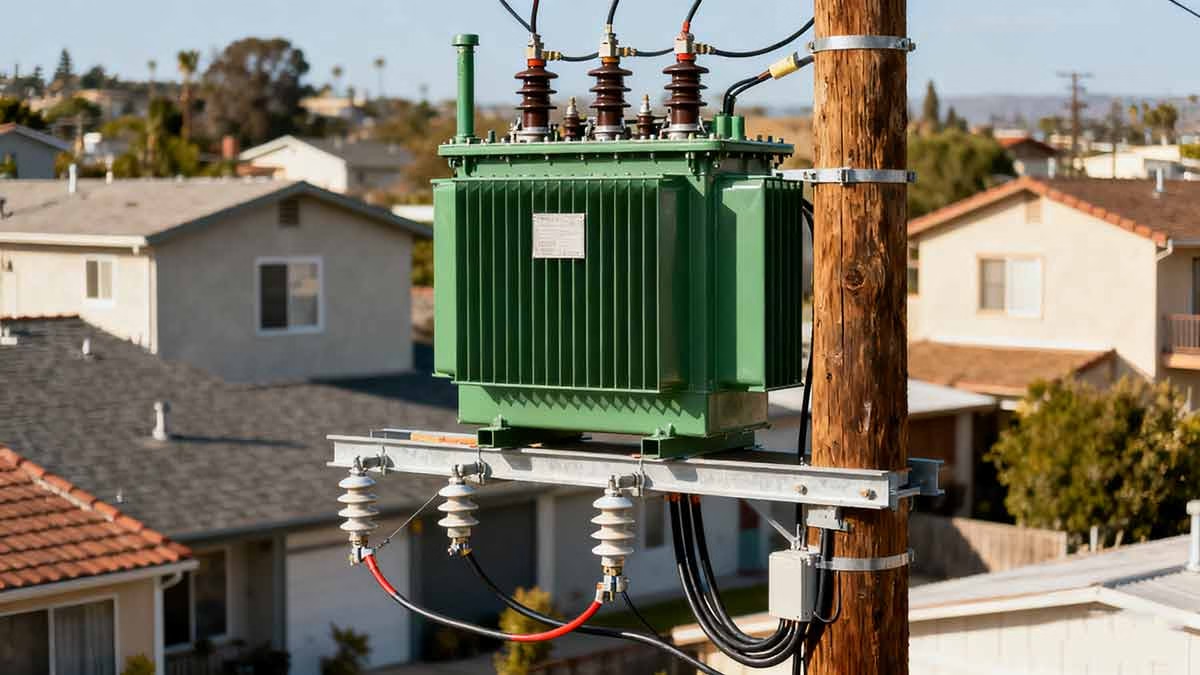
- Distribution Transformers: Further reduce voltage to consumer-friendly levels—120/240 V for residential use (North America) or 230 V for commercial/industrial applications (Europe, Asia). These are the pole-mounted or pad-mounted units you see in neighborhoods.
The Transformation Process: A Closer Look
- Primary Excitation: AC power flows into the primary coil, creating a fluctuating magnetic field.
- Flux Concentration: The core directs the magnetic field through the secondary coil.
- Voltage Induction: The secondary coil’s winding count determines output voltage. More turns = higher voltage (step-up); fewer turns = lower voltage (step-down).
- Efficiency Optimization: Modern transformers minimize losses through high-quality core materials, optimized coil design, and advanced cooling—achieving efficiencies of 99% or higher.
Losses & How to Mitigate Them
Even the most efficient transformers experience minor energy losses:
| Loss Type | Cause | Mitigation Strategy |
|---|---|---|
| Core Losses | Hysteresis (magnetic field reversal) and eddy currents | Use amorphous metal cores or laminated silicon steel |
| Copper Losses | Resistance in coil windings | Use high-conductivity copper or aluminum windings |
| Stray Losses | Leakage flux (magnetic field escaping the core) | Add shielding or optimize core geometry |
Real-World Applications Beyond Grid Distribution
Voltage transformation isn’t limited to power grids—transformers play critical roles in:
- Renewable Energy: Step-up transformers for solar/wind farms; step-down for battery storage systems.
- Electric Vehicles: On-board transformers convert grid voltage to 400/800 V for battery charging.
- Industrial Machinery: Custom step-down transformers for motors, welders, and precision equipment.
- Electronics: Tiny transformers in phone chargers and power adapters convert 120/230 V to low voltages (5–12 V).
As grids integrate more renewable energy and electrification expands, voltage transformation becomes even more critical. Smart transformers with real-time voltage adjustment and bidirectional power flow capabilities are now enabling more flexible, resilient power systems—ensuring reliable energy delivery for decades to come.
Types of Transformers: Designed for Diverse Applications
Transformers aren’t one-size-fits-all—they come in a wide range of designs, each engineered for specific applications. From massive substation units powering cities to tiny components in your laptop charger, every transformer type is tailored to meet unique voltage, capacity, and environmental requirements.
Understanding the different transformer types helps ensure you select the right solution for your project—whether you’re building a solar farm, upgrading an industrial facility, or designing electronic devices. Below is a breakdown of the most common types and their key use cases.
Power Transformers: Bulk Energy Transfer
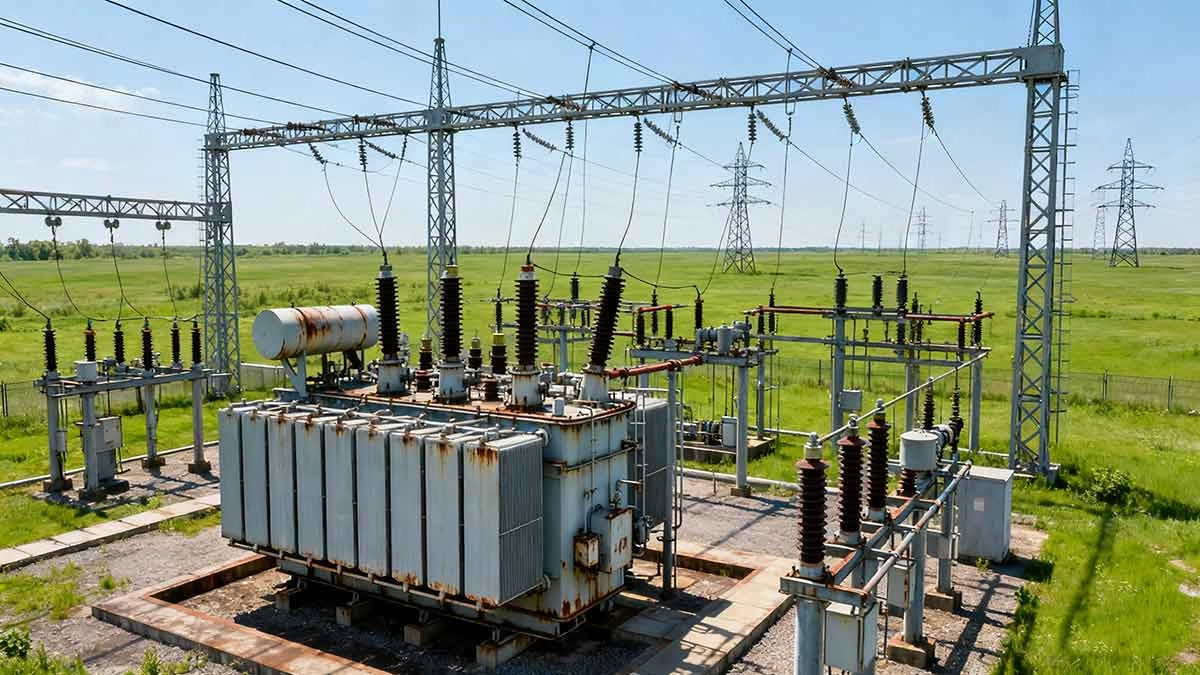
Power transformers are the heavyweights of the industry, handling large-scale energy transfer between grid stages:
- Step-Up Power Transformers: Located at power plants and renewable energy facilities, these units boost voltage from generators (10–25 kV) to transmission levels (115–765 kV). Capacities range from 50 MVA to 1,000+ MVA.
- Step-Down Power Transformers: Found in substations, they reduce transmission voltage to distribution levels (4–35 kV). Equipped with on-load tap changers, they maintain stable voltage despite fluctuating loads.
I once oversaw the installation of a 600 MVA step-down transformer at a downtown substation—its footprint was the size of a small house, and it required specialized transport and lifting equipment.
Distribution Transformers: Local Power Delivery
These are the most visible transformers, responsible for delivering power to homes and businesses:
- Pole-Mounted: Installed on utility poles, they’re common in suburban and rural areas. Capacities range from 10–100 kVA, with output voltages of 120/240 V or 208Y/120 V.
- Pad-Mounted: Ground-installed in locked enclosures, they’re used in urban areas, industrial parks, and neighborhoods with underground power lines. Capacities up to 500 kVA, ideal for commercial or multi-family buildings.
- Vault-Mounted: Underground transformers for dense urban environments (e.g., downtowns) where above-ground space is limited. Designed to withstand flooding and moisture.
Instrument Transformers: Precision Measurement & Protection
These specialized transformers enable safe monitoring and control of high-voltage systems:
- Current Transformers (CTs): Step down high currents (up to 10,000 A) to measurable levels (5 A or 1 A) for meters and protective relays. Critical for detecting overloads or short circuits.
- Voltage Transformers (VTs)/Potential Transformers (PTs): Reduce high voltages (up to 765 kV) to low, safe levels (120 V) for monitoring and metering. Ensure accurate voltage measurement without exposing equipment to dangerous levels.
Special-Purpose Transformers
These transformers serve niche industrial, commercial, or electronic applications:
- Isolation Transformers: Provide electrical separation between input and output, preventing ground loops and protecting sensitive equipment (e.g., medical devices, laboratory instruments).
- Autotransformers: Use a single winding for both primary and secondary coils, making them smaller, lighter, and more efficient than traditional transformers. Ideal for applications where voltage adjustment is minimal (e.g., 208 V → 240 V).
- Three-Phase Transformers: Designed for industrial power systems, they handle three-phase AC (common in factories, data centers, and large commercial buildings). More efficient than three single-phase transformers for the same capacity.
- Dry-Type Transformers: Encapsulated in resin, they’re fire-resistant and suitable for indoor use (e.g., hospitals, high-rises, data centers) where oil-filled transformers pose a hazard.
Electronic Transformers: Miniature Power Solutions
These tiny transformers power consumer electronics and low-voltage devices:
- Flyback Transformers: Used in switched-mode power supplies (SMPS) for phones, laptops, and TVs. Provide isolated low-voltage power (5–24 V) from grid voltage.
- Audio Transformers: Optimize signal transfer in audio equipment (speakers, amplifiers) and telecommunications systems. Reduce noise and improve sound quality.
- Pulse Transformers: Transmit digital pulses in high-speed circuits (e.g., computer motherboards, IoT devices) while providing electrical isolation.
Emerging Transformer Technologies
As power systems evolve, new transformer types are emerging to meet modern demands:
- Solid-State Transformers (SSTs): Combine power electronics with traditional transformer principles, enabling bidirectional power flow, voltage regulation, and integration with renewable energy.
- Superconducting Transformers: Use superconducting materials for windings, reducing losses to near-zero. Ideal for high-capacity applications but currently limited by cost.
- Smart Transformers: Equipped with IoT sensors and AI-driven controls, they enable predictive maintenance, real-time load balancing, and integration with smart grids.
Selecting the right transformer depends on factors like voltage requirements, capacity, environment (indoor/outdoor), safety regulations, and long-term efficiency goals. By matching the transformer type to your specific application, you ensure optimal performance, reliability, and cost-effectiveness.
The Role of Transformers in Modern Power Systems: Efficiency, Safety & Innovation
In an era of growing energy demand, renewable integration, and smart grid development, transformers are more critical than ever. They’re no longer just passive voltage converters—modern transformers are intelligent, efficient, and adaptable, driving the transition to more sustainable, resilient power systems.
Today’s transformers play three core roles: optimizing energy efficiency to reduce waste, ensuring safety for personnel and equipment, and enabling technological advancements like renewable energy integration and smart grid operation. Their evolution reflects the changing needs of our electrified world.
Efficiency: Reducing Energy Waste at Every Stage
Transformers are among the most efficient electrical devices, with modern models achieving efficiencies of 99% or higher. Even small improvements in efficiency translate to massive energy savings at scale:
- Advanced Core Materials: Amorphous metal cores reduce core losses by 30–70% compared to traditional silicon steel. A single 500 kVA amorphous core transformer saves ~10,000 kWh annually—enough to power a home for a year.
- Optimized Winding Designs: High-conductivity copper windings and improved insulation reduce copper losses, while optimized coil geometry minimizes leakage flux.
- Energy Efficiency Standards: Global standards like IEEE C57.120 and IEC 60076 drive manufacturers to produce more efficient transformers, with premium models exceeding minimum requirements by 5–10%.
I led a project to replace 50 aging transformers in a city’s distribution network with high-efficiency models. The upgrade reduced annual energy losses by 450,000 kWh and cut the city’s carbon footprint by 300 tons.
Safety: Protecting People, Equipment & the Environment
Modern transformers incorporate multiple safety features to mitigate risks:
- Fire Safety: Dry-type transformers use non-flammable resin insulation, while oil-filled models use biodegradable esters instead of mineral oil—reducing fire and environmental hazards.
- Fault Detection: Smart sensors monitor temperature, pressure, and oil quality, triggering alarms or automatic shutdowns before faults escalate. Buchholz relays in oil-filled transformers detect gas buildup from internal arcing, preventing explosions.
- Arc Flash Mitigation: Improved insulation and rapid fault isolation systems reduce arc flash risk, protecting maintenance personnel.
- Environmental Protection: Sealed enclosures prevent oil leaks, and recyclable materials (steel, copper) minimize environmental impact at end-of-life.
Innovation: Enabling Smart Grids & Renewable Energy
Transformers are at the forefront of grid modernization, enabling key technological advancements:
- Renewable Energy Integration: Bidirectional transformers handle power flow from solar/wind farms to the grid and vice versa, managing the variable output of renewable sources.
- Smart Grid Connectivity: IoT-enabled transformers transmit real-time data on load, temperature, and performance to grid management systems. This enables predictive maintenance, load balancing, and outage prevention.
- Electric Vehicle (EV) Charging: Specialized transformers at charging stations convert grid voltage to 400/800 V, supporting fast charging while avoiding grid overloads.
- Microgrid Support: Transformers enable standalone microgrids (critical for remote areas or disaster recovery) by regulating voltage between distributed generation, storage, and loads.

Traditional vs. Modern Transformers: A Comparison
| Aspect | Traditional Transformers | Modern Smart Transformers |
|---|---|---|
| Efficiency | 95–98% | 98–99.5% |
| Monitoring | Manual, periodic checks | Real-time sensor data + AI analytics |
| Control | Fixed voltage output | Dynamic voltage regulation |
| Grid Integration | Passive | Active (bidirectional power flow) |
| Maintenance | Reactive (fix after failure) | Predictive (maintain before failure) |
| Safety Features | Basic (fuses, pressure relief) | Comprehensive (arc flash mitigation, fault detection) |
Future Trends Shaping Transformer Technology
The transformer industry continues to innovate, with three key trends leading the way:
- Digitalization: AI-driven analytics and digital twins (virtual replicas of transformers) enable predictive maintenance and performance optimization.
- Electrification: As buildings, transportation, and industry electrify, transformers will need to handle higher loads and more diverse applications (e.g., EV charging, heat pumps).
- Sustainability: Manufacturers are focusing on eco-friendly materials, recyclable designs, and low-loss technologies to reduce the carbon footprint of transformers throughout their lifecycle.
Best Practices for Implementing Modern Transformers
To maximize the value of transformers in your power system:
- Prioritize Lifecycle Cost: While high-efficiency models have higher upfront costs, they deliver significant savings in energy and maintenance over 25–40 years.
- Embrace Smart Technology: IoT-enabled transformers provide visibility into system performance, helping you avoid unplanned downtime.
- Plan for Growth: Select transformers with 10–20% extra capacity to accommodate future load increases (e.g., new equipment, EV charging).
- Consider Environmental Conditions: Choose transformers rated for your environment—whether it’s extreme temperatures, coastal salt spray, or indoor fire safety requirements.
Transformers are the unsung heroes of our electrified world, and their evolution is critical to building a more efficient, sustainable, and resilient energy future. As power systems become more complex, transformers will remain at their core—adapting to new technologies and demands while delivering the reliable voltage conversion that powers our daily lives.

Conclusion
Electric transformers are the backbone of modern power systems, enabling efficient long-distance energy transmission, safe consumer use, and the integration of emerging technologies. From the physics of electromagnetic induction to the latest smart grid innovations, transformers have evolved from simple voltage converters to intelligent, indispensable components of our energy infrastructure.
As we move toward a more electrified, sustainable world, transformers will play an even greater role—powering renewable energy, supporting smart grids, and meeting the growing demands of homes, businesses, and industry. Their reliability, efficiency, and adaptability make them essential to building a resilient energy future.
Whether you’re designing a power system, upgrading existing infrastructure, or simply curious about how electricity reaches your home, understanding transformer technology is key to making informed decisions. With ongoing innovations in materials, digitalization, and sustainability, transformers will continue to shape our energy landscape for decades to come.