
Struggling to select the ideal pole transformer for your electrical grid? You’re not alone—grid engineers, project managers, and utility professionals often face uncertainty when matching transformer types to specific power needs. The wrong choice can compromise efficiency, reliability, and long-term cost-effectiveness.
Selecting the right pole transformer hinges on your grid’s voltage specifications, load capacity, application context, and environmental conditions. Options span single-phase and three-phase models, conventional and smart designs, step-up and step-down configurations, and specialized solutions like autotransformers and padmount units. Each type is engineered to address unique challenges in power distribution, from residential neighborhoods to industrial complexes.
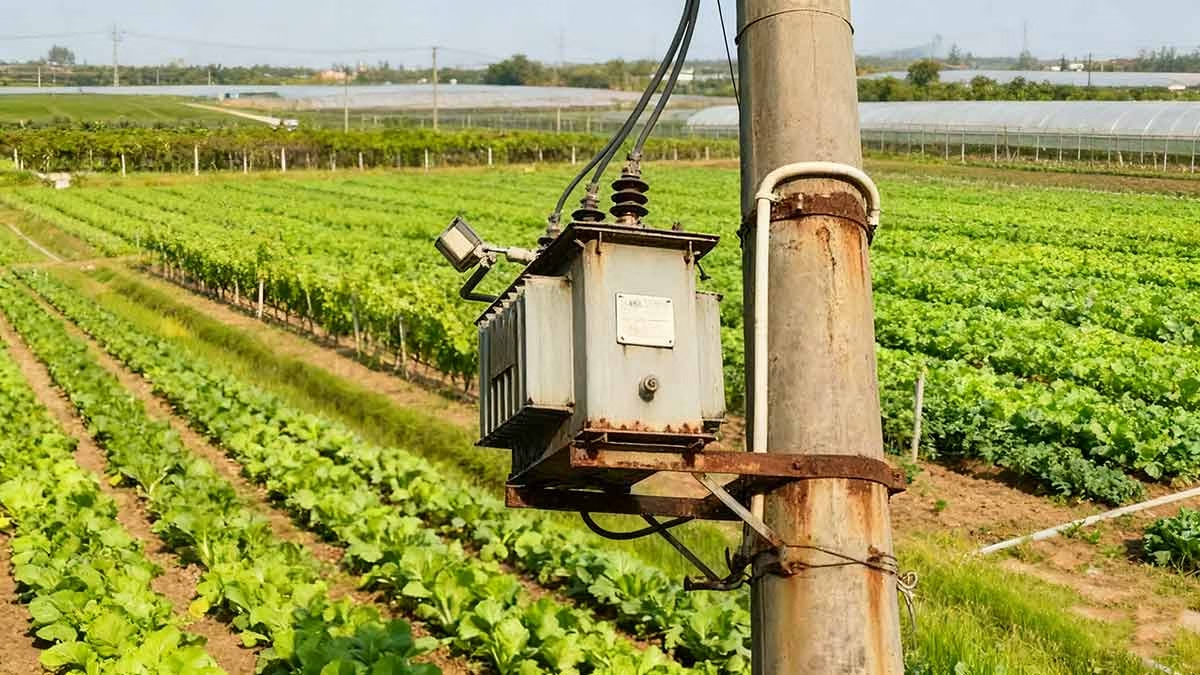
In this guide, we demystify pole transformer selection, exploring key types, their features, real-world applications, and critical decision factors. Whether you’re upgrading an existing grid or designing a new system, this resource will help you make an informed choice.
Contents
hide
Single-Phase vs. Three-Phase Pole Transformers
Ever wondered why some grid systems use different transformer configurations? The choice between single-phase and three-phase pole transformers directly impacts power delivery efficiency, load handling, and infrastructure costs—making it a foundational decision for any distribution project.
Single-phase transformers are engineered for low-power demand scenarios, while three-phase models excel in high-capacity applications. The split comes down to how each design distributes electrical load, integrates with existing infrastructure, and supports current and future power needs.
Single-Phase Pole Transformers
- Design Core: Features two windings (primary and secondary) for straightforward voltage transformation. Its simplified structure reduces complexity and cost.
- Ideal Applications: Residential areas, rural communities, and small businesses with modest power demands (e.g., homes, small retail stores, farmsteads).
- Key Advantages: Cost-effective for low-load scenarios, easy to install and maintain, and well-suited for unbalanced load profiles common in residential settings.
Three-Phase Pole Transformers
- Design Core: Incorporates three sets of windings, enabling it to handle higher power loads with greater efficiency. The balanced power delivery minimizes energy loss.
- Ideal Applications: Industrial facilities, large commercial buildings (e.g., malls, office parks), urban power grids, and areas with heavy machinery or high-density electrical use.
- Key Advantages: Superior efficiency for large loads, stable power delivery for sensitive equipment, and scalability to support growing energy demands.
| Feature | Single-Phase | Three-Phase |
|---|---|---|
| Power Capacity | Lower (up to 50 kVA typical) | Higher (50–500 kVA+) |
| Efficiency Profile | Optimal for small, scattered loads | Superior for concentrated, high loads |
| Initial Cost | More budget-friendly | Higher upfront, but cost-effective long-term |
| Physical Footprint | Compact, lightweight | Larger, heavier |
| Typical Voltage Output | 120/240V (residential standard) | 208/120V or 480/277V (commercial/industrial) |
| Load Compatibility | Unbalanced loads (e.g., household appliances) | Balanced loads (e.g., industrial machinery) |
Real-world application matters: For a rural community with scattered homes and low power demands, single-phase transformers delivered reliable service at a fraction of the cost of three-phase alternatives. Conversely, a new industrial park required three-phase units to support manufacturing equipment—cutting energy losses by 18% compared to a single-phase setup.
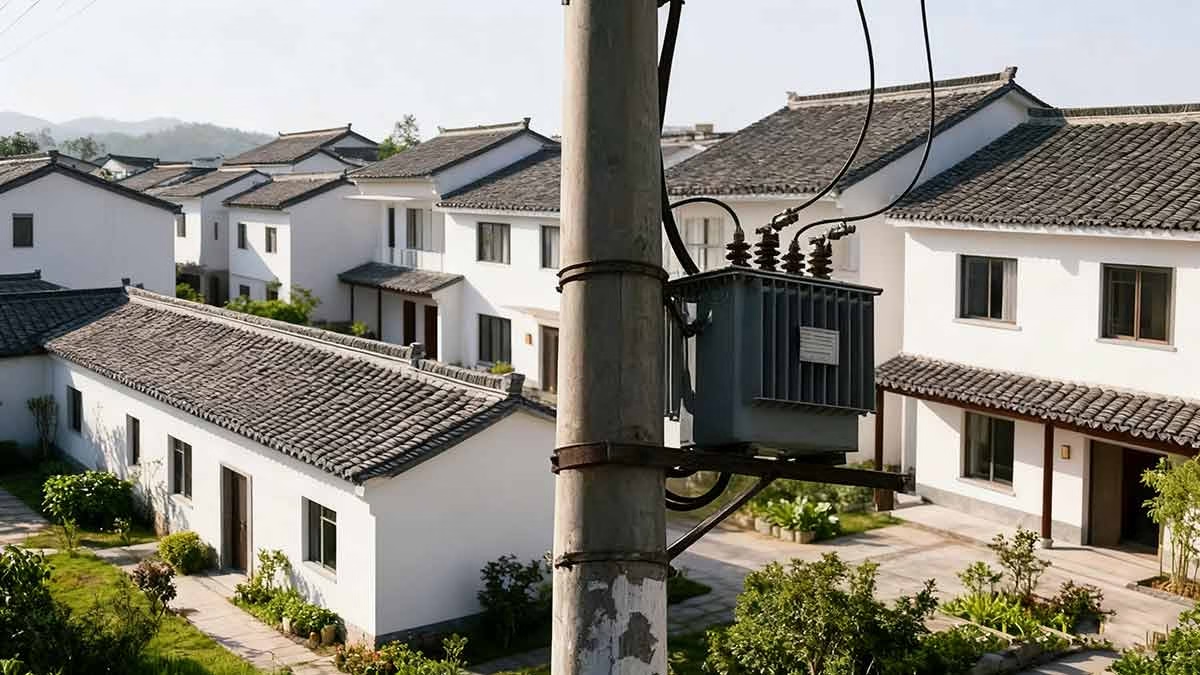
The decision hinges on future-proofing: If your area has plans for commercial or industrial growth, three-phase infrastructure avoids costly retrofits later. For stable, low-demand regions, single-phase remains the practical choice.
Conventional and Smart Pole Transformers
Should you stick with tried-and-true conventional transformers or invest in smart technology for your grid? The answer depends on your grid’s complexity, power quality goals, and long-term operational needs. Conventional models excel in simplicity and reliability, while smart transformers unlock advanced monitoring and adaptability for modern grids.
Conventional Pole Transformers
- Core Features: Focuses solely on voltage transformation with a passive design. No built-in monitoring or communication capabilities—relying on manual inspections for maintenance.
- Key Advantages: Time-tested reliability, lower initial cost, and straightforward maintenance (no specialized technical expertise required).
- Best For: Grids with stable, predictable power demands, remote areas with limited communication infrastructure, or projects with tight budget constraints.
- Limitations: No real-time performance data, requires manual intervention for voltage adjustments, and limited adaptability to changing grid conditions.
Smart Pole Transformers
- Core Features: Integrates IoT sensors, real-time monitoring, automatic voltage regulation, and two-way communication with grid control centers. Designed for dynamic, data-driven grid management.
- Key Advantages: Proactive fault detection (reducing outage times by up to 40%), dynamic load balancing, seamless integration with renewable energy sources, and predictive maintenance alerts.
- Best For: Urban grids, areas with fluctuating power demands, systems incorporating solar/wind energy, or projects prioritizing power quality and efficiency.
- Considerations: Higher upfront investment, requires cybersecurity measures to protect data, and needs technical expertise for maintenance.
| Feature | Conventional Transformers | Smart Transformers |
|---|---|---|
| Monitoring Capability | Manual inspections only | 24/7 real-time data collection |
| Voltage Regulation | Fixed or manual tap adjustments | Automatic, dynamic regulation |
| Communication | None | Two-way connectivity with control centers |
| Fault Detection | Reactive (detected post-outage) | Proactive (predictive alerts) |
| Renewable Integration | Limited compatibility | Advanced load balancing for variable inputs |
| Maintenance Needs | Simpler, scheduled inspections | Complex, but less frequent (data-driven) |
| Lifespan | 25–30 years (mechanical durability) | 20–25 years (electronic component limits) |
A suburban grid upgrade illustrates the difference: Switching from conventional to smart transformers reduced outage durations from 4 hours to 30 minutes on average. The real-time data also identified load hotspots, allowing for targeted infrastructure improvements that cut energy waste by 12%.
For remote areas with poor connectivity, conventional transformers remain the practical choice—their simplicity avoids the frustration of underutilized smart features. For modern, connected grids, the long-term efficiency and reliability gains of smart models justify the upfront cost.
Step-Up and Step-Down Pole Transformers
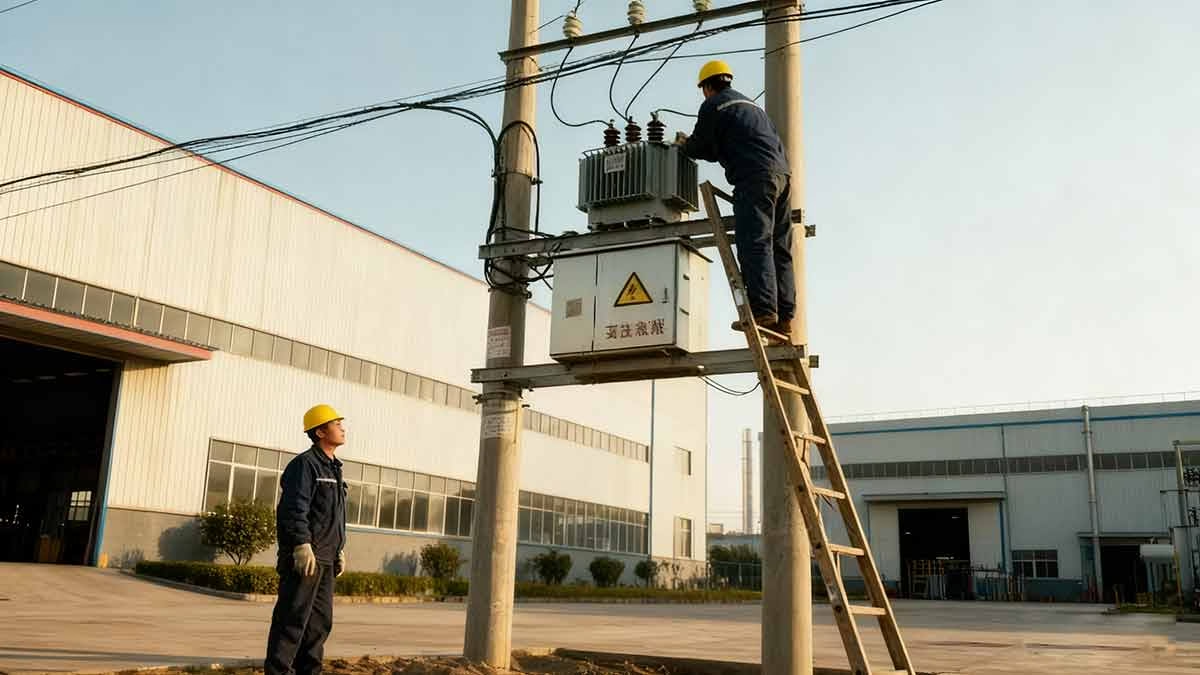
Voltage transformation is the backbone of power distribution—and step-up and step-down pole transformers serve opposite but equally critical roles. Step-up transformers boost voltage for long-distance transmission, while step-down models reduce it to safe, usable levels for end-users. The right choice depends on the transformer’s position in the grid and your voltage requirements.
Step-Up Pole Transformers
- Primary Function: Increases voltage from generation or local production levels to high-transmission voltages. This minimizes energy loss during long-distance transport (power loss decreases as voltage increases).
- Key Design: Secondary windings have more turns than primary windings, amplifying voltage while reducing current.
- Ideal Applications: Power plants (connecting to transmission lines), renewable energy installations (e.g., solar farms, wind parks), and substation inputs.
- Real-World Example: A 50MW solar farm generates power at 480V—step-up transformers boost it to 69kV for efficient transmission to the regional grid, cutting line losses by 60%.
Step-Down Pole Transformers
- Primary Function: Reduces high transmission/distribution voltages to low, safe levels for residential, commercial, or industrial use.
- Key Design: Primary windings have more turns than secondary windings, lowering voltage while increasing current for end-use compatibility.
- Ideal Applications: Substation outputs, neighborhood distribution poles, and industrial facilities (reducing grid voltage to equipment-specific levels).
- Real-World Example: A residential area receives 13.8kV from the grid—step-down transformers reduce it to 120/240V, making it safe for household appliances, lighting, and EV chargers.
| Feature | Step-Up Transformers | Step-Down Transformers |
|---|---|---|
| Core Purpose | Increase voltage for transmission | Decrease voltage for end-use |
| Typical Location | Generation sites, renewable farms | Neighborhoods, commercial areas, substations |
| Winding Ratio | Secondary > Primary | Primary > Secondary |
| Current Impact | Decreases current (reduces line loss) | Increases current (matches end-use needs) |
| Safety Focus | Handles high voltages (engineered for utility use) | Delivers safe, regulated voltages for public use |
| Size Profile | Larger (industrial-grade) | Varies (compact for residential, larger for industrial) |
The two types work in tandem: A complete grid uses step-up transformers to move power from plants to substations, then step-down models to distribute it to homes and businesses. For example, a cross-city power line carries 138kV—step-down transformers at neighborhood substations reduce it to 12.47kV, and pole-mounted step-down units further lower it to 120/240V for residential use.
Specialized Pole Transformers: Autotransformers and Padmounts
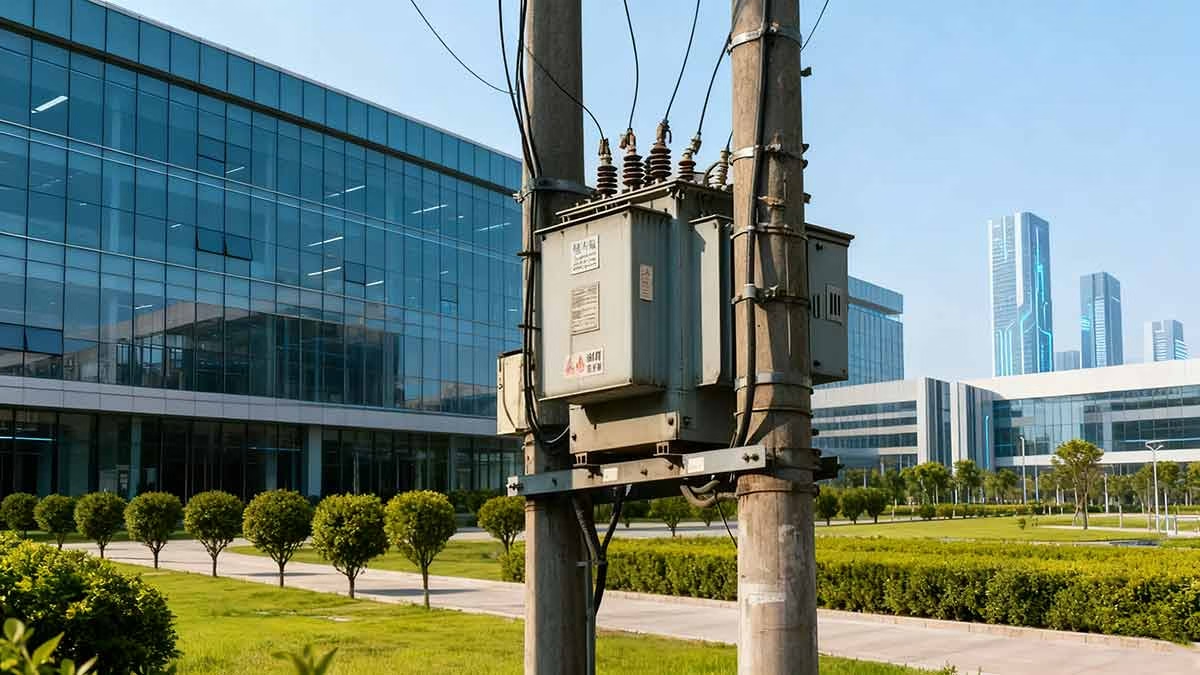
Standard transformers don’t always fit unique grid challenges—whether you need compact voltage adjustment, underground distribution, or specialized load handling. Autotransformers and padmount transformers offer tailored solutions for these niche scenarios, combining efficiency with design flexibility.
Autotransformers
- Design Core: Uses a single winding (shared between primary and secondary circuits) instead of two separate windings. This simplifies voltage adjustment for small to moderate changes.
- Key Advantages: More efficient for voltage shifts of 20% or less, smaller and lighter than traditional transformers, and lower cost for equivalent power ratings.
- Ideal Applications: Voltage regulation in distribution grids, interconnecting systems with slightly different voltages (e.g., 240V to 208V), and motor starting applications.
- Consideration: Offers less electrical isolation between circuits—less suitable for applications requiring strict separation.
Padmount Transformers
- Design Core: Ground-mounted (instead of pole-mounted) and enclosed in a weatherproof steel cabinet. Available in single or three-phase configurations.
- Key Advantages: Aesthetically discreet (blends with urban landscapes), safer for public areas (locked enclosure prevents unauthorized access), and ideal for underground distribution systems.
- Ideal Applications: Urban/suburban neighborhoods, commercial districts, industrial parks, and areas where overhead lines are prohibited (e.g., historic districts, waterfronts).
- Consideration: Higher upfront cost due to enclosure and installation requirements, may need specialized equipment for maintenance.
| Feature | Autotransformers | Padmount Transformers |
|---|---|---|
| Primary Use | Small voltage adjustments | Underground distribution, public areas |
| Size & Weight | Compact, lightweight | Larger, ground-mounted cabinet |
| Efficiency | High (98–99%) for small voltage shifts | Comparable to standard transformers (95–98%) |
| Cost Profile | Lower for equivalent power | Higher (enclosure + installation) |
| Safety Design | Less isolation between circuits | Locked, weatherproof enclosure (high public safety) |
| Installation Flexibility | Pole or pad-mounted | Ground-mounted only |
Specialized transformers solve unique problems: A historic district prohibited overhead lines—padmount transformers enabled underground distribution while preserving the area’s aesthetic. An industrial facility needed to connect two systems (240V and 208V)—an autotransformer provided efficient voltage adjustment without the footprint of a traditional two-winding unit.
When to choose specialized over standard: Opt for autotransformers if you need small voltage shifts and space savings. Choose padmounts for underground systems, public safety priorities, or aesthetic constraints.
Environmental Considerations: Selecting Pole Transformers for Different Climate Zones
A transformer’s performance and lifespan depend heavily on its ability to withstand local environmental conditions. Hot and humid regions, cold climates, coastal areas, and high-altitude locations all present unique challenges—from corrosion to overheating to insulation degradation. Selecting a climate-adapted pole transformer ensures reliability and avoids premature failure.
Hot & Humid Climates
- Challenges: High ambient temperatures (up to 50°C), moisture buildup, and accelerated insulation breakdown.
- Solutions: Enhanced cooling systems (forced air or oil circulation), heat-resistant insulation materials (Class H or higher), and moisture-wicking components to prevent condensation.
- Regions: Tropical areas, coastal lowlands, and desert regions with high humidity.
Cold Climates
- Challenges: Extreme low temperatures (-30°C or lower), risk of insulating oil freezing, and thermal stress from temperature swings.
- Solutions: Low-temperature-grade insulating oil (freeze point ≤ -40°C), built-in heaters for oil reservoirs, and reinforced tank designs to withstand thermal expansion/contraction.
- Regions: Arctic areas, northern temperate zones, and high-altitude cold zones.
Coastal & High-Pollution Areas
- Challenges: Salt spray (coastal) or industrial pollutants cause corrosion, insulator flashover, and metal degradation.
- Solutions: Corrosion-resistant materials (stainless steel tanks, hot-dip galvanized components), silicone rubber insulators (resistant to pollution), and sealed enclosures to prevent moisture ingress.
- Regions: Coastal communities, industrial corridors, and urban areas with high air pollution.
High-Altitude Regions
- Challenges: Thin air reduces cooling efficiency, increased risk of corona discharge (electrical arcing), and lower air dielectric strength.
- Solutions: Derated capacity calculations (adjust for lower air density), enhanced insulation systems, and corona-resistant bushings.
- Regions: Mountainous areas, plateaus, and regions above 1,000 meters.
| Climate Zone | Key Design Adaptations | Maintenance Priorities |
|---|---|---|
| Hot & Humid | Forced cooling, heat-resistant insulation | Insulation checks, moisture removal |
| Cold | Low-temperature oil, built-in heaters | Oil condition monitoring, heater function checks |
| Coastal/High-Pollution | Corrosion-resistant materials, pollution-grade insulators | Corrosion inspections, insulator cleaning |
| High-Altitude | Derated capacity, enhanced insulation | Cooling system checks, corona discharge monitoring |
A coastal project illustrates the importance of climate adaptation: Standard transformers failed within 5 years due to salt corrosion—replacing them with corrosion-resistant models extended lifespan to 25 years. In a high-altitude mining operation, transformers with derated capacity and enhanced insulation avoided overheating and corona discharge issues common with standard units.
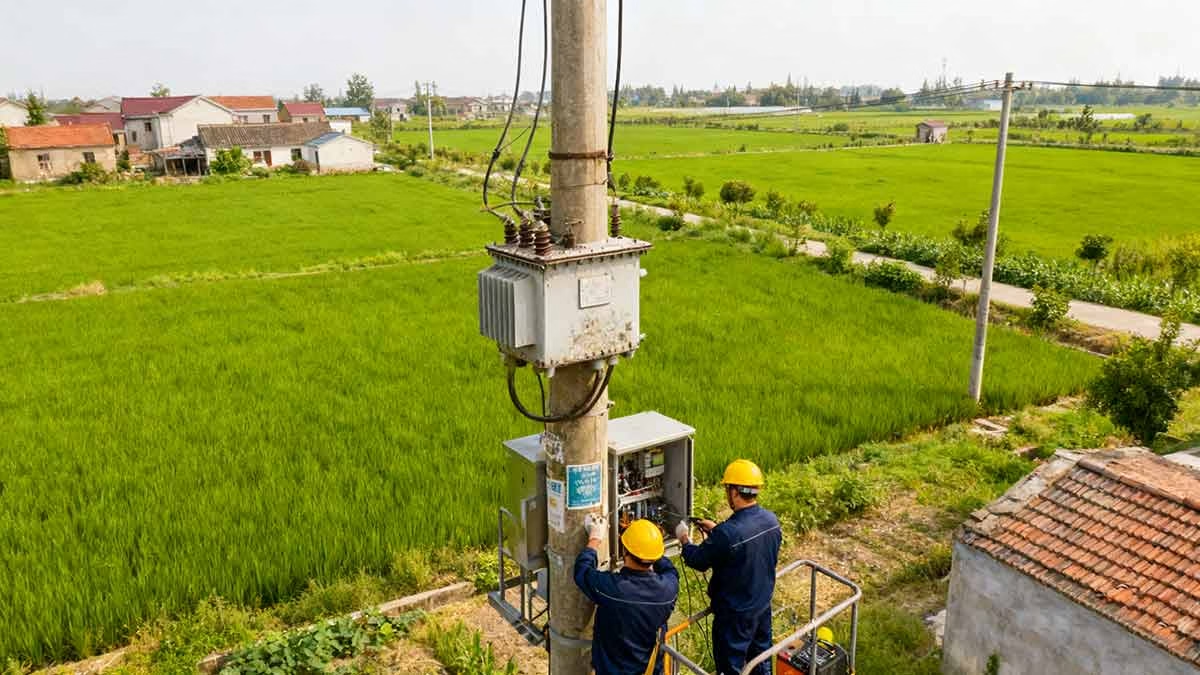
Key climate-focused questions:
- What is the full temperature range (not just averages) the transformer will face?
- Does the area have high humidity, salt exposure, or industrial pollutants?
- Is the site above 1,000 meters (requiring altitude derating)?
- Are there seasonal weather extremes (e.g., monsoons, blizzards)?
Investing in climate-adapted design upfront reduces maintenance costs and extends transformer lifespan by 50–100% compared to one-size-fits-all models.
Conclusion
Choosing the right pole transformer requires balancing technical requirements, application context, and environmental conditions. Single-phase models suit low-load residential/rural settings, while three-phase units excel in high-capacity commercial/industrial grids. Conventional transformers offer simplicity and cost savings for stable demands, while smart models deliver data-driven efficiency for modern grids. Step-up and step-down transformers play complementary roles in transmission and distribution, and specialized autotransformers/padmounts solve niche challenges.
Environmental adaptation is non-negotiable—climate-specific designs ensure longevity in hot, cold, coastal, or high-altitude regions. By aligning transformer type with your grid’s voltage needs, load profile, and long-term growth plans, you’ll achieve efficient, reliable power distribution that minimizes costs and maximizes uptime.
For personalized guidance on selecting the perfect pole transformer for your project, consult with a grid infrastructure specialist to assess your unique requirements and local conditions.