
A substation is a critical power system hub that converts voltage, distributes electrical energy, controls power flow, and connects multi-voltage transmission networks—with transformers as its core equipment. CHH Power integrates full-series substation equipment (transformers, instrument transformers, switchgear, lightning protection devices) to deliver safe, stable power solutions. Below is a systematic breakdown of key equipment, tailored to CHH’s product design and operational standards.
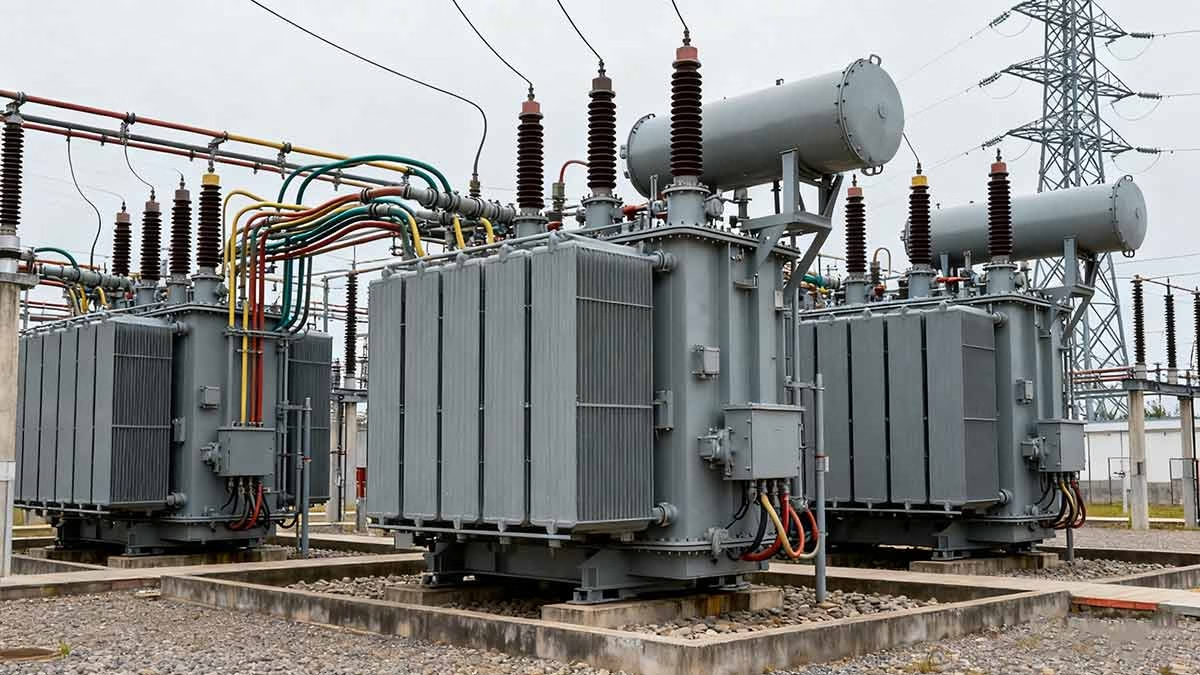
1. Core Equipment: Transformers
Transformers are the backbone of CHH Power’s substations, responsible for voltage conversion and energy transmission.
1.1 Classification by Structure
- Two-winding transformers: CHH’s mainstream model for general scenarios, with separate primary and secondary windings.
- Three-winding transformers: Designed for multi-voltage output needs (e.g., industrial parks with diverse load requirements).
- Autotransformers: Compact, high-efficiency models for scenarios where primary and secondary voltages are close (e.g., regional power grid connections).
1.2 Classification by Function
- Step-up transformers: Used in power system transmission-end substations, boosting generator output voltage (3.15kV–15.75kV) to high-voltage levels (up to 500kV) for long-distance transmission.
- Step-down transformers: Deployed in receiving-end substations, reducing high transmission voltage to usable levels (10kV, 0.4kV) for end users.
1.3 Voltage Regulation Types
- No-load tap-changing transformers: Adjust taps when the transformer is de-energized—suitable for stable load scenarios (CHH’s standard configuration for general substations).
- On-load tap-changing transformers: Adjust taps during operation—ideal for fluctuating loads, ensuring voltage stability (CHH’s customized option for industrial/commercial substations).
1.4 Core Function
Convert high-voltage/large current from transmission lines to low-voltage/small current at a constant ratio, enabling safe measurement and reliable power distribution.
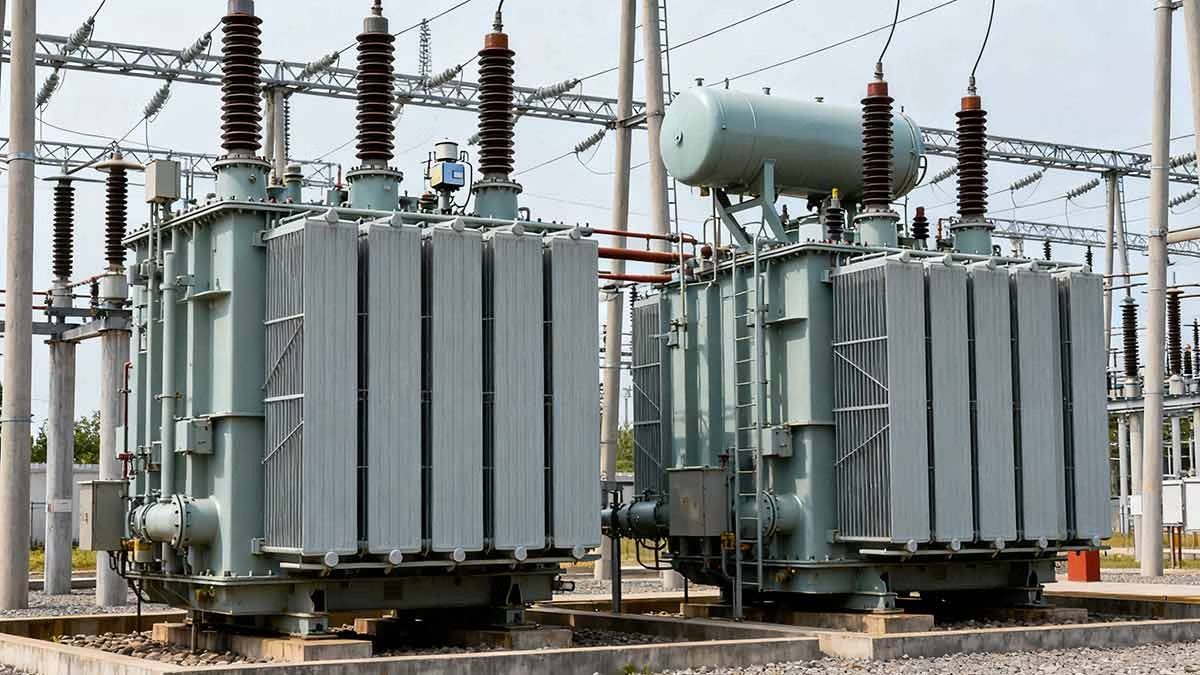
2. Instrument Transformers (Measurement Transformers)
Instrument transformers (voltage and current transformers) are key for substation measurement and protection, with a working principle similar to transformers.
2.1 Core Functions (CHH Power Standard Design)
- Electrical isolation: Separate measurement/protection equipment from the main circuit, preventing short-circuit currents from damaging devices or endangering personnel.
- Standardized conversion: Convert primary high voltage (to 100V or 100/√3V) and large current (to 5A), standardizing secondary measurement/protection equipment manufacturing.
- Reduced insulation requirements: Magnetic connection (no direct electrical contact) between primary and secondary sides lowers insulation demands for secondary equipment.
2.2 Voltage Transformers
- Specialize in voltage conversion, ensuring accurate measurement of primary circuit voltage for meters and protection devices.
- CHH’s voltage transformers adopt high-insulation materials to withstand transient overvoltage, complying with IEC 60044-2 standards.
2.3 Current Transformers
- Focus on current conversion, enabling safe monitoring of large primary currents.
- Critical Operational Note: The secondary winding is always close to short-circuit (connected to loads). Never open the secondary side—this generates dangerous high voltage, threatening equipment/personnel safety and damaging the transformer.
- CHH’s current transformers feature low error and high thermal stability, suitable for harsh substation environments.
3. Switchgear
Switchgear controls circuit on/off and isolates equipment, including circuit breakers, disconnect switches, load switches, and GIS (Gas Insulated Switchgear).
3.1 Circuit Breakers
- Functions: Open/close circuits under normal operation; automatically disconnect faulty equipment/lines via relay protection; support automatic reclosing.
- CHH’s Application: 220kV+ substations adopt air circuit breakers and sulfur hexafluoride (SF₆) circuit breakers for high breaking capacity and reliability.
3.2 Disconnect Switches (Knife Switches)
- Core Function: Isolate voltage during equipment/circuit maintenance to ensure safety.
- Critical Operation Rules: Cannot interrupt load/short-circuit current—must be used with circuit breakers.
- Power-off sequence: Close circuit breaker first → Open disconnect switch.
- Power-on sequence: Close disconnect switch first → Close circuit breaker.
- Incorrect operation causes equipment damage and personal injury (CHH Power mandates strict training for operators).
3.3 Load Switches
- Functions: Interrupt load current under normal operation; cannot interrupt fault current.
- Application: Used with high-voltage fuses for ≤10kV transformers or distribution cabinets (CHH’s preferred configuration for medium-voltage substations).
3.4 SF₆ Fully Sealed Composite Electrical Appliances (GIS)
- Structure: Integrates circuit breakers, disconnect switches, busbars, earthing switches, transformers, and bushings in enclosed chambers filled with SF₆ (insulating medium).
- Advantages: Compact structure, small footprint, weather resistance, long maintenance intervals, no electric shock/noise interference.
- Disadvantages: Higher cost, strict manufacturing/maintenance requirements.
- CHH’s Use Case: Deployed in space-constrained urban substations to reduce installation area.
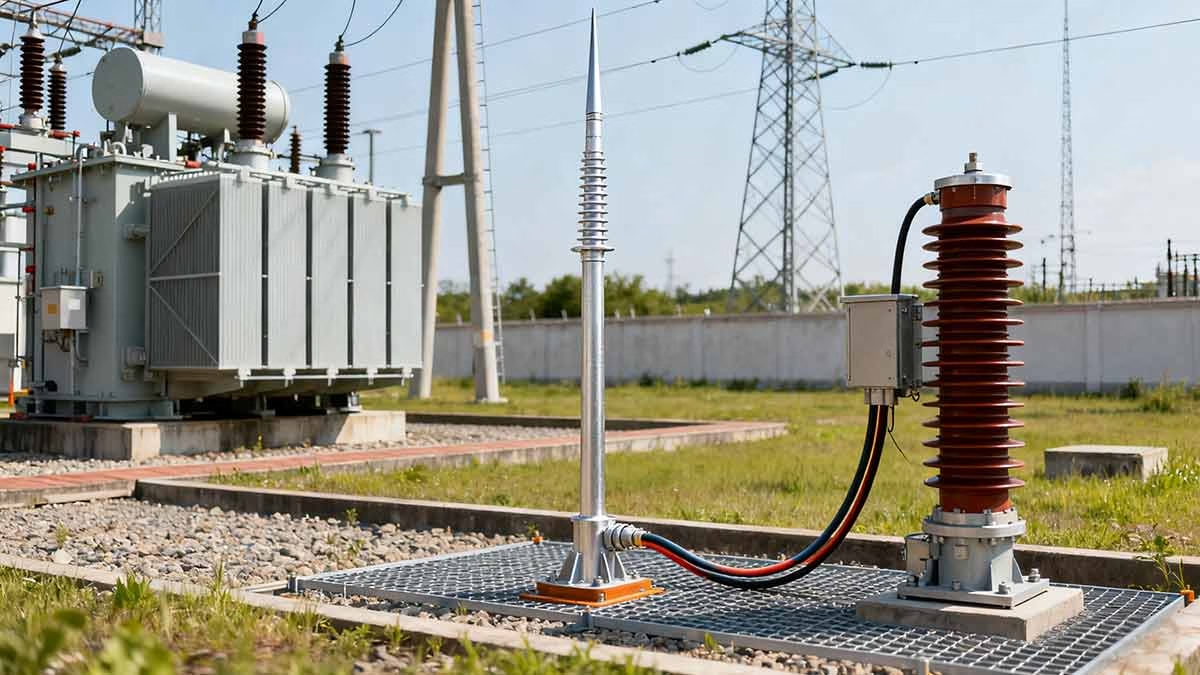
4. Lightning Protection Devices
Protect substations from lightning and overvoltage damage, including lightning rods and zinc oxide arresters.
4.1 Lightning Rods
- Function: Prevent direct lightning strikes on substations. Attract lightning, conduct lightning current to the ground, and shield key equipment.
- CHH’s Installation Standard: Installed on substation rooftops or open areas, with reliable grounding (resistance ≤4Ω) to ensure current dissipation.
4.2 Zinc Oxide Arresters (Mainstream Choice)
- Functions: Mitigate overvoltage from indirect lightning (along lines) or circuit breaker operation.
- Working Principle: Automatically discharges to the ground when overvoltage exceeds a threshold, reducing voltage to safe levels; automatically extinguishes the arc post-discharge to restore normal system operation.
- CHH’s Advantage: High response speed, low residual voltage, and long service life—compliant with IEC 60099-4 standards.
Key Compliance & Operational Notes
- All equipment must adhere to GB/T and IEC standards (CHH Power’s factory testing covers 100% of key performance indicators).
- Operators must complete professional training for switchgear operation (especially disconnect switches and GIS) to avoid accidents.
- Regular maintenance focuses on insulation performance (instrument transformers), contact tightness (switchgear), and arrester leakage current (lightning protection devices).