
It is critical to distinguish between box-type transformers (i.e., box-type substations) and standalone transformers—while the former integrates the latter as a core component, they serve entirely different roles. As a leading provider of integrated power solutions, CHH Power designs box-type substations as compact, prefabricated power distribution systems, and standalone transformers as specialized voltage-conversion devices. Below is a detailed breakdown of their definitions, compositions, functions, and relationships.
1. Box-Type Transformers (Box-Type Substations): Integrated Power Distribution Systems
Box-type transformers—officially called prefabricated box-type substations (not “standby substations” as mentioned; this is a misnomer)—are all-in-one power distribution equipment that combines multiple components to realize complete power conversion and distribution.
(1) Core Composition
CHH Power’s box-type substations integrate three key systems in a factory-prefabricated, fully enclosed steel structure box:
- High-Voltage Switchgear: Includes circuit breakers, isolating switches, and lightning arresters—responsible for receiving high-voltage grid power (e.g., 10kV, 35kV) and ensuring safe power input.
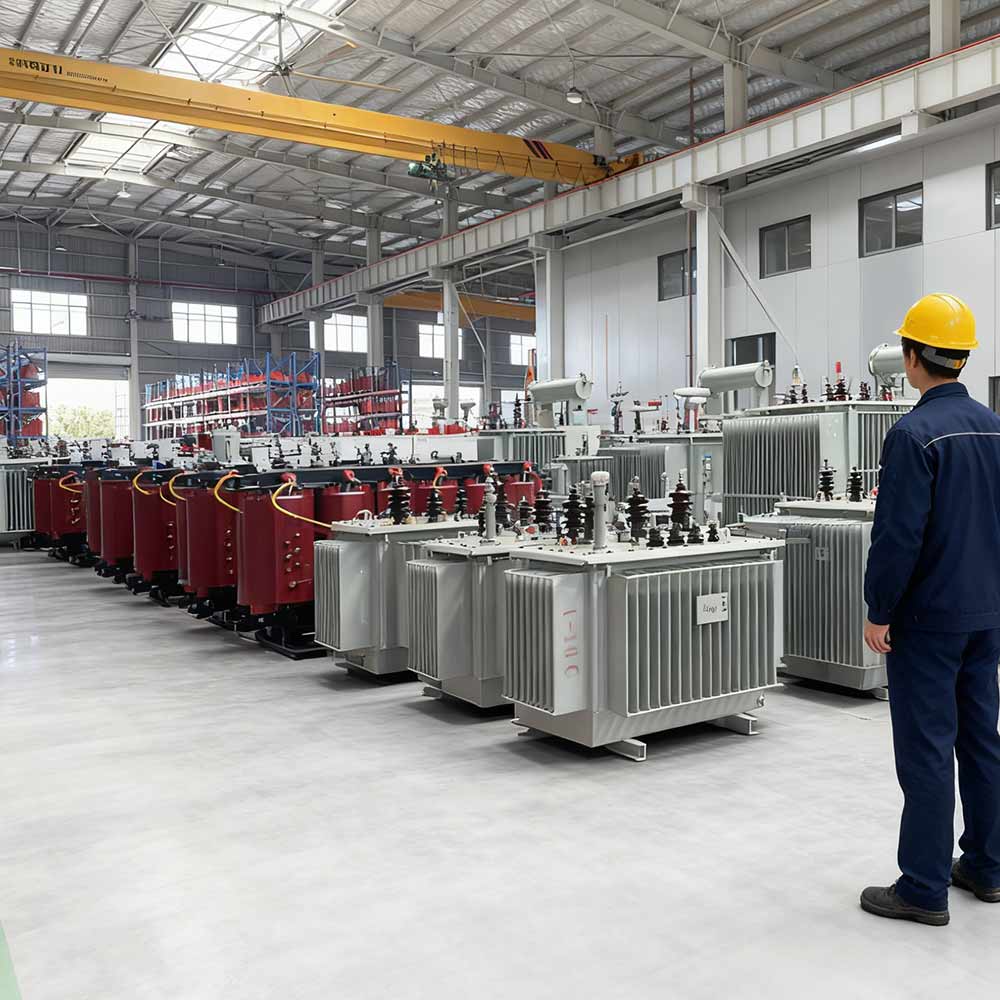
- Distribution Transformer: The core voltage-conversion component (usually an oil-immersed or dry-type transformer) that steps down high voltage to low voltage (e.g., 0.4kV) for end users.
- Low-Voltage Power Distribution Devices: Comprises low-voltage circuit breakers, contactors, and meters—distributing low-voltage power to loads (e.g., industrial machinery, residential buildings) and monitoring power usage.
(2) Structural & Protective Features
CHH Power’s box-type substations are engineered for durability and environmental adaptability:
- Fully Enclosed Steel Structure: The box uses Q235 steel with anti-corrosion coating (hot-dip galvanizing optional), achieving protections against moisture, rust, dust, rodents, fire, and theft (IP54 rating optional for outdoor use).
- Factory Prefabrication: All components are assembled, wired, and tested in CHH Power’s factory—on-site work is limited to foundation installation and cable connection, reducing construction time by 70% compared to civil substations.
(3) Application Scenarios
Due to their compact design and fast deployment, CHH Power’s box-type substations are widely used in:
- Urban power grid construction and upgrades (e.g., residential districts, commercial plazas) where land resources are scarce.
- Industrial and resource sectors: Mines, factories, oil/gas fields, and wind power stations (e.g., supporting 10MW wind farms with 35kV/0.4kV box-type substations).
- Temporary power needs: Construction sites, emergency disaster relief, and temporary infrastructure projects.
(4) Core Advantages Over Civil Substations
- Space Saving: Occupies only 1/5–1/3 of the land area of traditional civil substations (e.g., a 630kVA 10kV/0.4kV box-type substation needs ~20㎡ vs. 60㎡ for a civil substation).
- Cost Reduction: Eliminates investment in civil engineering (e.g., power distribution rooms, concrete foundations), cutting total project costs by 20–30%.
- Fast Commissioning: Can be put into operation within 1–2 weeks after delivery, compared to 3–6 months for civil substations.
2. Standalone Transformers: Specialized Voltage-Conversion Components
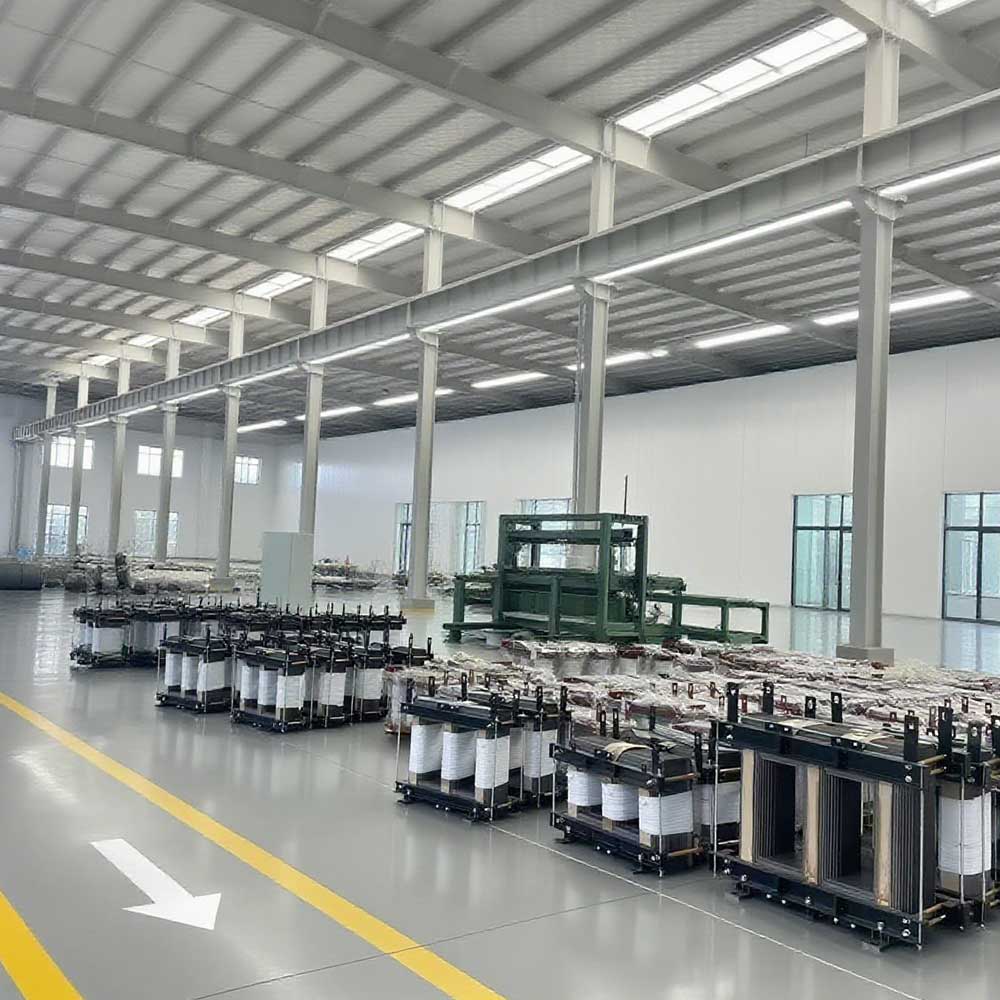
A standalone transformer is a single-function device that uses electromagnetic induction to change AC voltage. It is a core component of box-type substations but also widely used independently in power systems.
(1) Core Composition & Working Principle
CHH Power’s standalone transformers consist of three basic parts:
- Primary Coil: Receives input AC power and generates magnetic flux.
- Secondary Coil: Induces voltage from the magnetic flux to output adjusted AC power.
- Iron Core (Magnetic Core): A closed magnetic circuit made of low-loss silicon steel sheets, transmitting magnetic flux between coils and minimizing energy loss.
(2) Main Functions
Transformers are essential for power transmission and distribution, with key roles including:
- Voltage Transformation: Stepping up voltage for long-distance transmission (e.g., 10kV to 500kV) or stepping down voltage for end use (e.g., 10kV to 0.4kV).
- Current Transformation: Adjusting current to match load requirements (current is inversely proportional to voltage, per transformer principles).
- Impedance Transformation: Matching the impedance of signal sources and loads (critical in electronic circuits).
- Insulation Isolation: Separating high-voltage and low-voltage systems to ensure operational safety.
(3) Common Types of CHH Power’s Standalone Transformers
Based on application scenarios, CHH Power classifies standalone transformers into:
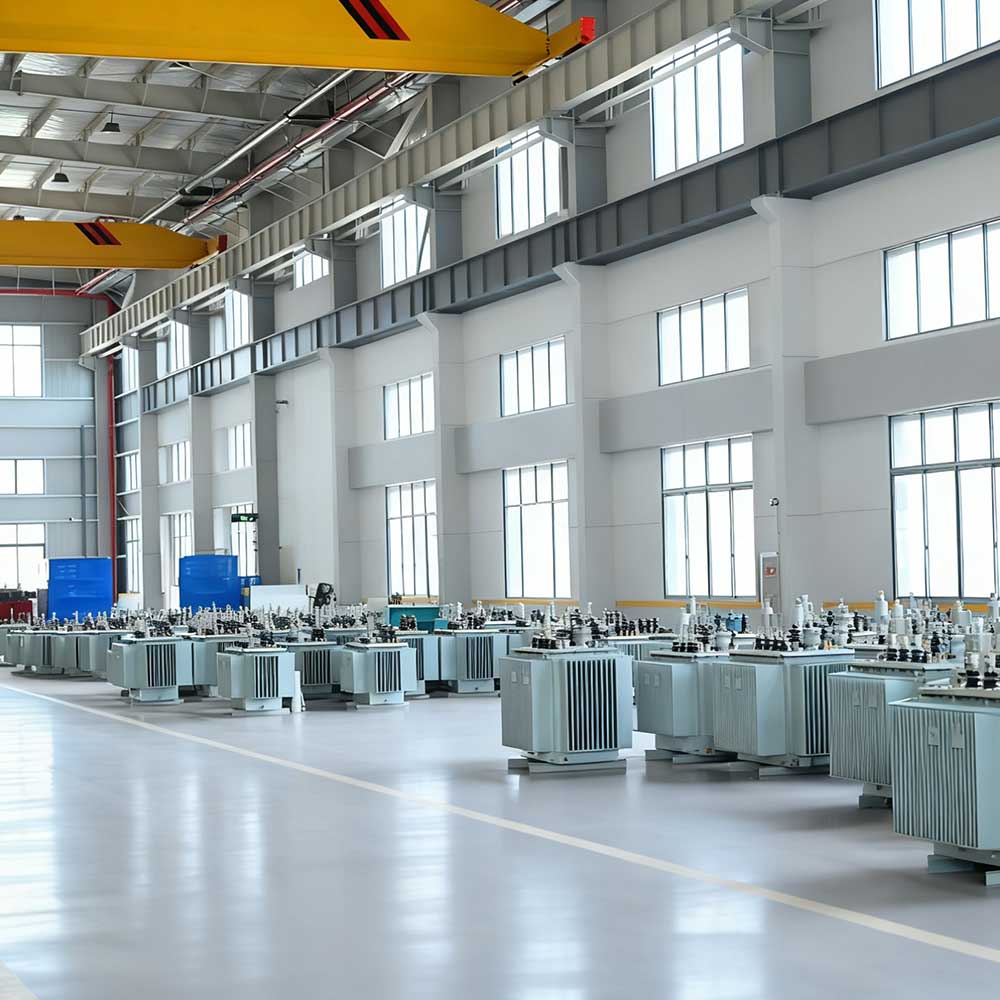
- Distribution Transformers: For low-voltage power distribution (e.g., 10kV/0.4kV dry-type or oil-immersed transformers for residential areas).
- Power Transformers: For high-voltage transmission (e.g., 220kV/110kV oil-immersed transformers for grid interconnections).
- Specialized Transformers: Rectifier transformers (for AC-to-DC conversion), control transformers (for industrial control circuits), and waterproof transformers (for outdoor use).
3. Key Relationship: Box-Type Substations Integrate Standalone Transformers
The most critical distinction is that box-type transformers (substations) are system-level equipment, while standalone transformers are component-level devices—their relationship is analogous to a “computer vs. a CPU”:
- Box-type substations = Standalone transformer + high-voltage switchgear + low-voltage distribution devices + protective enclosures + monitoring systems. They provide end-to-end power distribution solutions (from grid input to load supply).
- Standalone transformers = Only the voltage-conversion component. They cannot operate independently for power distribution; they must be paired with switchgear and control devices to form a complete system.
CHH Power emphasizes: Box-type substations are not “transformers”—they are integrated systems that use transformers as a core part. For example, CHH Power’s ZGS11 series box-type substation includes a 630kVA oil-immersed transformer, but the substation itself also has high-voltage vacuum circuit breakers and low-voltage air circuit breakers to realize safe power distribution.
Whether you need a compact box-type substation for urban grid upgrades or a standalone transformer for industrial voltage conversion, CHH Power offers tailored solutions. By integrating high-quality transformers with reliable switchgear, CHH Power’s box-type substations deliver efficient, safe, and cost-effective power distribution for diverse scenarios.






OUR CERTIFICATE


OUR PROJECTS


