
Dry type transformers stand as foundational components in modern power distribution systems, serving critical roles across commercial infrastructures, data centers, industrial manufacturing facilities, renewable energy installations, and urban utility networks. Unlike oil-immersed transformers, they deliver superior fire safety, low environmental impact, and minimal maintenance requirements, making them the preferred choice for indoor, high-safety, and eco-conscious applications. However, their long-term operational stability hinges entirely on intentional engineering, precise implementation, and ongoing management of factors that directly shape reliability and performance.
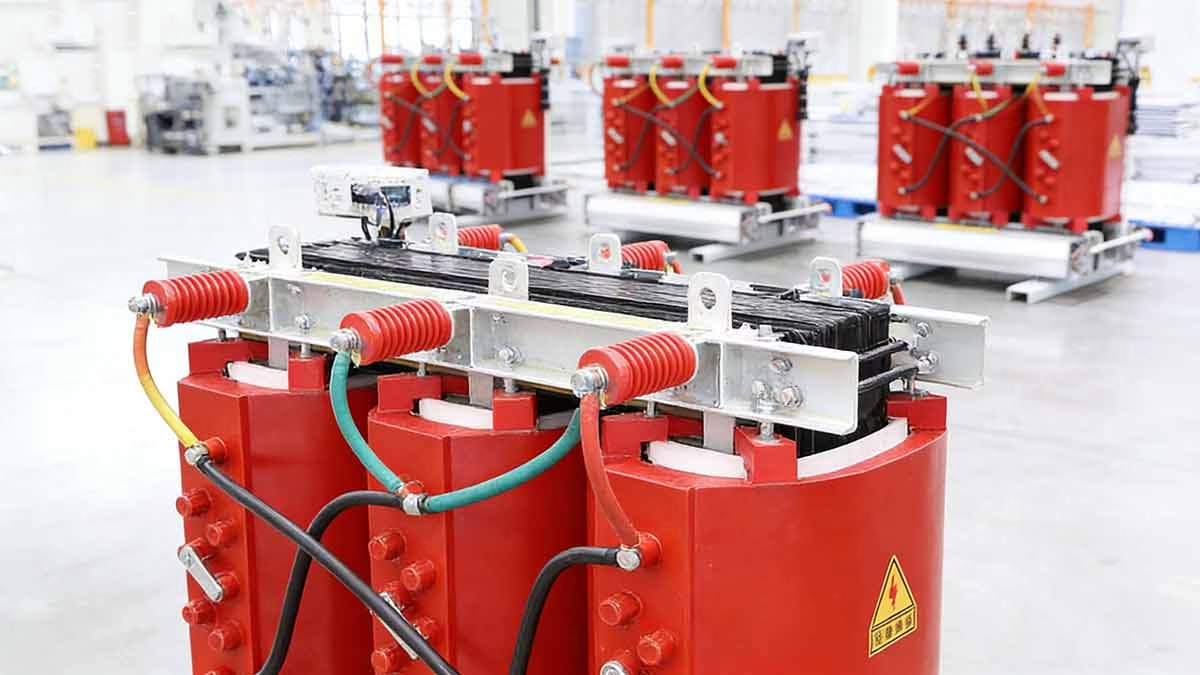
A dry type transformer that fails to meet reliability benchmarks can trigger costly unplanned downtime, compromise power system safety, accelerate insulation degradation, and shorten the overall service life of the equipment—pain points that directly impact operational budgets and business continuity for end-users. This comprehensive technical guide addresses core industry challenges by delivering data-driven, authoritative insights into every stage of optimizing the reliability and performance of dry type transformers. Covering advanced design principles, installation best practices, thermal management, preventive maintenance, environmental adaptation, and smart diagnostic integration, this resource equips engineers, facility managers, and procurement professionals with actionable strategies to eliminate avoidable failures, enhance operational efficiency, and maximize the return on investment for dry type transformer assets.
Contents
hide
Key Factors That Determine the Reliability and Performance of Dry Type Transformers
The reliability and performance of dry type transformers are not accidental outcomes; they are governed by an interconnected set of technical and operational factors. Understanding these foundational elements is the first step toward implementing targeted optimization strategies. Below is a structured breakdown of the primary influencing factors, organized by core operational categories:
1. Material Quality and Engineering Specifications
The intrinsic quality of raw materials and engineering precision form the base layer of transformer reliability. Substandard materials or imprecise manufacturing lead to inherent weaknesses that manifest as performance issues over time.
- Magnetic core materials: Grain orientation, silicon steel grade, and lamination precision directly impact core losses and thermal output.
- Insulation systems: Thermal class, resin formulation, and impregnation quality define resistance to electrical and thermal stress.
- Conductor materials: Copper vs. aluminum purity, cross-sectional design, and coating integrity affect current-carrying capacity and heat resistance.
- Structural components: Frame rigidity, fastener grade, and anti-vibration materials determine mechanical stability under load fluctuations and short-circuit events.
2. Operational Environmental Conditions
Environmental variables create external stressors that alter transformer performance and accelerate aging. These conditions vary drastically across applications and require tailored mitigation strategies.
- Ambient temperature: Extremes of heat or cold disrupt thermal equilibrium and degrade insulation properties.
- Humidity and moisture: High moisture levels increase partial discharge risk and reduce dielectric strength.
- Contaminants: Dust, chemical fumes, salt spray, and corrosive particles clog cooling systems and damage external components.
- Altitude: Reduced air density at high altitudes diminishes natural cooling efficiency, requiring capacity derating.
3. Installation and Site Configuration
Improper installation negates the benefits of high-quality manufacturing, creating persistent operational issues that are difficult to remediate post-commissioning.
- Placement and clearance: Inadequate space around the transformer restricts airflow and causes heat buildup.
- Electrical connections: Loose or misaligned terminals generate resistive heating and arcing risks.
- Grounding and bonding: Poor grounding introduces stray currents and insulation stress.
- Structural mounting: Unstable foundations lead to vibration-induced fatigue and component misalignment.
4. Thermal Management and Cooling Efficiency
Heat is the primary catalyst for transformer aging, making thermal control a critical determinant of long-term reliability.
- Cooling system design: Natural vs. forced air cooling capacity must align with load profiles and ambient conditions.
- Heat dissipation pathways: Blocked air channels or inefficient ventilation trap heat and elevate winding temperatures.
- Thermal monitoring: Lack of real-time temperature tracking prevents early detection of overheating events.
5. Maintenance and Operational Oversight
Reactive maintenance and insufficient monitoring lead to the escalation of minor issues into catastrophic failures.
- Inspection frequency: Irregular checks miss early signs of wear, contamination, and electrical degradation.
- Cleaning protocols: Neglected cooling systems and winding surfaces reduce heat dissipation efficiency.
- Performance testing: Lack of periodic electrical testing hides hidden faults in insulation and windings.
6. Smart System Integration and Compliance
Modern transformers rely on digital tools and standard adherence to maintain consistent performance.
- Diagnostic monitoring: IoT and sensor integration enable predictive maintenance and early fault detection.
- Regulatory compliance: Alignment with international standards ensures design and operational safety benchmarks are met.
- System compatibility: Integration with power distribution networks and load management systems prevents electrical stress.
The following table summarizes the impact of each key factor on transformer reliability and performance, along with associated risks of neglect:
| Influencing Factor | Impact on Reliability | Impact on Performance | Risks of Neglect |
|---|---|---|---|
| Material Quality | Reduces structural and electrical integrity | Increases energy losses and thermal output | Premature insulation failure, core degradation |
| Environmental Conditions | Accelerates aging and corrosion | Reduces load capacity and efficiency | Partial discharge, overheating, and component rust |
| Installation Practices | Creates persistent mechanical/electrical faults | Causes unstable voltage output and heat spikes | Terminal burnout, winding deformation, and safety hazards |
| Thermal Management | Shortens insulation service life | Lowers operational efficiency and overload tolerance | Thermal runaway, resin cracking, permanent damage |
| Maintenance Protocols | Increases unplanned failure rates | Reduces consistent power delivery | Extended downtime, costly emergency repairs |
| Smart Integration & Compliance | Limits predictive maintenance capabilities | Results in non-compliant operation and safety risks | Regulatory penalties, undetected critical faults |
Advanced Design Strategies for Enhancing Dry Type Transformer Reliability
Design engineering is the cornerstone of building dry type transformers with exceptional reliability and performance. Leading manufacturers implement specialized design strategies to address common failure modes and optimize operational stability. Below is a detailed breakdown of industry-leading design methodologies, organized by core transformer components:
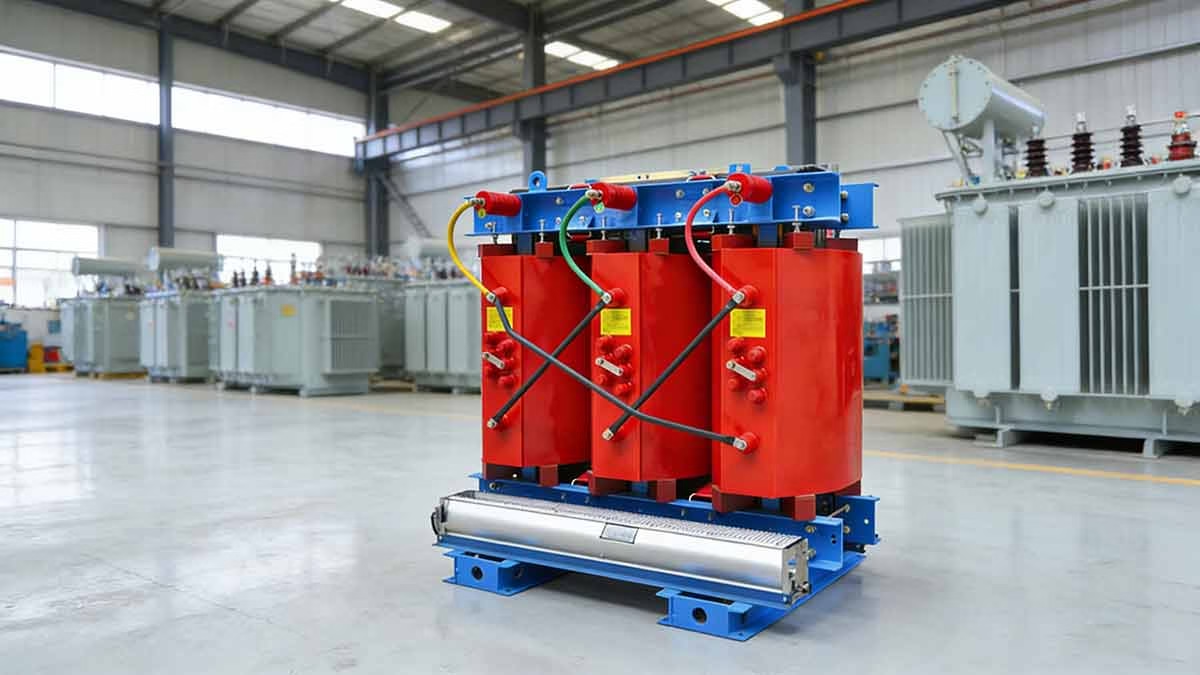
1. Magnetic Core Optimization
The magnetic core is responsible for efficient energy transfer, and its design directly reduces losses and mechanical stress.
- High-Grade Amorphous and Grain-Oriented Silicon Steel: Utilization of ultra-low loss core materials minimizes no-load losses, reducing baseline heat generation and improving energy efficiency.
- Precision Step-Lap Joint Construction: Mitigates flux concentration and vibration at core joints, reducing mechanical fatigue and noise output.
- Rigid Clamping Systems: Multi-point, high-strength clamping eliminates core movement during load cycles and short-circuit events, preserving dimensional stability.
- Low-Noise Core Engineering: Optimized lamination stacking and damping materials reduce vibration-induced stress, extending core service life.
2. Insulation System Enhancement
The insulation system is the most critical component for preventing electrical failure and ensuring long-term reliability.
- Thermal Class H and F Insulation Systems: These high-temperature-tolerant insulation materials withstand continuous thermal stress, doubling the effective service life compared to lower-class alternatives.
- Cast Resin and Vacuum Pressure Impregnation (VPI) Technology: Cast resin encapsulation provides a hermetic barrier against moisture, dust, and chemicals, while VPI treatment ensures uniform insulation penetration and bonding.
- Partial Discharge-Free Design: Precision winding geometry and controlled resin curing eliminate internal voids, preventing partial discharge activity that causes insulation breakdown.
- Extended Creepage and Clearance Distances: Optimized spatial design between conductive components prevents surface tracking, even in high-humidity or polluted environments.
3. Winding Construction for Mechanical and Thermal Resilience
Windings endure the highest levels of electrical and mechanical stress, requiring a robust design for sustained performance.
- High-Strength Conductor Materials: Oxygen-free copper and high-purity aluminum conductors with thermal-resistant coatings improve current-carrying capacity and heat dissipation.
- Short-Circuit Resistant Winding Supports: Reinforced coil bracing and structural anchors withstand the extreme electromagnetic forces generated during short-circuit events, preventing winding deformation.
- Optimized Winding Geometry: Uniform layer spacing and precision winding reduce hotspots and improve airflow through the coil structure.
4. Cooling System Integration
Proactive cooling design ensures thermal stability under variable load conditions.
- Strategically Engineered Air Channels: Vertical and horizontal air ducts integrated into the transformer structure maximize natural convection, even in compact installations.
- Modular Forced Air Cooling (AF) Options: Fan-assisted cooling systems with variable speed control activate based on real-time temperature data, optimizing cooling efficiency and energy consumption.
- Integrated Thermal Protection Sensors: Embedded temperature monitors provide built-in overheating protection, triggering alarms or load reduction before critical damage occurs.
5. Environmental and Mechanical Protection Design
Dry type transformers are engineered to adapt to diverse operating environments through specialized protective design features.
- IP-Rated Enclosures: Ingress protection ratings from IP54 to IP66 shield internal components from dust, water, and particulate contamination.
- Anti-Corrosion Coatings: Marine-grade and industrial anti-corrosion treatments protect metal structures in coastal, chemical, and high-humidity environments.
- Vibration-Damping Mounts: Integrated isolation materials reduce structural resonance, minimizing mechanical stress during operation and transportation.
Critical Installation Practices to Sustain Long-Term Performance
Even the most well-designed dry type transformer will underperform or fail prematurely if installed incorrectly. Installation is a high-impact phase that directly shapes the reliability and performance of dry type transformers throughout their service life. The following practices are industry-standard requirements for optimal installation:
1. Site Preparation and Environmental Assessment
- Conduct a pre-installation environmental audit to measure ambient temperature, humidity, altitude, and contaminant levels, ensuring alignment with transformer rating specifications.
- Prepare a level, load-bearing foundation that eliminates structural stress; uneven foundations cause core and winding misalignment over time.
- Verify that the installation site maintains an ambient temperature range of -25°C to +40°C (standard rating) and implement climate control for sites outside this range.
- Ensure the site is free from corrosive gases, explosive dust, and excessive moisture; relocate or enclose the transformer if environmental hazards are present.
2. Clearance and Ventilation Configuration
- Maintain minimum clearance distances of 30cm to 80cm on all sides of the transformer, as specified by the manufacturer, to enable unobstructed natural airflow.
- Avoid installing transformers in fully enclosed, unventilated spaces; ensure the installation room meets the required air changes per hour (ACH) based on transformer heat output.
- Position transformers away from direct sunlight, heat-generating equipment, and walls that block vertical heat dissipation.
- For multiple transformer installations, arrange units to prevent cross-heat accumulation and ensure individual cooling pathways are preserved.
3. Electrical Connection and Torque Management
- Use calibrated torque tools to tighten all cable terminals and busbars to manufacturer-specified torque values; over-tightening causes conductor damage, while under-tightening leads to resistive heating.
- Implement strain relief for all power cables to prevent mechanical stress on transformer bushings and terminals.
- Verify phase alignment, polarity, and vector group configuration to avoid system instability and harmonic distortion.
- Measure contact resistance post-connection to ensure optimal electrical conductivity and identify loose connections before energization.
4. Grounding and Bonding Implementation
- Establish a low-resistance grounding system in compliance with IEC and IEEE standards, connecting the transformer neutral and metallic enclosure to the facility’s grounding network.
- Implement equipotential bonding across all metal components to eliminate touch voltages and stray current-induced insulation damage.
- For high-impedance or isolated neutral systems, configure grounding per specific system requirements to prevent resonance and partial discharge.
5. Mechanical Mounting and Vibration Control
- Secure the transformer to the foundation using vibration-dampening pads or rails to reduce mechanical resonance.
- Remove all transportation bracing and bolts prior to energization; retained transportation hardware causes excessive vibration and structural damage.
- In seismic zones, install seismic restraint systems to protect the transformer during earthquake events.
- Re-tighten all structural fasteners post-transportation to address any loosening caused by shipping and handling.
6. Commissioning and Post-Installation Testing
Comprehensive commissioning is non-negotiable for validating installation quality and ensuring operational readiness. Mandatory tests include:
- Insulation Resistance (IR) Testing: Evaluates the integrity of the insulation system and identifies moisture contamination.
- Turns Ratio Testing (TTR): Confirms winding accuracy and detects shorted turns or winding damage.
- Winding Resistance Measurement: Identifies loose connections, conductor corrosion, or winding deformation.
- Partial Discharge Testing: Detects hidden insulation faults that are not visible during visual inspection.
- Infrared Thermal Scanning: Identifies hotspots in terminals, windings, and busbars caused by installation errors.
- Operational Load Testing: Verifies performance under simulated load conditions to confirm cooling and electrical stability.
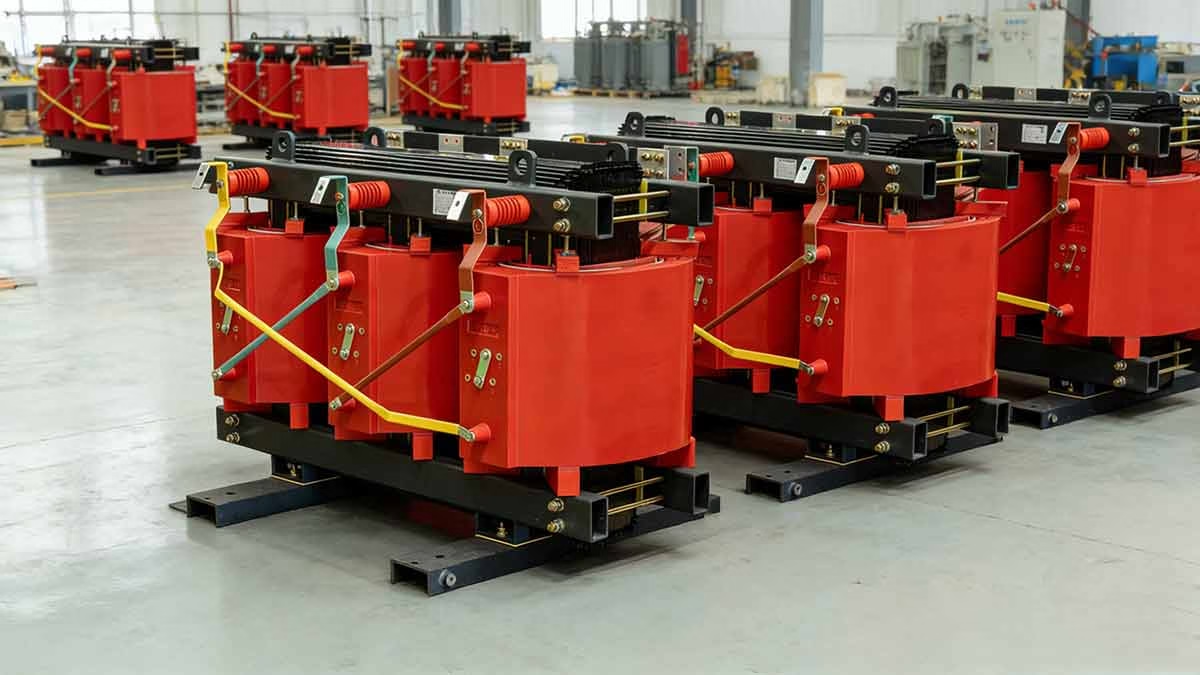
Ventilation and Thermal Management: Core Pillars of Transformer Efficiency
Thermal management is the single most influential operational factor in preserving the reliability and performance of dry type transformers. Excessive heat accelerates insulation aging at an exponential rate—industry data shows that every 8°C increase in operating temperature reduces insulation service life by approximately 50%. Effective ventilation and cooling strategies are essential to maintaining thermal equilibrium and preventing premature failure.
1. Ambient Temperature Control and Regulation
- Monitor and control ambient temperature at the installation site to stay within the transformer’s rated operating range; implement HVAC systems for indoor installations in high-temperature climates.
- Avoid heat recirculation by ensuring hot air is exhausted away from the transformer’s air intake, preventing a continuous cycle of rising temperatures.
- Implement thermal derating for transformers operating above 40°C ambient temperature or at altitudes exceeding 1000 meters, as reduced air density lowers cooling efficiency.
2. Natural and Forced Air Cooling Optimization
Natural Air Cooling (AN) Best Practices
- Ensure unobstructed airflow through the transformer’s internal air channels; regularly inspect and clear any debris blocking cooling pathways.
- Design installation spaces to facilitate vertical convection, with cool air intake at the bottom and hot air exhaust at the top of the unit.
- Avoid enclosing AN-cooled transformers in cabinets or rooms with insufficient ventilation, as this eliminates the natural cooling effect.
Forced Air Cooling (AF) Best Practices
- Install variable-speed fans that activate based on real-time winding temperature data, reducing energy consumption while maintaining optimal cooling.
- Regularly inspect and clean fan blades, motors, and air filters to prevent airflow reduction due to dust accumulation.
- Implement redundant fan systems for critical applications (data centers, industrial facilities) to avoid cooling failure if a single fan malfunctions.
3. Ventilation System Design for Diverse Installations
- Indoor Installations: Calculate required air changes per hour (ACH) based on transformer total losses and install mechanical exhaust systems to meet ACH requirements.
- Underground/Tunnel Installations: Implement sealed ventilation ducts with dehumidification to prevent moisture buildup and ensure efficient heat removal.
- Industrial Installations: Use filtered ventilation systems to prevent dust and contaminants from entering cooling channels while maintaining adequate airflow.
- Outdoor Installations: Install weatherproof enclosures with louvered ventilation to protect against precipitation while preserving cooling efficiency.
4. Thermal Monitoring and Overheating Prevention
- Deploy PT100 resistance temperature detectors (RTDs) or thermistors embedded in transformer windings and cores for continuous temperature monitoring.
- Integrate thermal alarm systems that trigger visual and audible alerts when temperatures exceed safe operating limits.
- Implement automatic load reduction protocols for high-temperature events to prevent thermal runaway and insulation damage.
- Conduct regular infrared thermographic scans to identify hidden hotspots that are not detected by standard temperature sensors.
Preventive Maintenance Protocols for Uninterrupted Transformer Operation
Preventive maintenance is a proactive strategy that preserves the reliability and performance of dry type transformers by addressing minor issues before they escalate into critical failures. Unlike reactive maintenance, which occurs after a breakdown, preventive maintenance reduces downtime, lowers repair costs, and extends transformer service life to its full design potential. Below is a structured, industry-standard preventive maintenance schedule and protocol:
1. Routine Visual Inspection (Quarterly)
- Inspect the transformer enclosure for physical damage, corrosion, or seal degradation; repair or replace damaged components immediately.
- Check for abnormal noise, vibration, or odors, which indicate mechanical loosening, winding stress, or insulation overheating.
- Verify that cooling fans, air filters, and ventilation pathways are free of dust, debris, and blockages.
- Inspect cable terminals and busbars for signs of overheating (discoloration, melting, or corrosion) and re-torque connections as needed.
- Monitor humidity levels within the enclosure and check for condensation, a key indicator of moisture intrusion.
2. Thermal and Cooling System Maintenance (Semi-Annually)
- Clean cooling fans, air ducts, and winding surfaces to remove accumulated dust, which restricts heat dissipation.
- Calibrate temperature sensors and thermal protection devices to ensure accurate readings and proper alarm functionality.
- Test fan operation and variable speed controls to confirm activation at specified temperature thresholds.
- Inspect ventilation systems for air leaks or blockages, repairing ductwork or louvers as needed.
- Conduct infrared thermal imaging to identify and resolve hotspots in windings, terminals, and core components.
3. Electrical Performance Testing (Annually)
- Perform Insulation Resistance (IR) testing to assess insulation health and detect moisture or contamination.
- Conduct Turns Ratio Testing (TTR) to verify winding consistency and identify shorted turns or winding damage.
- Measure winding resistance to detect conductor corrosion, loose connections, or mechanical deformation.
- Perform partial discharge testing to identify early signs of insulation degradation that may lead to electrical failure.
- Analyze power quality, including harmonic distortion and load imbalance, to address electrical stress on the transformer.
4. Environmental and Structural Maintenance (Bi-Annually)
- Reapply anti-corrosion coatings to metal components in coastal or industrial environments to prevent rust and structural degradation.
- Inspect and tighten structural fasteners, core clamps, and winding supports to address mechanical loosening.
- Test anti-vibration mounts and replace worn damping materials to reduce mechanical stress.
- Verify enclosure seal integrity and replace gaskets to prevent moisture and contaminant intrusion.
- Calibrate dehumidification systems (if installed) to maintain optimal humidity levels within the transformer enclosure.
5. Documentation and Trend Analysis (Ongoing)
- Maintain detailed records of all inspections, tests, and maintenance activities, including test results, temperature trends, and load profiles.
- Analyze historical data to identify performance trends, such as gradual temperature increases or rising partial discharge levels.
- Use trend data to develop predictive maintenance schedules, addressing potential failures before they impact operation.
- Update maintenance protocols based on operational changes, such as increased load demands or environmental shifts.
Environmental Protection Solutions for Diverse Operational Scenarios
Dry type transformers operate across an extensive range of environments, each presenting unique challenges that require specialized protection solutions. Tailoring environmental protections to specific applications is critical to sustaining the reliability and performance of dry type transformers. Below is a breakdown of application-specific environmental protection strategies:
1. Coastal and Offshore Applications
Coastal and offshore environments expose transformers to salt spray, high humidity, and corrosive marine air, which accelerate corrosion and insulation degradation.
- Protection Measures:
- Marine-grade anti-corrosion coatings on all metal structural components.
- Stainless steel hardware and fasteners to resist salt-induced rust.
- IP65 or IP66 rated enclosures to prevent saltwater and moisture intrusion.
- Dehumidification systems and internal condensation heaters to maintain low humidity levels.
- Epoxy cast resin insulation with salt-contaminant resistance properties.
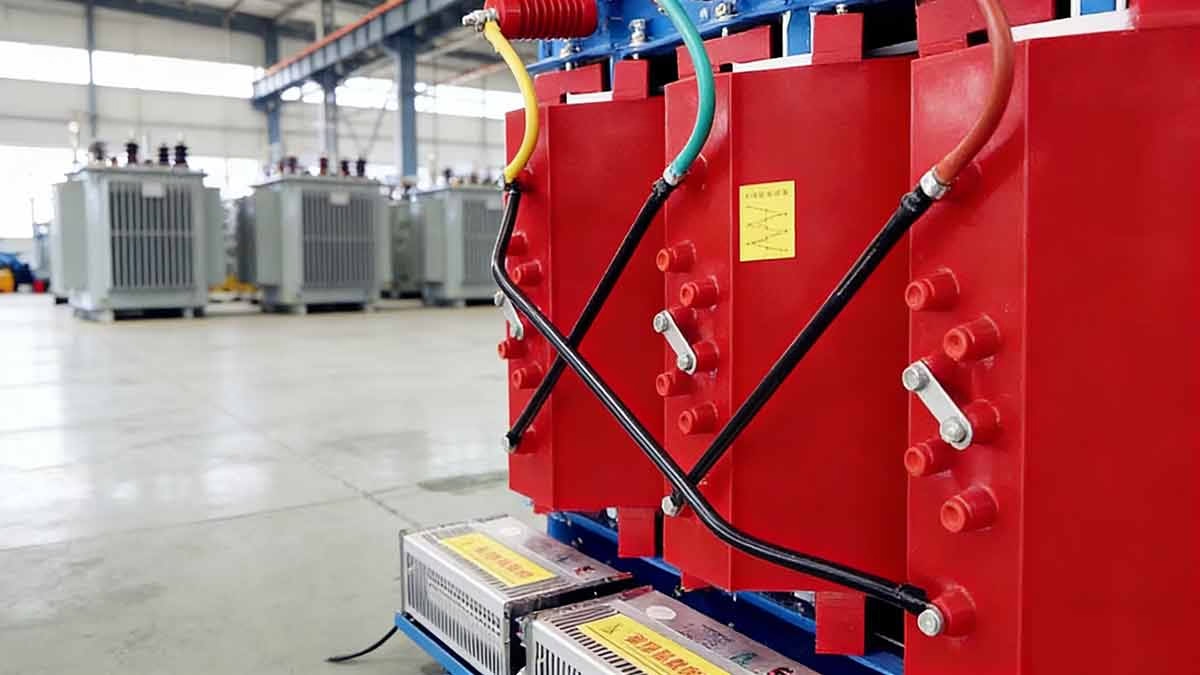
2. Industrial and Chemical Processing Facilities
Industrial sites feature abrasive dust, corrosive chemical fumes, high temperatures, and excessive vibration, all of which compromise transformer integrity.
- Protection Measures:
- IP65-rated dustproof and chemical-resistant enclosures.
- Acid and alkali-resistant resin insulation systems.
- Heavy-duty vibration isolation mounts to withstand industrial machinery vibration.
- High-temperature Class H insulation for extreme heat environments.
- Oversized cooling systems to compensate for heat-intensive industrial conditions.
3. Data Centers and Commercial Buildings
Data centers and commercial buildings require high fire safety, low noise, and consistent indoor air quality, with continuous load demands.
- Protection Measures:
- F1 fire-resistant insulation and enclosure materials for enhanced fire safety.
- Noise-dampening structural design to minimize operational noise output.
- Filtered ventilation systems to maintain clean indoor air quality.
- Low-smoke, low-toxicity materials to comply with indoor safety regulations.
- Continuous thermal and load monitoring for 24/7 operational stability.
4. Desert and High-Temperature Installations
Desert environments feature extreme heat, sandstorms, and UV radiation, which degrade insulation and block cooling systems.
- Protection Measures:
- Class H high-temperature insulation systems to withstand extreme ambient heat.
- UV-resistant exterior coatings to prevent sun damage to enclosures.
- Sealed, filtered enclosures to block sand and dust infiltration.
- Enhanced forced air cooling systems to counteract high ambient temperatures.
- Thermal derating and increased kVA capacity margins for sustained performance.
5. Cold Climate and Sub-Zero Applications
Cold regions present risks of freezing temperatures, condensation, and thermal shock, which make insulation brittle and cause moisture damage.
- Protection Measures:
- Anti-condensation heaters to prevent moisture buildup during thaw cycles.
- Low-temperature resilient insulation materials to avoid brittleness.
- Weatherproof enclosures to prevent ice and snow accumulation.
- Thermal shock-resistant coil structures to withstand rapid temperature fluctuations.
- Temperature-stable resin systems that maintain integrity in sub-zero conditions.
6. Renewable Energy Installations (Wind and Solar)
Renewable energy sites feature remote locations, variable load cycles, and outdoor exposure, requiring robust and self-sufficient protection.
- Protection Measures:
- Reinforced mechanical structures to withstand wind turbine vibration and variable solar load fluctuations.
- IP55+ outdoor-rated enclosures for weather protection.
- High-efficiency thermal management systems for remote, unstaffed locations.
- IoT-enabled remote monitoring for real-time performance tracking.
- Moisture and dust-resistant insulation to endure outdoor environmental conditions.
Smart Monitoring and Diagnostic Systems for Proactive Performance Optimization
The integration of smart monitoring and diagnostic systems represents a transformative advancement in preserving the reliability and performance of dry type transformers. These digital solutions move maintenance from a reactive to a predictive model, enabling operators to address potential failures before they cause downtime or equipment damage.
1. Core Monitoring Functionalities
Modern smart monitoring systems capture real-time data on all critical transformer operating parameters, providing complete visibility into asset health:
- Continuous temperature monitoring of windings, core, and ambient environment.
- Load profile tracking and power quality analysis (harmonics, voltage imbalance, transient spikes).
- Partial discharge detection and insulation health assessment.
- Vibration and mechanical stress measurement.
- Humidity, moisture, and contaminant level monitoring.
- Cooling system performance and fan operation tracking.
2. Predictive Analytics and Fault Detection
Advanced diagnostic algorithms analyze collected data to identify trends and predict potential failures:
- Remaining useful life (RUL) modeling for insulation systems.
- Thermal runaway risk prediction based on temperature trend analysis.
- Early detection of loose connections, winding deformation, and insulation degradation.
- Cooling system inefficiency detection and airflow blockage alerts.
- Load stress forecasting to prevent overloading and thermal damage.
3. Remote Monitoring and Connectivity
Smart systems enable seamless integration with modern power management infrastructure, supporting remote operation and oversight:
- IoT connectivity for cloud-based remote monitoring from any location.
- Integration with SCADA systems and smart grid networks for centralized asset management.
- Mobile alert notifications for critical fault conditions and performance anomalies.
- Digital twin technology for virtual simulation of transformer performance under varying load and environmental conditions.
- Automated data logging for compliance reporting and performance trend analysis.
4. Operational Benefits of Smart Diagnostic Integration
Implementing smart monitoring systems delivers measurable improvements to transformer reliability and performance:
- Reduces unplanned downtime by up to 70% through early fault detection.
- Extends transformer service life by 15-20% via targeted, predictive maintenance.
- Lowers operational and maintenance costs by eliminating unnecessary inspections and emergency repairs.
- Enhances system safety by preventing catastrophic failures such as insulation flashover and thermal runaway.
- Improves energy efficiency by optimizing load distribution and cooling system operation.
Compliance with International Standards for Guaranteed Reliability
Adherence to international technical standards is a non-negotiable requirement for ensuring the reliability and performance of dry type transformers. Standards establish uniform benchmarks for design, manufacturing, testing, and operation, ensuring transformers meet global safety and performance requirements. Key standards governing dry type transformer design and operation include:
1. IEC Standards
- IEC 60076-11: Specifies requirements for dry type power transformers, covering design, testing, and rating specifications.
- IEC 60076-14: Defines standards for transformer’s ability to withstand short-circuit events.
- IEC 61936-1: Outlines safety requirements for dry type transformers in indoor installations.
2. IEEE Standards
- IEEE C57.12.31: Establishes performance standards for dry type distribution transformers.
- IEEE C57.12.91: Provides guidelines for testing and quality assurance of dry type transformers.
- IEEE C57.110: Defines thermal evaluation and load rating standards for dry type transformers.
3. Regional and Application-Specific Standards
- National Electrical Code (NEC) for North American installations.
- Fire safety standards (UL 2203) for indoor and commercial applications.
- Marine and offshore standards (IEC 60092) for shipboard and coastal transformer installations.
Compliance with these standards ensures that dry type transformers are designed and manufactured to withstand operational stress, meet safety requirements, and deliver consistent reliability and performance throughout their service life. Manufacturers that adhere to these standards undergo rigorous type testing, routine testing, and quality assurance processes, providing end-users with guaranteed performance and regulatory compliance.
Conclusion
Optimizing the reliability and performance of dry type transformers is a holistic, multi-phase process that encompasses advanced design engineering, precise installation, proactive thermal management, structured preventive maintenance, application-specific environmental protection, and smart diagnostic integration. Each element plays an indispensable role in eliminating common failure modes, extending equipment service life, and ensuring stable, efficient power distribution across all critical applications.
For end-users, prioritizing these strategies translates to tangible business benefits: reduced operational downtime, lower maintenance and repair costs, enhanced power system safety, and maximized return on transformer assets. As dry type transformers continue to be the preferred choice for modern power infrastructure, adopting the authoritative, data-driven practices outlined in this guide is essential for overcoming operational challenges and ensuring consistent, high-performance operation for decades.
By focusing on material quality, engineering excellence, strict installation protocols, thermal stability, ongoing maintenance, environmental adaptability, and digital monitoring, stakeholders can fully unlock the potential of dry type transformers, ensuring they deliver unmatched reliability and performance in even the most demanding operating environments.
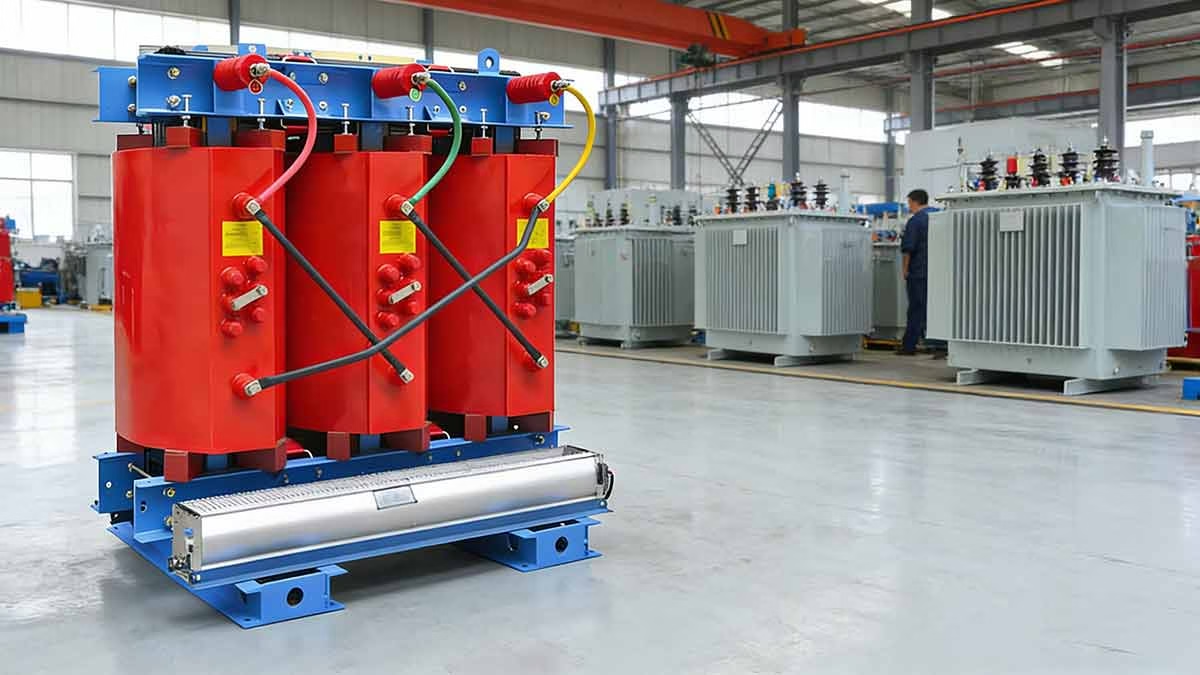
FAQ About Reliability and Performance of Dry Type Transformers
Q1: What is the single most important factor in maximizing the reliability and performance of dry type transformers?
Thermal management is the most critical factor, as excessive heat is the primary cause of insulation aging and premature failure. Implementing proper ventilation, cooling systems, and real-time temperature monitoring directly preserves transformer integrity and extends service life.
Q2: How often should preventive maintenance be performed on dry type transformers?
Routine visual inspections should be conducted quarterly, thermal and cooling system maintenance semi-annually, and comprehensive electrical performance testing annually. Remote monitoring-enabled transformers can utilize predictive maintenance schedules adjusted based on real-time performance data.
Q3: Do dry type transformers require different environmental protections for indoor vs. outdoor installation?
Yes. Indoor installations prioritize ventilation, fire safety, and moisture control, while outdoor installations require weatherproof enclosures, UV protection, and resistance to precipitation, dust, and temperature extremes. Application-specific protections must align with the unique environmental stressors of each installation location.
Q4: Can smart monitoring systems eliminate the need for physical transformer inspections?
No. Smart monitoring systems complement physical inspections by providing continuous data and early fault detection, but regular physical inspections are still necessary to identify visual issues such as physical damage, corrosion, and debris accumulation that sensors may not detect.
Q5: How does compliance with international standards impact transformer reliability?
Compliance with IEC, IEEE, and regional standards ensures that transformers are designed, manufactured, and tested to meet globally recognized performance and safety benchmarks. Non-compliant transformers may have inherent design flaws that lead to reduced reliability, performance issues, and safety hazards.