
Proper installation and commissioning of oil-immersed transformers stand as the cornerstone of guaranteeing long-term operational dependability and optimum energy conversion performance. Even minor errors during these foundational stages can trigger a cascade of operational malfunctions, electrical breakdowns, or even devastating equipment failures—consequences that translate to expensive operational halts, extensive restorations, and unplanned downtime for power distribution systems. Far too many facility operators and electrical contractors neglect core elements like rigorous premises preparation, precise insulating oil management, and comprehensive pre-commissioning validation, all of which directly impact a transformer’s efficiency, lifespan, and safety profile.
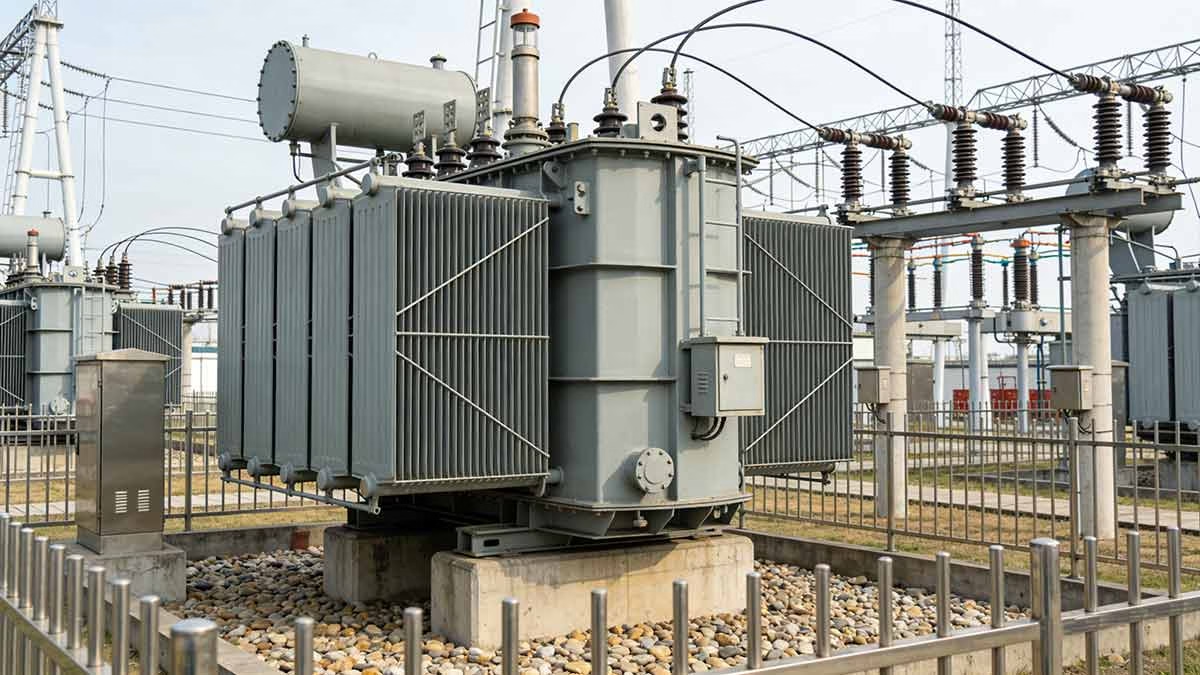
Oil-immersed transformers are the workhorses of power grids, industrial facilities, and commercial complexes, tasked with efficient voltage conversion while leveraging insulating oil for both thermal regulation and dielectric protection. When installed haphazardly, these vital assets face heightened risks of oil seepage, overheating, insulation degradation, and unplanned outages—issues that not only drive up maintenance costs but also compromise the entire power supply chain’s stability. This comprehensive guide delivers a stage-by-stage roadmap for professional oil-immersed transformer installation and commissioning, outlining proven industry methodologies to mitigate typical problems, address common installation pain points, and ensure a seamless, error-free startup that maximizes asset longevity. Whether you’re a seasoned electrical engineer, a facility manager, or a contractor executing installation projects, this resource provides authoritative, actionable insights to navigate every phase of the process with confidence, eliminating guesswork and reducing the risk of costly post-installation issues.
Contents
hide
Key Pre-Installation Preparations for Oil-Immersed Transformer Installation to Ensure Operational Safety
The success of any oil-immersed transformer installation begins long before the unit arrives on-site. A disorganized pre-installation phase is one of the most common causes of post-installation failures, from misalignment and vibration damage to inadequate cooling and safety hazards. To establish a safe, efficient installation foundation and eliminate preventable errors, a structured, checklist-driven pre-installation process is non-negotiable—one that addresses every logistical, technical, and safety consideration to align with industry standards and manufacturer specifications.
The core pre-installation steps for oil-immersed transformer installation encompass strategic site evaluation, engineered foundation preparation, rigorous insulating oil quality validation, detailed transportation and logistics planning, pre-configured electrical connection mapping, and comprehensive safety protocol implementation. Each of these steps is interdependent: a single oversight in site preparation, for example, can negate even the most precise installation of the transformer itself. Proper pre-installation planning not only ensures the transformer operates at peak efficiency and dependability but also minimizes operational risks, streamlines the on-site installation process, and lays the groundwork for easy maintenance and inspections over the asset’s lifespan. This phase also involves verifying compliance with local electrical codes, environmental regulations, and safety standards—critical for avoiding costly rework and regulatory penalties post-installation.
A common misconception in the industry is that oil-immersed transformers can be installed in any location without dedicated site preparation; this couldn’t be further from the truth. Even small oversights, like inadequate ventilation or an unstable base, can lead to chronic overheating, insulation failure, and a 30% or more reduction in the transformer’s expected lifespan. Below are the non-negotiable pre-installation pillars that form the basis of a successful oil-immersed transformer installation:
Site Selection and Environmental Risk Mitigation
Selecting the optimal installation site is the first and most critical pre-installation step, as it directly dictates the transformer’s cooling efficiency, safety, and long-term performance. The site must be evaluated through a dual lens: operational functionality and environmental resilience, with every factor aligned to the transformer’s rated capacity and application (industrial, commercial, or utility-grade power distribution).
Key environmental and operational considerations for site selection include:
- Load Proximity: The site should be positioned as close as practical to the primary power load center to minimize transmission line losses, which erode energy efficiency and increase operational costs over time.
- Thermal Regulation Potential: The site must offer unobstructed natural ventilation, with no confined spaces or obstructions that impede heat dissipation—oil-immersed transformers generate significant thermal energy during operation, and poor airflow leads to chronic overheating and oil degradation.
- Weather and Flood Protection: Flood-prone low-lying areas and high-humidity environments are to be avoided at all costs; if installation in a flood zone is unavoidable, the transformer must be mounted on elevated concrete platforms with a minimum height of 600mm above the 100-year flood level to prevent water ingress and insulation degradation.
- Ground Stability: The subsurface soil and bedrock must have the load-bearing capacity to support the transformer’s total weight (unit + insulating oil) without settling or shifting over time—unstable ground causes mechanical stress, misalignment, and damage to internal components like windings and core laminations.
- Contamination Control: The site should be free from excessive dust, industrial particulates, corrosive fumes, and chemical contaminants, all of which can degrade external components and seep into the oil system, compromising dielectric performance.
A pre-installation site validation checklist is essential here, with verifications for elevated mounting (if required), unobstructed airflow clearance, a professionally designed earthing and grounding system, and a functional drainage network to prevent water pooling and oil contamination from accidental spills.
Transformer Foundation and Mounting Engineering
The foundation is the structural backbone of an oil-immersed transformer installation, and its design must be engineered to support the transformer’s total static and dynamic weight, absorb vibrations, and prevent misalignment. A poorly designed foundation is a leading cause of mechanical stress, which leads to winding displacement, core damage, and oil leaks—all costly issues that can be entirely avoided with proper engineering.
Foundational requirements for oil-immersed transformer installation include:
- Concrete Pad Strength: The pad must be constructed from reinforced M30 or higher grade concrete, with a load-bearing capacity that exceeds the transformer’s total weight (including full oil capacity) by 25% to account for dynamic loads and environmental stress.
- Vibration Isolation: For transformers rated 1 MVA and above, and for installations in seismic zones or near sensitive equipment, rubber vibration dampers or neoprene pads must be installed between the transformer base and the concrete pad to absorb operational vibrations and prevent structural resonance.
- Secure Anchoring: Galvanized anchor bolts, sized and spaced to manufacturer specifications, must be embedded in the foundation to secure the transformer and prevent movement during operation or external disturbances (e.g., high winds, seismic activity).
- Clearance and Access: The foundation must be sized to provide unobstructed clearance around the transformer—minimum 1.5m for maintenance access, 2m for cooling airflow, and 3m for safe operation and emergency response.
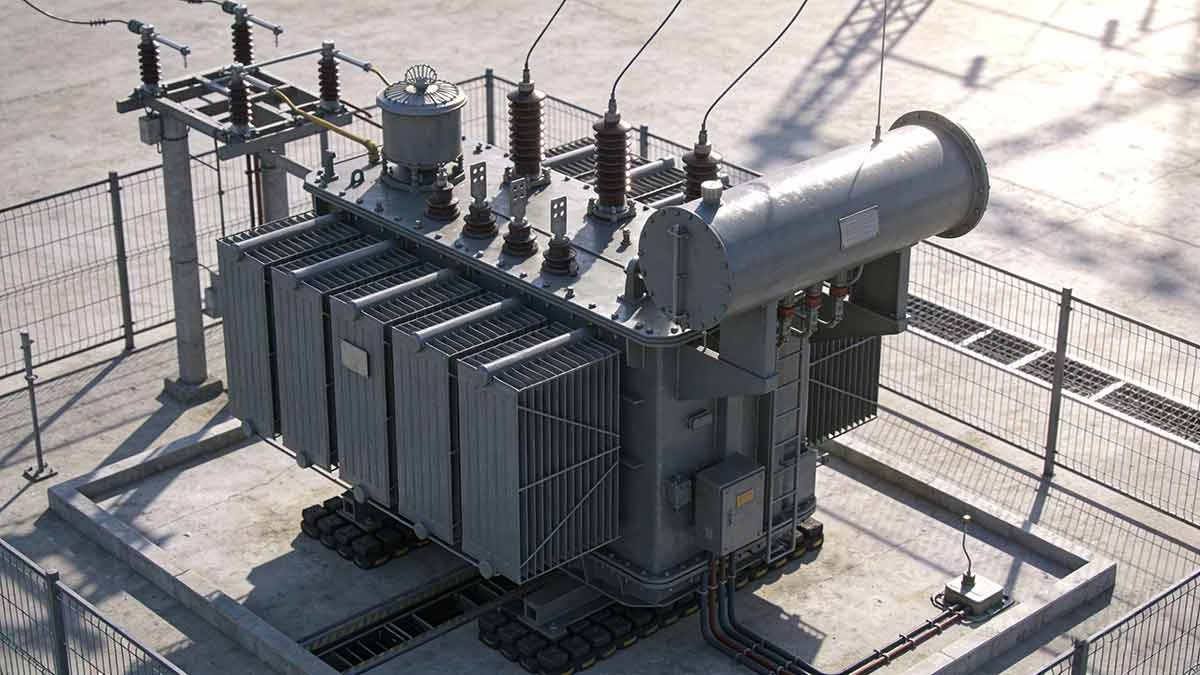
Foundation thickness is directly correlated to transformer rating: for 1–5 MVA units, a 30–40cm thick reinforced concrete pad is recommended; 5–10 MVA units require a 40–50cm pad; and 10–25 MVA units demand a 50–60cm pad with additional steel reinforcement. All foundations must be perfectly level (±0.5mm/m) to prevent uneven weight distribution, which causes stress on the transformer’s tank and internal components.
Pre-Transport Logistics and Equipment Validation
Oil-immersed transformers are heavy, delicate pieces of electrical equipment, with internal components (cores, windings) that are highly susceptible to damage from shock, tilt, and vibration during transportation. Pre-transport planning is therefore a critical pre-installation step, as improper transportation can render a new transformer unfit for operation before it even reaches the installation site.
Pre-transport logistics include verifying the transformer’s weight and dimensions to select the appropriate transportation vehicle (low-loader trailer for heavy units), surveying the transport route for weight restrictions, bridge load capacities, and overhead clearances (power lines, tunnels), and securing all necessary permits for oversized or overweight loads. Additionally, all removable components (bushings, radiators, cooling fans) must be removed and transported separately to prevent damage, and the transformer’s oil tank must be partially drained to a safe level (1/3 capacity) to avoid oil sloshing and tank damage during transit. Shock and tilt sensors should also be installed on the unit to monitor movement and detect excessive stress during transportation—data that is critical for post-transport inspection and validation.
Insulating Oil Quality Pre-Inspection
Transformer oil serves two critical functions: dielectric insulation and thermal cooling. Contaminated, degraded, or low-quality oil is a primary cause of electrical breakdowns and transformer failures, making pre-installation oil quality inspection a non-negotiable step. Even new, factory-supplied oil must undergo rigorous testing to ensure it meets IEC 60296 or ASTM D3487 standards, as storage and transportation can introduce moisture, particulates, or dissolved gases that compromise performance.
Key pre-installation oil quality tests include dielectric strength analysis (minimum 30 kV for new oil), moisture content measurement (maximum 10 ppm), acid number testing (maximum 0.05 mg KOH/g), and interfacial tension analysis (minimum 25 mN/m). Any oil that fails these tests must undergo filtration and degassing before installation to remove contaminants and restore performance. Pre-installation oil inspection also includes verifying the oil’s compatibility with the transformer’s internal components and ensuring all oil handling equipment (hoses, pumps, tanks) is clean and free from contamination to avoid introducing impurities during the filling process.
Electrical Connection and Grounding System Design
Pre-installation planning for electrical connections and grounding is critical to ensure safe, efficient operation and compliance with electrical codes. The design must align with the transformer’s wiring configuration (Delta-Delta, Star-Star, Delta-Star) and application, with clear mapping of high-voltage (HV) and low-voltage (LV) connections, neutral grounding, and protective devices.
Delta-Delta configurations are ideal for industrial power systems due to their ability to handle unbalanced loads, while Star-Star setups are used for high-voltage transmission applications that require a neutral connection. Delta-Star configurations are the most common for distribution transformers, as they efficiently step down high voltage to low voltage for commercial and residential use. The grounding system must be engineered to provide a low-resistance path for fault currents (maximum 5 ohms for most installations), with a dedicated earthing mat or rod system connected to the transformer’s neutral point to ensure voltage stability and safety. Additionally, surge arresters, fuses, and circuit breakers must be sized and positioned to protect the transformer from voltage spikes, overloads, and short circuits—all critical for preventing catastrophic failures post-installation.
Site Selection and Foundation Design Best Practices for Oil-Immersed Transformer Installation
Site selection and foundation design are not secondary considerations for oil-immersed transformer installation—they are integral to the asset’s operational safety, efficiency, and longevity. When these steps are executed without careful engineering and evaluation, the result is a litany of avoidable issues: uneven weight distribution leading to tank deformation, inadequate cooling causing chronic overheating, moisture ingress leading to insulation degradation, and mechanical vibrations damaging internal windings and cores. These issues not only drive up maintenance costs but also increase the risk of unplanned outages and safety hazards, including fire and electrical shock.
For oil-immersed transformer installation, site selection and foundation design demand a holistic evaluation of environmental conditions, structural stability, operational accessibility, and regulatory compliance. The ideal site provides unobstructed thermal regulation, robust protection from environmental contaminants and weather events, and a structurally sound foundation capable of supporting the transformer’s total weight while absorbing operational vibrations. A well-prepared site and engineered foundation do more than just prevent failures—they optimize the transformer’s performance, reduce long-term maintenance costs, and ensure compliance with local electrical, environmental, and safety codes. Contrary to the common myth that an oil-immersed transformer can be installed on any flat surface with minimal preparation, the reality is that even small deviations in site or foundation design can cut the transformer’s expected lifespan by half or more. This section outlines the industry-leading best practices for site selection and foundation design, tailored to different transformer ratings and installation environments (indoor, outdoor, seismic, flood-prone).
Site Selection Criteria: Balancing Functionality, Safety, and Resilience
The goal of site selection for oil-immersed transformer installation is to identify a location that minimizes operational risks, maximizes efficiency, and simplifies maintenance and inspection. The selection process must consider environmental, operational, and safety factors, with each decision aligned to the transformer’s rated capacity, application, and local regulatory requirements. Below are the non-negotiable criteria for evaluating and selecting a site:
Environmental Resilience
Environmental factors are the single biggest driver of site selection, as they directly impact the transformer’s insulation performance, cooling efficiency, and structural integrity. Key environmental considerations include:
- Flood and Water Protection: As noted earlier, flood-prone areas are to be avoided; if installation in a high-risk zone is mandatory, elevated mounting (600mm+ above flood level) with a sealed concrete base is required to prevent water ingress. Additionally, the site must have a functional drainage system to prevent water pooling around the foundation, which can lead to soil erosion and foundation settling.
- Ventilation and Thermal Regulation: Outdoor installations require unobstructed natural airflow, with no tall structures, walls, or vegetation blocking the transformer’s cooling surfaces (radiators, tank walls). Indoor installations demand mechanical ventilation systems (fans, exhausts) sized to the transformer’s heat output—for every 1 kVA of rated capacity, the ventilation system must provide a minimum of 10 cubic meters of air per hour to prevent heat buildup.
- Solar Exposure and Temperature Control: Direct, prolonged sunlight exposure accelerates oil degradation and insulation aging; sites with partial or full shade (e.g., under a covered structure) are preferred for outdoor installations. For extreme temperature environments (below 0°C or above 40°C), additional thermal protection (insulated tank covers, heating elements for cold climates) may be required to maintain optimal oil performance.
- Contamination and Corrosion Prevention: Sites near industrial facilities, construction zones, or coastal areas (salt air) require additional protection against particulates, corrosive fumes, and salt spray. This includes installing protective enclosures, air filters, and corrosion-resistant coatings on external components to prevent degradation.
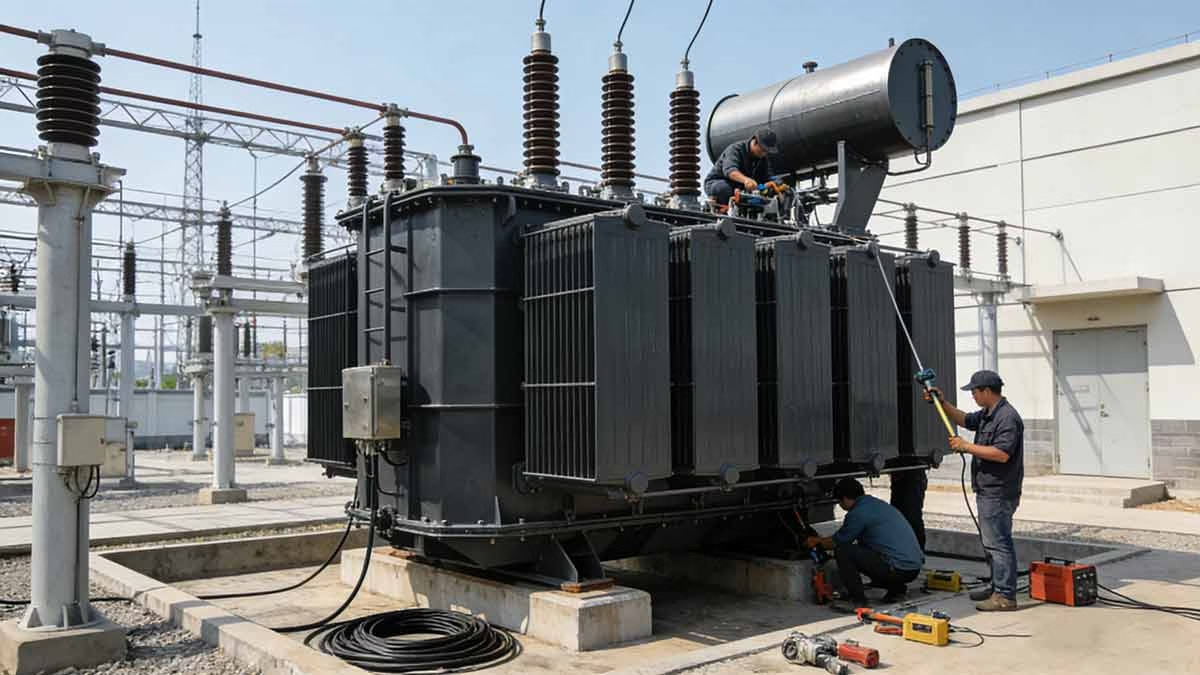
Operational Accessibility and Maintenance
A transformer site must be accessible for installation, routine maintenance, oil testing, and emergency repairs. Inadequate access leads to delayed maintenance, increased repair costs, and safety hazards for technicians. Key accessibility considerations include:
- Load Center Proximity: Minimizing the distance between the transformer and the primary power load reduces transmission line losses, improving energy efficiency and lowering operational costs. For industrial facilities, this means installing transformers near production lines or heavy machinery; for commercial buildings, near the main electrical panel.
- Maintenance Clearance: The site must provide unobstructed clearance around the transformer to allow for oil sampling, tank inspection, cooling system maintenance, and component replacement. Industry standards mandate a minimum 1.5m clearance for walkways and maintenance access, 2m clearance between the transformer and adjacent equipment (to prevent overheating and interference), and 4.5m+ clearance from overhead conductors (to avoid electrical discharge risks).
- Vehicle Access: The site must be accessible to heavy equipment (cranes, low-loader trailers) for installation and replacement, and to service vehicles for routine maintenance. This includes a paved or compacted access road with a load-bearing capacity matching the transformer’s weight.
Safety and Regulatory Compliance
Site selection must prioritize the safety of personnel and the general public, while adhering to local electrical codes, fire codes, and environmental regulations. Key safety considerations include:
- Safe Distance from Occupied Spaces: For outdoor installations, transformers must be positioned a minimum of 3m from occupied buildings, walkways, and public areas to prevent exposure to electrical hazards and oil spills.
- Barrier and Signage Installation: Perimeter barriers (fencing, bollards) and clear safety signage (high voltage, no entry, oil hazard) must be installed around the transformer to prevent unauthorized access and alert personnel to potential risks.
- Oil Spill Containment: Environmental regulations mandate that all oil-immersed transformer installations include an oil spill containment system to prevent groundwater contamination in the event of a leak or spill. This is a critical site design element, covered in detail in the foundation design section below.
Foundation Design: Engineering for Strength, Stability, and Compliance
A transformer’s foundation is more than just a concrete pad—it is a structural system engineered to support static and dynamic loads, absorb vibrations, prevent misalignment, and contain oil spills. The design must be tailored to the transformer’s rated capacity, weight, and installation environment (seismic, flood-prone, indoor/outdoor), with every element aligned to manufacturer specifications and industry standards (IEC 60076, IEEE C57). Below are the core best practices for foundation design for oil-immersed transformer installation:
Load-Bearing Capacity and Material Selection
The foundation’s primary function is to support the transformer’s total weight (unit + full oil capacity) without settling, shifting, or deforming. For this reason, the foundation must be constructed from high-strength reinforced concrete (M30 or higher), with a load-bearing capacity that exceeds the transformer’s total weight by 25% to account for dynamic operational loads, seismic activity, and environmental stress. The concrete pad must be cast on a compacted subbase (crushed stone or gravel) with a minimum thickness of 15cm to prevent soil erosion and settling, and all concrete must be cured for a minimum of 28 days before transformer installation to ensure maximum strength.
Foundation dimensions are directly correlated to transformer rating: the pad’s width and length must be at least 1.5 times the transformer’s base dimensions to provide adequate support and clearance, and thickness must be sized based on weight (1–5 MVA: 30–40cm; 5–10 MVA: 40–50cm; 10–25 MVA: 50–60cm). For transformers rated above 25 MVA, a pile foundation may be required to distribute the load to the underlying bedrock, particularly in areas with soft or unstable soil.
Vibration Isolation and Seismic Protection
Operational vibrations from oil-immersed transformers can cause structural resonance, damage internal components, and create noise nuisances—vibration isolation is therefore a critical foundation design element. For all transformers rated 1 MVA and above, rubber vibration dampers or neoprene pads (60–100mm thick) must be installed between the transformer base and the concrete pad. These dampers absorb operational vibrations, preventing them from transferring to the foundation and adjacent structures.
For installations in seismic zones (per local building codes), the foundation must include additional seismic protection features, such as spring-loaded damping systems, reinforced anchor bolts, and a concrete shear wall to resist lateral forces. The anchor bolts must be embedded a minimum of 30cm into the foundation and secured with nuts and washers to prevent the transformer from shifting during a seismic event. All seismic design elements must comply with IEEE C62.92 and local seismic codes to ensure safety and resilience.
Oil Spill Containment and Drainage
Environmental regulations worldwide mandate that oil-immersed transformer installations include an oil spill containment system to prevent groundwater contamination from accidental leaks or spills. This system is integrated directly into the foundation design and is a non-negotiable element for all outdoor installations. Key features of the oil spill containment system include:
- Containment Sump: A recessed sump (oil pit) constructed beneath the concrete pad, with a capacity of 110% of the transformer’s total oil capacity—this ensures that all oil from a complete spill is contained, with no runoff into the environment.
- Absorption Layers: The sump is filled with layers of crushed stone and gravel to absorb oil and prevent it from pooling, with a geotextile liner to separate the absorption material from the underlying soil.
- Oil-Water Separator: For installations with a drainage system, an oil-water separator is installed to remove oil from any water that enters the containment sump (e.g., rainwater), ensuring only clean water is discharged.
- Sloped Foundation: The concrete pad is sloped at a 2–5% gradient toward the containment sump to direct any oil leaks or spills into the sump, preventing pooling on the pad surface.
In addition to oil containment, the foundation must include a dedicated drainage system to direct rainwater and surface water away from the transformer and foundation. This system includes drainage channels or pipes connected to the site’s main drainage network, with a filter to prevent debris from clogging the lines—clogged drainage leads to water pooling, soil erosion, and foundation settling.
Leveling and Alignment
A perfectly level foundation is essential for oil-immersed transformer installation, as unevenness causes uneven weight distribution, mechanical stress, and misalignment of internal components. The concrete pad must be level to a tolerance of ±0.5mm/m, with no high or low spots that could cause the transformer to tilt. Leveling is verified using a precision laser level during the concrete pouring process and again before transformer installation—any deviations are corrected with shims or concrete grinding to ensure a perfect surface. Proper alignment also ensures that the transformer’s cooling system (radiators, fans) functions optimally, with no obstructions to airflow caused by tilting.
Final Site and Foundation Pre-Installation Validation
Before the transformer arrives on-site, a comprehensive validation of the site and foundation is required to ensure all design and installation standards are met. This validation includes a detailed checklist that verifies:
- Site clearances meet industry and manufacturer specifications for ventilation, maintenance, and safety.
- The foundation is level, structurally sound, and has cured for the required 28 days.
- The oil spill containment and drainage systems are installed and functional.
- Anchor bolts, vibration dampers, and seismic protection features are correctly positioned and secured.
- Protective barriers, safety signage, and grounding systems are installed and tested.
- The site is accessible to heavy equipment and service vehicles, with all necessary permits in place.
Any deficiencies identified during this validation are corrected before the transformer is transported to the site—this eliminates costly delays and rework during the installation phase, ensuring a seamless process from start to finish.
Safe Transportation and Handling Protocols for Oil-Immersed Transformer Installation
Transportation and handling are among the highest-risk phases of oil-immersed transformer installation, as these heavy, delicate assets are highly susceptible to damage from shock, tilt, vibration, and improper lifting. Unlike standard industrial equipment, oil-immersed transformers house precision internal components—laminated cores, copper windings, and dielectric bushings—that can be permanently damaged by even minor mishandling. A single mistake during transportation (e.g., lifting from an unapproved point, excessive tilting, or inadequate vibration damping) can lead to winding displacement, core damage, or oil tank deformation, rendering the transformer unfit for operation and resulting in costly repairs or replacement.
For oil-immersed transformer installation, safe transportation and handling demand specialized planning, purpose-built equipment, and strict adherence to manufacturer and industry protocols. The process is not a one-size-fits-all task: it is tailored to the transformer’s rated capacity, weight, dimensions, and the transport route’s conditions (e.g., road quality, overhead clearances, seismic zones). The core objectives of safe transportation and handling are to preserve the transformer’s structural and electrical integrity, prevent oil leaks and contamination, and ensure the safety of the transportation and installation crew. This section outlines the step-by-step industry protocols for pre-transport preparation, loading, in-transit monitoring, unloading, and post-transport inspection—all critical for a damage-free oil-immersed transformer installation.
Pre-Transport Preparation: Planning for Zero Damage
The foundation of safe transformer transportation is meticulous pre-transport planning and preparation. This phase begins weeks before the unit is moved, with a detailed evaluation of the transformer, transport route, and on-site installation conditions. Cutting corners in pre-transport preparation is the leading cause of transportation-related damage, making this phase non-negotiable for all oil-immersed transformer installations.
Transformer-Specific Preparation
Every oil-immersed transformer is designed with specific transportation requirements, outlined in the manufacturer’s technical manual—these requirements must be followed to the letter. Key transformer preparation steps include:
- Oil Level Adjustment: The transformer’s oil tank is partially drained to a safe level (1/3 of total capacity) to prevent oil sloshing during transit, which can cause tank deformation and internal component damage. The remaining oil is sufficient to provide dielectric protection to the core and windings during transportation.
- Removable Component Removal: All fragile or detachable components—HV/LV bushings, radiators, cooling fans, oil conservators, and instrumentation—are removed and packaged in protective crates for separate transportation. This prevents damage to these high-value components during lifting and transit, and they are reinstalled on-site by certified technicians.
- Protective Coating and Covering: The transformer’s tank and external metal components are coated with a temporary corrosion-resistant spray, and the entire unit is covered with a heavy-duty, waterproof tarpaulin to protect against dust, moisture, and road debris. Bushings and other delicate fittings (if not removed) are covered with custom wooden or foam padding to prevent impact damage.
- Sensor Installation: Shock, tilt, and temperature sensors are mounted on the transformer’s tank to monitor conditions during transit. Shock recorders are set to a threshold of <2g (acceleration), tilt sensors to <10° (any direction), and temperature sensors to <50°C—exceeding these thresholds triggers an alert, and the transport team is instructed to stop and inspect the unit immediately.
- Lifting Point Verification: The manufacturer’s designated lifting points (eye bolts, brackets, or lifting lugs) are inspected to ensure they are in good condition and capable of supporting the transformer’s total weight. Any damaged or worn lifting points are repaired or replaced before transportation—lifting from unapproved points is the single biggest cause of structural damage during transport.
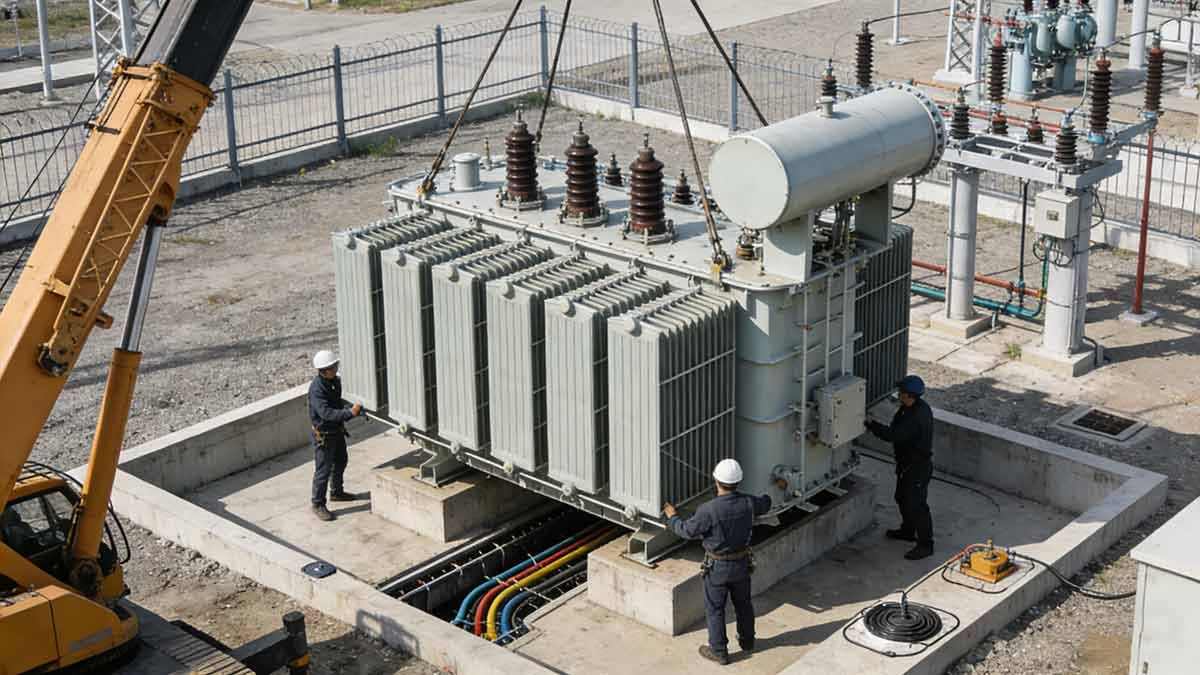
Route Planning and Logistics
A detailed route survey is conducted by a professional logistics team to identify and mitigate any risks along the transport path from the manufacturer’s facility to the installation site. Key route planning steps include:
- Route Survey: The team inspects the entire route for road quality (potholes, uneven pavement), weight restrictions (bridges, overpasses), overhead clearances (power lines, tunnels, tree branches), and narrow passages (roundabouts, sharp turns). Any problematic sections are either avoided or modified (e.g., tree trimming, road repair) before transit.
- Permit Acquisition: All necessary permits for oversized/overweight loads are obtained from local and state transportation authorities, including escort vehicle permits (required for loads exceeding a certain width/weight). Escort vehicles (front and rear) are arranged to guide the transport trailer and alert other motorists to the oversized load.
- Equipment Selection: The transport vehicle is selected based on the transformer’s weight and dimensions—low-loader semi-trailers with air suspension are the gold standard for oil-immersed transformer transportation, as they absorb road vibrations and provide a stable platform. For extremely heavy units (25 MVA+), self-propelled modular transporters (SPMTs) may be used for on-site movement.
- On-Site Preparation: The installation site is prepared for the transformer’s arrival, with a clear, level staging area for the transport trailer, and a certified crane (with a load capacity exceeding the transformer’s weight by 25%) positioned and ready for unloading. The crane is inspected and certified by a third party to ensure it is in safe operating condition.
Pre-Transport Checklist Validation
Before the transformer is loaded onto the transport vehicle, a comprehensive pre-transport checklist is completed to verify that all preparation steps are finished. The checklist includes verification of:
- Transformer weight and dimensions against transport vehicle capacity.
- Safe oil level and secure tank seals (no leaks).
- Removable components removed and packaged.
- Protective coverings and padding installed.
- Shock/tilt/temperature sensors installed and functional.
- Lifting points inspected and approved.
- Route survey completed and permits acquired.
- On-site unloading equipment (crane, SPMT) positioned and certified.
Only when all checklist items are verified is the transformer cleared for loading and transportation.
Safe Loading and Securing: Preventing Movement During Transit
Loading an oil-immersed transformer onto a transport vehicle is a precision operation that requires a certified crane operator, a dedicated rigging team, and strict adherence to lifting and securing protocols. Improper loading can cause immediate damage to the transformer (e.g., core misalignment, tank deformation) or create a safety hazard for the transport team and other motorists.
Lifting Best Practices
Lifting the transformer is the most critical step of the loading process, and only manufacturer-designated lifting points may be used—lifting from the tank, base rails, or any unapproved point will cause permanent structural or internal damage. Key lifting protocols include:
- Rigging Selection: High-strength synthetic slings or chain slings (rated for the transformer’s total weight) are used, with spreader beams to distribute the lifting force evenly across the transformer’s lifting points. Spreader beams prevent the slings from squeezing the tank or damaging external components.
- Crane Operation: The crane is positioned on a level, stable surface (compacted gravel or concrete) to prevent tipping, and the load is lifted slowly and steadily—sudden movements or jerks cause shock damage to internal components. The transformer is lifted just a few centimeters off the ground and held for 10–15 seconds to verify the rigging and lifting points are secure before being raised to the transport vehicle’s height.
- Level Lifting: The transformer is kept perfectly level during lifting to prevent oil sloshing and internal component misalignment. The crane operator uses a spirit level to verify that the unit is level, and adjustments are made to the slings if needed.
Securing the Transformer on the Transport Vehicle
Once the transformer is lowered onto the transport trailer, it is secured to prevent movement during transit—even minor shifting can cause vibration damage or tank deformation. Key securing protocols include:
- Padding and Stabilization: Heavy-duty rubber mats or wooden blocks are placed between the transformer’s base and the trailer’s deck to absorb road vibrations and prevent slipping. The blocks are positioned at the transformer’s four corners and along the base rails for maximum stability.
- Tie-Down Straps: High-strength ratchet tie-down straps (rated for the transformer’s weight) are used to secure the unit to the trailer’s anchor points. A minimum of four straps is used (one at each corner), with additional straps for longer units. The straps are tightened evenly to avoid uneven pressure on the tank.
- Blockading: Steel wheel chocks or blockades are placed against the transformer’s base rails to prevent forward/backward and side-to-side movement. The blockades are secured to the trailer deck with bolts or welds to ensure they do not shift during transit.
- Final Inspection: The secured transformer is inspected to verify there is no movement or play, and the tie-down straps are re-tightened after the first 50km of transit to account for any stretching.
In-Transit Monitoring: Real-Time Risk Mitigation
Even with the most careful loading and securing, road conditions (e.g., potholes, speed bumps, sharp turns) can create shock, tilt, or vibration that damages the transformer. Real-time in-transit monitoring is therefore critical to detect and address issues before they cause permanent damage.
Sensor Monitoring
The shock, tilt, and temperature sensors installed on the transformer provide real-time data to the transport team, with alerts triggered when thresholds are exceeded (shock >2g, tilt >10°, temperature >50°C). The team carries a portable monitor to track the sensor data, and the transport vehicle is stopped immediately if an alert is triggered. The transformer is inspected for damage (e.g., oil leaks, tank deformation), and any issues are addressed before transit resumes.
Routine Inspections
The transport team conducts routine inspections of the transformer at every rest stop or after every 100km of transit. The inspections include:
- Checking for oil leaks from the tank or seals.
- Verifying that tie-down straps are tight and that blockades are secure.
- Inspecting protective coverings for damage (tears, loose padding).
- Checking sensor data for any minor threshold breaches (even if no alert was triggered).
Speed and Driving Protocols
The transport vehicle is driven at a reduced speed (maximum 40km/h on highways, 20km/h on local roads) to minimize vibration and shock. Sudden acceleration, braking, and sharp turns are avoided, and the vehicle is kept in the slow lane to reduce the risk of collisions. Escort vehicles travel ahead and behind the transport trailer to alert other motorists and clear the way for safe passage.
Safe Unloading and On-Site Positioning: The Final Transport Step
Unloading the transformer at the installation site is a mirror of the loading process—precision, care, and adherence to manufacturer protocols are essential. The goal is to lower the unit onto the engineered foundation with zero shock, tilt, or movement, ensuring a seamless transition to the installation phase.
Pre-Unloading Preparation
Before unloading, the on-site team verifies all pre-installation steps are complete: the foundation is level and structurally sound, vibration dampers are in place, anchor bolts are positioned correctly, and the crane is certified and ready for operation. The staging area is cleared of all obstacles, and a safety perimeter is established to prevent unauthorized access to the work zone. The transport trailer is positioned as close to the foundation as possible, and the trailer’s air suspension is adjusted to level the deck with the foundation (if needed).
Unloading Best Practices
Unloading follows the same lifting protocols as loading, with the crane operator lifting the transformer slowly and steadily, keeping it perfectly level at all times. Key unloading steps include:
- The transformer is lifted just a few centimeters off the trailer deck and held for 10–15 seconds to verify rigging and lifting points.
- The unit is moved slowly to the foundation, with the crane operator guided by a spotter to ensure precise alignment with the anchor bolts and vibration dampers.
- The transformer is lowered gently onto the foundation, with the spotter verifying alignment at all four corners. The unit is lowered in small increments (1–2cm at a time) to avoid shock damage to the foundation and transformer.
- Once the transformer is resting on the vibration dampers, the rigging is removed, and the unit is secured to the anchor bolts (hand-tightened initially—final torquing is done after alignment verification).
On-Site Movement (If Required)
For installations where the transformer cannot be unloaded directly onto the foundation (e.g., tight spaces), SPMTs are used for on-site movement. SPMTs provide a stable, low-profile platform for moving heavy transformers, with precise steering and speed control to avoid obstacles and ensure alignment with the foundation. The transformer is secured to the SPMT with tie-down straps and padding, and movement is guided by a team of certified technicians to ensure zero damage.
Post-Transport Inspection and Validation
After the transformer is positioned on the foundation, a comprehensive post-transport inspection is conducted to verify that the unit has not sustained any damage during transit. This inspection is critical, as hidden damage (e.g., winding displacement, core misalignment) may not be visible to the naked eye but can cause catastrophic failures during commissioning. The post-transport inspection includes:
Visual and Structural Inspection
A detailed visual inspection of the transformer’s tank, base, and external components to check for:
- Dents, cracks, or deformation of the oil tank.
- Leaks from tank seals, valves, or fittings (oil stains or wet spots).
- Damage to external metal components (rails, brackets, cooling system mounts).
- Loose or damaged lifting points.
Any visual damage is documented and reported to the manufacturer, and repairs are made before proceeding with installation.
Sensor Data Review
The shock, tilt, and temperature sensor data are downloaded and reviewed to identify any threshold breaches during transit. Even minor breaches (e.g., a 1.8g shock or 8° tilt) trigger a more detailed inspection of the transformer’s internal components, as these can cause hidden damage to windings and cores.
Oil Quality and Level Check
The transformer’s oil level is checked to ensure no oil was lost during transit, and a small oil sample is taken for dielectric strength and moisture content testing. If the oil quality has degraded (e.g., moisture content >10 ppm), the oil is filtered and degassed before proceeding with installation.
Electrical Pre-Inspection
A basic electrical pre-inspection is conducted to verify that the transformer’s insulation resistance (using a megger test) is within manufacturer specifications. A low insulation resistance reading indicates moisture ingress or internal component damage, requiring a more detailed electrical test before installation.
Only when the post-transport inspection is passed—with no visible or hidden damage—is the transformer cleared for the next phase of oil-immersed transformer installation: oil filling, filtration, and testing.
Transformer Oil Filling, Filtration, and Testing for Reliable Oil-Immersed Transformer Installation
Transformer oil is the lifeblood of an oil-immersed transformer, serving two irreplaceable functions: dielectric insulation that prevents electrical breakdown between windings and the tank, and thermal cooling that dissipates heat generated during voltage conversion. For a reliable oil-immersed transformer installation, the handling, filling, filtration, and testing of this critical fluid are not optional steps—they are foundational to the transformer’s operational safety, efficiency, and longevity. Even minor oversights in oil management (e.g., unfiltered filling, moisture contamination, or inadequate testing) can lead to dielectric breakdown, overheating, winding failure, and catastrophic transformer malfunctions. These issues are entirely avoidable with strict adherence to industry standards and manufacturer protocols for oil handling.
A common misconception in the industry is that new, factory-supplied transformer oil can be filled directly into the unit without filtration or testing—this is a dangerous error. Even pristine factory oil can absorb moisture, dissolve atmospheric gases, or pick up particulates during storage and transportation, all of which compromise its dielectric and cooling performance. For oil-immersed transformer installation, transformer oil must undergo a rigorous process of filtration, degassing, and quality testing before and during filling, with ongoing monitoring to ensure it meets the strictest industry standards (IEC 60296, ASTM D3487). This section outlines the authoritative, step-by-step best practices for transformer oil filling, filtration, and testing—tailored to different transformer ratings and voltage levels—with a focus on mitigating contamination risks and ensuring the oil performs optimally for the life of the transformer.
Critical Pre-Filling Preparations for Transformer Oil
Before any oil is introduced into the transformer, a series of pre-filling preparations must be completed to eliminate contamination risks and ensure the filling process is seamless. These preparations address the transformer’s oil system, the oil itself, and the handling equipment—all potential sources of contamination that can derail a successful oil-immersed transformer installation. Cutting corners in pre-filling preparation is the leading cause of post-installation oil-related failures, making this phase non-negotiable.
Transformer Oil System Inspection and Cleaning
The transformer’s internal and external oil system (tank, pipes, valves, conservator, cooling system) must be inspected and cleaned to remove any debris, dust, or moisture that accumulated during manufacturing, transportation, and on-site installation. Key steps include:
- Internal Tank Cleaning: For new transformers, the internal tank is inspected for factory debris (metal shavings, insulation material) and cleaned with dry, filtered air or nitrogen if needed. For refurbished transformers, the tank is chemically cleaned and dried to remove old oil residue and contaminants.
- Seal and Valve Inspection: All oil system seals (gaskets, O-rings) and valves are inspected for damage, wear, or misalignment—leaky seals allow moisture and air to enter the oil system, compromising oil quality. Damaged seals are replaced with manufacturer-approved parts, and all valves are tested to ensure they open and close smoothly.
- Cooling System Flushing: The transformer’s cooling system (radiators, oil pumps, pipes) is flushed with dry, filtered air to remove debris and moisture, and tested for flow to ensure optimal cooling performance post-filling.
- Vacuum Testing: The entire oil system is subjected to a vacuum test (minimum 500 microns for high-voltage transformers) to detect leaks and remove trapped air and moisture. A stable vacuum reading over 30 minutes confirms the system is leak-tight and free from moisture.
Transformer Oil Quality Verification
Even new transformer oil must undergo a full quality verification before filling, as storage and transportation can compromise its performance. The oil is tested in a certified laboratory to ensure it meets the manufacturer’s specifications and industry standards, with the following key tests as non-negotiables:
- Dielectric Strength Test: Measures the oil’s ability to withstand high voltage without breakdown—minimum 30 kV for new oil (IEC 60156), with higher requirements for high-voltage transformers (66 kV+ requires >40 kV).
- Moisture Content Test: Measures the amount of water in the oil—maximum 10 ppm for new oil (IEC 60814), as moisture drastically reduces dielectric strength.
- Acid Number Test: Measures the oil’s acidity—maximum 0.05 mg KOH/g for new oil, as high acidity causes corrosion of internal metal components and insulation degradation.
- Interfacial Tension Test: Measures the oil’s ability to resist sludge formation—minimum 25 mN/m for new oil (IEC 60819), as low interfacial tension indicates contamination with oil-soluble impurities.
- Dissolved Gas Analysis (DGA): Measures the concentration of dissolved gases (hydrogen, methane, ethylene) in the oil—new oil should have near-zero levels of these gases, as their presence indicates thermal or electrical stress.
Any oil that fails these tests is rejected and replaced, or processed through filtration and degassing to restore performance before filling.
Oil Handling Equipment Sanitization
All oil handling equipment (pumps, hoses, tanks, filters, funnels) is a potential source of contamination, making sanitization a critical pre-filling step. The equipment must be dedicated to transformer oil only—never used for other fluids (e.g., hydraulic oil, diesel)—and sanitized using the following steps:
- Cleaning: Hoses and tanks are flushed with clean transformer oil to remove debris and old oil residue, then dried with dry, filtered air.
- Purification: Pumps and filters are disassembled and cleaned, with all replaceable filters (micron, water-absorbing) replaced with new ones.
- Leak Testing: All equipment is pressure-tested to detect leaks, and hoses are inspected for cracks or wear—leaky equipment introduces air and moisture into the oil during filling.
- Covering: Sanitized equipment is covered with clean, waterproof tarpaulins to prevent dust and moisture contamination until the filling process begins.
Transformer Oil Filling: Industry-Proven Methods for Contamination-Free Installation
The oil filling process for oil-immersed transformer installation is designed to introduce the oil into the transformer’s system without trapping air, moisture, or particulates—trapped air is a leading cause of partial discharge and insulation failure, particularly in high-voltage transformers. Two primary filling methods are used in the industry: vacuum filling (the gold standard for medium and high-voltage transformers, 11 kV+) and gravity filling (for low-voltage transformers, <11 kV). Each method has strict protocols that must be followed to ensure a contamination-free fill, with vacuum filling being the preferred method for all commercial and industrial oil-immersed transformer installations.
Vacuum Filling: The Preferred Method for Medium/High-Voltage Transformers
Vacuum filling is the most reliable method for oil-immersed transformer installation, as it removes trapped air and moisture from the transformer’s internal system while filling the oil—eliminating the risk of air bubbles and moisture contamination. This method is mandatory for transformers rated 11 kV and above, as high voltage magnifies the risks of partial discharge from trapped air. The step-by-step vacuum filling process is as follows:
- Establish a Deep Vacuum: The transformer’s oil system is evacuated to a deep vacuum (500–1000 microns for 11–33 kV transformers, <500 microns for 66 kV+ transformers) and held for a minimum of 24 hours (or per manufacturer specifications). This removes all trapped air and moisture from the tank, windings, and insulation.
- Heat the Oil: The transformer oil is heated to a temperature of 60–70°C before filling—heating reduces the oil’s viscosity, making it easier to flow and penetrate the transformer’s internal insulation, and also releases dissolved gases for easier removal.
- Vacuum Filling: The heated, filtered oil is pumped into the transformer’s oil system under continuous vacuum, with the filling rate controlled to 5–10 liters per minute (LPM) for medium-voltage transformers and 3–5 LPM for high-voltage transformers. Slow filling ensures the oil displaces the vacuum without trapping air, and the oil is introduced at the bottom of the tank to prevent splashing and air bubble formation.
- Monitor Oil Level: The oil level is monitored continuously using the transformer’s conservator tank gauge, with filling stopped when the oil reaches the manufacturer’s specified “cold fill” level (marked on the conservator). Overfilling is avoided, as oil expands when heated during operation and can cause leaks.
- Break the Vacuum Slowly: After filling, the vacuum is broken slowly (over 1–2 hours) by introducing dry, filtered nitrogen or air into the oil system—sudden vacuum breaking causes oil splashing and air entrainment. The nitrogen/air is introduced at the top of the tank to displace the vacuum gently.
- Settling Period: The filled transformer is left to settle for a minimum of 24 hours (48 hours for high-voltage transformers) to allow any remaining air bubbles to rise to the surface and be vented through the conservator tank’s air release valves. During the settling period, the oil temperature is maintained at 20–25°C to ensure optimal settling.
Gravity Filling: For Low-Voltage Transformers (<11 kV)
Gravity filling is a simpler method used for low-voltage oil-immersed transformers (<11 kV), where the risk of partial discharge from trapped air is lower. While less complex than vacuum filling, gravity filling still requires strict protocols to prevent contamination and air entrainment. The step-by-step gravity filling process is as follows:
- Prepare the Oil and Transformer: The oil is filtered (1–5 micron) and degassed, and the transformer’s air release valves (located at the top of the tank and windings) are opened to allow air to escape during filling.
- Elevate the Oil Tank: The oil storage tank is elevated above the transformer’s fill port (minimum 1m height) to create a gentle gravity flow—this prevents splashing and air bubble formation.
- Filtered Filling: The oil is passed through a 1–5 micron inline filter as it flows into the transformer’s fill port, removing any particulates that may have entered the oil during handling. The filling rate is controlled to 10–15 LPM to ensure smooth flow.
- Bleed Air Bubbles: As the oil fills the tank, air is bled from the air release valves—bleeding continues until a steady stream of oil (no air bubbles) flows from each valve, which is then closed tightly.
- Set the Oil Level: Filling is stopped when the oil reaches the manufacturer’s specified cold fill level on the conservator gauge, and the fill port is sealed with a manufacturer-approved gasket and bolted cover.
- Settling Period: The transformer is left to settle for a minimum of 12 hours, with air release valves opened periodically to vent any remaining air bubbles.
Transformer Oil Filtration and Degassing: Removing Contaminants for Optimal Performance
Even after pre-filling quality verification, transformer oil may contain trace amounts of moisture, dissolved gases, or particulates that compromise its performance—filtration and degassing are therefore critical steps for oil-immersed transformer installation, either before filling (for new oil) or after filling (to remove contaminants introduced during the filling process). Filtration and degassing are not one-time steps: they are ongoing processes that ensure the oil maintains its dielectric and cooling performance for the life of the transformer, but they are especially critical during installation to set a foundation of clean, high-quality oil.
Why Oil Filtration and Degassing Are Non-Negotiable
Contaminants in transformer oil have a direct, negative impact on the transformer’s performance and lifespan, with each type of contamination causing specific issues:
- Moisture: The most damaging contaminant, moisture reduces the oil’s dielectric strength by up to 50% at just 50 ppm, leading to electrical breakdown and winding failure. Moisture also causes corrosion of internal metal components and insulation degradation.
- Dissolved Gases: Gases like hydrogen, methane, and ethylene dissolve in the oil during storage and filling—these gases cause partial discharge at high voltage, leading to insulation breakdown and thermal stress.
- Solid Particulates: Dust, metal shavings, and insulation material block the transformer’s cooling system, causing overheating and reducing thermal efficiency. Particulates also act as abrasives, damaging internal components over time.
- Sludge and Oxidation Byproducts: Even new oil can form small amounts of sludge if exposed to air and heat—sludge clogs cooling channels and insulates windings, leading to overheating and premature failure.
Industry-Standard Oil Filtration and Degassing Equipment
Oil filtration and degassing for oil-immersed transformer installation require purpose-built equipment that targets all types of contaminants. The core equipment used in the industry includes:
- Vacuum Oil Purifiers: The workhorse of oil treatment, these units combine vacuum dehydration (to remove moisture) and degassing (to remove dissolved gases) with mechanical filtration (to remove particulates). They operate by heating the oil to 60–70°C, passing it through a high-vacuum chamber (where moisture and gases evaporate), and then filtering it through 1–5 micron filters to remove particulates.
- Centrifugal Oil Separators: These units use centrifugal force to separate solid particulates and water from the oil—ideal for removing large amounts of contamination (e.g., water from a flooded oil tank). They are used in conjunction with vacuum oil purifiers for heavy contamination.
- Micron Filter Housings: Inline 1–5 micron filter housings are used during filling and filtration to remove fine particulates that escape the vacuum oil purifier. These filters are disposable and replaced after each use to ensure optimal filtration.
- Water-Absorbing Filters: These specialized filters use molecular sieves to remove trace amounts of moisture (down to <5 ppm) from the oil, ideal for high-voltage transformers that require ultra-dry oil.
Step-by-Step Oil Filtration and Degassing Process
The filtration and degassing process for oil-immersed transformer installation is tailored to the oil’s contamination level, with a standard process for new oil and a more intensive process for contaminated oil. The standard process for new oil (pre-filling) is as follows:
- Heat the Oil: The oil is heated to 60–70°C in a sealed storage tank to reduce viscosity and release dissolved gases/moisture.
- Primary Filtration/Degassing: The oil is pumped through a vacuum oil purifier at a rate of 20–30 LPM, with the unit set to a vacuum of 500 microns. This step removes >99% of moisture, dissolved gases, and 1–5 micron particulates.
- Secondary Filtration: The oil is passed through a water-absorbing filter and a 1 micron inline filter to remove trace moisture and fine particulates.
- Quality Retesting: A sample of the filtered/degassed oil is tested for dielectric strength, moisture content, and acid number—only oil that meets the manufacturer’s specifications is cleared for filling.
For contaminated oil (e.g., oil with moisture content >50 ppm or visible particulates), the process is repeated 2–3 times, with a centrifugal oil separator used as a pre-treatment step to remove large amounts of water and solids. After filling, the oil is again filtered and degassed (circulated through the vacuum oil purifier for 4–6 hours) to remove any contaminants introduced during the filling process.
Transformer Oil Testing: Ongoing Quality Monitoring for Installation and Beyond
Oil testing is not just a pre-filling step for oil-immersed transformer installation—it is an ongoing process that begins with pre-filling verification, continues during and after filling, and extends into the transformer’s operational life. The goal of oil testing is to monitor the oil’s quality, detect contamination or degradation early, and take corrective action (e.g., filtration, oil replacement) before it causes transformer failure. For installation, oil testing is critical to confirm that the oil is clean and fit for use, and to validate that the filling and filtration processes were successful. Below are the key oil tests for oil-immersed transformer installation, along with their acceptance criteria and testing frequency.
Key Oil Tests for Installation: Pre-Fill, Post-Fill, and Pre-Commissioning
Three rounds of oil testing are mandatory for a successful oil-immersed transformer installation: pre-filling (verification of new oil quality), post-filling (validation of contamination-free filling), and pre-commissioning (final verification before energization). The key tests for each round are the same, with strict acceptance criteria aligned to IEC and ASTM standards:
| Test Name | Purpose | Acceptable Value for New/Installed Oil |
|---|---|---|
| Dielectric Strength | Measures voltage withstand capability (dielectric performance) | >30 kV (IEC 60156) |
| Moisture Content | Detects water contamination (the most damaging impurity) | <10 ppm (IEC 60814) |
| Acid Number | Evaluates acidity (corrosion and sludge risk) | <0.05 mg KOH/g (IEC 60819) |
| Interfacial Tension | Detects oil-soluble contaminants and sludge formation | >25 mN/m (IEC 60819) |
| Dissolved Gas Analysis (DGA) | Identifies dissolved gases (thermal/electrical stress) | Near-zero H₂, CH₄, C₂H₄, C₂H₂ |
A fourth test—oil viscosity—is also recommended for high-voltage transformers, with an acceptable value of 10–20 cSt at 40°C (IEC 60296) to ensure optimal flow and cooling performance.
Advanced Oil Testing: Dissolved Gas Analysis (DGA) for Early Fault Detection
DGA is the most powerful oil test for oil-immersed transformers, as it detects hidden faults (e.g., partial discharge, overheating, arcing) by measuring the concentration of dissolved gases in the oil. While new oil should have near-zero levels of these gases, DGA is critical during installation to confirm no thermal or electrical stress was introduced during transportation, handling, or filling (e.g., core damage leading to hydrogen generation). For installation, DGA is conducted pre-commissioning, with any abnormal gas levels triggering a detailed inspection of the transformer’s internal components before energization.
Key gases detected by DGA and their associated transformer issues include:
- Hydrogen (H₂): The most common gas, generated by partial discharge, moisture decomposition, or mild overheating—levels >100 ppm indicate a potential fault.
- Methane (CH₄): Generated by minor oil overheating (100–300°C)—levels >50 ppm indicate thermal stress.
- Ethylene (C₂H₄): Generated by severe oil overheating (300–700°C)—levels >20 ppm indicate significant thermal stress.
- Acetylene (C₂H₂): The most critical gas, generated by arcing or high-temperature sparking (>700°C)—any detectable level (≥1 ppm) indicates a serious fault that requires immediate investigation and repair.
Post-Installation Oil Testing Schedule
After the transformer is commissioned and put into operation, oil testing continues on a scheduled basis to monitor quality and detect degradation early. The testing schedule is tailored to the transformer’s rating and application, with more frequent testing for high-voltage and critical industrial transformers:
- Oil Level Check: Monthly (visual inspection of the conservator tank gauge).
- Basic Oil Testing (Dielectric Strength, Moisture Content): Every 6 months.
- Full Oil Analysis (DGA, Acid Number, Interfacial Tension): Annually.
- Oil Filtration/Purification: Every 3–5 years (or as needed if testing shows degradation).
- Complete Oil Replacement: Every 10–15 years (or earlier if testing shows irreversible degradation).
Common Oil Handling Mistakes and How to Avoid Them
Even with the most rigorous protocols, oil handling mistakes can occur during oil-immersed transformer installation—these mistakes are often avoidable with proper training, planning, and adherence to manufacturer specifications. Below are the most common oil handling mistakes, their risks, and the industry-proven solutions to prevent them:
| Common Mistake | Associated Risk | Prevention Solution |
|---|---|---|
| Skipping oil filtration/testing | Reduced dielectric strength, electrical breakdown, and winding failure | Conduct mandatory pre-fill/post-fill/pre-commissioning oil testing; filter all oil before filling |
| Filling oil without a vacuum (HV transformers) | Trapped air causes partial discharge, insulation failure, and HV breakdown | Use vacuum filling for all transformers 11 kV+; follow manufacturer’s vacuum specifications |
| Using contaminated handling equipment | Introduction of moisture, particulates, and oil-soluble contaminants | Sanitize all equipment with clean transformer oil and dry air; use dedicated oil handling equipment |
| Overfilling/underfilling the transformer | Oil leaks (overfill) or inadequate cooling/insulation (underfill) | Fill to the manufacturer’s marked “cold fill” level; monitor oil level continuously during filling |
| Ignoring the post-filling settling period | Trapped air bubbles remain, causing partial discharge and insulation damage | Follow mandatory settling periods (24h for HV, 12h for LV); vent air release valves periodically |
| Exposing oil to the open air for extended periods | Moisture/air absorption, oxidation, and particulate contamination | Keep oil storage tanks sealed; use nitrogen blanketing for long-term oil storage; minimize fill port open time |
By avoiding these common mistakes and adhering to the industry-proven oil handling protocols outlined in this section, you ensure that the transformer oil performs its critical dielectric and cooling functions optimally—laying the foundation for a reliable, long-lasting oil-immersed transformer installation.
Essential Electrical and Mechanical Tests Prior to Oil-Immersed Transformer Installation Commissioning
Commissioning an oil-immersed transformer without comprehensive electrical and mechanical testing is a catastrophic mistake that puts the entire power system at risk. The installation phase culminates in commissioning—the moment the transformer is energized and put into operational service—and pre-commissioning testing is the final line of defense against hidden defects, installation errors, and component damage that may have occurred during transportation, handling, or oil filling. These tests verify that the transformer’s electrical systems (windings, insulation, bushings) and mechanical systems (core, tank, cooling, mounting) meet manufacturer specifications and industry standards, ensuring the unit is safe, efficient, and reliable before it is connected to the power grid.
A common myth in the industry is that a new, factory-tested transformer does not require pre-commissioning testing—this could not be further from the truth. Factory testing is conducted under controlled conditions, and transportation, handling, and on-site installation can introduce hidden damage (e.g., winding displacement, core misalignment, insulation moisture ingress) that factory tests cannot account for. For oil-immersed transformer installation, pre-commissioning electrical and mechanical tests are mandatory, regardless of whether the unit is new or refurbished. These tests are designed to detect both visible and hidden issues, validate the success of the installation process, and ensure compliance with local electrical codes and safety standards (IEC 60076, IEEE C57). This section outlines the essential electrical and mechanical tests for pre-commissioning, including their purpose, step-by-step procedures, acceptance criteria, and the equipment required to perform them accurately. All tests must be conducted by certified electrical engineers and technicians with specialized training in transformer testing and commissioning.
Core Principles of Pre-Commissioning Testing
Before diving into the specific tests, it is critical to understand the core principles that guide pre-commissioning testing for oil-immersed transformer installation. These principles ensure the tests are accurate, reliable, and actionable, with results that directly inform whether the transformer is ready for commissioning:
- Test to Manufacturer Specifications: All test acceptance criteria must align with the transformer’s manufacturer technical manual—industry standards (IEC, IEEE) provide a baseline, but manufacturer specifications take precedence for custom or high-voltage units.
- Test in a Safe Environment: The testing area must be isolated from the power grid, with a safety perimeter established to prevent unauthorized access. All test equipment is grounded, and technicians follow lockout/tagout (LOTO) protocols to ensure safety.
- Use Calibrated Test Equipment: All electrical and mechanical test equipment (meggers, resistance meters, TTR testers) must be calibrated to national or international standards (e.g., ISO 17025) within the last 12 months—uncalibrated equipment produces inaccurate results that can lead to incorrect commissioning decisions.
- Document All Test Results: Every test result is documented in a pre-commissioning test report, including test conditions (temperature, humidity), equipment used, and readings. This report is a critical record for future maintenance, inspections, and warranty claims.
- Address Defects Before Commissioning: Any test result that falls outside the acceptance criteria is investigated immediately, and the defect is repaired or corrected before the transformer is energized. No transformer with a failed test is commissioned—this is a non-negotiable safety rule.
Essential Pre-Commissioning Electrical Tests
Electrical tests form the bulk of pre-commissioning testing for oil-immersed transformer installation, as they verify the integrity of the transformer’s core electrical systems: insulation, windings, bushings, and voltage transformation capabilities. These tests detect issues like insulation degradation, winding displacement, loose connections, incorrect tap settings, and oil dielectric failure—all of which can cause catastrophic breakdowns when the transformer is energized. Below are the non-negotiable electrical tests, in the order they should be performed, with detailed procedures and acceptance criteria.
Insulation Resistance Test (Megger Test)
The insulation resistance test (commonly called the megger test) is the first and most basic electrical test, measuring the resistance of the transformer’s insulation between windings (HV-LV) and between windings and the tank (HV-Ground, LV-Ground). The test detects moisture ingress, insulation contamination, and insulation degradation—all critical issues for oil-immersed transformers.
Purpose: Verify the insulation’s ability to resist electrical current leakage, a key indicator of insulation health. Test Equipment: Digital megohmmeter (megger) rated for the transformer’s voltage (5 kV megger for 11–33 kV transformers, 10 kV megger for 66 kV+ transformers). Test Procedure:
- Disconnect all external electrical connections from the transformer (HV, LV, neutral) and ground the tank.
- Clean the bushing terminals to remove dust and contamination (improves test accuracy).
- Apply the megger’s DC voltage to the HV winding, with the LV winding and tank grounded—record the insulation resistance reading after 1 minute (IR₁ₘ).
- Repeat the test for LV winding (HV grounded) and HV-LV winding (tank grounded).
- Calculate the polarization index (PI) (IR₁₀ₘ/IR₁ₘ) for HV and LV windings—PI is a secondary indicator of insulation health, with a value >2 indicating dry, healthy insulation.
Acceptance Criteria:
- HV to LV: >1000 MΩ
- HV to Ground: >500 MΩ
- LV to Ground: >200 MΩ
- Polarization Index (PI): >2.0 (for all windings)
A low insulation resistance reading or PI <2.0 indicates moisture ingress or insulation contamination—corrective action (e.g., oil filtration, vacuum drying) is required before retesting.
Winding Resistance Test
The winding resistance test measures the DC resistance of the transformer’s HV and LV windings, detecting loose connections, damaged windings, high-resistance joints, and winding displacement. Factory winding resistance values are provided by the manufacturer, and pre-commissioning readings must match these values within a small tolerance.
Purpose: Verify the integrity of the transformer’s copper/aluminum windings and their connections. Test Equipment: DC resistance meter (Kelvin bridge) with a current capacity of 10A+ (for low-resistance LV windings). Test Procedure:
- Ensure the transformer is at room temperature (20–25°C)—winding resistance is temperature-dependent, and readings are corrected to 20°C for comparison with factory values.
- Connect the Kelvin bridge to the HV winding terminals (phase-to-phase) and apply a low DC current (5–10A).
- Record the resistance reading for each HV phase-to-phase connection (Rₐₚ, Rᵦc, Rcₐ).
- Repeat the test for the LV winding phase-to-phase connections.
- Correct all readings to 20°C using the manufacturer’s temperature correction formula (based on winding material: copper or aluminum).
Acceptance Criteria:
- Corrected resistance readings match factory values within ±2% for HV windings and ±1% for LV windings.
- Phase-to-phase resistance readings are balanced (maximum deviation of 1% between phases).
A high resistance reading or unbalanced phase readings indicate a loose connection, damaged winding, or poor joint—these issues are repaired (e.g., re-tightening connections, replacing damaged winding sections) before retesting.
Transformer Turns Ratio (TTR) Test
The Transformer Turns Ratio (TTR) test verifies that the transformer’s winding turns ratio matches the nameplate and factory specifications, ensuring accurate voltage conversion (step-up or step-down). The TTR test also detects incorrect tap changer settings, winding short circuits, and winding open circuits—all of which compromise the transformer’s core function.
Purpose: Confirm the transformer’s ability to convert voltage at the specified ratio. Test Equipment: Digital TTR tester with tap changer position monitoring. Test Procedure:
- Set the transformer’s tap changer to the nominal (rated) position (per manufacturer specifications).
- Connect the TTR tester to the HV and LV winding terminals (phase-to-phase for three-phase transformers).
- Apply a low AC test voltage (100–240V) to the primary winding (HV for step-down transformers, LV for step-up transformers).
- The TTR tester measures the induced voltage in the secondary winding and calculates the turns ratio (TTR = Vₚᵣᵢₘₐᵣᵧ/Vₛₑcₒₙdₐᵣᵧ).
- Repeat the test for all three phases (three-phase transformers) and record the TTR for each phase.
- For transformers with on-load tap changers (OLTC), repeat the test for all tap positions to verify ratio accuracy across the tap range.
Acceptance Criteria:
- TTR for each phase matches the nameplate ratio within ±0.5% (nominal tap position).
- TTR values are balanced across all three phases (maximum deviation of 0.2% between phases).
- TTR values for all tap positions match the manufacturer’s tap ratio specifications within ±0.5%.
A TTR reading outside the ±0.5% tolerance indicates an incorrect tap changer setting, winding short circuit, or open circuit—tap changers are repositioned or repaired, and damaged windings are replaced before retesting.
Dielectric Strength (Oil Breakdown Voltage) Test
While the dielectric strength test is primarily an oil test, it is a critical electrical pre-commissioning test for oil-immersed transformer installation, as the oil is the transformer’s primary dielectric insulation. The test verifies that the oil can withstand the transformer’s rated voltage without breakdown, ensuring no electrical arcing between windings and the tank.
Purpose: Confirm the transformer oil’s ability to provide dielectric insulation at the rated voltage. Test Equipment: Oil breakdown voltage tester (per IEC 60156 standards) with stainless steel electrodes. Test Procedure:
- Collect a representative oil sample from the transformer’s oil tank (bottom drain valve) using a clean, dry sampling bottle (per IEC 60475 standards).
- Pour the oil sample into the tester’s test cell, ensuring no air bubbles are trapped between the electrodes.
- Apply an increasing AC voltage to the electrodes at a controlled rate (2 kV/s) until the oil breaks down (arcing occurs).
- Record the breakdown voltage (BDV) and repeat the test 5 times (per IEC 60156).
- Calculate the average BDV of the 5 tests—this is the oil’s dielectric strength.