
Are you curious about how distribution transformer testing underpins the stability of modern smart energy networks? As the backbone of power distribution, transformers directly influence the efficiency and resilience of energy systems. With the rapid evolution of smart grids and the growing integration of renewable energy, the significance of rigorous distribution transformer testing has never been more pronounced. This article delves into the core value, advanced methodologies, diagnostic techniques, and adaptive strategies of distribution transformer testing, addressing key questions that industry professionals and stakeholders often encounter.
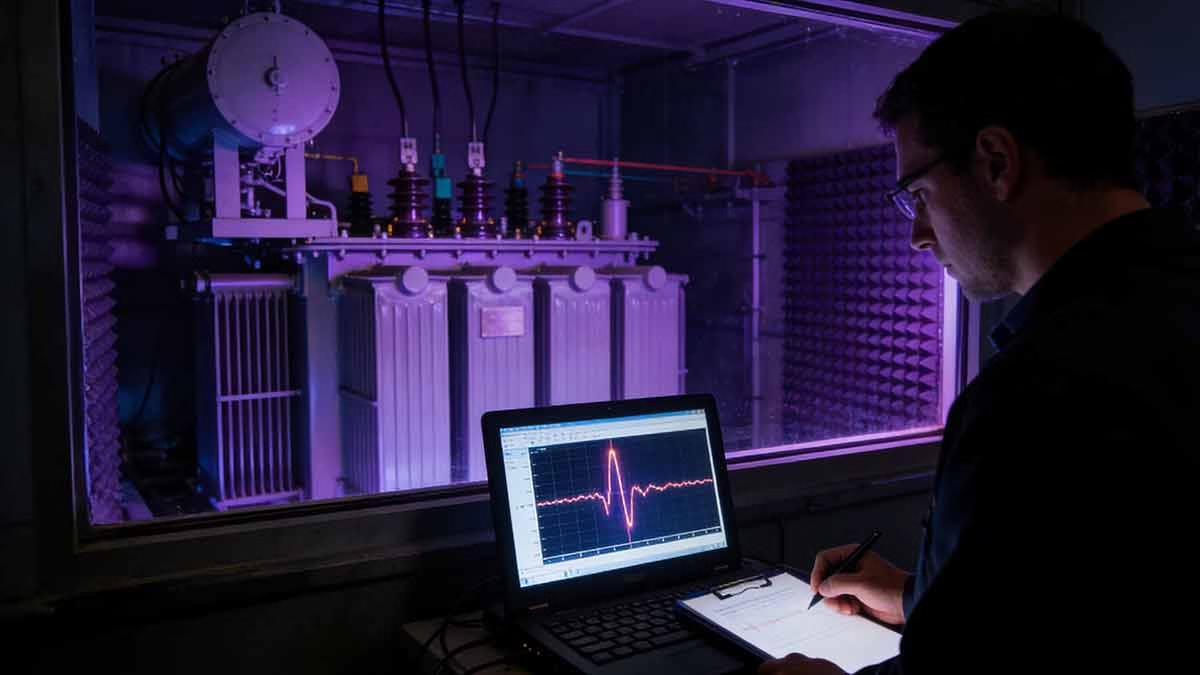
How Do Advanced Protocols in Distribution Transformer Testing Safeguard Smart Grid Integrity?
Have you ever wondered what ensures smart grids can withstand the intricate demands of modern energy distribution? Advanced protocols in distribution transformer testing serve as the fundamental safeguard for grid integrity and operational performance. Unlike traditional testing methods, these cutting-edge protocols integrate comprehensive electrical, thermal, mechanical, and environmental assessments, leveraging state-of-the-art equipment and data-driven analysis to evaluate transformer health comprehensively.
In the context of smart energy systems, distribution transformer testing protocols are designed to verify not only basic functionality but also compatibility with digital technologies and dynamic operational conditions. These protocols adhere to international standards such as IEC 60076 and IEEE C57.12.00, ensuring consistency and reliability across global energy networks. By incorporating advanced testing procedures, engineers can identify potential issues before they escalate, thereby minimizing downtime and optimizing grid efficiency.
Core Components of Advanced Distribution Transformer Testing Protocols
- Electrical Performance Assessment: This critical segment of distribution transformer testing focuses on verifying power quality and energy efficiency. Key tests include load loss and no-load loss measurements, which quantify energy dissipation under different operational scenarios. Additionally, impedance and reactance tests evaluate the transformer’s ability to regulate voltage, while insulation resistance and power factor testing detect potential insulation degradation that could lead to short circuits or breakdowns.
- Thermal Behavior Evaluation: Heat management is paramount for transformer longevity, especially in high-load smart grid environments. Distribution transformer testing for thermal performance involves temperature rise tests under varying load conditions to simulate real-world operational stress. Thermal imaging technology is also employed to identify hotspot areas that may indicate poor cooling or internal faults. Evaluating the efficiency of cooling systems—whether oil-immersed or dry-type—is another essential aspect of thermal testing.
- Mechanical Structural Verification: The mechanical integrity of transformers directly impacts their reliability. Distribution transformer testing in this domain includes vibration analysis during operation, which can detect loose components or winding deformations. Short-circuit withstand capability tests assess the transformer’s resilience to sudden electrical surges, while pressure and vacuum tests ensure the integrity of the tank and prevent oil leaks in oil-immersed models.
- Smart Grid Compatibility Validation: As smart grids become more interconnected, distribution transformer testing must verify seamless integration with digital components. This includes testing communication protocol compatibility (such as IEC 61850), conducting cybersecurity vulnerability assessments to protect against digital threats, and verifying interoperability with other smart grid devices like smart meters and renewable energy inverters.
- Environmental Stress Simulation: Transformers operate in diverse environmental conditions, from arid deserts to coastal regions prone to salt corrosion. Distribution transformer testing incorporates climate chamber tests to simulate extreme temperatures, salt spray tests for coastal applications, and seismic simulation for earthquake-prone areas. These tests ensure transformers maintain performance and reliability regardless of environmental challenges.
Test Category in Distribution Transformer Testing | Primary Purpose | Relevance to Smart Grid Operations |
|---|---|---|
Electrical Performance | Verify power quality and energy efficiency | Ensure stable and efficient energy distribution |
Thermal Behavior | Assess heat management capabilities | Prevent overheating and equipment damage in high-load scenarios |
Mechanical Structural | Confirm structural soundness and resilience | Guarantee long-term reliability and reduce unplanned outages |
Smart Grid Compatibility | Validate integration with digital grid components | Enable advanced grid functionalities and digital management |
Environmental Stress | Simulate real-world environmental conditions | Ensure consistent performance across diverse geographic locations |
A real-world example underscores the value of these advanced protocols. During a distribution transformer testing project for a major urban smart grid upgrade, engineers identified a minor firmware glitch in a new transformer model during compatibility testing. This glitch could have disrupted communication with other grid components, leading to widespread power fluctuations. By addressing the issue before deployment, the team avoided potential service disruptions affecting thousands of residents. The project manager emphasized, “Distribution transformer testing isn’t just a box-ticking exercise—it’s a proactive measure that safeguards the entire grid ecosystem.”
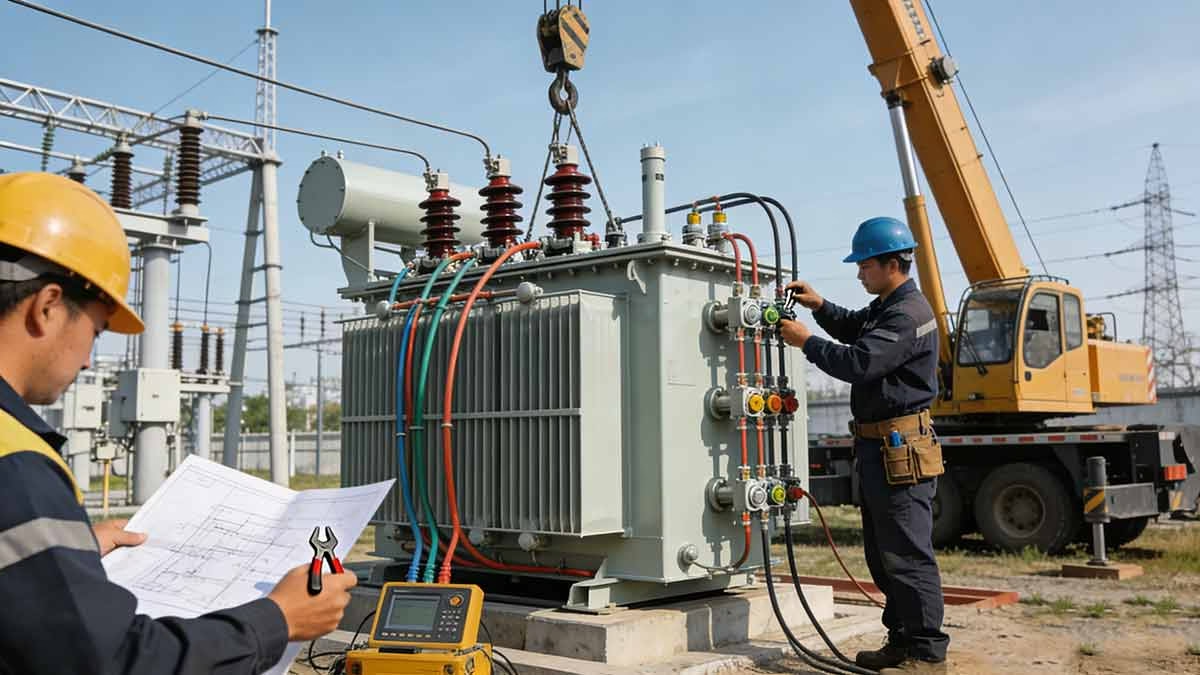
Another notable case involved distribution transformer testing for a coastal smart grid project. Standard protective coatings failed to withstand simulated salt spray exposure, prompting the development of a new nano-coating technology. This innovation extended the transformer’s expected lifespan in corrosive coastal environments by 30%, demonstrating how testing drives technological advancement in the industry.
How Does Modern Distribution Transformer Testing Enhance Diagnostic Accuracy for Grid Reliability?
In the realm of smart grids, reliability is non-negotiable. But how do modern diagnostic approaches in distribution transformer testing ensure the dependability of critical transformer assets? Unlike traditional reactive maintenance, modern diagnostics combine non-invasive testing, real-time monitoring, and advanced analytics to provide holistic insights into transformer health, enabling proactive maintenance and minimizing unplanned downtime.
Modern distribution transformer testing leverages cutting-edge technologies to detect subtle anomalies that may indicate impending failures. By analyzing data from multiple sources, engineers can create detailed health profiles for each transformer, allowing for targeted maintenance and extending asset lifespan. This proactive approach is particularly crucial in smart grids, where interconnected components mean a single failure can have cascading effects.
Cutting-Edge Diagnostic Techniques in Distribution Transformer Testing
- Dissolved Gas Analysis (DGA): A cornerstone of distribution transformer testing for oil-immersed models, DGA monitors gases dissolved in transformer oil. When internal faults occur (such as arcing or overheating), they produce characteristic gases like methane, ethane, and acetylene. Modern DGA systems use AI-driven algorithms to interpret gas compositions, providing early warning of developing faults. Continuous DGA monitoring ensures engineers can detect issues before they escalate to catastrophic failures.
- Frequency Response Analysis (FRA): This non-invasive distribution transformer testing technique assesses mechanical integrity by measuring the transformer’s frequency response. Winding deformations, core movements, or loose components alter the frequency signature, allowing engineers to compare current readings with baseline data for accurate diagnostics. FRA is particularly valuable after severe events like thunderstorms or short circuits, where internal damage may not be visible to the naked eye.
- Partial Discharge (PD) Monitoring: Partial discharges—localized electrical discharges within insulation—are early indicators of insulation degradation. Distribution transformer testing for PD uses acoustic and electrical sensors to detect and localize these discharges in real time. Trend analysis of PD data helps predict insulation failure, enabling timely maintenance to extend transformer lifespan and prevent breakdowns.
- Thermal Imaging and Acoustic Monitoring: Thermal imaging cameras identify temperature anomalies that may indicate poor cooling or internal faults, while acoustic sensors detect unusual operational sounds (such as buzzing or humming) that signal mechanical issues. Integrating these technologies with AI enables automated pattern recognition, allowing for real-time alerts and rapid intervention.
- Oil Quality Analysis: Beyond DGA, distribution transformer testing includes regular sampling and analysis of transformer oil. Key parameters include acidity, moisture content, and dielectric strength—all of which affect insulation performance. Trending these parameters over time provides insights into oil degradation, enabling scheduled oil replacement or treatment to maintain optimal transformer performance.
Diagnostic Technique in Distribution Transformer Testing | Key Faults Detected | Impact on Grid Reliability |
|---|---|---|
Dissolved Gas Analysis | Internal arcing, overheating, and insulation breakdown | Prevents catastrophic failures and widespread blackouts |
Frequency Response Analysis | Winding deformations, core movements, loose components | Ensures structural integrity and avoids mechanical failures |
Partial Discharge Monitoring | Insulation weaknesses, early degradation | Extends transformer lifespan and reduces maintenance costs |
Thermal & Acoustic Monitoring | Temperature anomalies, mechanical malfunctions | Enables immediate intervention and minimizes downtime |
Oil Quality Analysis | Oil degradation, moisture contamination | Maintains insulation performance and optimal operational efficiency |
A compelling case study highlights the impact of modern diagnostics in distribution transformer testing. A large urban substation implemented continuous DGA monitoring as part of its distribution transformer testing program. Within months, the system detected a sudden spike in combustible gases in a critical transformer. Engineers immediately took the unit offline and discovered a developing arc in the windings. The utility manager later stated, “This diagnostic testing saved us from a potential explosion and a citywide blackout—its value can’t be overstated.”
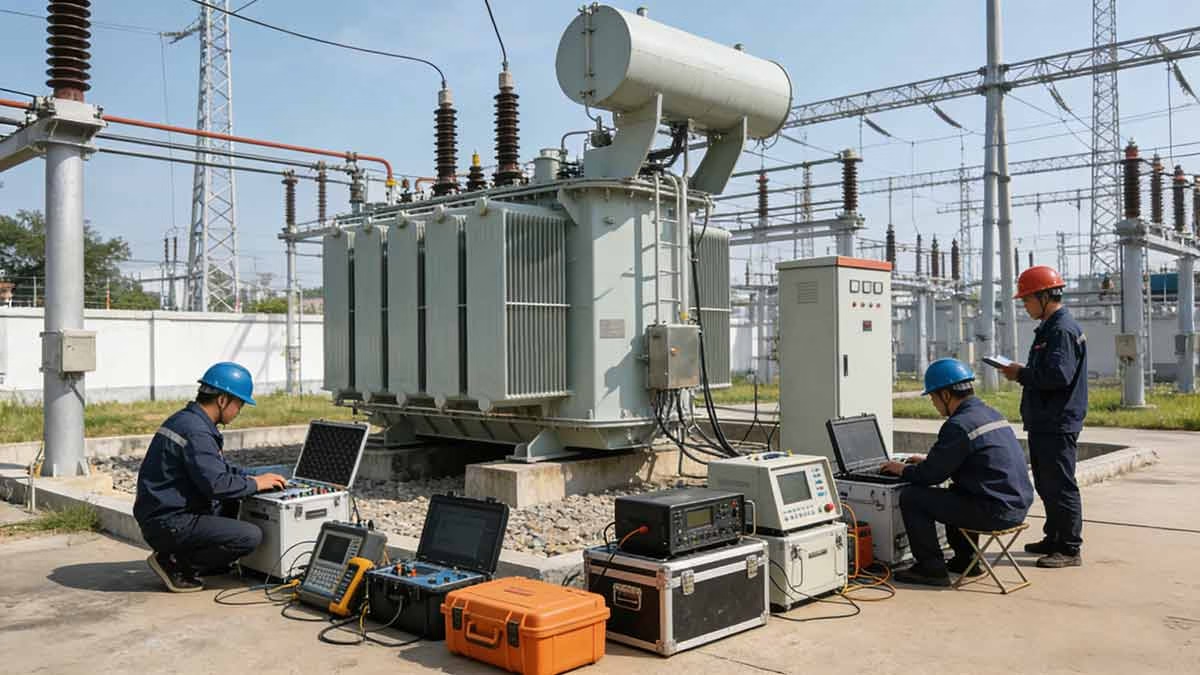
Another example involves FRA in distribution transformer testing following a severe thunderstorm. The test revealed subtle winding deformations that were invisible during visual inspections but could have led to complete transformer failure. Targeted repairs based on these insights avoided the need for costly replacement, demonstrating how modern diagnostics optimize maintenance costs while enhancing reliability.
How to Adapt Distribution Transformer Testing for Next-Generation Smart Grid Challenges?
The rapid evolution of smart grids—characterized by dynamic loads, bidirectional power flows, and increased digitalization—presents unique challenges for distribution transformer testing. How can testing methods adapt to meet the demands of these next-generation energy systems? The answer lies in integrating digital technologies, real-time data analysis, and interoperability testing to ensure transformers can thrive in increasingly complex grid environments.
Next-generation distribution transformer testing moves beyond traditional static testing to embrace dynamic, simulation-driven approaches. By replicating real-world operational scenarios and leveraging advanced data analytics, engineers can evaluate transformer performance under the most demanding conditions, ensuring compatibility with emerging technologies like renewable energy sources and energy storage systems.
Evolving Testing Strategies for Modern Smart Grids
- Digital Twin Simulation: A game-changer in distribution transformer testing, digital twins are detailed virtual replicas of transformers and their surrounding grid environments. These models simulate a wide range of operational scenarios—from peak load conditions to renewable energy fluctuations—enabling predictive analysis of long-term performance. Digital twin technology allows engineers to identify potential issues before they occur in the physical world, reducing testing time and costs while improving accuracy.
- Real-Time Data Analytics: Modern distribution transformer testing integrates big data platforms with testing equipment to process and analyze data streams in real time. AI and machine learning algorithms identify patterns and anomalies, providing immediate insights into transformer health. This real-time analysis enables on-the-fly adjustments during testing procedures, ensuring more accurate results and faster problem identification.
- Interoperability Testing: As smart grids become more interconnected, distribution transformer testing must verify seamless integration with other grid components. This includes testing communication protocols with smart meters, renewable inverters, and energy management systems, as well as validating data exchange and command execution capabilities. Interoperability testing ensures transformers can respond effectively to grid management signals and collaborate with other devices to optimize energy distribution.
- Cybersecurity Vulnerability Assessment: Digitalization increases the risk of cyber threats to smart grids, making cybersecurity a critical component of distribution transformer testing. Penetration testing of transformer control systems, verification of encryption and access control mechanisms, and simulation of cyber-attack scenarios assess the transformer’s resilience to digital threats. These tests ensure transformers remain secure and operational even in the face of cyber incidents.
- Power Quality and Harmonics Testing: The integration of renewable energy sources introduces variable power inputs and harmonic distortions, which can impact transformer performance. Distribution transformer testing for power quality evaluates the transformer’s response to fluctuating inputs and measures harmonic distortion under various load conditions. These tests verify the transformer’s ability to maintain power quality and stability in grids with high renewable penetration.
Adaptive Testing Approach | Smart Grid Challenge Addressed | Impact on Grid Performance |
|---|---|---|
Digital Twin Simulation | Complex, dynamic operational scenarios | Improved predictive capabilities and reduced testing costs |
Real-Time Data Analytics | Rapid interpretation of large data volumes | Faster problem identification and more accurate testing results |
Interoperability Testing | Integration complexities with digital grid components | Enhanced grid coordination and seamless technology integration |
Cybersecurity Assessment | Digital threats and vulnerabilities | Increased grid security and protection against cyber incidents |
Power Quality Testing | Variable renewable energy inputs and harmonics | Stable power delivery and improved overall grid reliability |
A notable example of adaptive distribution transformer testing comes from a smart city initiative. Engineers used digital twin technology to simulate ten years of transformer operation across various scenarios, including peak demand periods and renewable energy fluctuations. The simulation identified a potential harmonic resonance issue that could have caused widespread power quality problems. By addressing the issue during the design phase, the team ensured the transformers could support the city’s smart grid goals. The city’s chief engineer commented, “Digital twin-driven distribution transformer testing gave us insights into future challenges we couldn’t have anticipated—saving us from costly retrofits down the line.”
Another case involved interoperability testing for a microgrid project. Distribution transformer testing revealed incompatibilities between the transformers’ communication protocols and third-party smart inverters. This discovery led to a collaborative effort between vendors to develop a more flexible communication standard, improving the overall integration of the microgrid. A grid operator noted, “Interoperability testing isn’t just about verifying equipment—it’s about building a cohesive, efficient grid ecosystem that can adapt to evolving technologies.”

How to Leverage Distribution Transformer Testing Data for Predictive Maintenance and Grid Optimization?
In the era of smart grids, proactive maintenance is key to optimizing operational efficiency and reducing costs. How can distribution transformer testing data be leveraged to implement effective predictive maintenance strategies? Predictive maintenance uses advanced analytics and machine learning to analyze testing data, forecast potential failures, and optimize maintenance schedules—transforming how utilities manage their transformer assets.
By harnessing the wealth of data from distribution transformer testing, utilities can move beyond reactive maintenance (fixing issues after they occur) to proactive maintenance (addressing issues before they cause failures). This shift not only reduces downtime and maintenance costs but also enhances overall grid reliability and efficiency.
Key Strategies for Utilizing Testing Data in Predictive Maintenance
- Comprehensive Data Integration: Effective predictive maintenance starts with integrating data from multiple sources, including historical distribution transformer testing results, real-time monitoring data, and operational records. This holistic approach creates detailed transformer health profiles, enabling engineers to identify trends and patterns that may indicate impending issues.
- Machine Learning-Driven Prediction Models: Machine learning algorithms analyze large volumes of distribution transformer testing data to identify patterns associated with failures. These models can predict transformer performance degradation, insulation failure, or mechanical issues with high accuracy. Continuous learning from new data improves prediction accuracy over time, ensuring maintenance strategies remain effective as operational conditions change.
- Risk-Based Maintenance Planning: Distribution transformer testing data enables risk-based maintenance, where maintenance activities are prioritized based on transformer criticality and health status. High-risk transformers (those with identified issues or operating in critical grid locations) receive more frequent attention, while low-risk units are maintained on a less frequent schedule. This optimized approach minimizes downtime and reduces maintenance costs by focusing resources where they are most needed.
- Performance Optimization: Testing data isn’t just for predicting failures—it also helps optimize transformer and grid performance. Analyzing load patterns from distribution transformer testing allows utilities to optimize transformer sizing and placement, reducing energy losses. Identifying energy loss hotspots enables targeted improvements, such as upgrading cooling systems or replacing outdated transformers, to enhance overall grid efficiency.
- Lifecycle Management: Distribution transformer testing data provides insights into the remaining useful life of each asset. This information enables utilities to make informed decisions about transformer replacement or upgrades, balancing short-term maintenance costs with long-term reliability goals. Strategic lifecycle management ensures grid modernization initiatives are aligned with asset performance, maximizing return on investment.
Predictive Maintenance Aspect | Operational Benefit | Impact on Grid Optimization |
|---|---|---|
Comprehensive Data Integration | Holistic transformer health assessment | Informed decision-making and targeted maintenance |
Machine Learning Models | Accurate failure prediction | Reduced unexpected outages and improved grid reliability |
Risk-Based Planning | Efficient resource allocation | Optimized maintenance costs and minimized downtime |
Performance Optimization | Enhanced energy efficiency | Reduced energy losses and improved grid performance |
Lifecycle Management | Strategic asset management | Long-term grid reliability and aligned modernization initiatives |
A successful implementation of predictive maintenance using distribution transformer testing data comes from a large utility company. The company integrated historical testing data, real-time monitoring, and machine learning algorithms to develop a predictive maintenance system. Within the first year, the system identified a potential failure in a critical substation transformer. Targeted maintenance was performed, avoiding a major outage that could have cost the utility millions in repairs and lost revenue. The operations manager stated, “This system has transformed our maintenance approach—we’re now preventing failures instead of reacting to them, and the savings have been substantial.”
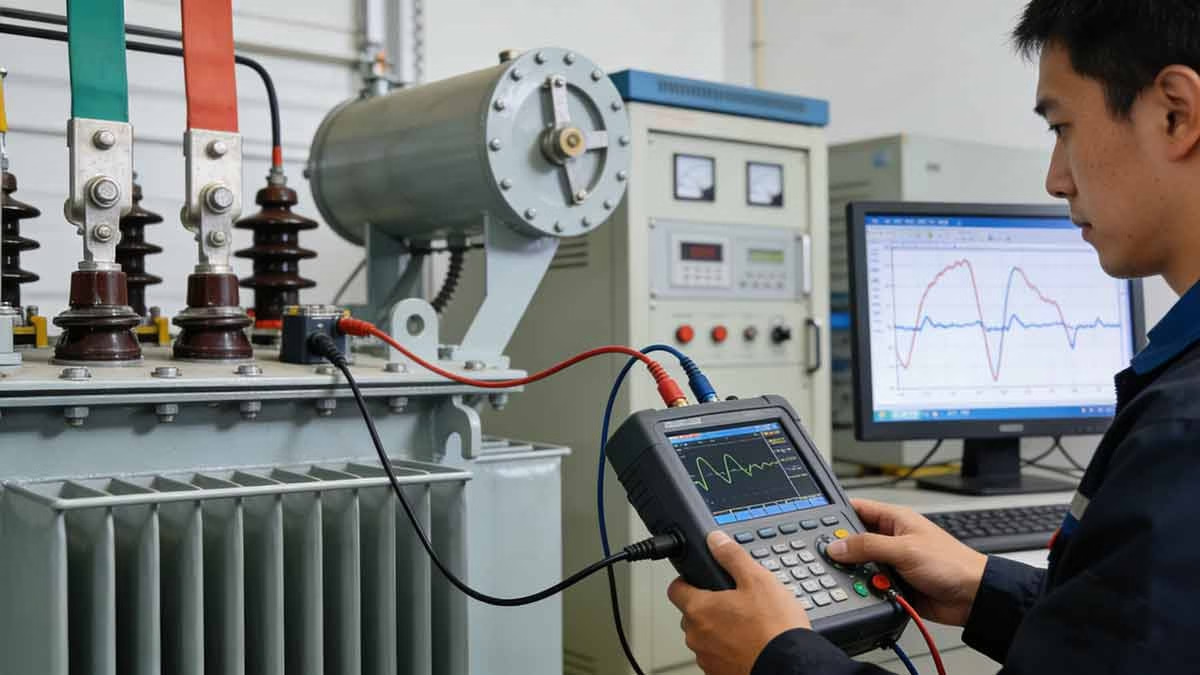
Another example involves a rural power network that used distribution transformer testing data to optimize its maintenance schedule. By analyzing years of testing results and operational records, the utility developed a dynamic maintenance plan that reduced unnecessary inspections by 25% while catching issues 30% earlier than before. A senior technician noted, “Predictive maintenance has made our work more efficient and effective. We’re focusing on the transformers that need attention most, which has improved our team’s productivity and the reliability of the grid.”
What Is the Role of Distribution Transformer Testing in Renewable Energy Integration?
As the world shifts toward sustainable energy, renewable sources like solar and wind are becoming increasingly prevalent in power networks. How does distribution transformer testing adapt to ensure the reliability and efficiency of grids with high renewable penetration? Distribution transformer testing plays a critical role in verifying that transformers can handle the unique challenges of renewable energy, such as variable loads, bidirectional power flows, and power quality issues.
Renewable energy sources introduce dynamic and unpredictable operational conditions that traditional transformers may not be designed to handle. Distribution transformer testing must evolve to evaluate transformer performance under these conditions, ensuring seamless integration and maintaining grid stability. By verifying compatibility with renewable energy systems, testing enables the transition to more sustainable power networks.
Critical Testing Focus Areas for Renewable Integration
- Variable Load Testing: Renewable energy generation is inherently variable—solar output fluctuates with cloud cover, and wind output varies with wind speed. Distribution transformer testing for variable loads simulates these fluctuations to evaluate transformer performance. Key tests include assessing voltage regulation capabilities, verifying thermal stability under rapidly changing loads, and ensuring the transformer can handle frequent on/off cycles.
- Bidirectional Power Flow Evaluation: Unlike traditional grids, which have unidirectional power flow from generation to consumption, smart grids with renewable energy often have bidirectional flow (power flows from distributed generation sources back to the grid). Distribution transformer testing evaluates the transformer’s ability to handle this reverse flow efficiently. Tests include verifying insulation integrity under reverse voltage, assessing cooling system performance during reverse load conditions, and ensuring the transformer’s protective devices work effectively in both flow directions.
- Harmonic Distortion Analysis: Renewable energy inverters (which convert DC power from solar panels or wind turbines to AC power) can introduce harmonic distortions into the grid. These harmonics can cause overheating, reduce efficiency, and damage equipment. Distribution transformer testing for harmonic distortion measures the transformer’s response to various harmonic profiles, evaluates its harmonic mitigation capabilities, and ensures the transformer can operate safely and efficiently in grids with high harmonic content.
- Fault Ride-Through Capability: Grid stability is critical during renewable energy fluctuations, such as sudden drops in wind or solar output. Distribution transformer testing assesses the transformer’s fault ride-through capability—its ability to maintain voltage levels and remain connected to the grid during disturbances. This ensures the transformer can support grid stability and prevent cascading failures during renewable energy fluctuations.
- Energy Storage Integration Testing: Energy storage systems (such as batteries) are often paired with renewable energy sources to balance supply and demand. Distribution transformer testing verifies compatibility with these storage systems, including testing performance under combined renewable and storage scenarios, evaluating the impact of rapid charge/discharge cycles on transformer health, and ensuring seamless integration with storage control systems.
Test Category in Distribution Transformer Testing | Renewable Integration Challenge Addressed | Impact on Sustainable Networks |
|---|---|---|
Variable Load Testing | Fluctuating solar and wind power generation | Stable grid operation and consistent power delivery |
Bidirectional Flow Evaluation | Excess renewable power feeding back to the grid | Efficient energy distribution and reduced waste |
Harmonic Analysis | Power quality issues from renewable inverters | Improved power quality and reduced equipment damage |
Fault Ride-Through | Grid stability concerns during renewable fluctuations | Enhanced network resilience and reduced outages |
Storage Integration Testing | Balancing supply and demand with energy storage | Optimized renewable utilization and improved grid flexibility |
A compelling example of distribution transformer testing for renewable integration comes from a large solar farm project. Engineers simulated a full year of solar generation patterns, including rapid fluctuations due to cloud cover and seasonal changes. During testing, one transformer model exhibited unexpected voltage regulation issues during sudden output drops. This led to a redesign of the transformer’s voltage control system, which improved the stability of the solar farm’s output and reduced the risk of grid disturbances. The project manager commented, “Distribution transformer testing was instrumental in ensuring our solar farm could integrate seamlessly with the grid—without it, we would have faced significant reliability issues.”
Another case involves a wind farm with integrated battery storage. The unique operational challenges of this system—including rapid power transitions between wind and storage—required custom distribution transformer testing protocols. These tests identified potential thermal issues during high-frequency charge/discharge cycles, leading to the development of a novel cooling system design. The result was a 20% improvement in transformer efficiency and a 15% extension in lifespan. A grid operator noted, “Distribution transformer testing isn’t just about verifying compliance—it’s about innovating to support the future of renewable energy.”
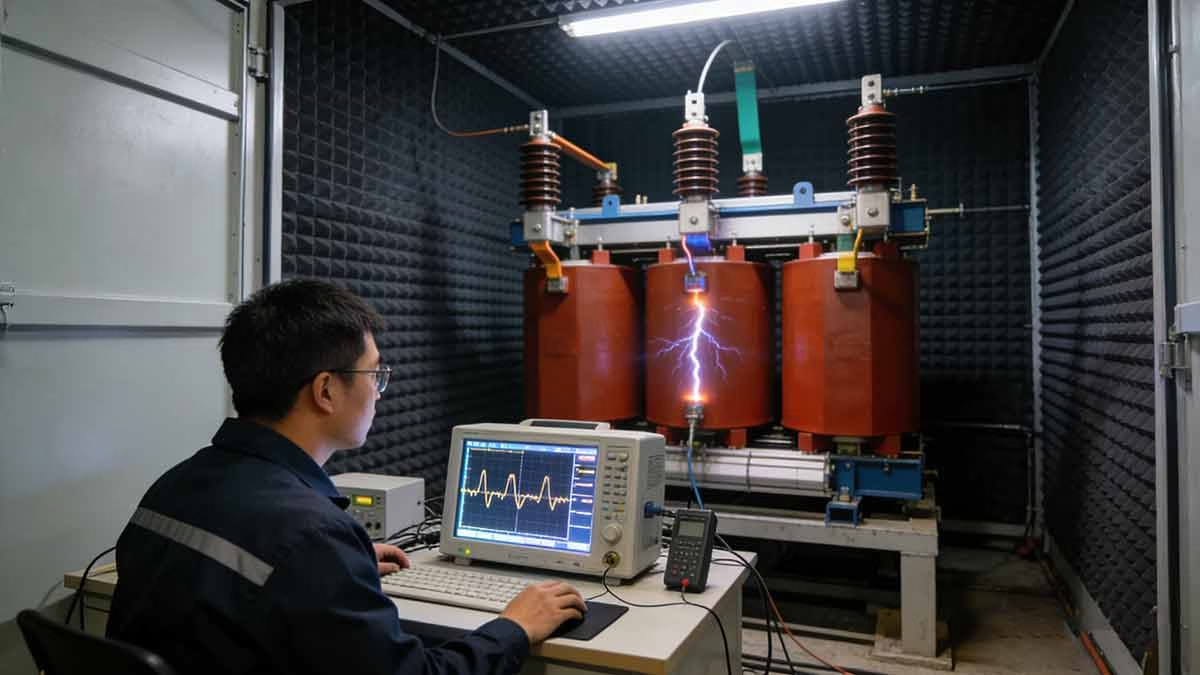
Conclusion: Why Distribution Transformer Testing Is Indispensable for Smart Grid Success
Distribution transformer testing stands as a cornerstone of modern smart grid reliability, efficiency, and sustainability. From advanced protocols that safeguard grid integrity to predictive maintenance strategies that optimize asset performance, testing plays a multifaceted role in addressing the challenges of evolving energy systems. As renewable energy integration increases and grids become more digitalized, the importance of robust, adaptive distribution transformer testing will only continue to grow.
By embracing cutting-edge diagnostic techniques, digital simulation, and data-driven analytics, distribution transformer testing enables utilities to proactively address potential issues, reduce downtime, and enhance grid resilience. It ensures transformers can handle the dynamic loads, bidirectional power flows, and interoperability requirements of next-generation smart grids, while supporting the transition to sustainable energy networks.
For industry professionals, investing in comprehensive distribution transformer testing isn’t just a technical necessity—it’s a strategic decision that drives long-term grid reliability, operational efficiency, and environmental sustainability. As the energy landscape continues to evolve, distribution transformer testing will remain at the forefront of smart grid innovation, ensuring that our power systems can meet the demands of the future.