
Reader’s Question: “I’m in the process of planning an industrial project and need to know—how much does a power transformer weigh? I’ve seen vague numbers online, but I need accurate, reliable information to budget for transportation, installation, and overall project costs. Can you explain the factors that affect transformer weight and provide real-world examples?”
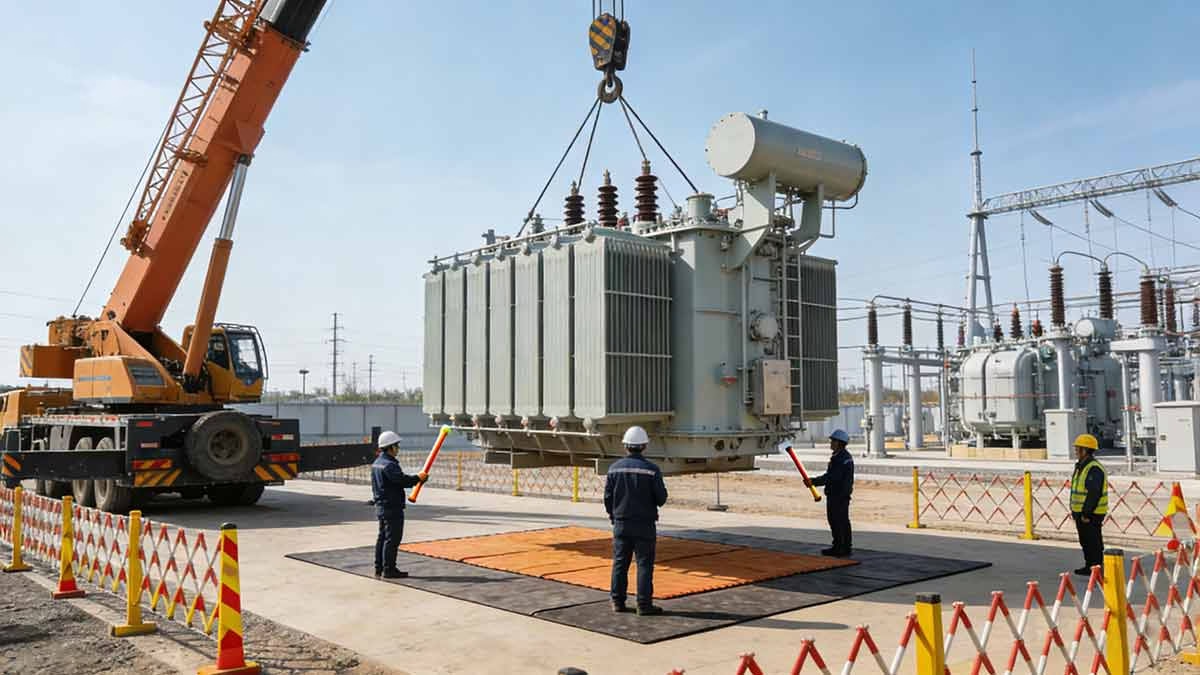
Authoritative Response: Great question—one that’s critical for project planners, electrical engineers, and procurement teams alike. The weight of a power transformer is not a one-size-fits-all figure; it’s shaped by a range of technical and design factors, from capacity and voltage rating to core materials and cooling systems. Below, we’ll break down everything you need to know about “how much does a power transformer weigh,” including detailed weight ranges for different transformer types, the key factors influencing mass, real-world applications, and how to get precise weight data for your specific needs. This guide draws on industry standards and decades of engineering expertise to deliver actionable, reliable insights.
Contents
hide
How Much Does a Power Transformer Weigh? Key Factors That Define Transformer Mass
To answer “how much does a power transformer weigh” comprehensively, we first need to understand the core variables that dictate a transformer’s overall heft. While many people assume weight is solely tied to capacity, the reality is far more nuanced. A transformer’s mass is the result of careful engineering trade-offs between performance, efficiency, and durability—each of which impacts the materials used and their quantity. Below are the most influential factors, explained in detail:
1. Transformer Capacity (kVA/MVA Rating)
Capacity is the most direct driver of transformer weight. Measured in kilovolt-amperes (kVA) for smaller units or megavolt-amperes (MVA) for large power transformers, capacity refers to the maximum electrical load the transformer can handle. As capacity increases, the transformer requires larger core laminations, thicker windings, and more insulation—all of which add significant mass. For example, a small 50 kVA distribution transformer will weigh a fraction of a 200 MVA unit used in a power substation. However, it’s important to note that capacity alone doesn’t tell the full story; two transformers with the same kVA rating can vary in weight if they’re designed for different voltage levels or cooling requirements.
2. Core and Winding Materials
The core and windings are the “heart” of a power transformer, and the materials used for these components have a profound impact on weight. Transformers rely on magnetic cores (typically made of silicon steel) to channel magnetic flux, and conductive windings (usually copper or aluminum) to transfer electrical energy.
Silicon steel cores are preferred for their high magnetic permeability, which reduces energy loss. Thicker core laminations can handle higher flux densities but add weight, while thinner laminations (used in high-efficiency transformers) may reduce mass slightly but require more precise manufacturing. When it comes to windings, copper is more conductive than aluminum, meaning smaller copper windings can achieve the same performance as larger aluminum ones.
However, copper is significantly denser (8.96 g/cm³ vs. aluminum’s 2.7 g/cm³), so copper-wound transformers are typically heavier than their aluminum-wound counterparts of the same capacity. Some manufacturers offer both options, allowing buyers to balance weight, cost, and efficiency based on their project needs.
3. Design and Construction Type
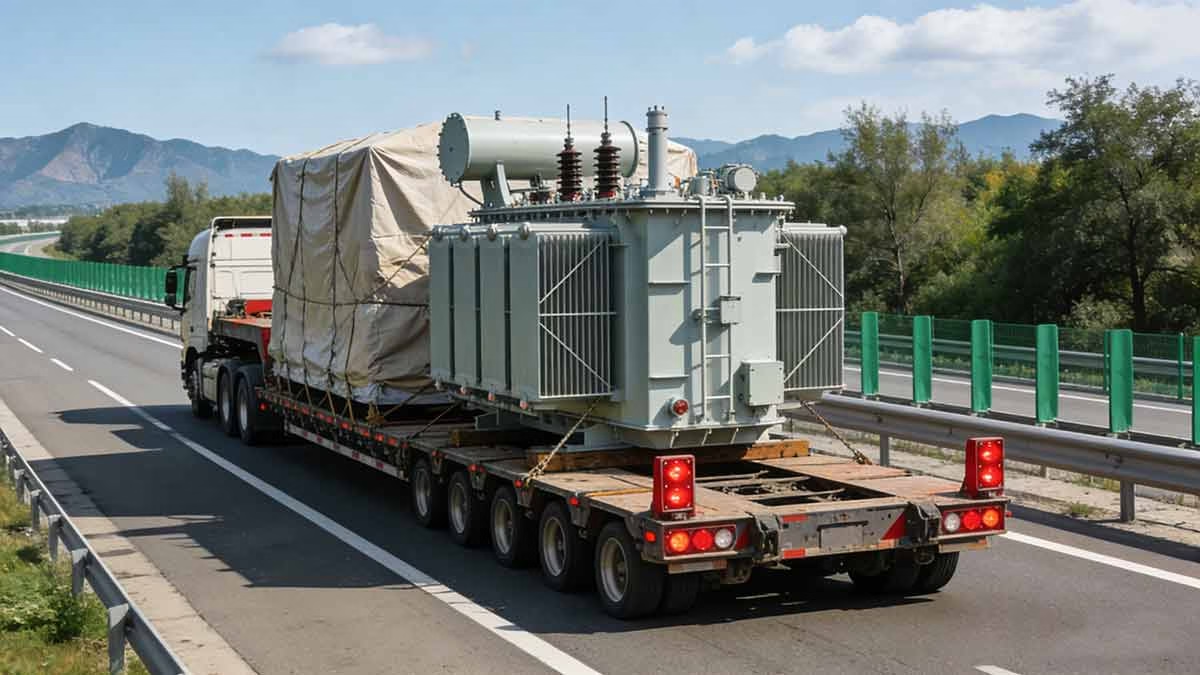
Transformer design—including core configuration (core-type vs. shell-type), winding arrangement, and tank design (for oil-immersed units)—plays a major role in weight. Core-type transformers, which have windings surrounding the core, are more common for medium to large capacities and tend to be lighter than shell-type transformers (where the core surrounds the windings) of the same rating. Shell-type transformers offer better mechanical strength but require more core material, increasing mass.
For oil-immersed transformers, the tank size and material (steel thickness) also contribute to weight. Larger tanks are needed to hold more insulating oil, which is required for cooling and insulation in high-capacity units. Additionally, some transformers feature reinforced tanks for outdoor or harsh environment use, adding extra weight compared to standard indoor units.
4. Cooling System Configuration
Transformers generate heat during operation, so cooling systems are essential to maintain performance. The type of cooling system used directly affects weight. Smaller transformers often use natural convection cooling (AN for oil-immersed units), which relies on the natural circulation of oil to dissipate heat—this adds minimal weight beyond the tank and oil. Larger transformers, however, require forced cooling systems, such as forced air (AF) or forced oil circulation (OFAF, OFWF), which include fans, pumps, and additional piping.
For example, an OFAF (Forced Oil Air Forced) cooling system can add several hundred kilograms to a medium-capacity transformer, while a large OFWF (Forced Oil Water Forced) system—used in power transformers at utility substations—can add tons of weight. These systems are necessary for high-load operations but must be factored into overall weight calculations for transportation and installation.
5. Voltage Rating and Insulation Requirements
Voltage rating (the maximum voltage the transformer can handle) dictates the amount of insulation needed. Higher voltage transformers require thicker insulation materials (such as pressboard, paper, or synthetic polymers) to prevent electrical arcing. Insulation materials, while lightweight individually, add up significantly in large transformers. For example, a 110 kV transformer will have far more insulation than a 10 kV unit of the same capacity, resulting in a higher overall weight.
Additionally, high-voltage transformers often require reinforced winding supports and larger spacing between components, which further increases mass. This is why utility-scale transformers (used in high-voltage transmission) are much heavier than distribution transformers (used in low-voltage local grids) of similar capacity.
How Much Does a Power Transformer Weigh? Breakdown by Transformer Type
Transformer weight varies dramatically by type, as each type is designed for specific applications with unique performance and environmental requirements. Below, we’ll answer “how much does a power transformer weigh” for the most common types, including distribution transformers, power transformers, dry-type transformers, and oil-immersed transformers. Each section includes real-world weight ranges and examples to help you contextualize the data.
1. Oil-Immersed Power Transformers: Weight Ranges & Examples
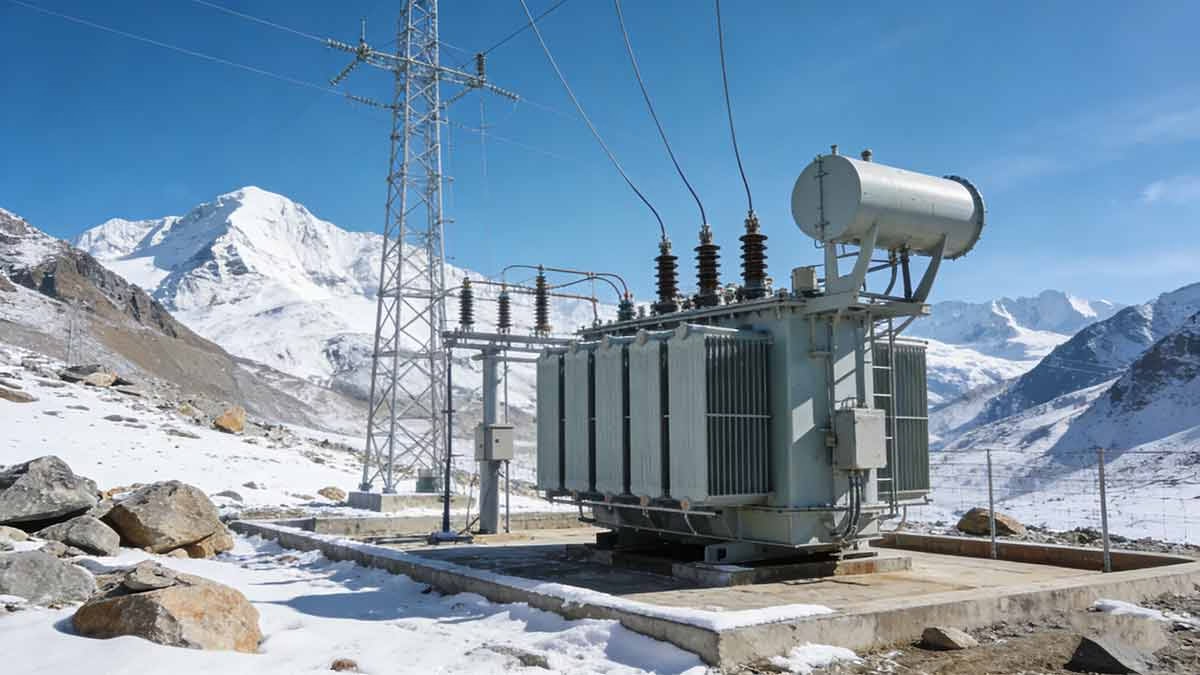
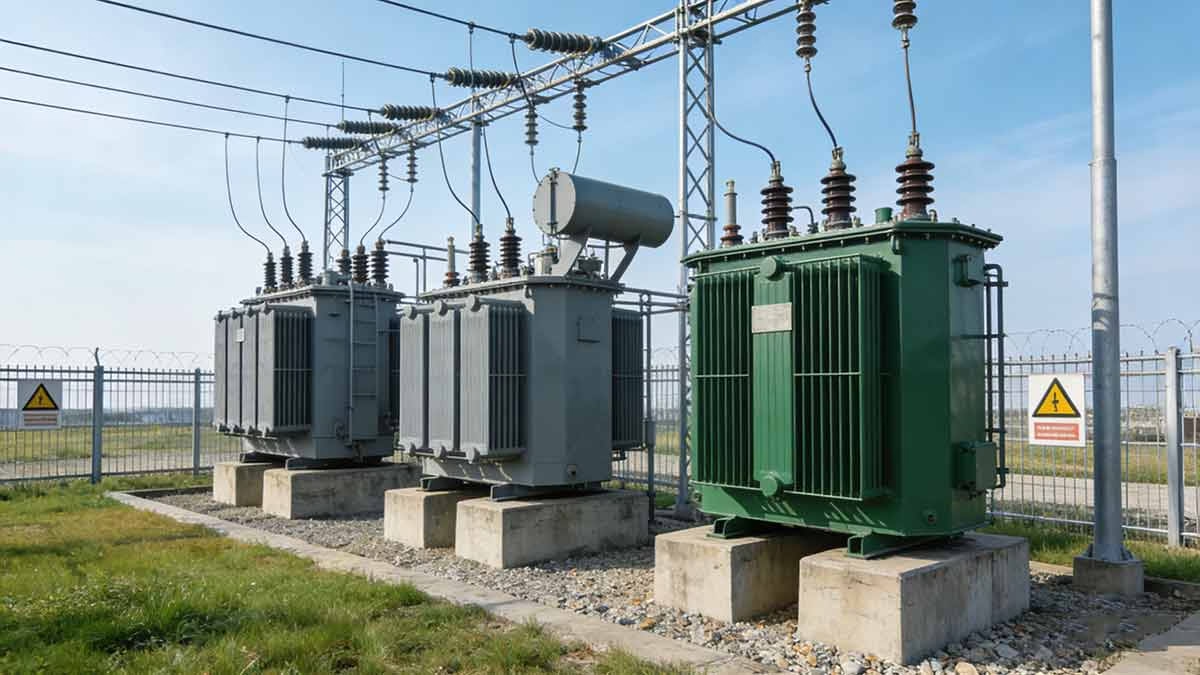
Oil-immersed transformers are the most common type for industrial and utility applications, thanks to their high efficiency and ability to handle large loads. The insulating oil inside the tank serves dual purposes: cooling the transformer and preventing electrical arcing. When it comes to “how much does a power transformer weigh” for oil-immersed units, weight ranges from a few hundred kilograms to several hundred tons, depending on capacity and design.
Small oil-immersed distribution transformers (50 kVA to 500 kVA) are typically used in residential and commercial areas to step down high-voltage grid power to usable levels. These units weigh between 300 kg and 3,000 kg (0.3 tons to 3 tons). For example:
- 50 kVA oil-immersed distribution transformer: 350 kg to 500 kg
- 200 kVA oil-immersed distribution transformer: 1,200 kg to 1,800 kg
- 500 kVA oil-immersed distribution transformer: 2,500 kg to 3,200 kg
Medium-capacity oil-immersed power transformers (1 MVA to 50 MVA) are used in industrial facilities, commercial complexes, and regional substations. These units weigh between 5 tons and 50 tons. Examples include:
- 5 MVA oil-immersed power transformer: 8 tons to 12 tons
- 20 MVA oil-immersed power transformer: 22 tons to 28 tons
- 50 MVA oil-immersed power transformer: 45 tons to 55 tons
Large utility-scale oil-immersed power transformers (100 MVA to 1,000 MVA) are the workhorses of the electrical grid, used in high-voltage transmission substations to step up or step down power for long-distance distribution. These massive units can weigh 100 tons or more—some even exceeding 300 tons. Real-world examples:
- 100 MVA oil-immersed power transformer: 120 tons to 150 tons
- 500 MVA oil-immersed power transformer: 200 tons to 250 tons
- 800 MVA oil-immersed power transformer: 280 tons to 320 tons
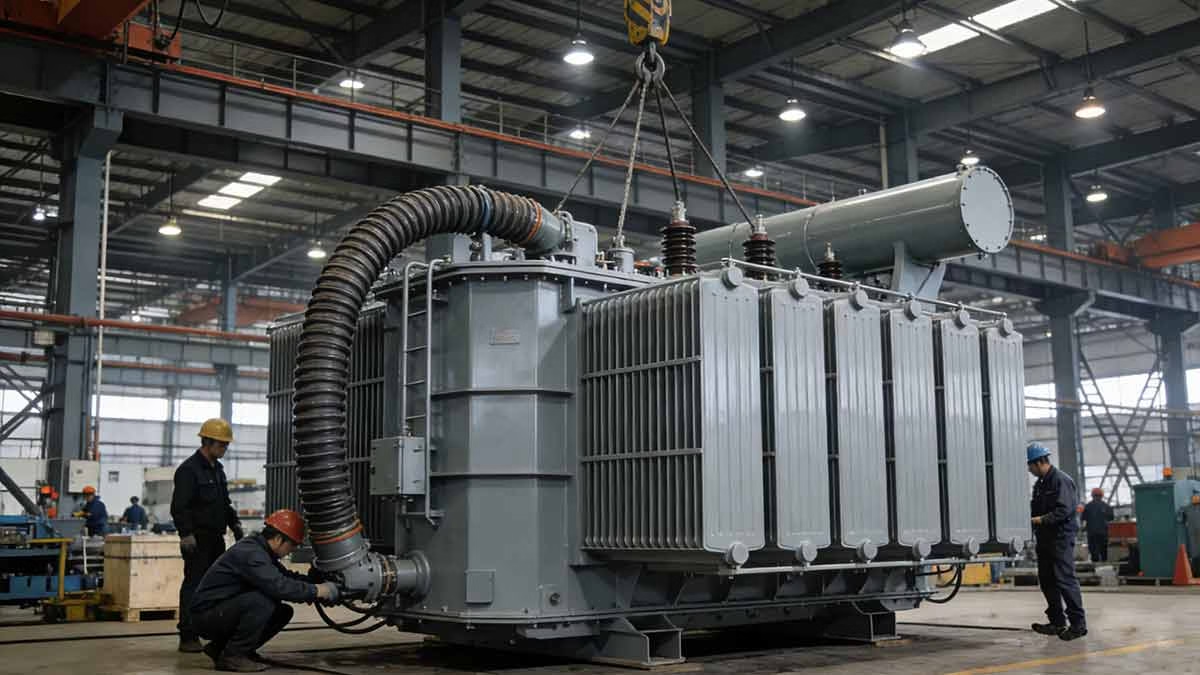
It’s important to note that the oil itself contributes significantly to weight. A typical oil-immersed transformer contains 10% to 20% of its total weight in insulating oil. For example, a 20-ton transformer may hold 2 to 4 tons of oil—weight that must be considered for transportation (either with or without oil, depending on logistics).
2. Dry-Type Power Transformers: Weight Ranges & Examples
Dry-type transformers use air or inert gas for cooling instead of oil, making them ideal for indoor applications (such as commercial buildings, data centers, and hospitals) where fire risk is a concern. When answering “how much does a power transformer weigh” for dry-type units, it’s important to note that they are typically lighter than oil-immersed transformers of the same capacity, as they don’t require a heavy steel tank or insulating oil. However, their weight still varies widely by capacity and design.
Small dry-type distribution transformers (5 kVA to 100 kVA) are commonly used in residential buildings and small commercial spaces. These units weigh between 50 kg and 500 kg. Examples:
- 10 kVA dry-type transformer: 70 kg to 100 kg
- 50 kVA dry-type transformer: 200 kg to 300 kg
- 100 kVA dry-type transformer: 400 kg to 550 kg
Medium-capacity dry-type power transformers (200 kVA to 5 MVA) are used in industrial facilities and large commercial buildings (such as malls and office towers). These units weigh between 800 kg and 8 tons. Examples:
- 200 kVA dry-type transformer: 850 kg to 1,100 kg
- 1 MVA dry-type transformer: 2.5 tons to 3.5 tons
- 5 MVA dry-type transformer: 6 tons to 8.5 tons
Large dry-type power transformers (10 MVA to 20 MVA) are less common than oil-immersed units but are used in specialized applications (such as indoor substations in dense urban areas). These units weigh between 12 tons and 25 tons. For example, a 15 MVA dry-type transformer typically weighs 18 tons to 22 tons.
One key factor affecting dry-type transformer weight is the insulation class. Higher insulation classes (such as F or H) require more advanced insulation materials, which can add slight weight but improve thermal performance. Additionally, dry-type transformers with forced air cooling systems (to handle higher loads) will be heavier than those with natural convection cooling.
3. Distribution vs. Power Transformers: Weight Differences
A common source of confusion when asking “how much does a power transformer weigh” is the difference between distribution transformers and power transformers. While both are “power transformers” in a broad sense, they serve distinct roles in the electrical grid, leading to significant weight differences.
Distribution transformers are designed to step down high-voltage power (from transmission lines) to low-voltage power (220V/380V) for residential, commercial, and small industrial use. They have small to medium capacities (typically 5 kVA to 500 kVA) and are lightweight, ranging from 50 kg to 3 tons (as detailed in the sections above). Their compact design and light weight make them easy to install on utility poles or in small ground-mounted enclosures.
Power transformers, by contrast, are designed for high-capacity, high-voltage applications (such as power plants, substations, and large industrial facilities). They have capacities ranging from 1 MVA to 1,000 MVA and weigh 5 tons or more, with utility-scale units exceeding 300 tons. Their large size and weight are due to the need to handle massive electrical loads, high voltage levels, and the associated cooling and insulation requirements.
To illustrate the difference: a 500 kVA distribution transformer (oil-immersed) weighs 2.5 to 3.2 tons, while a 500 MVA power transformer (oil-immersed) weighs 200 to 250 tons—nearly 100 times more. This highlights why it’s critical to specify the type of transformer when asking “how much does a power transformer weigh.”
4. Specialized Transformers: Weight Considerations
Specialized transformers—such as traction transformers (for railways), rectifier transformers (for industrial processes), and marine transformers (for ships)—have unique weight requirements based on their application. When answering “how much does a power transformer weigh” for these units, it’s important to account for factors like space constraints, vibration resistance, and environmental conditions.
Traction transformers, used in electric locomotives and high-speed trains, are designed to be lightweight and compact (to save energy and space). A typical 2 MVA traction transformer weighs 3 to 5 tons—significantly lighter than a standard 2 MVA industrial transformer (which weighs 6 to 8 tons). This weight reduction is achieved through advanced materials (such as lightweight core laminations) and compact design.
Rectifier transformers, used in electrolytic processes (like aluminum production) and battery charging, often have heavy windings and insulation to handle harmonic loads. A 10 MVA rectifier transformer typically weighs 15 to 20 tons—slightly heavier than a standard 10 MVA power transformer.
Marine transformers, designed for use on ships and offshore platforms, must be lightweight (to minimize ship displacement) and corrosion-resistant. A 500 kVA marine transformer weighs 800 kg to 1,200 kg—lighter than a standard 500 kVA distribution transformer—due to the use of aluminum windings and lightweight tank materials.
How Much Does a Power Transformer Weigh? Real-World Applications & Case Studies
To further contextualize “how much does a power transformer weigh,” let’s look at real-world applications and case studies. These examples highlight how transformer weight impacts project planning, transportation, and installation—critical considerations for buyers and engineers.
Case Study 1: Residential Subdivision Distribution Transformer
A construction company building a 50-home residential subdivision needed to install 10 distribution transformers to power the homes. The project engineer specified 200 kVA oil-immersed distribution transformers (the standard for this type of development). Based on weight data, each transformer weighed 1,500 kg (1.5 tons).
The weight of the transformers influenced several project decisions:
- Transportation: The transformers were transported via small trucks (instead of heavy-duty vehicles), reducing transportation costs.
- Installation: A small crane (5-ton capacity) was used to lift the transformers onto utility poles, eliminating the need for a large, expensive crane.
- Foundation: No special foundation was required for the ground-mounted transformer enclosures, as the 1.5-ton weight was within standard soil bearing capacity.
This case shows how knowing “how much does a power transformer weigh” early in the project can save time and money by allowing for accurate logistics planning.
Case Study 2: Industrial Facility Power Transformer
A manufacturing plant expanding its production capacity needed a 20 MVA oil-immersed power transformer to power new production lines. The transformer weighed 25 tons—far heavier than the plant’s existing 5 MVA unit (which weighed 10 tons).
The increased weight required several specialized measures:
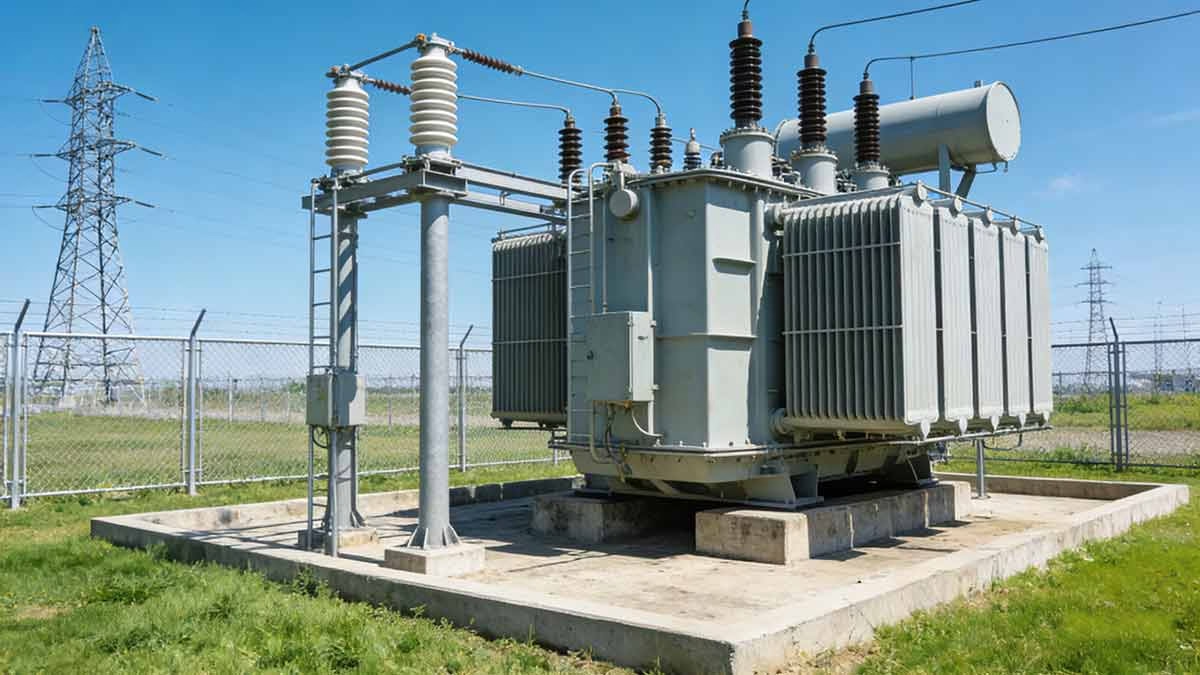
- Transportation: A heavy-duty flatbed truck with a lowboy trailer was used to transport the transformer, as standard trucks couldn’t handle the 25-ton weight. The route also required permits from local authorities, as the transformer exceeded standard weight limits for public roads.
- Installation: A 50-ton mobile crane was hired to lift the transformer into place. The plant also had to reinforce the concrete floor of the transformer room to support the 25-ton weight (plus the weight of the oil and cooling system).
- Maintenance: The plant installed a permanent lifting beam in the transformer room to facilitate future maintenance, as the transformer’s weight made manual lifting impossible.
This example demonstrates how transformer weight can impact not just initial installation but also long-term maintenance and operational planning.
Case Study 3: Utility Grid Substation Transformer
A utility company upgrading a regional substation needed a 500 MVA oil-immersed power transformer to handle increased electricity demand. The transformer weighed 220 tons—one of the largest units the company had ever installed.
The extreme weight required a highly coordinated logistics and installation plan:
- Transportation: The transformer was transported via rail (the only feasible method for a 220-ton unit) to a nearby rail yard, then transferred to a specialized heavy-haul truck for the final 10-mile trip to the substation. The truck used 16 axles to distribute the weight evenly, and the route required temporary road reinforcements.
- Installation: A 300-ton crawler crane was used to lift the transformer into place. The substation’s foundation was specially designed with reinforced concrete and steel pilings to support the 220-ton weight (plus the 40 tons of insulating oil that would be added later).
- Timing: The installation took three weeks (compared to one week for smaller transformers), as the heavy-lift operations required precise coordination with local authorities, rail companies, and crane operators.
This case underscores why “how much does a power transformer weigh” is a critical question for utility-scale projects—extreme weight can lead to significant logistical challenges and cost overruns if not planned for properly.
How Much Does a Power Transformer Weigh? Why Accurate Weight Data Matters
You might be wondering: “Why does it matter exactly how much a power transformer weighs?” The answer is simple: accurate weight data is essential for every stage of a transformer’s lifecycle, from procurement and transportation to installation and maintenance. Below are the key reasons why you can’t afford to guess when it comes to transformer weight.
1. Transportation Safety & Cost
Overweight loads pose significant safety risks on public roads, including tire blowouts, brake failures, and road damage. In most countries, transporting loads over a certain weight (typically 40 tons for trucks) requires special permits, route inspections, and sometimes temporary road modifications. If you underestimate a transformer’s weight, you may end up with a truck that can’t handle the load—leading to delays, fines, or even accidents.
Accurate weight data also helps you choose the most cost-effective transportation method. For example, a 5-ton transformer can be transported via a standard flatbed truck for a few thousand dollars, while a 200-ton transformer may require rail transportation and specialized trucks, costing tens of thousands of dollars. Guessing the weight could lead to choosing an inadequate (or overly expensive) transportation method..
2. Installation Feasibility & Safety
Installing a transformer requires lifting equipment (cranes, hoists) that can handle its weight. If you underestimate the weight, you may rent a crane that’s too small—leading to equipment failure, damage to the transformer, or injury to workers. Overestimating the weight means renting a larger, more expensive crane than needed, wasting money.
Additionally, the installation site (whether it’s a utility pole, transformer room, or substation foundation) must be able to support the transformer’s weight. A transformer that’s heavier than the site can handle may cause structural damage (such as a collapsed floor or unstable utility pole) or pose a safety risk to nearby people and equipment.
3. Project Budgeting & Planning
Transformer weight directly impacts project costs, including transportation, installation, and foundation costs. For example:
- Transportation costs increase with weight (heavier loads require more fuel, specialized equipment, and permits).
- Installation costs increase with weight (larger cranes and more labor are needed).
- Foundation costs increase with weight (heavier transformers require reinforced concrete or steel foundations).
If you don’t have accurate weight data, you may underestimate these costs—leading to budget overruns. Conversely, accurate weight data allows you to create a detailed budget and avoid unexpected expenses.
4. Maintenance & Replacement Planning
Transformer maintenance (such as oil changes, winding inspections, or core repairs) often requires lifting or moving the transformer. Accurate weight data ensures that you have the right equipment on hand for maintenance tasks. For example, a 25-ton transformer may require a permanent lifting beam in the transformer room, while a 1-ton transformer can be moved with a portable hoist.
Additionally, when planning for transformer replacement, knowing the weight of the existing unit helps you assess whether the current installation site and infrastructure can support a new transformer (which may be larger or smaller in weight).
How to Get Accurate “How Much Does a Power Transformer Weigh” Data
Now that you understand why transformer weight is important, the next question is: how do you get accurate weight data for your specific transformer? Guessing or relying on generic weight ranges (while helpful for initial planning) isn’t sufficient for final project decisions. Below are the most reliable methods to get precise weight information.
1. Consult the Transformer’s Technical Datasheet
Every transformer manufacturer provides a technical datasheet (or specification sheet) for each of their products. This datasheet includes detailed information about the transformer, including its weight (typically listed as “total weight” or “shipping weight”). Shipping weight includes the transformer itself, any cooling systems, and (for oil-immersed units) the insulating oil (or sometimes the weight without oil, with oil weight listed separately).
When reviewing the datasheet, make sure to note whether the weight is with or without oil—this can make a significant difference (as oil can account for 10% to 20% of the total weight). If you’re unsure, contact the manufacturer for clarification.
2. Contact the Manufacturer Directly
If you can’t find the weight on the datasheet (or if you’re considering a custom transformer), the best way to get accurate weight data is to contact the manufacturer directly. Manufacturers have detailed engineering data about their products and can provide precise weight information based on your specific requirements (capacity, voltage rating, cooling system, etc.).
When contacting the manufacturer, be prepared to provide the following information:
- Transformer type (oil-immersed, dry-type, distribution, power, etc.)
- Capacity (kVA or MVA)
- Voltage rating (primary and secondary)
- Cooling system type (AN, AF, OFAF, etc.)
- Any special requirements (custom design, harsh environment, etc.)
A reputable manufacturer will be able to provide you with a detailed weight breakdown (core weight, winding weight, tank weight, oil weight, etc.) as well as the total shipping weight.
3. Review Industry Standards & Guidelines
Industry organizations (such as the International Electrotechnical Commission, IEC; or the Institute of Electrical and Electronics Engineers, IEEE) publish standards and guidelines for transformer design and manufacturing. These standards often include typical weight ranges for different types and capacities of transformers, which can be useful for initial planning.
For example, IEC 60076 (the international standard for oil-immersed power transformers) provides guidance on weight-to-capacity ratios for standard transformers. However, it’s important to note that these are general guidelines—actual weights may vary by manufacturer and design.
4. Work with a Qualified Electrical Engineer
If you’re working on a complex project (such as a large industrial facility or utility substation), working with a qualified electrical engineer can help you get accurate weight data. Engineers have experience with transformer specifications and can review datasheets, consult with manufacturers, and calculate weight based on your project’s specific needs.
Additionally, engineers can help you assess the impact of transformer weight on your project (such as foundation requirements, transportation logistics, and installation costs) and make recommendations to optimize weight and cost.
How Much Does a Power Transformer Weigh? Common Myths & Misconceptions
When researching “how much does a power transformer weigh,” you may come across several myths and misconceptions. Below, we’ll debunk the most common ones to help you get accurate information.
Myth 1: All Transformers of the Same Capacity Weigh the Same
This is one of the most common misconceptions. As we’ve explained throughout this guide, two transformers with the same capacity can vary in weight due to differences in design, materials, cooling systems, and voltage ratings. For example, a 500 kVA copper-wound oil-immersed transformer will weigh more than a 500 kVA aluminum-wound dry-type transformer. Always check the specific datasheet for the transformer you’re considering, not just generic capacity-to-weight charts.
Myth 2: Heavier Transformers Are Always Better Quality
While it’s true that high-quality transformers often use premium materials (such as copper windings and thick core laminations) that add weight, weight alone is not a measure of quality. A heavier transformer could simply be using outdated, inefficient materials (such as thick insulation that’s not necessary for modern voltage ratings) or have a poorly designed cooling system that requires extra components. Quality is determined by factors like efficiency, reliability, manufacturer reputation, and compliance with industry standards—not just weight.
Myth 3: Dry-Type Transformers Are Always Lighter Than Oil-Immersed Transformers
While this is generally true for transformers of the same capacity, there are exceptions. For example, a large dry-type transformer with a forced air cooling system and high insulation class may weigh more than a small oil-immersed transformer of the same capacity. Additionally, some specialized dry-type transformers (such as those designed for harsh environments) may use heavy-duty materials that increase weight. Always compare specific datasheets when comparing transformer weights.
Myth 4: Transformer Weight Doesn’t Affect Efficiency
This is false. Transformer weight is closely tied to materials (such as core and winding materials), which directly impact efficiency. For example, copper-wound transformers are heavier than aluminum-wound transformers but are more efficient (as copper has lower resistance, reducing energy loss). Similarly, transformers with thinner core laminations (which are slightly lighter) are more efficient than those with thicker laminations (which are heavier). When choosing a transformer, it’s important to balance weight, efficiency, and cost—not just focus on one factor.
How Much Does a Power Transformer Weigh? Final Recommendations for Buyers & Engineers
After reviewing all the information in this guide, you should have a clear understanding of “how much does a power transformer weigh” and the factors that influence weight. Below are our final recommendations to help you apply this knowledge to your project:
- Start with your project’s specific needs: Before researching transformer weights, define your capacity, voltage, and application requirements. This will help you narrow down the type of transformer you need and avoid wasting time on irrelevant weight data.
- Use generic weight ranges for initial planning: Generic weight ranges (like those provided in this guide) are useful for budgeting and logistics planning in the early stages of a project. However, always confirm with the manufacturer’s datasheet for final decisions.
- Consider the total lifecycle cost: Don’t just focus on the initial cost of the transformer—consider the cost of transportation, installation, maintenance, and energy loss (efficiency). A slightly heavier, more efficient transformer may save you money in the long run.
- Work with reputable manufacturers: Reputable manufacturers provide accurate, detailed datasheets and are willing to answer questions about transformer weight and design. Avoid manufacturers that don’t provide clear weight data or can’t explain the factors influencing weight.
- Plan for logistics early: Incorporate transformer weight into your project plan as early as possible. This will help you avoid delays and cost overruns related to transportation, installation, and foundation design.
Final Note: The question “how much does a power transformer weigh” doesn’t have a single answer—but with the right information and resources, you can get precise weight data for your specific needs. By understanding the factors that influence weight, using reliable sources for data, and planning for logistics early, you can ensure that your transformer project is safe, efficient, and cost-effective.
Next Steps: If you need help finding a transformer with the right weight and specifications for your project, contact a qualified transformer manufacturer or electrical engineer. They can provide personalized guidance based on your project’s unique requirements.