
What is a Pad Mounted Transformer? A pad mounted transformer is a ground-installed electrical unit engineered to step down high-voltage utility power to the low-voltage levels required for residential and commercial applications. Recognizable by their iconic green enclosures, these units outperform traditional pole-mounted alternatives in three critical areas: enhanced safety, superior energy efficiency, and minimal visual disruption. It’s no wonder they’ve become the gold standard for power distribution in contemporary residential subdivisions and urban zones.
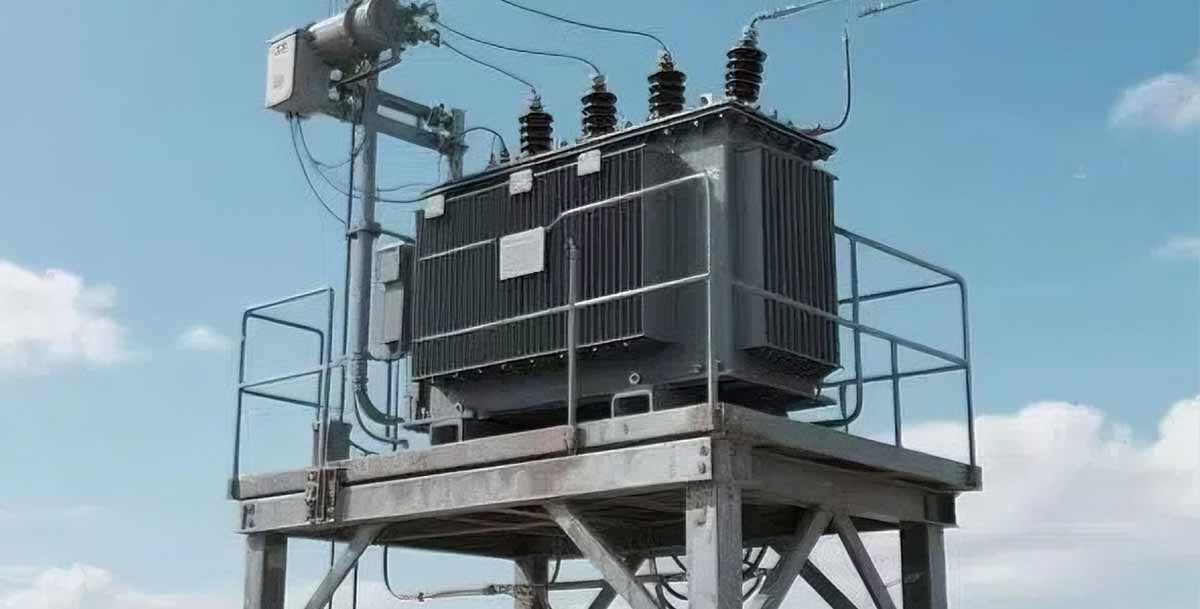
With more than two decades of hands-on experience designing, installing, and maintaining pad mounted transformers, I’ve come to view these understated enclosures as the backbone of modern power grids. What looks like a simple green box from the outside hides a world of sophisticated engineering that keeps your lights on, appliances running, and homes comfortable. In this guide, we’ll peel back the layers to explore how these powerhouses operate, what’s inside them, and why they’re indispensable to your neighborhood’s electrical infrastructure.
How Pad Mounted Transformers Work: The Science Powering Your Street’s Electricity
Have you ever flipped a light switch or plugged in a device and wondered how electricity arrives at your home so reliably? The answer lies in those green pad mounted transformers scattered throughout your community. But what exactly happens inside them to make this power conversion possible?
At their core, pad mounted transformers leverage the principle of electromagnetic induction to reduce high-voltage electricity from underground transmission lines to the safe, usable voltage for household and business use—all without any direct electrical contact between input and output circuits.
I still remember the first time I opened up a pad mounted transformer early in my career. The intricate interplay of components inside that seemingly plain enclosure left me astounded. Let’s break down the step-by-step transformation process and explore why these units are non-negotiable for modern power distribution.
The Voltage Transformation Process
Pad mounted transformers operate on a straightforward yet incredibly effective mechanism, broken down into three key stages:
- High-Voltage Input
Electricity flows into the transformer from buried power lines, typically carrying voltages ranging from 4,000 to 34,500 volts—levels far too high for direct residential use.
- Electromagnetic Induction
The incoming high-voltage current passes through primary coils wrapped around a laminated steel core. This current creates a constantly changing magnetic field, which in turn induces an electric current in adjacent secondary coils. The ratio of turns between primary and secondary coils dictates the exact voltage reduction rate.
- Low-Voltage Output
The induced current exits the secondary coils at a much lower voltage, usually the 120/240-volt standard that powers everything from your refrigerator to your smartphone charger.
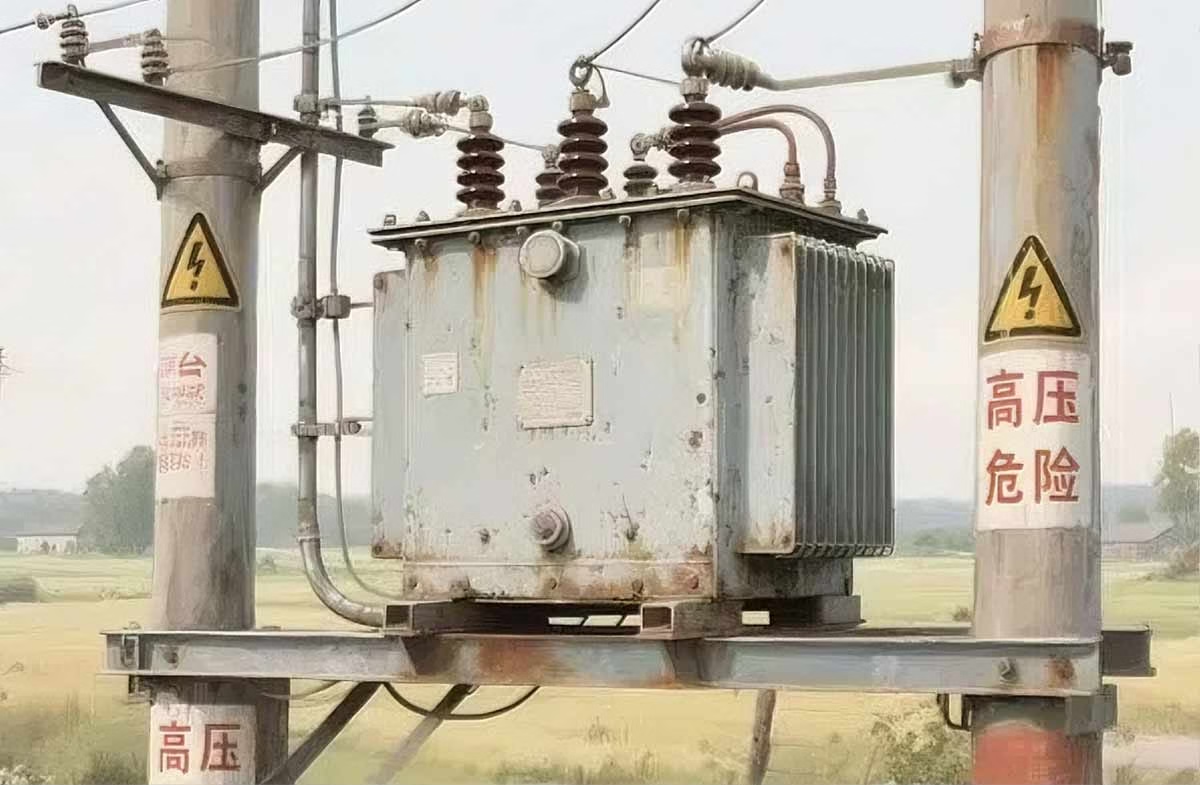
Efficiency and Load Management Innovations
Modern pad mounted transformers are built for peak performance, even under fluctuating demand conditions:
- Load Tap Changers: These critical components adjust the transformer’s voltage output in real time to match neighborhood demand, ensuring stable power delivery during morning and evening peak usage hours, as well as quieter off-peak periods.
- Advanced Cooling Systems: Most units rely on natural oil circulation to dissipate heat generated during operation. For high-capacity models serving commercial areas or densely populated neighborhoods, integrated fans provide additional cooling to prevent overheating.
- Smart Monitoring Sensors: Cutting-edge units are equipped with sensors that track core temperature, insulating oil levels, and electrical load. This data enables utility teams to identify potential issues before they escalate, minimizing downtime and extending the transformer’s service life.
Component Efficiency Breakdown
| Component | Core Function | Impact on Overall Efficiency |
|---|---|---|
| Laminated Steel Core | Creates a focused path for magnetic flux | Minimizes eddy current losses, boosting energy efficiency by up to 2-3% |
| Copper/Aluminum Windings | Facilitates voltage conversion via induction | Copper windings offer lower resistance, reducing energy waste compared to aluminum alternatives |
| Insulating Oil | Cools internal parts and prevents electrical arcing | Maintains optimal operating temperatures, extending component lifespan and preserving efficiency over time |
| Load Tap Changers | Regulates output voltage to match demand | Eliminates voltage fluctuations that can waste energy and damage sensitive electronics |
In my decades in the industry, I’ve witnessed firsthand how proper sizing and maintenance make all the difference. I once consulted on a suburban neighborhood plagued by frequent power fluctuations and flickering lights. A quick inspection revealed the existing pad mounted transformer was undersized, struggling to keep up with the area’s growing demand for electric vehicles, smart home devices, and central air conditioning systems. Upgrading to a higher-capacity unit not only resolved the fluctuations but also improved overall grid efficiency by 5%—a small change with a big impact.
It’s easy to overlook these units, but their capacity is impressive: a standard residential pad mounted transformer can reliably power 10 to 15 homes, operating 24/7 with minimal noise or disruption. Today’s top models boast efficiency ratings of over 98%, meaning only a tiny fraction of energy is lost as heat during the conversion process.
That said, no transformer is 100% efficient. A small amount of energy is always dissipated as heat, which is why you might notice the area around a pad mounted transformer feels slightly warmer on hot summer days or during peak usage times.
As we move toward smarter, more interconnected power grids, pad mounted transformers are evolving right along with them. The latest models feature IoT-enabled monitoring systems that send real-time performance data to utility providers, enabling predictive maintenance and dynamic load balancing. This integration with smart grid technology is laying the groundwork for a more resilient, responsive, and sustainable electrical infrastructure.
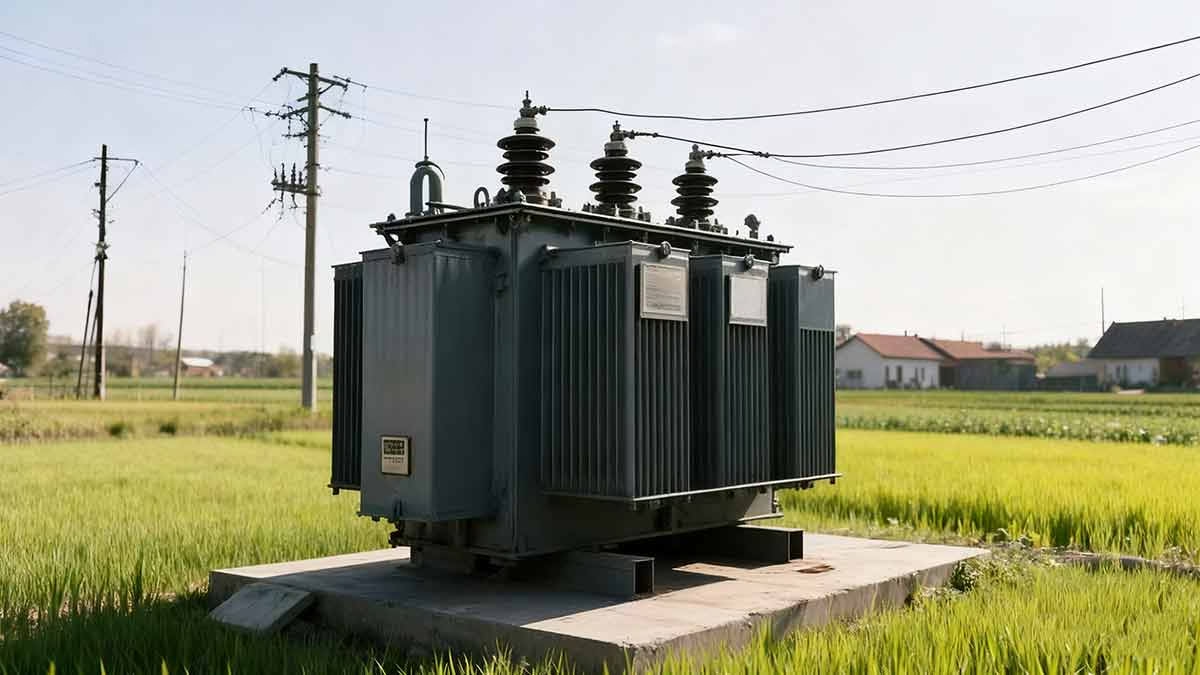
Understanding how these transformers work isn’t just an exercise in curiosity—it’s a way to appreciate the complex, reliable infrastructure that powers our daily lives. Next time you pass a green pad mounted transformer on your street, you’ll know there’s a world of precision engineering working behind the scenes to keep your home running smoothly.
Key Components of Pad Mounted Transformers: What’s Inside That Green Enclosure
Walk past any residential street, and you’ll likely spot a few of those unassuming green boxes—but have you ever stopped to wonder what’s inside them? Pad mounted transformers may look simple from the outside, but they’re packed with precision-engineered components that work in harmony to deliver safe, consistent power to your home.
Every pad mounted transformer is built around a core set of parts: a laminated steel core, primary and secondary windings, high-grade insulating oil, insulated bushings, and a rugged protective enclosure. Each component plays a unique, irreplaceable role in reducing high-voltage power to usable levels, ensuring both efficiency and safety for end users.
Over the years, I’ve opened up hundreds of pad mounted transformers—and every time, I’m impressed by the thoughtful engineering that goes into each part. Let’s take a deep dive into these components, their functions, and why they’re critical to reliable power distribution.
The Core and Windings: The Heart of Voltage Conversion
The core and windings are where the magic of electromagnetic induction happens—they’re the beating heart of the transformer:
- Laminated Steel Core: Constructed from thin, stacked steel sheets, this component creates a concentrated path for magnetic flux. The laminated design is intentional: it minimizes eddy current losses, which would otherwise waste energy and reduce efficiency.
- Primary Windings: These coils receive the incoming high-voltage power from utility lines. Typically made of high-conductivity copper wire, the number of turns in the primary windings is carefully calibrated to set the voltage reduction ratio.
- Secondary Windings: Positioned adjacent to the primary windings, these coils produce the low-voltage output for residential use. They have fewer turns than the primary windings, and their copper construction ensures minimal energy loss during current transfer.
Insulating Oil: The Unsung Workhorse
Insulating oil serves three vital functions that are critical to the transformer’s operation:
- Electrical Insulation: It prevents arcing and short circuits between the high-voltage primary windings and low-voltage secondary windings, as well as between the coils and the transformer’s metal enclosure.
- Heat Dissipation: As the transformer operates, it generates heat—especially during peak demand. The oil absorbs this heat and circulates naturally, dissipating it through the transformer’s walls to keep internal components cool.
- Component Preservation: The oil creates a protective barrier that shields the steel core and copper windings from moisture and oxidation, significantly extending the transformer’s service life. For eco-conscious applications, modern models use vegetable-based insulating oils instead of traditional mineral oils, offering better fire safety and biodegradability.

Bushings and Terminals: The Connection to the Grid
Bushings act as the transformer’s interface with the outside world, facilitating safe power transfer between the unit and underground utility lines:
- High-Voltage Bushings: These heavily insulated components connect the transformer’s primary windings to incoming high-voltage lines. Their robust insulation prevents flashovers, even in wet or humid conditions.
- Low-Voltage Bushings: Designed for easier access, these components link the secondary windings to the low-voltage distribution lines that feed power to homes and businesses.
Auxiliary Components: Safety and Monitoring Systems
A suite of auxiliary parts ensures the transformer operates safely and efficiently over its lifespan:
- Pressure Relief Device: In the event of an internal fault (such as a short circuit) that causes pressure to spike, this device releases excess pressure to prevent the transformer enclosure from rupturing.
- Temperature Gauge: Monitors the temperature of the insulating oil and windings, alerting maintenance teams if temperatures rise to dangerous levels.
- Oil Level Indicator: Provides a clear visual of the oil level inside the enclosure, helping to identify leaks or losses before they impact performance.
- Tap Changer: Adjusts the number of active turns in the windings to fine-tune voltage output, ensuring stable power delivery even as demand fluctuates.
Component Maintenance Checklist
| Component | Core Function | Critical Maintenance Considerations |
|---|---|---|
| Laminated Steel Core | Magnetic flux path | Inspect for unusual vibrations or humming sounds that indicate misalignment |
| Copper Windings | Voltage conversion | Monitor for overheating, which can signal insulation degradation |
| Insulating Oil | Cooling and insulation | Conduct regular oil testing to check for contaminants or moisture buildup |
| Bushings | Power connection | Inspect for cracks, corrosion, or leakage that could compromise insulation |
| Pressure Relief Device | Safety protection | Test annually to ensure it activates correctly under pressure |
| Temperature Gauge | Performance monitoring | Verify accuracy periodically to avoid false readings |
In my experience, proactive maintenance of these components is the key to maximizing a transformer’s lifespan. I once encountered a unit that was running 20°F hotter than normal. A quick check revealed the oil level was 15% below the recommended threshold, reducing its cooling capacity. Topping up the insulating oil resolved the issue immediately— a simple fix that saved the utility company from a costly replacement and prevented a potential power outage.
What’s most remarkable about these components is how they work in perfect tandem. The core and windings handle the core task of voltage transformation; the insulating oil keeps everything cool and protected; the bushings enable safe grid connections; and the auxiliary systems provide critical oversight. Together, they create a reliable power solution that requires minimal intervention.
With proper maintenance, a pad mounted transformer can last 30 years or more. I’ve worked on units that have served neighborhoods since the 1990s— a testament to the durability of their components and the quality of modern transformer engineering.
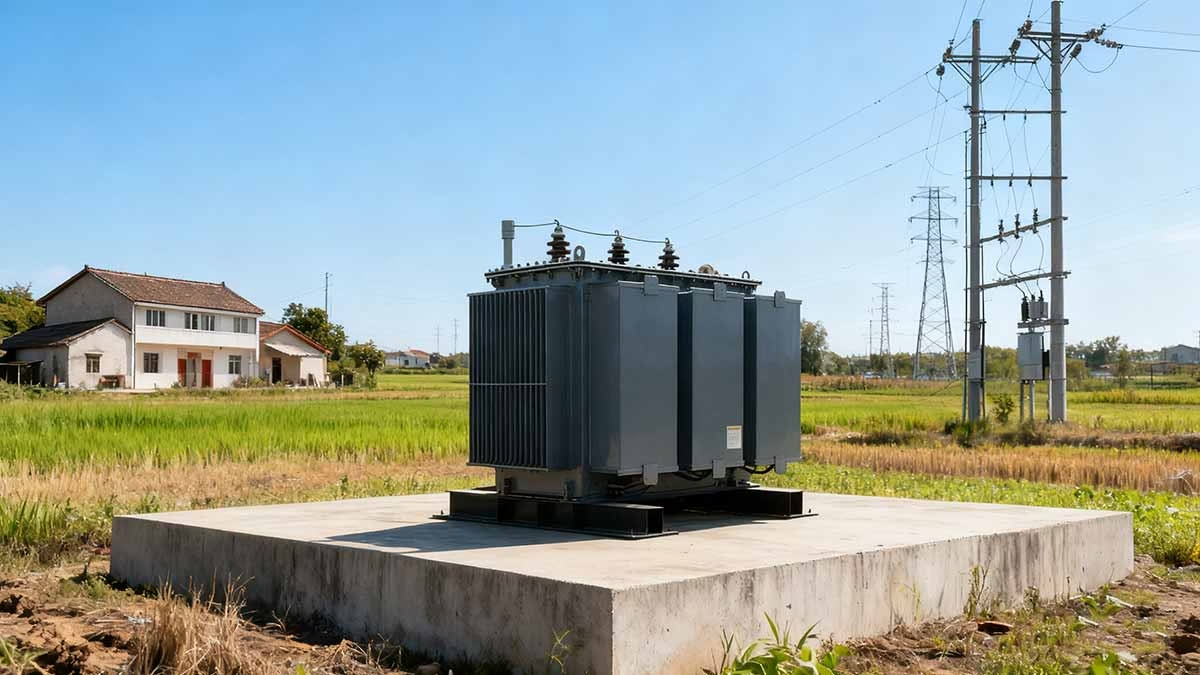
Of course, these units aren’t maintenance-free. Regular inspections are essential to catch small issues before they become major problems. Oil tests, for example, can detect early signs of internal wear or contamination, allowing teams to address issues before they lead to failures.
As technology advances, we’re seeing exciting innovations in transformer components. Eco-friendly insulating oils are becoming more common, and smart sensors are enabling remote monitoring and predictive maintenance. These advancements are making pad mounted transformers more efficient, sustainable, and reliable than ever before.
You don’t need to be an electrical engineer to appreciate the complexity of these green boxes. Understanding their key components helps you recognize the incredible engineering that powers your daily life. Next time you pass a pad mounted transformer, you’ll know exactly what’s inside—and why it’s so essential to your neighborhood’s electrical supply.
Conclusion
Pad mounted transformers are the unsung workhorses of modern power distribution systems, quietly converting high-voltage utility power into the safe, usable electricity that powers homes and businesses. Their superior safety profile, energy efficiency, and low visual impact make them the preferred choice for contemporary neighborhoods, outperforming traditional pole-mounted alternatives in nearly every category.
Beyond their practical benefits, these units represent a perfect blend of simplicity and sophistication. What looks like a basic green box from the outside is a carefully engineered system that leverages electromagnetic induction, precision cooling, and smart monitoring to deliver reliable power 24/7.
As our power grids evolve to meet the demands of electric vehicles, smart homes, and renewable energy sources, pad mounted transformers will continue to play a central role. Their adaptability to smart grid technology and capacity for upgrades make them a future-proof solution for power distribution.
The next time you flip a light switch or charge your car, take a moment to appreciate the pad mounted transformer down the street. It’s a small but mighty device that keeps our modern lives running smoothly.
More FAQ About Pad Mounted Transformer
Q: Where are pad mounted transformers typically installed?
A: Pad mounted transformers are commonly installed in street easements, residential subdivisions, commercial parking lots, industrial campuses, and near outdoor facilities like solar farms. They are ideal for areas with underground power distribution lines, as their ground-mounted and enclosed design avoids the need for overhead transformer poles. Installation locations must comply with local electrical codes, ensuring sufficient clearance from buildings, walkways, and flammable materials. In residential areas, they are often placed at the edge of properties to minimize visual impact while ensuring a convenient power supply to multiple households.
Q: What are the advantages of pad mounted transformers over pole-mounted transformers?
A: Compared to pole-mounted transformers, pad mounted transformers offer superior safety due to their enclosed cabinet, which prevents accidental contact with live components. They have a lower visual profile and are more aesthetically pleasing, making them suitable for urban and residential areas. Their design provides better protection against environmental damage (e.g., storms, wildlife) and reduces noise during operation. Additionally, pad mounted transformers can handle larger capacities and are easier to maintain, as technicians can access components without climbing poles. However, they require more ground space and higher initial installation costs for concrete pad construction.
Q: What are the common types of pad mounted transformers (oil-immersed vs. dry-type)?
A: Most traditional pad mounted transformers are oil-immersed, using insulating oil for cooling and insulation. They offer high thermal efficiency, large capacity, and lower cost, making them suitable for outdoor use in most climates. Dry-type pad mounted transformers, which use air or solid insulation materials (e.g., Nomex), are non-flammable and ideal for areas with strict fire safety requirements, such as near buildings, hospitals, or chemical facilities. Dry-type models require less maintenance but have higher upfront costs and smaller capacity limits. The selection depends on environmental conditions, fire codes, and budget constraints.
Q: What key parameters should be considered when selecting a pad mounted transformer?
A: Key selection parameters include rated capacity (kVA), primary and secondary voltage levels, insulation type (oil-immersed or dry-type), cooling method, load type, and environmental conditions. Rated capacity should be sized to meet current load demands with a 10-20% margin for future growth, calculated as kVA = total load power (kW) ÷ power factor (typically 0.8-0.9). Voltage levels must match the utility grid (e.g., 10kV primary, 0.4kV secondary) and end-user equipment. Additionally, factors like efficiency rating, noise level (compliant with NEMA TR 1), and protection level (IP rating) should be considered to ensure reliable and cost-effective operation.
Q: What are the common faults of pad mounted transformers and how to handle them?
A: Common faults include oil leaks (oil-immersed types), winding short circuits or open circuits, core grounding issues, and tap changer malfunctions. Oil leaks require immediate repair of seals or gaskets and refilling with appropriate insulating oil. winding faults, indicated by abnormal temperature rise or voltage fluctuations, require off-the-line testing (e.g., DC resistance, oil chromatography) and repair (e.g., rewinding or insulating reinforcement). Core grounding issues, which cause increased loss and overheating, can be resolved by removing metal debris or replacing insulation. Tap changer problems, such as contact oxidation, require cleaning or replacement. All faults should be addressed by qualified technicians to avoid safety hazards or equipment damage.
Q: What is the overload capacity of a pad mounted transformer?
A: Pad mounted transformers are designed to handle short-term overloads, typically 120% of rated capacity for 2 hours or 150% for 1 hour, depending on the model and cooling method. Oil-immersed models have better overload capacity due to the heat-dissipating properties of insulating oil, while dry-type models have more limited overload capability. Long-term overload should be avoided, as it causes excessive temperature rise, accelerates insulation aging, and reduces lifespan. Overload capacity is specified by manufacturers in compliance with IEEE standards, and operators should monitor load levels to ensure they stay within safe limits.
Q: How to ensure the safety of pad mounted transformers in public areas?
A: Safety in public areas is ensured through several design and operational measures: hermetically sealed steel cabinets that prevent access to live components; grounding of the cabinet to eliminate electric shock risks; clear safety labels (compliant with NEMA 260) indicating high-voltage hazards; and installation of protective devices (fuses, circuit breakers) that trip in case of faults. Additionally, installation locations are selected to minimize pedestrian contact, with sufficient clearance from walkways and play areas. Regular inspections for cabinet damage or tampering also help maintain safety in public environments.
Q: What factors affect the cost of a pad mounted transformer?
A: Key cost factors include rated capacity (larger capacity = higher cost), insulation type (dry-type models are 20-30% more expensive than oil-immersed), material quality (copper windings vs. aluminum windings), efficiency rating (high-efficiency models have higher upfront costs), and customization (e.g., special voltage levels, weatherproofing for harsh climates). Installation costs, including concrete pad construction, wiring, and testing, also contribute significantly. Oil-immersed transformers have lower initial costs but higher long-term maintenance costs (oil testing, leak repairs), while dry-type models have lower maintenance costs but higher upfront investment.
Q: How to detect and prevent oil leaks in oil-immersed pad mounted transformers?
A: Oil leaks can be detected through regular visual inspections for oil stains around the cabinet, gaskets, and bushings. Advanced methods include using oil level sensors and pressure monitoring systems that trigger alarms when leaks occur. Prevention measures include using high-quality gaskets and seals, ensuring proper installation torque for connections, and avoiding physical damage to the cabinet. Regular oil sampling and testing also help maintain oil quality, reducing the risk of degradation that can lead to seal failure. In cold climates, heating systems may be installed to prevent oil viscosity changes that can stress seals.