
In an era of rapid industrialization and commercial diversification, 3-phase distribution transformer stands as an irreplaceable pillar of power infrastructure. Beyond merely handling high power loads, these engineering workhorses deliver unmatched operational efficiency, adapt to dynamic energy demands, and serve as the critical link between power grids and the complex requirements of modern businesses—from manufacturing plants to smart commercial hubs.
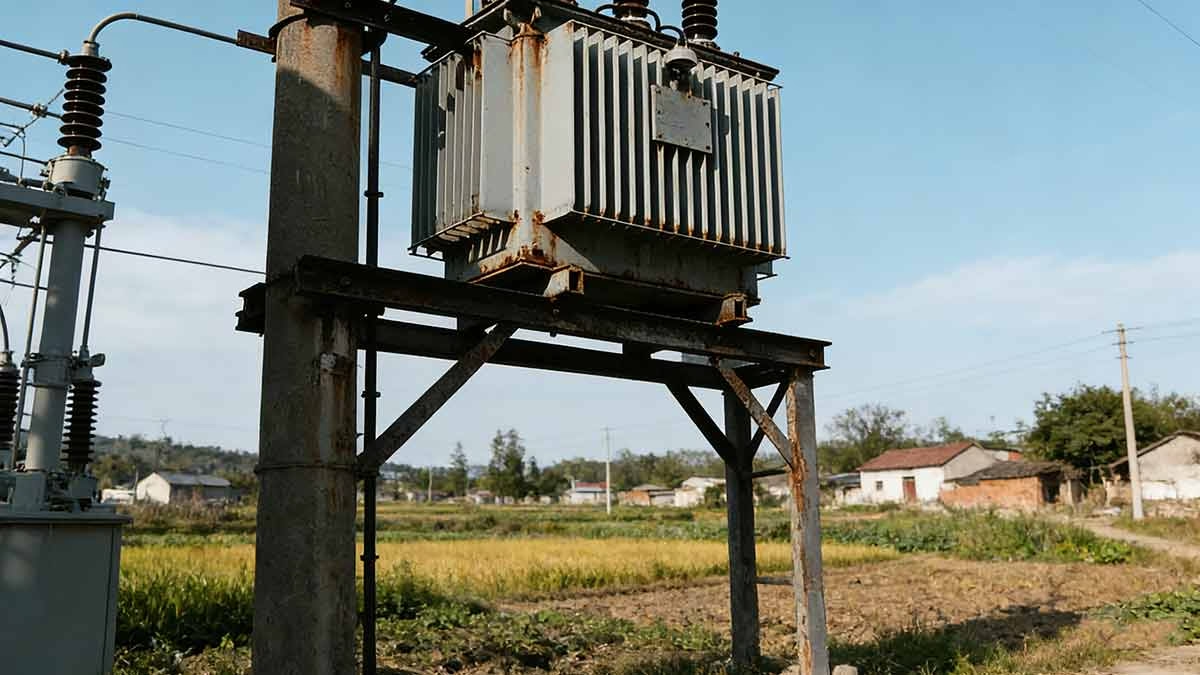
Drawing on over 15 years of hands-on experience in power system design and transformer engineering, I’ve witnessed firsthand how 3-phase transformers shape operational resilience and scalability. Let’s explore their transformative impact across industrial and commercial landscapes and how innovative designs are redefining their role in the future of energy.
Contents
hide
Scaling 3-Phase Distribution Transformers to Meet Industrial Growth’s Evolving Power Needs
As industries expand production lines, adopt automation, and integrate new technologies, their power demands surge exponentially. The challenge lies in scaling power infrastructure without disrupting operations or incurring prohibitive costs—and 3-phase distribution transformers are at the forefront of solving this.
These transformers are engineered to grow with your business, offering scalable solutions that eliminate the need for complete infrastructure overhauls. Whether you’re a mid-sized manufacturer expanding capacity or a large industrial park welcoming new tenants, scalable 3-phase transformers ensure seamless power delivery as your needs evolve.
Modular Design: The Future of Scalable Power
Modular 3-phase transformers have revolutionized how we approach power scaling, offering flexibility that traditional monolithic designs can’t match:
- Plug-and-Play Expansion: Add capacity modules incrementally as power demands grow, without shutting down critical operations.
- Space-Efficient Installation: Modules can be configured to fit constrained spaces—ideal for brownfield industrial sites or retrofits.
- Minimal Downtime Upgrades: Swap or add modules in hours, not days, ensuring production continuity.
A standout example from my portfolio involves an automotive component manufacturer in the Midwest. Starting with a 3-module 3-phase transformer system (1.2 MVA total capacity) in 2018, we expanded to 7 modules by 2023—supporting a 150% increase in production lines—with zero operational downtime. The modular design also allowed the client to align capital expenditures with revenue growth, avoiding upfront overinvestment.
High-Capacity Core Technologies
Advancements in core design have unlocked unprecedented power density, enabling transformers to deliver more output without proportional increases in size:
| Core Technology | Power Handling Capacity | Size Reduction vs. Traditional | Key Advantage |
|---|---|---|---|
| Standard Grain-Oriented Steel | Baseline (1x) | N/A | Cost-effective for stable loads |
| Advanced Amorphous Alloy | 2.5x–3.5x | 25–35% smaller | Low core losses at partial loads |
| Mega-Capacity Nano-Crystalline | 4.5x–6x | 40–55% smaller | Ultra-high density for space-constrained sites |
For a food processing plant in Texas, we deployed a nano-crystalline core transformer that delivered 5x the capacity of their old unit while occupying 45% less floor space—critical for their facility expansion that prioritized production area over equipment storage.
Next-Gen Cooling Systems
Increased power density demands advanced thermal management, and modern 3-phase transformers integrate cooling solutions tailored to industrial conditions:
- Enhanced Oil-Air Cooling: Premium mineral oils with improved thermal conductivity, paired with finned radiators for efficient heat dissipation.
- Variable-Speed Forced Air: Smart fans that adjust speed based on load, reducing energy consumption by 15–20% compared to constant-speed systems.
- Closed-Loop Water Cooling: For ultra-high-capacity applications (5+ MVA), water-glycol mixtures that maintain optimal temperatures even in extreme industrial environments.
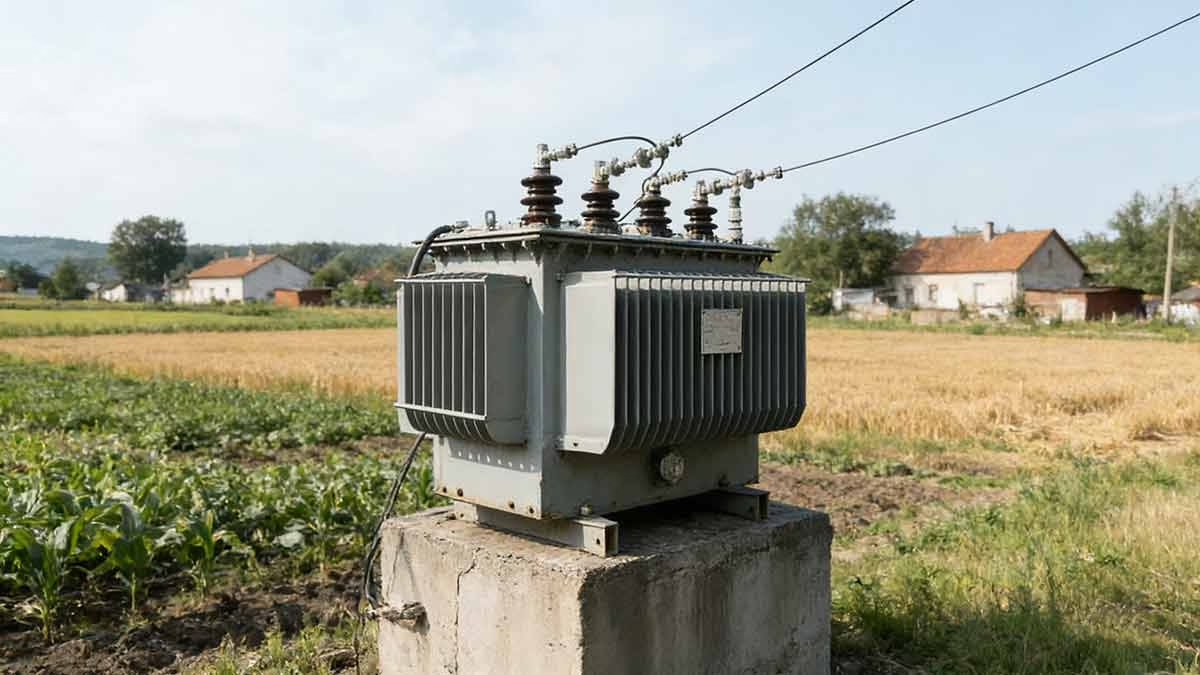
A steel mill in Pennsylvania recently upgraded to a water-cooled 3-phase transformer, boosting their power handling from 8 MVA to 12 MVA while staying within the same equipment footprint. The closed-loop system also eliminated the risk of oil leaks, aligning with their environmental sustainability goals.
Intelligent Load Management
Scalability isn’t just about more power—it’s about smarter power distribution. Modern 3-phase transformers integrate IoT-enabled load management features:
- Real-Time Load Monitoring: Sensors track current draw, voltage stability, and temperature, providing actionable data via cloud dashboards.
- AI-Powered Load Forecasting: Machine learning algorithms predict peak demand periods, adjusting tap positions proactively to avoid overloads.
- Adaptive Tap Changers: Automatic voltage regulation that responds to load fluctuations in milliseconds, ensuring consistent power quality for sensitive equipment.
These features proved game-changing for a pharmaceutical manufacturer with highly variable loads (due to batch processing). The transformer’s AI system reduced voltage sags by 80% and cut energy waste by 12%, directly improving product yield and reducing operational costs.
Optimizing Efficiency & Reliability in High-Demand Industrial Environments
Industrial operations depend on two non-negotiables: efficient power use (to control costs) and unwavering reliability (to avoid costly downtime). 3-phase distribution transformers are engineered to excel in both areas, leveraging advanced materials, precision manufacturing, and proactive monitoring.
In high-demand settings—where transformers operate 24/7 under varying loads—even marginal efficiency gains translate to significant long-term savings. Similarly, reliability is measured in minutes of downtime avoided: a single transformer failure can cost industrial facilities $10,000–$100,000 per hour, depending on the industry.
Advanced Core Materials for Minimal Energy Loss
The transformer core is the primary source of no-load losses, and modern materials have drastically reduced this inefficiency:
- Amorphous Metal Cores: These disordered atomic-structure alloys reduce core losses by 60–70% compared to traditional silicon steel, making them ideal for transformers operating at partial loads (common in batch processing industries).
- Grain-Oriented Electrical Steel (GOES): With crystalline grain aligned to magnetic flux, GOES cores minimize hysteresis losses, delivering consistent efficiency at full load.
- Nano-Crystalline Alloys: Emerging materials that offer core loss reductions of up to 80% vs. silicon steel, though currently limited to specialized high-efficiency applications.
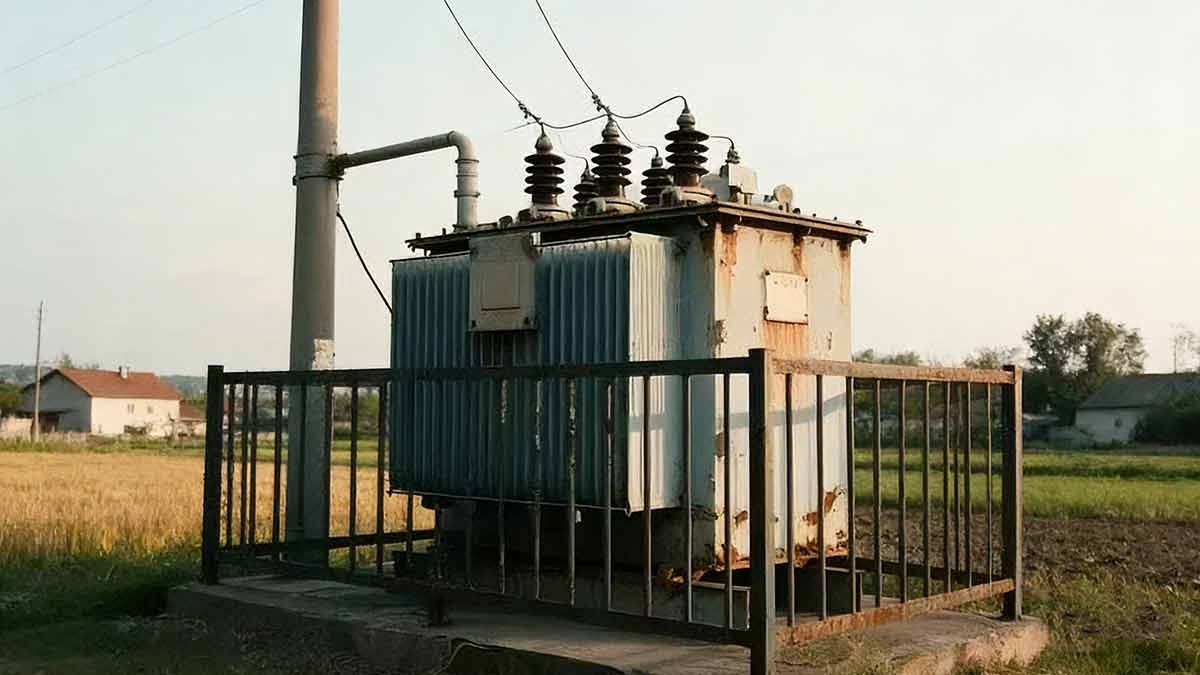
For a chemical plant in Louisiana, swapping their 20-year-old silicon steel core transformer for an amorphous metal model cut annual energy costs by $42,000—achieving ROI in just 18 months. The reduced heat generation also extended the transformer’s expected lifespan from 25 to 35 years.
Precision Winding Techniques
Winding design directly impacts both efficiency and reliability, with custom configurations tailored to industrial environments:
| Winding Type | Efficiency Rating | Reliability Strength | Ideal Application |
|---|---|---|---|
| Layer Winding | 97.5–98.5% | Resistance to mechanical stress | Heavy-industry transformers (steel, mining) |
| Disc Winding | 98.5–99.2% | Superior insulation integrity | Corrosive environments (chemical, petrochemical) |
| Helical Winding | 99.0–99.5% | High current-carrying capacity | High-power applications (data centers, industrial parks) |
In a petrochemical plant with corrosive atmospheric conditions, we specified disc-wound transformers with fluoropolymer insulation—eliminating winding failures that had plagued their old units every 3–5 years. The new transformers have operated flawlessly for 8 years, with no maintenance required beyond routine inspections.
Robust Insulation Systems
Insulation failure is a leading cause of transformer downtime, so modern 3-phase transformers use materials engineered for durability and safety:
- Nomex® Paper Insulation: Withstands continuous operating temperatures up to 220°C, ideal for high-heat industrial settings.
- Ester-Based Cooling Fluids: Non-toxic, biodegradable alternatives to mineral oil that offer better fire safety (flash point >300°C) and improved insulation life.
- Hybrid Insulation Systems: Combine Nomex® with ceramic coatings for critical components, providing double protection against electrical breakdown and thermal degradation.
A waste-to-energy plant in Florida upgraded to ester-fluid-insulated transformers, reducing their fire risk and qualifying for lower insurance premiums. The fluid’s biodegradability also aligned with their sustainability certifications, a key requirement for their municipal contracts.
Predictive Maintenance & Diagnostics
Proactive monitoring is the cornerstone of transformer reliability, and modern 3-phase units integrate advanced diagnostic systems:
- Dissolved Gas Analysis (DGA): Tracks gas concentrations in cooling fluids to detect early signs of insulation breakdown or overheating.
- Partial Discharge Monitoring: Identifies electrical arcing before it causes catastrophic failure, with sensitivity to defects as small as 1mm.
- Thermal Imaging Sensors: Continuously monitor winding and core temperatures, alerting operators to hotspots that could indicate overloads or damage.
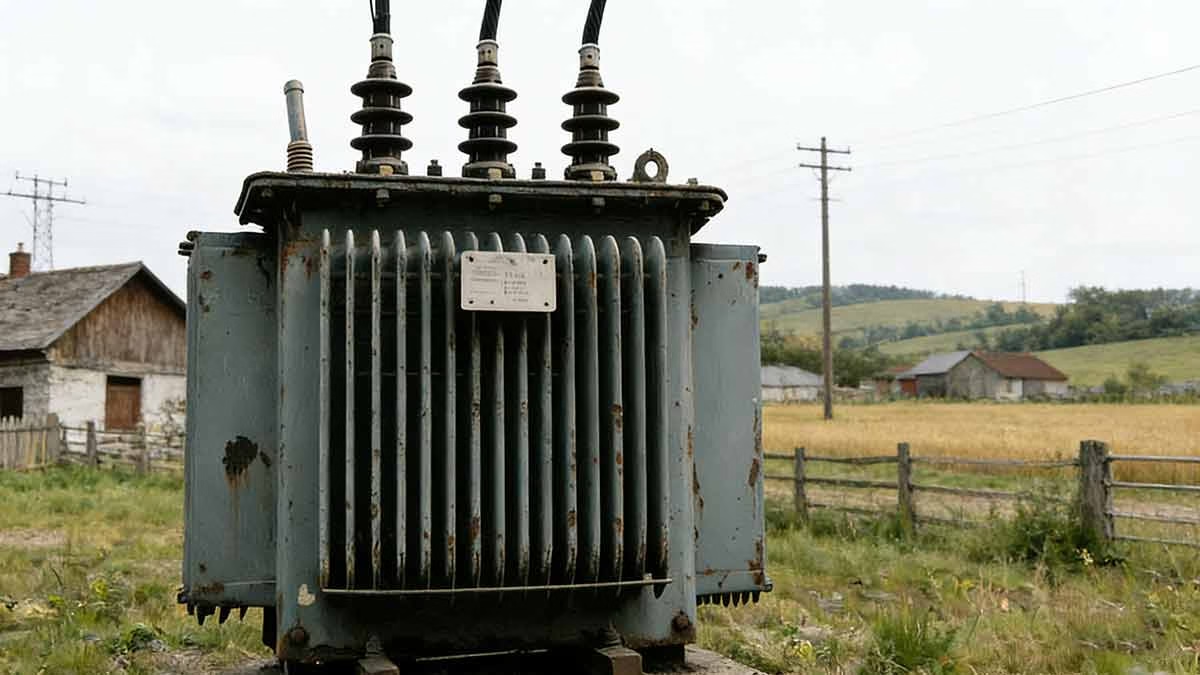
For a manufacturing campus in Ohio, we implemented a DGA-based predictive maintenance program that detected a developing winding fault 6 months before it would have caused a failure. The proactive repair cost $8,000—avoiding an estimated $240,000 in downtime and replacement costs.
Versatility in Power Distribution: Adapting 3-Phase Transformers to Diverse Commercial Loads
Commercial applications—from shopping malls and office towers to data centers and healthcare facilities—have vastly different power requirements than industrial sites. 3-phase distribution transformers excel in this diversity, offering configurable solutions that adapt to varying voltage needs, load patterns, and power quality demands.
Unlike residential transformers, commercial-grade 3-phase units must balance efficiency at both peak and off-peak loads, support mixed-use power demands (e.g., lighting, HVAC, computing), and ensure uninterrupted power for critical systems. Their versatility makes them the backbone of modern commercial infrastructure.
Voltage Flexibility for Mixed-Use Applications
Commercial facilities often require multiple voltage levels to power diverse equipment, and 3-phase transformers offer unmatched flexibility:
- Multi-Tap Configurations: Secondary windings with multiple tap points (e.g., 480V, 240V, 120V) to supply different systems from a single transformer.
- Wide Input Voltage Ranges: Designed to handle fluctuations in grid voltage (±10% of nominal), ensuring stable output for sensitive electronics.
- Auto-Transformers: Compact, cost-effective solutions for small voltage adjustments (e.g., stepping 480V down to 400V for European equipment).
A regional shopping mall in Georgia exemplifies this versatility: a single 3-phase transformer with 5 tap points supplies 480V for HVAC systems, 240V for retail kiosks, and 120V for lighting and POS systems. This consolidated approach reduced equipment costs by 30% and simplified maintenance compared to multiple single-phase transformers.
Load Profile Adaptation
Commercial loads vary dramatically throughout the day (e.g., peak demand in offices during work hours, malls on weekends), and 3-phase transformers are engineered to handle these fluctuations:
| Load Profile Type | Key Characteristic | Transformer Adaptation |
|---|---|---|
| Steady Loads | Constant power draw (e.g., data center servers) | High full-load efficiency, low no-load losses |
| Peaky Loads | Sudden power spikes (e.g., mall HVAC startup) | Overload capacity (125–150% for 30 minutes), robust cooling |
| Fluctuating Loads | Variable draw (e.g., office buildings) | Adaptive tap changers, low core losses at partial load |
For a 20-story office tower in Chicago, we specified a 3-phase transformer with 150% overload capacity to handle morning HVAC startup surges. The unit’s amorphous metal core also ensured efficient operation during evening hours when the load dropped to just 30% of peak capacity.
Power Quality Enhancement
Many commercial applications—particularly healthcare, finance, and technology—require ultra-clean power to protect sensitive equipment:
- Harmonic Mitigation: Integrated filters that reduce harmonic distortion (THD <5%) caused by LED lighting, VFDs, and computing equipment.
- Voltage Regulation: Precision tap changers that maintain output voltage within ±1% of nominal, preventing damage to servers and medical devices.
- Surge Protection: Built-in metal-oxide varistors (MOVs) that shield against voltage transients from grid fluctuations or lightning strikes.
A hospital in Michigan relied on this technology to protect its MRI machines and life-support systems. The transformer’s harmonic filters reduced THD from 12% to 3%, eliminating equipment malfunctions that had previously disrupted patient care.
Specialized Configurations for Unique Needs
Commercial facilities often have niche requirements that demand custom transformer configurations:
- Delta-Wye Connections: Ideal for mixed lighting and power loads, providing a neutral wire for 120V circuits while maintaining 3-phase power for heavy equipment.
- Zig-Zag Windings: Reduce unbalanced loads and suppress zero-sequence harmonics, common in retail centers with diverse tenant equipment.
- Scott-T Connections: Convert 3-phase power to 2-phase for legacy equipment (e.g., old elevators or industrial machinery in historic buildings).
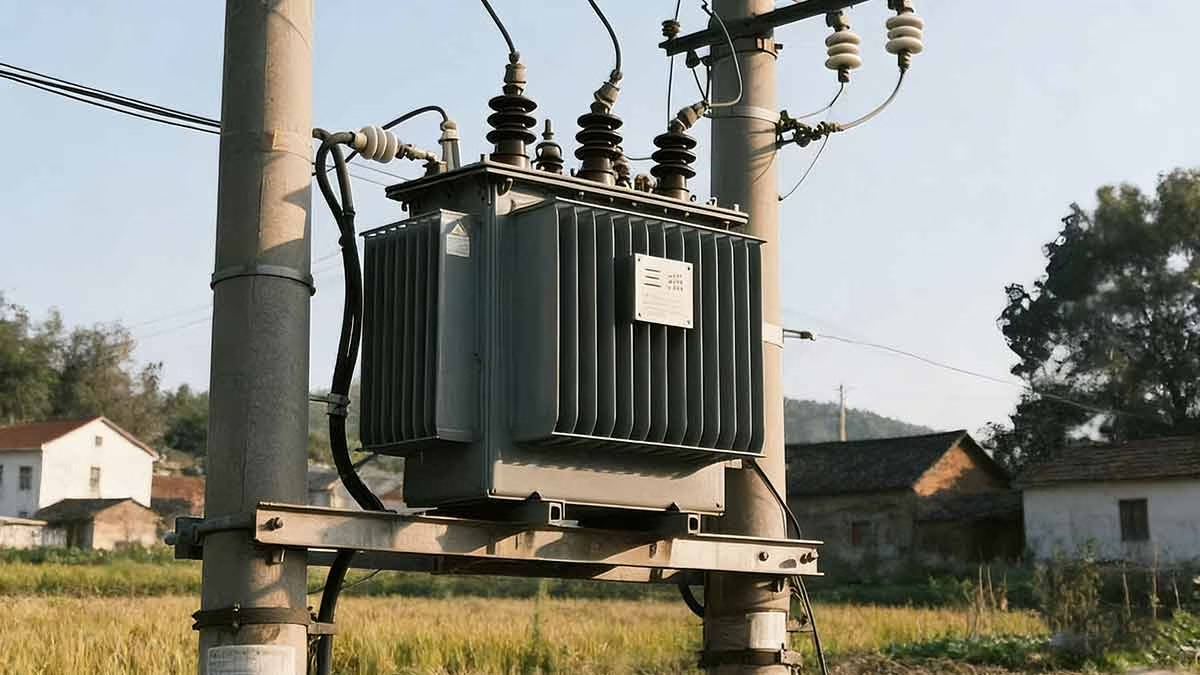
During the renovation of a 1920s office building in New York, we used Scott-T transformers to power the original 2-phase elevator systems while upgrading the rest of the building to 3-phase power. This solution preserved the historic infrastructure while meeting modern energy demands.
Future-Ready Infrastructure: Flexible 3-Phase Transformers for Evolving Industrial Zones
Industrial zones are undergoing rapid transformation—driven by sustainability goals, smart manufacturing, and the integration of renewable energy. 3-phase distribution transformers are evolving to support this shift, offering flexible, eco-friendly solutions that align with the infrastructure of tomorrow.
The key to future readiness lies in adaptability: transformers must integrate with smart grids, support renewable energy sources, and scale to meet changing production demands—all while reducing environmental impact.
Scalable & Modular Power Ecosystems
Modern industrial zones require power infrastructure that can grow with new tenants and technologies, and 3-phase transformers are central to this ecosystem:
- Modular Grid Integration: Transformers designed to connect seamlessly with microgrids, allowing industrial parks to generate and distribute power locally.
- Hot-Swappable Components: Critical parts (e.g., cooling systems, tap changers) that can be replaced without shutting down the entire unit, reducing maintenance downtime.
- Capacity-on-Demand: Pay-as-you-grow models where additional capacity is activated remotely, eliminating the need for physical upgrades until required.
An industrial park in North Carolina adopted this approach, installing a network of modular 3-phase transformers connected to a solar-powered microgrid. As new tenants (including a battery manufacturer and a precision engineering firm) moved in, capacity was activated remotely—cutting deployment time from months to weeks.
Smart Grid Compatibility
The future of industrial power is interconnected, and 3-phase transformers are becoming intelligent nodes in smart grid systems:
| Smart Grid Feature | Transformer Integration | Industrial Benefit |
|---|---|---|
| Real-Time Data Sharing | IoT sensors that transmit load, temperature, and efficiency data to grid management systems | Optimized power distribution across the industrial zone |
| Two-Way Communication | Bidirectional data flow between transformers and grid operators | Rapid response to grid outages or voltage fluctuations |
| Automated Load Balancing | AI-driven systems that redistribute power between transformers to avoid overloads | Reduced risk of downtime during peak demand periods |
A smart manufacturing zone in Arizona leveraged this technology to balance power between solar-generated energy and grid supply. The transformers’ two-way communication capabilities allowed the grid operator to shift load to solar during peak daylight hours, cutting the zone’s carbon footprint by 28%.
Renewable Energy Integration
As industrial zones adopt solar, wind, and other renewable sources, 3-phase transformers must handle the unique challenges of variable renewable power:
- Bi-Directional Power Flow: Designed to accept power from renewable sources (e.g., rooftop solar) and feed excess back to the grid.
- Energy Storage Compatibility: Integrated with battery storage systems to smooth out power fluctuations from wind or solar.
- Low-Voltage Ride-Through (LVRT): Maintains grid connection during voltage sags caused by renewable energy variability, preventing costly disconnections.
A wind-powered industrial park in Iowa deployed 3-phase transformers with LVRT capabilities, ensuring that manufacturing operations continued uninterrupted even during sudden drops in wind power output. The transformers are also integrated with a lithium-ion battery system, storing excess energy for use during low-wind periods.
Sustainable Design & Materials
Future-ready transformers prioritize environmental sustainability, with innovations that reduce carbon footprint and waste:
- Eco-Friendly Cooling Fluids: Biodegradable ester fluids that replace toxic mineral oils, reducing environmental risk in case of leaks.
- Recyclable Materials: Cores and windings are made from 95% recyclable materials, aligning with circular economy goals.
- Energy-Efficient Designs: Meeting or exceeding IE3 (International Efficiency) standards, reducing lifecycle energy consumption by 20–30%.
A European industrial zone focused on carbon neutrality chose ester-fluid transformers for its entire power infrastructure. The switch eliminated the risk of soil or water contamination and reduced the zone’s overall energy use by 15%, helping them achieve their 2030 carbon reduction targets.
Enabling Smart Industries: 3-Phase Transformers’ Role in Technological Advancement
Smart industries—powered by IoT, automation, AI, and data analytics—demand a new level of performance from their power infrastructure. 3-phase distribution transformers are no longer just power distributors; they’re enablers of technological innovation, providing the reliable, high-quality power that smart systems depend on.
From data centers to automated factories, these transformers integrate with digital technologies to support real-time decision-making, optimize energy use, and enhance operational agility.
Powering Sensitive Smart Equipment
Smart industrial equipment—such as AI-driven quality control systems, robotic arms, and IoT sensors—requires ultra-stable, clean power to function reliably:
- Precision Voltage Regulation: Maintains voltage within ±0.5% of nominal, preventing data corruption or equipment malfunctions.
- Low Harmonic Distortion: THD <3% to avoid interference with sensitive electronics and communication systems.
- Fast Transient Response: Adjusts to load changes in microseconds, critical for high-speed automation.
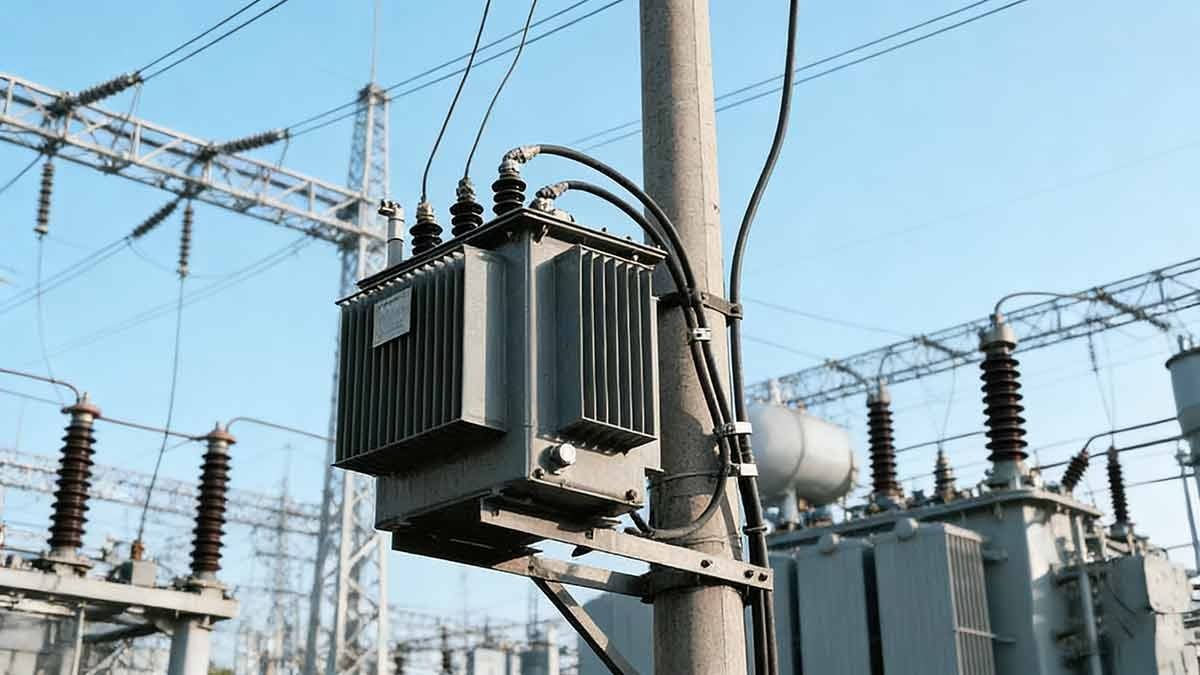
A semiconductor manufacturing plant in Oregon relied on these features to power their AI-driven wafer inspection systems. The transformer’s low harmonic distortion ensured consistent image quality, while fast transient response prevented downtime during sudden load shifts from robotic handling equipment.
Supporting Data Center Infrastructure
Data centers are the brains of smart industries, and their power demands are unlike any other commercial application. 3-phase transformers for data centers prioritize:
- High Reliability: Redundant designs (N+1 or 2N) to eliminate single points of failure.
- Extreme Efficiency: Low no-load and full-load losses to reduce cooling costs (data centers spend 30–40% of energy on cooling).
- Scalability: Modular configurations that grow with server capacity, avoiding overprovisioning.
A hyperscale data center in Virginia deployed a network of parallel 3-phase transformers with N+1 redundancy. The modular design allowed them to add capacity as they expanded their server farm, while the high-efficiency cores cut annual energy costs by $1.2 million.
Integrating Industrial IoT (IIoT)
3-phase transformers are becoming key components of IIoT ecosystems, providing data that drives operational efficiency:
- Embedded Sensor Networks: Measure temperature, vibration, oil quality, and load in real time, transmitting data to cloud-based analytics platforms.
- Predictive Maintenance AI: Machine learning models that analyze sensor data to predict failures before they occur, reducing unplanned downtime.
- Energy Optimization Algorithms: Adjust transformer operation based on production schedules and energy prices, minimizing costs.
A smart factory in Germany integrated their 3-phase transformers with their IIoT platform, using sensor data to optimize energy use across production lines. The system reduced energy waste by 18% and extended transformer maintenance intervals from 2 to 5 years.
Enabling Automation & Robotics
Automated factories and robotic systems require power that can keep up with their dynamic demands:
- High Inrush Current Handling: Supports the sudden power draw of robotic arms and conveyor systems during startup.
- Stable Frequency Output: Maintains 60Hz (or 50Hz) frequency within ±0.1%, critical for precise motion control.
- Fault Tolerance: Isolates faults to prevent system-wide shutdowns, ensuring continuous operation of automated lines.
An automotive assembly plant in Michigan upgraded to 3-phase transformers with high inrush current capacity, enabling them to deploy 50 additional welding robots without overloading their power system. The transformers’ fault tolerance also reduced production line shutdowns by 40%.
Supporting Edge Computing
Edge computing—processing data closer to the source—is becoming critical for smart industries, and it requires distributed power solutions:
- Compact, High-Density Transformers: Designed to fit in edge data centers and distributed computing nodes.
- Cooling Integration: Compatible with edge computing cooling systems (e.g., liquid cooling), maintaining efficiency in constrained spaces.
- Redundant Power Paths: Ensures uninterrupted power for mission-critical edge applications (e.g., real-time inventory management).
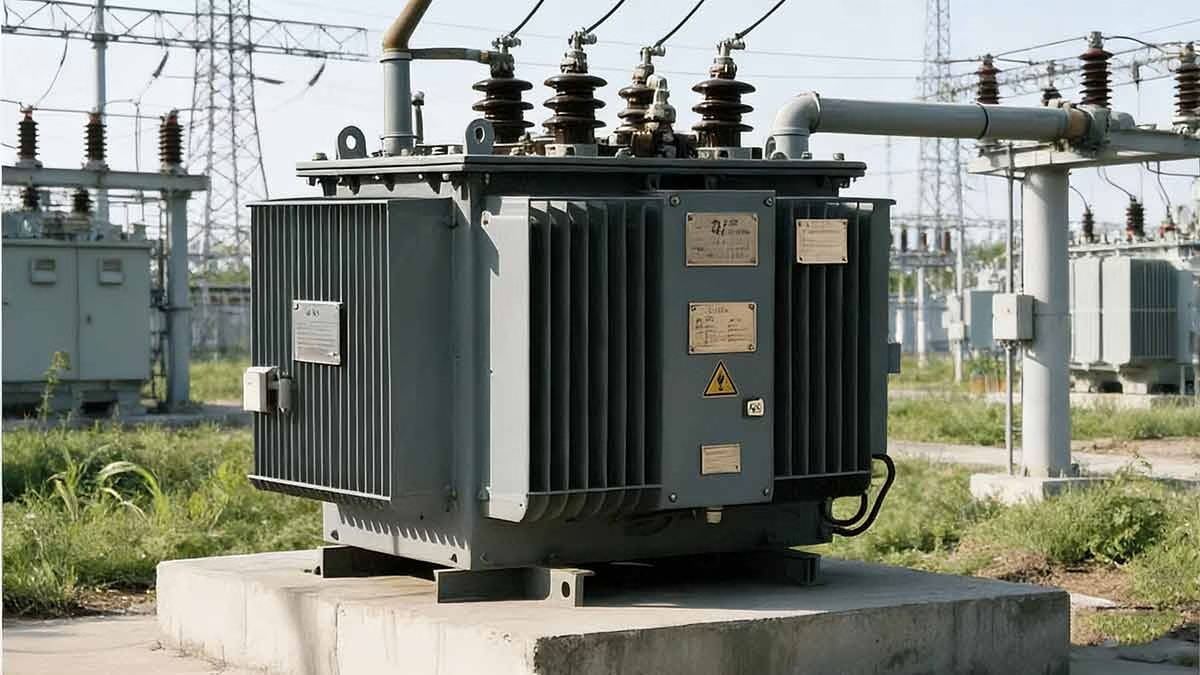
A smart logistics center in Texas deployed small, high-density 3-phase transformers throughout their facility to power edge computing nodes. The transformers’ compact design allowed them to be installed near conveyor systems, reducing data latency and supporting real-time package tracking.
Conclusion
3-phase distribution transformers are far more than passive power components—they’re the lifeblood of industrial growth, commercial resilience, and technological advancement. Their ability to scale with evolving demands, deliver unmatched efficiency and reliability, adapt to diverse load profiles, support future-ready infrastructure, and enable smart industrial systems makes them indispensable in today’s dynamic energy landscape.
As industries embrace sustainability, automation, and connectivity, the role of 3-phase transformers will only grow more critical. By investing in modern, innovative transformer solutions, businesses can not only meet their current power needs but also position themselves for success in a future where agility, efficiency, and reliability are the keys to competitive advantage.
From modular designs that grow with your business to smart systems that optimize energy use in real time, 3-phase transformers are engineered to power progress—today and tomorrow.
More FAQ About 3-phase Distribution Transformer
Q: What is a 3-phase distribution transformer and its core function?
A: A 3-phase distribution transformer is a critical electrical device that steps down high-voltage electricity from transmission grids to lower, usable voltages for residential, commercial, and industrial consumers. Its core function lies in efficient power distribution by converting voltages (e.g., 10kV/35kV to 380V/220V) while maintaining stable electrical parameters, ensuring compatibility with various electrical equipment. Unlike single-phase transformers, it utilizes three sets of windings and a laminated core to handle balanced three-phase power, making it ideal for large-scale power supply scenarios that demand high efficiency and reliability.
Q: How does a 3-phase distribution transformer work?
A: It operates based on the principle of electromagnetic induction. When three-phase alternating current is applied to the primary windings, it generates a rotating magnetic flux in the laminated core. This flux simultaneously links with the secondary windings, inducing a three-phase electromotive force (EMF) in them. The voltage transformation ratio is determined by the turns ratio of the primary and secondary windings—adjusting this ratio allows precise voltage regulation. The core, typically made of high-permeability cold-rolled grain-oriented silicon steel sheets, minimizes hysteresis and eddy current losses, enhancing overall energy efficiency.
Q: What are the main types of 3-phase distribution transformers?
A: The two primary types are oil-immersed and dry-type transformers. Oil-immersed transformers use transformer oil as both insulation and cooling medium, offering excellent heat dissipation and large capacity, making them suitable for outdoor and large-scale power grid applications. Sealed oil-immersed models (e.g., S-M series) eliminate oil contact with air, extending service life. Dry-type transformers adopt solid insulation (e.g., epoxy resin) and air cooling, featuring fire resistance, explosion protection, and low maintenance needs—ideal for indoor environments with strict fire safety requirements, such as high-rises, hospitals, and shopping malls.
Q: What are the standard ratings for 3-phase distribution transformers?
A: Standard ratings are defined based on load requirements, with common kVA ratings including 10kVA, 16kVA, 100kVA, 200kVA, and 500kVA for rural and general applications. 10kVA is suitable for small rural households or agricultural use, while 500kVA caters to large rural areas or small industrial operations. Voltage ratings typically follow regional standards: for example, high-voltage up to 34,500 kV/19,920 volts and low-voltage up to 480 volts per IEEE Std C57.12.22-1993 (R1998). These ratings ensure compatibility with grid specifications and safe load handling.
Q: What are the key advantages of 3-phase distribution transformers over single-phase ones?
A: Compared to single-phase models, 3-phase distribution transformers offer higher efficiency, as they minimize copper and iron losses due to balanced load distribution. They have a more compact design for the same power output, reducing installation space and costs. Additionally, they enable a stable power supply for high-power equipment (e.g., industrial machinery, elevators) that single-phase transformers cannot efficiently support. Voltage regulation is also more flexible via tap changers, adapting to grid fluctuations and diverse user needs.
Q: What are the common applications of 3-phase distribution transformers?
A: They are widely used in urban and rural power grids, stepping down high-voltage transmission power to end-user voltages. Industrial sectors (e.g., steel plants, mines) rely on them to power heavy machinery. Commercial buildings (malls, hotels, office towers) use them for lighting, air conditioning, and elevators. Critical public facilities like hospitals, schools, and transportation hubs also depend on them for reliable power to support life-saving equipment and public services. They are also essential for integrating renewable energy systems into the grid.
Q: Can a 3-phase distribution transformer convert single-phase to three-phase power?
A: No, a transformer cannot convert single-phase to three-phase power. Phase conversion requires specialized equipment like phase converters or variable frequency drives (VFDs). However, a 3-phase transformer can supply single-phase loads by connecting to one of its three phases—for example, powering a cooling fan while supporting a main three-phase load. Conversely, three single-phase transformers can be configured to form a 3-phase system for large-scale applications.
Q: What are the key maintenance points for 3-phase distribution transformers?
A: Regular maintenance includes visual inspections for oil leaks (for oil-immersed types) and clean, damage-free bushings. Oil quality testing (insulation strength, acid value, moisture content) is critical for oil-immersed models, with filtration or replacement required if oil deteriorates. Temperature monitoring prevents overloading and overheating, which can shorten service life. Preventive tests (insulation resistance, DC resistance, turns ratio tests) and tap changer checks ensure contact integrity and electrical performance. For smart models, remote condition monitoring via sensors is increasingly used.
Q: What are the common faults of 3-phase distribution transformers and their causes?
A: Common faults include winding issues (turn-to-turn short circuits, open circuits, deformation) due to insulation aging, short-circuit currents, or manufacturing defects. Core faults (multiple groundings, local overheating) result from insulation damage or loose clamping parts. Insulation failures (aging, moisture absorption, partial discharge) are caused by long-term operation at high temperatures or poor sealing. Tap changer faults (mechanical jamming, contact ablation) and cooling system malfunctions (pump/fan failures, radiator blockages) also occur frequently. Environmental factors like lightning strikes and extreme humidity can exacerbate faults.
Q: How to select the right 3-phase distribution transformer for a project?
A: Selection depends on load characteristics (power rating, voltage requirements, load type), installation environment (indoor/outdoor, temperature, humidity), and grid standards. First, determine the required kVA rating based on total connected load and future expansion needs. Choose the type (oil-immersed vs. dry-type) based on fire safety and space constraints. Verify voltage ratings (primary/secondary) match grid and load specifications. Consider efficiency classes and smart features (remote monitoring) for long-term operational benefits.
Q: How does a tap changer work in a 3-phase distribution transformer?
A: A tap changer adjusts the transformer’s turns ratio to regulate output voltage, compensating for grid fluctuations and load changes. It consists of taps (voltage adjustment points) on the windings and a switching mechanism. On-load tap changers (OLTCs) can adjust voltage without interrupting power, while off-load tap changers require shutdown. Proper operation ensures stable voltage quality—malfunctions (e.g., poor contact, mechanical jamming) can cause overheating or voltage instability, requiring regular inspection and maintenance.
Q: What is the typical service life of a 3-phase distribution transformer, and what factors affect it?
A: The typical service life is 20-30 years, depending on design, manufacturing quality, operation conditions, and maintenance. High-quality materials (e.g., cold-rolled silicon steel, premium insulation) and advanced manufacturing processes extend life. Proper maintenance (oil testing, temperature control, preventive tests) prevents premature aging. Adverse factors include overloading, frequent short-circuit currents, harsh environments (high humidity, extreme temperatures), and poor ventilation, which accelerate insulation degradation and component wear. Smart monitoring systems can extend life by enabling timely maintenance and optimizing operation.