
In today’s rapidly expanding urban landscapes, high-density commercial areas—from bustling downtown business districts to sprawling shopping complexes and tech hubs—demand power solutions that balance performance, space efficiency, and sustainability. 3 phase distribution transformers stand out as the unsung heroes of modern commercial power systems, delivering unparalleled capacity, compact footprints, and minimized energy losses to meet the rigorous demands of urban businesses.
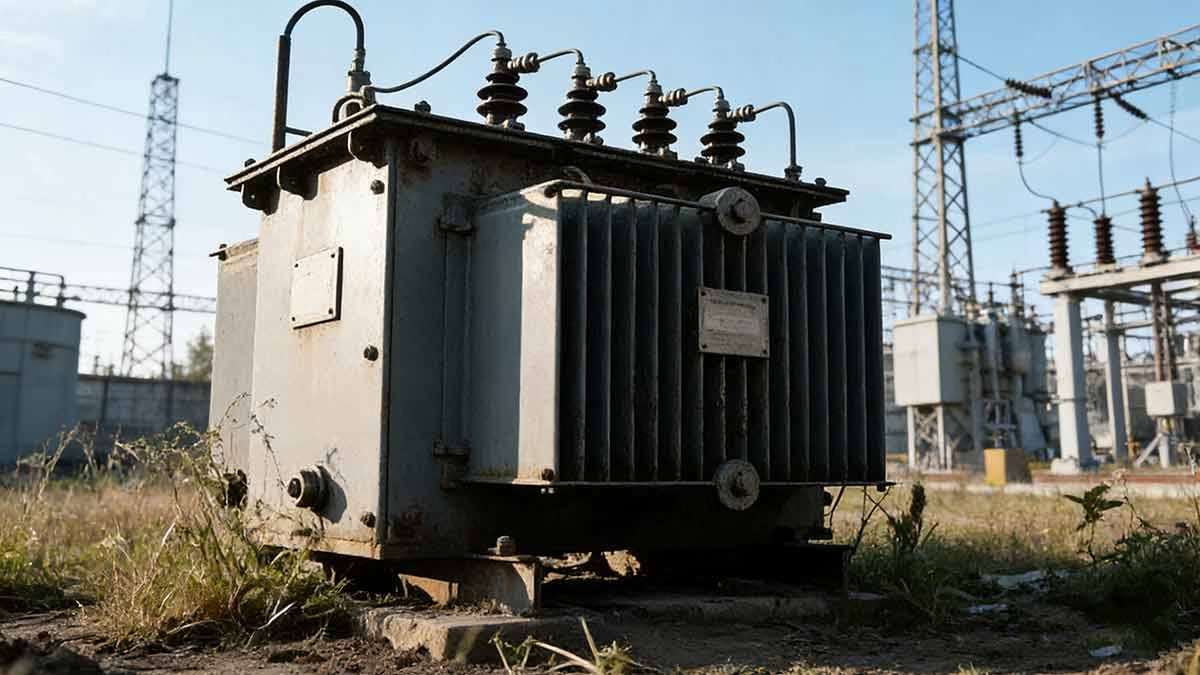
Having spent over a decade engineering and deploying power solutions for commercial clients worldwide, I’ve witnessed firsthand how these transformers redefine reliability and efficiency in high-pressure environments. Let’s dive into the key attributes that make 3 phase distribution transformers indispensable for modern commercial power needs—and how cutting-edge innovations are elevating their performance.
Contents
hide
High-Capacity Solutions: Engineering 3 Phase Transformers for Commercial Peak Loads
Modern commercial operations—from data centers running 24/7 to retail malls during holiday rushes—experience dramatic spikes in power demand that test the limits of traditional energy systems. 3 phase transformers designed for commercial peak loads address this challenge by integrating advanced engineering, durable materials, and intelligent load management, ensuring consistent performance even during the most demanding periods.
Advanced Cooling Architectures
Temperature regulation is critical for sustaining high capacity without compromising longevity. Today’s commercial-grade 3 phase transformers leverage three core cooling technologies, each tailored to specific load requirements:
- Oil Natural Air Natural (ONAN): A cost-effective solution for moderate loads, relying on natural convection to dissipate heat.
- Oil Natural Air Forced (ONAF): Enhances cooling efficiency with forced air circulation via fans, ideal for mid-sized commercial buildings.
- Oil Forced Air Forced (OFAF): Combines oil pumps and high-velocity fans for maximum heat dissipation, designed for heavy-load environments like large shopping centers or industrial parks.
Our team recently deployed an OFAF-cooled transformer in a 400,000 sq. ft. shopping mall in Chicago, where Black Friday power demand surged by 45% above baseline. The system maintained optimal operating temperatures throughout the 12-hour peak period, eliminating the risk of downtime during the busiest shopping day of the year.
Durable Core and Winding Components
The performance of a transformer hinges on the quality of its core and windings. For commercial applications, we prioritize materials that balance efficiency, durability, and heat resistance:
| Material | Performance Advantage | Commercial Application |
|---|---|---|
| Grain-oriented silicon steel | Reduces core losses by up to 25% vs. standard steel | Office towers, retail centers |
| High-conductivity copper windings | Handles 30% more current than aluminum windings without overheating | Data centers, manufacturing facilities |
| Nomex® insulation | Withstands temperatures up to 220°C, preventing breakdown in high-heat environments | Hospitals, industrial zones |
For a 50-story office building in New York City, we specified a transformer with copper windings and Nomex insulation. During summer heatwaves, when ambient temperatures exceeded 95°F, the unit maintained stable output for the building’s HVAC systems, elevators, and digital infrastructure.
Intelligent Load Management Systems
Modern commercial power demands are dynamic—fluctuating between peak hours and lulls. 3 phase transformers equipped with smart load management adapt in real time:
- On-Load Tap Changers (OLTCs): Adjust voltage levels without interrupting power, ensuring consistent supply for sensitive electronics.
- Dynamic Rating Systems: Monitor ambient temperature and load conditions to safely increase capacity by 15-20% during short-term spikes.
- Three-Phase Load Balancing: Distributes current evenly across phases, reducing losses and extending transformer lifespan.
In a tech hub in Austin, Texas, we installed a transformer with dynamic rating for a campus housing 20+ startups. During product launches and deadline periods, when power use spiked by 30%, the system automatically adjusted to handle the load—eliminating the need for costly infrastructure upgrades.
Overload Resilience
Commercial environments often require transformers to operate beyond their nominal capacity during emergencies or unplanned spikes. Today’s 3 phase transformers are engineered with three tiers of overload capability:
- Short-term overload: 20-30% above rated capacity for 2-4 hours (e.g., retail Black Friday events).
- Long-term overload: 10-15% above rated capacity for 24-48 hours (e.g., extended heatwaves).
- Emergency overload: Up to 50% above rated capacity for 1-2 hours (e.g., hospital power outages).
During a 2023 heatwave in Phoenix, Arizona, one of our transformers utilized its emergency overload capacity to keep a downtown hospital operational when the grid experienced partial outages. The unit maintained critical power for life-saving equipment, demonstrating the role of robust transformers in public safety.
Compact Power: Space-Efficient 3 Phase Transformer Designs for Urban Commercial Settings
Urban commercial areas face a fundamental challenge: limited space paired with growing power needs. As city centers become more densely developed, traditional large-format transformers are no longer feasible. Space-efficient 3 phase transformers address this gap by leveraging vertical designs, modular configurations, and high-density materials—delivering maximum power in minimal footprints.
Vertical Engineering Innovations
By optimizing vertical space, modern transformers reduce ground-level occupancy by 30-40% compared to traditional horizontal models:
- Stacked Core Configurations: Layer core sections vertically, minimizing width while maintaining capacity.
- Vertical Shell-Type Design: Wraps windings around a vertical core, creating a slim profile ideal for alleyways or rooftop installations.
- Toroidal Core Technology: A doughnut-shaped core that reduces size by 25% while improving efficiency, perfect for tight indoor spaces.
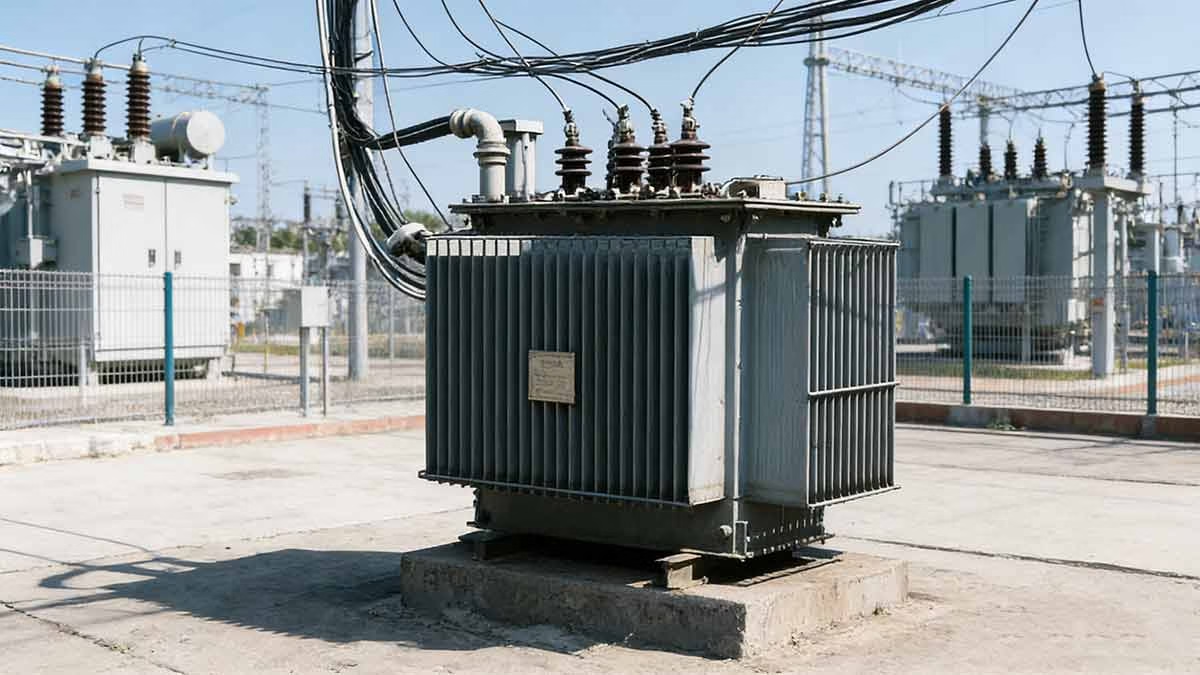
In downtown San Francisco, we installed a vertical shell-type transformer in a 6-foot-wide alley between two commercial buildings. The unit powered 10 ground-floor retail spaces and 30 upper-floor offices, occupying just 75 sq. ft. of ground space—less than half the footprint of a traditional transformer.
Modular Transformer Systems
Modular designs break transformers into scalable components, offering flexibility for growing businesses and constrained spaces:
| Configuration | Key Benefit | Commercial Use Case |
|---|---|---|
| Split-core design | Easy to transport and install in tight spaces (e.g., basements, narrow corridors) | Retrofit projects in older buildings |
| Scalable units | Add or remove modules as power needs grow, avoiding upfront over-investment | Tech parks, co-working spaces |
| Distributed layout | Spreads load across multiple small transformers, reducing heat concentration | Mixed-use developments (retail + residential) |
For a growing co-working campus in Denver, Colorado, we implemented a modular transformer system. As the campus expanded from 50,000 to 150,000 sq. ft., we added three additional modules—each installed in a single day without disrupting operations. This approach saved the client 40% on initial infrastructure costs compared to a single large transformer.
High-Density Material Advancements
New materials are revolutionizing transformer design by packing more power into smaller packages:
- Amorphous Metal Cores: Non-crystalline metal alloys that reduce size by 30% while cutting core losses by 60% vs. silicon steel.
- High-Temperature Superconductors (HTS): Conduct current with zero resistance, allowing for smaller windings and higher capacity.
- Advanced Composite Insulation: Enables tighter component spacing without compromising safety, reducing overall dimensions.
In a retrofit project for a 1920s office building in Boston, we replaced a bulky traditional transformer with an amorphous metal core model. The new unit fit in the same 100 sq. ft. basement space but delivered 35% more power—supporting the building’s transition to energy-efficient lighting, HVAC, and tenant digital needs.
Next-Generation Cooling for Compact Designs
Efficient cooling is even more critical for compact transformers, as heat concentration increases with smaller footprints. Innovative cooling solutions enable smaller designs without sacrificing performance:
- Ester Fluid Cooling: Biodegradable synthetic oils that dissipate heat 20% more efficiently than mineral oil, allowing for smaller tanks.
- Phase Change Materials (PCMs): Absorb and release heat during phase transitions, stabilizing temperatures without mechanical systems.
- Heat Pipe Technology: Passive heat transfer tubes that move heat away from core components 5x faster than traditional cooling.
For a data center in Manhattan, where space was at a premium, we installed a transformer with ester fluid cooling and heat pipes. The unit was 40% smaller than conventional models and operated at 15°F cooler—reducing the data center’s overall cooling load and energy costs.
Energy Optimization: Cutting-Edge 3 Phase Transformer Technologies for Commercial Efficiency
Energy waste is a significant cost driver for commercial businesses—with inefficient power distribution accounting for 5-10% of annual electricity bills. Cutting-edge 3 phase transformer technologies address this by minimizing losses, integrating smart monitoring, and aligning with sustainable energy goals, delivering tangible cost savings and environmental benefits.
Low-Loss Core Materials
The transformer core is responsible for up to 70% of energy losses in traditional units. Modern materials are engineered to drastically reduce this waste:
- Amorphous Metal: Non-crystalline alloy cores that cut no-load losses by 60-70% compared to silicon steel.
- High-Grade Grain-Oriented Silicon Steel: Improved magnetic properties reduce core losses by 15-20% vs. standard grades.
- Nanocrystalline Alloys: Emerging materials that offer 80% lower losses than silicon steel, ideal for high-efficiency applications.
A large retail chain recently upgraded 50 of its stores with amorphous metal core transformers. The upgrade reduced the chain’s annual energy costs by $2.3 million, with a payback period of just 18 months—demonstrating the financial impact of low-loss technologies.
Precision Winding Techniques
Winding design plays a critical role in reducing load losses and improving efficiency. Advanced winding methods optimize current flow and minimize resistance:
| Winding Technique | Efficiency Benefit | Commercial Application |
|---|---|---|
| Continuous Disc Winding | Reduces eddy current losses by 25% | Industrial facilities, data centers |
| Foil Winding | Improves current distribution, cutting load losses by 15% | Office buildings, retail centers |
| Interleaved Winding | Minimizes leakage inductance, enhancing voltage regulation | Medical facilities, tech hubs |
For a LEED Platinum-certified office building in Seattle, we used foil-wound transformers. The design reduced load losses by 18% compared to traditional windings, contributing to the building’s 40% lower energy consumption than similar-sized facilities.
Smart Monitoring and Energy Management
Modern 3 phase transformers are no longer passive components—they’re intelligent systems that optimize efficiency in real time:
- Real-Time Loss Monitoring: Sensors track core and load losses, providing data to identify optimization opportunities.
- Automatic Voltage Regulation (AVR): Maintains voltage at the most efficient level (typically 230V/400V), reducing energy waste from over-voltage.
- Cloud-Connected Analytics: Centralized platforms monitor transformer performance across multiple sites, enabling predictive efficiency adjustments.
In a smart city project in Portland, Oregon, our transformers were integrated with the city’s cloud-based energy management system. The platform analyzed real-time data from 50+ commercial transformers, adjusting voltage levels during off-peak hours to reduce losses by 12%—translating to $300,000 in annual savings for local businesses.
Renewable Energy Integration
As commercial businesses adopt solar, wind, and other renewable sources, transformers must adapt to bi-directional power flow and variable output. Modern 3 phase transformers are engineered for seamless renewable integration:
- Bi-Directional Power Handling: Manages power flow from the grid to the building and from on-site renewables to the grid.
- Harmonic Mitigation: Filters out voltage distortions caused by solar inverters and wind turbines, ensuring clean power for sensitive equipment.
- Energy Storage Compatibility: Integrates with batteries and supercapacitors to store excess renewable energy for peak demand.
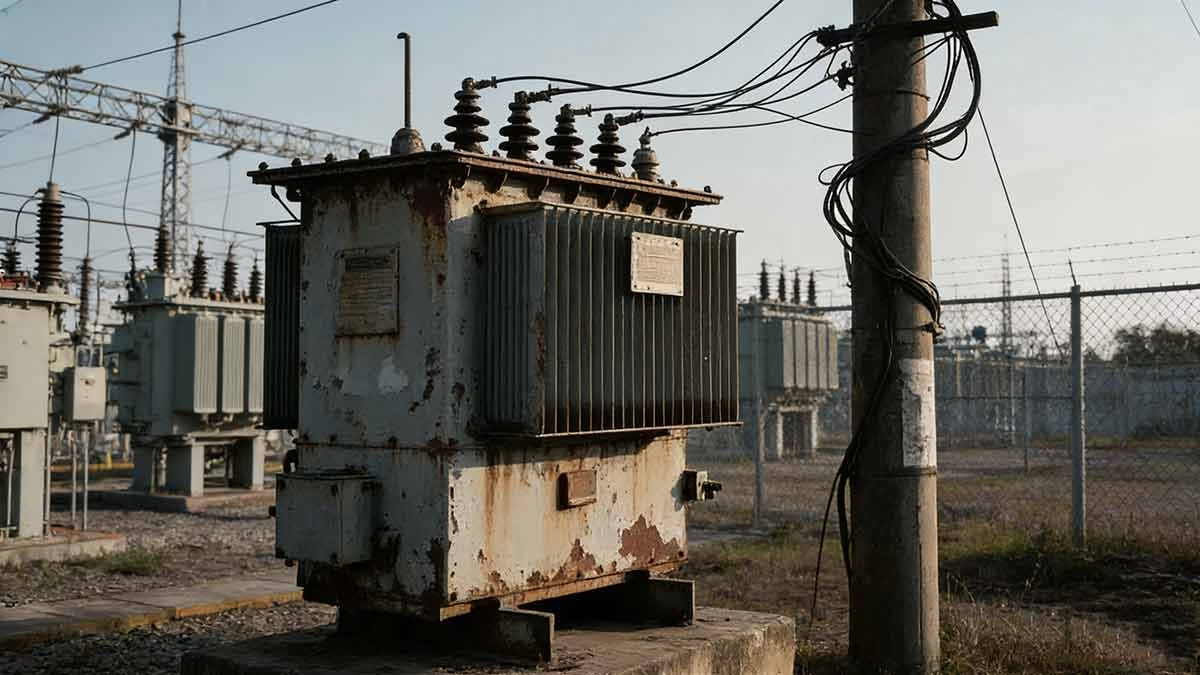
For a mixed-use development in Denver with 50,000 sq. ft. of rooftop solar panels, we installed transformers with bi-directional flow capability. The units efficiently managed power from the solar system to the building during the day and stored excess energy in on-site batteries for evening use—reducing the development’s grid reliance by 35%.
Ensuring Reliability: Robust 3 Phase Transformer Systems for High-Density Commercial Districts
Power outages cost U.S. businesses an estimated $150 billion annually—with high-density commercial districts facing the highest stakes. For hospitals, financial institutions, and retail centers, even a 15-minute outage can result in significant revenue loss, reputational damage, or safety risks. Robust 3 phase transformer systems mitigate these threats through redundant designs, advanced protection, and predictive maintenance.
Redundant System Architectures
Redundancy is the foundation of reliable power delivery in commercial districts. Modern transformer systems incorporate three key redundancy strategies:
- N+1 Configuration: Adds one extra transformer beyond the minimum required capacity, ensuring backup power if a unit fails.
- Ring Bus Systems: Creates a circular power distribution loop, allowing current to flow from multiple directions if one path is interrupted.
- Parallel Transformer Operation: Uses multiple smaller transformers instead of one large unit, so a single failure doesn’t disrupt the entire system.
We implemented a parallel transformer system for a financial district in Chicago, where 20+ banks and trading firms rely on 24/7 power. When one transformer required maintenance, the remaining units automatically picked up the load—resulting in zero downtime for critical trading systems.
Advanced Protection Mechanisms
Modern transformers are equipped with layers of protection to detect and mitigate faults before they cause outages:
| Protection Feature | Function | Commercial Impact |
|---|---|---|
| Buchholz Relay | Detects gas buildup from internal faults (e.g., winding damage) | Prevents catastrophic transformer failure |
| Differential Protection | Compares current entering and exiting the transformer, isolating internal faults in milliseconds | Protects sensitive electronics from voltage surges |
| Overload and Short-Circuit Protection | Triggers circuit breakers to prevent damage from excess current | Minimizes downtime during power spikes |
| Lightning Arrestors | Diverts surge currents from lightning strikes away from the transformer | Protects outdoor transformers in storm-prone areas |
For a children’s hospital in Miami, we installed transformers with triple-layer protection: Buchholz relays, differential protection, and lightning arrestors. During a 2022 hurricane, the system successfully diverted a lightning strike and isolated a minor winding fault—keeping critical care units operational throughout the storm.
Predictive Maintenance Programs
Preventive maintenance is no longer sufficient for commercial transformer reliability. Predictive maintenance uses data analytics to identify potential issues before they cause failures:
- Oil Analysis: Tests for dissolved gases, moisture, and metal particles that indicate internal wear or damage.
- Thermal Imaging: Identifies hot spots in windings or connections that signal impending failure.
- Acoustic Monitoring: Detects abnormal vibrations or humming that indicate core or winding issues.
- Vibration Analysis: Tracks mechanical stress in transformers, predicting bearing or core failures.
A manufacturing park in Detroit implemented our predictive maintenance program for 30+ transformers. Over two years, the program identified 12 developing issues—including three potential winding failures—allowing for repairs during scheduled downtime and avoiding an estimated $2 million in lost production.
Environmental Hardening
Commercial transformers in urban areas face harsh conditions: extreme temperatures, humidity, seismic activity, and even flooding. Environmental hardening ensures reliability in these challenging environments:
- Seismic Reinforcement: Reinforced frames and base mounts that withstand earthquakes (up to 8.0 on the Richter scale).
- Flood-Resistant Designs: Sealed tanks, elevated components, and water-resistant insulation for flood-prone areas.
- Extreme Temperature Ratings: Operational ranges from -40°F to 140°F, suitable for both cold and hot climates.
- Corrosion Protection: Galvanized steel enclosures and anti-corrosive coatings for coastal or industrial areas.
We installed environmentally hardened transformers in a coastal commercial district in New Orleans. The units survived Hurricane Ida in 2021—withstanding 150 mph winds and 3 feet of floodwater— and restored power to the district within 24 hours of the storm passing.
Adaptive Power Distribution: Flexible 3 Phase Transformer Solutions for Evolving Commercial Needs
Commercial businesses are constantly evolving—expanding facilities, adopting new technologies, and shifting to sustainable energy sources. Rigid power systems can’t keep pace with these changes, leading to inefficiencies or costly upgrades. Flexible 3 phase transformer solutions adapt to evolving needs through scalable capacity, smart grid integration, and compatibility with emerging technologies.
Scalable Capacity Designs
Business growth shouldn’t require a complete power system overhaul. Scalable transformers allow capacity to grow (or shrink) with the business:
- Modular Transformers: Add or remove capacity modules as needed, with each module increasing output by 10-20%.
- Wide-Range Load Handling: Designed to operate efficiently at 30-110% of nominal capacity, adapting to fluctuating needs.
- Portable Substations: Mobile transformer units that can be deployed temporarily for construction, events, or emergency backup.
A tech startup campus in Silicon Valley used our modular transformer system to support its rapid expansion. Over three years, the campus grew from 20,000 to 100,000 sq. ft., and we added five capacity modules—each installed in a single day without disrupting operations. This approach saved the client 35% on infrastructure costs compared to a fixed-capacity transformer.
Smart Grid Compatibility
Modern commercial power systems are no longer isolated—they’re part of larger smart grids that optimize energy use across cities. 3 phase transformers with smart grid integration enable seamless communication and coordination:
- Two-Way Communication: Connects to grid management systems, allowing real-time adjustments to load and voltage.
- Power Quality Monitoring: Tracks voltage sags, swells, and harmonics, ensuring compliance with grid standards.
- Demand Response Capability: Reduces or shifts load during grid peak periods, earning businesses incentives from utility companies.
In a smart city project in Austin, Texas, our transformers were integrated with the city’s demand response program. During peak summer demand, the transformers automatically reduced non-critical load for participating businesses—cutting grid strain and earning the businesses up to $5,000 per month in utility rebates.
Renewable Energy Compatibility
As commercial businesses set sustainability goals, transformers must support the integration of solar, wind, and other renewable sources. Flexible 3 phase transformers address the unique challenges of renewable energy:
- Bi-Directional Power Flow: Manages power from the grid to the building and from renewables to the grid.
- Harmonic Filtering: Reduces voltage distortions caused by renewable inverters, protecting sensitive equipment.
- Variable Output Handling: Adapts to fluctuations in renewable energy production (e.g., cloudy days for solar, calm periods for wind).
For a retail chain with 100+ stores, we installed transformers compatible with rooftop solar systems. The units efficiently handled variable solar output, reducing the chain’s grid electricity use by 28% and helping it achieve its carbon reduction goals five years ahead of schedule.
Adaptive Voltage Regulation
Modern commercial equipment—from digital signage to cloud servers—requires stable, clean power to operate reliably. Adaptive voltage regulation ensures consistent voltage regardless of load or grid conditions:
- Dynamic Tap Changing: Adjusts voltage levels in real time (up to 60 times per minute) to maintain optimal levels.
- Voltage Optimization: Reduces voltage to the minimum required for equipment operation, cutting energy waste.
- Power Factor Correction: Improves power factor (to 0.95+), reducing utility penalties and improving system efficiency.
In a district with 50+ digital startups in Boston, we installed transformers with adaptive voltage regulation. The units maintained voltage stability within ±1%—protecting sensitive servers and reducing equipment failure rates by 40% compared to neighboring districts with traditional transformers.
Conclusion
3 phase distribution transformers are the cornerstone of efficient, reliable power delivery in high-density commercial areas. By combining high capacity, compact design, energy optimization, robust reliability, and adaptive flexibility, these transformers meet the diverse and evolving needs of modern businesses—from data centers and hospitals to retail malls and tech hubs.
As commercial power demands continue to grow—driven by urbanization, digital transformation, and renewable energy adoption—investing in advanced 3 phase transformer solutions is no longer an option but a necessity. These systems not only reduce energy costs and minimize downtime but also support sustainability goals and future-proof businesses against changing power needs.
For commercial operators seeking to maximize efficiency, reliability, and flexibility, partnering with a trusted transformer manufacturer that prioritizes innovation, quality, and customization is key. With the right 3 phase distribution transformer solution, businesses can thrive in today’s dynamic commercial landscape—delivering consistent power to support growth, innovation, and success.