
Have you ever stopped to wonder how the electricity generated at a distant power plant safely reaches your home, phone charger, or office printer—all while maintaining the right voltage to keep your devices running smoothly? The answer lies in one of the most unsung heroes of modern infrastructure: the electric transformer.
An electric transformer is a sophisticated electrical device designed to adjust voltage levels of electrical energy without altering its frequency. Acting as the backbone of power transmission and distribution networks, it steps up voltage for efficient long-distance travel (minimizing energy loss) and steps it down to safe levels for everyday use in residences, commercial buildings, and industrial facilities. Without transformers, the reliable delivery of electricity from generation sites to end-users would be nearly impossible.
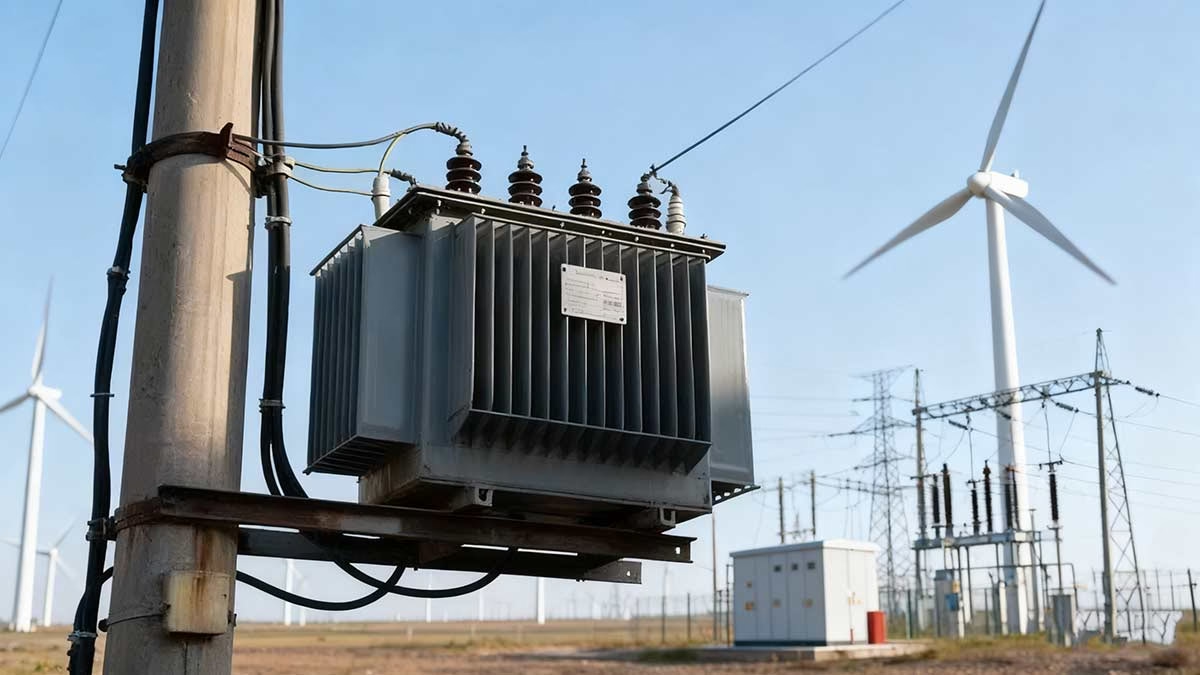
Over my two decades in the transformer manufacturing and power industry, I’ve witnessed firsthand how these devices—from towering substation units to compact pole-mounted models—silently power our daily lives. Let’s explore the inner workings, key roles, and evolving capabilities of electric transformers, and why they’re indispensable to our modern electrical ecosystem.
Contents
hide
Voltage Transformation: How Electric Transformers Bridge Power Plants and Homes
Ever plugged in a kitchen appliance or charged your laptop and taken for granted that it works perfectly? That’s the magic of voltage transformation at play. But how exactly do transformers adapt the raw electricity from power plants to meet the needs of your home?
At its core, voltage transformation relies on electromagnetic induction—a principle that allows transformers to convert low-voltage, high-current electricity into high-voltage, low-current power (and vice versa). This process is critical because high-voltage electricity travels much more efficiently over long distances, while low-voltage power is safe for household and commercial use.
Step-Up Transformation: Preparing Electricity for the Long Haul
Power plants—whether fueled by coal, natural gas, wind, or solar—generate electricity at relatively low voltages (typically 10–30 kV). To send this power hundreds of miles through transmission lines without significant energy loss, step-up transformers boost the voltage to ultra-high levels (138 kV to 765 kV or higher).
I once led a project at a large solar farm where we installed a custom step-up transformer that converted the farm’s 20 kV output to 500 kV for integration into the national grid. The scale of this transformer was striking—roughly the size of a small garage—yet its precision ensured that every watt of solar energy was efficiently transmitted to communities miles away.
Transmission Substations: The Midpoint in Voltage Regulation
After traveling through high-voltage transmission lines, electricity reaches regional transmission substations. Here, step-down transformers reduce the voltage to intermediate levels (e.g., 69 kV to 230 kV) to prepare it for local distribution. These substations also act as grid hubs, managing power flow and ensuring stability across the network.
In a recent grid modernization project, my team upgraded transformers at a substation serving over 100,000 residents. The new units featured advanced voltage regulation technology, which improved power quality and reduced fluctuations—meaning fewer flickering lights and more reliable performance for households and businesses.
Distribution Transformers: Delivering Power to Your Doorstep
From transmission substations, electricity flows through distribution lines to neighborhoods, where distribution transformers perform the final voltage reduction. These transformers—often mounted on utility poles, placed on concrete pads, or installed underground—lower the voltage to the standard 240/120 V used in most homes and small businesses.
Last year, we replaced aging pole-mounted transformers in a suburban community with more efficient models. The upgrade not only reduced energy loss by 15% but also included smart monitoring features that allowed the utility company to detect issues before they caused outages—keeping the neighborhood powered even during peak usage hours.
Energy Efficiency in Transmission: How Transformers Minimize Power Losses
One of the biggest challenges in power transmission is minimizing energy loss. When electricity travels through wires, some energy is wasted as heat due to resistance—a problem known as resistive loss. Transformers address this challenge head-on, making long-distance power delivery both efficient and cost-effective.
The Science Behind High-Voltage Efficiency
Resistive loss is proportional to the square of the current (Ohm’s Law: P = I²R). By stepping up voltage, transformers significantly reduce the current flowing through transmission lines—cutting resistive loss dramatically. For example, doubling the voltage halves the current, which reduces energy loss by 75%.
In a project for a cross-country transmission line, we helped upgrade the system from 345 kV to 765 kV. The result? A 65% reduction in power loss over 800 miles—enough to power 50,000 homes annually. This not only saved the utility company millions in energy costs but also reduced carbon emissions by cutting the need for additional generation capacity.
Advanced Transformer Design for Lower Internal Losses
Modern transformers are engineered to minimize their own internal energy losses, thanks to innovations in materials and design:
- Core Materials: Amorphous metal and nanocrystalline cores replace traditional silicon steel, reducing core losses (energy wasted as heat in the transformer’s magnetic core) by up to 70%. In one industrial application, switching to an amorphous metal core transformer saved a manufacturing plant over $20,000 per year in electricity costs.
- Cooling Systems: Oil-immersed cooling (for large transformers) and dry-type cooling (for indoor use) ensure optimal operating temperatures, preventing overheating and maintaining efficiency. We recently designed a hybrid cooling system for a downtown substation that combined oil circulation with forced-air radiators—keeping the transformer running at peak efficiency even during summer heatwaves.
- Insulation Technology: High-performance insulation materials reduce leakage current and improve voltage withstand capability, further enhancing efficiency and reliability.
Transformer Types and Applications: From Substations to Residential Areas
Transformers aren’t one-size-fits-all—they’re engineered to meet specific needs across the power grid. From massive industrial units to compact devices for specialized applications, each type plays a unique role in delivering electricity safely and efficiently.
Industrial-Grade Power Transformers
These are the workhorses of the grid, designed to handle high voltages and large power loads:
- Generator Step-Up Transformers: Installed at power plants to boost generator output for transmission.
- Substation Transformers: Used in transmission and distribution substations to adjust voltage levels between grid segments.
- Interconnection Transformers: Link different voltage networks, ensuring seamless power flow between regional grids.
I once oversaw the installation of a 1,200 MVA substation transformer—weighing over 500 tons—that now serves as the backbone of a major city’s power supply. Its design included advanced fault tolerance features, ensuring it could withstand extreme weather and grid disturbances.
Distribution Transformers
These transformers bring power directly to end-users, and their design depends on location and application:
| Type | Typical Rating | Common Locations |
|---|---|---|
| Pole-Mounted | 5–200 kVA | Residential neighborhoods, rural areas |
| Pad-Mounted | 75–5,000 kVA | Commercial districts, industrial parks |
| Underground | 75–3,000 kVA | Urban areas, shopping malls, airports |
In a recent urban redevelopment project, we installed over 50 pad-mounted transformers to power a mixed-use community of apartments, shops, and offices. Each transformer was sized to handle the specific load of its area, ensuring efficient power delivery without overcapacity.
Specialized Application Transformers
For unique electrical needs, specialized transformers are engineered to provide safety, isolation, or precise voltage control:
- Isolation Transformers: Separate the input and output circuits to prevent electric shock and reduce electrical noise—critical for hospitals, data centers, and sensitive industrial equipment.
- Auto-Transformers: Use a single winding to adjust voltage, offering higher efficiency for applications where isolation isn’t required (e.g., voltage regulation in factories).
- Instrument Transformers: Measure voltage and current for metering and protection purposes, ensuring accurate monitoring of grid performance.
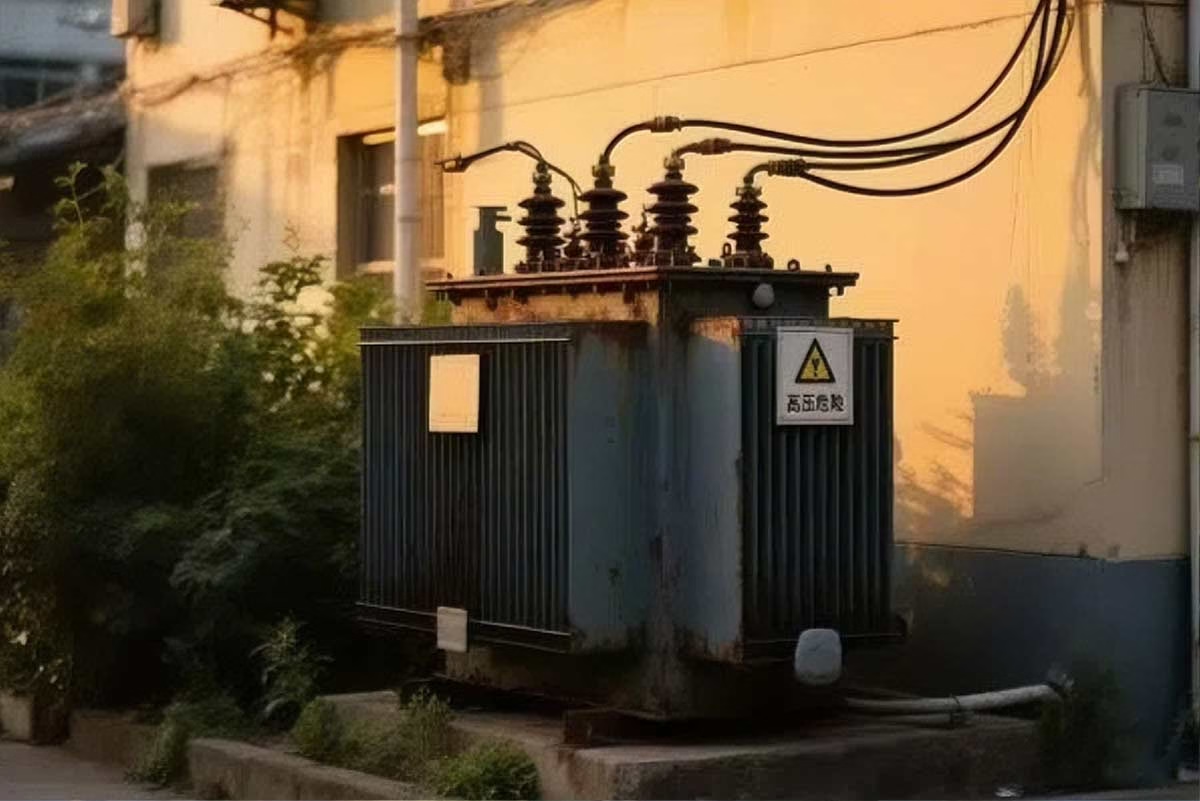
We recently supplied isolation transformers for a research laboratory working with sensitive electronic equipment. The transformers eliminated electrical interference, allowing the lab’s instruments to operate with pinpoint accuracy.
Safety and Stability: How Transformers Protect Your Household Power Supply
Have you ever noticed that your lights don’t dim when your neighbor turns on their air conditioner or electric oven? That’s a testament to the safety and stability features built into transformers. These devices act as guardians of the grid, ensuring that the electricity reaching your home is safe, consistent, and reliable.
Voltage Regulation: Keeping Appliances Protected
Transformers maintain stable voltage levels even as demand fluctuates, preventing damage to sensitive electronics:
- On-Load Tap Changers (OLTCs): Adjust the transformer’s voltage ratio while it’s in operation, ensuring a steady output regardless of load changes.
- Automatic Voltage Regulators (AVRs): Fine-tune voltage levels in real time, compensating for fluctuations in the grid.
In a residential area prone to voltage spikes, we upgraded transformers with OLTCs and AVRs. The result? A 90% reduction in appliance damage claims, as the transformers kept voltage within the safe range for TVs, refrigerators, and other household devices.
Fault Isolation: Preventing Outages from Spreading
Transformers are equipped with protective features that isolate faults (e.g., short circuits, lightning strikes) to prevent them from affecting the entire grid:
| Protection Type | Function | Benefit |
|---|---|---|
| Overcurrent Protection | Shuts off power if current exceeds safe levels | Prevents transformer damage and fires |
| Differential Protection | Detects internal faults (e.g., winding damage) | Minimizes outage areas by isolating the faulty unit |
| Thermal Protection | Monitors temperature and triggers alerts if overheating | Extends transformer lifespan and prevents failures |
During a severe thunderstorm last year, a lightning strike hit a utility pole transformer in a rural area. Thanks to its differential protection system, the transformer isolated the fault, limiting the outage to just five homes instead of the entire neighborhood.
Load Management: Balancing Demand Across the Grid
As more households adopt electric vehicles (EVs), rooftop solar panels, and smart appliances, transformers play a key role in balancing variable loads:
- Load Tap Changers: Adjust output to match demand, preventing overloading during peak hours.
- Smart Grid Integration: Enable real-time load monitoring, allowing utilities to redistribute power where it’s needed most.
We recently implemented a load management system for a suburban community with high EV adoption. The transformers communicated with the utility’s grid management platform, balancing EV charging loads during evening peak hours and preventing brownouts.
Smart Grid Integration: Transformers Shaping the Future of Home Energy
The rise of smart grids—digitally connected power networks that optimize energy use—has transformed transformers from passive devices into active, intelligent components. Modern transformers are now equipped with sensors, communication tools, and AI-driven controls, enabling them to support the future of home energy management.
Real-Time Monitoring and Predictive Maintenance
Smart transformers feature built-in sensors that track voltage, current, temperature, and oil condition (for oil-immersed models). This data is transmitted to utility companies via cloud-based platforms, allowing for:
- Remote Diagnostics: Utilities can identify potential issues (e.g., overheating, insulation degradation) without sending technicians to the field.
- Predictive Maintenance: AI algorithms analyze data to predict failures before they occur, reducing unplanned outages.
In a pilot project with a regional utility, we installed smart transformers in 50 neighborhoods. The predictive maintenance system reduced unplanned outages by 35% in the first year, saving the utility over $1 million in repair costs and improving customer satisfaction.
Bidirectional Power Flow: Supporting Renewable Energy
With more homeowners installing rooftop solar panels and battery storage systems, power now flows both from the grid to homes and from homes to the grid. Smart transformers are designed to handle this bidirectional flow, ensuring stability and efficiency:
- Reverse Power Handling: Manage electricity generated by solar panels as it’s fed back into the grid.
- Voltage Stabilization: Maintain consistent voltage levels even with variable input from renewable sources.
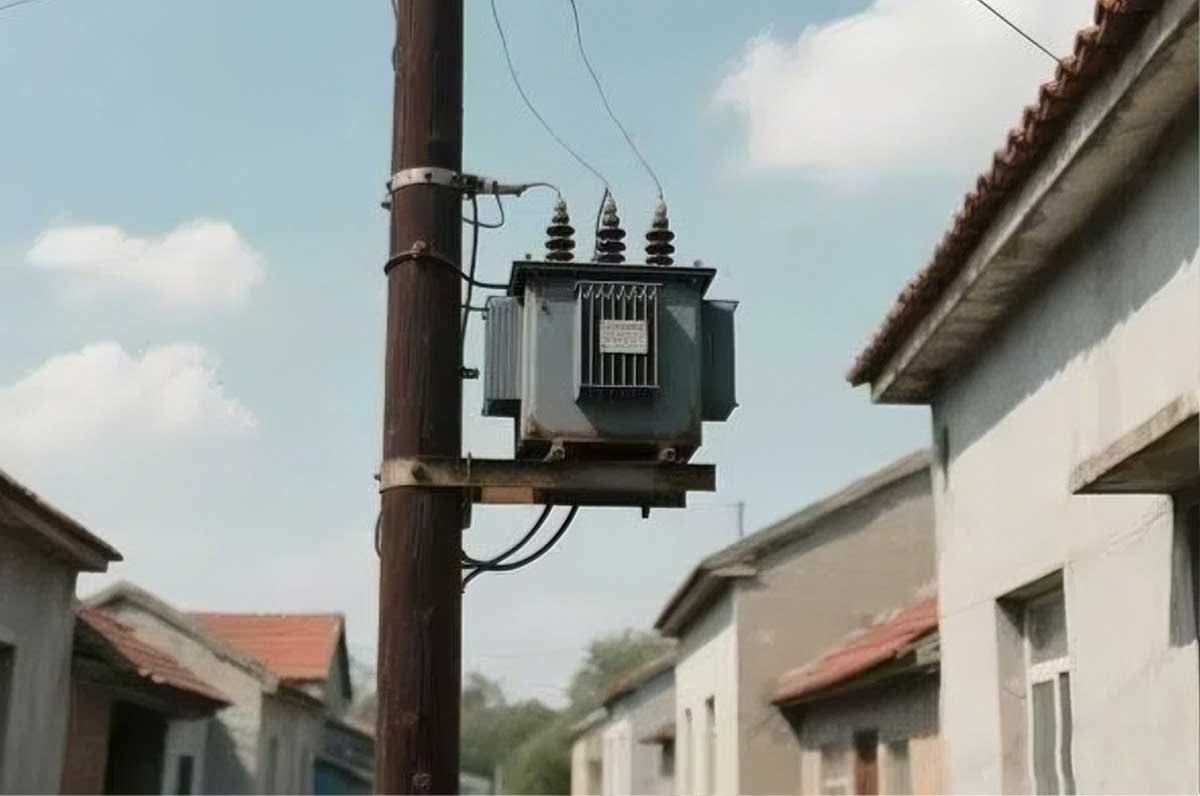
We upgraded transformers in a neighborhood with 80% solar adoption, enabling residents to sell excess energy back to the grid while ensuring the local power supply remained stable. The project increased the community’s renewable energy usage by 40% and reduced electricity bills for homeowners.
Demand Response: Transforming Transformers into Grid Management Tools
Smart transformers enable demand response programs, where utilities can adjust power usage during peak hours to avoid blackouts:
- Load Shedding: Temporarily reduce power to non-critical loads (e.g., outdoor lighting, pool pumps) with customer consent.
- Time-of-Use Pricing Support: Allow utilities to offer lower rates during off-peak hours, encouraging consumers to shift usage.
During a record heatwave last summer, our demand response system—integrated with smart transformers—successfully reduced peak demand by 15%, preventing brownouts and keeping air conditioning running in homes and hospitals.
Conclusion
Electric transformers are far more than just voltage-adjusting devices—they’re the unsung heroes that connect power plants to homes, ensure efficient energy transmission, and protect our electrical systems. From the massive step-up transformers at power plants to the compact units on neighborhood utility poles, every transformer plays a critical role in keeping our modern world powered.
As the energy landscape evolves—with more renewable sources, smart grids, and electric vehicles—transformers are evolving too. Today’s smart transformers are equipped with advanced sensors, AI-driven controls, and bidirectional power flow capabilities, making them essential to building a more efficient, reliable, and sustainable power grid.
Whether you’re a homeowner, business owner, or industry professional, understanding the role of electric transformers helps you appreciate the complexity of the power system that keeps your lights on, your devices charged, and your life running smoothly. As a transformer manufacturer with decades of experience, I’m proud to be part of an industry that’s shaping the future of energy—one transformer at a time.