
Contents
hide
Introduction: Why Every Professional Needs a Reliable Guide to Transformer Failures
Transformers are among the most critical assets in power distribution, industrial facilities, utilities, and commercial operations. When they operate correctly, they provide stable voltage, consistent power flow, and reliable service with minimal attention. However, when a transformer begins to fail or experiences a catastrophic fault, the consequences can range from minor disruptions to widespread outages, equipment damage, safety hazards, and costly downtime.
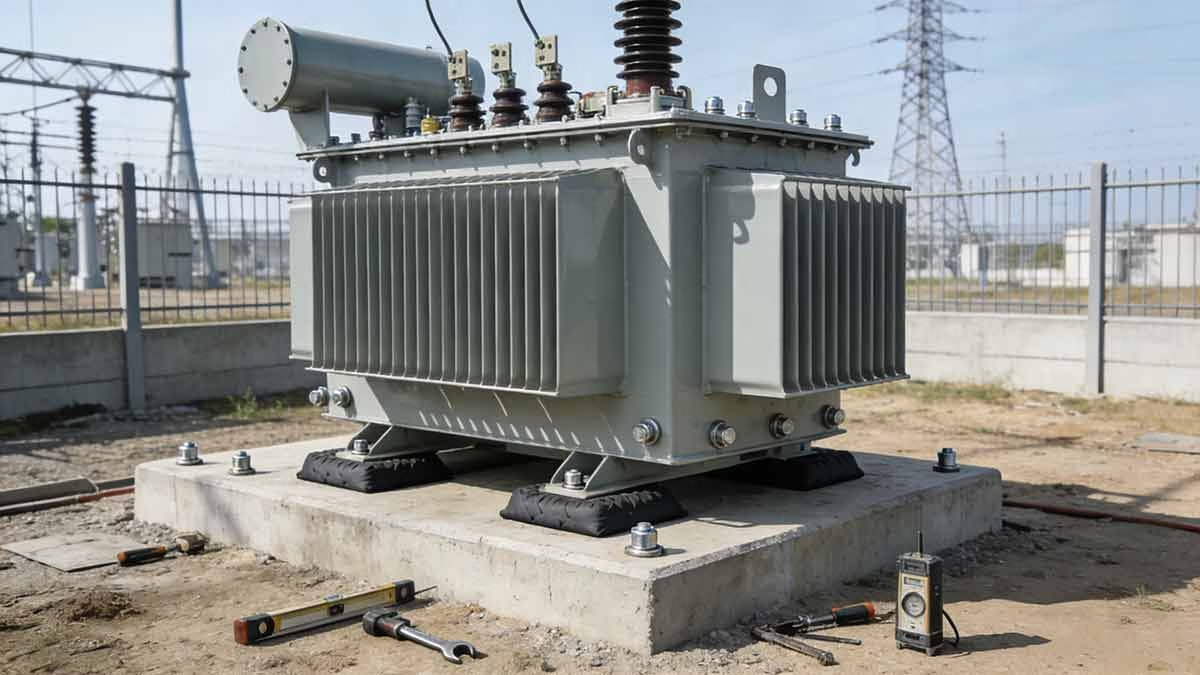
A well-structured Guide to Transformer Failures helps technicians, engineers, maintenance teams, and facility managers recognize early symptoms, understand failure mechanisms, act decisively, and implement long-term prevention. This guide goes beyond basic observations to deliver practical, field-proven insights that reduce risk, extend transformer life, and improve operational reliability.
What Happens When a Transformer Fails? Understanding Failure Outcomes
One of the most important sections in any Guide to Transformer Failures is clarifying the real-world impact of transformer malfunctions. Not all failures are identical, and understanding the range of possible outcomes helps teams prepare appropriate responses.
Mild to Moderate Transformer Failures
In less severe scenarios, a transformer may experience minor faults that trigger protective devices without extensive physical damage.
- Protective relays trip to isolate the unit.
- Voltage dips or brief interruptions occur.
- Small internal issues are contained before they spread.
- Equipment can often be returned to service after inspection and testing.
These events still signal underlying problems that require investigation, even if no obvious damage is visible.
Severe & Catastrophic Transformer Failures
Advanced failures involve breakdown of insulation, thermal runaway, oil decomposition, or mechanical failure.
- Insulation system collapse leading to short circuits
- Rapid temperature rise that damages windings and core
- Oil leakage, ventilation issues, or pressure buildup
- Risk of tank rupture, fire, or explosion in oil-filled units
- Extended outages affecting entire substations or industrial plants
The difference between a minor trip and a major incident often depends on early detection and response—core themes reinforced throughout this Guide to Transformer Failures.
Common Transformer Problems That Lead to Failure
Most transformer failures do not occur suddenly. They develop gradually due to ongoing stress, neglect, environmental exposure, or operational abuse. This Guide to Transformer Failures categorizes the most frequent underlying issues.
Overheating & Thermal Stress
Excessive heat is the single largest contributor to transformer aging and failure.
- Sustained overload beyond rated capacity
- Poor ventilation, blocked radiators, or malfunctioning cooling systems
- High ambient temperatures or inadequate heat dissipation
- Internal hotspots from loose connections or uneven winding distribution
Thermal stress accelerates insulation breakdown, which permanently weakens the transformer over time.
Oil Degradation & Contamination
Oil-filled transformers rely on clean, dry oil for insulation and cooling.
- Oil leaks that reduce the level and cooling efficiency
- Moisture ingress that lowers dielectric strength
- Sludge, carbon, or particles that block cooling paths
- Oxidation and thermal decomposition shorten service life
Oil quality directly determines how long a transformer can operate reliably.
Moisture & Environmental Ingress
Moisture is one of the most underappreciated threats highlighted in this Guide to Transformer Failures.
- Water vapor entering through faulty gaskets or breathers
- Condensation inside the tank during temperature changes
- Reduced insulation resistance and increased partial discharge
- Accelerated degradation of paper and polymer insulation
Even small amounts of moisture drastically increase failure risk.
Electrical Surges & Faults
High-energy electrical events impose severe stress on transformer components.
- Lightning strikes and switching surges
- Short circuits and phase-to-phase or phase-to-ground faults
- Inrush currents, harmonics, and unbalanced loads
- Repetitive voltage spikes that weaken winding insulation
These events can cause immediate or delayed failures, even if the unit appears to recover.
Mechanical Stress & Physical Damage
Mechanical integrity is essential for long-term performance.
- Vibration from nearby equipment or operational loads
- Shock during transportation, installation, or movement
- Seismic activity or ground movement that distorts windings
- Loose internal components, clamps, or supports
Mechanical damage often precedes electrical failure and can be detected through advanced testing.
Key Signs & Symptoms of a Failing Transformer
A reliable Guide to Transformer Failures must emphasize that transformers almost always provide warning signals before complete failure. Recognizing these symptoms early can prevent costly incidents.
Audible Changes in Transformer Sound
Normal transformers produce a steady, consistent hum. Changes indicate trouble:
- Louder, harsher buzzing or rattling
- Irregular or intermittent noise
- Crackling or arcing sounds inside the tank
- Increased vibration that can be felt or heard
Unusual noise is often the first warning noticed by on-site personnel.
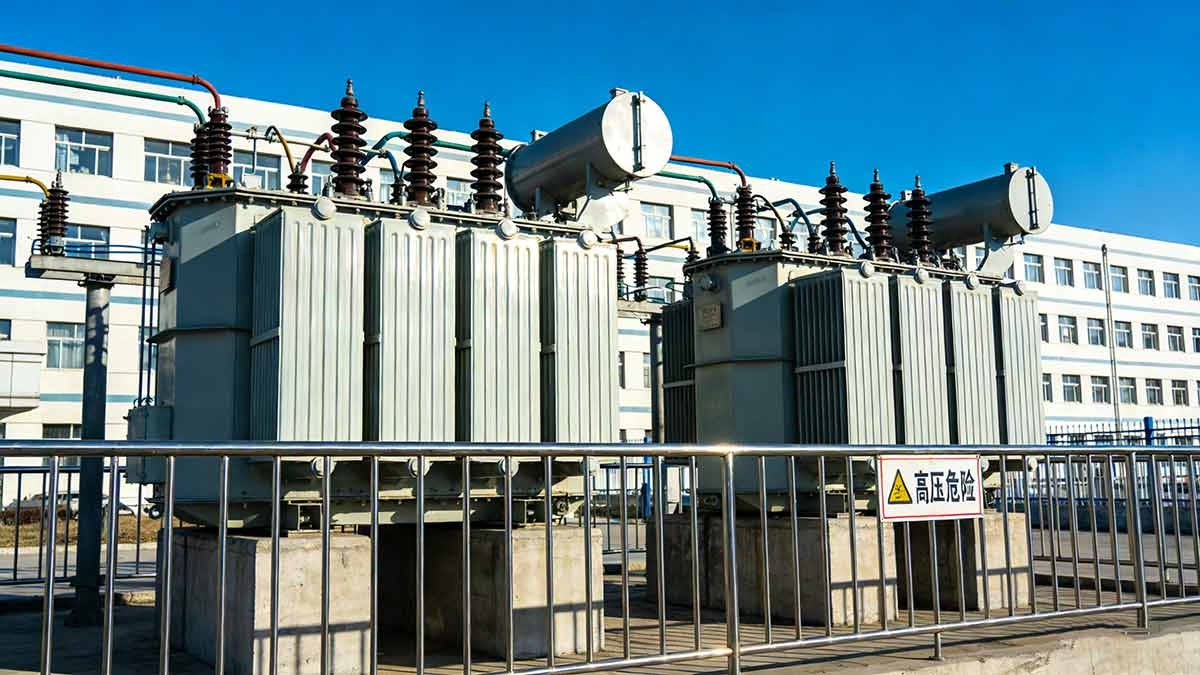
Visual Indicators of Transformer Distress
Visual inspection remains one of the simplest and most effective diagnostic tools.
- Oil stains, leaks, or wet areas on the tank or base
- Bulging panels, cracked bushings, or broken porcelain
- Burn marks, discoloration, or physical damage
- Corroded terminals, loose connections, or damaged seals
These visual cues should trigger immediate further inspection.
Thermal & Temperature Abnormalities
Temperature trends reveal hidden problems that may not be visible to the naked eye.
- Higher top-oil temperatures under normal load
- Localized hotspots detected by thermal imaging
- Cooling fans or pumps running continuously
- Uneven heating between phases or components
Consistent temperature monitoring is a cornerstone of proactive maintenance.
Electrical & Operational Symptoms
Electrical performance changes often point directly to internal issues.
- Voltage drops, fluctuations, or imbalances between phases
- Nuisance tripping of relays, fuses, or circuit breakers
- Poor voltage regulation under varying load conditions
- Increased partial discharge or unusual test results
Any deviation from normal electrical behavior requires investigation.
What Actually Causes Transformers to Fail?
This Guide to Transformer Failures clarifies that most failures result from a combination of factors rather than a single event. Understanding root causes helps prevent recurrence.
Cumulative Insulation Aging
Insulation deterioration is the primary long-term failure mechanism.
- Heat, moisture, and electrical stress break down organic materials
- Aging accelerates exponentially with temperature increases
- Weakened insulation cannot withstand normal operating stresses
- Small weaknesses eventually become full breakdowns
Once insulation is compromised, failure is only a matter of time.
Lack of Preventive Maintenance
Many failures are directly linked to insufficient or delayed maintenance.
- Infrequent oil testing and analysis
- Ignoring minor leaks or temperature increases
- Missing opportunities to correct small issues
- Failing to trend test results over time
Proactive maintenance is far less expensive than emergency replacement.
Harsh & Unfavorable Environments
Environmental conditions significantly influence transformer lifespan.
- High humidity, coastal salt air, or chemical pollution
- Extreme temperature fluctuations between day and night
- Dust, dirt, or debris that blocks cooling systems
- Poor ventilation or exposure to corrosive elements
Environmental control directly supports reliability and longevity.
Severe Electrical & Mechanical Events
High-stress events can cause immediate or delayed failures.
- Lightning surges that stress winding insulation
- Short-circuit forces that distort coil structures
- Transportation damage that goes undetected
- Vibration that loosens internal components
These events often create latent defects that appear much later.
Improper Operation & Overloading
Operating outside design parameters shortens transformer life.
- Continuous overload beyond nameplate rating
- Unbalanced phases that create uneven heating
- Harmonic-rich loads from modern equipment
- Inadequate protection settings or coordination
Misoperation is avoidable with proper monitoring and controls.
Step-by-Step Transformer Troubleshooting Field Guide
A truly useful Guide to Transformer Failures includes actionable troubleshooting procedures used by professional technicians.
1. Visual & Physical Inspection
Begin with a complete external assessment:
- Check for oil leaks, stains, or physical damage
- Inspect bushings, cables, and connections for defects
- Verify cooling systems, fans, pumps, and radiators
- Note unusual sounds, smells, or vibrations
Document every observation for comparison and trend analysis.
2. Transformer Oil Testing & Analysis
Oil provides a window into internal transformer health.
- Dissolved Gas Analysis (DGA) to detect thermal or electrical faults
- Moisture content measurement
- Dielectric strength testing
- Furan analysis for paper insulation aging
Interpreting oil data correctly is critical for accurate diagnosis.
3. Thermal Imaging & Temperature Analysis
Infrared scanning identifies hidden hotspots.
- Compare temperatures across phases
- Check connections, bushings, and tap changers
- Monitor top oil and winding temperatures
- Establish baseline temperatures for future reference
Thermal imaging is non-invasive and highly effective.
4. Electrical Diagnostic Testing
Advanced electrical tests reveal internal condition.
- Insulation resistance testing
- Winding resistance measurements
- Turns ratio and phase deviation checks
- Power factor/dissipation factor tests
- Sweep Frequency Response Analysis (SFRA)
These tests confirm mechanical and electrical integrity.
5. Load & Power Quality Evaluation
Assess whether the transformer is suitable for its application.
- Verify load profile and duty cycle
- Check for harmonics, imbalance, and voltage distortion
- Confirm sizing matches actual demand
- Review protection settings and performance
Many failures relate to misapplication rather than a component defect.
Transformer Repair vs Replacement: Practical Decision Guide
A complete Guide to Transformer Failures helps users choose the most economical and safe solution.
When Transformer Repair Is Recommended
Repair is practical when issues are localized and non-critical:
- External leaks, gasket replacements, or seal repairs
- Cooling system faults, fan replacements, or radiator cleaning
- Loose connections or minor bushing issues
- Strong oil test results and healthy insulation
Repair is cost-effective when core components remain sound.
When Transformer Replacement Is Necessary
Replacement becomes necessary when internal damage is severe:
- Advanced winding or insulation failure
- Significant gas generation in oil tests
- Mechanical deformation detected by SFRA
- Compromised bushings or structural damage
Replacement eliminates ongoing safety and reliability risks.
Safety Risks Associated With Transformer Failures
Safety is the highest priority in any Guide to Transformer Failures. Transformer failures present serious hazards that must be respected.
Immediate Physical Hazards
- Oil leaks create slip and fire risks
- Risk of tank rupture or explosion during severe faults
- Electrical shock from exposed energized components
- Arc flash hazards during testing or maintenance
Strict lockout/tagout procedures are mandatory before any work.
Operational & System Risks
- Extended power outages affecting production or services
- Cascading failures that damage other equipment
- Unplanned downtime and revenue loss
- Regulatory compliance and safety reporting obligations
Early intervention reduces both safety and business risks.
How to Prevent Transformer Failures: Best Practices
The most valuable section of this Guide to Transformer Failures focuses on prevention, which is far more effective than emergency response.
✦ Maintain Proper Loading & Operation
- Stay within nameplate ratings and avoid continuous overload
- Monitor load balance and minimize phase imbalance
- Protect against harmonics and voltage fluctuations
- Ensure protective devices are properly set and tested
Responsible operation extends service life dramatically.
✦ Preserve Cooling & Oil Integrity
- Clean radiators and ensure unobstructed airflow
- Test and replace oil when contamination or aging occurs
- Repair leaks immediately to prevent moisture ingress
- Maintain breathers and drying systems
Cooling and oil health directly determine reliability.
✦ Perform Regular Scheduled Testing
- Conduct routine Dissolved Gas Analysis
- Monitor insulation resistance and trends
- Test dielectric strength and moisture content
- Perform thermal scans and visual inspections
Trended data is more useful than one-time results.
✦ Control Environmental Exposure
- Protect against moisture, salt, dust, and chemicals
- Maintain proper sealing and gaskets
- Keep bushings clean to prevent tracking
- Ensure adequate ventilation and temperature control
Environmental control slows aging and reduces failures.
✦ Inspect After Shock, Transport, or Faults
- Run SFRA testing after transportation or seismic activity
- Verify mechanical integrity following electrical faults
- Compare results to baseline factory data
- Repair hidden damage before returning to service
Post-event testing prevents unexpected failures.
Conclusion: Master Transformer Reliability With This Complete Guide to Transformer Failures
Transformers are essential infrastructure, and their reliable operation directly affects safety, productivity, and cost. This comprehensive Guide to Transformer Failures equips engineers, technicians, and facility managers with the knowledge to recognize early warning signs, understand root causes, perform effective troubleshooting, make informed repair or replacement decisions, and implement proactive prevention strategies.
By following the practices outlined in this guide, you can reduce unplanned outages, lower maintenance costs, improve safety, and maximize the service life of your transformer assets. Whether you are responsible for a single unit or an entire fleet, understanding transformer failures is not just technical knowledge—it is a critical operational advantage.