
Single phase power transformers stand as indispensable components in contemporary electrical systems, tasked with converting high-voltage electricity into lower, safer levels for daily use. Their ability to deliver stable, efficient power makes them a cornerstone in residential communities, light manufacturing facilities, renewable energy setups, and numerous other scenarios reliant on single-phase electrical networks.
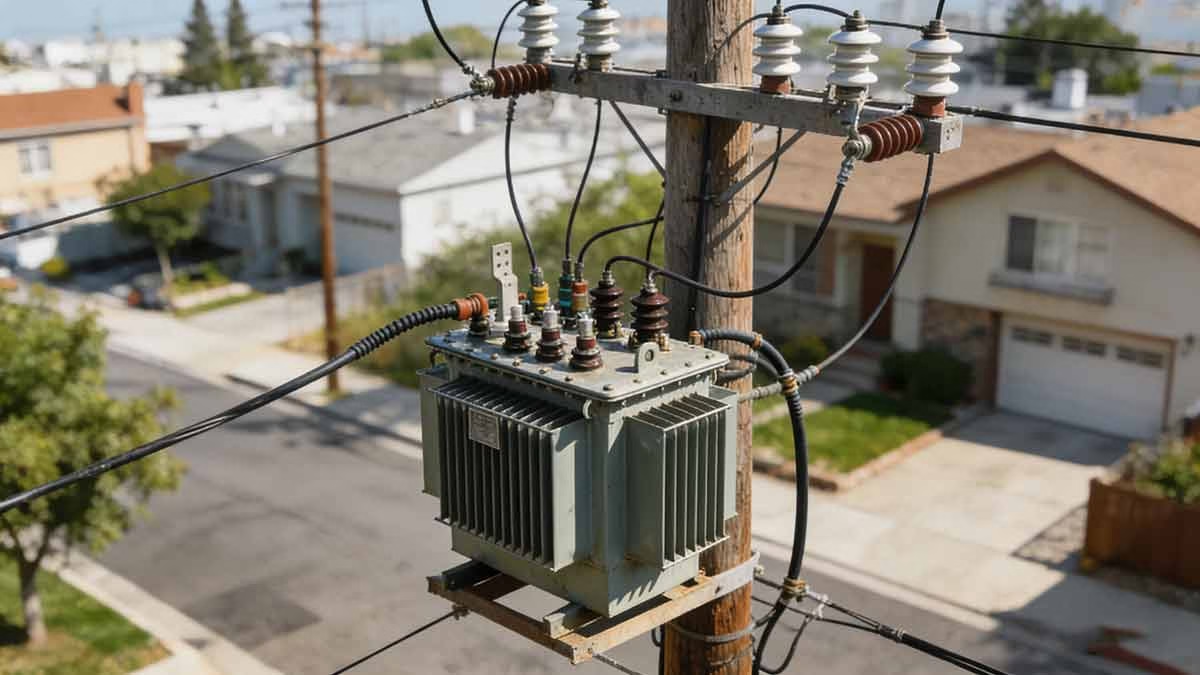
As an electrical engineer with over a decade of experience in power distribution and transformer technology, I have witnessed firsthand how these devices address critical power needs across diverse sectors. This article delves into the key applications of single phase power transformers, resolving common industry doubts, explaining technical mechanisms, and highlighting their irreplaceable role in shaping our electrified world.
Before exploring specific use cases, it is essential to clarify a core question: Why are single phase power transformers preferred in certain scenarios over three-phase alternatives? The answer lies in their compact design, cost-effectiveness, and suitability for low-to-medium power demands. Unlike three-phase transformers, which excel in large-scale industrial settings, single phase models are optimized for applications where power requirements are moderate, and space is limited—making them ideal for homes, small workshops, and decentralized energy systems. Now, let’s examine how these transformers operate in real-world contexts.
Contents
hide
How Do Single Phase Transformers Support Residential Electricity Distribution?
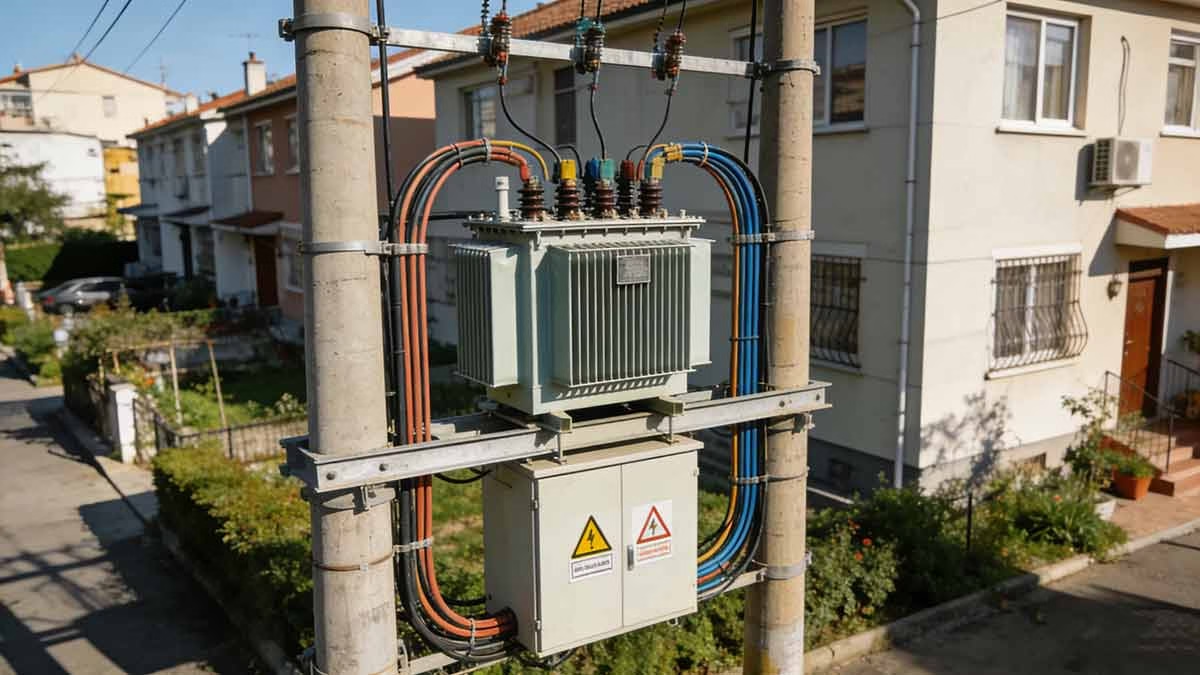
If you’ve ever observed the cylindrical devices mounted on utility poles in residential areas, you’ve seen single phase transformers at work. These units are the unsung heroes of home electricity supply, bridging the gap between high-voltage grid power and the safe levels required by household appliances.
Residential electrical networks rely on single phase transformers to mitigate the risks of high-voltage distribution lines, which typically carry 7.2kV or higher. By stepping this voltage down to 240/120V, the transformers ensure compatibility with household wiring, lighting fixtures, refrigerators, air conditioners, and other electronic devices. This voltage reduction is not just about safety—it also optimizes power delivery efficiency for the varying loads of daily life.
Voltage Regulation and Load Adaptability
A key advantage of modern single phase residential transformers is their ability to handle dynamic load fluctuations. Homes experience peak power demand during morning and evening hours, when multiple appliances run simultaneously. These transformers are sized to accommodate such surges, with built-in overload capacity to prevent shutdowns during high-usage periods like hot summers, when air conditioners operate continuously.
Moreover, advanced models feature low core loss designs, leveraging materials like amorphous steel to minimize energy waste. This not only reduces utility costs for homeowners but also aligns with global energy efficiency standards. For instance, replacing aging transformers with high-efficiency units can cut local grid energy losses by 15-20%, as demonstrated in a neighborhood upgrade project I led—residents reported a 10-12% reduction in monthly electricity bills post-installation.
Residential Transformer Specifications by Application
Property Type | Typical Capacity | Primary Voltage | Secondary Voltage | Mounting Style | Protection Mechanisms |
|---|---|---|---|---|---|
Small Single-Family Home | 10-15 kVA | 7.2 kV | 240/120V | Pole-mounted | Cartridge fuses |
Large Single-Family Home | 20-25 kVA | 7.2 kV | 240/120V | Pad-mounted | Fuses + thermal circuit breakers |
Multi-Unit Dwelling (Apartment) | 40-60 kVA | 7.2 kV | 240/120V | Pad-mounted | Multiple circuit breakers + surge protectors |
Looking ahead, single phase residential transformers are evolving to support smart grid integration and home electrification trends. With the rise of electric vehicles (EVs) and home energy storage systems, modern units are being engineered for bidirectional power flow, allowing them to interact with smart meters and adjust output based on real-time demand. This adaptability ensures they remain critical to sustainable residential power systems.
In What Ways Do Single Phase Transformers Empower Light Manufacturing?
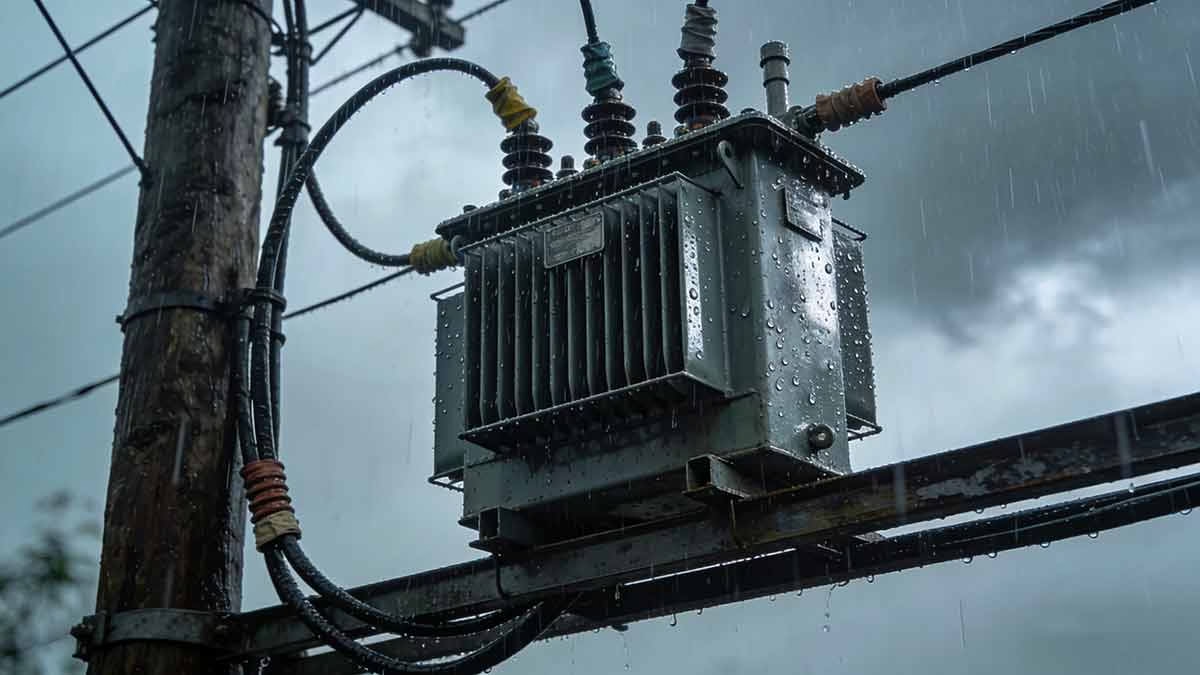
Small-scale workshops, craft facilities, and light manufacturing plants depend on single phase transformers to power equipment safely and efficiently. These settings often feature a mix of machinery, control systems, and lighting—all with distinct voltage requirements that single phase models can accommodate.
Unlike heavy industrial operations that require three-phase power, light manufacturing typically operates with moderate power loads (2-25 kVA), making single phase transformers a cost-effective and space-saving solution. They convert grid-supplied 480V power to 240V or 120V, ensuring compatibility with machine tools, welding equipment, and sensitive control panels.
Equipment Powering and Operational Stability
Single phase transformers play a pivotal role in maintaining precision in light manufacturing. For example, CNC routers, lathes, and milling machines require stable voltage to deliver accurate cuts and finishes. The transformers’ ability to filter out power line disturbances prevents equipment malfunctions and reduces product defects.
Welding operations present a unique challenge due to their fluctuating load demands. Single phase transformers designed for welding applications feature high short-term capacity, enabling them to supply sudden bursts of current while maintaining voltage stability. This ensures consistent weld quality and protects the welding equipment from damage.
Transformer Applications in Light Manufacturing Settings
Application | Power Range | Input Voltage | Output Voltage | Key Features |
|---|---|---|---|---|
Machine Tools | 2-10 kVA | 480V | 240V | Overload protection, low harmonic distortion |
Welding Equipment | 5-25 kVA | 480V | 240V | High short-term capacity, surge resistance |
Industrial Lighting | 1-5 kVA | 480V | 277V | Power factor correction, dimming support |
Control Panels | 0.5-2 kVA | 240V | 120V | Galvanic isolation, EMI filtering |
Modern single phase transformers for light manufacturing prioritize energy efficiency, with amorphous metal cores that achieve efficiency ratings over 98%. Some models also include tap changers, allowing operators to adjust voltage levels for optimized performance under varying load conditions. This combination of efficiency and flexibility makes them indispensable to small-scale industrial productivity.
How Do Single Phase Transformers Integrate with Renewable Energy Systems?
Decentralized renewable energy sources—such as rooftop solar panels and small wind turbines—rely on single phase transformers to convert variable output into usable power for homes and small businesses. These transformers address the unique challenges of renewable energy, including voltage fluctuations and grid compatibility, making green power practical and reliable.
Renewable energy systems often produce power at inconsistent voltages: solar panels generate direct current (DC) at 240-600V, while small wind turbines output alternating current (AC) with variable frequency. Single phase transformers, often paired with inverters, convert this erratic power into stable 240/120V AC, matching grid requirements and ensuring safe use in households.
Solar and Wind Energy Applications
In residential solar installations, single phase inverter transformers play a dual role: converting DC power from solar panels to AC and providing galvanic isolation between the solar system and the grid. This isolation prevents ground faults and protects both the system and the grid from electrical disturbances. Additionally, these transformers manage voltage levels to enable net metering, allowing homeowners to feed excess power back to the grid.
For small wind turbine systems, single phase transformers step up voltage from the turbine’s 240-480V AC output to a level suitable for efficient transmission. They also smooth out voltage fluctuations caused by varying wind speeds, ensuring stable power delivery to the home or local grid. In hybrid solar-wind systems, specialized transformers handle both inverter output and variable turbine AC, optimizing energy harvest across different weather conditions.
Transformer Specifications for Small-Scale Renewable Systems
System Type | Typical Capacity | Input Characteristics | Output Voltage | Specialized Capabilities |
|---|---|---|---|---|
Residential Solar | 5-10 kVA | 240-600V DC | 240/120V AC | DC/AC conversion, grid synchronization |
Small Wind Turbine | 10-25 kVA | 240-480V AC (variable frequency) | 240/120V AC | Variable input handling, voltage stabilization |
Hybrid Solar-Wind | 15-50 kVA | Variable DC/AC | 240/120V AC | Bidirectional power flow, energy storage integration |
As renewable energy adoption grows, single phase transformers for these applications are becoming smarter. Modern models feature communication capabilities, allowing them to interface with home energy management systems and smart meters. This enables real-time monitoring of energy flow, optimization of power usage, and seamless integration with grid demand response programs.
What Role Do Single Phase Transformers Play in Lighting Systems?
Commercial spaces, office buildings, and public areas rely on single phase transformers to power lighting systems efficiently and reliably. From retail stores to streetlights, these transformers convert high-voltage grid power to levels suitable for various lighting fixtures, while supporting smart controls and energy-saving features.
Lighting applications demand consistent voltage to ensure uniform illumination and extend fixture lifespan. Single phase transformers deliver this stability, while also accommodating specialized needs such as dimming, daylight harvesting, and photocell control—critical for energy efficiency in both indoor and outdoor settings.
Indoor and Outdoor Lighting Applications
In retail environments, single phase transformers power spotlights, display lighting, and ambient fixtures. They support dimming systems that allow stores to create dynamic atmospheres, enhancing the shopping experience while reducing energy consumption. Office buildings benefit from transformers that integrate with daylight harvesting systems, adjusting lighting output based on natural light levels to minimize waste.
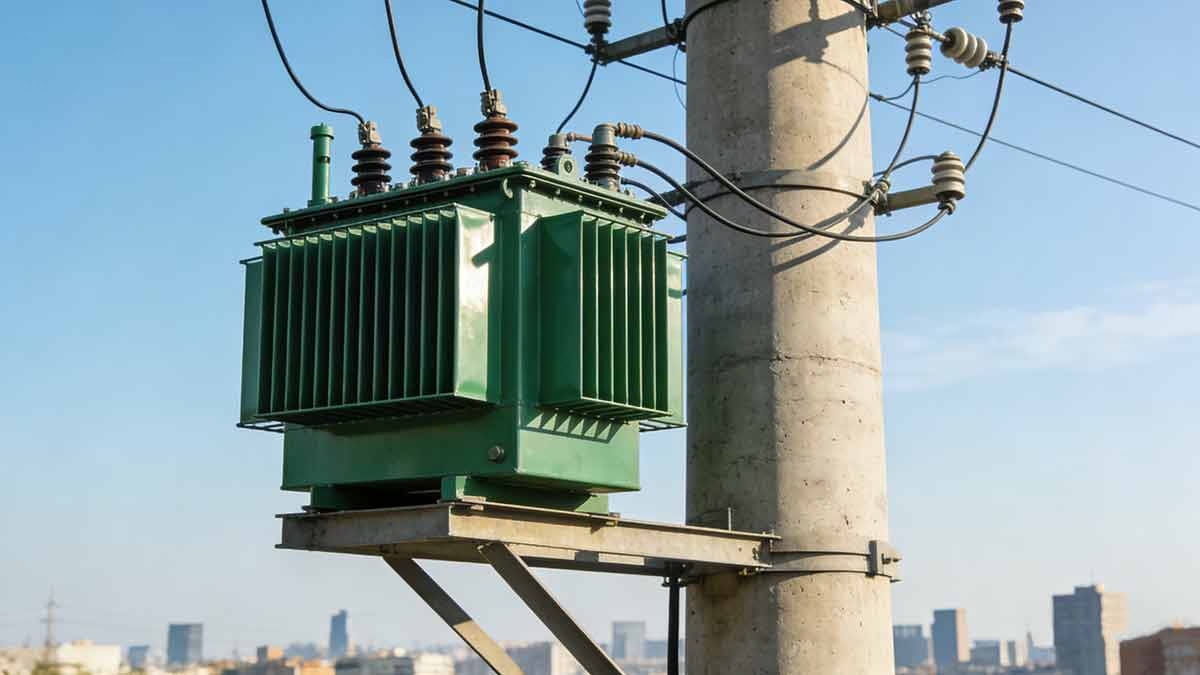
Outdoor lighting—such as streetlights, park illumination, and parking lot fixtures—relies on single phase transformers designed for harsh weather conditions. These units step down 7.2kV distribution voltage to 120/240V, powering long stretches of lighting while supporting dusk-to-dawn operation and smart controls. Their robust construction resists temperature extremes, moisture, and corrosion, ensuring reliable performance year-round.
Transformer Requirements for Different Lighting Scenarios
Lighting Scenario | Capacity Range | Input Voltage | Output Voltage | Key Features |
|---|---|---|---|---|
Retail Lighting | 10-50 kVA | 480V | 120/208V | Dimming support, power factor correction |
Office Lighting | 25-100 kVA | 480V | 277/480V | Daylight harvesting integration, energy monitoring |
Street Lighting | 5-25 kVA | 7.2kV | 120/240V | Photocell control, weather resistance |
With the shift to LED lighting, single phase transformers have evolved to support the low-power, high-efficiency needs of these fixtures. They minimize core losses and integrate with smart control systems, further reducing energy consumption. In a recent mall renovation project I oversaw, upgrading to smart single phase transformers paired with LED lighting cut energy use by 40%, while improving light quality and customer experience.
How Do Single Phase Transformers Enhance HVAC and Refrigeration Systems?
Heating, ventilation, air conditioning (HVAC), and refrigeration systems depend on single phase transformers to power compressors, fans, and control panels. These transformers convert high-voltage power to levels suitable for system components, while handling high inrush currents, variable loads, and ensuring precise temperature control.
HVAC and refrigeration applications present unique challenges: compressors require high starting currents, control systems need stable low-voltage power, and commercial refrigeration often involves multiple units with varying voltage needs. Single phase transformers are engineered to address these demands, ensuring efficient and reliable operation.
Residential and Commercial Applications
In residential HVAC systems, single phase transformers supply 24V power to thermostats and control boards, while delivering 240V to compressors. They handle the high inrush current during compressor startup, preventing voltage drops and protecting the system from damage. Modern models integrate with smart home systems, enabling remote control and energy-efficient operation.
Commercial refrigeration—such as supermarkets and food storage facilities—relies on single phase transformers to power multiple cooling units from a single source. These transformers support variable frequency drives (VFDs), which adjust compressor speed based on cooling demand, reducing energy consumption by up to 30%. They also provide multiple output voltages to accommodate freezers, coolers, and control systems, ensuring consistent temperature regulation for food safety.
Transformer Specifications for HVAC/Refrigeration
System Type | Capacity Range | Input Voltage | Output Voltage | Critical Features |
|---|---|---|---|---|
Residential AC | 2-5 kVA | 240V | 24V (control), 240V (compressor) | Surge protection, high inrush handling |
Commercial HVAC | 10-50 kVA | 480V | 120/208V | VFD compatibility, load balancing |
Supermarket Refrigeration | 25-100 kVA | 480V | 120/208V, 277V | Multiple outputs, demand response support |
As buildings become more energy-efficient, single phase transformers for HVAC and refrigeration are evolving to support smart grid integration. They can participate in demand response programs, reducing load during peak grid hours, and integrate with building management systems for optimized operation. This adaptability ensures they remain critical to sustainable building infrastructure.
Why Are Single Phase Transformers Critical for Laboratory and Medical Equipment?
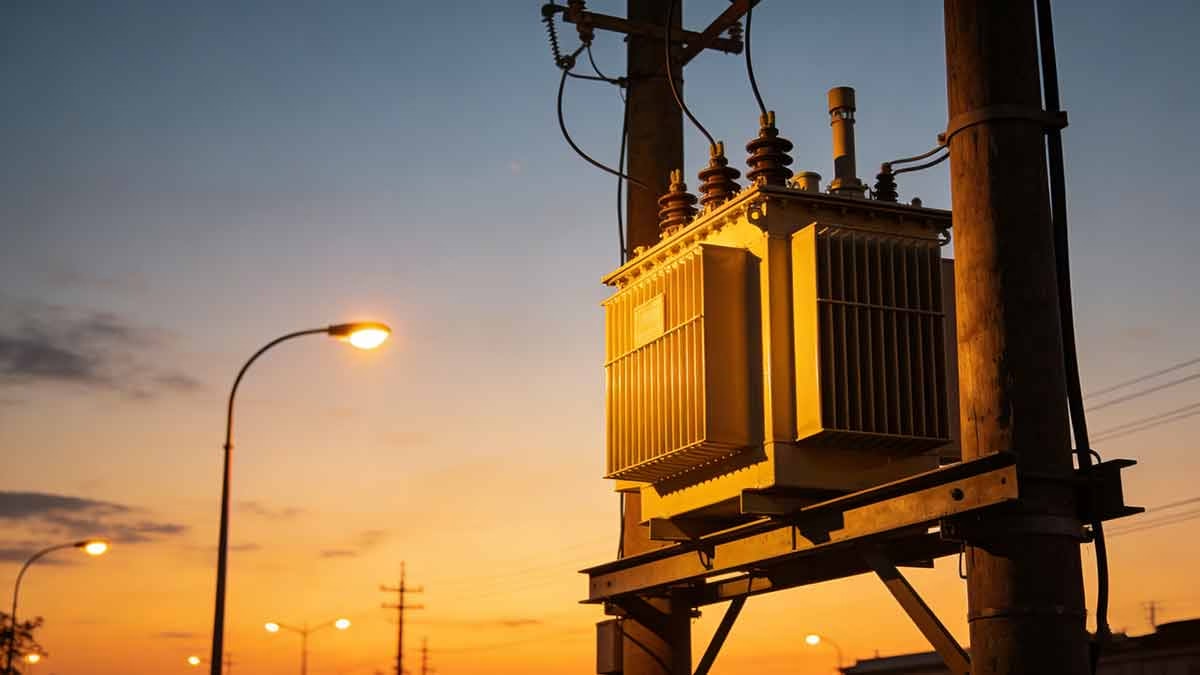
Laboratory and medical equipment demand ultra-clean, stable power to ensure accuracy and reliability. Single phase transformers designed for these applications provide precise voltage regulation, electromagnetic interference (EMI) shielding, and isolation—protecting sensitive components from power fluctuations and ensuring consistent performance.
Medical devices such as MRI machines, X-ray systems, and spectrometers require power with minimal noise and tight voltage tolerances. Even minor fluctuations can compromise diagnostic accuracy or experimental results. Single phase transformers address these needs with specialized designs that prioritize power quality and safety.
Medical and Laboratory Applications
MRI machines rely on single phase transformers to power superconducting magnets and image processing systems. These transformers deliver ultra-stable voltage, with EMI shielding to prevent interference with the magnet’s sensitive sensors. X-ray equipment uses transformers that supply high-voltage DC for tube operation, while maintaining precise control to ensure image clarity.
In laboratory settings, spectrometers, electron microscopes, and analytical instruments depend on transformers for stable power. Electron microscopes, for example, require ultra-low noise power to control electron beams, enabling high-resolution atomic-scale imaging. Transformers for these applications incorporate Faraday shielding and servo-controlled regulation to maintain voltage within ±0.1% tolerances.
Transformer Requirements for Precision Equipment
Equipment Type | Capacity Range | Input Voltage | Output Characteristics | Specialized Features |
|---|---|---|---|---|
MRI Machine | 50-100 kVA | 480V | Multiple precise outputs | Ultra-low noise, magnetic shielding |
X-ray System | 10-30 kVA | 480V | High voltage DC | High voltage isolation, precise regulation |
Mass Spectrometer | 5-15 kVA | 208V | Multiple stable voltages | EMI filtering, surge protection |
The design of these transformers prioritizes electromagnetic compatibility (EMC), using materials like mu-metal for magnetic shielding and electrostatic shields to reduce capacitive coupling. This ensures they do not interfere with other sensitive equipment in medical and laboratory environments. In a hospital MRI installation I managed, custom single phase transformers with advanced shielding improved image clarity, allowing doctors to detect subtle abnormalities that were previously undetectable.
How Do Single Phase Transformers Support Electric Vehicle Charging Stations?
Electric vehicle (EV) charging stations rely on single phase transformers to convert grid power into the voltage and current levels suitable for EV batteries. These transformers ensure safe, fast charging while protecting both the vehicle and the grid from harmonics, voltage fluctuations, and overloads.
EV charging applications vary widely—from residential Level 2 chargers to public fast-charging stations—each requiring transformers tailored to their power demands. Single phase models are ideal for low-to-medium power charging, offering compact design, cost-effectiveness, and compatibility with residential and commercial electrical systems.
Residential and Public Charging Applications
Residential Level 2 EV chargers use single phase transformers to step up 120V household power to 240V, enabling faster charging (20-30 miles of range per hour). These transformers handle continuous high-power loads during overnight charging and integrate with smart home systems, supporting time-of-use pricing and grid demand response.
Public AC charging stations and small fast-charging facilities depend on single phase transformers to distribute power to multiple ports. They balance loads across simultaneous charging sessions and manage high current demands, ensuring efficient and reliable service. Advanced models include harmonic mitigation features to comply with grid power quality standards, preventing disturbances to nearby electrical systems.
Transformer Specifications for EV Charging
Charging Type | Capacity Range | Input Voltage | Output Voltage | Key Capabilities |
|---|---|---|---|---|
Home Level 2 Charger | 7-10 kVA | 240V | 240V AC | Smart grid integration, continuous load handling |
Public AC Charging | 20-50 kVA | 480V | 240V AC | Load balancing, multi-port support |
DC Fast Charging (Small-Scale) | 50-150 kVA | 480V | 200-1000V DC | High current output, harmonic filtering |
The future of EV charging transformers lies in bidirectional capability, enabling vehicle-to-grid (V2G) power flow. This allows EV batteries to feed power back to the grid during peak demand, supporting grid stability and renewable energy integration. As EV adoption grows, single phase transformers will continue to evolve to meet the demands of faster charging, smarter grid integration, and enhanced reliability.
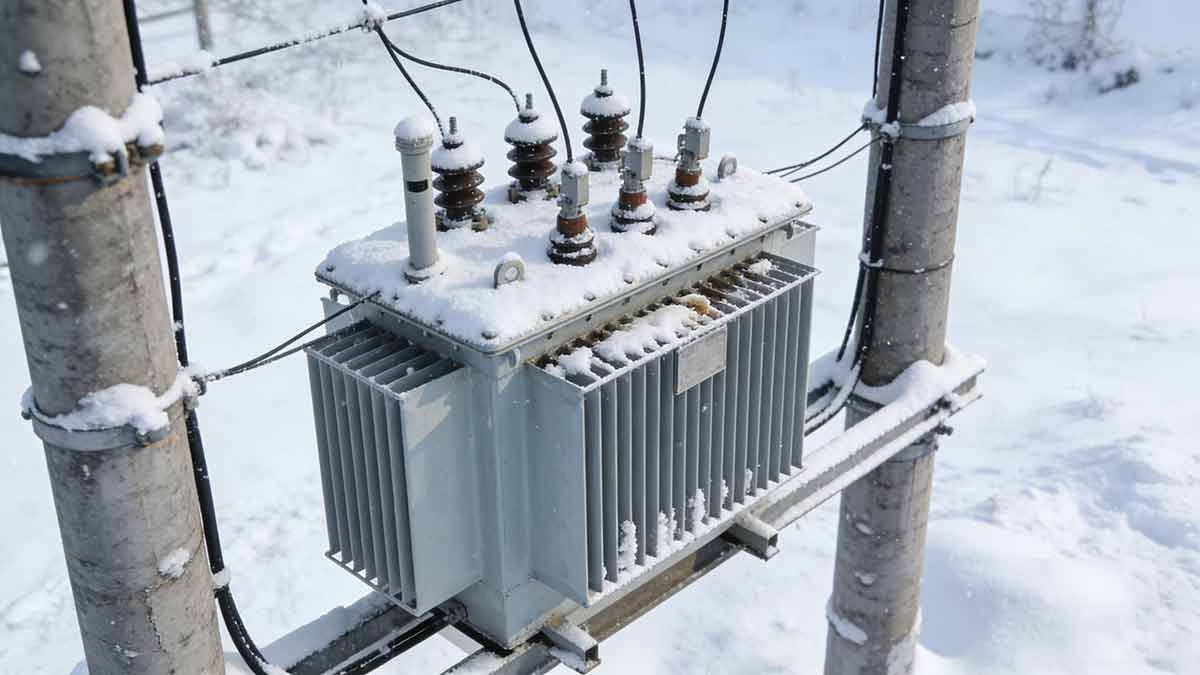
How Do Single Phase Transformers Sustain Telecommunications Infrastructure?
Telecommunications networks—from cell towers to data centers—rely on single phase transformers to maintain uninterrupted connectivity. These devices serve as the backbone of power supply for communication equipment, ensuring stable voltage delivery, supporting backup systems, and enabling efficient operation of the infrastructure that keeps global communication seamless.
Unlike other applications, telecom systems demand 24/7 reliability and resilience, even in remote or harsh environments. Single phase transformers tailored for telecom use are engineered to withstand extreme temperatures, moisture, and voltage fluctuations, while converting grid power to levels compatible with sensitive networking gear.
Key Telecom Applications and Functionalities
Cell towers, the pillars of mobile communication, depend on single phase transformers to step down high-voltage distribution power (7.2kV-14.4kV) to 120/240V for antennas, transmitters, and control systems. Crucially, these transformers integrate with battery backups and generators, ensuring continuous service during grid outages—critical for emergency communication.
Data centers, which host vast amounts of digital data, rely on single phase transformers for precise power distribution. They supply stable voltage to server racks, networking equipment, and cooling systems, while supporting redundant power setups to avoid costly downtime. The transformers also filter out electrical noise, protecting sensitive data-processing hardware from disturbances.
Transformer Specifications for Telecom Scenarios
Telecom Setting | Typical Capacity | Input Voltage | Output Voltage | Core Features |
Cell Tower | 15-25 kVA | 7.2kV-14.4kV | 120/240V | Outdoor-rated, backup power integration |
Small Data Center | 100-500 kVA | 480V | 120/208V | High efficiency, redundant power support |
Network Equipment Room | 10-50 kVA | 480V | 120/208V | Compact design, heat management |
Modern telecom transformers are increasingly intelligent, equipped with remote monitoring sensors that track temperature, load, and operational status. In a rural cell tower upgrade project I led, these smart transformers allowed the provider to detect potential failures remotely, cutting maintenance costs by 30% and improving network uptime. As 5G and edge computing expand, these transformers will evolve to handle higher data loads and tighter reliability requirements.
Why Are Single Phase Transformers Essential for Security and Alarm Systems?
Security and alarm systems—including CCTV networks, access control, and intrusion detectors—depend on single phase transformers for consistent, clean power. These devices ensure uninterrupted operation during power fluctuations, shield sensitive equipment from electrical disturbances, and support backup systems to maintain security even during outages.
Security systems face unique challenges: they operate 24/7, require stable low-voltage power for sensors and controllers, and must resist voltage spikes or noise that could trigger false alarms. Single phase transformers address these needs with specialized designs, including isolation features and surge protection.
Security System Applications
Video surveillance systems rely on single phase transformers to power multiple IP or CCTV cameras and recording devices. They support Power over Ethernet (PoE) setups, delivering both power and data over a single cable, while isolating camera circuits from main power disturbances to avoid video signal degradation.
Access control systems—such as card readers, electric locks, and biometric scanners—require multi-voltage power supplies. Single phase transformers deliver 12V DC or 24V AC as needed, integrating with uninterruptible power supplies (UPS) to ensure security is maintained during grid failures. This is critical for commercial buildings and high-security facilities where access must be controlled at all times.
Transformer Specifications for Security Systems
Security Component | Typical Capacity | Input Voltage | Output Voltage | Key Protections |
CCTV Network | 5-20 kVA | 240V | 24V AC, 12V DC | Surge protection, EMI filtering |
Access Control System | 2-10 kVA | 240V | 12V DC, 24V AC | Battery backup compatibility |
Alarm Panel | 1-5 kVA | 240V | 16.5V AC | Voltage stabilization, noise reduction |
In a corporate campus security upgrade I managed, single phase transformers with advanced noise filtering eliminated false alarms caused by electrical interference, while UPS integration ensured the system operated flawlessly during a 12-hour power outage. As security systems become more connected and AI-driven, transformers will evolve to support dynamic load balancing and integration with building management platforms.
How Do Single Phase Transformers Elevate Audio-Visual Equipment Performance?
Audio-visual (AV) equipment—from professional concert sound systems to home theaters—relies on single phase transformers to deliver clean, stable power. These devices minimize electrical noise, support high-power demands, and protect expensive gear from voltage fluctuations, ensuring superior sound and visual quality.
AV applications demand ultra-low noise power, as even minor electrical disturbances can degrade sound clarity or image quality. Single phase transformers for AV use incorporate specialized shielding and isolation features to eliminate interference, while adapting to the transient loads of amplifiers and high-resolution displays.
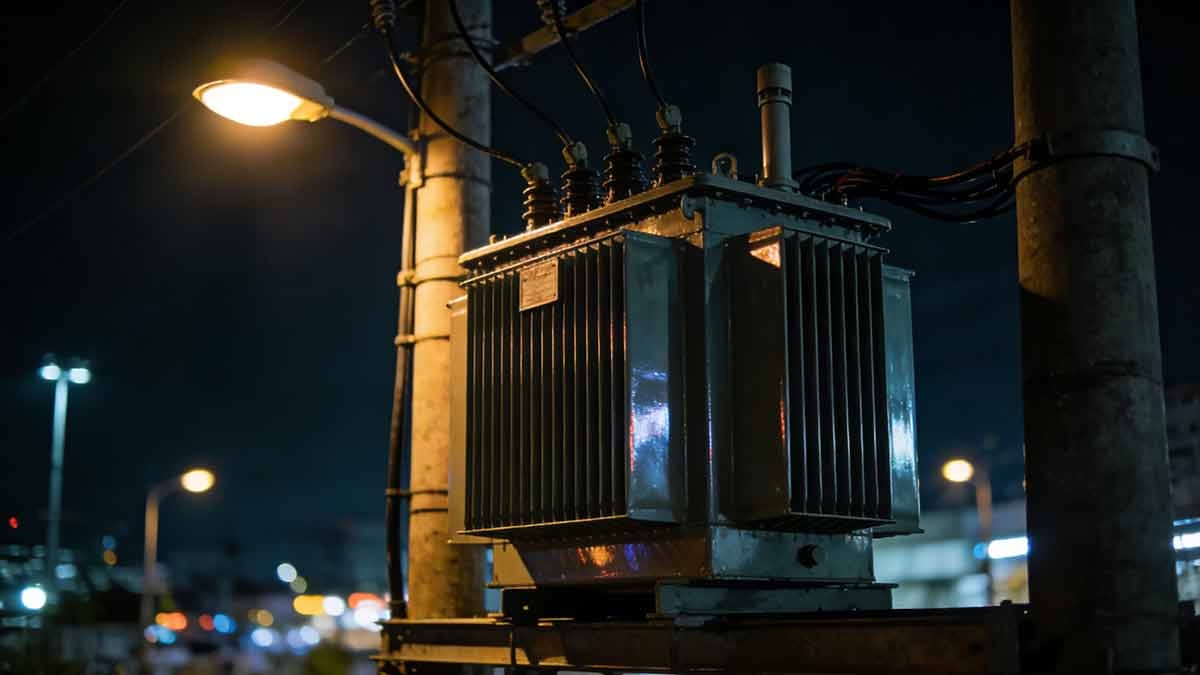
AV Equipment Applications
Professional audio systems, such as concert hall amplifiers and recording studio gear, depend on single phase transformers for stable power delivery. They reduce harmonic distortion and ground loops, preserving the nuances of musical performances. High-wattage amplifiers require transformers with high short-term power capacity to handle sudden volume peaks without voltage drop.
Home theaters and gaming setups benefit from transformers that support 4K/8K displays, VR headsets, and high-performance gaming consoles. These transformers ensure consistent voltage for crisp visuals and immersive sound, while protecting equipment from power surges caused by lightning or grid fluctuations.
Transformer Specifications for AV Systems
AV Application | Capacity Range | Input Voltage | Output Voltage | Specialized Traits |
Professional Audio | 1-5 kVA | 240V | 120V (isolated) | Ultra-low noise, Faraday shielding |
Home Theater | 500VA – 2kVA | 240V | 120V | Surge protection, heat management |
Gaming Setup | 1-3 kVA | 240V | 120V | High current capacity, transient load handling |
In a renowned concert hall sound system upgrade, I installed low-noise single phase transformers that eliminated electrical hum, revealing subtle audio details previously masked by interference. The sound engineer noted a significant improvement in clarity, particularly for orchestral performances. As AV technology advances—with higher resolution displays and immersive 3D audio—transformers will evolve to support higher power density and smarter integration with smart home systems.
Conclusion
Single phase power transformers are versatile workhorses in modern electrical systems, supporting a wide range of applications from residential power distribution to precision medical equipment. Their ability to convert voltage levels safely, deliver stable power, and adapt to diverse load demands makes them indispensable in our electrified world. Whether powering homes, small factories, renewable energy systems, or EV chargers, these transformers address critical industry needs while aligning with energy efficiency and sustainability goals.
As technology advances, single phase transformers are evolving to meet new challenges—integrating with smart grids, supporting bidirectional power flow, and minimizing energy losses. For businesses and homeowners alike, understanding their applications and capabilities is key to optimizing power systems, reducing costs, and ensuring reliable operation. With their enduring role in shaping efficient, safe, and sustainable electrical infrastructure, single phase power transformers will remain a cornerstone of modern industry for years to come.