
If you’re an electrical project coordinator, facility maintenance engineer, or key decision-maker tasked with power transformer deployment, you’ve probably pondered this vital question: “Which environmental aspects must we prioritize to ensure our transformer operates safely, efficiently, and durably for decades?” As an electrical engineering professional with 18 years of hands-on experience in transformer setup, commissioning, and long-term upkeep, I’ve guided hundreds of clients in avoiding costly setbacks caused by overlooked environmental variables.
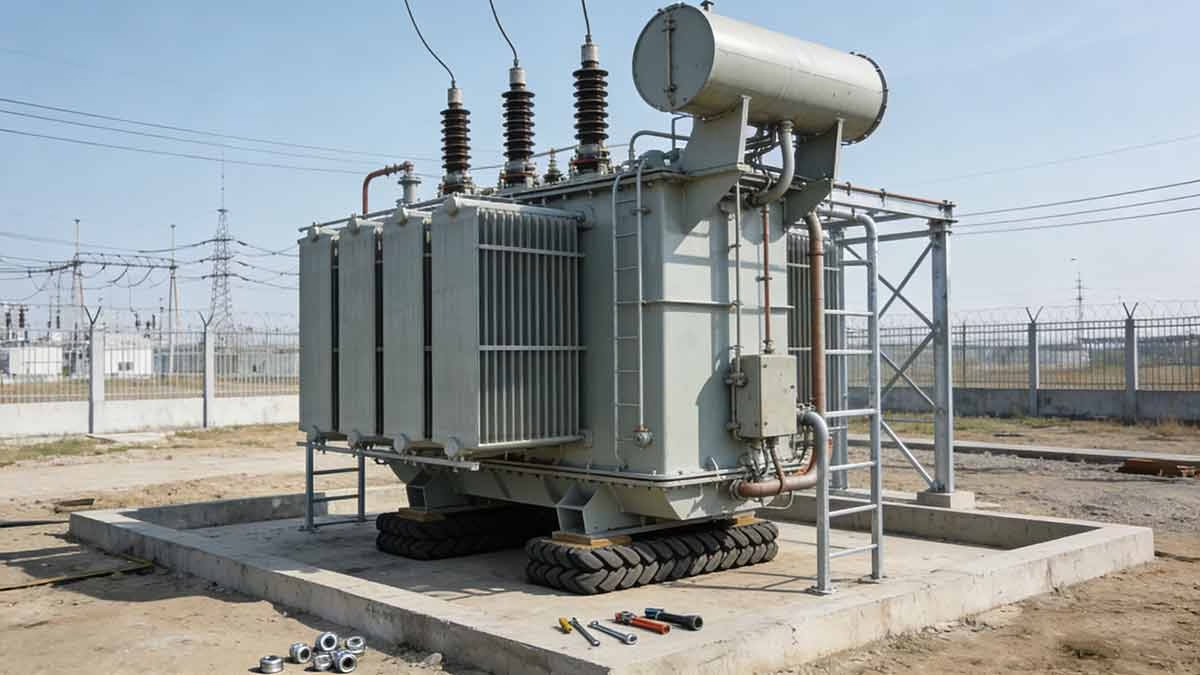
This comprehensive guide addresses that exact concern, breaking down seven essential environmental prerequisites with industry insights, real-world project examples, and actionable solutions. We’ll examine the tradeoffs between indoor and outdoor placement, stable foundation engineering, mandatory safety clearance areas, flood protection for coastal and low-lying locations, anti-seismic vibration management, optimized thermal regulation, and effective EMI shielding.
Each section delves into best practices, common pitfalls, and global compliance standards to ensure your installation meets the highest benchmarks—all in a conversational, approachable tone to resolve your most pressing uncertainties and equip you with the knowledge to make informed decisions.
How Does Climate Influence the Decision Between Indoor and Outdoor Power Transformer Installation?
One of the most common dilemmas I encounter is clients choosing between indoor and outdoor transformer installation based solely on available space or initial costs—without considering how the climate will impact the equipment’s lifespan, operational efficiency, and maintenance demands. The truth is, your placement choice directly affects how well your transformer performs over time, how frequently you’ll need to service it, and how much it will cost you in the long term. Climate stands as the single most influential factor in this decision, so let’s break down the key differences, climate-related challenges, and how to select the right option for your specific site.
Indoor Power Transformer Installation: Advantages, Challenges, and Climate Adjustments
Indoor installation is often the preferred choice for sites with extreme weather conditions, but it comes with its own set of considerations. The controlled setting of an indoor facility shields transformers from direct exposure to harsh elements, yet it requires careful planning to address cooling needs and space constraints.
- Key Advantages: Complete defense against extreme temperatures, humidity, UV radiation, and airborne contaminants; easier access for routine maintenance and inspections; reduced risk of vandalism or accidental damage; and a consistent operating environment that supports reliable performance and extends equipment longevity. Indoor setups also minimize the impact of external debris, which can accumulate on outdoor units and hinder performance.
- Primary Challenges: Potential need for supplementary cooling systems (especially for high-load transformers that generate substantial heat); limited space in existing facilities, which may require custom installation designs or structural modifications; and higher initial construction expenses compared to outdoor setups, due to the need for dedicated indoor space, ventilation systems, and possibly fire suppression measures.
- Climate-Specific Adjustments: In hot or humid climates, indoor installations require forced air cooling (FAC) or liquid cooling systems to maintain ambient temperature within safe operating ranges (typically between 10°C and 40°C); in cold climates, insulation and heating elements may be necessary to prevent condensation buildup and ensure proper startup and operation during low-temperature conditions. Additionally, in areas with high pollution levels—such as industrial zones—indoor installations benefit from air filtration systems to keep contaminants from entering the transformer’s internal components, which can degrade insulation and cause premature failure.
Outdoor Power Transformer Installation: Benefits, Obstacles, and Climate Adaptations
Outdoor installation is a popular option for large transformers or sites with limited indoor space, but it exposes equipment to the full range of environmental conditions—making climate resilience a top priority. Without proper safeguards, outdoor transformers are vulnerable to weather-related wear and tear that can shorten their lifespan and trigger unplanned outages, which can be costly for businesses and communities.
- Key Benefits: No need for dedicated indoor space, making it ideal for large power transformers that would be difficult to accommodate indoors; natural air cooling can be more efficient in moderate climates, reducing energy consumption for cooling systems; lower initial construction costs, as there’s no need to build or modify indoor facilities; and easier expansion or replacement of equipment, as outdoor setups are less constrained by space limitations.
- Primary Obstacles: Direct exposure to temperature fluctuations, which can degrade insulation materials over time and reduce operational efficiency; high humidity or coastal salt air, which increases the risk of corrosion on metal components such as tanks and bushing connections; UV radiation, which damages external coatings and plastic parts; and higher maintenance frequency to address weather-related wear, such as rust, debris buildup, and seal degradation. Outdoor transformers are also more susceptible to damage from severe weather events like storms, lightning, and heavy snowfall.
- Climate-Specific Adaptations: In coastal or industrial areas, outdoor transformers require corrosion-resistant coatings (such as marine-grade paint) and sealed enclosures to protect against salt spray or chemical pollutants; in areas with extreme temperature swings, thermal insulation and weatherproof covers help stabilize internal temperatures and prevent damage from freezing or overheating; in rainy or snowy regions, proper drainage systems around the transformer pad prevent water accumulation and ice formation. Additionally, in areas prone to lightning strikes, surge protection devices and lightning rods are essential to safeguard the transformer from voltage spikes that can cause internal damage.
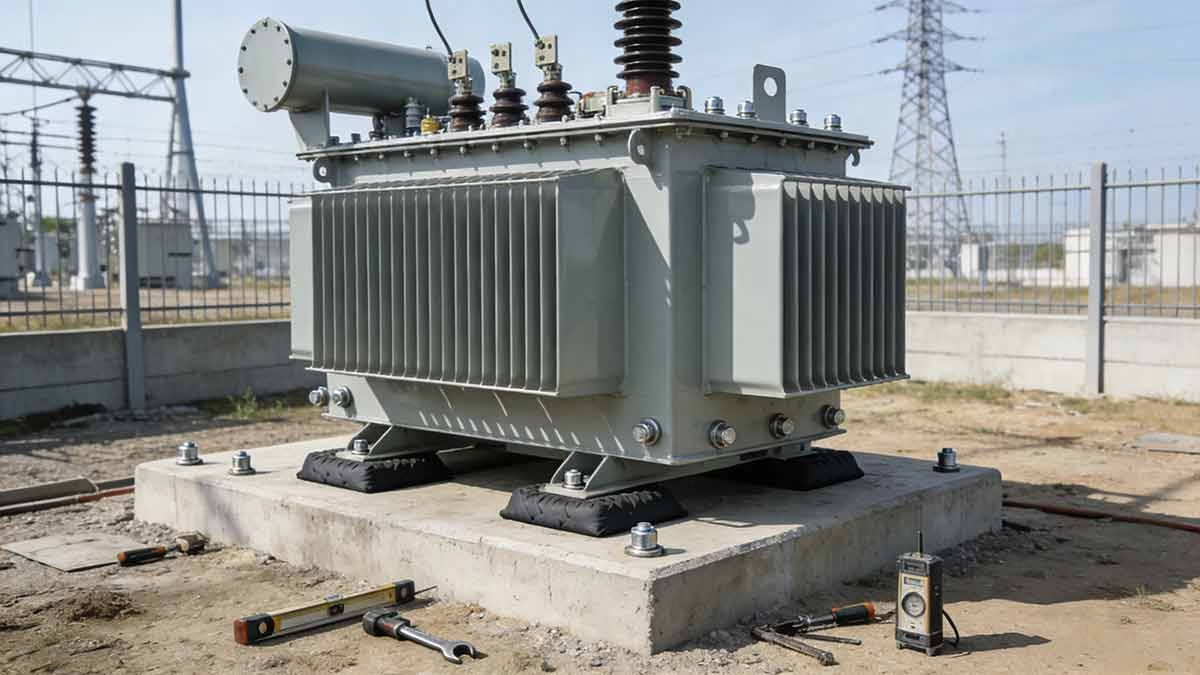
Real-World Project Example: The Cost of Ignoring Climate in Placement Decisions
A manufacturing client in a subtropical coastal region once chose outdoor transformer installation to cut initial construction costs, declining our recommendation for a corrosion-resistant enclosure and marine-grade coatings. Within just two years, the transformer’s tank and bushing connections showed severe rust and pitting due to constant exposure to salt air. This corrosion led to insulation breakdown, resulting in an unplanned outage that halted production for three days.
The cost to retrofit a marine-grade enclosure, replace damaged components, and repair the insulation exceeded the initial savings by 40%—a costly reminder of why climate resilience should never be sacrificed for short-term cost cuts. Since then, the client has adopted our climate-focused placement strategy for all new transformer installations, reducing maintenance costs by 30% annually and avoiding further unplanned downtime.
Key Decision Factors for Choosing Between Indoor and Outdoor Installation
When deciding between indoor and outdoor installation, focus on these key factors to make the right choice for your site: local climate patterns (including extreme temperatures, humidity levels, and pollution levels); available space and future expansion needs (will you need to add more transformers later?); load profile (high-load transformers may benefit from the controlled cooling of indoor installations); and long-term maintenance budget (outdoor transformers often require more frequent maintenance, which can add up over time).
For critical applications—such as hospital or data center power supply—indoor installation often provides the reliability needed to avoid costly downtime. Additionally, consider local regulations and compliance standards, as some regions have specific requirements for transformer placement based on environmental factors, such as noise pollution or fire safety.
How to Design a Stable Power Transformer Foundation to Avoid Subsidence?
One of the most overlooked aspects of power transformer installation is foundation design—and it’s also one of the most critical. A poorly designed foundation can lead to subsidence (sinking or shifting of the ground), uneven loading, and even catastrophic transformer failure. Over the years, I’ve seen countless projects delayed, damaged, or rendered unsafe by inadequate ground preparation and foundation design. Let’s explore the essential principles of foundation design, common mistakes to avoid, and how to ensure long-term stability for your transformer.
Rule 1: Conduct a Comprehensive Soil Analysis
The first step in designing a stable foundation is understanding the soil at your installation site—this determines everything from the foundation’s bearing capacity to its resistance to subsidence and moisture. A thorough soil analysis involves geotechnical surveys, soil borings, and sample testing to identify soil type, composition, moisture content, drainage characteristics, and potential issues like expansive soils or high water tables.
For example, expansive soils (which swell when wet and shrink when dry) can exert significant pressure on the foundation, leading to cracks and subsidence over time. In such cases, soil stabilization techniques—such as adding lime or cement—or specialized foundation designs (like raft foundations) are necessary to mitigate these risks. Additionally, soil with poor drainage can lead to water accumulation, which weakens the soil structure and increases the likelihood of subsidence.
Rule 2: Calculate Total Load Accurately
Accurate load calculation is essential to ensure the foundation can support the transformer’s weight and any additional stresses during operation. Many clients make the mistake of only considering the transformer’s static weight, but dynamic loads—such as those caused by vibration during operation or wind forces—must also be taken into account. The total load includes the transformer’s weight (including oil), the weight of accessory equipment (such as cooling systems and control cabinets), and dynamic loads generated during operation.
It’s also important to apply appropriate safety margins to account for potential future upgrades or unexpected loads. Even a small miscalculation in load can lead to foundation failure over time, so it’s critical to work with structural engineers to ensure accurate load analysis.
Rule 3: Plan for Proper Drainage
Proper drainage is a key component of foundation design, as water accumulation around the foundation can lead to soil erosion, weakening of the soil structure, and foundation damage. The foundation should be designed with sloped surfaces to facilitate water runoff, and adequate drainage systems—such as French drains or perforated pipes—should be installed around the foundation to redirect water away from the site. In areas with high water tables, it may be necessary to install a sump pump system to remove excess water.
The choice of materials is also important: permeable materials can help improve drainage in areas with poor soil drainage, while waterproofing measures—such as waterproof coatings or membranes—can prevent water from seeping into the foundation and causing damage. For concrete foundations, it’s important to use a high-quality concrete mix that is resistant to water damage.
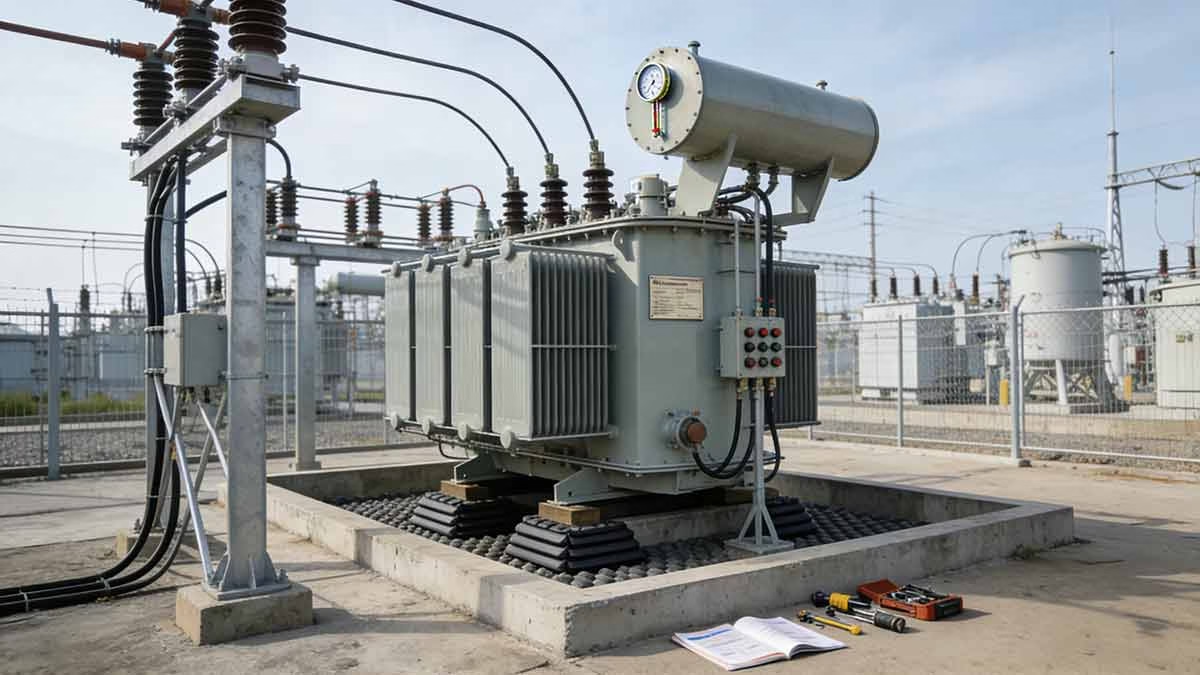
Rule 4: Implement Robust Reinforcement
Reinforcement is essential to enhance the foundation’s strength and durability, especially for concrete foundations. Steel rebar is the most common reinforcement material, but fiber reinforcement can also be used for additional strength. The size and spacing of rebar should be based on load calculations and soil conditions, and proper concrete mix design is critical to ensure the foundation can withstand the required loads.
Quality control during construction is also important: rebar must be properly placed and covered with concrete to prevent corrosion, and regular inspections should be conducted to ensure compliance with design specifications. A poorly reinforced foundation is prone to cracking and failure, so it’s important to invest in high-quality reinforcement and strict quality control measures.
Rule 5: Account for Seismic Activity
In earthquake-prone areas, seismic considerations are non-negotiable in foundation design. The first step is to assess the local seismic risk using regional seismic hazard maps, and then apply appropriate design standards—such as IEEE 693—to ensure the foundation can withstand seismic activity. In high-risk areas, base isolation systems can be used to absorb and dissipate seismic energy, reducing the transmission of ground motion to the transformer.
Flexible connections between the transformer and the foundation can also help accommodate movement during an earthquake, preventing damage to the transformer and its components. Seismic qualification testing may also be required for critical installations to verify the foundation’s ability to withstand seismic forces.
Real-World Project Example: The Consequences of Inadequate Foundation Design
A commercial client once opted for a basic foundation design to save costs on a transformer installation in an area with expansive soils. Within a year, we noticed significant settling of the foundation, which caused the transformer to tilt and put stress on its internal components. The settling also damaged the transformer’s cooling system, leading to overheating and reduced efficiency.
The cost of rectifying the foundation—including soil stabilization, reinforcement, and realignment of the transformer—far exceeded what a proper initial design would have cost. This example highlights the importance of investing in a robust foundation design that accounts for site-specific soil conditions and potential risks.
What Are the Minimum Safe Clearance Zones for Power Transformer Installation by Voltage?
Many electrical project professionals wonder: “Are we maintaining the correct safety clearances around our transformer?” Misjudging these distances can lead to catastrophic accidents, regulatory non-compliance, and costly retrofits. Proper clearance zones are critical for ensuring the safety of personnel working near the transformer and preventing electrical arcing, which can cause fires and equipment damage.
The minimum safe distances vary based on voltage levels, with higher voltages requiring larger clearances. In this section, we’ll break down the key factors influencing clearance zones, provide a practical guide for different voltage levels, and share best practices for implementing safe clearance areas.
Factors Influencing Clearance Zones
Several factors influence the required clearance zones for power transformer installation, with voltage level being the most significant. Higher voltages generate stronger electric fields, which require larger clearances to prevent electrical arcing between the transformer and nearby objects or personnel. Insulation type also plays a role: air insulation requires larger clearances than solid or liquid insulation, as air is a less effective insulator. Environmental conditions—such as altitude, humidity, and pollution levels—can also affect clearance requirements.
At higher altitudes, air density decreases, reducing its insulating properties and requiring larger clearances. High humidity and pollution can also degrade insulation performance, necessitating additional clearance. Finally, accessibility is a key factor: public access areas require larger clearances than restricted areas, as there is a higher risk of unauthorized personnel coming into contact with the transformer.
Practical Clearance Zone Guide for Common Voltage Levels
Below is a simplified guide to minimum clearance zones for common voltage levels, based on IEEE standards. It’s important to note that these are general guidelines, and you should always consult local regulations and specific standards for your installation. Local codes may have more stringent requirements, especially in densely populated areas or industrial zones.
Voltage Level | Minimum Clearance (Feet) | Minimum Clearance (Meters) |
|---|---|---|
480 V | 3 ft | 0.9 m |
4.16 kV | 4 ft | 1.2 m |
13.8 kV | 5 ft | 1.5 m |
34.5 kV | 6 ft | 1.8 m |
69 kV | 7 ft | 2.1 m |
138 kV | 10 ft | 3.0 m |
230 kV | 15 ft | 4.6 m |
500 kV | 25 ft | 7.6 m |
Best Practices for Implementing Safe Clearance Zones
Implementing safe clearance zones requires a combination of physical barriers, clear signage, and proper monitoring. Physical barriers—such as fences, walls, or enclosures—should be used to restrict access to the clearance zone. These barriers should be of adequate height and strength to prevent unauthorized entry, and they should be regularly inspected for damage. Clear, visible signage indicating danger zones is also essential; signage should be in multiple languages if necessary, and it should be placed in prominent locations around the clearance zone.
Ground markings—such as painted lines or contrasting tape—can help reinforce safe boundaries, especially in areas where physical barriers are not feasible. For critical installations, electronic access control systems and motion sensors can be used to detect unauthorized entry and alert personnel. Additional considerations include working clearances, emergency access, and vegetation management.
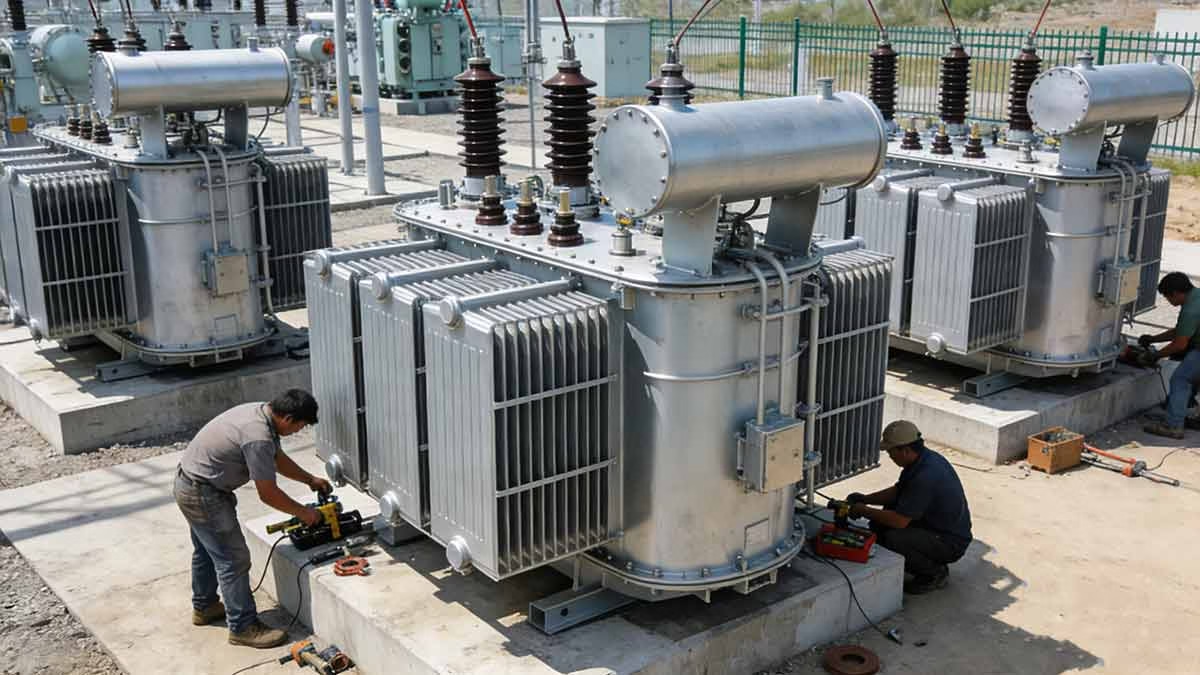
Working clearances should be larger than the minimum safe distances to allow for maintenance activities, such as equipment inspection and repair. Emergency access routes should be kept clear to ensure emergency responders can quickly reach the transformer in the event of an accident. Vegetation around the clearance zone should be regularly trimmed to prevent it from growing into the zone, as vegetation can conduct electricity and cause arcing.
Finally, it’s important to plan for future expansion: clearance zones should be designed with potential upgrades in mind, allowing for additional equipment or increased voltage levels without requiring costly retrofits.
How to Mitigate Flood Risk for Power Transformer Installations in Coastal Areas?
For clients with coastal power transformer installations, a common concern is: “How can we protect our transformer from flood damage?” Flooding is a significant risk for coastal sites, as it can cause catastrophic equipment failure, environmental hazards (such as oil spills), and prolonged power outages. Effective flood risk mitigation involves a combination of elevated foundations, waterproof enclosures, robust drainage systems, and emergency shutdown procedures. In this section, we’ll explore these strategies in detail, share real-world examples, and provide guidance on implementing comprehensive flood protection for your coastal transformer installation.
Elevation: The First Line of Defense Against Flooding
Elevating the transformer and its components above flood levels is the most effective way to mitigate flood risk. The foundation pad should be elevated above the highest historical flood level for the area, and additional height should be added to account for future sea level rise projections. This ensures that even during extreme flood events, the transformer remains above water.
Critical components—such as control cabinets, cooling systems, and cable connections—should also be installed on raised platforms to prevent water ingress. Elevated walkways can be installed to provide maintenance access to the transformer, and these walkways should also be elevated above flood levels. When designing elevated foundations, it’s important to ensure they are stable and can support the transformer’s weight, especially in areas with soft or unstable soil.
Waterproofing: Sealing Against Water Ingress
Even with elevated foundations, waterproofing is essential to prevent water from seeping into the transformer and its components. The transformer tank should be constructed from corrosion-resistant materials—such as stainless steel or coated carbon steel—and it should be equipped with specialized marine-grade coatings to protect against saltwater corrosion. All openings in the transformer—such as bushing connections, access hatches, and cable entries—should be sealed with watertight gaskets and O-rings to prevent water ingress.
Submersible-grade gaskets are recommended for coastal installations, as they are designed to withstand prolonged exposure to water. Cable entries should be equipped with waterproof cable glands and conduit sealing systems to prevent water from entering through cable ducts.
Drainage Systems: Managing Water Flow Effectively
Robust drainage systems are essential to redirect water away from the transformer installation and prevent water accumulation. Perimeter drains—such as French drains or perforated pipes—can be installed around the foundation to collect and redirect water away from the site. Sump pump systems should be installed to remove accumulated water from low-lying areas; redundant sump pumps with backup power (such as generators) are recommended to ensure continuous operation during power outages.
Oil-water separators should also be incorporated into the drainage system to prevent oil contamination in the event of a transformer leak. These separators comply with environmental regulations and help protect local ecosystems from oil pollution.
Emergency Procedures: Preparing for Flood Events
Even with the best prevention measures, it’s important to have emergency procedures in place to respond to flood events. Flood detection systems—such as water level sensors and early warning systems—can alert personnel to rising water levels, allowing them to take action before flooding occurs. Emergency shutdown protocols should be developed to guide personnel in de-energizing the transformer safely during a flood.
These protocols should be clearly documented and regularly reviewed, and personnel should be trained on rapid response actions. Post-flood recovery plans are also essential: detailed inspection checklists should be created to assess damage to the transformer and its components, and procedures for safe re-energization should be established.
What Are the Anti-Seismic Requirements for Power Transformer Installation in Earthquake Zones?
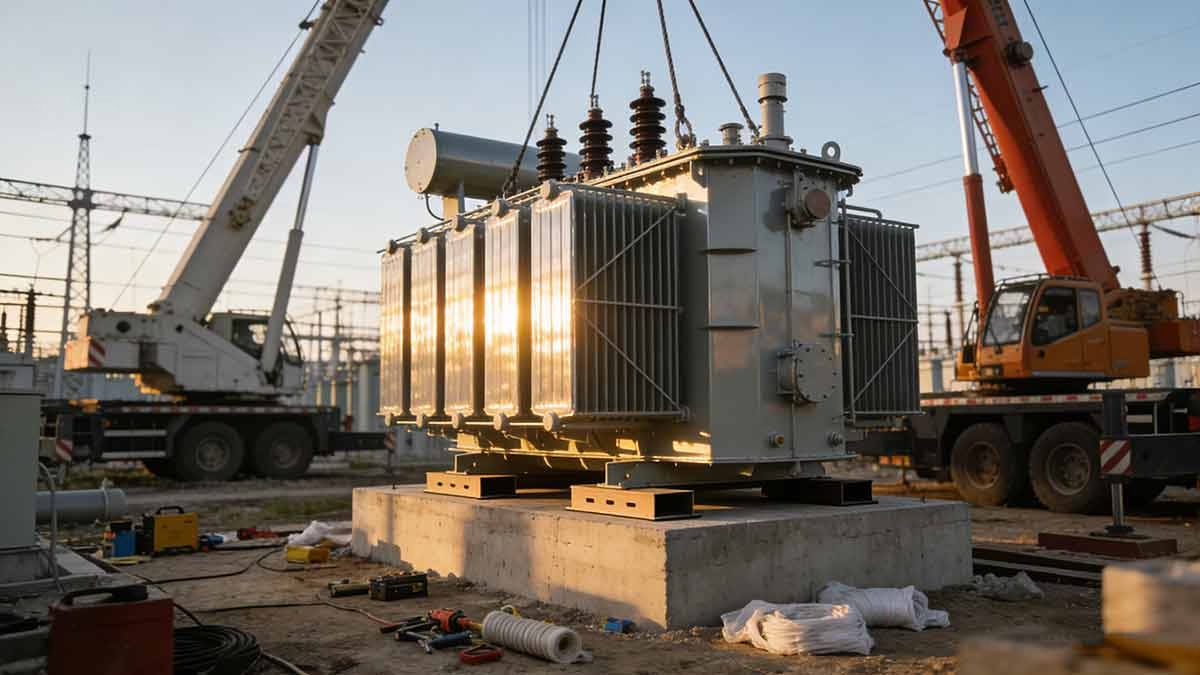
For clients in earthquake-prone regions, a key question is: “Can our transformer withstand a major earthquake?” In these areas, vibration control and anti-seismic design are not just about equipment performance—they’re about preventing catastrophic failures, oil spills, and prolonged power outages. Anti-seismic requirements for transformers include base isolation systems, reinforced foundations, flexible connections, and seismic qualification testing. In this section, we’ll explore these requirements in detail, share industry best practices, and provide guidance on ensuring your transformer installation is seismic-resistant.
Base Isolation Systems: Absorbing Seismic Energy
Base isolation systems are a critical component of anti-seismic design, as they absorb and dissipate seismic energy, reducing the transmission of ground motion to the transformer. There are several types of base isolators, including elastomeric bearings, friction pendulum bearings, and spring-damper systems. Elastomeric bearings are made of layers of rubber and steel, and they deform under seismic forces to absorb energy.
Friction pendulum bearings use a pendulum-like design to isolate the transformer from ground motion, while spring-damper systems combine springs and dampers to absorb and dissipate energy. The choice of base isolator depends on the local seismic risk, soil conditions, and the transformer’s size and weight. It’s important to work with seismic engineers to select the right base isolation system for your specific site.
Reinforced Foundations for Seismic Stability
In earthquake zones, foundations must be reinforced to withstand seismic forces and prevent subsidence. Enhanced concrete designs—using higher strength concrete mixes and increased reinforcement ratios—are recommended to improve the foundation’s durability and resistance to cracking. Anchor bolt systems should be oversized and deep-set to ensure the transformer is securely attached to the foundation; expansion or chemical anchors can be used for retrofit applications.
Soil-structure interaction is also an important consideration: soil amplification effects (where soil amplifies ground motion) should be assessed, and soil improvement techniques—such as compaction or grouting—may be necessary to improve soil stability.
Flexible Connections: Accommodating Seismic Movement
Flexible connections between the transformer and its components are essential to accommodate movement during an earthquake, preventing damage to the transformer and its accessories. Bushing designs should include slip-fit bushings and flexible gaskets to allow for horizontal and vertical movement. Cable connections should be installed with loops or slack to prevent tension during seismic activity, and flexible conduit systems can be used to protect cables from damage. Oil circulation systems should be equipped with flexible piping and expansion joints to accommodate movement and prevent oil leaks.
Seismic Qualification Testing
Seismic qualification testing is required for critical transformer installations in earthquake zones to verify the equipment’s ability to withstand seismic forces. There are several types of tests, including shake table tests, finite element analysis, and time history analysis. Shake table tests simulate real earthquake conditions by subjecting the transformer to ground motion on a specialized table; these tests are conducted in accordance with IEEE 693 standards.
Finite element analysis uses computer models to simulate the transformer’s behavior under seismic loads, while time history analysis evaluates the transformer’s response to specific earthquake records. Testing and certification are essential to ensure compliance with local regulations and industry standards.
How to Manage Thermal Conditions for Different Types of Power Transformers?
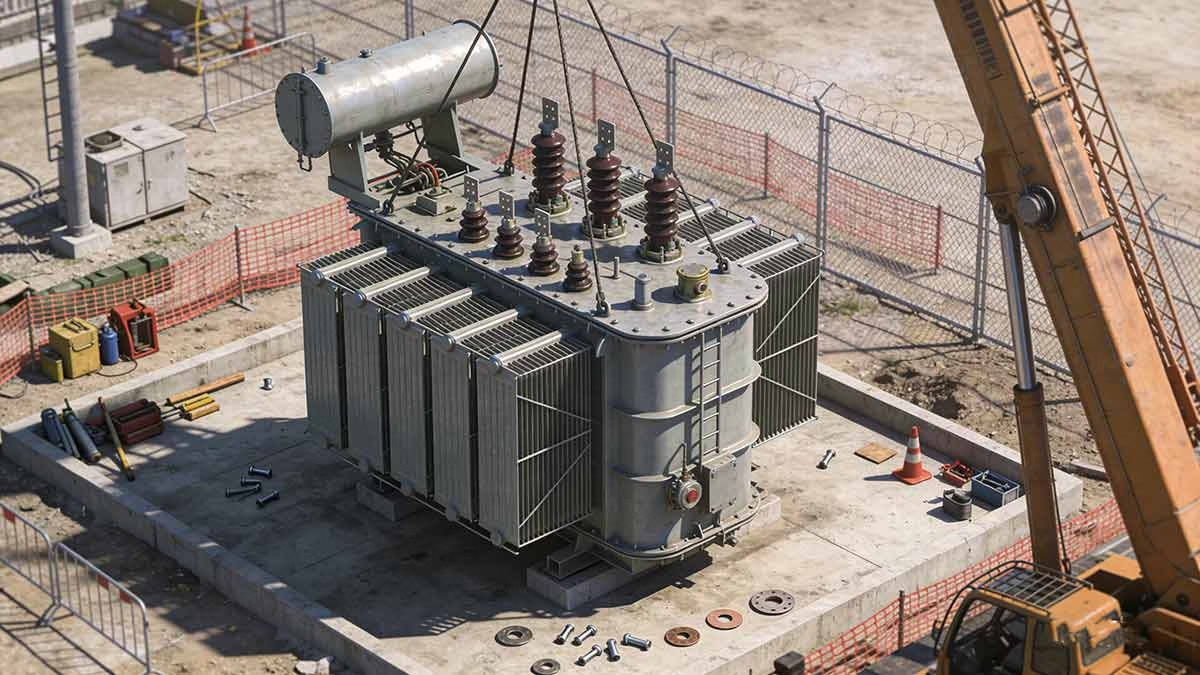
Many clients struggle with: “How can we keep our transformers cool and operating efficiently?” Proper thermal management is critical for transformer performance and lifespan, as overheating can degrade insulation materials, reduce efficiency, and cause premature failure. Ambient temperature limits vary by transformer type, with dry-type transformers typically tolerating higher temperatures than oil-filled ones. In this section, we’ll explore thermal management strategies for different transformer types, share best practices for cooling system design, and provide guidance on maintaining optimal operating temperatures.
Thermal Limits for Oil-Filled and Dry-Type Transformers
Oil-filled transformers are the most common type used in industrial and commercial applications, and they have specific ambient temperature limits. The standard range for oil-filled transformers is -25°C to 40°C (-13°F to 104°F), although extended range models are available for extreme climates. Dry-type transformers, which use air or solid insulation instead of oil, can tolerate higher temperatures—typically up to 50°C (122°F) for standard models.
The thermal limits are determined by the insulation class of the transformer: higher insulation classes allow for higher operating temperatures. It’s important to select a transformer with the appropriate insulation class for your site’s ambient temperature conditions.
Cooling Systems for Optimal Thermal Management
The choice of cooling system depends on the transformer type, load profile, and ambient temperature conditions. For oil-filled transformers, common cooling methods include natural air cooling (ONAN), forced air cooling (ONAF), and forced oil cooling (OFAF). Natural air cooling relies on convection to dissipate heat, and it’s suitable for low-load transformers in moderate climates.
Forced air cooling uses fans to blow air over the transformer’s radiators, increasing heat dissipation; this method is suitable for medium-load transformers or transformers in warmer climates. Forced oil cooling uses pumps to circulate oil through the transformer and radiators, and it’s suitable for high-load transformers or transformers in extreme climates. For dry-type transformers, cooling methods include natural air cooling (AN) and forced air cooling (AF). Natural air cooling is suitable for low-load transformers, while forced air cooling is used for high-load transformers or transformers in warm environments.
In addition to these standard cooling systems, advanced technologies—such as phase change materials and heat pipe technology—can be used to enhance thermal management. Phase change materials absorb excess heat during peak loads and release it during cooler periods, while heat pipe technology provides efficient heat transfer without moving parts.
Best Practices for Thermal Management
Proper ventilation and air flow are essential for effective thermal management. Transformers should be spaced appropriately to allow for air circulation, and indoor installations should have adequate ventilation systems to remove heat. Cooling systems should be sized based on the transformer’s load profile and ambient temperature conditions, and temperature-controlled cooling activation can help reduce energy consumption by only activating cooling systems when necessary.
Load management is also important: dynamic loading based on ambient temperature can help prevent overheating during peak periods. Online monitoring systems can be used to track real-time temperature and load data, allowing personnel to make adjustments as needed.
How to Implement Effective EMI Shielding for Power Transformers in High-RF Environments?
In today’s high-tech world, many clients ask: “How can we protect our transformer from electromagnetic interference (EMI) in high-RF environments?” EMI is a significant concern for transformer installations near radio transmitters, cellular base stations, or industrial equipment, as it can cause voltage distortions, operational errors in control systems, and interference with nearby sensitive equipment.
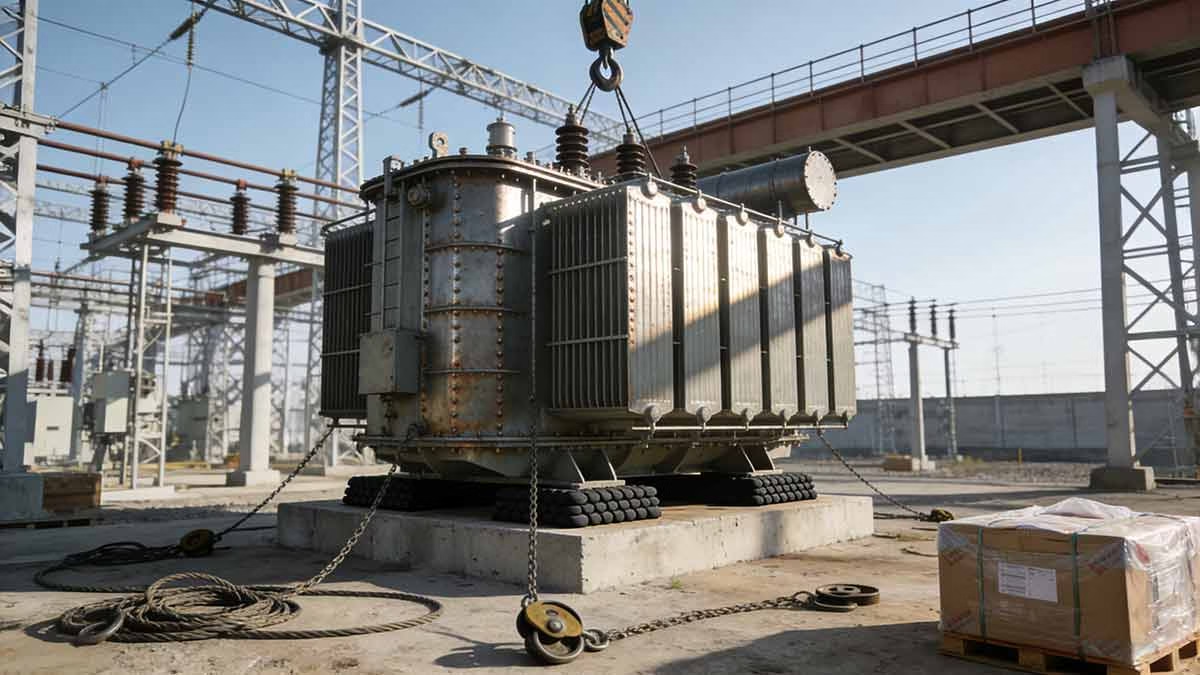
Effective EMI shielding involves a combination of Faraday cages, conductive enclosures, proper grounding, and filtering. In this section, we’ll explore these techniques in detail, share real-world examples, and provide guidance on implementing comprehensive EMI protection.
Understanding EMI Sources and Their Effects
To implement effective EMI shielding, it’s first important to understand the sources of EMI and their effects. External EMI sources include radio and TV transmitters, cellular base stations, industrial equipment (such as motors and welders), and power lines. Transformer-generated EMI can also be a concern: this is caused by core magnetostriction (the expansion and contraction of the transformer core), winding vibrations, and partial discharges.
The effects of EMI on transformers include voltage distortions, which can reduce efficiency and damage internal components; operational errors in control systems, which can lead to unplanned outages; and interference with nearby sensitive equipment, such as computers and monitoring systems.
Key EMI Shielding Techniques
There are several effective EMI shielding techniques, each with its own advantages and applications. Faraday cages are conductive enclosures that surround the transformer, blocking external EMI from entering and preventing transformer-generated EMI from escaping. Faraday cages are highly effective and are often used for critical installations in high-RF environments.
Conductive paints can be applied to the transformer tank and components to provide moderate EMI shielding; these paints are cost-effective and easy to apply. Metallic foils can be wrapped around cables and sensitive parts to provide moderate to high shielding, and they are especially useful for cable connections. Ferrite beads are used on cables to suppress high-frequency noise, making them a cost-effective solution for specific frequency ranges.
Implementing a Comprehensive EMI Shielding Solution
A comprehensive EMI shielding solution involves more than just one technique—it requires a combination of enclosure design, cable shielding, grounding, and filtering. The transformer enclosure should be made of conductive materials (such as steel or aluminum) and properly sealed to prevent EMI leakage. All openings and joints in the enclosure should be sealed with conductive gaskets to ensure a continuous conductive path. Cable shielding is essential for preventing EMI from traveling through cables: shielded cables should be used for all connections, and cable shields should be properly terminated to the grounding system.
A low-impedance grounding network is critical for dissipating EMI, and all metallic components should be bonded together to ensure a consistent ground potential. EMI filters should be installed on power and control cables to suppress EMI signals, and surge protection devices can help protect against voltage spikes caused by EMI.
Testing and Verification of EMI Shielding
After implementing an EMI shielding solution, it’s important to test and verify its effectiveness. Electromagnetic compatibility (EMC) testing should be conducted to ensure the transformer complies with relevant standards—such as IEC 61000—which set limits for EMI emissions and immunity. On-site measurements using spectrum analyzers can be performed to identify specific interference sources and verify that shielding is effective.
Continuous monitoring systems can be installed to track EMI levels over time, and alerts can be set up for unexpected increases in EMI. Regular inspections of the shielding system are also important to ensure it remains intact and effective, as damage to enclosures or cables can compromise shielding performance.
Final Thoughts on Critical Environmental Considerations for Power Transformer Installation
Successful power transformer installation requires careful consideration of seven critical environmental factors: climate-related placement decisions (indoor vs. outdoor), stable foundation design, safe clearance zones, flood protection (especially for coastal sites), anti-seismic measures (for earthquake zones), thermal management, and EMI shielding (for high-RF environments). Each of these factors plays a crucial role in ensuring the transformer operates safely, efficiently, and durably for decades.
By prioritizing these environmental considerations, working with experienced engineers, and adhering to global compliance standards, you can avoid costly mistakes, reduce maintenance costs, and ensure a reliable power supply for your facility.
Remember, every installation is unique—local climate conditions, soil properties, voltage requirements, and site-specific risks must be taken into account when developing your installation plan.
Investing in proper environmental protection upfront will pay off in the long run, as it will extend the transformer’s lifespan, reduce the risk of unplanned outages, and ensure compliance with regulatory standards. If you have additional questions or need guidance on any aspect of power transformer installation, don’t hesitate to consult with an experienced electrical engineering professional.