
Contents
hide
Why IEC Standards for Power Transformers Are the Foundation of Global Electrical Grids
Power transformers represent one of the most critical assets in power transmission and distribution systems. Their stability, efficiency, and safety directly influence grid reliability across continents. Without unified international guidelines, transformer specifications, manufacturing practices, and performance benchmarks would vary drastically, creating compatibility risks, operational failures, and trade barriers.
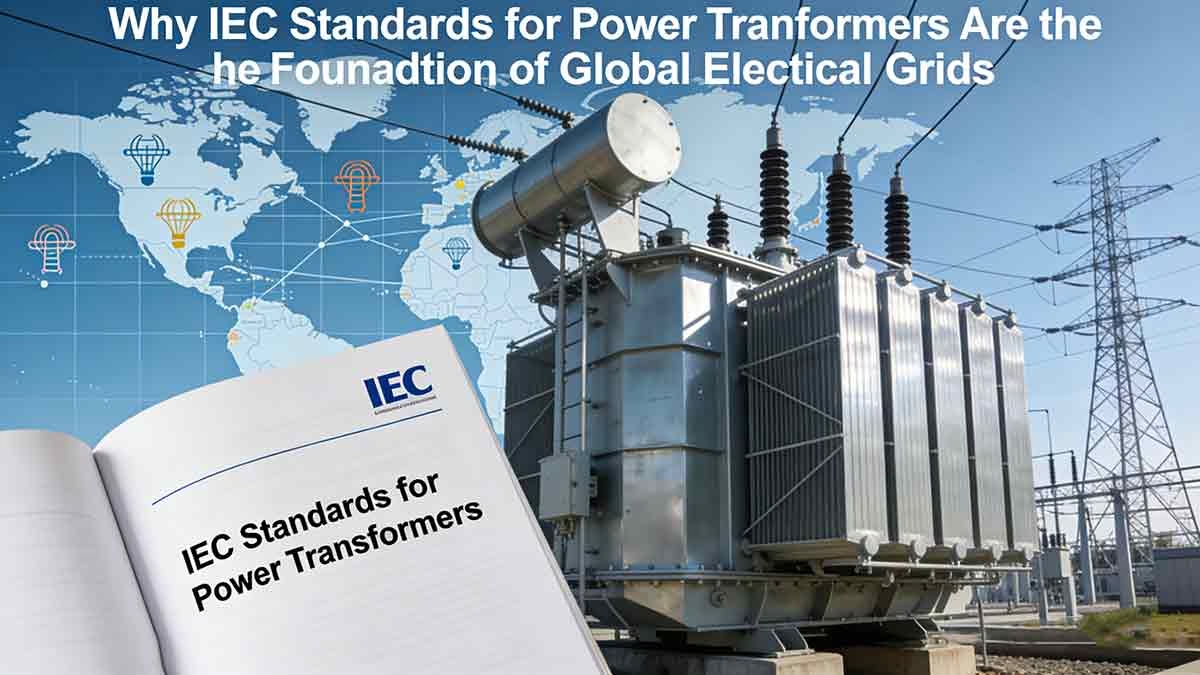
IEC Standards for Power Transformers solve this challenge by establishing globally harmonized requirements that manufacturers, engineers, utilities, and procurement teams rely on every day. These standards ensure consistent performance, cross-border interoperability, and adherence to strict safety and environmental norms.
What Is the Role of IEC in Power Transformer Standardization
The International Electrotechnical Commission (IEC) is the world’s leading organization for creating and publishing international standards for electrical, electronic, and related technologies. For power transformers, its role extends far beyond simple rule-making.
- It unifies technical requirements across more than 170 countries
- It eliminates regional inconsistencies in design and testing
- It supports safer, more efficient, and more sustainable transformer deployment
- It facilitates international trade and public infrastructure tenders
Without IEC standardization, global energy projects would face repeated delays, redundant testing, and inconsistent quality levels. IEC Standards for Power Transformers create a universal technical language for the entire power industry.
Core Functions of IEC Transformer Standards
- Standardize voltage ratings, insulation levels, and performance tolerances
- Establish uniform testing procedures for type, routine, and special evaluations
- Define safety limits to protect personnel and electrical infrastructure
- Integrate modern advancements like renewable integration and digital monitoring
- Support environmental compliance and eco-design objectives
Key IEC Standards for Power Transformers You Must Know
The IEC 60076 series is the primary reference for IEC Standards for Power Transformers. This comprehensive framework covers every aspect of transformer engineering, from basic design to advanced diagnostic systems.
| IEC Standard | Core Focus Area | Practical Application |
|---|---|---|
| IEC 60076-1 | General Requirements | Ratings, terminology, tolerances, and nameplate definitions |
| IEC 60076-2 | Temperature Rise | Thermal performance and safe operating limits |
| IEC 60076-3 | Dielectric Tests | Insulation strength and impulse voltage withstand |
| IEC 60076-5 | Short-Circuit Withstand | Mechanical robustness during grid faults |
| IEC 60076-7 | Loading Guide | Overload capability and insulation lifespan |
| IEC 60076-10 | Sound Level Measurement | Noise emission limits for environmental compliance |
| IEC 60076-16 | Renewable Energy Transformers | Design for wind, solar, and hybrid power systems |
| IEC 60076-19 | Digital Monitoring | Smart transformer diagnostics and condition assessment |
This structured series ensures every high-quality power transformer follows the same internationally recognized engineering principles.
Additional Supporting IEC Standards
Beyond the IEC 60076 series, several complementary standards reinforce full compliance:
- IEC 60214 for on-load tap changers
- IEC 61099 for biodegradable insulating fluids
- IEC 60137 for transformer bushings
- IEC 61378 for HVDC converter transformers
Together, these documents form a complete compliance ecosystem for modern power transformers.
How IEC Standards for Power Transformers Define Performance & Testing
A common misunderstanding is that IEC standards only outline design rules. In reality, IEC Standards for Power Transformers provide one of the world’s most rigorous testing frameworks, ensuring real-world reliability.
Type Tests Validate Overall Design
Type tests are performed on prototype units to confirm design compliance before mass production.
- Temperature rise evaluation under full load
- Lightning and switching impulse dielectric tests
- Short-circuit withstand verification
- Noise level measurement
- Loss evaluation for efficiency validation
These tests confirm the transformer can withstand extreme operating conditions without failure.
Routine Tests Ensure Manufacturing Consistency
Every transformer undergoes routine tests before delivery. These evaluations verify consistent quality across production runs.
- Winding resistance measurement
- Turns ratio and vector group verification
- Applied and induced voltage tests
- Insulation resistance checks
- Load loss and no-load loss measurement
Routine testing acts as the final quality gate before shipment.
Special Tests for Project-Specific Requirements
Many global projects require additional assessments tailored to environmental or operational conditions.
- Frequency response analysis for winding integrity
- Vibration testing for seismic or offshore locations
- Partial discharge measurement for high-voltage applications
- Moisture content analysis for long-term insulation health
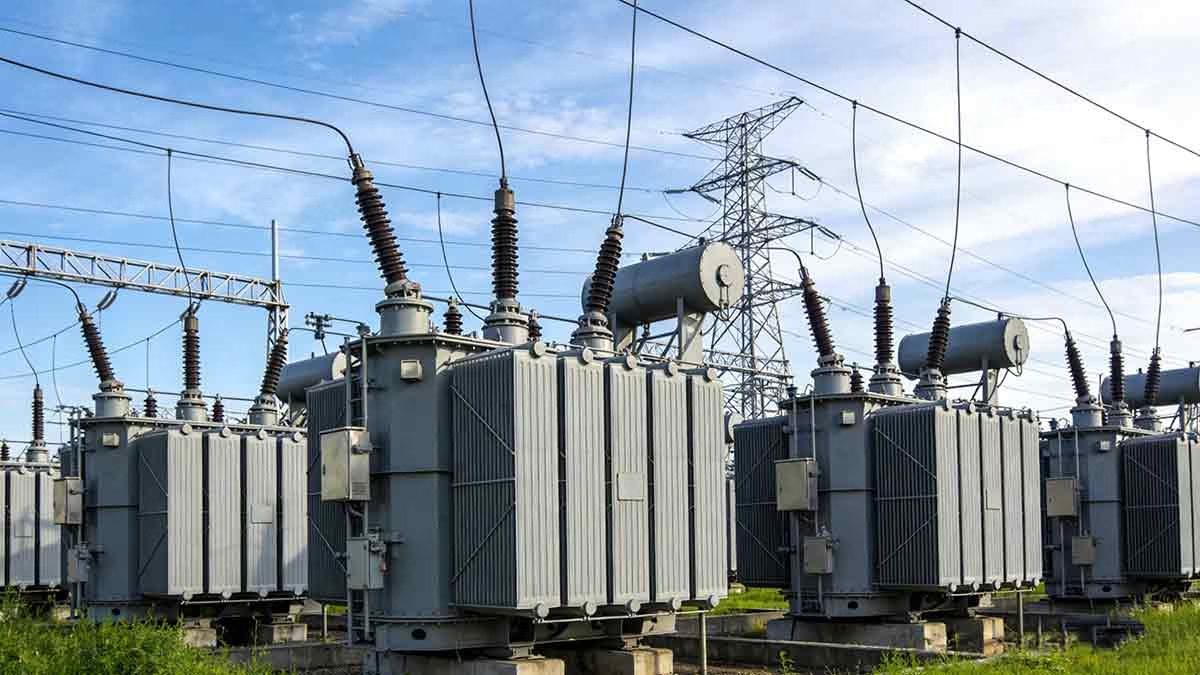
Safety & Environmental Provisions in IEC Standards for Power Transformers
Modern IEC Standards for Power Transformers strongly emphasize safety and environmental protection, addressing both operational hazards and ecological impact.
Electrical & Operational Safety
- Strict dielectric strength requirements to prevent flashovers
- Defined clearances and creepage distances for different pollution classes
- Mandatory protective devices such as pressure relief valves and Buchholz relays
- Thermal limits to avoid overheating and component damage
Fire & Explosion Protection
- Oil containment systems to prevent leakage and environmental contamination
- Standards for flame-retardant and biodegradable fluids
- Temperature monitoring for early fault detection
- Structural design to reduce explosion risk
Environmental Compliance
- Noise emission limits to protect residential and urban areas
- Restrictions on hazardous substances such as PCBs
- Recyclability targets for core materials, copper, and steel
- Energy efficiency mandates to reduce carbon footprint
IEC standards align with global environmental regulations, including ISO 14001 and EU EcoDesign directives.
IEC Standards for Power Transformers vs IEEE & ANSI: Key Differences
Many global buyers and engineers struggle to understand how IEC standards compare to North American frameworks. While both systems ensure high performance, their philosophies differ significantly.
Regional Scope
- IEC: Global standard used in Europe, Asia, Africa, the Middle East, and most of the world
- IEEE/ANSI: Primarily focused on North American 60 Hz grid systems
Design Philosophy
- IEC emphasizes international harmonization, efficiency, and eco-design
- IEEE/ANSI prioritizes ruggedness, fault tolerance, and regional grid compatibility
Testing & Performance
- IEC uses standardized, repeatable test methods with tight tolerances
- IEEE includes more application-specific sequences tailored to local utilities
- Voltage classification and insulation labeling use different terminology
Despite these differences, modern manufacturers often provide dual-compliant transformers that meet both IEC and IEEE requirements for global market access.
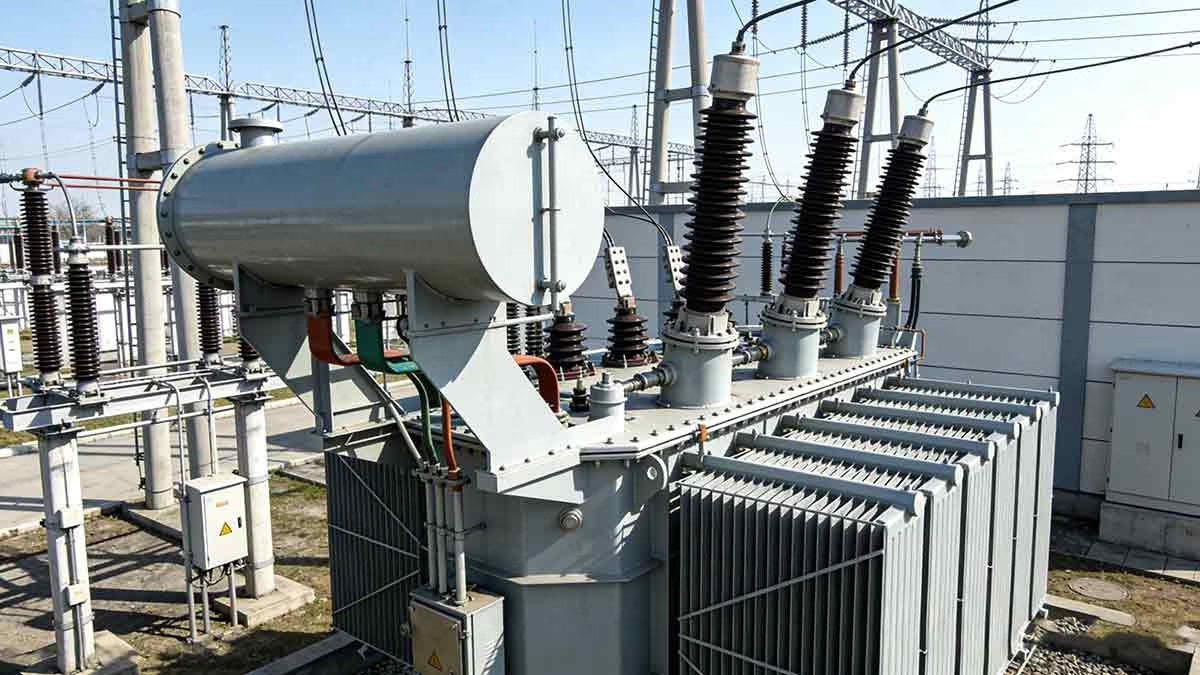
Why IEC Compliance Is Critical for Global Transformer Projects
For any cross-border power infrastructure initiative, compliance with IEC Standards for Power Transformers is not optional—it is essential.
✅ Universal Market Access
IEC compliance acts as a global trade passport, accepted in public tenders across most continents.
✅ Reduced Project Delays
Unified standards eliminate repeated testing, conflicting specifications, and certification barriers.
✅ Improved Reliability & Safety
Transformers built to IEC standards undergo rigorous validation, reducing field failures and downtime.
✅ Lower Total Cost of Ownership
Higher efficiency, longer service life, and easier maintenance deliver long-term financial benefits.
✅ Stronger Sustainability Performance
IEC-compliant transformers support decarbonization goals through reduced losses and eco-friendly materials.
Projects that prioritize IEC compliance consistently achieve faster commissioning, better grid compatibility, and stronger long-term performance.
Common Misconceptions About IEC Standards for Power Transformers
Despite their widespread use, several myths persist about IEC transformer standards.
Myth 1: IEC Standards Only Apply in Europe
Fact: IEC standards are recognized and enforced in more than 170 countries worldwide.
Myth 2: Compliance Is Only About Documentation
Fact: IEC compliance involves verified design, strict manufacturing controls, and formal testing.
Myth 3: IEC and IEEE Standards Are Fully Interchangeable
Fact: While increasingly harmonized, technical differences still require careful specification.
Myth 4: Small Transformers Do Not Need IEC Compliance
Fact: IEC Standards for Power Transformers apply to all sizes, from distribution to large power units.
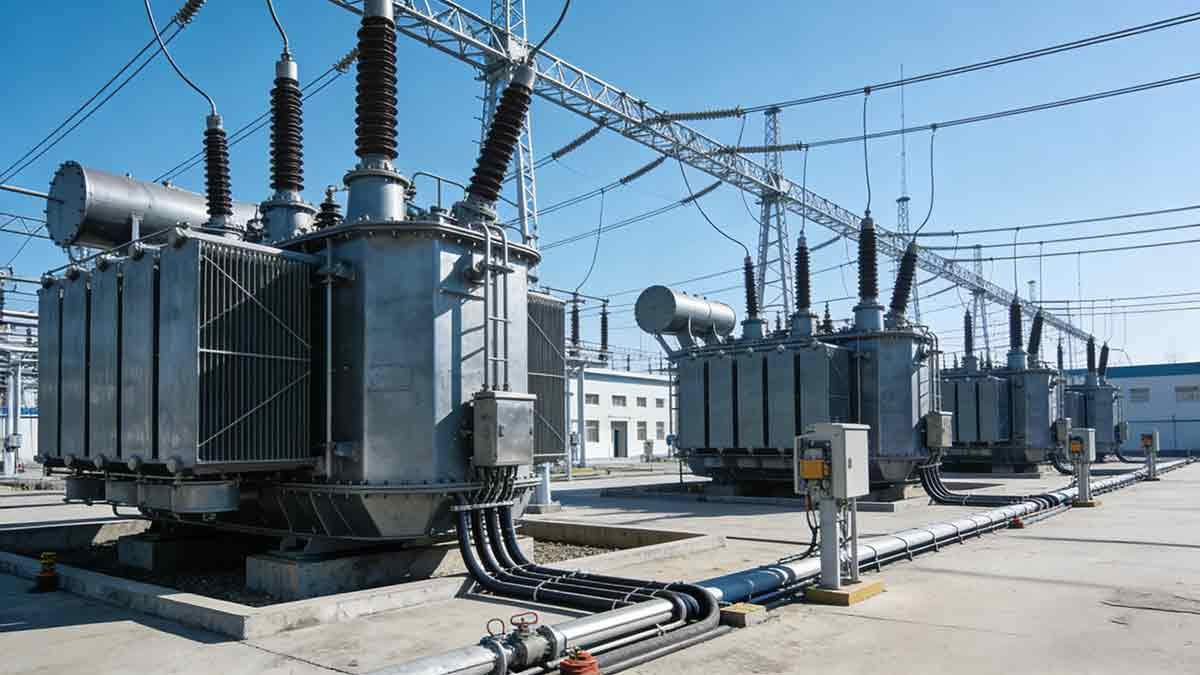
The Future of IEC Standards for Power Transformers
IEC standards continue to evolve alongside global energy trends, ensuring they remain relevant for future grids.
- Digitalization and smart monitoring under IEC 60076-19
- Stricter eco-design and energy efficiency regulations
- AI-driven diagnostics and predictive maintenance integration
- Enhanced standards for renewable energy and HVDC systems
- Improved fire safety and environmental protection rules
These updates ensure IEC Standards for Power Transformers will remain the global benchmark for decades to come.
Conclusion
IEC Standards for Power Transformers form the backbone of safe, efficient, and interoperable electrical infrastructure worldwide. They unify design, testing, safety, and environmental requirements across continents, enabling reliable power delivery and seamless international trade.
For manufacturers, compliance demonstrates engineering excellence and global credibility. For buyers and utilities, it ensures consistent performance, reduced risk, and long-term value. In an increasingly connected energy landscape, IEC standards are not just guidelines—they are essential to building resilient, sustainable power systems for the future.