
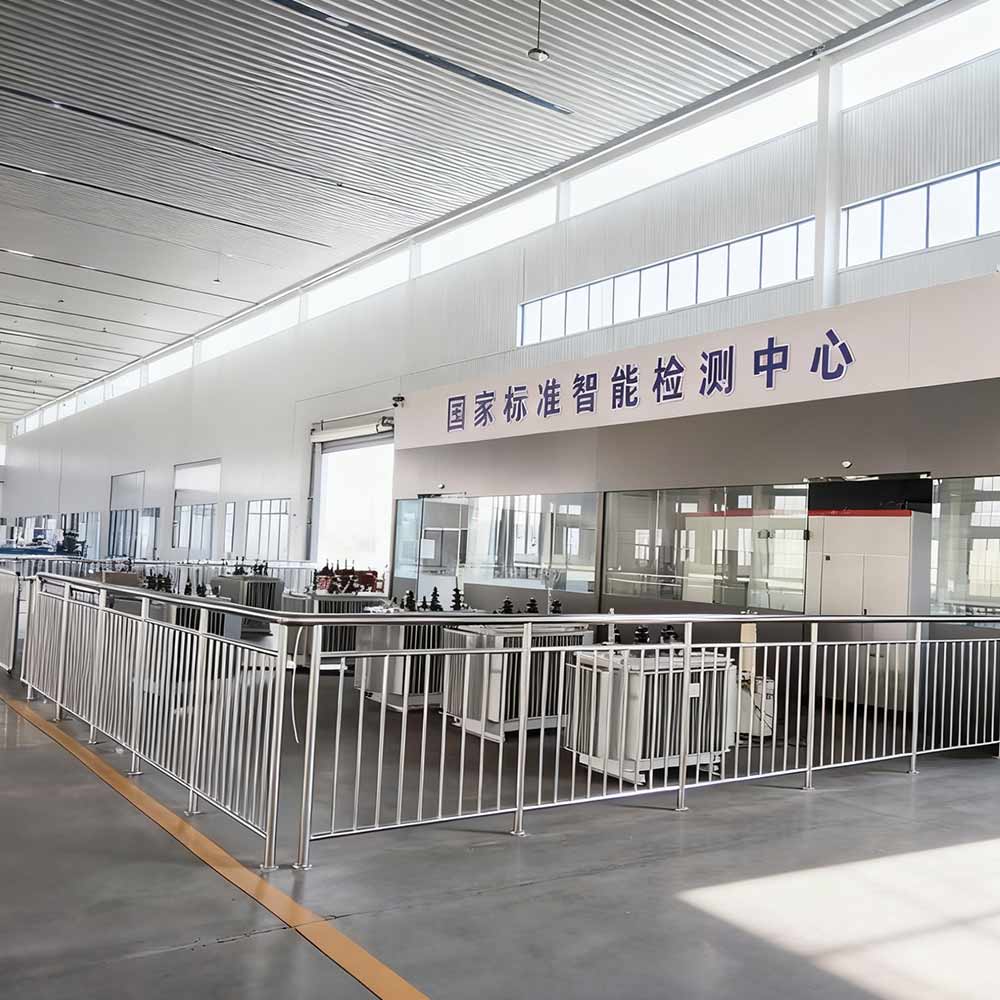
These eight test items cover key dimensions of transformer performance, insulation, and reliability—they are mandatory for CHH Power’s transformers to ensure compliance with national standards, factory specifications, and safe operational requirements. Below is a systematic breakdown of each test’s purpose, core content, and significance.
Contents
hide
1. Winding-to-Ground Insulation Resistance Measurement
- Core Purpose: Detect overall moisture intrusion or insulation defects in the transformer.
- Key Significance: Prevents insulation breakdown caused by dampness or defects, avoiding short circuits between windings and the core.
2. Withstand Voltage Test
- Core Purpose: Verify if the transformer’s main insulation meets national standards under specified power frequency voltage.
- Key Significance: Ensures the insulation system can withstand rated voltage and transient overvoltage during operation, eliminating insulation failure risks.
3. Voltage Ratio Measurement & Connection Group Label Verification
- Core Purpose: Confirm the transformer achieves the expected voltage conversion effect, and the connection group matches the factory nameplate.
- Key Significance: Avoids voltage mismatch with the power grid or load equipment, preventing phase sequence errors that affect system integration.
4. No-Load Current & No-Load Loss Measurement
- Core Purpose: Check if no-load current and no-load loss comply with national standards and technical regulations.
- Key Significance: Reflects the quality of the transformer core (e.g., silicon steel sheet performance) and reduces unnecessary energy consumption during light-load operation.
5. Short-Circuit Impedance & Load Loss Measurement
- Core Purpose: Verify short-circuit impedance and load loss meet national standards or relevant regulations.
- Key Significance: Ensures the transformer can withstand short-circuit faults, limits fault current, and maintains efficient operation under rated load.
6. Winding Resistance Measurement
- Core Purpose: Inspect wire welding quality, tap changer contact (static and moving contacts), and three-phase DC resistance balance.
- Key Significance: Prevents local overheating caused by poor welding or contact, and avoids unbalanced current due to uneven three-phase resistance.
7. Transformer Oil Test
- Core Purpose: Evaluate oil quality by testing dielectric strength (pressure resistance), moisture content, acid value, and impurities.
- Key Operations: Compare test results with the factory test report; analyze the root cause if there are significant deviations.
- Key Significance: Ensures the oil maintains insulation and cooling functions, avoiding oil degradation-induced equipment failures.
8. Specialized Tests for Specific Scenarios
(1) Amorphous Alloy Iron Core Transformers
- Beyond visual inspection, additional insulation resistance measurement is required (targets the unique insulation structure of amorphous alloy cores).
(2) Transformers Protected by Fuses
- Supplemental tests: Verify fuse short-circuit capacity (ability to withstand fault current) and sensitivity (timely tripping to protect the transformer).
Key Compliance Notes
- All tests must adhere to GB/T national standards and CHH Power’s factory technical specifications.
- Test data must be recorded and archived for lifecycle maintenance reference.
- Abnormal test results require immediate troubleshooting (e.g., insulation defects, oil degradation) before the transformer is put into operation or continues service.









OUR CERTIFICATE


OUR PROJECTS


