
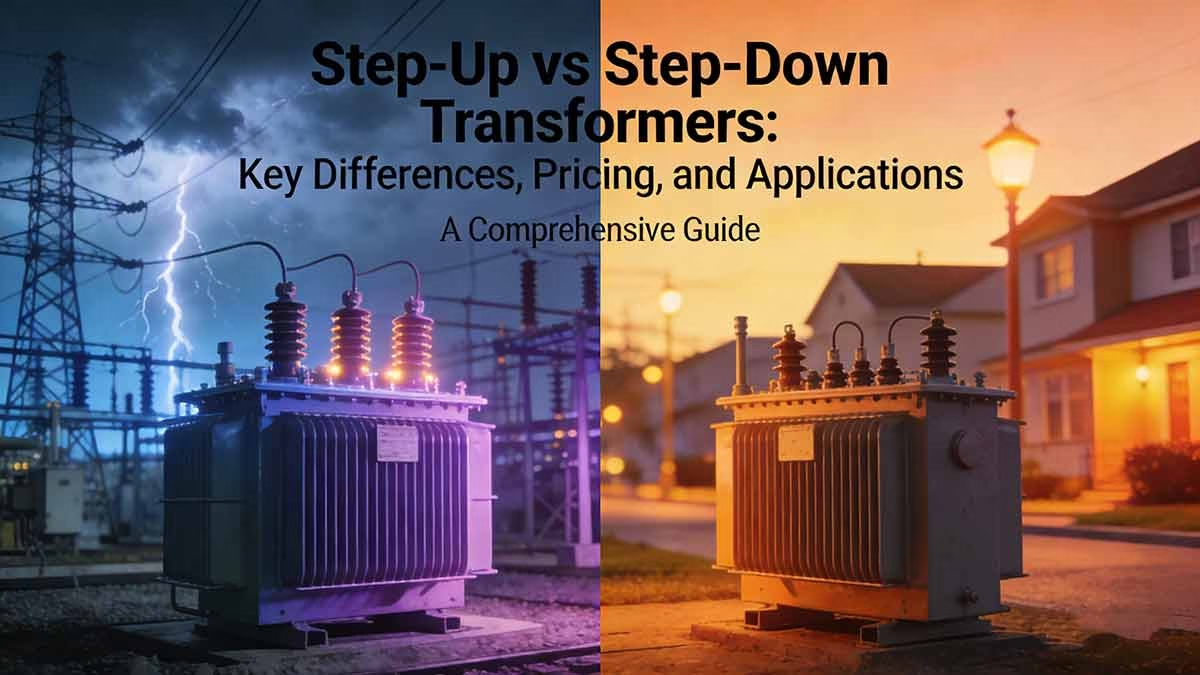
When selecting electrical equipment for industrial, commercial, or utility applications, understanding the difference between a step-up transformer and a step-down transformer is critical. These two transformer types serve opposite but equally important roles in power transmission and distribution systems. Making the right choice directly impacts energy efficiency, operational safety, upfront investment, and long-term expenses. This article provides a clear, fact-based comparison of step-up vs step-down transformers, covering price, performance, application suitability, maintenance, and total cost of ownership to help you make a confident decision.
Contents
hide
What Is a Step-Up Transformer & How It Works
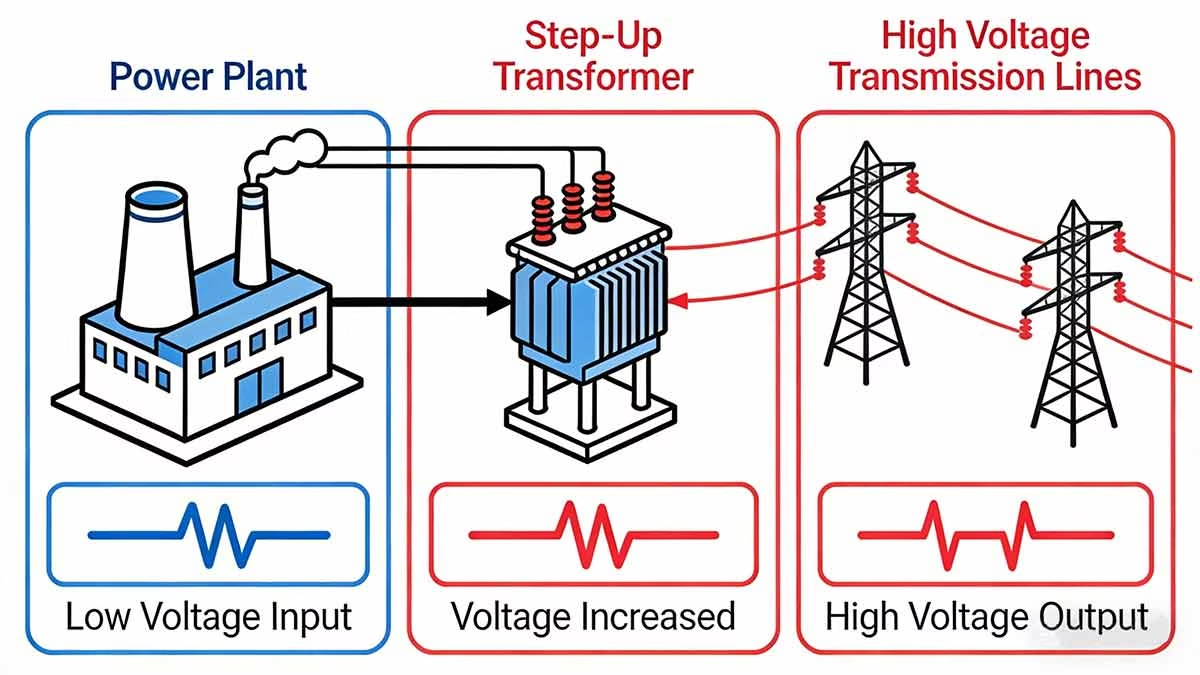
A step-up transformer is a static electrical device that increases voltage from the input side (primary winding) to the output side (secondary winding). It has more turns in the secondary winding than in the primary winding.
- Increases low input voltage to high output voltage
- Used primarily in power transmission stations
- Reduces energy loss during long-distance power delivery
- Works based on Faraday’s Law of electromagnetic induction
Step-up transformers are essential in power plants, where electricity is generated at relatively low voltage and must be raised to high or extra-high voltage for efficient transmission across power grids.
What Is a Step-Down Transformer & How It Works
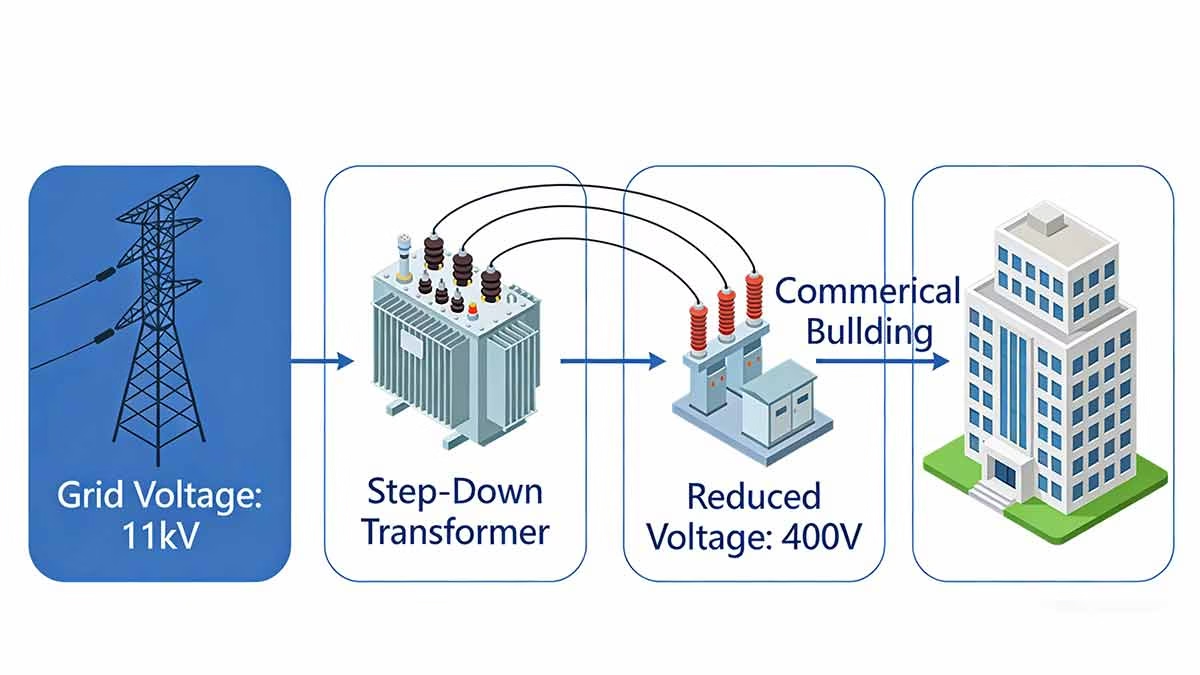
A step-down transformer decreases voltage from the primary side to the secondary side. It has more turns in the primary winding than in the secondary winding.
- Reduces high input voltage to a lower, usable voltage
- Most commonly used in distribution networks
- Supplies safe voltage for homes, offices, and factories
- Found in both indoor and outdoor electrical systems
Step-down transformers are the most widely used type in daily life and industry, bringing high-voltage grid power down to levels safe for machinery and consumers.
Core Differences Between Step-Up and Step-Down Transformers
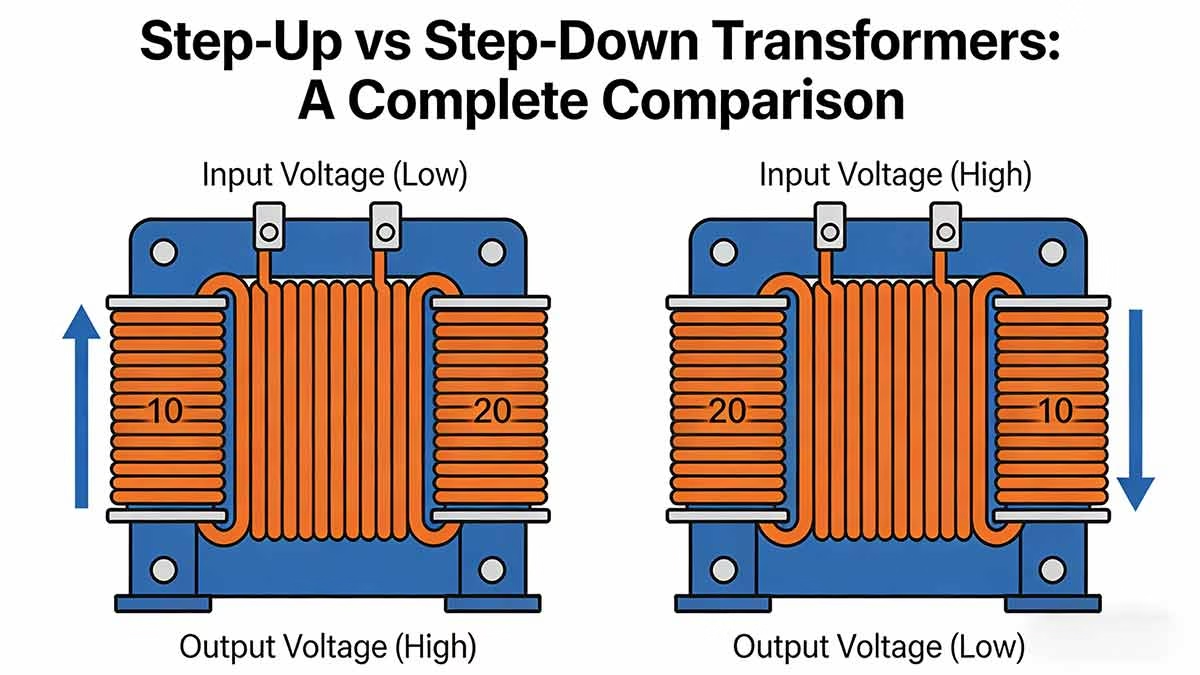
The table below summarizes the most important structural and functional differences between the two transformer types for quick understanding.
| Comparison Category | Step-Up Transformer | Step-Down Transformer |
|---|---|---|
| Voltage Change | Increases voltage | Decreases voltage |
| Winding Design | Secondary turns > Primary turns | Primary turns > Secondary turns |
| Input Voltage | Low voltage | High voltage |
| Output Voltage | High voltage | Low voltage |
| Typical Location | Power plants, transmission substations | Distribution substations, commercial buildings |
| Wire Thickness | Thinner secondary wire | Thicker secondary wire |
| Common Use | Long-distance power transmission | Local power supply & equipment operation |
This basic comparison helps clarify why each transformer exists and where they should be applied.
Step-Up vs Step-Down Transformer: Performance Comparison
Performance is one of the most important factors when choosing between a step-up and a step-down transformer. Below is a detailed breakdown of real-world performance metrics.
Efficiency Ratings
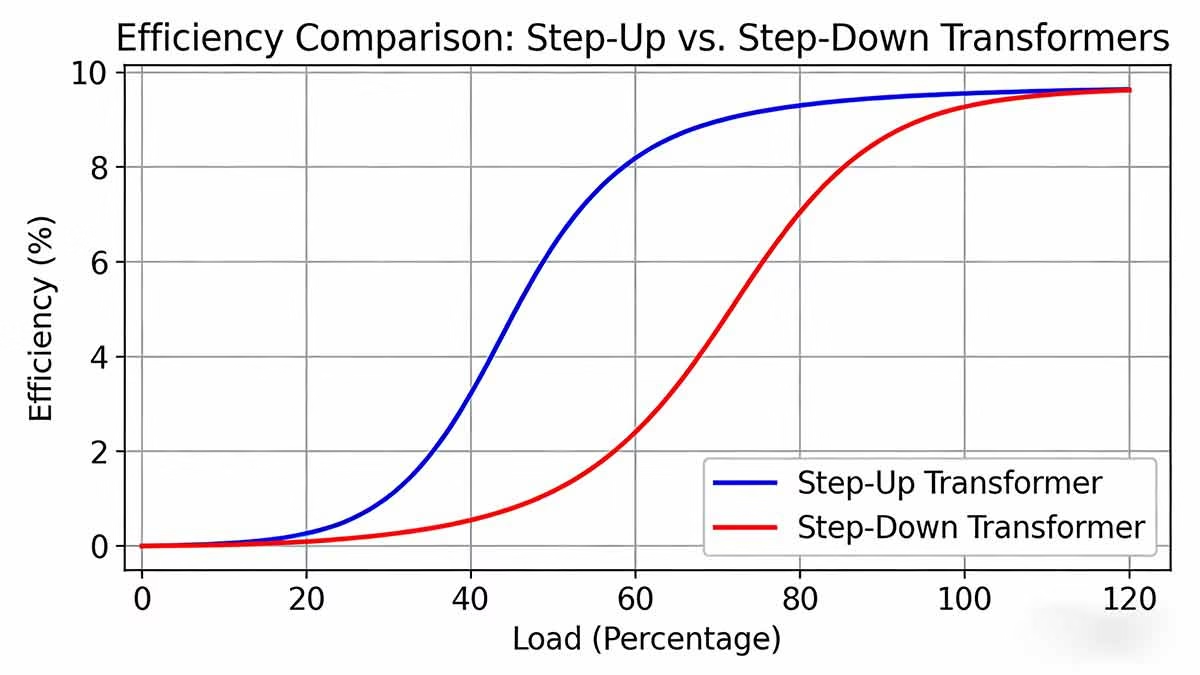
Both modern step-up and step-down transformers offer high efficiency, usually ranging from 95% to 99%. However, their efficiency under load can vary slightly.
- Step-up transformers often operate under heavy, consistent loads, designed for maximum efficiency at full load
- Step-down transformers handle fluctuating loads, maintaining high efficiency across partial and full loads
- Both types lose minimal energy as heat during operation
Load Capacity & Stability
- Step-up transformers support extremely high voltage and power ratings, from a few MVA up to hundreds of MVA
- Step-down transformers come in a wider range of sizes, from small kVA units for residential areas to large units for industrial zones
- Step-down transformers provide better voltage stability for end users
- Step-up transformers focus on reducing transmission loss rather than local voltage regulation
Durability & Lifespan
When manufactured with similar materials and standards, step-up and step-down transformers have nearly identical service life.
- Average design life: 25 to 35 years
- Regular oil testing and maintenance can extend the lifespan beyond 35 years
- Sealed, corrosion-resistant designs improve durability in outdoor environments
Price Comparison: Step-Up vs Step-Down Transformer
Upfront price is a major concern for buyers. The cost of a transformer depends on voltage level, capacity, insulation type, cooling system, and materials.
General Price Range
In most cases:
- Large-capacity step-up transformers are more expensive due to high-voltage insulation requirements and complex design
- Standard distribution step-down transformers are more affordable and mass-produced
- Custom-built units cost more than standard models
Factors That Affect Transformer Price
- Power rating (kVA/MVA)
- Input and output voltage levels
- Cooling type (ONAN, ONAF, etc.)
- Insulation material (oil-immersed or dry-type)
- Tank material and corrosion protection
- Certification standards (IEC, ANSI, etc.)
- Accessories (conservator, Buchholz relay, thermometer)
Higher voltage requirements almost always increase the price, which is why large step-up transformers are generally more costly.
Maintenance Cost Comparison
Long-term cost includes more than just the purchase price. Maintenance expenses over the transformer’s lifetime play a huge role.
Maintenance for Step-Up Transformers
- Operated in controlled substation environments
- Less exposure to dust, moisture, and physical damage
- Requires periodic oil testing, insulation monitoring, and cleaning
- Professional supervision is standard
Maintenance for Step-Down Transformers
- Often installed outdoors, exposed to weather and vibration
- May need more frequent visual inspections
- Routine tasks include oil check, gasket inspection, and cooling system cleaning
- Smaller units have lower maintenance costs
Overall, standard step-down transformers have similar or slightly higher maintenance frequency but lower per-service costs compared to large step-up units.
Total Cost of Ownership (TCO) Breakdown
Total cost of ownership includes initial price, installation, energy loss, maintenance, and replacement over the lifetime of the transformer.
TCO for Step-Up Transformers
- Higher initial purchase cost
- Lower energy loss during transmission
- Longer service intervals
- Used in critical, high-reliability applications
- Justifies higher investment through grid efficiency
TCO for Step-Down Transformers
- Lower upfront cost
- Mass availability reduces installation expenses
- A wide service network lowers repair costs
- Ideal for widespread distribution networks
- Lower total cost for most commercial and industrial users
For most buyers outside major power transmission, step-down transformers provide better total cost of ownership.
Real-World Applications: Which Transformer Do You Need?
Understanding applications helps you avoid choosing the wrong transformer type and wasting budget.
Typical Step-Up Transformer Applications
- Power generation plants
- Transmission substations
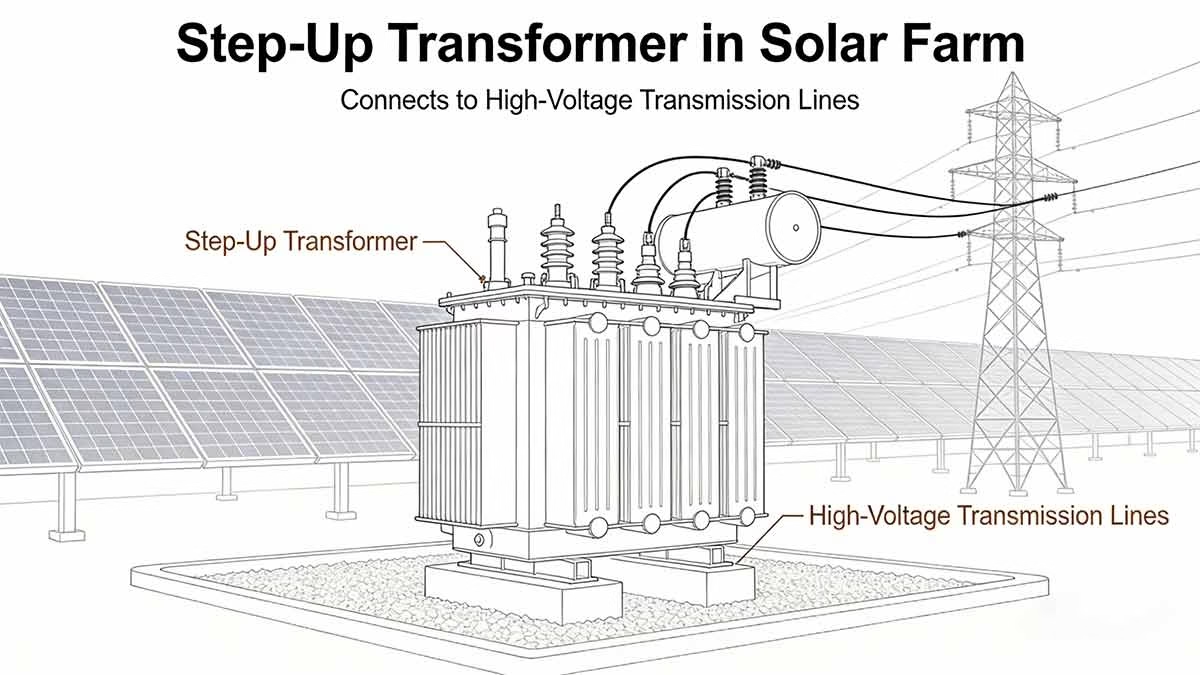
- Renewable energy systems (solar and wind farms)
- Industrial high-voltage equipment
- Long-distance power transmission lines
Typical Step-Down Transformer Applications
- Local power distribution
- Residential areas and commercial buildings
- Industrial machinery and manufacturing lines
- Shopping malls, hospitals, and schools
- Construction sites and temporary power supplies
If your goal is to send power far away, you need a step-up transformer. If you want to use power safely on-site, you need a step-down transformer.
Common Questions About Step-Up and Step-Down Transformers
To help you make a fully informed choice, we answer the most frequently asked questions from engineers, project managers, and utility buyers.
Can a Step-Up Transformer Be Used as a Step-Down Transformer?
In some cases, a transformer can be reverse-connected, but this is not recommended for regular or industrial use. Efficiency, voltage regulation, and safety ratings are designed for one direction. Misuse can lead to overheating, poor performance, or failure.
Which Transformer Is More Energy-Efficient?
Modern, well-maintained step-up and step-down transformers have similar efficiency levels. The difference comes from load conditions and usage environment, not the transformer type itself.
How Long Do Transformers Last Before Replacement?
With proper maintenance, oil-immersed step-up and step-down transformers typically last 25–35 years. Dry-type transformers usually last 15–25 years.
Which Transformer Should You Choose?
Choosing between a step-up transformer and a step-down transformer ultimately depends on your voltage requirements, application location, load type, and budget.
- Choose a step-up if you need to increase the voltage for long-distance transmission
- Choose step-down if you need to reduce voltage for safe, local usage
- Compare the total cost of ownership instead of only the upfront price
- Always buy from a manufacturer that meets international standards
- Select the right cooling and protection system for your environment
Whether for power generation, industrial production, or local distribution, selecting the correct transformer ensures stable operation, lower energy bills, and longer service life.
Conclusion
The difference between step-up vs step-down transformers is clear: one increases voltage for transmission, and the other reduces voltage for safe usage. While step-up transformers often have a higher price and are used in critical transmission systems, step-down transformers offer better affordability and versatility for most commercial and industrial applications. By evaluating price, performance, maintenance, and total cost, you can select the ideal transformer for your project.
If you need help selecting the right transformer for your voltage, load, and environment requirements, our team of experienced engineers can provide professional guidance and customized solutions tailored to your needs.