
Single phase and three phase power transformers differ significantly in core design, practical applications, energy efficiency, and their impact on electrical grids. Single phase models feature a streamlined structure, making them ideal for low-power requirements, while three phase transformers boast a more complex design that delivers superior efficiency—perfect for industrial operations and large-scale power distribution networks.
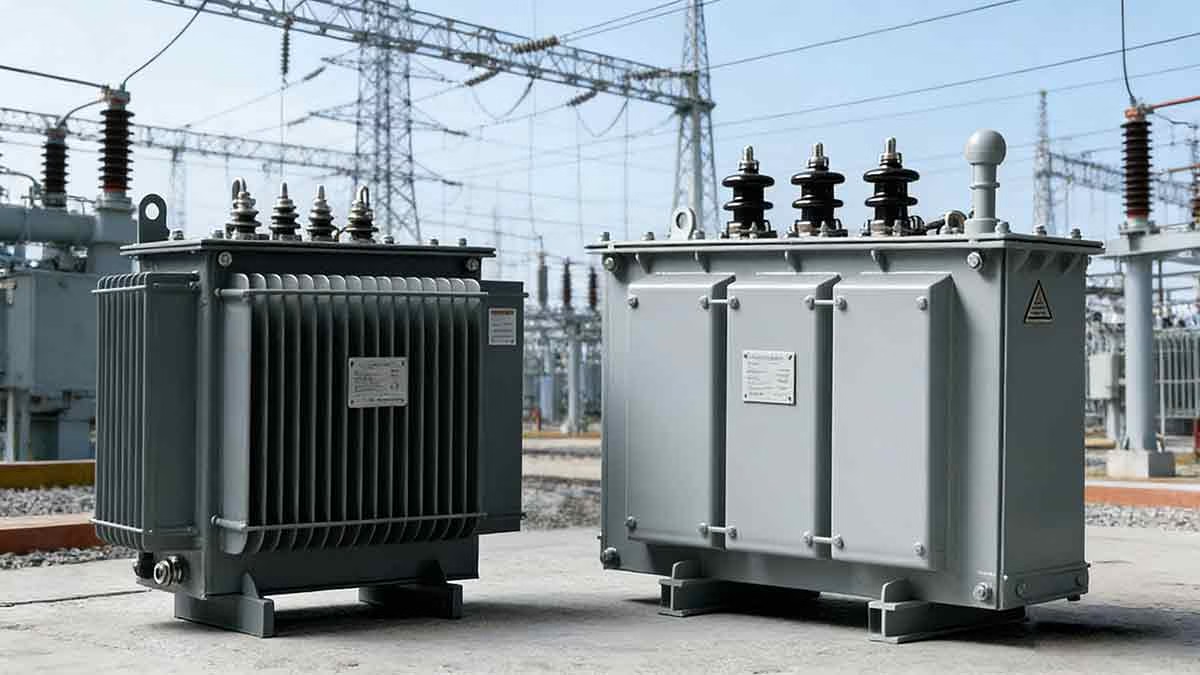
In my two decades working with electrical systems, I’ve learned that choosing the right transformer isn’t just a technical decision—it’s a choice that shapes project reliability, operational costs, and long-term scalability. Let’s explore the key distinctions between these two transformer types to help you make a decision aligned with your specific needs.
Contents
hide
Fundamental Principles: What Sets Single and Three Phase Transformers Apart?
Have you ever wondered why some transformers are compact and straightforward, while others are larger and more intricate? The answer lies in their core operational principles. Single phase and three phase transformers are engineered to handle electrical current in distinct ways, and these differences ripple through every aspect of their performance.
Single phase transformers operate with a single alternating current (AC) waveform, while three phase models manage three separate AC currents, each shifted by 120 degrees. This fundamental difference influences their design complexity, power handling capabilities, and efficiency—making each type better suited for specific scenarios.
Core Design and Operational Mechanics
Let’s break down the foundational elements that define how these transformers work:
- Winding Configuration: Single phase transformers feature one primary winding and one secondary winding, creating a simple current transfer path. Three phase transformers, by contrast, include three sets of primary and secondary windings, each aligned to handle a separate phase of current.
- Magnetic Core Construction: Single phase cores typically use a single-limb or shell-type design, while three phase cores employ a three-limb configuration that optimizes magnetic flux distribution.
- Operational Flow: Single phase transformers rely on a pulsating magnetic field, while three phase models generate a rotating magnetic field—this difference is what enables three phase units to deliver more consistent power.
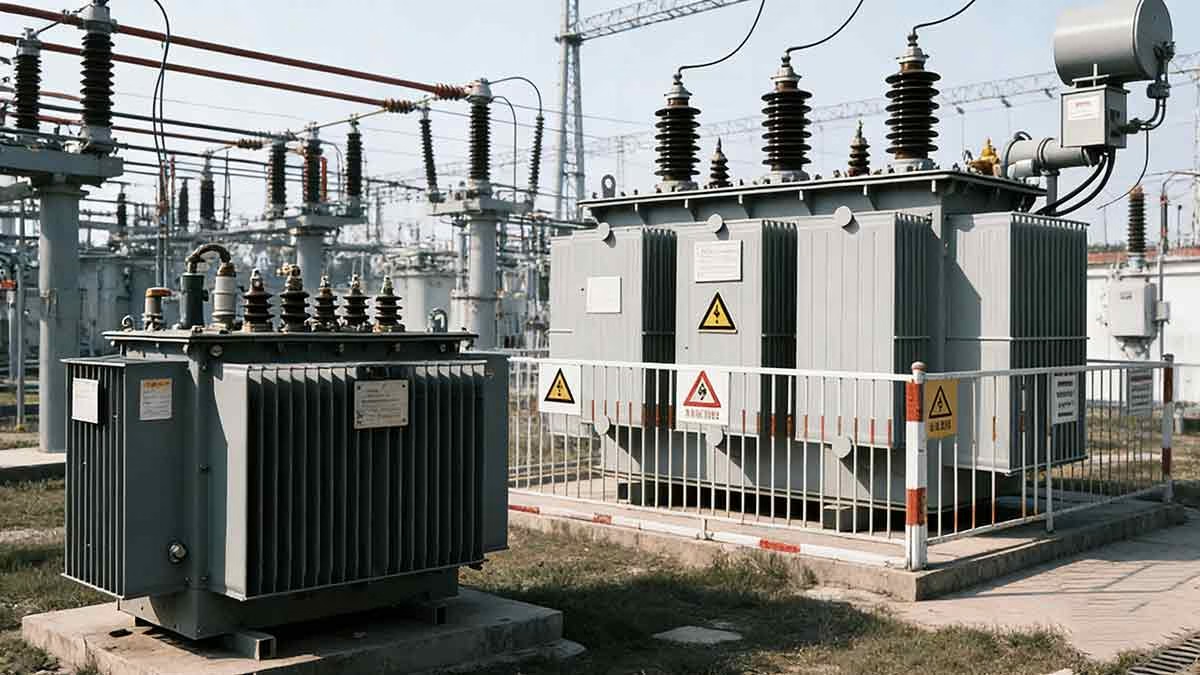
I recall a project where we disassembled a vintage single phase transformer to inspect its windings—its simplicity was striking compared to the three phase units we regularly install in industrial sites. It’s analogous to comparing a solo instrument to a full chamber ensemble: both work, but the latter delivers greater depth and capability.
Power Handling Capabilities
When it comes to managing electrical load, the two transformer types couldn’t be more different:
| Aspect | Single Phase | Three Phase |
|---|---|---|
| Power Capacity | Limited (ideal for low-power needs) | High (handles heavy industrial loads) |
| Voltage Compatibility | Typically suited for low to medium voltages | Designed for high-voltage applications |
| Current Delivery | Pulsating (varies with the AC waveform) | Constant (smooth, uninterrupted flow) |
Last year, we worked on a manufacturing facility that needed to power a 500HP motor. A single three phase transformer handled the load seamlessly—something that would have required four or five single phase units, not to mention additional wiring and space.
Efficiency and Physical Footprint
The design differences translate directly to efficiency and size:
- Material Utilization: Three phase transformers use copper windings more efficiently, reducing conductive losses. Their core design also requires less magnetic material compared to single phase models of equivalent power.
- Space Requirements: For the same power rating, three phase transformers are 20-30% more compact than single phase units. This is a game-changer for facilities with limited floor space.
I once helped a beverage bottling plant redesign its power system. By replacing six single phase transformers with two three phase units, we freed up 400 square feet of floor space and improved the plant’s overall energy efficiency by 8%.
Application Scenarios: Choosing the Right Transformer for Your Needs
Selecting between single phase and three phase transformers doesn’t have to be a guessing game—each type excels in specific environments. The key is to match the transformer’s capabilities to your power requirements, existing infrastructure, and long-term goals.
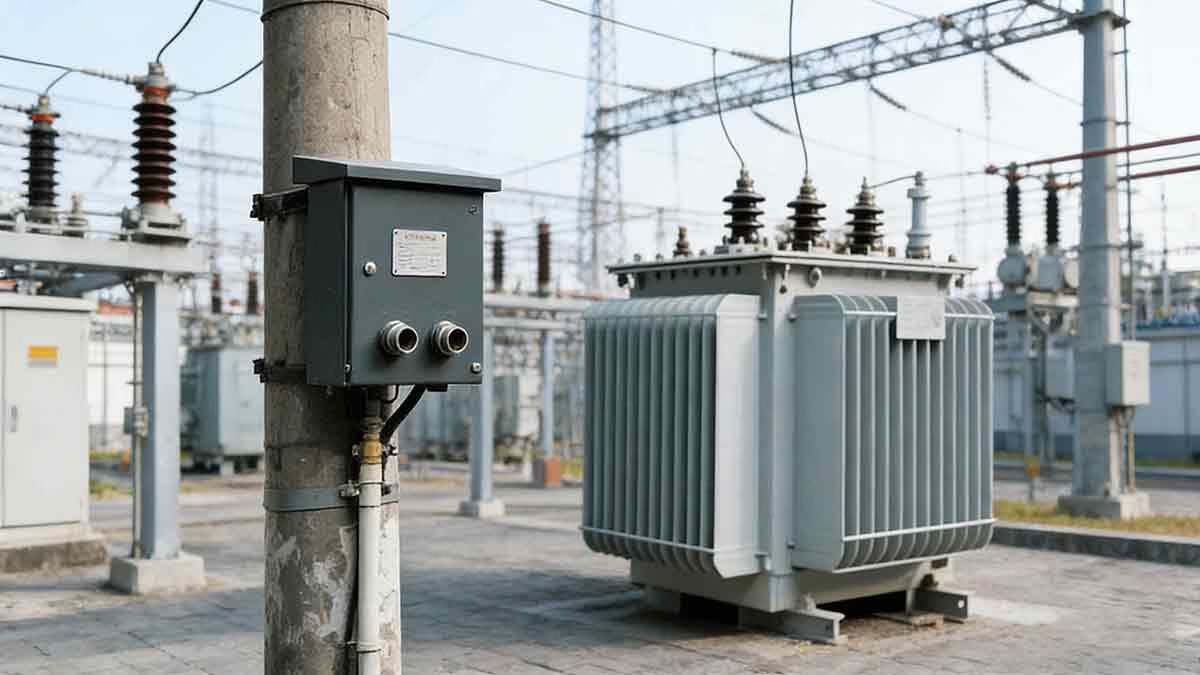
Single phase transformers shine in residential and small commercial settings, where power demands are modest. Three phase transformers, on the other hand, are the backbone of industrial operations, large commercial buildings, and power distribution networks. Let’s dive into the scenarios where each type delivers the best results.
Residential and Small-Scale Commercial Use
Single phase transformers are the workhorses of low-power environments:
- Homes: Powering refrigerators, air conditioners, lighting, and other household appliances.
- Small Businesses: Supporting cafes, boutique shops, and home offices with basic electrical needs.
- Rural Areas: Often the only viable option, as three phase infrastructure is rarely available in remote locations.
I collaborated on a project to electrify a remote mountain village a few years ago. Single phase transformers were the perfect fit—they provided reliable power for residents’ homes and small workshops without requiring expensive grid upgrades.
Industrial and Large-Scale Commercial Applications
Three phase transformers dominate in high-power settings:
| Application | Why Three Phase is Ideal | Real-World Example |
|---|---|---|
| Manufacturing Plants | Handles heavy machinery and continuous operation | Powering assembly lines, welding equipment, and conveyor systems |
| High-Rise Buildings | Delivers balanced power for HVAC, elevators, and multiple tenants | A 30-story office tower in downtown Chicago |
| Data Centers | Provides stable, efficient power for servers and cooling systems | A cloud computing facility with 10,000+ servers |
Last quarter, we installed a 2MVA three phase transformer at a new automotive parts factory. It efficiently powers everything from stamping machines to office computers—proving its versatility in mixed-use industrial settings.
Specialized Use Cases
Some scenarios require a hybrid approach or specific transformer types:
- Renewable Energy: Solar and wind farms often use three phase transformers to connect to the electrical grid, as they handle variable power outputs more effectively.
- Transportation: Electric trains and mass transit systems rely on three phase transformers for consistent power delivery.
- Research Facilities: Laboratories may use both types—three phase for heavy equipment and single phase for sensitive instruments like spectrometers.
I helped design the power system for a biotechnology research center last year. We used three phase transformers for their fermentation tanks and cooling systems, while single phase units powered their analytical equipment—striking a balance between power and precision.
Efficiency and Performance: How Do the Two Types Compare?
Energy efficiency and system performance are critical factors in transformer selection—they directly impact operational costs and equipment lifespan. While both single phase and three phase transformers get the job done, their performance characteristics vary significantly, especially in medium to high-power applications.
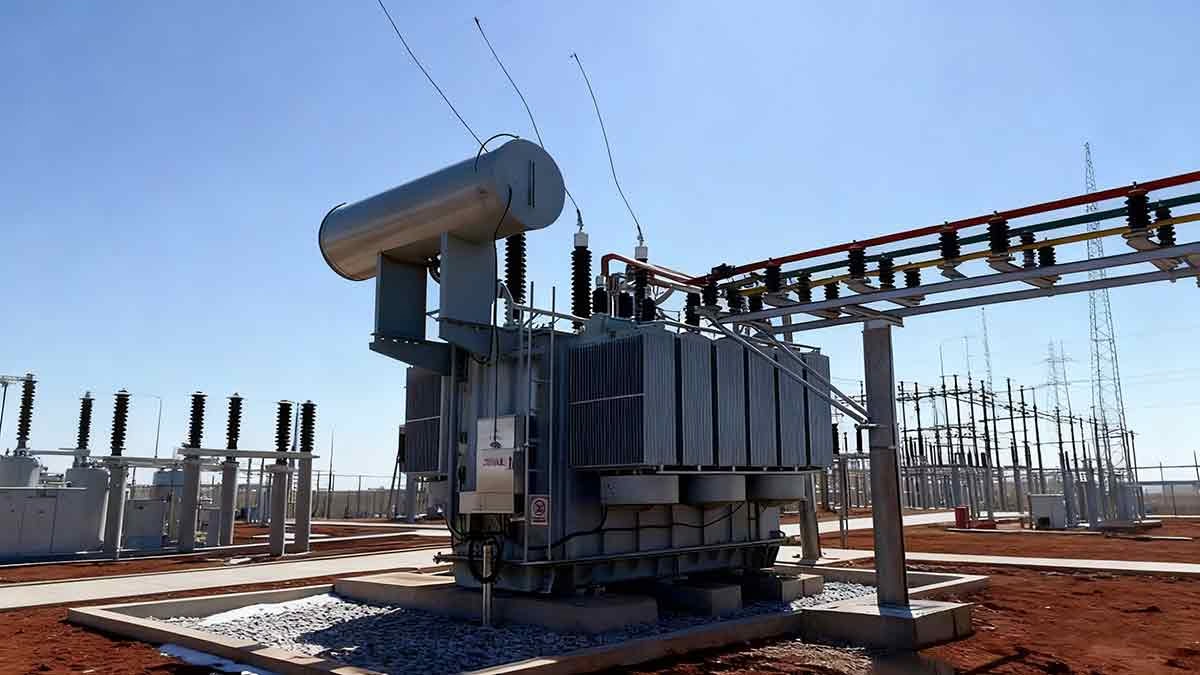
Three phase transformers generally outperform single phase models in efficiency, power quality, and load handling. However, single phase transformers can be more efficient for small, specific loads. Let’s break down the key performance differences.
Energy Efficiency
When it comes to minimizing energy loss, three phase transformers have a clear edge:
- Core Losses: Three phase models have lower magnetic core losses due to their balanced magnetic fields, which reduce hysteresis and eddy current losses.
- Copper Losses: Their efficient winding design uses less copper, reducing conductive losses compared to single phase transformers.
- Overall Efficiency: For power ratings above 10kVA, three phase transformers typically achieve efficiency ratings of 95-99%, while single phase units hover around 90-95%.
I conducted an efficiency audit for a chain of grocery stores last year. By replacing 12 single phase transformers with 4 three phase units, we reduced their annual energy costs by $18,000—a 7% improvement in overall efficiency.
Power Quality
Stable, clean power is essential for protecting sensitive equipment:
| Aspect | Single Phase | Three Phase |
|---|---|---|
| Voltage Stability | Good for small loads, but can fluctuate with changing demand | Excellent—maintains consistent voltage even under variable loads |
| Harmonic Distortion | Prone to harmonics, which can disrupt sensitive equipment | Better harmonic cancellation, resulting in cleaner power |
| Load Balancing | Not applicable—single phase systems can’t balance loads across phases | Inherently balanced, reducing stress on the electrical system |
We worked with a hospital that was experiencing issues with their MRI machines due to voltage fluctuations. By upgrading to three phase transformers, we eliminated the fluctuations and improved the reliability of their critical medical equipment.
Load Handling Capabilities
The ability to manage peak loads and scale with demand is another key difference:
- Overload Capacity: Three phase transformers can handle temporary overloads (up to 125% of rated capacity) more effectively than single phase units, which are prone to overheating.
- Power Density: Three phase models deliver more power per square foot, making them ideal for facilities with limited space.
- Scalability: Three phase systems are easier to expand—you can add additional load without replacing the entire transformer.
A tech startup we advised recently doubled their office space and equipment load. Thanks to their three phase transformer system, they only needed to upgrade the secondary wiring—no new transformer required.
Installation and Maintenance: Key Considerations for Each Type
Installing and maintaining transformers requires careful planning, but the requirements differ significantly between single phase and three phase models. Understanding these differences can help you avoid costly mistakes, minimize downtime, and extend the lifespan of your equipment.
Three phase transformers require more complex installation and specialized maintenance, while single phase units are simpler to set up and service. Let’s explore the unique considerations for each type.
Installation Factors
Getting the installation right is critical for long-term performance:
- Space Requirements: Three phase transformers need more clearance for ventilation and wiring, while single phase units can be installed in tighter spaces.
- Wiring Complexity: Three phase installation involves connecting three hot wires and a neutral (if required), requiring precise phase alignment. Single phase installation only requires two hot wires and a neutral.
- Infrastructure Compatibility: Three phase transformers require a three phase power supply—if your site only has single phase service, upgrading the infrastructure can be costly.
I led a team installing a three phase transformer in a historic building last year. The tight basement space and limited access made the installation challenging, but careful planning and custom mounting brackets allowed us to complete the job without damaging the building’s structure.
Maintenance Needs
Regular maintenance is essential to keep transformers operating efficiently:
| Aspect | Single Phase | Three Phase |
|---|---|---|
| Maintenance Frequency | More frequent for high-load applications (every 6-12 months) | Less frequent (every 12-24 months) but more comprehensive |
| Skill Level Required | Basic electrical knowledge suffices for routine checks | Requires specialized training in three phase systems |
| Common Issues | Overheating, loose connections, and winding degradation | Phase imbalance, harmonic buildup, and oil contamination (for oil-filled units) |
We manage the maintenance program for a large manufacturing client with 15 three phase transformers. Our team conducts annual thermal imaging scans, oil analysis (for oil-filled units), and phase balance checks—this proactive approach has reduced unplanned downtime by 60%.
Troubleshooting and Repairs
When issues arise, the complexity of repairs varies:
- Fault Detection: Single phase transformer faults (like a shorted winding) are easier to diagnose with basic testing equipment. Three phase faults require advanced tools to identify phase imbalances or winding issues.
- Repair Complexity: Single phase repairs are often straightforward—replacing a winding or terminal block can be done in a few hours. Three phase repairs may involve rewinding multiple coils or realigning phases, which can take days.
- Downtime Impact: A single phase transformer failure typically affects a small area (like a single office or home), while a three phase failure can shut down an entire industrial plant or building.
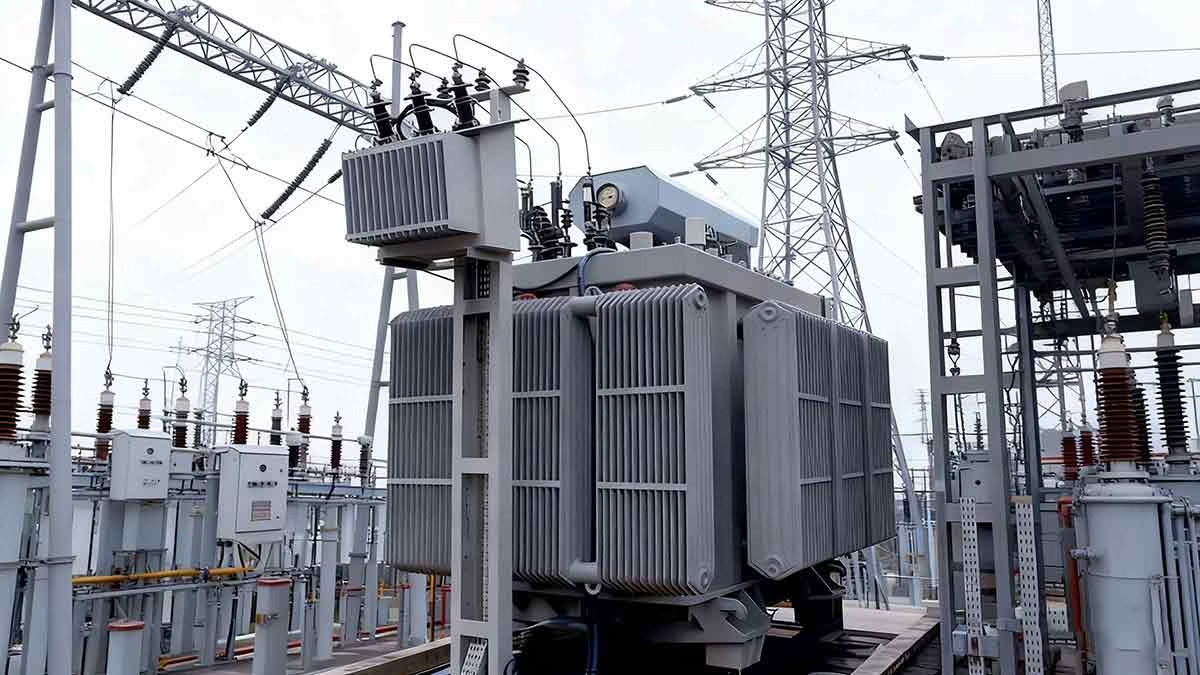
A food processing plant we worked with experienced a three phase transformer failure during peak production. The repair took 48 hours, but we used the downtime to upgrade the transformer’s cooling system—improving its reliability and extending its lifespan by 10 years.
Grid Stability and Power Quality: How Transformers Impact Electrical Networks
Transformers play a critical role in maintaining grid stability and power quality—their design directly influences voltage consistency, load distribution, and the overall reliability of the electrical system. Single phase and three phase transformers have distinct impacts on grids, especially in large-scale or high-demand networks.
Three phase transformers contribute to more stable, efficient grids, while single phase units can present challenges in larger systems if not properly managed. Let’s explore how each type affects grid performance.
Voltage Stability
Consistent voltage is essential for protecting equipment and ensuring reliable power delivery:
- Three Phase Advantage: Three phase transformers deliver balanced voltage due to their rotating magnetic field, even when loads fluctuate. This stability reduces voltage dips and surges that can damage equipment.
- Single Phase Challenge: Single phase systems are more prone to voltage fluctuations, especially when power demand spikes (like during peak hours in residential areas).
- Real-World Impact: Stable voltage extends the lifespan of appliances, motors, and electronic equipment—reducing maintenance costs and downtime.
I worked with a suburban community a few years ago that was struggling with frequent voltage dips. Their aging single phase distribution system couldn’t handle the growing demand from electric vehicles and smart home devices. After upgrading to three phase transformers, the voltage fluctuations dropped by 80%, and residents reported far fewer issues with appliance malfunctions.
Load Balancing
Even load distribution is key to grid efficiency:
| Aspect | Single Phase | Three Phase |
|---|---|---|
| Load Distribution | Can create unbalanced loads across the grid, especially in densely populated areas | Distributes loads evenly across three phases, reducing strain on the system |
| Neutral Current | Higher neutral currents, which can cause overheating in wiring | Lower neutral currents, improving safety and efficiency |
| System Efficiency | Lower overall efficiency due to imbalances | Higher efficiency, as balanced loads reduce energy losses |
A large shopping mall we advised recently upgraded to three phase transformers to address persistent load imbalance issues. The upgrade reduced their neutral current by 50% and improved their overall grid efficiency by 6%.
Harmonic Mitigation
Harmonics are unwanted electrical frequencies that can disrupt sensitive equipment and reduce grid efficiency:
- Three Phase Advantage: Three phase transformers naturally cancel out triplen harmonics (odd multiples of 3), which are common in modern electrical systems.
- Single Phase Issue: Single phase transformers are more susceptible to harmonic distortion, which can cause interference with computers, medical equipment, and other sensitive devices.
- Grid Impact: Harmonic mitigation improves power quality, reducing the risk of equipment failure and improving the reliability of the entire electrical network.
We worked with a hospital that was experiencing interference with their diagnostic equipment due to harmonic distortion. By replacing their single phase transformers with three phase units, we reduced harmonic distortion by 75%, ensuring their critical medical equipment operated reliably.
Conclusion
Single phase and three phase power transformers are not one-size-fits-all solutions—each brings unique strengths tailored to specific applications. Three phase transformers stand out for their superior efficiency, grid stability, and power quality, making them the ideal choice for industrial operations, large commercial buildings, and power distribution networks. Single phase transformers, meanwhile, remain the most practical option for residential settings, small businesses, and remote areas where low-power needs and simplicity are priorities.
As an industry professional with years of hands-on experience, my advice is to align your transformer choice with your current power requirements and future goals. Consider factors like load capacity, infrastructure compatibility, energy efficiency, and maintenance needs—this holistic approach will ensure you select a transformer that delivers reliable performance and long-term value. Whether you’re powering a home, a factory, or an entire community, the right transformer is the foundation of a safe, efficient electrical system.