
Contents
hide
Why Proper Transformer Selection Is Critical for Any Electrical Project
How to Choose the Right Transformer is one of the most important decisions in power system design. It directly influences energy efficiency, operational safety, equipment lifespan, and long-term operating expenses. Whether you are building an industrial facility, commercial building, renewable energy plant, or utility substation, a poorly matched transformer can lead to overloads, excessive energy waste, unplanned downtime, and premature failure.
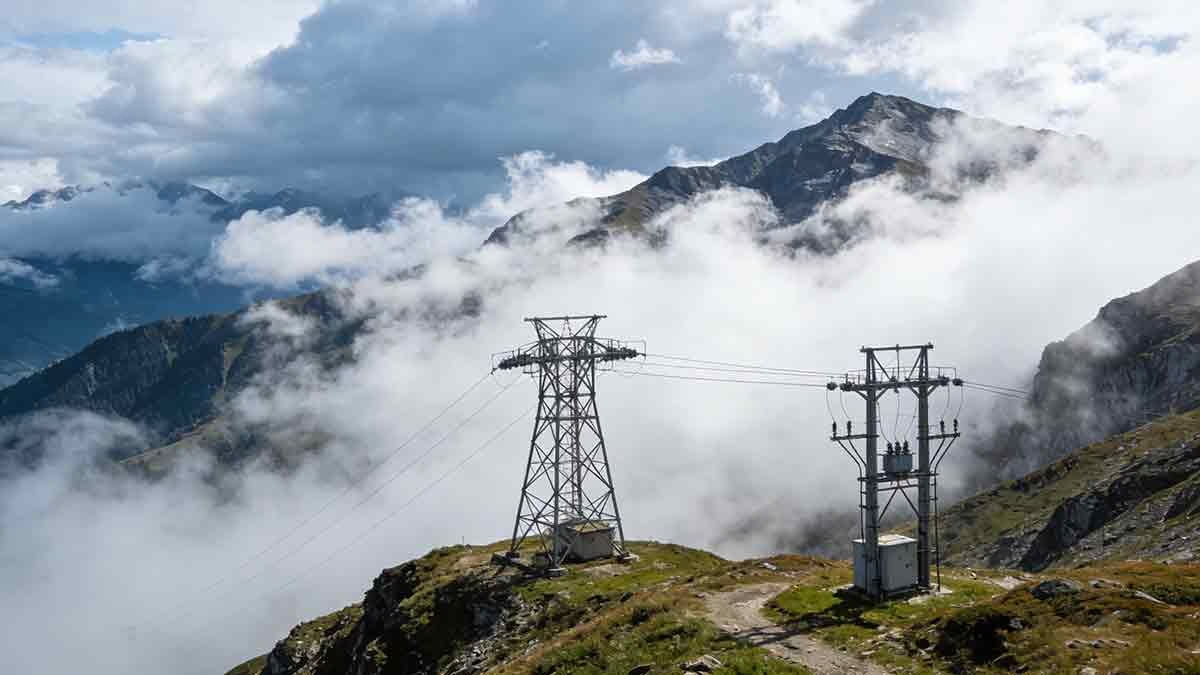
A well-selected transformer delivers stable power distribution, reduces energy losses, complies with global safety standards, and minimizes the total cost of ownership. This guide will walk you through every essential factor to help you make a fully informed decision.
Key Factors to Define Before Choosing a Transformer
Before comparing models or manufacturers, you must clarify the core requirements of your project. Skipping this step often results in oversized, undersized, or incompatible transformers.
Understand Your Power Demand & Load Profile
Learning how to choose the right transformer starts with accurate load analysis. Many buyers make the mistake of using only nameplate ratings or rough estimates, which leads to inefficient operation or system risks.
- Measure real-time power consumption over a representative period
- Identify peak load, average load, and load fluctuations
- Account for harmonic loads, motor starting currents, and future expansion
- Calculate the proper kVA requirement based on actual demand, not guesswork
Without detailed load data, you cannot size a transformer correctly or predict long-term performance.
Distinguish Between Continuous & Intermittent Loads
Load type significantly impacts transformer cooling, efficiency class, and overload capacity.
- Continuous loads: 24/7 operation, such as manufacturing, data centers, and utility grids
- Intermittent loads: Variable usage such as commercial buildings, construction sites
- Seasonal loads: Peak demand during specific periods, such as cooling or agricultural use
Each type requires a different design approach to balance efficiency and reliability.
Oil-Immersed vs Dry-Type Transformers: Which Is Best?
One of the most common questions when learning how to choose the right transformer is selecting between oil-immersed and dry-type units. Each design serves specific environments and applications.
Oil-Immersed Transformers
Oil-immersed transformers use insulating oil for cooling and insulation. They are widely used in high-power, outdoor, and utility applications.
Advantages
- Higher efficiency and lower energy losses
- Stronger overload capability
- Longer service life (up to 30–40 years)
- Lower cost for large capacity ratings
- Better performance in outdoor environments
Best For
- Utility substations
- Wind and solar farms
- Industrial plants
- Outdoor installations
Dry-Type Transformers
Dry-type transformers use air or epoxy resin for insulation. They are designed for indoor and fire-sensitive locations.
Advantages
- Fire-resistant and self-extinguishing
- No risk of oil leakage
- Low maintenance requirements
- Safe for public and occupied spaces
Best For
- Hospitals, airports, and shopping malls
- Indoor substations
- Tunnels and underground facilities
- High-density urban areas
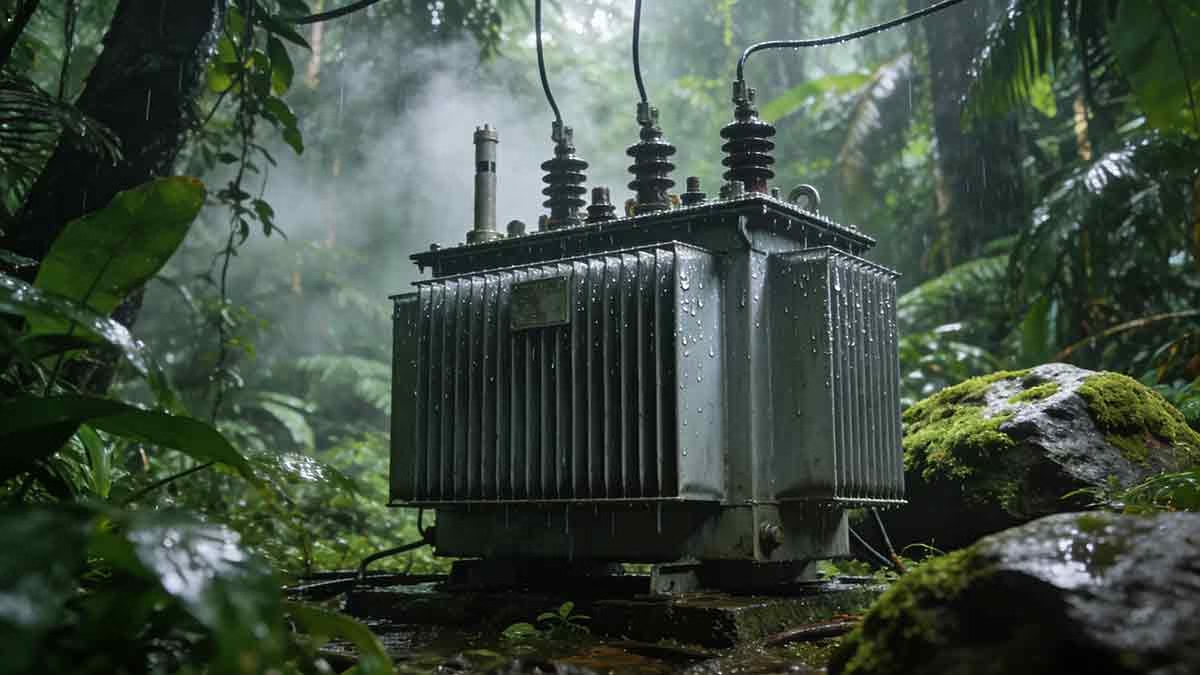
Comparison Table: Oil-Immersed vs Dry-Type Transformers
| Feature | Oil-Immersed Transformer | Dry-Type Transformer |
|---|---|---|
| Cooling Medium | Insulating oil | Air or epoxy resin |
| Fire Safety | Moderate | Excellent |
| Installation | Outdoor/dedicated room | Indoor/public areas |
| Efficiency | Very high | High |
| Maintenance | Moderate | Low |
| Typical Lifespan | 30–40 years | 20–25 years |
Your operating environment and safety regulations should determine which type you select.
How to Select the Correct Voltage & Capacity Rating
Voltage configuration and kVA/MVA capacity are foundational specifications when you need to know how to choose the right transformer.
Determine Primary & Secondary Voltage Levels
Transformer voltage must match the incoming grid and outgoing load requirements. Common voltage classes include:
- Low voltage: 0.4kV – 1kV
- Medium voltage: 3.3kV – 33kV
- High voltage: 66kV – 220kV
You must also decide whether an on-load tap changer (OLTC) or off-circuit tap changer is needed for voltage regulation.
Calculate Required Transformer Capacity
Capacity is measured in kVA or MVA and depends on total load, power factor, diversity factor, and future growth.
Basic formula:
Required kVA = Peak Load (kW) / Power Factor
Always include a safety margin (10–25%) to accommodate future expansion and load fluctuations.
Avoid Common Sizing Mistakes
- Do not rely only on connected load estimates
- Do not ignore power factor and harmonics
- Avoid oversizing, which reduces efficiency at partial load
- Avoid undersizing, which causes overheating and failure
Accurate sizing ensures stable performance and reduces lifetime expenses.
How Site & Environmental Conditions Affect Transformer Choice
Environmental factors are often overlooked but heavily influence durability and performance when learning how to choose the right transformer.
Ambient Temperature & Climate
- High temperatures reduce cooling efficiency and accelerate insulation aging
- Extremely low temperatures affect oil fluidity and startup performance
- Tropical and desert environments require enhanced cooling systems
Altitude & Air Density
Above 1000 meters, air density decreases, reducing both cooling and insulation performance. Transformers must be derated or specially designed.
Humidity, Dust & Corrosion
- Coastal and industrial areas have salt, chemicals, and high humidity
- Dust and pollution cause flashovers and insulation breakdown
- Solutions include sealed tanks, silicone bushings, and anti-corrosive coatings
Indoor vs Outdoor Installation
- Outdoor units need weatherproof enclosures and oil containment
- Indoor units prioritize fire safety and low noise
- Underground or confined spaces need forced cooling and ventilation
Adapting the transformer to its environment greatly extends service life.

International Standards, Efficiency & Safety Requirements
When you are deciding how to choose the right transformer, compliance with global standards ensures reliability, safety, and grid compatibility.
Major International Standards
- IEC 60076: Global standard for power transformers
- IEEE C57: North American standard
- GB/T 1094: Chinese national standard
- EN 50588: European ecodesign standard
Efficiency Classes & Energy Regulations
Global regulations mandate minimum efficiency levels to reduce energy waste:
- EU Ecodesign Tier 1 & Tier 2
- US DOE 2016 efficiency standards
- BIS star rating for India
High-efficiency transformers have a higher upfront cost but much lower operational expenses.
Safety Certifications
- Temperature rise limits
- Short-circuit withstand capability
- Partial discharge and insulation testing
- Fire safety and environmental protection
Always verify test reports and factory certification before purchasing.
Lifecycle Cost: Budget, Maintenance & Long-Term Value
Many buyers focus only on the upfront price, but transformer ownership cost extends far beyond the initial purchase.
Capital Expenditure (CAPEX)
Includes manufacturing, transportation, installation, and commissioning.
Operational Expenditure (OPEX)
- Energy losses over decades of use
- Routine inspections and oil testing
- Replacement parts and maintenance services
- Downtime risk and failure costs
Total Cost of Ownership (TCO)
Over 25 years, energy losses often cost 3–8 times more than the original transformer price. High-efficiency models consistently deliver better TCO.
Maintenance Best Practices
- Regular oil quality analysis
- Thermal imaging and condition monitoring
- Tap changer and bushing inspection
- Cleaning and corrosion prevention
Proactive maintenance extends lifespan and reduces unexpected failures.
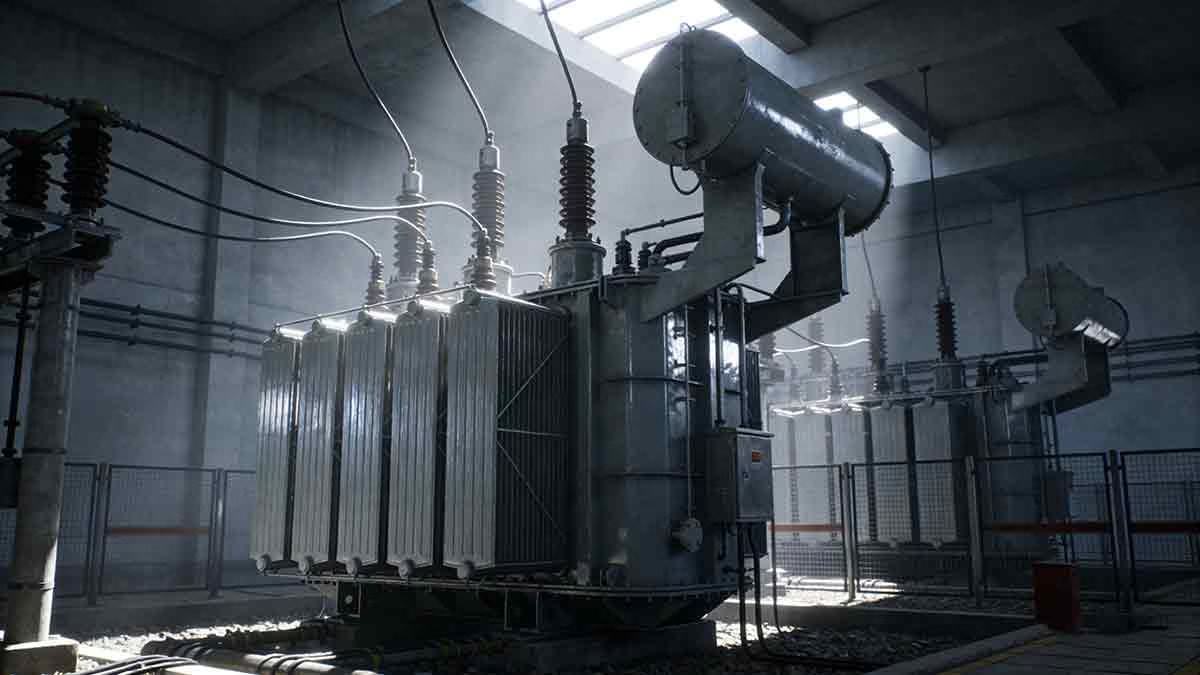
Step-by-Step Checklist: How to Choose the Right Transformer
Use this practical checklist to confirm you have covered all critical factors:
✓ Complete load measurement and profile analysis
✓ Correct voltage ratio and kVA/MVA capacity
✓ Suitable type: oil-immersed or dry-type
✓ Environmental adaptation: temperature, altitude, humidity
✓ Compliance with IEC, IEEE, or local standards
✓ Efficiency class matching operational hours
✓ Cooling mode suitable for load duty cycle
✓ Long-term lifecycle cost evaluation
✓ Reliable manufacturer with test certification
Following this process eliminates guesswork and ensures a reliable, cost-effective transformer solution.
Conclusion
Learning how to choose the right transformer involves a holistic evaluation of load demand, type selection, voltage and capacity, environmental conditions, standards compliance, and lifecycle economics. A well-chosen transformer improves system stability, reduces energy costs, enhances safety, and delivers decades of reliable service.
By following the professional guidelines in this article, you can avoid common mistakes, select the ideal transformer for your application, and achieve optimal performance and value. Always work with experienced manufacturers who can provide customized solutions and full technical support.