
How Much Does a Transformer Cost? The price tag of a transformer is far from a fixed figure—it fluctuates dramatically based on its classification, power capacity, voltage grade, and intended application. Whether you’re procuring a compact distribution transformer for a residential community or a large-scale power transformer for industrial facilities or utility grids, grasping the key elements that drive costs is vital for effective project planning and budget allocation. Overlooking critical pricing factors can lead to unexpected expenditures, suboptimal equipment selection, or compromised operational efficiency.
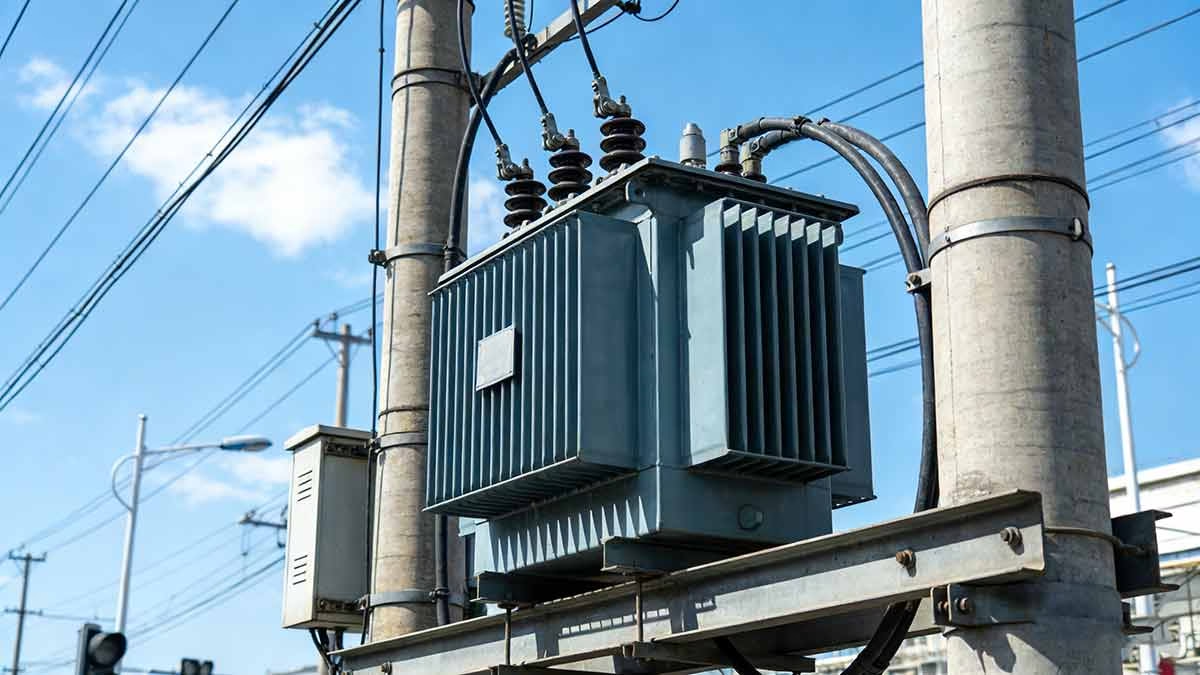
This guide delves deep into transformer pricing mechanics, breaking down cost influencers, category-specific price ranges, and hidden ownership expenses. With authoritative insights and practical examples, it aims to resolve common procurement doubts and empower buyers to make informed decisions aligned with technical requirements and financial goals.
Contents
hide
What Are the Primary Transformer Categories and Their Corresponding Price Brackets?
Selecting the right transformer without understanding category-specific pricing often leads to costly mistakes—such as overpaying for advanced features or opting for a budget model that fails to meet application demands. Premature failures, excessive energy wastage, and frequent maintenance needs are common consequences of misaligned procurement. To avoid these pitfalls, it’s essential to familiarize yourself with the main transformer types, their core characteristics, and realistic market price ranges.
Common transformer classifications include power transformers, distribution transformers, dry-type transformers, oil-immersed transformers, autotransformers, and specialty units like rectifier or isolation transformers. Their prices span a wide spectrum: from approximately \$1,000 for small distribution units to over \$1 million for high-capacity power transformers, with variations driven by size, voltage, cooling mechanisms, and customization.
Overview of Transformer Types, Applications, and Cost Ranges
Transformer Type | Primary Application | Typical Rating | Estimated Price Range (USD) |
|---|---|---|---|
Power Transformer | Transmission substations, power generation facilities | 2.5–1,000 MVA | \$50,000 – \$2,000,000+ |
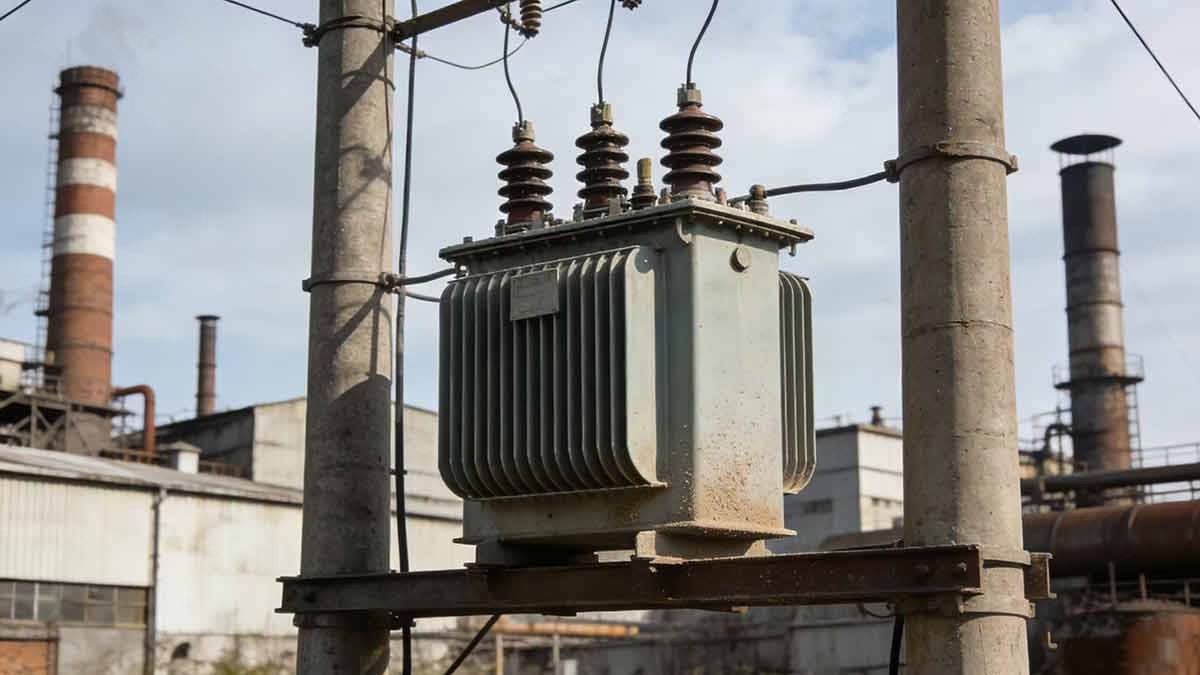
Distribution Transformer | Utility poles, pad-mounted setups, neighborhood power supply | 25–2,500 kVA | \$1,000 – \$25,000 |
Dry-Type Transformer | Indoor commercial spaces, industrial clean zones, and hospitals | 100–2,500 kVA | \$3,000 – \$50,000 |
Oil-Immersed Transformer | Outdoor installations, heavy-duty industrial/utility use | 50 kVA – 500 MVA | \$2,000 – \$1,000,000 |
Grid voltage conversion, regional power transmission | 10–800 MVA | \$30,000 – \$1,500,000 | |
Rectifier Transformer | Electrolysis processes, industrial furnaces, and mining operations | Custom (500 kVA – 100 MVA) | \$15,000 – \$800,000+ |
Isolation Transformer | Hospitals, data centers, and sensitive electronic equipment | 1–500 kVA | \$300 – \$20,000 |
Detailed Breakdown of Key Transformer Types
1. Power Transformers
Power transformers are custom-designed high-voltage apparatuses engineered to link power generation plants with transmission grids. They operate at voltage levels ranging from 66 kV to 765 kV and boast capacities between 2.5 MVA and 1,000 MVA. Oil-immersed cooling systems—such as ONAN (Oil Natural Air Natural), ONAF (Oil Natural Air Forced), and OFAF (Oil Forced Air Forced)—are standard due to their superior heat dissipation capabilities.
Pricing for power transformers typically falls between \$150,000 and \$2,000,000+, with cost drivers including winding materials (copper vs. aluminum), tap changer design (on-load vs. off-load), insulation class, and logistics expenses for transporting these oversized units. Compliance with strict international standards like IEC 60076 and IEEE C57.12 also adds to engineering and testing costs.
2. Distribution Transformers
As the most widely used transformer type globally, distribution transformers supply power to local grids, urban neighborhoods, and rural areas. They operate at medium-to-low voltages (11 kV/6.6 kV input, 400/230 V output) and have capacities from 25 kVA to 2,500 kVA. Installation options include pole-mounted, pad-mounted, and kiosk-type configurations to suit diverse environments.
Costs range from \$1,000 to \$25,000, with smaller rural units at the lower end and urban models equipped with anti-theft features, built-in protection relays, and weatherproof enclosures commanding higher prices. Mass production of standard distribution transformers helps keep costs manageable for utility companies.
3. Dry-Type Transformers
Dry-type transformers are fire-resistant, oil-free units ideal for indoor applications like hospitals, schools, commercial buildings, and clean industrial zones. They operate at voltages between 400 V and 11 kV, with capacities from 100 kVA to 2,500 kVA, and use air cooling (AN/AF) or vacuum pressure impregnation (VPI) for insulation.
Prices span \$3,000 to \$50,000, influenced by encapsulation type, insulation class (F or H), harmonic suppression features, and enclosure ratings (IP23 to IP54). Their oil-free design eliminates fire risks and environmental concerns, making them a preferred choice for indoor settings despite higher upfront costs compared to basic oil-immersed units.
4. Oil-Immersed Transformers
Oil-immersed transformers excel in heavy-duty outdoor environments and industrial grids, thanks to their robust construction and efficient cooling. They handle voltages from 6.6 kV to 220 kV and capacities from 50 kVA to 500 MVA, with mineral oil or ester-based fluids serving as both coolant and insulation.
Pricing ranges from \$2,000 to \$1,000,000, with costs rising sharply for higher insulation levels, tank pressure ratings, and advanced cooling systems. Premium models may include features like gas monitoring relays (Buchholz relays) and temperature sensors to enhance reliability in harsh conditions.
5. Autotransformers
Autotransformers use shared windings to achieve voltage conversion, offering cost and weight advantages over traditional two-winding transformers. They are commonly used in regional transmission stations and long-haul grids, operating at voltages of 400/220/132 kV and capacities from 10 MVA to 800 MVA.
Costs fall between \$30,000 and \$1,500,000, with price variations driven by winding design complexity, insulation requirements, and integrated protection systems. While more affordable than equivalent two-winding transformers, autotransformers require enhanced surge protection due to their shared winding configuration.
6. Specialty Transformers
Rectifier transformers cater to DC load applications like electrochemical processes, steel mills, and smelters. They feature custom windings and harmonic mitigation designs, with capacities from 500 kVA to 100 MVA and prices from \$15,000 to \$800,000+. Isolation transformers, used to protect sensitive equipment in hospitals and data centers, range from 1 kVA to 500 kVA and cost \$300 to \$20,000, with premium models including EMI filters and surge suppressors.
How Does Capacity (kVA/MVA) Impact Transformer Pricing?
Transformer procurement often represents a significant line item in electrical infrastructure projects, yet many buyers struggle to understand how capacity ratings—measured in kilovolt-amperes (kVA) or megavolt-amperes (MVA)—influence costs. Overlooking the nonlinear relationship between capacity and price can lead to budget overruns, underutilized equipment, or system overloads. A clear grasp of this correlation is essential for accurate budgeting and optimal transformer sizing.
Transformer capacity has a direct, exponential impact on pricing. As capacity increases, the size of core materials, windings, insulation, cooling systems, and structural components scales up—driving higher material costs, engineering complexity, and logistics expenses. Generally, doubling capacity can increase prices by 1.6–1.8 times, though this multiplier varies based on voltage level, design features, and manufacturing standards.
Capacity Tiers and Corresponding Price Ranges
Capacity | Voltage Class | Typical Cooling Type | Estimated Price Range (USD) |
|---|---|---|---|
25 kVA | 11 kV / 0.4 kV | ONAN (Oil Natural Air Natural) | \$1,000 – \$1,500 |
100 kVA | 11 kV / 0.4 kV | ONAN | \$2,000 – \$3,500 |
500 kVA | 11 kV / 0.4 kV | ONAN or ONAF | \$5,000 – \$10,000 |
1,000 kVA (1 MVA) | 11/33 kV | ONAF | \$10,000 – \$18,000 |
2,500 kVA (2.5 MVA) | 33 kV / 0.4 kV | OFAF | \$25,000 – \$50,000 |
10 MVA | 66/132 kV | OFAF or OFWF | \$80,000 – \$180,000 |
100 MVA | 220 kV | OFWF, OLTC | \$400,000 – \$900,000 |
500+ MVA | 400/765 kV | OFWF, high-end designs | \$1.2 million – \$2.5 million |
Note: These prices reflect standard designs and may fluctuate based on customization, certifications, raw material costs, and regional market conditions.
Nonlinear Price Growth with Capacity
The relationship between transformer capacity and price is logarithmic, not linear. As capacity expands, design complexity and material requirements grow disproportionately. For example, a 100 MVA transformer costs 300–400 times more than a 25 kVA unit, despite having 4,000 times the capacity. Key drivers of this nonlinear growth include:
- Material Volume: Copper and CRGO (Cold-Rolled Grain-Oriented) steel usage increases with capacity, but larger cores and windings require thicker insulation and structural reinforcement, adding incremental costs.
- Cooling System Upgrades: Small transformers use passive cooling, while large units require forced oil-air or forced oil-water systems—adding pumps, radiators, and control mechanisms.
- Insulation and Bushing Design: Higher capacity units need thicker insulation and larger bushings to withstand voltage stresses, with specialized materials increasing costs.
- Logistics Challenges: Oversized transformers require custom crating, heavy-duty transportation, and on-site lifting equipment, adding 5–15% to total costs.
Real-World Example: Industrial Capacity Sizing
Consider an industrial plant requiring either a 1,000 kVA or 2,500 kVA transformer:
Parameter | Option A (1,000 kVA) | Option B (2,500 kVA) |
|---|---|---|
Voltage Level | 11 kV/400 V | 33 kV/400 V |
Transformer Type | Oil-immersed, ONAN | Oil-immersed, OFAF |
Base Price | \~\$15,000 | \~\$38,000 |
Price per kVA | \~\$15/kVA | \~\$15.2/kVA |
Footprint | 1.5 m² | 4 m² |
While the 2,500 kVA unit has 2.5 times the capacity of the 1,000 kVA model, its price is only 2.53 times higher—demonstrating how economies of scale partially offset material and design costs for larger units. However, the higher voltage class and forced cooling system still drive up the cost per kVA slightly.
What Role Do Voltage Ratings Play in Transformer Pricing?
Many buyers prioritize capacity when budgeting for transformers, but voltage rating is an equally critical cost driver—often hiding significant price variations for units with identical capacity. Choosing the wrong voltage rating can result in over-engineering (wasting funds on unnecessary features) or underperformance (risking equipment failure and grid instability). Voltage rating impacts insulation requirements, physical dimensions, and testing standards—all of which contribute to the final price.
Higher voltage ratings demand stronger insulation, larger bushings, increased clearance distances, and more rigorous testing—driving up design and manufacturing costs. As voltage classes rise from low voltage (<1.1 kV) to medium (1.1–33 kV), high (33–132 kV), extra-high (220–400 kV), and ultra-high (500+ kV), transformer prices increase sharply due to compounding technical challenges.
Voltage Class vs. Pricing: Key Comparisons
Voltage Class | Typical Application | Key Design Factors | Estimated Price Impact |
|---|---|---|---|
Low Voltage (≤1.1 kV) | Internal circuits, isolation transformers | Minimal insulation, simple windings | \$300 – \$2,000 |
Medium Voltage (1.1–33 kV) | Distribution transformers, factories | Oil or dry-type, standard bushings | \$1,000 – \$50,000 |
High Voltage (33–132 kV) | Substations, large industry | Advanced cooling, oil-immersed, OLTC | \$20,000 – \$500,000 |
Extra-High Voltage (220–400 kV) | Utility transmission, regional grid | Large core, special bushings, radiators | \$200,000 – \$2,000,000+ |
Ultra-High Voltage (500+ kV) | Inter-country grids, backbone systems | Highest insulation, custom engineering | \$1M – \$5M+ |
Voltage-Driven Cost Factors
- Insulation Requirements: Higher voltages demand thicker insulation layers and specialized dielectric materials (e.g., high-grade pressboard, synthetic films). This can add 10–50% to material costs, with ultra-high voltage units requiring custom insulation systems.
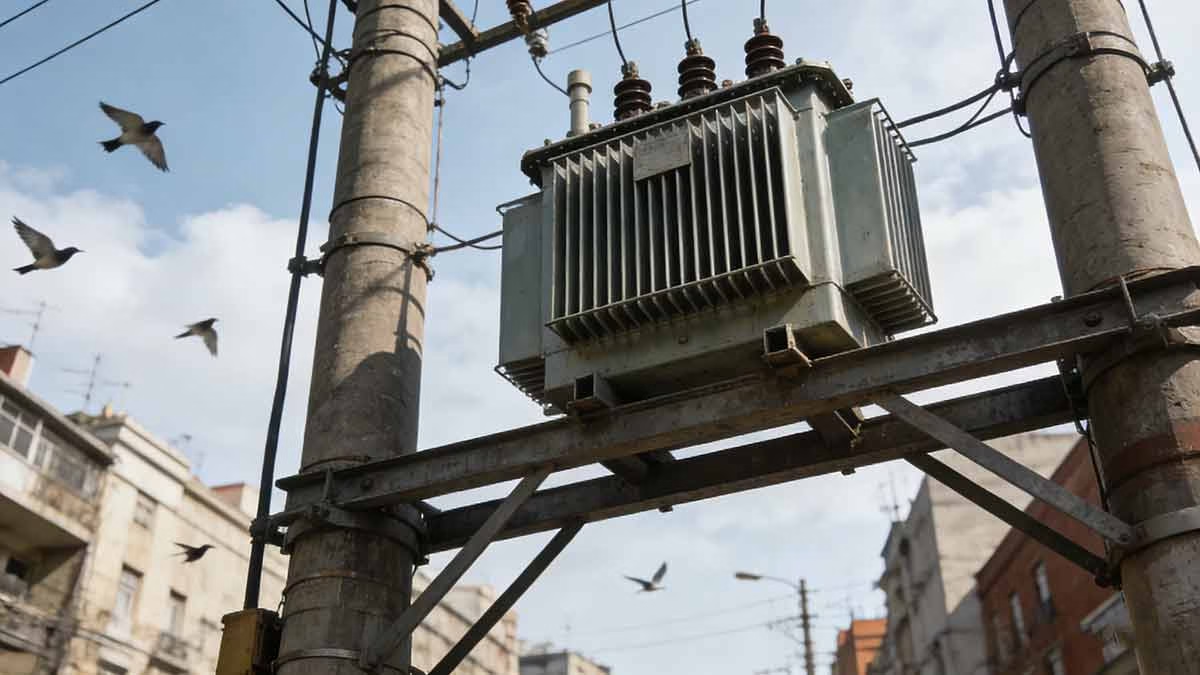
- Bushing Design: High-voltage transformers use porcelain or composite bushings rated for surge withstand, costing \$5,000 to \$100,000+ per unit—compared to basic bushings for low-voltage models (\$100–\$500).
- Clearance Distances: Larger air and oil gaps between windings, core, and tank increase physical size, requiring more materials and larger enclosures.
- Testing Standards: High-voltage units undergo rigorous testing (lightning impulse, heat run, partial discharge) adding \$10,000–\$50,000 to engineering and certification costs.
Example: 1 MVA Transformer at Different Voltage Ratings
A transformer with 1 MVA capacity can vary more than 10 times in price based solely on voltage rating:
Voltage Rating | Insulation Level | Cooling Type | Estimated Cost (USD) |
|---|---|---|---|
11 kV / 400 V | Standard oil-paper | ONAN | \$10,000 – \$14,000 |
33 kV / 400 V | Medium insulation | ONAN or ONAF | \$15,000 – \$22,000 |
66 kV / 400 V | High-grade insulation | ONAF or OFAF | \$30,000 – \$45,000 |
132 kV / 400 V | Advanced design, OLTC | OFAF | \$60,000 – \$90,000 |
220 kV / 400 V | High-end insulation | OFWF + OLTC | \$100,000 – \$180,000 |
Do Custom-Built Transformers Command Higher Prices?
Custom-built transformers are often necessary when standard models fail to meet specific technical, spatial, or regulatory requirements—such as compact footprints for urban retrofits, specialized cooling for harsh environments, or unique voltage combinations for renewable energy projects. However, many buyers wonder if customization justifies the higher price tag. The answer lies in understanding the cost drivers behind custom designs and balancing performance needs with budget constraints.
In most cases, custom-built transformers cost 20–100% more than standard units of equivalent capacity and voltage class. The premium stems from specialized engineering, non-standard components, low-volume production, extended testing, and design validation. For mission-critical applications like nuclear power or offshore platforms, customization costs can surge by 200–300% due to strict compliance and durability requirements.
Why Custom Transformers Cost More
- Engineering Design: Custom units require additional hours of electrical and mechanical calculations, finite element analysis (FEA), and design iterations—adding \$5,000–\$50,000 to engineering costs.
- Non-Standard Components: Custom dimensions, bushing positions, or enclosure materials (e.g., stainless steel for corrosion resistance) require specialized manufacturing, eliminating economies of scale.
- Unique Voltage/Tap Configurations: Non-catalog voltage ratios or on-load tap changer (OLTC) setups demand custom winding designs and testing, increasing material and labor costs.
- Cooling Modifications: Custom radiator layouts, ester-based fluids, or forced cooling systems for space-constrained areas add complexity and component costs.
- Testing and Compliance: Custom units often require client-witnessed factory tests, type tests for unique designs, and compliance with regional standards (e.g., CSA, BIS)—extending lead times and testing expenses.
Standard vs. Custom Transformer Price Comparison
Parameter | Standard Transformer | Custom Transformer |
|---|---|---|
Capacity | 1,000 kVA | 1,000 kVA |
Voltage | 11 kV / 400 V | 13.2 kV / 380 V |
Enclosure | Standard IP23 Outdoor | Stainless steel IP55 with vents |
Cooling | ONAN | OFAF with side-mounted radiators |
Tap Changer | Off-load ±5% | On-load ±10%, 17 taps |
Protection | Basic relay + Buchholz | SCADA-integrated with RTDs + gas relay |
Price Estimate (USD) | \$15,000 – \$18,000 | \$25,000 – \$35,000 |
Price Increase | – | \~70% higher |
Cost-Optimization Strategies for Custom Transformers
Not all customizations need to break the budget. The following strategies can help balance flexibility with cost-effectiveness:
- Use Semi-Standard Components: Leverage existing core sizes, winding designs, or bushing types where possible to reduce tooling and manufacturing costs.
- Early Design Consultation: Collaborate with manufacturers early to avoid over-engineering—e.g., selecting a standard enclosure with minor modifications instead of a fully custom design.
- Batch Procurement: Ordering 2+ custom units reduces setup costs and improves manufacturing efficiency, lowering the per-unit price by 10–20%.
- Material Substitution: Use aluminum windings instead of copper for non-critical applications, or standard insulation materials where performance requirements allow.
What Additional Costs Should Be Factored Into Transformer Procurement?
Focusing solely on the upfront purchase price of a transformer is a common oversight that leads to budget overruns and unplanned expenses. Transformers are long-lifespan assets (20–40 years), and their total cost of ownership (TCO) includes a range of hidden costs—from installation and energy losses to maintenance and decommissioning. Ignoring these factors can result in a 30–200% increase in lifetime costs compared to the initial purchase price.
A comprehensive TCO analysis accounts for capital costs, transportation, site preparation, installation, energy losses, maintenance, monitoring, compliance, and end-of-life expenses. This holistic approach ensures accurate budgeting and helps identify cost-saving opportunities—such as investing in low-loss transformers to reduce long-term energy bills.
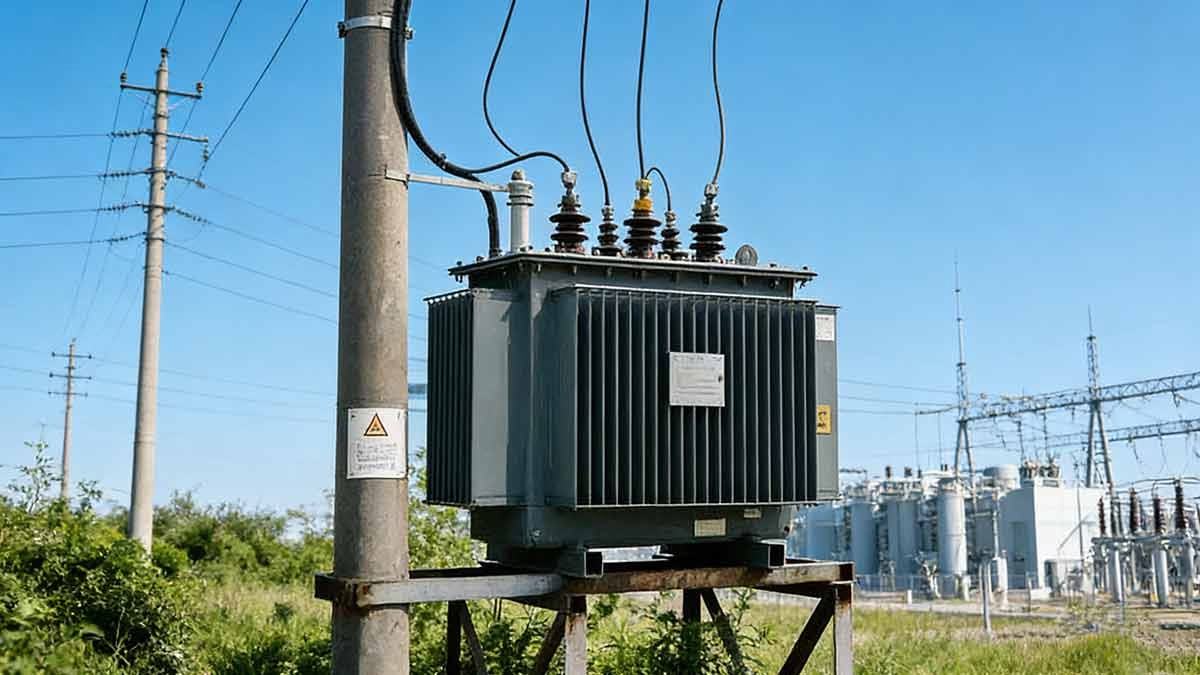
Total Cost of Ownership Breakdown
Cost Category | Typical Percentage of TCO | Description |
|---|---|---|
Capital Cost (Base Price) | 30%–60% | Manufacturer cost for the transformer unit itself |
Transportation & Handling | 5%–10% | Crating, shipping, on-site unloading, and lifting equipment |
Site Preparation | 3%–7% | Civil works, concrete foundations, oil containment, and fencing |
Installation & Commissioning | 5%–15% | Electrical hookup, oil filling, tap calibration, and energization testing |
Protection & Accessories | 5%–10% | CTs, VTs, surge arresters, OLTCs, relays, and circuit breakers |
Energy Losses | 10%–30% (over lifetime) | Core (no-load) and copper (load) losses during operation |
Maintenance & Servicing | 5%–15% | Oil testing, insulation checks, tap changer servicing, and overhauls |
Regulatory & Environmental | 2%–5% | Fire suppression, noise mitigation, and oil spill containment |
End-of-Life Disposal | 2%–6% | Oil recycling, scrap handling, and hazardous material removal |
Key Hidden Cost Drivers
1. Energy Losses
Energy losses are the single largest hidden cost over a transformer’s lifetime. Core losses (0.3–2% of rated power) occur 24/7, while copper losses vary with load. For a 1 MVA transformer, lifetime energy losses can cost \$35,000–\$100,000—far exceeding the initial purchase price. Investing in low-loss transformers (e.g., IE3 efficiency class) may increase upfront costs by 10–20% but reduces energy expenses by 30–50% over 20 years.
2. Installation and Site Works
Installation costs include concrete foundations (\$1,000–\$25,000), oil containment pits (\$3,000–\$10,000), grounding systems (\$500–\$5,000), and commissioning labor (\$1,000–\$10,000). For large power transformers, specialized lifting equipment and civil engineering can add \$50,000–\$200,000 to installation costs.
3. Maintenance and Servicing
Routine maintenance includes annual oil sampling (\$200–\$500), 3–5 year insulation resistance tests (\$500–\$1,000), and 10–15 year full overhauls (\$10,000–\$50,000+). Neglecting maintenance accelerates equipment aging and increases the risk of costly failures—e.g., a failed tap changer can cost \$15,000–\$30,000 to replace.
What Are Typical Transformer Prices for Specific Applications?
Transformer prices are not just determined by capacity and voltage—they are heavily influenced by the application. A 1 MVA transformer for a residential neighborhood may cost \$10,000, while a 1 MVA unit for a data center or renewable energy farm could cost \$50,000+ due to specialized features. Understanding application-specific price benchmarks is critical for accurate budgeting and avoiding mismatched equipment.
Application-Specific Price Examples
1. Residential Distribution
Pole-mounted or pad-mounted distribution transformers for urban/rural neighborhoods operate at 11 kV/400 V, with capacities from 25–250 kVA. They feature sealed oil-immersed designs and basic protection, costing \$1,000–\$8,000. Utility companies often procure these in bulk to reduce per-unit costs.
2. Commercial Buildings
Dry-type indoor transformers for malls, offices, and hotels (250–1,000 kVA, 11 kV/415 V) require fire-safe designs and BMS integration. Prices range from \$5,000–\$25,000, with higher costs for IP44 enclosures and harmonic suppression.
3. Industrial Plants
Heavy-duty transformers for factories, refineries, and foundries (1–10 MVA, 33 kV/6.6 kV) feature oil-immersed designs, OLTCs, and advanced cooling. Prices fall between \$15,000–\$250,000+, driven by fault tolerance and rugged construction.
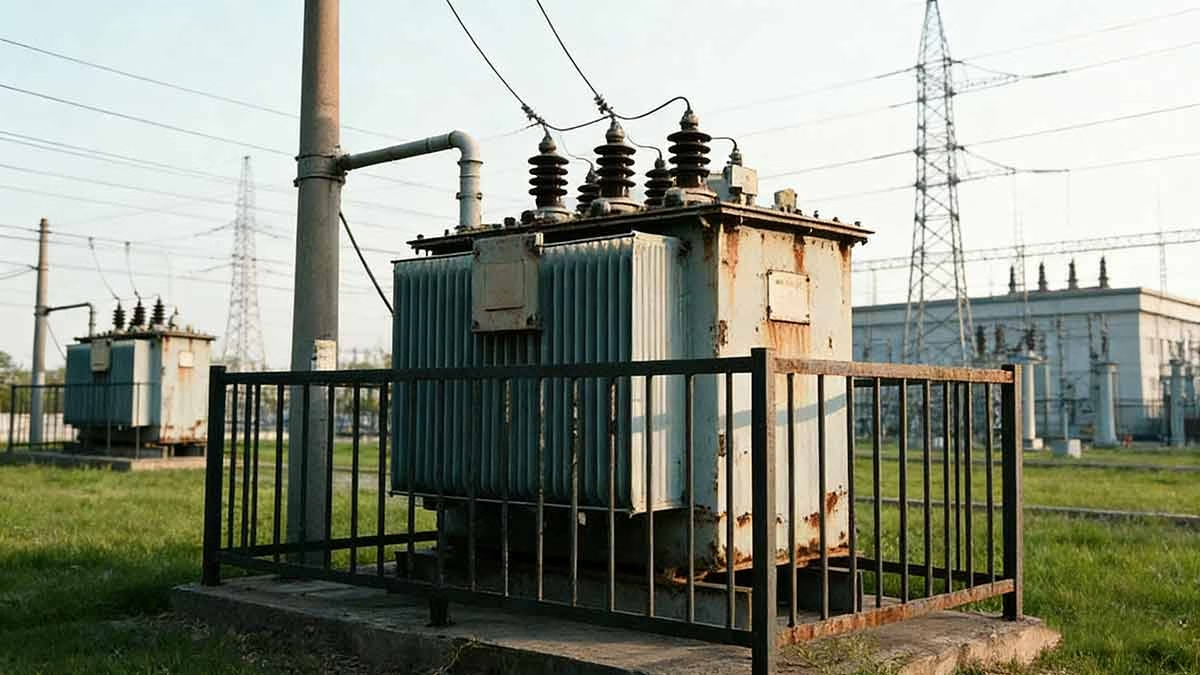
4. Renewable Energy
Pad-mounted step-up transformers for solar/wind farms (1–5 MVA, 0.69 kV/11–33 kV) require inverter compatibility, harmonic filtering, and compact footprints. Costs range from \$20,000–\$80,000, with premiums for grid-tie compliance features.
5. Data Centers
Isolation transformers for data centers (500–2,500 kVA, 11 kV/415 V) include EMI shielding, low inrush current designs, and temperature monitoring. Prices span \$10,000–\$50,000+, reflecting their mission-critical role in protecting sensitive equipment.
6. Utility Transmission Substations
Generator step-up (GSU) and power transformers for grid applications (10–500 MVA, 132–400 kV) feature OFWF cooling, OLTCs, and SCADA integration. These massive units cost \$200,000–\$2,000,000+, with logistics and installation adding 10–15% to total costs.
7. Healthcare Facilities
Medical-grade isolation transformers (10–200 kVA, 415 V/230 V) include leakage current limitation and alarm systems. Prices range from \$500–\$10,000, with strict compliance to IEC 60601 medical standards driving costs.
Frequently Asked Questions (FAQ) About Transformer Costs
Q1: What is the average cost of a transformer?
A1: There is no one-size-fits-all average cost, as prices vary widely by type and size. Small distribution transformers cost \$1,000–\$25,000, medium industrial units \$25,000–\$250,000, and large power transformers \$200,000–\$2,500,000+. Custom designs and high-voltage units command premium prices.
Q2: Are copper-wound transformers more expensive than aluminum-wound ones?
A2: Yes, copper-wound transformers cost 15–30% more upfront than aluminum-wound models due to higher copper prices. However, copper offers lower resistance, reducing energy losses and improving efficiency—making it cost-effective for high-load, long-lifespan applications.
Q3: How much does transformer installation cost compared to the unit price?
A3: Installation costs typically represent 5–15% of the transformer’s base price for small-to-medium units, and 10–20% for large power transformers. Complex installations (e.g., urban retrofits, high-voltage substations) can push installation costs to 30% of the unit price.
Q4: Is it cheaper to repair or replace a faulty transformer?
A4: Small transformers (\<500 kVA) are usually cheaper to replace, as repairs often cost 50–70% of a new unit’s price. For large power transformers (\>1 MVA), repairs (e.g., winding rewiring, tap changer replacement) can cost 30–60% of a new unit’s price—making them cost-effective if the core and tank are intact.
Q5: How do raw material prices affect transformer costs?
A5: Copper and CRGO steel account for 30–50% of a transformer’s material costs. Fluctuations in global copper prices (±10–15%) can directly impact unit prices, while CRGO steel shortages may increase lead times and costs for large cores.
Conclusion
Transformer pricing is a complex interplay of capacity, voltage, type, customization, and lifecycle costs. While small distribution units start at \$1,000, large custom power transformers can exceed \$2 million—making it essential to align technical requirements with budget constraints. By understanding the nonlinear relationship between capacity and price, voltage-driven cost factors, and hidden ownership expenses, buyers can avoid costly mistakes and select the most cost-effective equipment for their application.
For optimal value, prioritize a total cost of ownership approach over upfront price alone. Investing in efficient, durable transformers—even with higher initial costs—reduces long-term energy losses and maintenance expenses. Collaborating with experienced manufacturers early in the design process can also help optimize customization, balance performance needs, and control costs.