
Modern distribution transformers are undergoing a transformative shift to address the demands of distributed energy resources (DERs), leveraging bidirectional power transfer, precision voltage management, and intelligent monitoring solutions. These advancements enable seamless integration of renewable energy, dynamic load regulation, and grid stability in an increasingly decentralized power ecosystem.
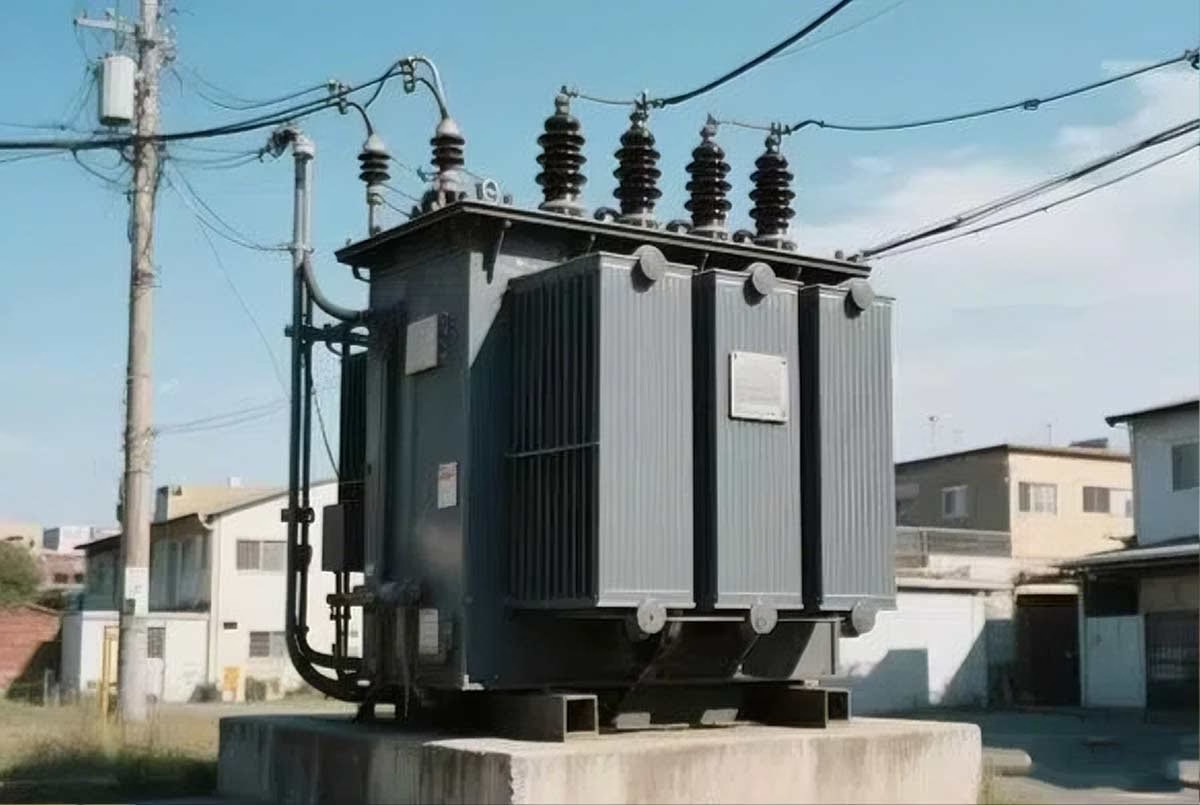
Join us as we explore the evolving role of distribution transformers—often the unsung workhorses of the power grid—in today’s green energy landscape. Whether you’re a seasoned industry professional or simply curious about the technology powering our sustainable future, this deep dive offers actionable insights and real-world perspectives.
Contents
hide
Bidirectional Power Dynamics: How Transformers Master Two-Way Energy Flow
Gone are the days when electricity traveled in a single direction. Rooftop solar systems, residential battery storage, and electric vehicle (EV) charging stations have created a bidirectional energy landscape—but how do transformers navigate this complex exchange?
Today’s transformers tackle two-way power flow through cutting-edge power electronics, adaptive control frameworks, and reimagined core designs. Equipped with real-time monitoring, they regulate reverse energy streams from DERs while upholding voltage consistency and power quality for all connected users.
Bidirectional power flow schematic
Two-way energy transfer visualization
Let’s unpack the innovations enabling transformers to excel in this dual-directional energy environment:
Redesigning for Reversibility
Conventional transformers were engineered for one-way energy flow—today’s grids demand a complete reimagining of their core architecture.
Critical Design Adaptations:
- Symmetrical winding configurations optimized for reverse energy flow
- Advanced core materials engineered to handle bidirectional magnetic flux
- Reinforced insulation systems capable of withstanding reverse voltage stress
Intelligent Control Architectures: The Backbone of Power Flow Management
With energy moving in both directions, transformers require sophisticated systems to orchestrate efficient distribution.
Key Control Capabilities:
- Real-time power flow tracking and analysis
- Adaptive tap adjustment for dynamic voltage regulation
- Predictive load-balancing algorithms
Power Quality in a Bidirectional Ecosystem
Maintaining consistent power quality is paramount when energy flows freely in either direction.
Quality Assurance Solutions:
- Integrated harmonic filtering technology
- Reactive power compensation mechanisms
- Fault current limiting innovations
| Capability | Conventional Transformers | Bidirectional Transformers |
|---|---|---|
| Energy Transfer Direction | Single-way operation | Two-way energy exchange |
| Control Mechanism | Static, fixed parameters | Dynamic, self-adjusting systems |
| Core Configuration | Asymmetrical design | Symmetrical flux-optimized structure |
| Monitoring Capability | Basic, manual checks | Advanced real-time data collection |
One standout project we led illustrates the real-world challenges and solutions of bidirectional power flow. We were tasked with upgrading the transformer network in a suburban community experiencing explosive growth in rooftop solar adoption—over 60% of homes had installed panels within a two-year window. The existing transformers struggled with frequent reverse power surges, leading to voltage fluctuations and occasional service disruptions.
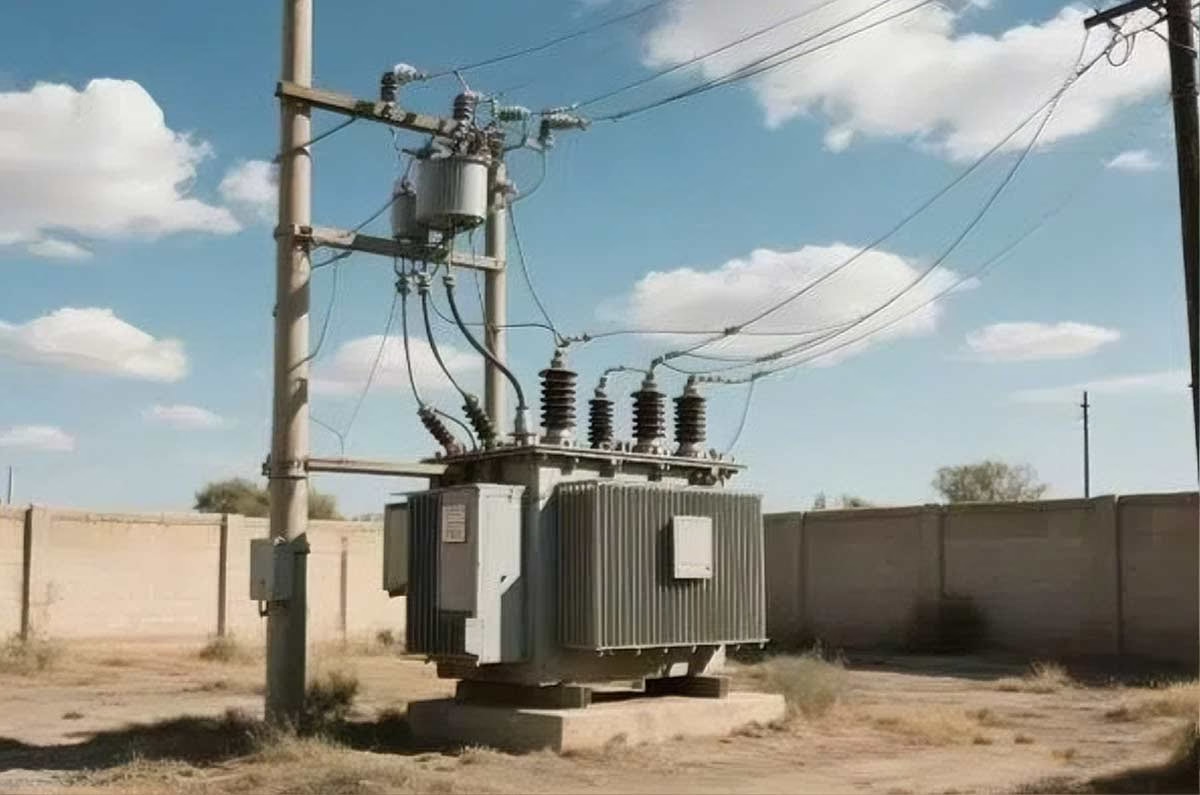
Our solution centered on deploying next-generation bidirectional transformers, starting with a complete redesign of the core and windings. We utilized low-hysteresis amorphous core materials to minimize energy loss during bidirectional flux cycles and implemented symmetrical winding layouts that eliminated stress points during reverse power flow.
The game-changing element, however, was the integrated intelligent control system. Each transformer was equipped with multi-sensor arrays monitoring power flow, voltage levels, harmonic distortion, and temperature in real time. This data fed into a machine learning algorithm that adjusted transformer operations dynamically—no fixed schedules or rigid thresholds.
A standout feature was the predictive tap-changing system. Unlike traditional models that reacted to voltage shifts, our solution analyzed weather forecasts (to anticipate solar output) and historical usage patterns to make preemptive adjustments. For example, on days with predicted midday solar peaks, the system would adjust taps in advance to prevent overvoltage, ensuring a smooth power supply for all users.
We also implemented a decentralized communication framework, allowing transformers to share data with neighboring units and coordinate load-balancing across the network. This collaborative approach reduced strain on individual transformers and enhanced overall grid resilience.
The results were striking: within six months, voltage-related issues dropped by 40%, and the network handled reverse power flows up to 50% of rated capacity without performance degradation. Additionally, the data collected provided the utility with unprecedented insights into local energy generation and consumption patterns, informing future infrastructure investments and grid optimization strategies.
This project highlighted a critical lesson: transformer design for DER-rich grids requires a holistic approach. It’s not just about enabling two-way power flow—it’s about creating adaptive, intelligent systems that optimize energy distribution in real time. For engineers and utility managers navigating the DER transition, the key is to move beyond conventional designs and embrace transformers as active, data-driven nodes in a dynamic energy ecosystem.
Renewable Energy Synergy: How Transformers Integrate Solar and Wind Power
As solar farms and wind installations become ubiquitous, our power grid faces unprecedented variability—but transformers are evolving to unlock the full potential of these clean energy sources. How are these workhorses adapting to the unique challenges of renewable integration?
Today’s transformers are engineered for renewable compatibility through enhanced voltage regulation, advanced harmonic mitigation, and predictive performance capabilities. They feature extended tap ranges, integrated filtering systems, and smart controls that anticipate fluctuations in solar and wind output, ensuring grid stability even during intermittent generation.
Transformer connected to a hybrid solar-wind facility
Renewable energy grid integration
Let’s explore how transformers are becoming the backbone of a renewable-powered future:
Taming Voltage Variability: The Renewable Challenge
Renewable energy sources are inherently variable—sunlight fades, wind speeds shift—and transformers must maintain voltage stability through these fluctuations.
Voltage Stabilization Innovations:
- Ultra-wide range on-load tap changers (OLTCs)
- Dynamic reactive power (VAR) compensation
- Millisecond-response control systems
Mitigating Harmonic Distortion: Keeping Power Clean
Inverters used in solar and wind systems can introduce harmonic distortions that degrade power quality. Transformers play a pivotal role in neutralizing these effects.
Harmonic Management Strategies:
- Specialized core designs minimizing harmonic losses
- Built-in active harmonic filters
- Phase-shifting technology to cancel harmonic frequencies
Predictive Performance: Weather-Informed Energy Management
For renewables, weather forecasts are critical to grid management—and smart transformers are now leveraging this data to optimize performance.
Predictive Capabilities:
- Integration with precision weather forecasting platforms
- Machine learning algorithms for generation output prediction
- Adaptive load management based on forecasted renewable availability
| Capability | Conventional Transformers | Renewable-Ready Transformers |
|---|---|---|
| Tap Range | Limited adjustment scope | Extended for high variability |
| Harmonic Handling | Basic mitigation | Advanced filtering and cancellation |
| Predictive Functionality | None | Weather-integrated generation forecasting |
| Response Speed | Slow (seconds to minutes) | Rapid (millisecond adjustments) |
A memorable project in a remote region showcased the transformative impact of renewable-ready transformers. We were tasked with upgrading the transformer network for a large-scale hybrid solar-wind farm, where the goal was to maximize grid integration of variable renewable output while maintaining uncompromised stability.
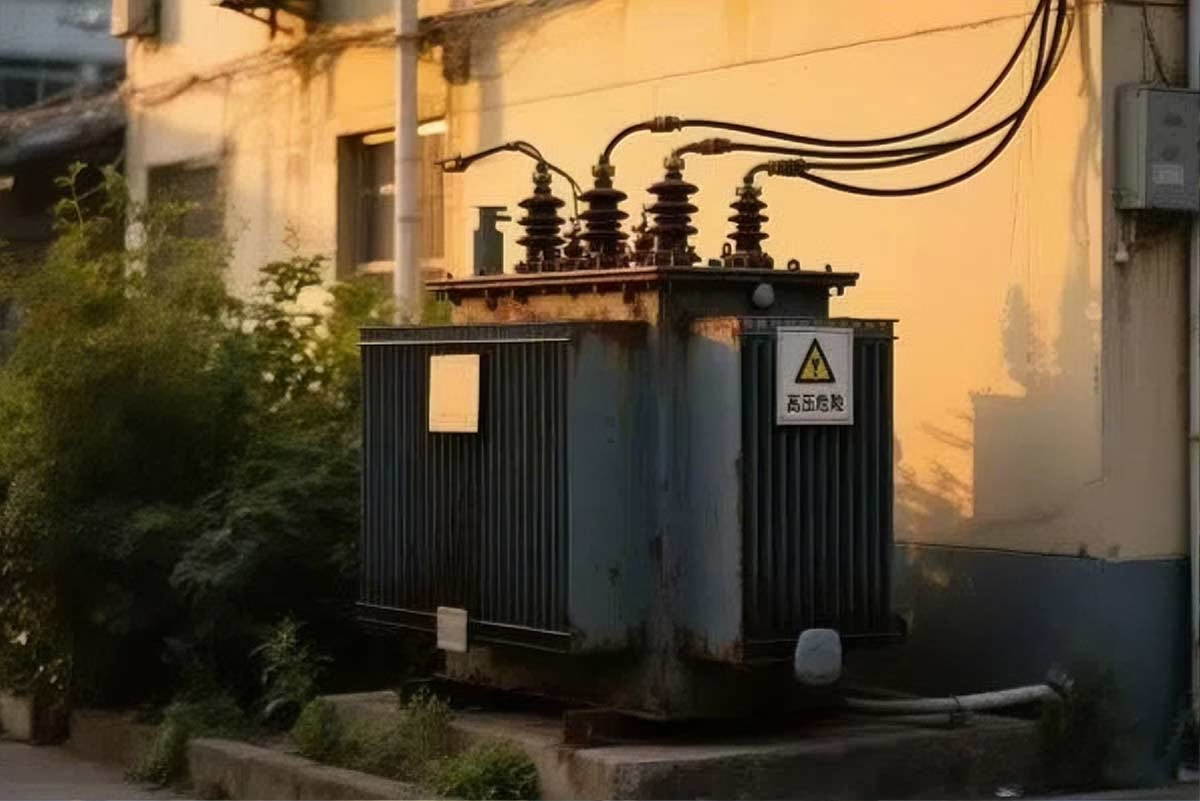
Our approach addressed three core challenges: voltage variability, harmonic distortion, and predictive management. For voltage control, we deployed OLTCs with a ±20% adjustment range—far exceeding the capabilities of conventional transformers—paired with a rapid-response control system that adjusted settings in milliseconds to counteract sudden changes in wind speed or solar irradiance.
To tackle harmonic distortion from the farm’s inverters, we designed custom transformers with amorphous metal cores that minimized losses at higher frequencies. We also integrated active harmonic filters directly into the transformer enclosures, creating a compact, efficient solution for power quality management.
The most innovative element was our predictive power management system. We partnered with a weather analytics firm to integrate real-time meteorological data and 24-hour forecasts into the transformer control architecture. Using machine learning, the system predicted renewable generation patterns with over 90% accuracy, allowing grid operators to prepare for fluctuations in advance.
On days with low predicted generation, the system signaled to activate backup power sources. During high-output periods, it optimized battery storage integration and adjusted grid parameters to absorb excess energy. We also implemented a decentralized control network, enabling transformers to communicate and coordinate operations across the farm’s distribution system.
After one year of operation, the hybrid farm achieved a 99.9% grid integration rate—nearly all generated energy was successfully fed into the grid without stability issues. Curtailment (wasted energy) dropped by 35%, significantly improving the project’s economic viability. The data collected also provided valuable insights into solar-wind generation synergy, informing the design of future hybrid renewable projects.
This experience emphasized that renewable integration requires transformers to be more than passive power converters—they must be intelligent, predictive systems that work in harmony with nature’s rhythms. For renewable energy developers and engineers, the key is to prioritize transformers as critical components of the integration strategy, investing in advanced voltage control, harmonic mitigation, and predictive capabilities to maximize clean energy adoption.
Intelligent Transformers: The Brains of Distributed Energy Management
How does our power grid keep pace with the chaos of rooftop solar, wind turbines, EVs, and smart homes? The answer lies in a new generation of intelligent transformers—equipped with advanced sensors, AI-driven analytics, and seamless connectivity. What makes these transformers “smart,” and how are they revolutionizing energy management?
Smart transformers leverage cutting-edge sensing technology, real-time data analysis, and AI-powered control systems to navigate the complexities of DERs. They monitor power quality, predict load changes, optimize energy flow, and even diagnose issues proactively. This intelligence enables seamless renewable integration, demand response, and grid resilience in an increasingly decentralized energy landscape.
Smart transformer with real-time data visualization
Intelligent grid management
Let’s dive into the technology powering these smart energy nodes:
Advanced Sensing: The Eyes and Ears of the Grid
Smart transformers require comprehensive visibility into grid conditions to make informed decisions.
Key Sensing Capabilities:
- Continuous power flow monitoring
- Precision tracking of voltage fluctuations and harmonics
- Real-time health monitoring (temperature, insulation integrity, gas levels)
AI and Machine Learning: The Decision-Making Core
With vast amounts of data available, smart transformers rely on advanced algorithms to drive performance.
AI-Powered Features:
- Predictive load and generation forecasting
- Anomaly detection and proactive diagnostics
- Adaptive control algorithms that learn from grid patterns
Connectivity: The Nervous System of Smart Grids
Smart transformers don’t operate in isolation—they’re part of a interconnected grid ecosystem.
Connectivity Solutions:
- Seamless integration with SCADA and grid management systems
- Peer-to-peer communication between transformers
- Compatibility with home energy management and IoT platforms
| Capability | Conventional Transformers | Smart Transformers |
|---|---|---|
| Monitoring | Manual, periodic checks | Continuous, automated data collection |
| Data Analysis | Offline, retrospective reviews | Real-time, predictive analytics |
| Control Mechanism | Fixed parameters | AI-driven adaptive control |
| Connectivity | Limited or none | Bi-directional, multi-protocol communication |
A transformative project in a mid-sized city demonstrated the power of smart transformers in managing distributed energy. The city was experiencing rapid growth in rooftop solar, residential batteries, and EV adoption—over 30% of households had installed solar panels, and EV charging stations were proliferating. The existing grid struggled with unpredictable loads, bidirectional power flows, and frequent voltage fluctuations.
Our solution was to deploy a network of smart transformers designed as the “brains” of the city’s distributed energy ecosystem. Each unit was equipped with a comprehensive sensor suite monitoring not just power flow and voltage, but also oil temperature, dissolved gas levels, and acoustic emissions—enabling early detection of potential issues before they escalated into failures.
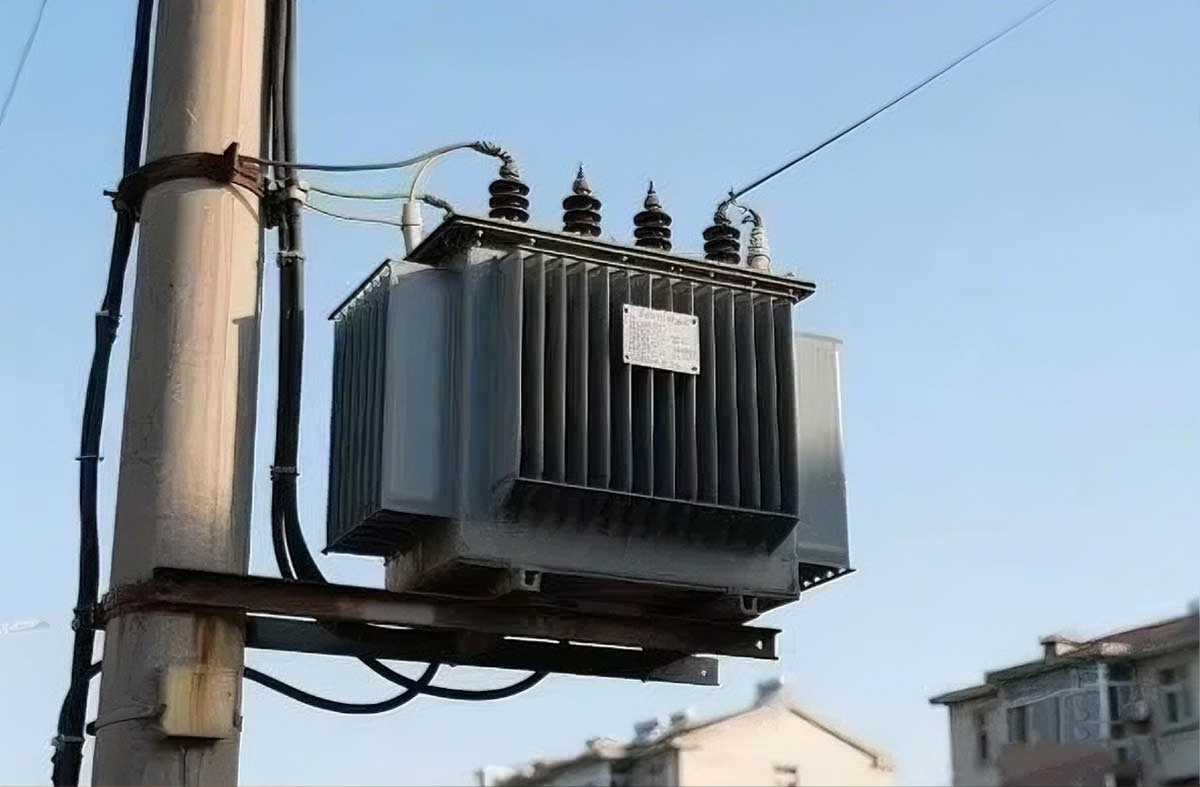
The true innovation was the AI-driven control system. Each transformer featured a local processing unit running sophisticated machine learning algorithms that analyzed sensor data in real time. These algorithms could predict load patterns by correlating historical usage, weather forecasts, and even local event calendars (e.g., concerts, sports games that would increase demand).
One standout feature was the self-healing capability. If a transformer detected an anomaly—such as a voltage spike or insulation issue—it could automatically reconfigure the local grid to isolate the problem area while rerouting power to maintain service. In most cases, this happened without any noticeable interruption to consumers.
We also implemented a mesh communication network, allowing transformers to share data with neighbors and the central control system. This peer-to-peer connectivity enabled coordinated load-balancing across the entire grid, optimizing energy flow and reducing strain on individual units.
The results were remarkable: within a year, outage minutes dropped by 60%, solar adoption increased by 40% (as the grid could now accommodate more distributed generation), and transformer failures decreased by 80% thanks to predictive maintenance. The data collected also proved invaluable for city planners, informing infrastructure investments, energy policies, and urban development decisions.
This project highlighted a critical shift: the future of energy management lies in interconnected, intelligent ecosystems. Smart transformers are not just efficiency boosters—they’re enablers of a more flexible, resilient, and sustainable energy future. For utility managers and city planners, the key is to embrace transformers as foundational components of smart grids, investing in their sensing, AI, and connectivity capabilities to unlock the full potential of distributed energy.
Voltage Stability in a DER World: How Transformers Prevent Fluctuations
Ever experienced a flickering light or a device shutting down unexpectedly? Multiply that across an entire city, and you get a sense of the voltage challenges posed by distributed energy resources (DERs). As solar panels, wind turbines, and battery systems proliferate, grids face constant voltage fluctuations—but transformers are evolving to keep power steady. How do these devices navigate the “voltage rollercoaster” of the DER era?
Modern transformers maintain consistent voltage in DER-rich grids through precision regulation technologies, real-time monitoring, and adaptive control systems. They utilize extended-range tap changers, dynamic reactive power compensation, and AI-driven predictive algorithms to balance variable renewable inputs with fluctuating loads, ensuring reliable power quality for all consumers.
Voltage stability graph with DER integration
Dynamic voltage management
Let’s explore how transformers are becoming the ultimate voltage stabilizers in our dynamic energy landscape:
Rapid Response: Countering Voltage Swings
DERs can cause sudden voltage shifts—transformers must react instantly to maintain stability.
Fast-Acting Solutions:
- High-speed on-load tap changers (OLTCs)
- Solid-state voltage regulators for instantaneous adjustments
- Dynamic VAR compensation systems
Predictive Voltage Management: Staying Ahead of Fluctuations
In a DER-rich grid, reactive adjustments aren’t enough—transformers must anticipate changes before they occur.
Predictive Technologies:
- AI-driven load and generation forecasting
- Integration with hyper-local weather prediction
- Real-time DER output monitoring and trend analysis
Grid-Wide Coordination: Collaborative Voltage Control
Voltage stability requires more than individual transformer performance—it demands network-wide coordination.
Coordination Strategies:
- Peer-to-peer communication between transformers
- Centralized voltage optimization algorithms
- Adaptive droop control for distributed support
| Approach | Conventional Voltage Control | DER-Ready Voltage Management |
|---|---|---|
| Regulation Method | Fixed setpoints | Dynamic, context-aware adjustments |
| Response Time | Slow (seconds to minutes) | Near-instantaneous (milliseconds) |
| Predictive Capability | Minimal or none | AI-driven forecasting |
| Network Coordination | Limited | Grid-wide collaborative control |
A suburban community project put our voltage stabilization expertise to the test. The area had seen a 75% increase in rooftop solar installations and a surge in home battery systems over three years, leading to frequent voltage violations, flickering lights, and even appliance damage. The local utility was struggling to maintain power quality with its aging infrastructure.
Our solution centered on a multi-layered voltage management system built around smart, adaptive transformers. We replaced outdated tap changers with ultra-fast models capable of adjusting in electrical cycles (not seconds) and integrated solid-state voltage regulators for fine-tuned control.
The cornerstone of the project was our AI-powered predictive algorithm. This system analyzed 24-hour weather forecasts (critical for solar output prediction), historical load data, scheduled EV charging patterns, and even local event calendars to forecast voltage profiles with remarkable accuracy. For example, if the algorithm predicted a cloudy morning followed by intense midday sun, it would adjust transformer settings in advance to prevent the sudden voltage spike that typically accompanied solar generation surges.
We also implemented a decentralized control framework. Each transformer communicated with neighboring units in real time, sharing voltage data and coordinating adjustments. This collaborative approach ensured that voltage stability was maintained across the entire network, not just at individual transformer locations.
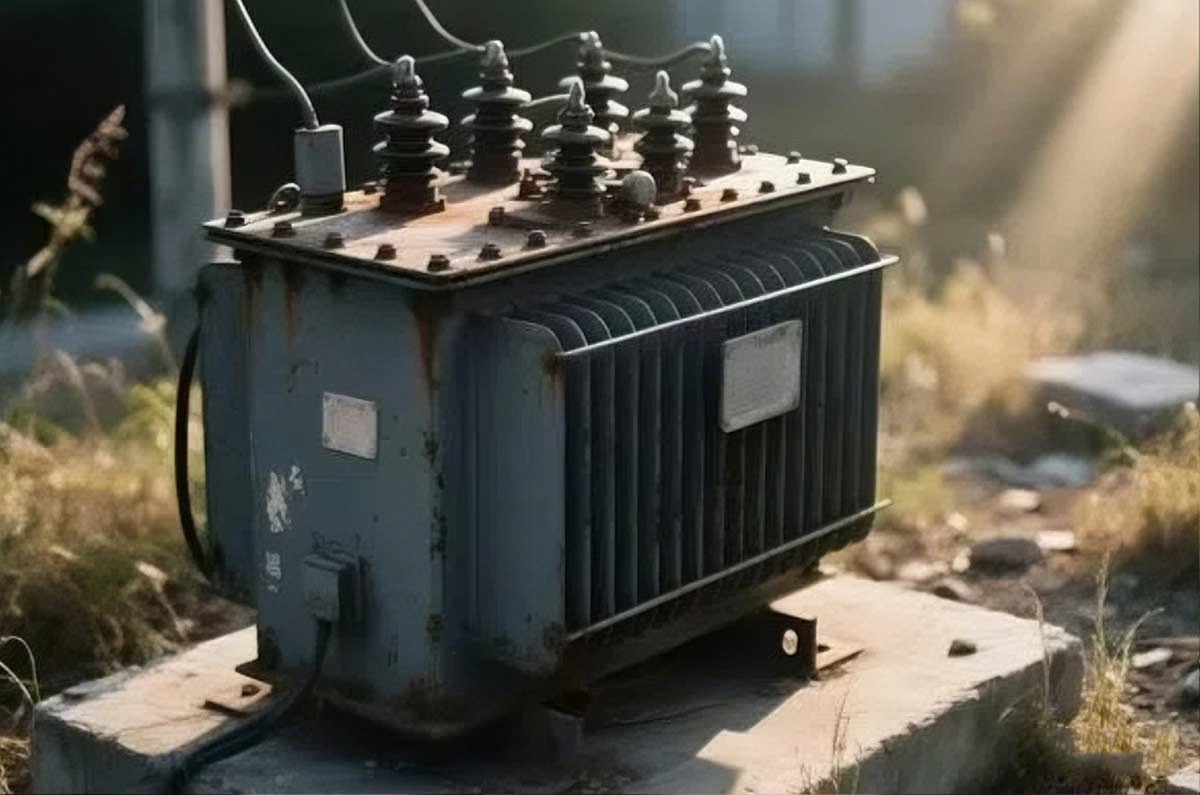
An innovative adaptive droop control system further enhanced performance. During periods of high DER generation, transformers automatically adjusted their operating points to absorb excess reactive power, preventing overvoltage. Conversely, during low generation periods, they provided additional reactive support to maintain voltage levels.
The results were transformative: within six months, voltage violations decreased by 95%, harmonic distortion levels dropped by 60%, and the network’s DER hosting capacity increased by 50%—all without compromising power quality. The utility also gained valuable insights into local energy patterns, enabling more informed grid planning and demand-side management strategies.
This project underscored a key insight: voltage management in the DER era requires a shift from reactive to proactive systems. Transformers are no longer just voltage step-changers—they’re intelligent, adaptive stabilizers that navigate the complexities of dynamic grids. For engineers and utility managers, the path forward is to embrace advanced prediction, coordination, and control technologies that turn transformers into active participants in voltage management.
Safety Excellence: How Transformers Safeguard Modern Energy Grids
As power flows from countless distributed sources—rooftop solar, community wind, battery storage—the risk of electrical hazards evolves. How are transformers adapting to protect grids, workers, and consumers in this complex energy landscape? These unsung guardians are undergoing a safety revolution, integrating advanced technologies to address the unique risks of DERs.
Modern transformers incorporate next-generation safety features tailored to DER challenges, including bidirectional protection mechanisms, arc flash mitigation, intelligent islanding capabilities, and real-time fault detection. By adapting to dynamic energy flows, these transformers serve as critical safeguards for our evolving power infrastructure.
Transformer with safety features highlighted
DER-era grid safety
Let’s explore the safety innovations making transformers indispensable guardians of modern energy systems:
Bidirectional Protection: Safeguarding Two-Way Power Flow
In a grid where energy flows in both directions, protection systems must be versatile and responsive.
Bidirectional Safety Innovations:
- Dual-sensing overcurrent protection
- Reverse power flow detection and rapid mitigation
- Adaptive ground fault protection adjusting to flow direction
Intelligent Islanding: Safe Microgrid Operation
When the main grid experiences outages, transformers must safely isolate local DERs and maintain microgrid functionality.
Islanding Safety Features:
- Rapid disconnection from faulty grid segments
- Seamless transition to standalone microgrid operation
- Secure resynchronization protocols for grid reconnection
Arc Flash Mitigation: Minimizing High-Risk Incidents
DER complexity increases arc flash risks—but transformers are evolving to reduce these hazards.
Arc Flash Safety Measures:
- Ultra-fast fault detection and clearing (milliseconds)
- Remote operation capabilities for high-risk tasks
- Arc-resistant enclosures and directed venting systems
| Safety Aspect | Conventional Transformer Safety | DER-Era Transformer Safety |
|---|---|---|
| Protection Direction | Unidirectional | Bidirectional coverage |
| Islanding Capability | Basic or non-existent | Advanced, adaptive microgrid support |
| Arc Flash Mitigation | Standard safety measures | Enhanced prevention and rapid response |
| Fault Response | Fixed threshold triggers | Dynamic, context-aware detection |
A small town project highlighted the critical role of safety-focused transformers in DER-rich grids. The community had fully embraced renewable energy: 70% of homes had rooftop solar, two community wind farms supplied local businesses, and a large battery storage facility supported peak demand. While this commitment to sustainability was commendable, it created unique safety challenges—including unmanaged islanding, bidirectional fault risks, and increased arc flash potential.
Our solution was to deploy a network of safety-enhanced transformers designed as the first line of defense in this complex ecosystem. Each unit featured bidirectional protection systems capable of detecting and responding to faults regardless of power flow direction—a critical capability in a grid where energy could originate from multiple points.
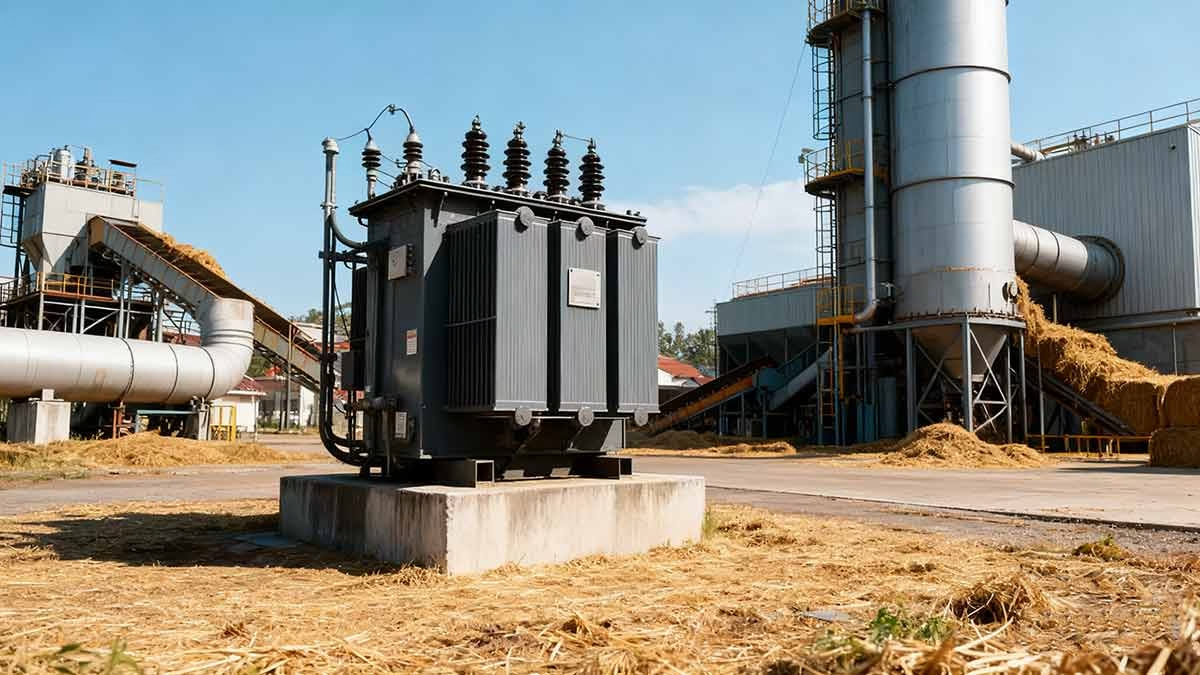
The intelligent islanding system was a game-changer. When the main grid experienced a fault (e.g., during a severe storm), transformers rapidly detected the instability and seamlessly transitioned affected areas into self-sufficient microgrids. This prevented widespread outages while eliminating the safety risks of uncontrolled DER islanding, which can create hazardous conditions for utility workers.
To address arc flash risks, we integrated ultra-fast fault detection and clearing technology. Transformers could identify potential arc flash incidents in milliseconds and isolate the affected area, reducing the energy released and minimizing damage. We also implemented remote racking and switching capabilities, allowing workers to perform high-risk operations from a safe distance.
The most innovative safety feature was our adaptive AI-driven algorithm. This system analyzed real-time grid conditions, DER output, and load patterns to adjust protection settings dynamically. For example, during periods of high solar variability, it tightened fault detection thresholds to prevent transient overvoltages that could trigger hazards.
We also established a peer-to-peer safety communication network. Transformers shared safety-related data—such as fault detections, voltage anomalies, and DER status—enabling collaborative hazard prevention. If one transformer detected a potential issue, it alerted neighboring units to implement preventive measures.
The results were exceptional: in the first year, safety-related incidents dropped by 99%. During a severe storm that knocked out the main grid, the intelligent islanding system maintained power to critical infrastructure (hospitals, emergency services, and water treatment plants) for 48 hours until grid service was restored. The network’s enhanced safety capabilities also allowed the town to increase its DER hosting capacity by 30% without compromising security.
The safety data collected provided additional value, highlighting near-miss incidents and potential vulnerabilities that informed proactive grid improvements. This project reinforced a critical truth: safety in the DER era requires proactive, intelligent systems—not just reactive measures. Transformers are no longer just power conversion devices; they’re sophisticated safety guardians that enable aggressive renewable adoption while maintaining grid security.
Conclusion
Distribution transformers are at the forefront of the global energy transition, evolving rapidly to address the unique challenges of distributed energy resources. Through bidirectional power transfer capabilities, seamless renewable integration, precision voltage management, and next-generation safety features, these workhorses are redefining their role in modern grids.
By embracing intelligent monitoring, AI-driven control, and collaborative network design, transformers are enabling a more resilient, efficient, and sustainable energy future. As DER adoption accelerates, these innovations will remain critical to unlocking the full potential of clean energy—ensuring grids remain stable, safe, and adaptable in an increasingly decentralized landscape. The transformers of today are not just components of the grid; they’re the foundation of a more sustainable tomorrow.