
For utilities, businesses, and facility managers, oil-immersed transformers are the workhorses of power distribution—reliable, efficient, and built to last. But understanding oil-immersed transformer lifespan is critical to avoiding costly unexpected failures, unplanned downtime, and premature replacements. Many operators assume these transformers last a fixed number of years, but the truth is, their lifespan depends on a mix of design, maintenance, environment, and usage.

In this article, we break down the average oil-immersed transformer lifespan, the factors that impact it, how to extend it, and the red flags that signal a failing unit—plus real-world examples to help you protect your investment. By the end, you’ll have the knowledge to keep your oil-immersed transformer running at its best for decades.
Contents
hide
What Is the Typical Oil-Immersed Transformer Lifespan?
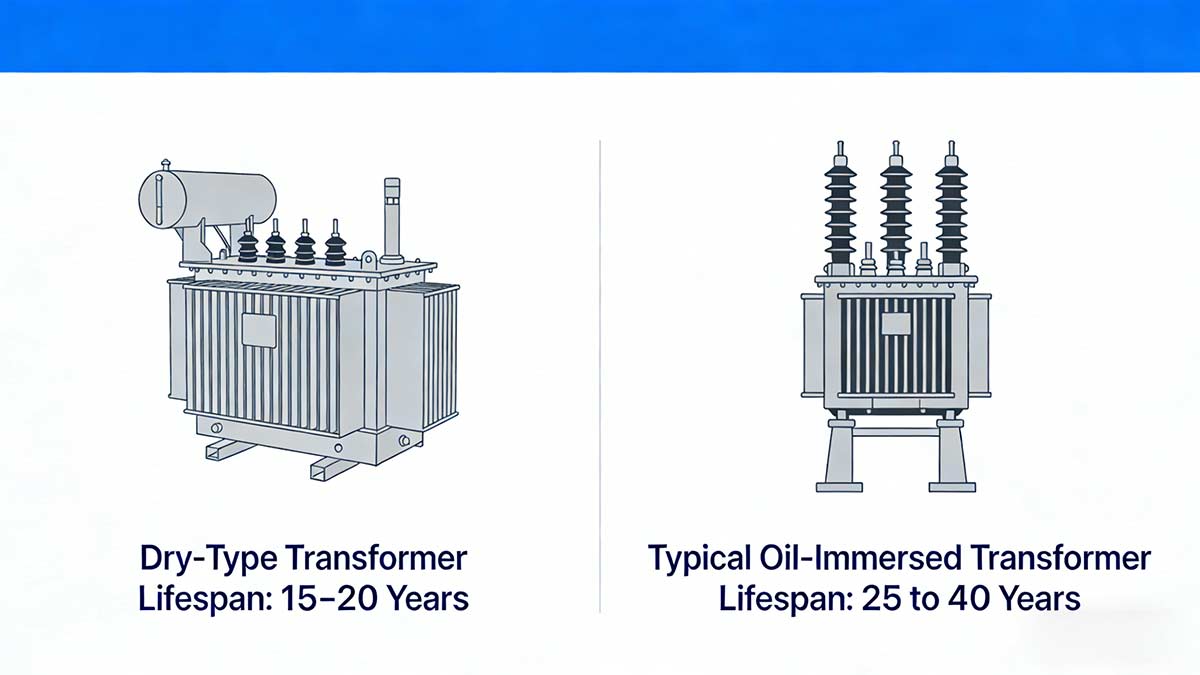
Unlike dry-type transformers, which typically have a lifespan of 15–20 years, oil-immersed transformers are engineered for longevity—when properly maintained. The average oil-immersed transformer lifespan ranges from 25 to 40 years, with many well-maintained units lasting 45+ years. However, this range is not guaranteed; poor maintenance, harsh conditions, or overuse can cut a transformer’s life short by 10–15 years. Understanding the baseline lifespan and what influences it is the first step to avoiding costly replacements.
Key Factors That Determine Oil-Immersed Transformer Lifespan
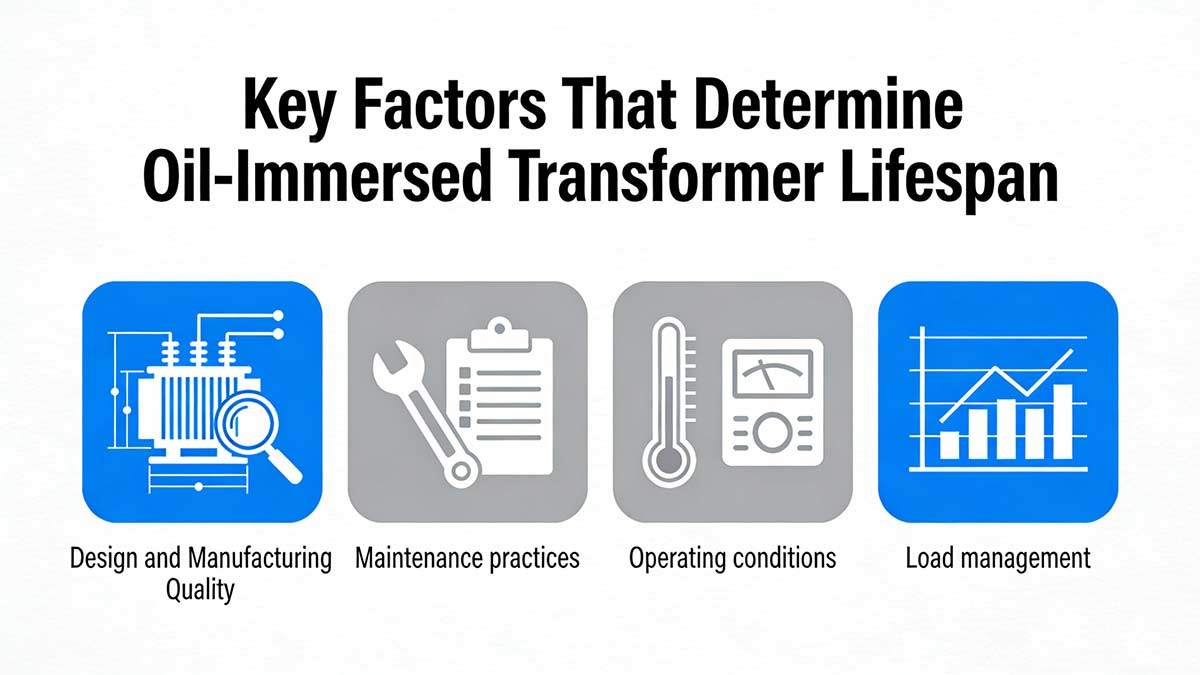
An oil-immersed transformer’s lifespan is not random—it’s shaped by four core factors. These factors interact with one another, so neglecting one can impact the others. Below is a breakdown of each factor, with practical insights to help you optimize your transformer’s service life:
- Design and Manufacturing Quality: Transformers built with high-grade materials (e.g., premium core steel, durable windings, and high-quality transformer oil) last longer. Cheap materials or shoddy manufacturing can lead to early wear and failure.
- Maintenance Practices: Regular oil testing, cleaning, and component inspections are the single most important factor in extending oil-immersed transformer lifespan. Skipping maintenance is the top cause of premature failure.
- Operating Conditions: Extreme temperatures, humidity, pollution, and vibration can degrade components over time. Outdoor or industrial transformers face harsher conditions than indoor units.
- Load Management: Consistently overloading the transformer or subjecting it to frequent load spikes strains the core and windings, shortening its lifespan.
Operating Condition | Average Lifespan | Key Notes |
|---|---|---|
Well-maintained, indoor, normal load | 35–45 years | Ideal conditions; minimal stress on components |
Regular maintenance, outdoor, moderate load | 25–35 years | Exposed to weather but well-cared for |
Inconsistent maintenance, industrial setting | 15–25 years | Pollution, vibration, and irregular care shorten life |
Poor maintenance, frequent overloading | 10–15 years | Premature failure is common; high replacement costs |
Common Question: Do all oil-immersed transformers last the same amount of time? No—even identical models can have drastically different lifespans based on how they’re maintained and operated. A well-maintained transformer in a mild environment can outlast a neglected one by 20+ years.
Why Oil-Immersed Transformers Fail Prematurely (And How to Avoid It)
The biggest cost associated with oil-immersed transformers is premature failure—replacing a unit before its expected lifespan can cost tens of thousands of dollars, plus downtime and labor. Most premature failures are avoidable, as they stem from predictable issues. Below are the top causes of shortened oil-immersed transformer lifespan, along with actionable steps to prevent them.
1. Neglecting Transformer Oil Maintenance
Transformer oil is the lifeblood of an oil-immersed transformer—it cools the core and windings, insulates electrical components, and prevents corrosion. When oil degrades or becomes contaminated, it can no longer protect the transformer, leading to overheating and component damage. This is the #1 cause of premature oil-immersed transformer failure.
- Common Oil Issues: Contamination (dust, water, or metal particles), oxidation (from exposure to air), and sludge buildup (from degraded oil).
- Warning Signs: Dark, cloudy oil; a burning or oily smell; increased transformer temperature; or loud hissing noises (from boiling oil).
- Prevention Tips: Test oil quarterly for contamination and oxidation; filter or replace oil every 5–10 years (or sooner if tests show issues); keep the transformer’s oil tank sealed to prevent water and dust entry.
Case Study: A utility company in Texas neglected oil testing for its 10-year-old oil-immersed transformer. After a summer heatwave, the transformer failed suddenly—an inspection revealed contaminated oil that had corroded the windings. The replacement cost $25,000, plus $15,000 in lost revenue from downtime. Regular oil testing would have detected the issue early, costing just $500 to fix.
2. Overloading and Poor Load Management
Oil-immersed transformers are designed to handle a specific load (measured in kVA). When operators exceed this load—by adding new equipment, expanding operations, or ignoring peak demand—the transformer works harder, leading to overheating, winding damage, and shortened lifespan. Frequent load spikes are just as damaging as consistent overloading.
- Key Risks: Overheating degrades transformer oil and weakens insulation; repeated load spikes strain the core and windings, leading to cracks or short circuits.
- Warning Signs: Loud, strained buzzing; transformer feels hot to the touch; frequent circuit breaker trips; or dimming lights in nearby equipment.
- Prevention Tips: Check the transformer’s nameplate for its rated load; use a clamp meter to monitor actual load regularly; avoid adding new equipment without upgrading the transformer; install load-balancing systems to reduce spikes.
3. Harsh Environmental Conditions
Outdoor and industrial oil-immersed transformers face a range of environmental threats that shorten their lifespan. Extreme temperatures, humidity, saltwater (coastal areas), pollution (industrial zones), and vibration can all damage components over time.
- Common Environmental Threats:
- Extreme heat: Accelerates oil degradation and overheating.
- Moisture: Causes corrosion and insulation damage.
- Pollution: Dust, chemicals, or salt buildup clogs radiators and contaminates oil.
- Vibration: Loosens core and winding components, leading to noise and damage.
- Prevention Tips: Install weatherproof enclosures for outdoor units; use corrosion-resistant tanks in coastal/industrial areas; add anti-vibration pads to reduce vibration; clean radiators regularly to prevent clogging.
Example: A coastal resort in Florida installed an oil-immersed transformer near the beach without corrosion protection. Within 8 years, saltwater had corroded the tank and contaminated the oil, forcing a premature replacement. Installing a corrosion-resistant tank and regular cleaning would have extended the transformer’s life to 30+ years.
4. Poor Installation and Component Wear
Even high-quality oil-immersed transformers can fail early if installed incorrectly. Poor mounting, misaligned components, or loose connections can lead to vibration, overheating, and component wear. Over time, normal wear and tear (e.g., on bushings, gaskets, or cooling fans) can also shorten lifespan if not addressed.
- Installation Mistakes: Mounting on an unstable surface, incorrect wiring, or inadequate ventilation.
- Wear and Tear Issues: Cracked bushings, leaking gaskets, or failed cooling fans.
- Prevention Tips: Hire qualified technicians for installation; inspect components annually for wear; replace gaskets, bushings, or cooling fans at the first sign of damage; ensure proper ventilation around the transformer.
How to Extend Oil-Immersed Transformer Lifespan (Practical Maintenance Guide)
Extending your oil-immersed transformer lifespan doesn’t require expensive upgrades—it starts with consistent, proactive maintenance. Below is a step-by-step guide to keep your transformer running longer, plus a maintenance schedule to follow.
Essential Maintenance Tasks to Extend Lifespan
These tasks are simple, cost-effective, and proven to extend oil-immersed transformer lifespan by 10–15 years. Focus on consistency—even small, regular checks make a big difference.
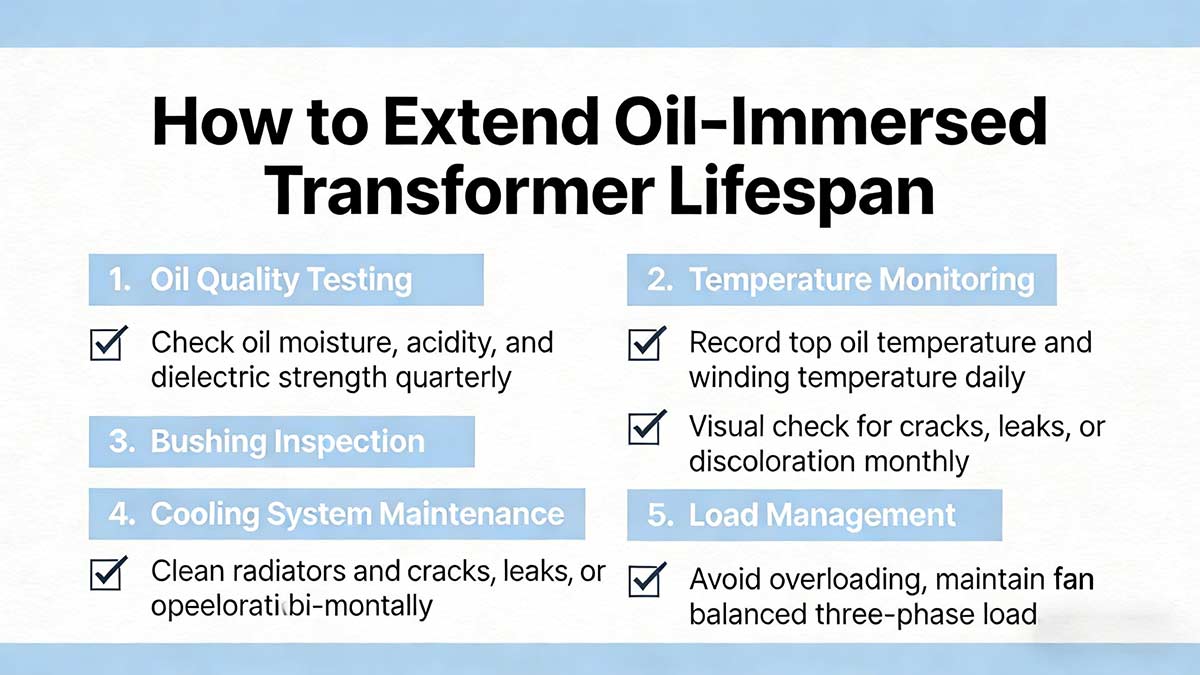
- Oil Testing and Maintenance:
- Quarterly: Take oil samples to test for contamination, oxidation, and moisture.
- Annually: Filter the oil to remove debris and contaminants.
- Every 5–10 Years: Replace the oil entirely (or sooner if test results are poor).
- Component Inspections:
- Monthly: Check for oil leaks, unusual noises, or overheating.
- Annually: Inspect bushings for cracks or damage; tighten loose bolts and clamps; clean radiators and cooling fans.
- Biannually: Check wiring connections and insulation for wear.
- Load and Temperature Monitoring:
- Monthly: Use a clamp meter to monitor load levels; ensure they stay below the transformer’s rated capacity.
- During peak demand, check the temperature regularly to prevent overheating.
- Environmental Protection:
- Seasonally: Clean debris from around the transformer; check enclosures for damage.
- Annually: Inspect for corrosion (especially in coastal/industrial areas); replace anti-vibration pads if worn.
Maintenance Task | Frequency | Cost Estimate | Lifespan Benefit |
|---|---|---|---|
Oil sampling and testing | Quarterly | $100–$200 per test | Early detection of oil issues prevents component damage |
Radiator/fan cleaning | Semi-annually | $200–$300 per cleaning | Ensures proper cooling; reduces overheating risk |
Component inspection (bushings, clamps) | Annually | $300–$500 per inspection | Catches wear early; prevents loose parts or arcing |
Oil filtration | Annually | $500–$800 per filtration | Extends oil life; reduces contamination risk |
Oil replacement | Every 5–10 years | $1,000–$2,000 per replacement | Resets oil protection; extends transformer life by 5–10 years |
Additional Tips to Maximize Lifespan
- Invest in smart monitoring: Install sensors to track oil temperature, moisture levels, and load in real time. This allows you to detect issues before they escalate.
- Avoid overcrowding: Ensure the area around the transformer is clear of debris, equipment, or vegetation—this improves ventilation and reduces fire risk.
- Train personnel: Teach your team to recognize warning signs (e.g., unusual noises, oil leaks) and perform basic checks. Early detection saves time and money.
- Work with trusted suppliers: When replacing components or oil, use high-quality, manufacturer-recommended products. Cheap replacements can shorten lifespan.
Signs Your Oil-Immersed Transformer Is Nearing the End of Its Lifespan
Even with proper maintenance, all oil-immersed transformers will eventually reach the end of their service life. Recognizing the warning signs of a failing transformer allows you to plan for a replacement, avoiding unexpected downtime and costly emergencies. Below are the key signs that your transformer is nearing the end of its lifespan:
1. Frequent Repairs
If your transformer requires monthly or quarterly repairs (e.g., oil leaks, component replacements), it’s a sign that its components are worn out. The cost of frequent repairs will soon exceed the cost of a new transformer.
2. Declining Oil Quality
If oil tests consistently show high contamination, oxidation, or moisture—even after filtration or partial replacement—it means the transformer’s internal components are deteriorating. Oil can only be cleaned or replaced so many times before the core and windings are too damaged to save.
3. Persistent Overheating
If your transformer runs hot even when under normal load, it’s a sign that the cooling system is failing or the core/windings are damaged. Overheating accelerates wear and will eventually lead to complete failure.
4. Unusual Noises
Loud buzzing, hissing, or clanking noises (beyond the normal low hum) indicate internal damage. These noises often stem from loose components, winding damage, or boiling oil—all signs of a transformer nearing failure.
5. Age Exceeds 35–40 Years
Even well-maintained oil-immersed transformers start to degrade after 35–40 years. After this age, components like windings and insulation break down, increasing the risk of failure. It’s wise to start planning for replacement once your transformer reaches 30 years old.
Case Study: A manufacturing plant in Ohio had a 40-year-old oil-immersed transformer that required $6,000 in repairs over one year. Instead of continuing to fix it, the plant invested in a new transformer for $18,000. The new unit required no major repairs in the first 5 years, saving the plant $12,000 in maintenance costs alone.
Choosing a Replacement Oil-Immersed Transformer (When the Time Comes)
When your oil-immersed transformer reaches the end of its lifespan, choosing the right replacement is critical to maximizing future longevity and avoiding costly mistakes. Below are key factors to consider when selecting a new transformer:
1. Match Load Requirements
Calculate your current and future load needs to ensure the new transformer can handle peak demand. It’s better to choose a unit with a slightly higher kVA rating than you currently need—this prevents overloading and extends its lifespan.
2. Prioritize Quality Materials
Look for transformers built with high-grade core steel, copper windings, and premium transformer oil. These materials resist wear and corrosion, ensuring a longer lifespan. Avoid cheap, low-quality units—they may save money upfront, but will fail prematurely.
3. Consider Environmental Conditions
Choose a transformer designed for your specific environment: corrosion-resistant tanks for coastal/industrial areas, weatherproof enclosures for outdoor units, and cooling systems tailored to extreme temperatures.
4. Opt for Energy Efficiency
Modern oil-immersed transformers are more energy-efficient than older models. Look for units with high efficiency ratings—they reduce energy costs and generate less heat, extending their lifespan.
5. Work with a Trusted Supplier
Choose a supplier with experience in oil-immersed transformers and a reputation for quality. A reliable supplier will help you select the right unit, provide professional installation, and offer ongoing support to keep your transformer running smoothly.
Conclusion: Protect Your Investment by Understanding Oil-Immersed Transformer Lifespan
An oil-immersed transformer is a significant investment—one that should last 25–40 years with proper care. By understanding the typical oil-immersed transformer lifespan, the factors that impact it, and how to extend it, you can avoid costly premature failures, unplanned downtime, and unnecessary replacements. Remember, proactive maintenance is the key to maximizing your transformer’s service life—small, regular checks can save you tens of thousands of dollars in the long run.
If you’re unsure about your oil-immersed transformer’s current condition, need help creating a maintenance schedule, or are ready to replace an aging unit, our team of transformer experts is here to help. We offer high-quality oil-immersed transformers designed for longevity, plus professional maintenance and troubleshooting services to keep your power system running safely and efficiently. Don’t wait until your transformer fails—take action today to protect your investment and extend your oil-immersed transformer lifespan.