
Selecting the right oil-filled transformer requires matching technical specifications to your unique application—and leading manufacturers offer a diverse range of solutions to meet this need. These transformers are categorized by power rating, industry-specific design, cooling systems, eco-friendly innovations, and smart capabilities. From low-capacity residential units to utility-scale powerhouses, each model is engineered to deliver reliability, efficiency, and performance tailored to distinct use cases.
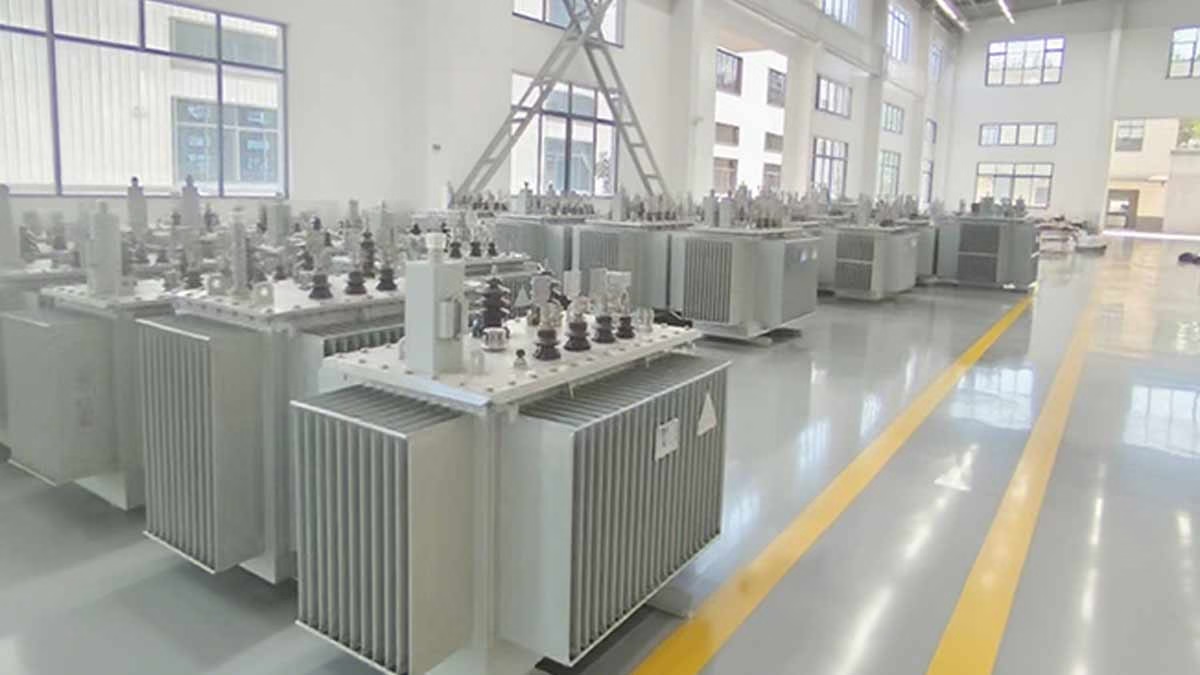
With decades of industry experience, this guide breaks down the key variations in oil-filled transformers, helping you navigate capacity ranges, application-specific designs, cooling systems, sustainable options, and smart features. Whether you’re outfitting a small commercial space, industrial facility, or utility grid, this resource will empower you to make an informed decision.
Contents
hide
Power Rating Spectrum: Categorizing Oil-Filled Transformers by Capacity
The wide range of transformer capacities can be overwhelming—but understanding how manufacturers segment power ratings is key to narrowing your choice. Oil-filled transformers are grouped into three core categories, each aligned with specific operational demands and scale.
Manufacturers classify oil-filled transformers by low (up to 5 MVA), medium (5–40 MVA), and high capacity (above 40 MVA). Each category serves distinct applications, from neighborhood power distribution to cross-country transmission lines, with design features optimized for load size and operational intensity.
Breaking Down Capacity Categories
- Low Capacity (Up to 5 MVA):
- Distribution transformers (up to 2.5 MVA) are the workhorses of residential and small commercial settings. These compact, cost-effective units are often pole-mounted or pad-mounted, delivering power to suburban neighborhoods, small offices, and local businesses.
- Small industrial transformers (2.5–5 MVA) cater to mid-sized manufacturing facilities and large commercial buildings. A 4 MVA unit, for example, might power a medium-scale factory, striking a balance between operational needs and cost-efficiency.
- Medium Capacity (5–40 MVA):
- Large industrial transformers (5–20 MVA) are custom-engineered for heavy manufacturing, such as steel mills or chemical plants. These robust units handle high-energy production lines and specialized industrial processes, requiring durability and consistent performance.
- Substation transformers (20–40 MVA) are critical components of urban and suburban power grids. Deployed in distribution substations, they step down voltage for widespread delivery, with models like 30 MVA units enhancing grid reliability in city infrastructure upgrades.
- High Capacity (Above 40 MVA):
- Utility-scale transformers (40–100 MVA) are essential for power generation and regional distribution. Found in large power plants and major substations, 80 MVA units, for instance, manage massive loads across wide geographic areas.
- Extra-high voltage transformers (above 100 MVA) enable long-distance power transmission. These engineering feats—such as 500 MVA units—are designed for ultra-high voltage systems, connecting power plants to distant cities and cross-border grids.
| Capacity Category | Power Range | Typical Applications | Key Design Features |
|---|---|---|---|
| Low Capacity | Up to 5 MVA | Residential, small commercial, mid-sized factories | Compact footprint, cost-effective, easy installation |
| Medium Capacity | 5–40 MVA | Heavy industry, distribution substations | Customizable windings, robust insulation, load flexibility |
| High Capacity | Above 40 MVA | Power plants, utility grids, long-distance transmission | Advanced cooling systems, high-efficiency cores, redundant safety features |
Choosing the right capacity hinges on balancing current load demands, future growth, and operational efficiency. For low-capacity needs, reliability and cost-effectiveness take priority—suburban developments, for example, often use 1 MVA transformers to avoid disruptive and expensive replacements. Medium-capacity units strike a sweet spot for data centers or large manufacturing facilities, where 25 MVA models offer the reliability and expansion headroom needed in fast-growing sectors.
High-capacity transformers demand meticulous planning, from transportation (some weigh hundreds of tons) to specialized cooling. For utility-scale projects, 200 MVA units require custom engineering to handle the extreme heat and load fluctuations of power generation. Across all categories, efficiency is a growing focus: even low-capacity transformers now use amorphous metal cores to minimize energy losses, with 3 MVA shopping mall units, for instance, offsetting 15% higher upfront costs through long-term energy savings.
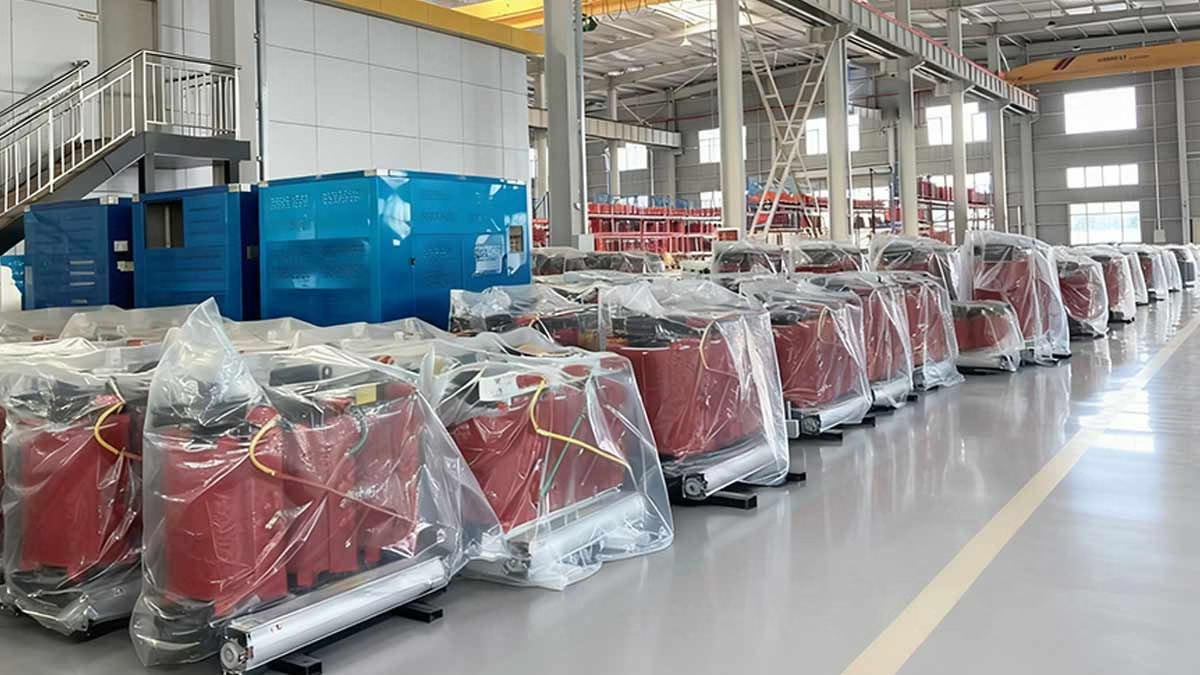
Application-Specific Designs: Oil-Filled Transformers for Targeted Industries
Different industries have unique power requirements—from the variable loads of renewable energy to the harsh conditions of offshore platforms. Leading manufacturers address these needs with specialized oil-filled transformers, engineered to thrive in distinct operational environments.
Application-specific oil-filled transformers include rectifier models for heavy industry, traction units for railways, generator step-up transformers for power plants, and custom designs for renewable energy, marine use, and data centers. Each type is optimized for load characteristics, environmental conditions, and industry-specific safety standards.
Industry-Tailored Transformer Solutions
- Heavy Industry & Manufacturing:
- Rectifier transformers (20–100 MVA) supply large-scale DC power for aluminum smelting and chlor-alkali plants. These units mitigate harmonics from electrolysis processes, ensuring stable power delivery to sensitive production equipment.
- Furnace transformers (up to 50 MVA) are built for electric arc furnaces in steel production. They withstand extreme load fluctuations and harsh electrical environments, critical for uninterrupted metal processing.
- Variable Frequency Drive (VFD) transformers optimize energy use in motor-heavy industries like paper mills, handling non-sinusoidal currents to improve efficiency.
- Transportation & Infrastructure:
- Traction transformers (5–30 MVA) power electric railways and subway systems. Compact and durable, they offer high overload capacity to handle rush-hour peaks, with recent metro upgrades using models that boost energy efficiency by 15%.
- Mobile substation transformers enable rapid deployment for emergency power restoration or temporary construction sites, delivering critical electricity within hours of installation.
- Marine transformers are engineered for ships and offshore platforms, with corrosion-resistant materials and vibration-dampening designs to withstand salt spray and constant motion.
- Energy Generation & Distribution:
- Generator step-up transformers (100–1000 MVA) connect power plants to the grid, stepping up voltage for long-distance transmission. Nuclear power plants, for example, rely on 800 MVA units with specialized protection features to ensure grid stability.
- HVDC converter transformers facilitate cross-border power transfer, enabling efficient transmission over distances exceeding 1000 km.
- Wind turbine transformers (2–100 MVA) are compact enough for nacelle or base installation, handling variable wind energy outputs while resisting offshore weather conditions.
- Specialized Applications:
- Data center transformers (5–50 MVA) prioritize reliability and efficiency, with 99.9% efficiency ratings and real-time monitoring to support 24/7 high-density loads.
- Solar farm transformers (2–100 MVA) optimize variable solar outputs, featuring grid-integration capabilities to handle fluctuating power flows.
- Oil & gas industry transformers include hazardous-environment designs with enhanced fire safety and corrosion resistance, ideal for offshore platforms and refineries.
| Industry | Transformer Type | Key Features | Typical Capacity Range |
|---|---|---|---|
| Heavy Industry | Rectifier/Furnace/VFD | Harmonic mitigation, load fluctuation resistance | 20–100 MVA |
| Transportation | Traction/Mobile | Compact, high overload capacity, portability | 5–30 MVA |
| Energy Generation | Generator Step-Up/HVDC/Wind | High capacity, voltage regulation, environmental resistance | 2–1000 MVA |
| Data Centers | High-Efficiency Monitoring | Real-time diagnostics, 24/7 reliability | 5–50 MVA |
| Renewable Energy | Solar/Wind | Variable load handling, grid integration | 2–100 MVA |
Specialized transformers deliver tangible operational benefits. In aluminum smelting, a 60 MVA rectifier transformer with harmonic mitigation reduces equipment stress and extends service life. For offshore wind farms, 66 MVA units with corrosion-resistant construction have operated flawlessly for years, delivering consistent clean energy. In urban metros, compact traction transformers save space while boosting capacity by 20% compared to older models.
When selecting an industry-specific transformer, prioritize manufacturers with proven sector experience, and consider total cost of ownership—including maintenance needs and efficiency gains—over upfront price. A higher initial investment in a specialized unit often translates to lower downtime, reduced energy costs, and compliance with industry regulations.
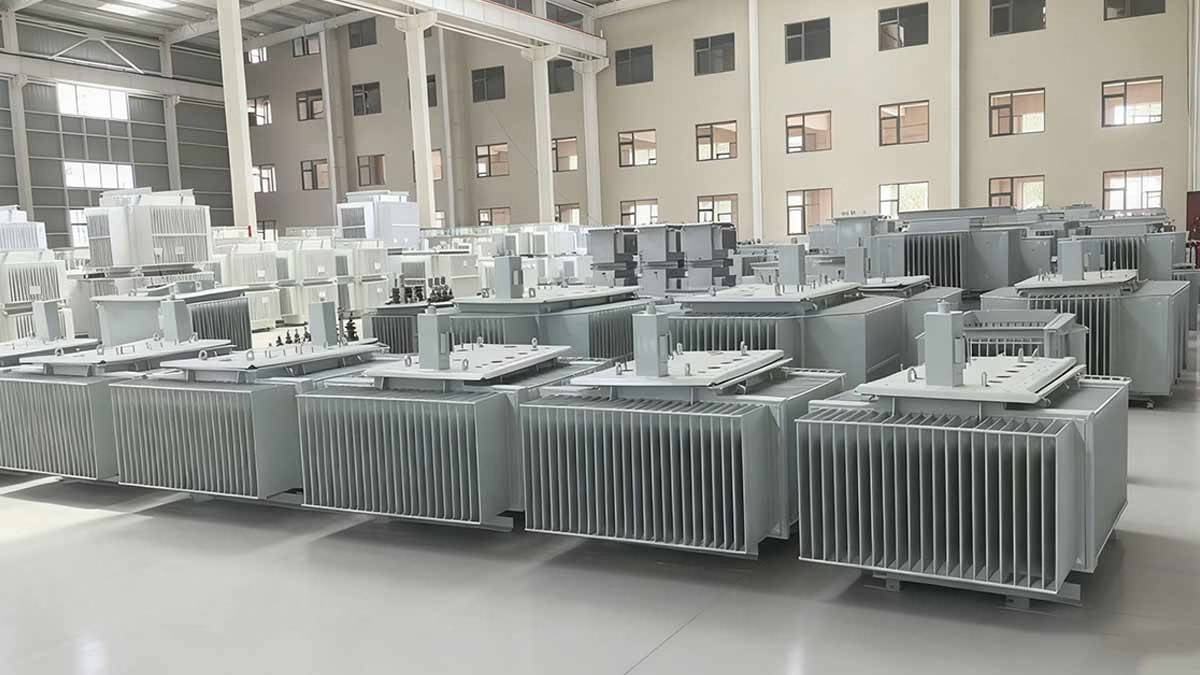
Cooling Systems Compared: ONAN, ONAF, OFAF – Which Is Right for You?
Transformer cooling systems are critical to performance and longevity—but the acronyms (ONAN, ONAF, OFAF) can be confusing. Each system uses different methods to dissipate heat, with suitability depending on capacity, ambient temperature, and operational environment.
The three primary cooling systems for oil-filled transformers are ONAN (Oil Natural Air Natural), ONAF (Oil Natural Air Forced), and OFAF (Oil Forced Air Forced). ONAN is ideal for small capacities and controlled environments; ONAF balances efficiency and cost for medium-scale applications; OFAF delivers maximum cooling for high-capacity units in demanding conditions.
Deep Dive into Cooling Technologies
- ONAN (Oil Natural Air Natural):
- Operating Principle: Heat rises naturally in the transformer oil, circulating passively through the core and windings. Heat is then dissipated from radiators via ambient air flow.
- Typical Applications: Distribution transformers up to 10 MVA, indoor installations in controlled environments (e.g., air-conditioned shopping malls or office buildings). A 5 MVA ONAN unit thrives in stable, cool settings where load demands are consistent.
- Advantages & Limitations: Simple design with no moving parts ensures quiet operation and low maintenance—perfect for urban areas. However, limited cooling capacity makes it unsuitable for high ambient temperatures or variable loads.
- ONAF (Oil Natural Air Forced):
- Operating Principle: Oil circulates naturally, but fans blow forced air over radiators to enhance heat dissipation. Fans activate automatically as temperatures rise, adapting to load fluctuations.
- Typical Applications: Medium-capacity transformers (10–60 MVA), outdoor substations in moderate climates. A 40 MVA ONAF unit is a popular choice for suburban substations, balancing cooling performance and cost.
- Advantages & Limitations: Offers 25% more cooling capacity than ONAN without increasing transformer size. The addition of fans introduces moderate maintenance needs but provides flexibility for seasonal temperature shifts.
- OFAF (Oil Forced Air Forced):
- Operating Principle: Pumps circulate oil through the transformer and radiators, while fans blow forced air over the cooling surfaces. This active system delivers maximum heat dissipation.
- Typical Applications: High-capacity transformers (above 60 MVA), heavy industrial settings, and hot climates. A 200 MVA OFAF unit is critical for urban substations or steel mills, where extreme heat and heavy loads demand robust cooling.
- Advantages & Limitations: Delivers the highest cooling efficiency, handling extreme temperatures and variable loads. However, the combination of pumps and fans increases complexity, maintenance requirements, and noise levels.
| Cooling System | Efficiency | Capacity Range | Complexity | Maintenance Needs | Noise Level | Ideal Environment |
|---|---|---|---|---|---|---|
| ONAN | Low | Up to 10 MVA | Low | Minimal | Low | Controlled indoor, mild climates |
| ONAF | Medium | 10–60 MVA | Medium | Moderate (fan upkeep) | Medium | Outdoor substations, moderate temperatures |
| OFAF | High | Above 60 MVA | High | Regular (pumps + fans) | High | Industrial settings, hot climates, heavy loads |
Selecting the right cooling system depends on balancing load demands, environment, and operational constraints. For indoor applications like data centers, ONAN’s quiet operation and low maintenance are priorities. In suburban areas with seasonal temperature shifts, ONAF adapts efficiently without excessive costs. For industrial complexes in hot climates, OFAF’s maximum cooling capacity is non-negotiable—even with higher maintenance needs.
Hybrid systems are emerging as a flexible solution, switching between ONAN and ONAF/OFAF modes based on load and temperature. These systems optimize energy efficiency for variable-demand applications like data centers, ensuring adequate cooling during peaks while minimizing energy use during lulls. Always consider ambient temperature ranges, load profiles, and noise restrictions when choosing a cooling system—oversizing an OFAF unit for a small indoor application wastes resources, while undersizing an ONAN unit in a hot climate leads to premature failure.

Eco-Friendly Options: Biodegradable Oils and Sustainable Transformer Designs
Sustainability is reshaping the transformer industry, with manufacturers prioritizing eco-friendly materials, energy efficiency, and reduced environmental impact. These innovations not only meet regulatory requirements but also deliver operational benefits like improved safety and longer service life.
Leading manufacturers offer eco-friendly oil-filled transformers featuring biodegradable insulating fluids, recyclable materials, and low-loss designs. Key innovations include natural/synthetic ester fluids, amorphous metal cores, and compact designs that minimize resource use. These sustainable options align with environmental goals while enhancing reliability and safety.
Sustainable Transformer Innovations
- Biodegradable Insulating Fluids:
- Natural ester fluids, derived from vegetable oils, are fully biodegradable and non-toxic. Ideal for installations near waterways or protected areas, they meet strict environmental regulations while offering a higher fire point (over 300°C) than traditional mineral oil.
- Synthetic ester fluids are man-made biodegradable alternatives, combining the environmental benefits of natural esters with enhanced thermal stability. Deployed in urban substations, they reduce fire risk and eliminate contamination concerns.
- Silicon-based fluids, while non-biodegradable, are non-toxic and fire-resistant, suitable for high-risk industrial environments where safety is paramount.
- Energy-Efficient Core Materials:
- Amorphous metal cores reduce core losses by up to 70% compared to traditional silicon steel. These recycled-material cores are a game-changer for grid modernization projects, cutting energy waste and lowering operational costs.
- High-grade electrical steel with improved magnetic properties minimizes no-load losses, extending transformer life by reducing heat generation.
- Laser-scribed core laminations reduce eddy current losses, enhancing efficiency for 24/7 applications like data centers.
- Sustainable Manufacturing & Design:
- Recyclable construction ensures up to 90% of transformer materials can be repurposed at the end of service life, reducing waste and resource depletion.
- Compact designs minimize material use and installation footprint, freeing up green space in urban substations and residential areas.
- Low-loss designs target both no-load and load losses, improving overall grid efficiency—utilities report 15% lower distribution losses after upgrading to these models.
| Feature | Traditional Transformers | Eco-Friendly Transformers | Environmental & Operational Benefits |
|---|---|---|---|
| Insulating Fluid | Mineral oil | Natural/synthetic esters | Biodegradable, non-toxic, higher fire safety |
| Core Material | Silicon steel | Amorphous metal | 70% lower core losses, recycled content |
| Recyclability | Limited | Up to 90% | Reduced waste, lower resource use |
| Efficiency | Standard (95–97%) | High-efficiency (98–99.5%) | Lower energy consumption, reduced carbon footprint |
| Lifespan | Standard | Extended | Fewer replacements, reduced resource demand |
Eco-friendly transformers deliver value beyond sustainability. For installations near sensitive watersheds, natural ester fluids eliminate contamination risks while gaining regulatory approval. In urban areas, their high fire point reduces the need for expensive fire suppression systems, shrinking substation footprints. Amorphous metal cores in grid transformers deliver substantial energy savings—over a 25-year lifespan, a single 10 MVA eco-friendly unit can save thousands in electricity costs.
While sustainable options carry a 15–40% upfront price premium, the total cost of ownership is often lower due to energy savings, longer life, and reduced maintenance. For utilities and industrial operators, they align with corporate social responsibility goals and future-proof against tightening environmental regulations. When evaluating eco-friendly transformers, consider local environmental risks, energy efficiency targets, and long-term operational costs—these factors often justify the initial investment.
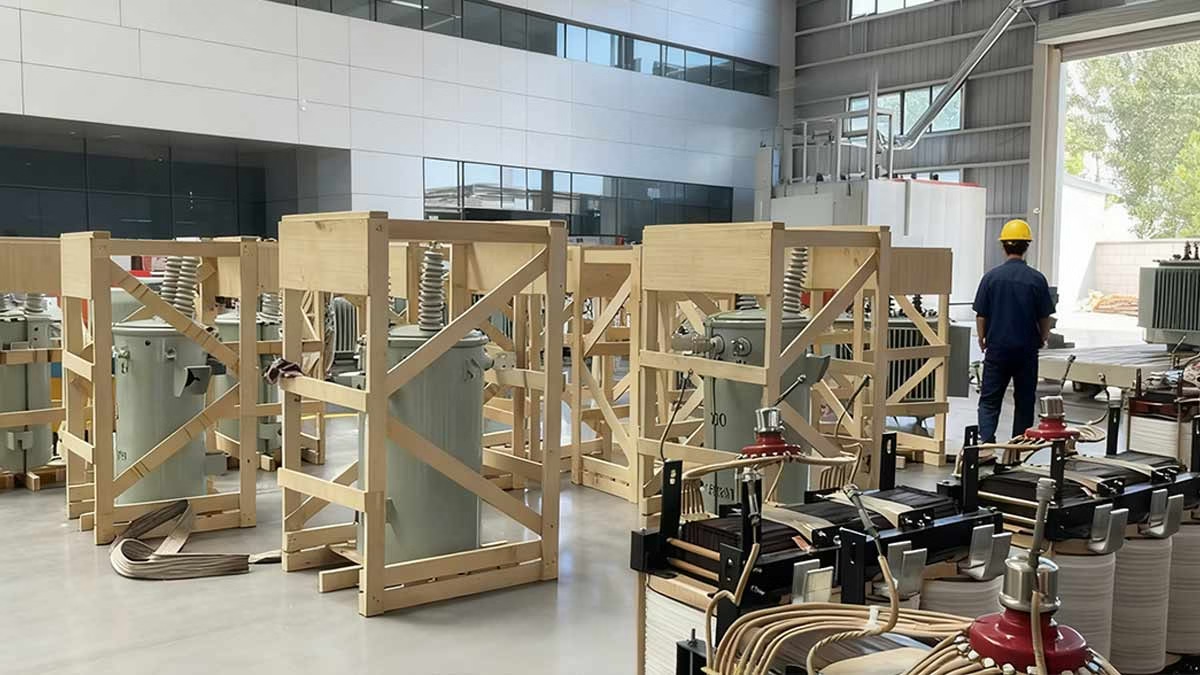
Smart Features and IoT Integration: Advanced Monitoring for Oil-Filled Transformers
Unexpected transformer failures and inefficient operations are costly—smart technology and IoT integration are revolutionizing how these critical assets are monitored and managed. Modern oil-filled transformers now include real-time diagnostics, predictive maintenance, and smart grid connectivity, transforming reactive upkeep into proactive asset management.
Top manufacturers equip oil-filled transformers with advanced monitoring features: real-time condition tracking, AI-driven predictive maintenance, and smart grid integration. Key capabilities include online dissolved gas analysis, temperature/load monitoring, remote diagnostics, and dynamic load management. These smart transformers improve reliability, reduce downtime, and optimize operational efficiency.
Cutting-Edge Smart Transformer Features
- Real-Time Condition Monitoring:
- Online Dissolved Gas Analysis (DGA) continuously tracks gas levels in transformer oil, detecting insulation breakdown or arcing at early stages. Critical for utility substations, this technology prevents catastrophic failures by alerting teams to issues before they escalate.
- Temperature monitoring tracks oil and winding temperatures in real time, enabling dynamic load management. In data centers, this feature increases transformer utilization by 20% while preventing overheating.
- Partial discharge monitoring detects insulation deterioration in high-voltage units, extending service life by addressing issues proactively.
- Predictive Maintenance Capabilities:
- AI-driven fault prediction uses machine learning algorithms to analyze operational data, forecasting potential failures weeks in advance. Utilities report a 30% reduction in maintenance costs after implementing these systems.
- Load forecasting analyzes historical data to predict future demand, optimizing capacity planning and avoiding unnecessary upgrades.
- Remaining life assessment estimates operational longevity, helping organizations prioritize replacements and allocate resources efficiently.
- Smart Grid Integration:
- Remote monitoring and control enable off-site management of transformer operations, reducing response times for rural or large-scale grids by 60%.
- Power quality analysis identifies harmonics, voltage fluctuations, and other issues, improving grid stability and protecting sensitive equipment.
- Dynamic load management adjusts operations based on real-time grid conditions, facilitating renewable energy integration and balancing variable power flows.
- Advanced Communication Interfaces:
- SCADA integration connects transformers to existing grid management systems, providing centralized control for large-scale networks.
- IoT connectivity enables cloud-based monitoring and big data analytics, supporting system-wide optimization in smart cities.
- Cybersecurity features—including encrypted communications and intrusion detection—protect critical infrastructure from digital threats.
| Smart Feature | Operational Benefit | Measurable Impact |
|---|---|---|
| Online DGA | Early fault detection | 50% reduction in unexpected failures |
| AI Fault Prediction | Predictive maintenance | 30% lower maintenance costs |
| Remote Monitoring | Faster issue resolution | 60% reduced response times |
| Dynamic Load Management | Optimized asset use | 20% increase in capacity utilization |
| Power Quality Analysis | Grid stability | 40% fewer power quality-related issues |
Smart transformers deliver transformative results across applications. In critical substations, online DGA has prevented major outages by detecting insulation issues early, saving millions in repair and downtime costs. For utilities managing rural networks, remote monitoring eliminates the need for frequent on-site inspections, reducing operational expenses. In industrial parks, power quality analysis resolves harmonic issues that disrupt sensitive manufacturing equipment.
The data generated by smart transformers is a valuable asset—cloud-based analytics platforms turn raw data into actionable insights, enabling utilities to optimize grid performance and plan for future growth. While smart features add 20–40% to initial transformer costs, the return on investment is substantial: reduced downtime, lower maintenance expenses, and extended asset life justify the premium for critical applications.
When selecting a smart transformer, prioritize compatibility with existing systems, cybersecurity features, and manufacturer support for data management. Ensure your team has the skills to leverage the technology—or partner with manufacturers that offer training and managed monitoring services. As grids become more complex and renewable energy integration grows, smart transformer features will transition from a luxury to a necessity.
Conclusion
Oil-filled transformers are versatile workhorses of power distribution, with options tailored to every capacity, industry, and operational need. From low-capacity residential units to utility-scale powerhouses, the right transformer depends on matching capacity, cooling systems, and features to your specific application.
Sustainable innovations like biodegradable oils and low-loss cores align with environmental goals, while smart IoT integration transforms maintenance from reactive to proactive. By understanding capacity ranges, application-specific designs, cooling technologies, eco-friendly options, and smart features, you can select a transformer that delivers reliability, efficiency, and long-term value.
Whether you’re upgrading a small commercial space, outfitting an industrial facility, or modernizing a utility grid, the key is to prioritize total cost of ownership—balancing upfront investment with energy savings, maintenance needs, and operational performance. With the right oil-filled transformer, you’ll ensure stable power delivery, minimize downtime, and future-proof your infrastructure against evolving demands.