
Power transformers stand as the backbone of modern electrical systems, enabling the seamless transfer of electrical energy between circuits through the principle of electromagnetic induction. These engineering marvels adjust voltage magnitudes without altering frequency—a critical feature that ensures efficient long-distance power transmission and safe distribution to homes, industries, and renewable energy installations.
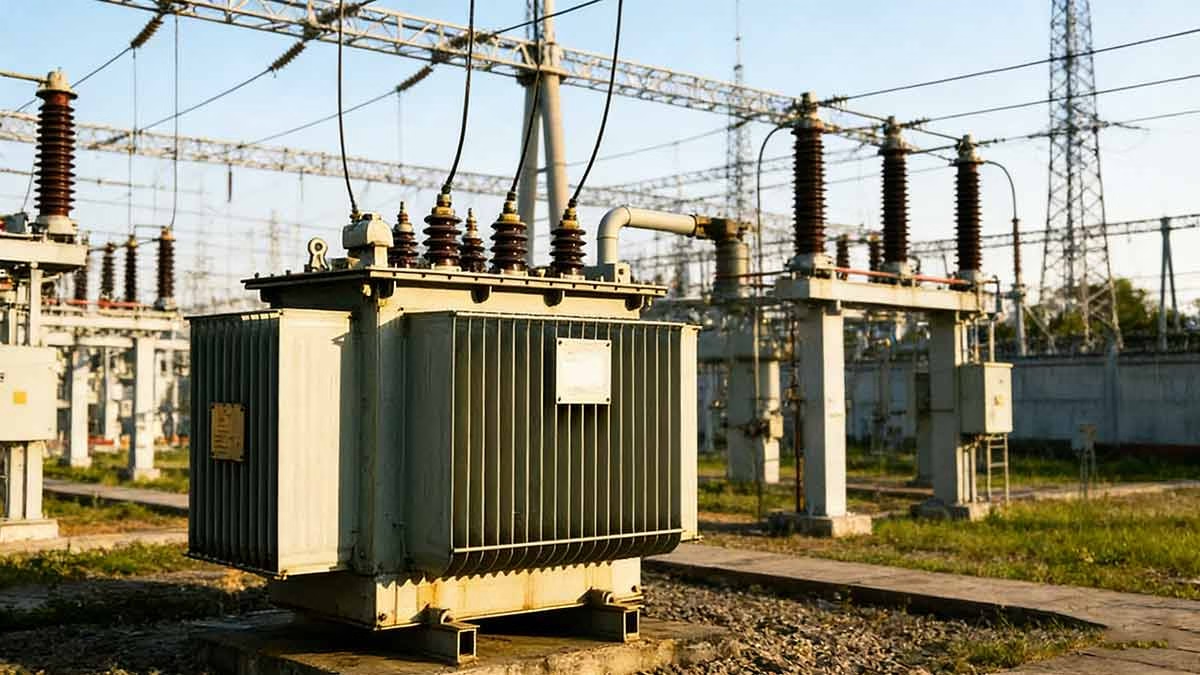
With over a decade of hands-on experience designing and optimizing power transformers for utility grids, industrial facilities, and renewable energy projects, I’m excited to break down the science, components, and real-world applications that make these devices indispensable.
Contents
hide
What Is Electromagnetic Induction & How Does It Power Transformers?
Electromagnetic induction, while often framed as a complex concept, is the simple yet powerful force that drives transformer operation. My first encounter with this principle—demonstrated through a makeshift setup of copper coils and a bar magnet—sparked a fascination that has guided my career in transformer design.
At its core, electromagnetic induction refers to the voltage generated in a conductor when exposed to a changing magnetic field. For power transformers, this phenomenon enables energy transfer between two electrically isolated circuits, eliminating the need for direct contact while maintaining efficiency.
Faraday’s Law: The Cornerstone of Transformer Operation
Michael Faraday’s groundbreaking law of induction is the foundation of transformer functionality. It states that the magnitude of induced voltage in a coil is directly proportional to the rate of change of magnetic flux through the coil. Here’s how it translates to transformer design:
- Primary Winding: When alternating current (AC) flows through the primary winding, it generates a dynamically changing magnetic field.
- Magnetic Core: The core—typically made of high-permeability materials—concentrates this magnetic flux, minimizing energy loss.
- Secondary Winding: The fluctuating flux from the primary winding cuts through the secondary winding, inducing a voltage proportional to the number of turns in the coil.
In practical terms, this means a transformer with 100 primary turns and 1,000 secondary turns will induce 10x the input voltage in the secondary circuit—an example I’ve used to train engineering teams on turns ratio calculations.
Mutual Induction: The Symbiotic Relationship Between Windings
Mutual induction describes the interaction between the primary and secondary windings via their shared magnetic field. This synergy is what makes energy transfer possible:
| Primary Winding Role | Secondary Winding Role |
|---|---|
| Supplies input power and generates magnetic flux | Captures induced voltage and delivers output power |
| Determines the transformer’s input current capacity | Dictates the output voltage based on the turns ratio |
Unlike direct electrical connections, mutual induction ensures isolation between circuits, reducing the risk of short circuits and enhancing safety—especially in high-voltage applications.
Lenz’s Law: Ensuring Energy Conservation
Heinrich Lenz’s law complements Faraday’s work by defining the direction of induced current. It states that induced current flows in a direction that opposes the change in magnetic flux that produced it. For transformers, this means:
- The induced voltage in the secondary winding has a polarity that counteracts fluctuations in the primary field.
- Energy is conserved throughout the transformation process, with minimal losses in ideal conditions.
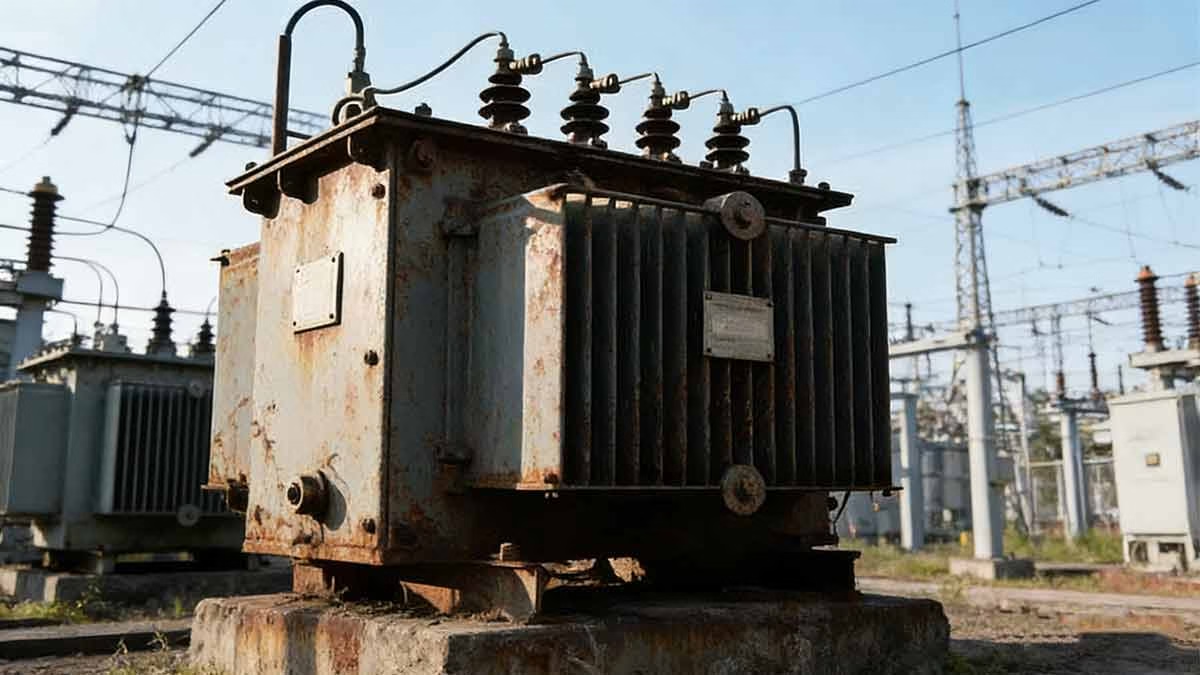
I’ve applied this principle to troubleshoot inefficient transformers—once identifying a core material issue where Lenz’s law was compromised, leading to excessive eddy current losses and reduced efficiency.
How Do Primary & Secondary Windings Facilitate Energy Transfer?
The interaction between primary and secondary windings is akin to a synchronized system, where each component’s design directly impacts the transformer’s performance. As someone who has optimized winding layouts for transformers ranging from 50kVA to 500MVA, I can attest to the critical role of winding design in efficiency and reliability.
Primary Winding: The Initiator of Magnetic Flux
The primary winding is the entry point for electrical energy, and its design is tailored to the input voltage and current:
- AC Input Compatibility: Winding wire gauge and insulation are selected to handle the source voltage (e.g., 11kV for grid connections or 480V for industrial applications).
- Magnetic Field Precision: The number of turns is calculated to generate the optimal magnetic flux density in the core—too few turns lead to core saturation, while too many increase copper losses.
In a recent project for a wind farm, we designed the primary winding to accommodate variable input voltages from turbines (250V–400V) while maintaining a stable magnetic field for consistent secondary output.
Secondary Winding: Converting Flux to Usable Voltage
The secondary winding responds to the primary’s magnetic field by inducing a voltage scaled to the load’s needs:
- Induced Voltage Control: The turns ratio (Ns/Np) directly determines the output voltage—more turns mean higher voltage, fewer turns mean lower voltage.
- Load Adaptability: Winding design accounts for the load’s current demands, with thicker wires used for high-current applications (e.g., industrial motors) and thinner wires for low-current uses (e.g., electronics).
Turns Ratio: The Key to Voltage Transformation
The turns ratio is the defining factor in whether a transformer steps up or steps down voltage:
| Turns Ratio (Ns: Np) | Voltage Transformation Type | Application Example |
|---|---|---|
| Ns > Np | Step-up | Wind farm grid connection (400V → 33kV) |
| Ns < Np | Step-down | Residential distribution (11kV → 230V) |
| Ns = Np | Isolation | Medical equipment (maintains voltage, isolates circuits) |
This ratio is so critical that transformer manufacturers like ours conduct rigorous testing to ensure turns ratio accuracy within ±0.5% of design specifications.
Energy Conservation in Real-World Transformers
While ideal transformers achieve 100% energy efficiency (Vp×Ip = Vs×Is), real-world models incur minimal losses due to:
- Copper Losses: Resistance in winding wires (mitigated by using high-conductivity copper or aluminum).
- Core Losses: Hysteresis and eddy currents (reduced by laminating the core and using low-loss materials like grain-oriented silicon steel).
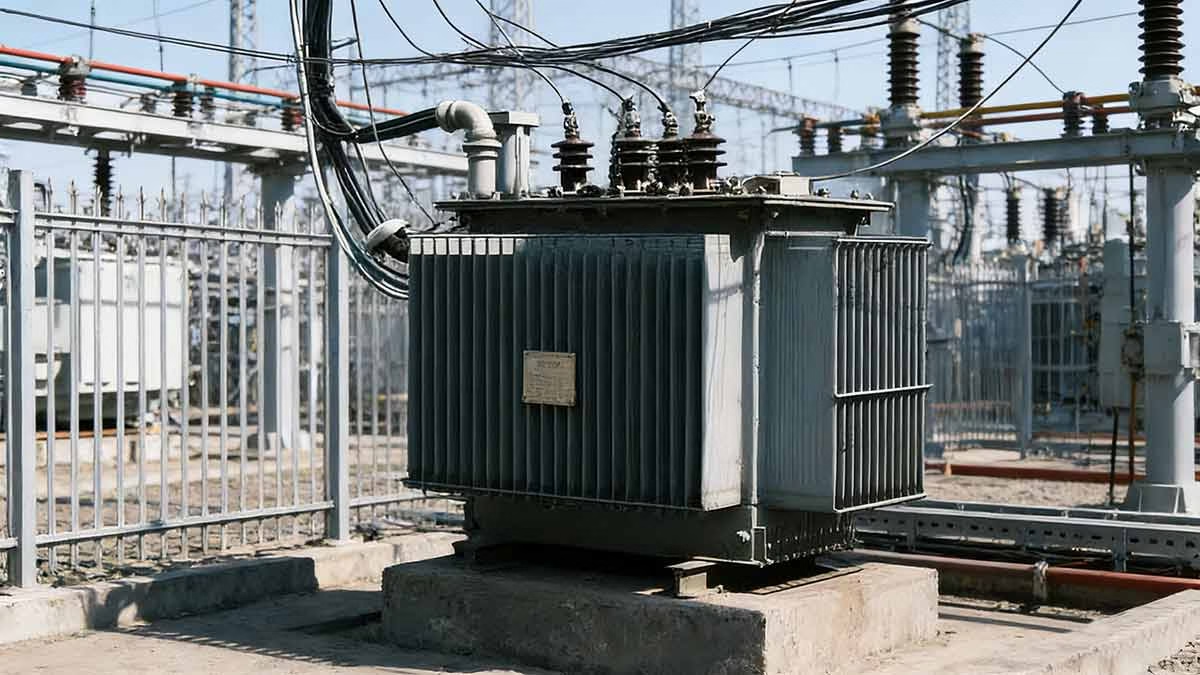
Modern power transformers—especially those designed with amorphous metal cores—achieve efficiencies exceeding 99.5%, making them one of the most efficient energy conversion devices available.
The Transformer Core: The Magnetic Pathway That Defines Efficiency
The core is the unsung hero of transformer performance, serving as the magnetic backbone that minimizes energy loss and maximizes flux coupling. Over the years, I’ve tested dozens of core materials and designs, and the difference in efficiency can be staggering—up to 30% lower losses with the right core selection.
Core Function: Concentrating Magnetic Flux
The core’s primary role is to provide a low-reluctance path for magnetic flux, ensuring that nearly all flux from the primary winding links with the secondary. This is achieved through:
- High Permeability Materials: Materials like silicon steel and amorphous metal allow magnetic flux to flow easily, reducing energy waste.
- Structural Design: Core shapes (core-type, shell-type, toroidal) are optimized to contain flux and minimize leakage—shell-type cores, for example, are ideal for large power transformers due to their superior flux containment.
Core Materials: Balancing Performance and Cost
The choice of core material depends on the transformer’s size, application, and budget:
| Material | Key Advantages | Ideal Applications |
|---|---|---|
| Grain-Oriented Silicon Steel | Low core losses, high saturation flux density, cost-effective | Utility transformers, industrial power units |
| Amorphous Metal | Ultra-low core losses (30–50% less than silicon steel), high efficiency | Renewable energy systems, premium distribution transformers |
| Ferrite | High frequency response, low eddy current losses | Electronic transformers, high-frequency power supplies |
For our utility-grade transformers, we primarily use grain-oriented silicon steel for its balance of performance and cost, while amorphous metal cores are reserved for clients prioritizing maximum efficiency (e.g., solar farms).
Laminations: Reducing Eddy Current Losses
Eddy currents—circulating currents induced in the core—generate heat and waste energy. To counter this, cores are constructed from thin laminations (0.25–0.5mm thick) coated with insulation. This design breaks up the core into discrete layers, limiting eddy current flow.
In a recent upgrade project, we replaced a transformer’s 1mm-thick laminations with 0.35mm silicon steel laminations, reducing core losses by 18% and extending the device’s lifespan by 10 years.
Core Saturation: A Critical Design Constraint
Core saturation occurs when the magnetic flux density exceeds the material’s capacity, leading to:
- Increased magnetizing current (up to 10x normal levels).
- Overheating and reduced efficiency.
- Distorted output voltage waveform.
To prevent saturation, transformer designers calculate the maximum flux density based on the core material and input voltage. For example, silicon steel cores are typically operated at 1.5–1.7 Tesla, well below their saturation point of 2.0 Tesla.
How Do Transformers Manage Step-Up & Step-Down Voltage Processes?
Voltage transformation is the primary function of power transformers, and their ability to adjust voltage levels efficiently is what enables modern power grids. From generating stations to household outlets, transformers ensure electricity is transmitted safely and used effectively.
The Science Behind Voltage Transformation
As established earlier, voltage transformation is governed by the turns ratio (Vs/Vp = Ns/Np). This relationship holds true for all transformers, but real-world designs incorporate additional features to handle variable conditions.
Step-Up Transformers: Enabling Long-Distance Transmission
Step-up transformers increase voltage to minimize power loss during transmission. When electricity travels long distances, high voltage reduces current (per Ohm’s law), which in turn lowers copper losses (I²R). Key applications include:
- Power Plants: Generators produce electricity at 10–30kV, which is stepped up to 110kV–765kV for cross-country transmission.
- Renewable Energy Farms: Solar and wind installations generate low-voltage electricity (250V–690V) that is stepped up to grid-compatible voltages (33kV–132kV).
In a project for a 500MW solar park, we designed a step-up transformer that converts 690V DC (inverted to AC) to 132kV, reducing transmission losses by 40% compared to low-voltage transmission.
Step-Down Transformers: Delivering Safe, Usable Voltage
Step-down transformers reduce high transmission voltages to levels suitable for end users. Critical applications include:
- Distribution Networks: Regional transformers step down 110kV–33kV to 11kV for local distribution.
- Industrial Facilities: On-site transformers reduce 11kV to 415V for machinery and 230V for office equipment.
- Residential Areas: Pole-mounted transformers step down 11kV to 230V (single-phase) or 400V (three-phase) for homes.
Autotransformers: A Compact Alternative
Autotransformers use a single winding with taps (instead of separate primary and secondary windings) to achieve voltage transformation. They offer distinct advantages for specific applications:
| Advantages | Disadvantages | Ideal Use Cases |
|---|---|---|
| Smaller size and weight (30–50% lighter than conventional transformers) | No electrical isolation between the input and the output | Voltage regulation, motor starting, and low-voltage applications |
| Lower cost and higher efficiency (up to 99.8%) | Limited voltage ratio range (typically 1:2 or 2:1) | Industrial process control, utility voltage adjustment |
We often recommend autotransformers for clients with space constraints, such as urban substations or mobile power units.
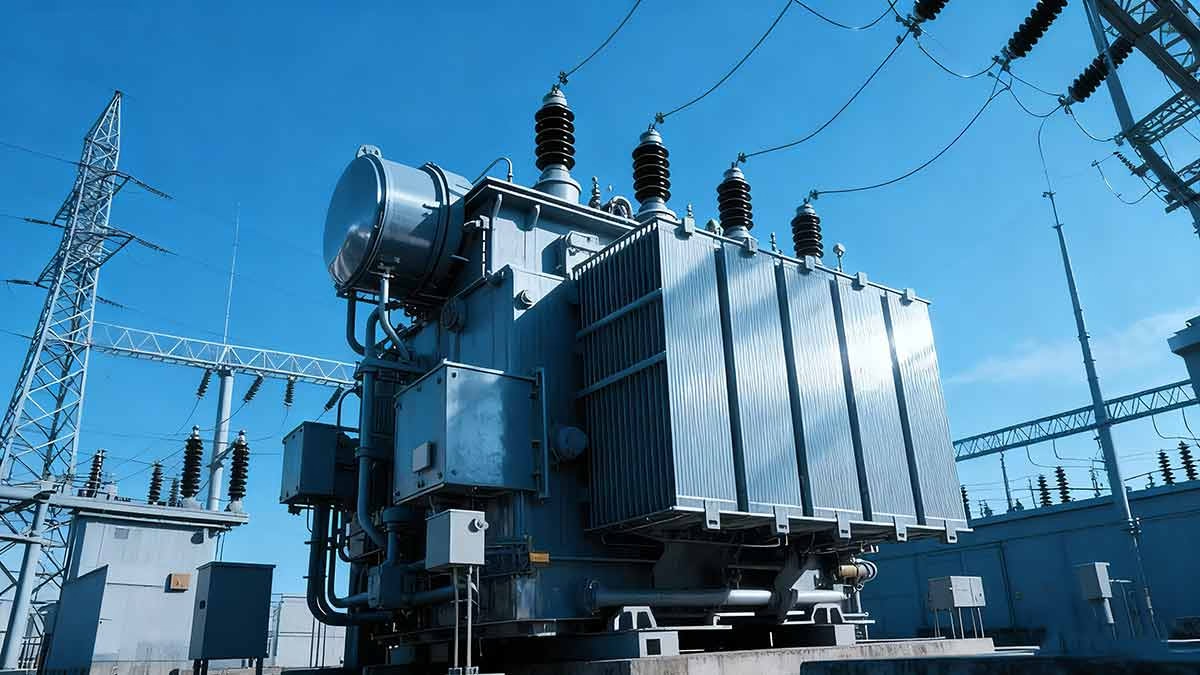
Tap Changers: Fine-Tuning Voltage for Stability
Tap changers adjust the number of turns in the winding, allowing for precise voltage regulation despite fluctuations in input voltage or load. There are two primary types:
- Off-Load Tap Changers (OLTC): Adjusted when the transformer is de-energized—ideal for applications with stable loads (e.g., residential distribution).
- On-Load Tap Changers (OLTC): Adjusted while the transformer is in operation—critical for utilities and industrial facilities with variable loads (e.g., manufacturing plants, data centers).
Our smart transformers integrate digital OLTCs that automatically adjust voltage based on real-time load data, ensuring ±1% voltage stability even during peak demand.
Key Components of a Power Transformer & Their Critical Functions
A power transformer’s reliability and efficiency depend on the synergy of its components. Each part—from the core to the bushings—plays a vital role in ensuring safe, consistent performance. Below is a detailed breakdown of the components we prioritize in our transformer designs:
Core: The Magnetic Heart
- Material: Grain-oriented silicon steel (standard) or amorphous metal (premium).
- Function: Concentrates magnetic flux and minimizes leakage.
- Design Variations: Core-type (windings around the core) for large transformers; shell-type (core around the windings) for high-voltage applications; toroidal (donut-shaped) for low-loss, compact units.
Windings: The Electrical Conductors
- Primary Winding: Connected to the power source; designed for input voltage and current.
- Secondary Winding: Connected to the load; designed for output voltage and current.
- Winding Materials: Copper (higher conductivity, lower losses) or aluminum (cost-effective, lighter).
- Insulation: Paper, pressboard, or polymer materials rated for the transformer’s voltage class (e.g., 11kV, 33kV, 132kV).
Insulation System: Preventing Short Circuits
Insulation is critical for safety and longevity, especially in high-voltage transformers:
- Oil Insulation: Mineral oil or natural ester oil (environmentally friendly alternative) used in large transformers; provides insulation and cooling.
- Solid Insulation: Epoxy resin or paper insulation used in dry-type transformers (ideal for indoor applications like data centers).
- Gas Insulation: SF6 gas is used in high-voltage, compact transformers (e.g., GIS substations).
Cooling System: Managing Heat Dissipation
Transformers generate heat from copper and core losses, so cooling systems are essential to maintain efficiency:
- Oil-Immersed Cooling:
- ONAN (Oil Natural, Air Natural): Passive cooling for small transformers (≤500kVA).
- ONAF (Oil Natural, Air Forced): Fan-assisted cooling for medium transformers (500kVA–5MVA).
- OFAF (Oil Forced, Air Forced): Pump and fan-assisted cooling for large transformers (>5MVA).
- Dry-Type Cooling:
- AN (Air Natural): Passive cooling for indoor transformers (≤1MVA).
- AF (Air Forced): Blower-assisted cooling for high-load indoor applications.
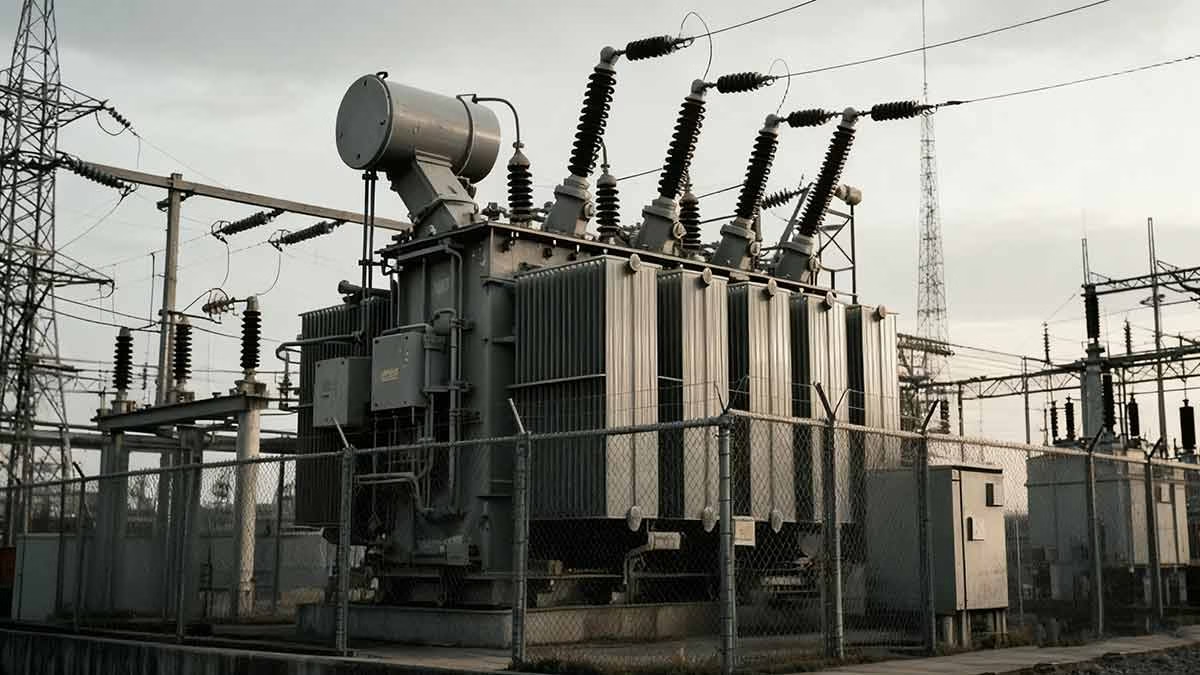
For a transformer installed in a desert climate, we designed a custom OFAF system with enhanced radiators and temperature sensors to withstand ambient temperatures up to 55°C.
Tap Changers: Voltage Regulation
- Off-Load Tap Changers: Manual adjustment; no power interruption required for small changes.
- On-Load Tap Changers: Automatic or manual adjustment; maintains voltage stability during operation.
Bushings: External Connections
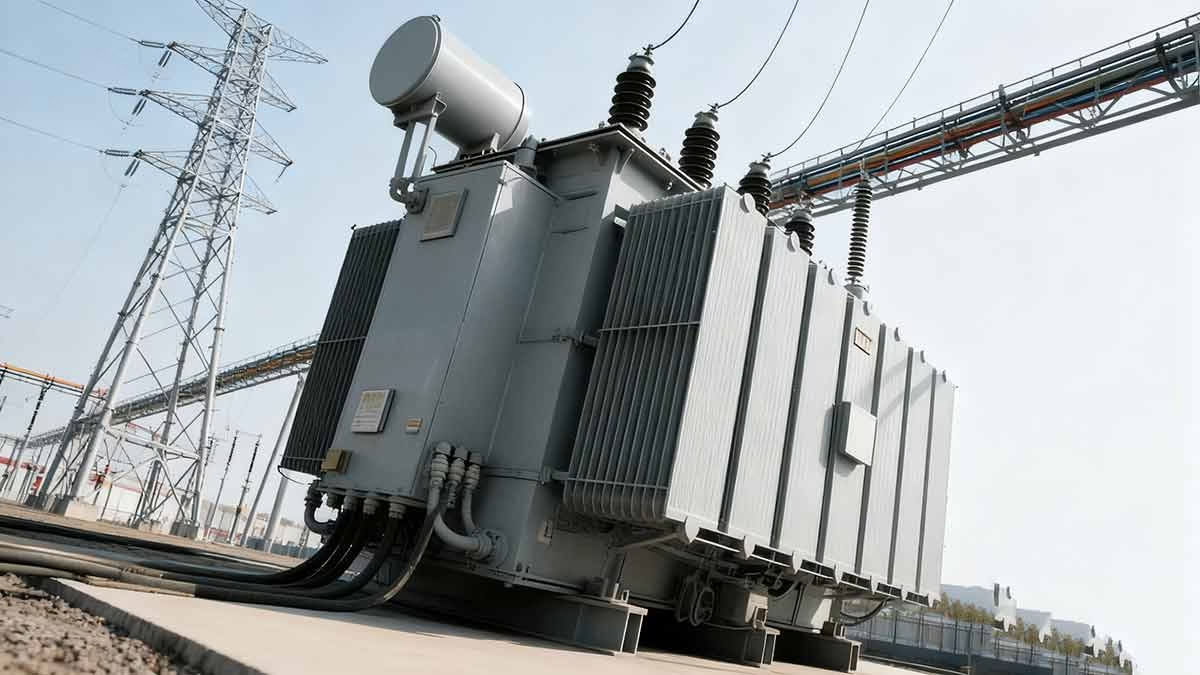
- Function: Provide an insulated passage for conductors between the transformer’s internal windings and the external electrical system.
- Types: Oil-filled (for oil-immersed transformers), solid epoxy (for dry-type transformers), or gas-insulated (for high-voltage applications).
Tank & Conservator (Oil-Immersed Transformers)
- Tank: Steel enclosure that houses the core, windings, and insulation oil; designed to withstand pressure and environmental conditions.
- Conservator: A small tank attached to the main tank that accommodates oil expansion and contraction due to temperature changes; it prevents oil oxidation by limiting air contact.
Conclusion
Power transformers are engineering essentials that enable the reliable, efficient transfer of electrical energy across modern societies. From the foundational principles of electromagnetic induction to the precision design of cores, windings, and insulation systems, every aspect of a transformer is optimized to balance performance, safety, and cost.
As a transformer manufacturer, we prioritize incorporating the latest materials (e.g., amorphous metal cores), smart technologies (e.g., digital tap changers), and environmentally friendly solutions (e.g., natural ester oil) to meet the evolving needs of utilities, industries, and renewable energy projects.
Understanding how transformers work—from their core components to their role in voltage transformation—empowers engineers, facility managers, and energy professionals to make informed decisions when selecting, installing, and maintaining these critical devices. Whether you’re designing a wind farm, upgrading an industrial facility, or building a smart grid, a well-designed power transformer is the key to unlocking efficient, reliable electrical energy.
More FAQ About How Does A Power Transformer Work
Q: What is the basic working principle of a power transformer?
A: A power transformer operates on the principle of electromagnetic induction, as described by Faraday’s Law. When alternating current (AC) flows through the primary winding, it generates an alternating magnetic flux in the magnetic core. This fluctuating magnetic flux passes through the secondary winding, inducing an electromotive force (EMF) in it. The voltage ratio between the primary and secondary windings is proportional to their turn ratio, enabling voltage stepping-up or stepping-down while maintaining the same frequency. Essentially, it converts electrical energy into magnetic energy and then back into electrical energy for transmission and distribution.
Q: What are the key components of a power transformer and their functions?
A: The core components include: 1) Magnetic Core: Usually made of silicon steel sheets, it provides a low-reluctance path for magnetic flux, minimizing magnetic losses. 2) Windings (Primary & Secondary): Conductive coils (typically copper or aluminum) that transfer energy—primary winding connects to the power source, secondary winding connects to the load. 3) Insulation Materials: Separate windings from each other and the core to prevent short circuits, using materials like enameled wire insulation and polyester film. 4) Tank & Cooling System: For oil-immersed transformers, the tank holds insulating oil that cools the windings and enhances insulation. 5) Bushings: Insulate and support the leads extending from the windings to the external circuit.
Q: What is the significance of the turn ratio in a power transformer?
A: The turn ratio (N₁/N₂) is the ratio of the number of turns in the primary winding (N₁) to the secondary winding (N₂). It directly determines the voltage transformation ratio: V₁/V₂ = N₁/N₂ (where V₁ is the primary voltage, V₂ is the secondary voltage). A turn ratio greater than 1 means the transformer is a step-down transformer (reducing voltage), while a ratio less than 1 indicates a step-up transformer (increasing voltage). This ratio also inversely affects the current ratio (I₁/I₂ = N₂/N₁) to maintain power balance (excluding losses).
Q: What is the difference between a step-up and a step-down power transformer?
A: A step-up transformer increases voltage: its secondary winding has more turns than the primary (N₂ > N₁), so V₂ > V₁. It is primarily used in power plants to boost generator output voltage (e.g., from 10kV to 500kV) for long-distance transmission, reducing current and line losses. A step-down transformer decreases voltage: its secondary winding has fewer turns (N₂ < N₁), so V₂ < V₁. It is widely used in substations and households to reduce high transmission voltage to usable levels (e.g., 220V or 110V) for appliances and equipment.
Q: Why is the magnetic core made of silicon steel sheets instead of solid iron?
A: Silicon steel sheets are used to minimize two key magnetic losses: hysteresis loss and eddy current loss. Hysteresis loss occurs due to the repeated magnetization and demagnetization of the core by alternating flux; adding silicon to steel reduces this loss. Eddy currents are induced, circulating currents in the core material, causing heating. Laminating the core into thin silicon steel sheets (insulated from each other) breaks the path of eddy currents, significantly reducing their magnitude and associated heat generation. Solid iron would have much higher eddy current losses, making the transformer inefficient and prone to overheating.
Q: What are the common types of power transformers based on cooling methods?
A: The main types are: 1) Oil-Immersed Transformer: Uses insulating oil as both coolant and insulator. The oil absorbs heat from windings and core, transferring it to the tank walls or radiators for dissipation. Suitable for large-capacity, high-voltage applications (e.g., grid substations). 2) Dry-Type Transformer: Uses air as the cooling medium, with windings insulated by resin or other dry materials. It is smaller, fire-safe, and suitable for indoor use (e.g., buildings, factories). 3) Gas-Insulated Transformer: Filled with sulfur hexafluoride (SF₆) gas for insulation and cooling, used in compact, high-voltage installations where space is limited.
Q: What causes winding faults in power transformers, and how can they be prevented?
A: Common winding faults include turn-to-turn short circuits, ground faults, phase-to-phase short circuits, and open circuits. Causes include: insulation damage during manufacturing/repair, overheating from overload or poor cooling, mechanical deformation from short-circuit shocks, moisture absorption, and insulation oil degradation. Identification signs include: increased oil temperature, unbalanced DC resistance between phases, abnormal buzzing or bubbling sounds in oil, and activation of gas or differential protection relays. For confirmation, technicians measure winding resistance and perform insulation tests.
Q: Is it normal for a power transformer to generate heat during operation?
A: Mild heating is normal, as transformers have inherent power losses (copper loss and iron loss) that convert to heat. Copper loss occurs due to resistance in windings when current flows, while iron loss comes from hysteresis and eddy currents in the core. However, excessive heating (e.g., tank surface too hot to touch) indicates abnormal conditions, such as overloading, poor cooling (clogged radiators, insufficient oil), winding short circuits, or core faults. Transformers are designed with temperature limits; exceeding these can accelerate insulation aging and shorten service life, so proper ventilation and cooling system maintenance are critical.
Q: What causes the “buzzing” sound in a power transformer, and when is it a concern?
A: The normal buzzing sound comes from magnetostriction—expansion and contraction of the silicon steel core as it is alternately magnetized. This sound is steady and uniform under normal operation. Abnormal buzzing (loud, irregular, or accompanied by rattling) indicates issues: loose core clamping bolts (amplifying vibration), overload (increased magnetic flux density), voltage fluctuations, or faulty windings. If the sound suddenly becomes louder or changes tone, it may signal an impending fault, requiring immediate inspection by maintenance personnel.
Q: How to select the correct capacity (kVA) for a power transformer?
A: Capacity selection is based on the total connected load and future expansion needs. The basic principle is to choose a transformer with a rated capacity slightly higher than the total calculated load to avoid overloading. Specifically, calculate the total apparent power (in kVA) of all connected devices, then add a 20-30% margin for load growth and non-linear loads (e.g., motors, electronic equipment). Oversized transformers waste energy (higher no-load losses), while undersized ones operate under overload, leading to overheating and premature failure. For industrial applications, factors like load diversity and peak demand are also considered.
Q: What is the difference between a three-phase and a single-phase power transformer?
A: Single-phase transformers have two windings (primary and secondary) and are used in single-phase power systems (e.g., residential areas, small appliances), converting single-phase AC voltage. Three-phase transformers have three sets of primary and secondary windings, designed for three-phase power systems (e.g., factories, power grids). They are more efficient, compact, and cost-effective than three separate single-phase transformers for the same total capacity. Three-phase transformers are essential for large-scale power transmission and industrial equipment (e.g., motors, compressors) that require three-phase power.
Q: Can a 110V to 220V power transformer be used continuously, and what is its service life?
A: A qualified 110V to 220V transformer can be used continuously if operated within its rated capacity and under proper conditions (adequate ventilation, dry environment, no overloading). Normal service life is 5-10 years, depending on quality, usage, and maintenance. Factors affecting life: poor ventilation (causing overheating), frequent overloading, moisture or corrosive environments (damaging insulation), and poor-quality materials (e.g., aluminum windings prone to oxidation). To extend service life, avoid overloading, keep the transformer clean, and ensure proper heat dissipation.
Q: What are copper loss and iron loss in power transformers, and how to reduced them?
A: Copper loss (I²R loss) is the power lost as heat in windings due to electrical resistance; it increases with load current. Iron loss (core loss) is constant (regardless of load) and comes from hysteresis and eddy currents in the core. Reduction methods: Use high-conductivity copper windings (instead of aluminum) to lower resistance (reducing copper loss); use thin, grain-oriented silicon steel sheets for the core (reducing iron loss); optimize winding design to minimize current density; and ensure proper cooling to reduce temperature-related resistance increases. For no-load loss reduction, amorphous alloy cores are used in high-efficiency transformers.
Q: What should be done if a power transformer catches fire?
A: Immediate actions: 1) Disconnect the transformer from the power supply by tripping all side circuit breakers and opening isolation switches. 2) Stop the cooling system (fans, oil pumps) to prevent fire spread. 3) If oil is burning on the tank top, open the lower emergency oil drain valve to lower the oil level (avoiding core exposure). Do NOT drain oil if the internal core/windings are on fire, as this can cause an explosion. 4) Extinguish the fire using dry powder, carbon dioxide, or foam fire extinguishers (do not use water). 5) Activate the fire alarm and notify the fire department. After the fire, inspect the transformer for structural damage before considering restarting.
Q: What are the future development trends of power transformers?
A: Future trends focus on high efficiency, miniaturization, intelligence, and environmental friendliness. 1) High-Efficiency Materials: Use of amorphous alloy or nanocrystalline cores to reduce no-load losses. 2) Miniaturization: Adoption of high-frequency designs and advanced cooling technologies (e.g., liquid cooling) for a smaller size. 3) Intelligence: Integration of sensors and IoT technology for real-time monitoring of temperature, oil quality, and load status, enabling predictive maintenance. 4) Environmental Friendliness: Development of oil-free (dry-type) transformers and biodegradable insulating oil to reduce environmental impact. 5) High-Voltage Capacity: Design of ultra-high-voltage transformers (e.g., 1100kV) for long-distance, low-loss power transmission.