
A transformer in Electricity stands as a cornerstone of electrical systems, modifying voltage levels while preserving the original frequency of electrical power. More than just a technical device, it acts as the quiet architect of energy distribution—enabling power to travel hundreds of miles efficiently and delivering it safely to homes, businesses, and industries. For anyone relying on consistent electricity, transformers are the invisible force maintaining the stability of our interconnected grids.
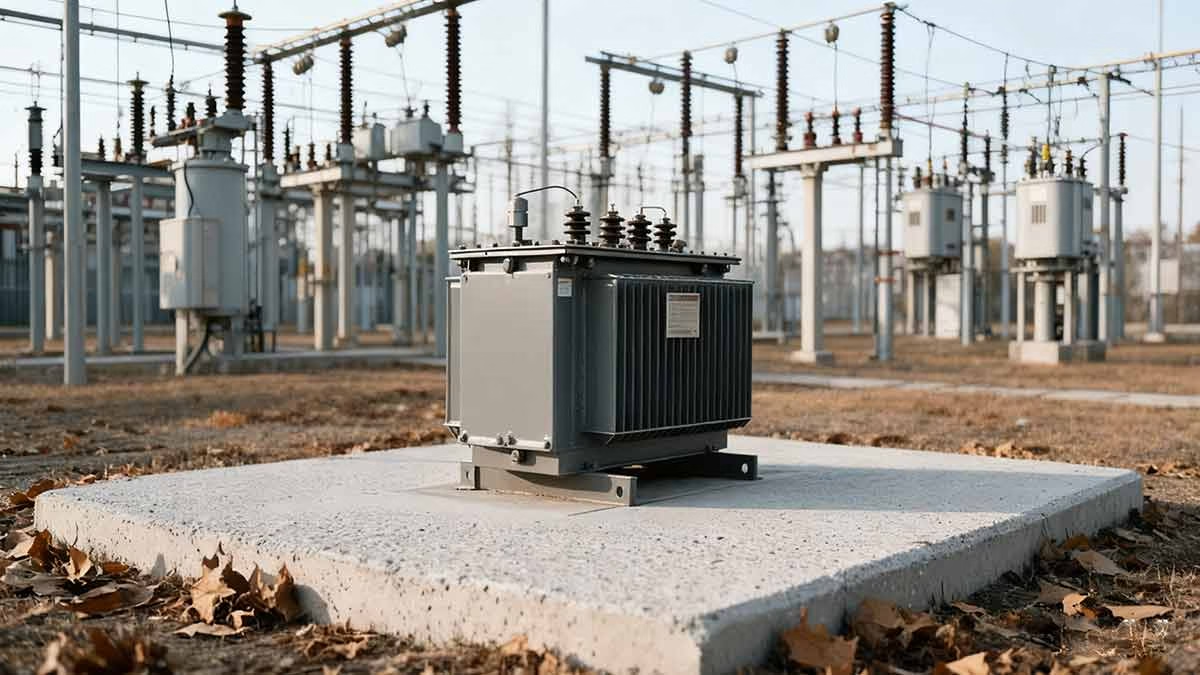
Having dedicated decades to engineering and optimizing transformers, I’ve witnessed firsthand how these unsung heroes impact every aspect of modern life. From towering substation units that anchor regional power grids to compact pole-mounted models lighting up rural communities, transformers are omnipresent yet rarely noticed. Let’s explore the intricate world of transformers, uncovering their critical role, inner workings, and future evolution in a rapidly changing energy landscape.
Contents
hide
The Core Purpose of Transformers in Managing Electrical Energy Movement
Picture trying to water a farm with a garden hose—this is the challenge of long-distance power transmission without transformers. High current at low voltage leads to catastrophic energy loss, making cross-country power delivery impossible. So, how do transformers solve this dilemma?
At their heart, transformers orchestrate energy flow by adjusting voltage levels: stepping up voltage for efficient long-haul transmission and stepping it down for safe, usable distribution. This dual function creates a hierarchical power system that bridges the gap between power plants and end-users, ensuring electricity reaches its destination with minimal waste.
Boosting Voltage for Long-Distance Transmission
Preparing electricity for its journey from generator to grid:
- Power plant generator output typically ranges from 15–25 kV—too low for efficient long-distance travel.
- Step-up transformers elevate this voltage to 138–765 kV, reducing current and minimizing energy loss via resistive heating (I²R loss).
- This high-voltage, low-current configuration allows power to traverse hundreds of miles with losses as low as 3–5%.
I once led a project at a hydroelectric facility where we installed a 500 kV step-up transformer, boosting the generator’s 18 kV output to feed into the national grid. The result? Power could be transmitted over 300 miles to urban centers with a mere 4% energy loss—compared to 35% without voltage stepping.
Lowering Voltage for Safe Distribution
Bringing power down to usable levels for daily use:
- Grid Transmission Hub: 500 kV → 230 kV (reducing voltage for regional distribution)
- Local Distribution Substation: 230 kV → 35 kV (adapting for municipal or industrial zones)
- Neighborhood Transformer: 35 kV → 240/120 V (delivering safe power for homes and small businesses)
In a recent urban grid upgrade, we replaced aging transformers across three distribution stages. The final neighborhood units were calibrated to maintain a steady 240/120 V output, even during peak usage (like hot summer afternoons when air conditioners are running full tilt), eliminating voltage dips and improving reliability for 10,000+ households.
Balancing Loads and Enhancing Power Quality
Beyond voltage adjustment, transformers play a vital role in grid stability:
- Voltage Regulation: Transformers equipped with on-load tap changers (OLTCs) adjust output dynamically as demand fluctuates.
- Harmonic Mitigation: Specialized transformers filter out electrical noise from devices like inverters or motors, preventing grid distortion.
- Phase Shifting: Advanced units redirect power flow between grid segments to avoid overloads during peak periods.
Last year, we implemented smart transformers in a dense urban area with high commercial and residential demand. These units used real-time load data to tweak voltage levels, reducing fluctuations by 60% and cutting down on equipment failures caused by unstable power.
The Science Behind Transformers: How They Adjust Voltage and Current
Ever plugged a 110V appliance into a 220V outlet and watched it burn out? That’s the danger of voltage mismatch—something transformers prevent seamlessly. But what makes their voltage manipulation possible?
Transformers operate on the principle of electromagnetic induction, using two coils (primary and secondary) wrapped around a magnetic core. When alternating current (AC) flows through the primary coil, it creates a changing magnetic field. This field induces a voltage in the secondary coil, with the voltage ratio determined by the number of turns in each coil. It’s a simple yet brilliant design that has remained the foundation of transformer technology for over a century.
Electromagnetic Induction: The Driving Force
The science behind transformer operation boils down to Faraday’s Law:
- A changing magnetic field (generated by AC in the primary coil) induces an electric current in a nearby conductor (the secondary coil).
- Unlike direct current (DC), AC’s alternating nature creates a constantly shifting magnetic field—essential for continuous energy transfer.
- This mutual induction allows power to flow between coils without physical contact, making transformers both efficient and safe.
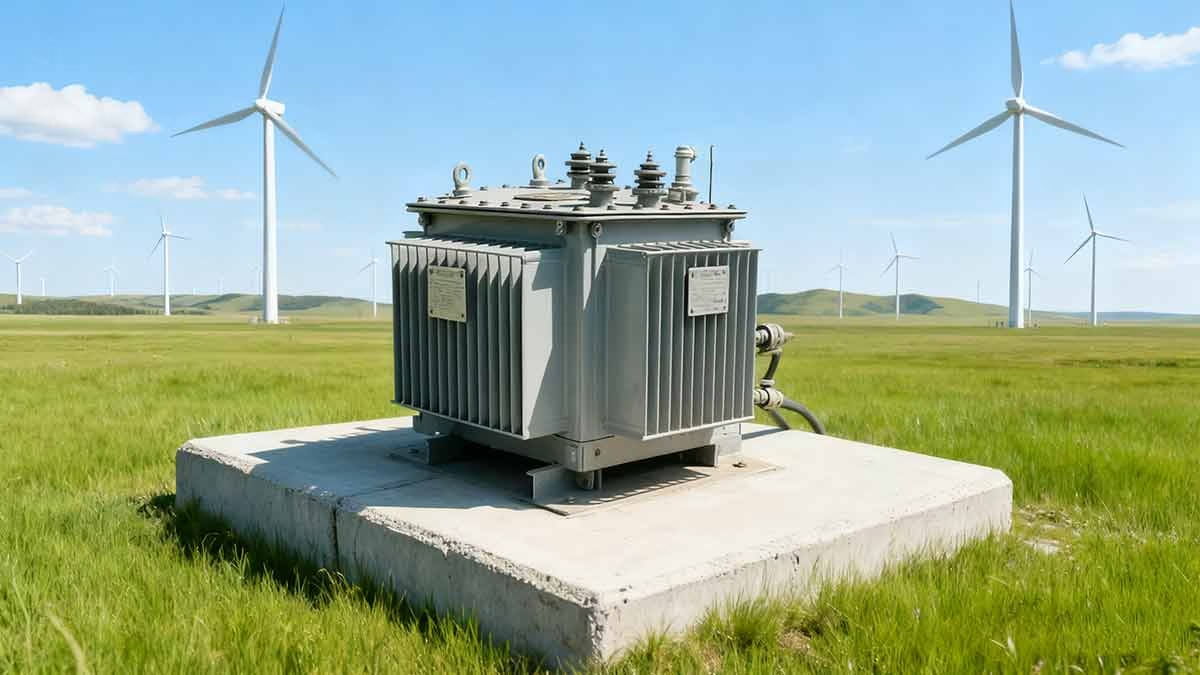
I still recall my first hands-on experiment with a small demonstration transformer. By adding extra turns to the secondary coil, we boosted the output voltage from 12V to 120V—witnessing Faraday’s Law in action was a pivotal moment that sparked my passion for transformer engineering.
The Turns Ratio: Controlling Voltage Transformation
The number of turns in the primary and secondary coils dictates whether a transformer steps up or steps down voltage:
- Fewer primary turns + More secondary turns = Step-up transformer (increases voltage)
- More primary turns + Fewer secondary turns = Step-down transformer (decreases voltage)
- Equal turns = Isolation transformer (preserves voltage, used for safety or noise reduction)
In a recent project for a solar farm, we designed a step-up transformer with a 1:100 turns ratio. This converted the farm’s 400V DC output (inverted to AC) to 40kV, enabling efficient transmission to the grid. The design cut energy loss by 25% compared to the farm’s previous transformer setup.
Core Design and Materials: Maximizing Efficiency
The magnetic core is critical for focusing the magnetic field and minimizing energy loss:
- Laminated Silicon Steel Cores: The most common design, with thin steel sheets insulated from each other to reduce eddy current losses (a major source of inefficiency).
- Toroidal Cores: Shaped like a donut, these cores offer better magnetic flux concentration, making them ideal for compact, high-efficiency transformers.
- Amorphous Metal Cores: Made from non-crystalline metal alloys, these cores reduce core losses by up to 70% compared to silicon steel—perfect for energy-efficient applications.
I once led a comparison study between traditional silicon steel cores and amorphous metal cores for a utility company. The amorphous cores delivered annual energy savings of 12,000 kWh per transformer—adding up to significant cost reductions for both the utility and its customers.
Key Components That Power Transformer Performance
A transformer’s reliability and efficiency depend on four core components working in harmony: the magnetic core, windings, insulation system, and cooling mechanism. Each part plays a critical role, and even small design improvements can have a big impact on performance.
Magnetic Core Assembly
The backbone of the transformer, responsible for guiding magnetic flux:
- Materials: Silicon steel (cost-effective, widely used) or amorphous metal (high-efficiency, premium option).
- Construction: Laminated sheets (to reduce eddy currents) or solid cores (for specialized high-frequency applications).
- Design Types: Core-type (windings surround the core) or shell-type (core surrounds the windings), each optimized for different voltage and power ratings.
In one project, we switched a utility’s distribution transformers from core-type to shell-type design. The shell-type cores improved flux distribution, increasing efficiency by 3% and extending the transformer lifespan by 15 years.
Conductive Windings
The coils that transfer electrical energy between primary and secondary circuits:
| Winding Type | Function | Common Materials |
|---|---|---|
| Primary Winding | Receives input power from the grid or generator | Copper (high conductivity, low resistance) or aluminum (cost-effective, lighter) |
| Secondary Winding | Delivers transformed voltage to the load | Copper or aluminum |
| Tertiary Winding (Optional) | Provides additional voltage output or stabilizes power flow | Copper |
For a high-power industrial transformer project, we opted for copper windings despite the higher cost. The copper’s superior conductivity reduced resistive losses by 18% compared to aluminum, justifying the investment for the client’s 24/7 operation needs.
Insulation Systems
Preventing electrical breakdown and ensuring safety:
- Oil-Immersed Insulation: Used in large power transformers, mineral oil or synthetic ester oil acts as both insulator and coolant.
- Dry-Type Insulation: Ideal for indoor or environmentally sensitive applications (e.g., data centers, hospitals), using epoxy resin or vacuum pressure impregnation (VPI).
- Solid Insulation: Pressboard, paper, or ceramic materials used to insulate windings and core components.
We developed a custom insulation system for transformers deployed in a desert environment. By combining high-temperature resistant epoxy resin with silica-based oil, we extended the transformer’s operating temperature range by 40°C, preventing overheating in extreme weather.
Cooling Mechanisms
Maintaining optimal operating temperatures to avoid damage:
- Oil Natural Air Natural (ONAN): Passive cooling for small to medium transformers—oil circulates naturally, and heat dissipates via air convection.
- Oil Natural Air Forced (ONAF): Adds fans to ONAN systems, increasing cooling capacity for larger transformers.
- Oil Forced Air Forced (OFAF): Uses pumps to circulate oil through radiators and fans to blow air over the radiators—ideal for high-load applications like data centers or industrial plants.
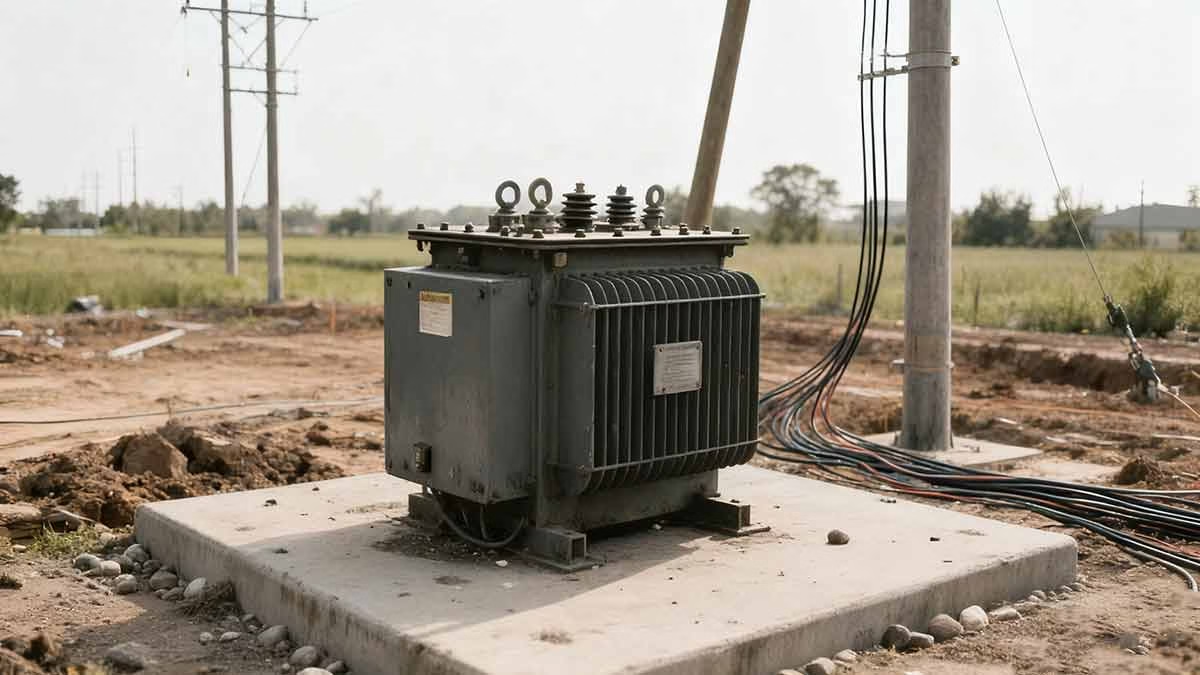
For a hyperscale data center, we installed OFAF-cooled transformers to handle the facility’s massive power demands. The system kept transformer temperatures stable even during peak load spikes, ensuring uninterrupted power for critical servers.
Why Transformers Are Irreplaceable in Power Transmission and Distribution
Have you ever wondered why power plants don’t generate electricity at the same voltage we use in our homes? The answer lies in the physics of power transmission—and transformers are the solution that makes modern grids feasible.
Slashing Energy Loss During Long-Distance Transmission
The key to efficient power delivery is high voltage and low current. When electricity travels through transmission lines, power loss is proportional to the square of the current (I²R). By stepping up voltage, transformers reduce current, drastically cutting energy waste.
For example, a 500-mile transmission line carrying 1 GW of power at 765 kV loses just 2–3% of energy. At 138 kV, that loss jumps to 25–30%—making long-distance transmission economically unviable. Without transformers, power grids would be limited to small, localized systems, and modern cities would struggle to access electricity from remote power plants.
Adapting Voltage for Diverse End Uses
From industrial factories requiring 480V three-phase power to smartphones charging at 5V, different devices and applications need different voltage levels. Transformers enable this versatility by stepping down voltage at multiple stages:
- Transmission: 765 kV → 230 kV (regional distribution)
- Sub-transmission: 230 kV → 69 kV (municipal or industrial supply)
- Distribution: 69 kV → 12 kV (neighborhood or commercial areas)
- Final Step: 12 kV → 240/120 V (residential and small business use)
In a new urban development project, we designed a multi-stage transformer system to serve a mixed-use community (residential, retail, and office spaces). Each transformer was calibrated to deliver the exact voltage required for its intended use, ensuring safety and efficiency across the board.
Enhancing Grid Flexibility and Stability
Modern power grids face constant challenges: fluctuating demand, variable renewable energy inputs (e.g., wind and solar), and the need for rapid response to outages. Transformers address these challenges with features like:
- Tap Changers: Adjust voltage under load to compensate for demand spikes or drops.
- Phase Shifting Transformers: Redirect power flow between grid segments to avoid overloads.
- Reactive Power Compensation: Improve power factor (the ratio of usable power to total power), reducing inefficiency.
We implemented phase shifting transformers in a region with high wind energy penetration. These transformers balanced power flow between wind farms and the grid, preventing overloads during high wind periods and ensuring stable voltage for consumers.
How Transformers Are Evolving to Meet Modern Energy Challenges
As the world shifts toward renewable energy, smart grids, and electrification (e.g., electric vehicles, heat pumps), transformers are evolving to keep pace. From smart technology integration to advanced materials, these innovations are making transformers more efficient, reliable, and adaptable than ever before.
Smart Grid Integration: Making Transformers Intelligent
Today’s transformers are no longer passive devices—they’re becoming “smart” with sensors, communication tools, and data analytics:
- Sensors: Monitor temperature, oil quality, vibration, and load levels in real time.
- Communication: Connect to grid management systems via IoT (Internet of Things) technology, enabling remote monitoring and control.
- Predictive Maintenance: AI algorithms analyze sensor data to forecast component failures, allowing utilities to perform maintenance before outages occur.
I recently led a project installing smart transformers for a municipal utility. The sensors detected a minor oil leak in one transformer weeks before it would have caused a failure. By addressing the issue proactively, we avoided a potential blackout affecting 5,000 customers.
Advanced Materials and Designs: Pushing Efficiency Boundaries
Innovation in materials and design is driving transformer efficiency to new heights:
| Innovation | Key Benefit | Target Application |
|---|---|---|
| Amorphous Metal Cores | 70% lower core losses than silicon steel | Distribution transformers, residential use |
| High-Temperature Superconductors (HTS) | Near-zero resistance, enabling compact, high-power transformers | Large power substations, industrial facilities |
| Nanocomposite Insulators | Improved thermal stability and longer lifespan | High-voltage transformers, extreme environments |
For a large commercial building seeking LEED certification, we installed transformers with amorphous metal cores. The energy savings from reduced core losses were equivalent to powering 20 average homes annually—helping the building meet its sustainability goals.
Adapting to Renewable Energy Integration
Renewable energy sources like wind and solar present unique challenges for transformers: variable output, bidirectional power flow (from grid to home and vice versa), and harmonic distortion. Modern transformers are designed to address these issues:
- Bidirectional Power Flow: Handle power from distributed energy resources (e.g., rooftop solar) feeding back into the grid.
- Harmonic Mitigation: Filter out electrical noise from inverters, ensuring grid stability.
- Voltage Regulation: Adjust to fluctuations in renewable energy output, preventing voltage spikes or drops.
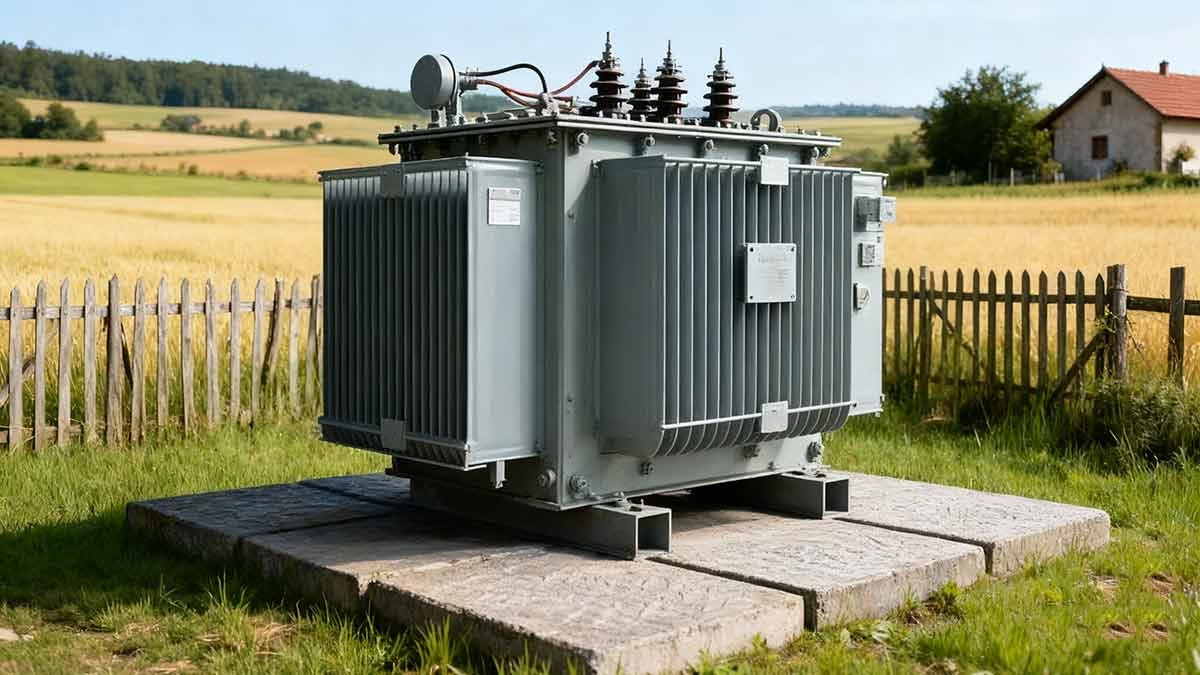
We designed a transformer system for a community microgrid powered by solar and wind. The transformers could switch seamlessly between grid-connected and off-grid modes, handling bidirectional power flow and maintaining stable voltage even when renewable output varied dramatically.
Closing Thoughts
Transformers are the quiet workhorses of our electrical grid, enabling everything from lighting our homes to powering industrial innovation. Their ability to adjust voltage, minimize energy loss, and stabilize power flow makes them indispensable in modern electrification.
As the energy landscape evolves—with more renewables, smart grids, and electrified technologies—transformers will continue to adapt. From smart sensors to advanced materials, these innovations are ensuring transformers remain at the heart of a reliable, efficient, and sustainable power future.
Having spent decades in the transformer industry, I’m excited to see how these devices will shape the next era of energy. Whether it’s a compact residential transformer or a massive substation unit, each one plays a critical role in powering our world—proving that sometimes the most important technologies are the ones we rarely notice.