
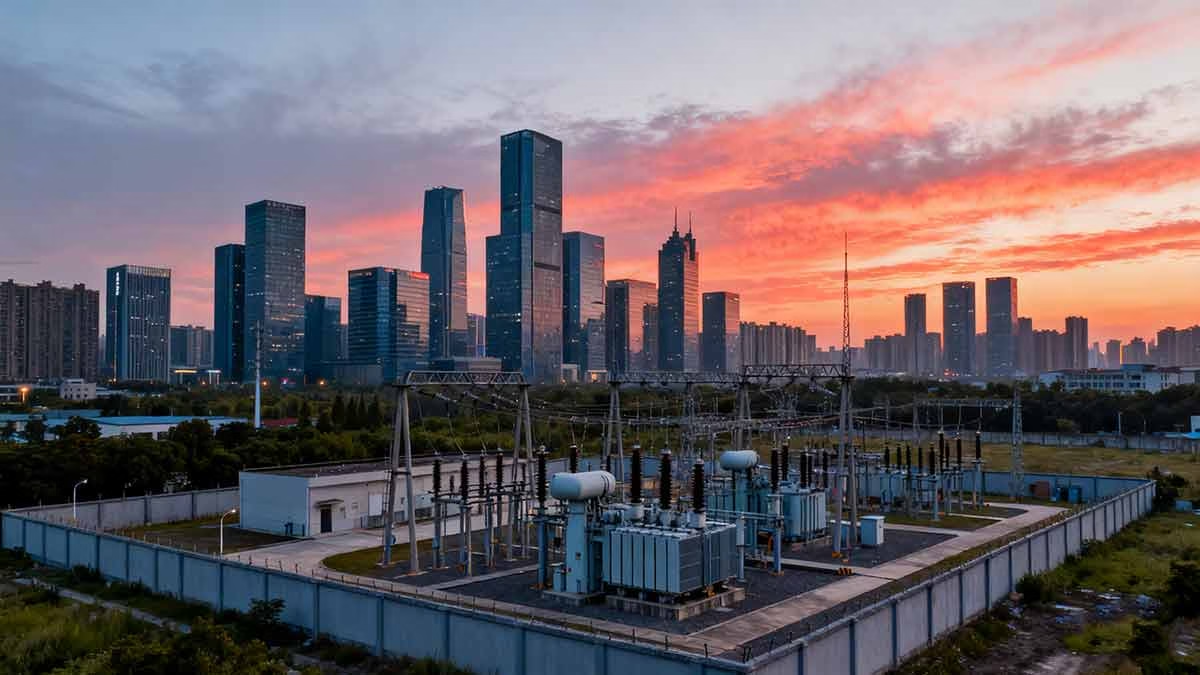
Ever passed those fenced electrical facilities and wondered what is an electrical substation? Those are electrical substations—unsung heroes of the power grid that keep electricity flowing safely and efficiently from power plants to homes, businesses, and industries. Far more than just a collection of equipment, they’re the backbone of reliable energy delivery.
An electrical substation acts as a dynamic hub in the power network, handling voltage transformation, circuit switching, and grid regulation. It ensures electricity is converted to optimal voltages for long-distance transmission and safe local use, while providing critical protection against faults and maintaining power quality. For anyone relying on consistent electricity—from homeowners to factory managers—substations are indispensable.
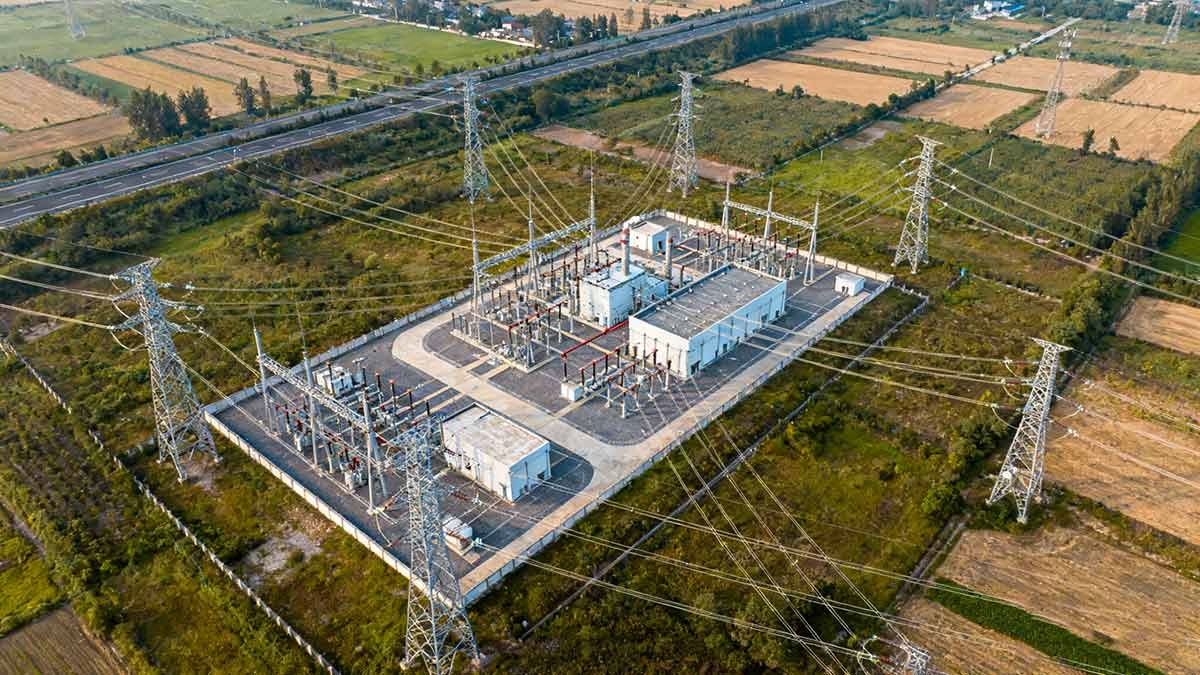
As an engineer with years of experience designing and optimizing substations, I’m excited to demystify these vital facilities. Let’s explore their core functions, components, technology, and why they’re essential to modern life.
The Basics of Electrical Substations
Flipping a light switch or charging an electric vehicle seems simple—but the journey of electricity depends on substations. These facilities perform three irreplaceable roles that make modern power distribution possible: voltage transformation, circuit management, and grid control.
Core Functions of Substations
- Voltage Transformation: The most fundamental role. Substations step up voltage from power plants (typically 20kV) to ultra-high levels (up to 765kV) for efficient long-distance transmission—reducing energy loss by minimizing current flow. They then step down voltage to safer levels (120/240V for homes, 480V for businesses) for end use.
- Circuit Switching: Like traffic controllers for electricity, substations connect or disconnect power lines, isolate faulty sections, and balance loads. This flexibility prevents widespread outages: if a line fails, the substation reroutes power to keep service intact for most users.
- Grid Control & Protection: Substations monitor power flow, voltage, and frequency in real time. They detect faults (e.g., short circuits) and trigger automatic shutdowns to protect equipment and personnel, while maintaining consistent power quality for sensitive devices like computers or medical equipment.
Why Substations Matter
- Efficiency Drivers: High-voltage transmission reduces energy loss by up to 90% compared to low-voltage delivery, making substations critical for cost-effective long-distance power transport.
- Reliability Guardians: By isolating faults and balancing loads, substations minimize downtime—critical for hospitals, data centers, and industrial operations that can’t afford outages.
- Safety Enforcers: They ensure electricity is converted to non-hazardous voltages before reaching consumers, preventing electrical accidents.
- Flexibility Enablers: Substations integrate new power sources (solar, wind) into the grid and adapt to changing demand patterns, supporting energy transition goals.
A recent project upgrading a rural substation’s switching system cut local outage times by 60%—proving how even small substation improvements deliver tangible benefits to communities.
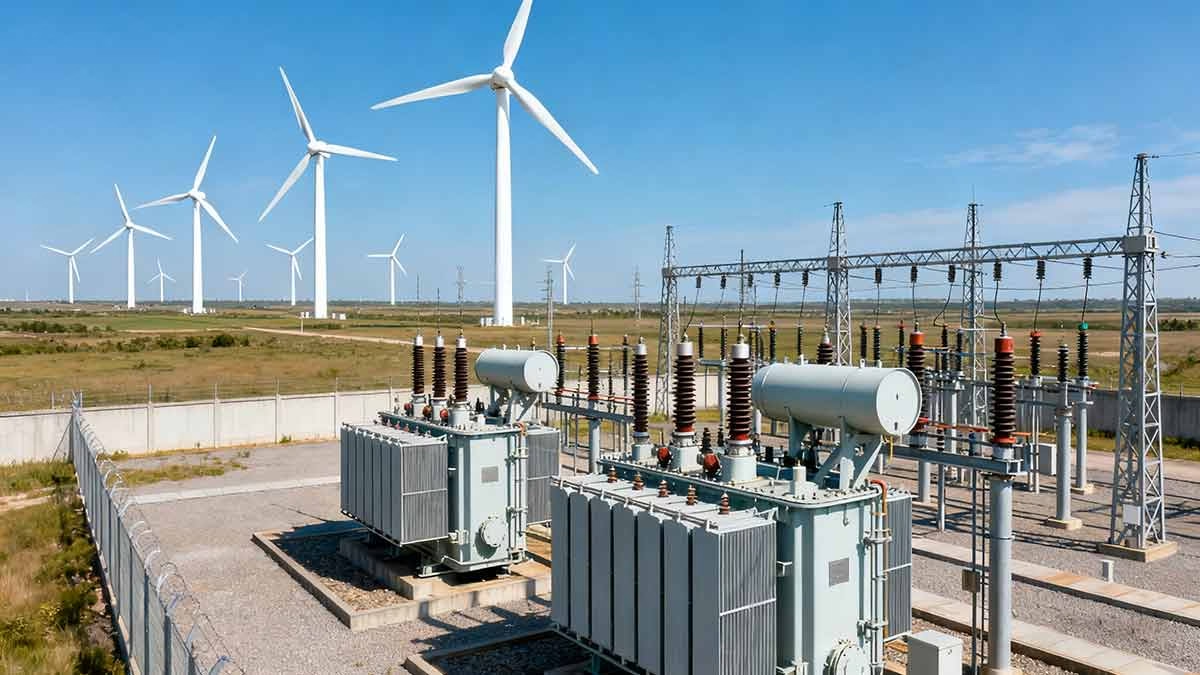
Anatomy of a Substation: Key Components
A substation’s functionality relies on interconnected components, each designed to perform a specific role. From voltage conversion to safety protection, every piece works in harmony to keep the grid running smoothly.
Essential Substation Components
- Transformers: The workhorses that handle voltage conversion. Step-up transformers boost generation-site voltage for transmission, while step-down models reduce it for distribution. Modern transformers use amorphous steel cores to cut energy losses by 30–40% compared to older designs.
- Circuit Breakers: Safety devices that interrupt faulty current flow to prevent equipment damage or fires. Types include SF6 gas breakers (for high voltage), oil-filled breakers (for medium voltage), and air-insulated breakers (for low voltage)—each tailored to specific grid needs.
- Busbars: Thick copper or aluminum conductors that act as “distribution backbones,” routing power between transformers, breakers, and outgoing lines. Their configuration (e.g., single, double, or ring bus) determines the substation’s flexibility and reliability.
- Insulators: Porcelain or polymer devices that prevent electrical leakage by isolating live components from grounded structures. They withstand weather, pollution, and high voltages while providing mechanical support.
- Control & Protection Systems: The “brain” of the substation, including SCADA (Supervisory Control and Data Acquisition) systems and protective relays. These digital tools monitor operations in real time, trigger automatic responses to faults, and enable remote management.
- Switchgear: Enclosed panels that house circuit breakers, switches, and meters. Air-insulated switchgear (AIS) is cost-effective for large sites, while gas-insulated switchgear (GIS) uses SF6 or eco-friendly alternatives for compact urban substations.
- Capacitor Banks: Improve power factor and voltage stability by supplying reactive power, reducing energy waste and ensuring efficient equipment operation.
- Grounding Grids: A network of buried conductors that provides a safe path for fault currents, protecting personnel and equipment from electric shock.
Each component is critical: A faulty insulator can cause power outages, while outdated control systems may delay fault responses. During a substation retrofit last year, upgrading old relays to digital models cut fault detection time from minutes to seconds—dramatically improving grid resilience.
Voltage Transformation: The Heart of Substation Operations
Voltage transformation is what makes long-distance power delivery feasible. Without it, electricity would lose most of its energy during transmission, making modern grid systems impossible. Let’s break down how this process works and why it’s so essential.
The Science Behind Voltage Transformation
Transformers operate on the principle of electromagnetic induction: Two coils (primary and secondary windings) wrapped around an iron core transfer electrical energy without direct contact. Changing the number of turns in each coil adjusts voltage:
- Step-Up Transformation: Secondary windings have more turns than primary windings, increasing voltage (e.g., 20kV from a power plant to 400kV for transmission).
- Step-Down Transformation: Primary windings have more turns than secondary windings, decreasing voltage (e.g., 400kV to 33kV for regional distribution, then to 120/240V for homes).
Think of it like water pressure: High voltage is like high water pressure—ideal for moving large volumes over long distances—while low voltage is safer and more usable for everyday needs.
Why Voltage Matters for Efficiency
- Reduced Energy Loss: Power loss in transmission lines follows the formula I2R (current squared times resistance). Higher voltage reduces current, cutting losses significantly. For example, transmitting 1GW of power at 400kV instead of 20kV reduces current to 1/20th, slashing losses to 1/400th.
- Cost Savings: Lower current allows thinner, less expensive transmission lines, reducing infrastructure costs.
- Increased Capacity: Higher voltage lines carry more power, delaying the need for new transmission corridors.
Real-World Voltage Journey
- A coal or solar power plant generates electricity at 10–20kV.
- A step-up substation boosts voltage to 230–765kV for long-distance transmission.
- A regional substation steps voltage down to 69–138kV for distribution to cities.
- Local distribution substations reduce voltage to 4–34.5kV for neighborhoods.
- Pole-mounted transformers (or small substation units) finalize the step-down to 120/240V for residential use.
Challenges & Innovations
- High-Voltage Equipment Costs: Ultra-high-voltage transformers and breakers require significant investment, but the long-term energy savings justify the expense.
- Safety Requirements: Higher voltages demand larger clearances, robust insulation, and advanced protection systems to prevent arc flashes.
- Smart Transformers: Modern “intelligent” transformers adjust voltage dynamically, integrate with renewable energy, and communicate with grid control centers—optimizing performance in real time.
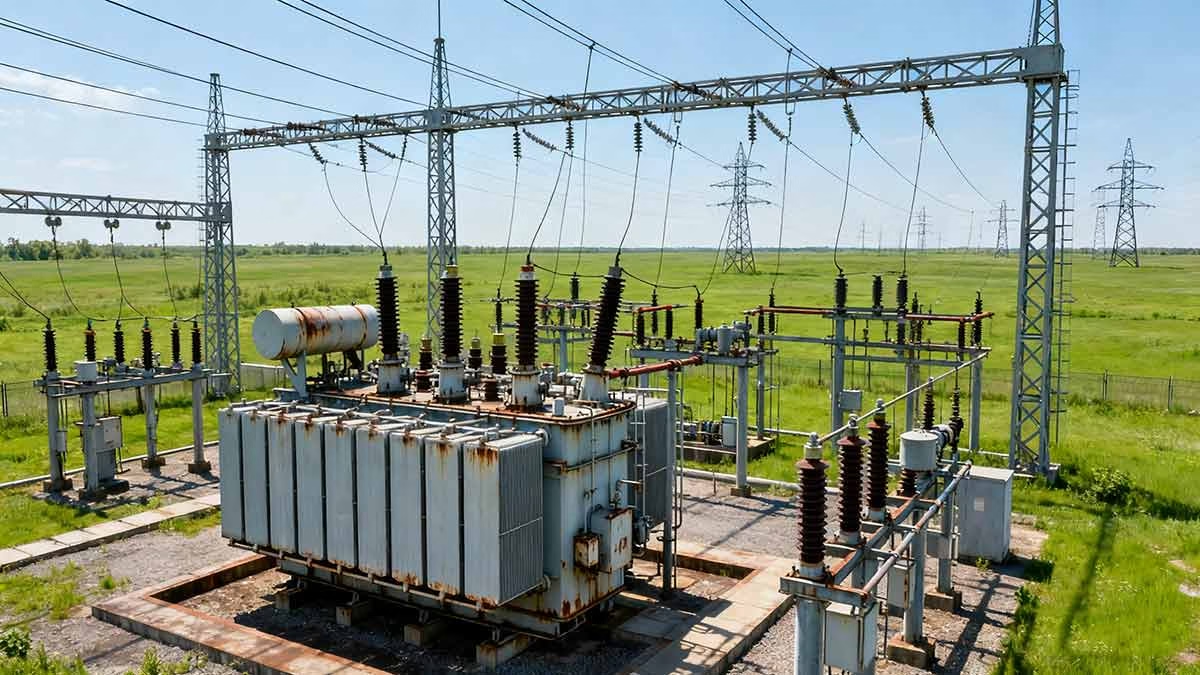
Types of Substations: Tailored to Grid Needs
Not all substations are the same—they’re designed to address specific roles in the power network, from long-distance transmission to local distribution. Each type handles different voltage levels and performs unique functions, working together to form a seamless grid.
Key Substation Types
- Transmission Substations: The “interstate highways” of the grid. They handle ultra-high voltages (230–765kV), connecting power plants to the transmission network. These large, often remote facilities transfer massive amounts of power over hundreds of miles. A 500kV transmission substation, for example, can move enough electricity to power 500,000 homes.
- Distribution Substations: The “local roads” that bring power to communities. They step down voltage from 69–138kV to 4–34.5kV, distributing power to neighborhoods, businesses, and small industrial sites. These smaller, more numerous substations are often located near population centers.
- Switching Substations: Focus on circuit management rather than voltage transformation. They route power between lines, isolate faults, and enable maintenance without widespread outages. Critical for urban grids, they enhance flexibility and reliability by creating redundant power paths.
- Converter Substations: Specialized facilities that convert alternating current (AC) to direct current (DC) and vice versa. Used for long-distance HVDC (High-Voltage Direct Current) transmission, which reduces energy loss over thousands of miles, and for integrating renewable energy sources.
- Mobile Substations: Temporary or emergency units deployed during outages, maintenance, or natural disasters. These portable facilities can be truck-mounted and quickly connected to restore power, minimizing downtime for communities or critical infrastructure.
- Traction Substations: Power electric railways and transit systems. They convert grid voltage to the specific levels needed for trains (e.g., 25kV AC or 750V DC), ensuring reliable operation of commuter lines and high-speed rail.
Comparing Substation Types
| Type | Voltage Range | Core Function | Location |
|---|---|---|---|
| Transmission | 230–765kV | Long-distance power transfer | Remote areas, near power plants |
| Distribution | 4–138kV | Local power delivery | Near neighborhoods, commercial districts |
| Switching | Varies (all levels) | Circuit routing, fault isolation | Urban grids, transmission hubs |
| Converter | Up to 800kV DC | AC/DC conversion for HVDC transmission | Renewable energy sites, cross-country lines |
| Mobile | 4–69kV | Emergency power restoration | Temporary deployment (outages, construction) |
| Traction | 25kV AC / 750V DC | Railway power supply | Along rail lines, transit hubs |
Each type solves unique grid challenges: A converter substation enables a solar farm in the desert to send power to a city 500 miles away, while a mobile substation restores electricity after a hurricane. Together, they form a flexible, resilient network that adapts to diverse energy needs.
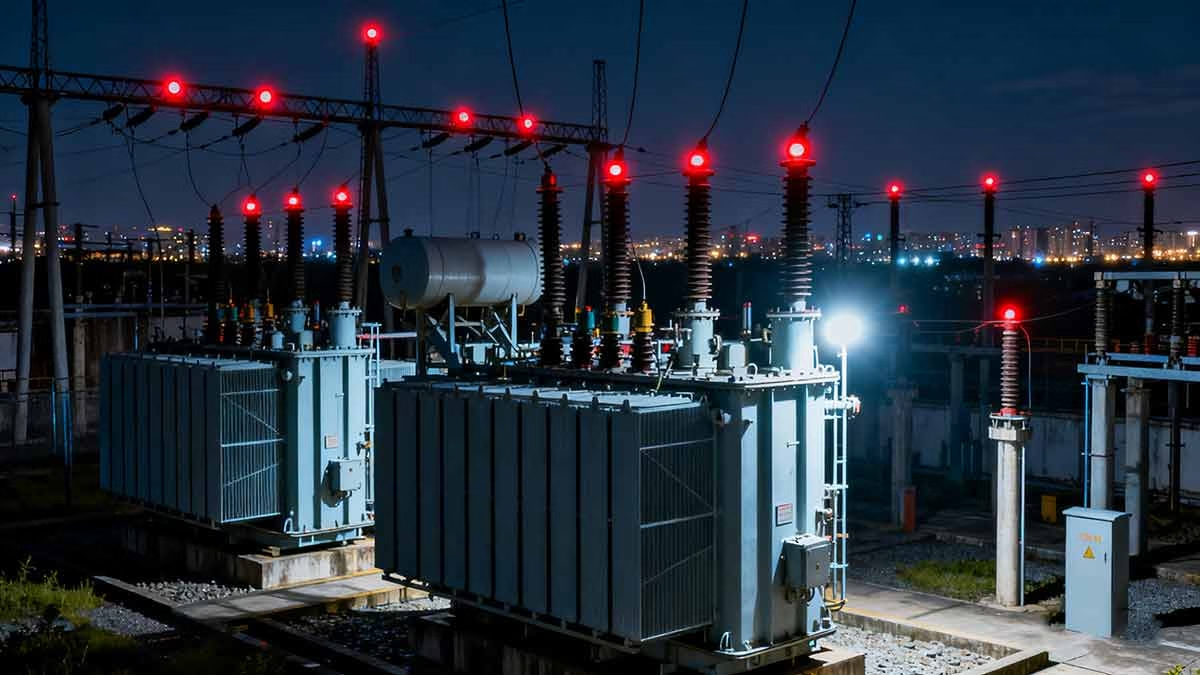
Modern Substation Technology: Safety, Efficiency, and Smart Integration
Today’s substations are far more advanced than their predecessors. Equipped with digital tools, automation, and smart grid connectivity, they’re designed for higher efficiency, enhanced safety, and seamless integration with renewable energy—meeting the demands of a modern, sustainable power system.
Key Technological Advancements
- Digital Control & Automation: SCADA systems and intelligent electronic devices (IEDs) enable remote monitoring and operation. Operators can adjust settings, detect faults, and manage power flow from a central control center, reducing the need for on-site personnel and speeding up responses.
- Smart Grid Connectivity: Modern substations communicate bidirectionally with the grid, supporting demand response (adjusting power use during peak times) and integrating variable renewable energy (solar, wind). They balance fluctuating inputs to maintain stable voltage and frequency.
- Advanced Protection Systems: Adaptive relays and wide-area protection coordinate across multiple substations to prevent cascading outages. Arc flash mitigation technology quickly quenches electrical arcs, reducing injury risks for workers.
- Efficient Equipment: Amorphous core transformers cut energy losses by 70% compared to traditional models. Gas-insulated switchgear (GIS) reduces substation footprint by 80%, making it ideal for urban areas with limited space.
- Condition-Based Maintenance: Sensors monitor equipment temperature, vibration, and insulation health in real time. AI-powered analytics predict failures, allowing for proactive maintenance that extends equipment life and reduces downtime.
- Cybersecurity: With increased connectivity comes greater risk—modern substations feature firewalls, encrypted communication, and access controls to protect against cyber threats. Regular security audits ensure compliance with industry standards.
Environmental & Safety Innovations
- Eco-Friendly Insulation: Alternatives to SF6 (a potent greenhouse gas) are now used in switchgear, reducing environmental impact.
- Noise Reduction: Low-noise transformers and sound-dampening enclosures make substations compatible with residential and urban settings.
- Advanced Grounding: Computer-modeled grounding grids minimize step-and-touch potentials, protecting workers and nearby residents from electric shock.
Future Trends
- AI & Machine Learning: Predictive analytics will optimize power flow, automate fault response, and reduce energy waste.
- IoT Integration: More sensors and connected devices will provide granular data, enabling hyper-efficient grid management.
- Superconducting Equipment: High-temperature superconductors will further reduce losses and shrink substation size.
- Virtual Substations: Software-defined substations will replace some physical components, increasing flexibility and reducing costs.
A recent smart substation project in a major city integrated solar power, battery storage, and AI-driven load balancing—cutting carbon emissions by 25% and improving reliability by 30%. These innovations aren’t just technical upgrades; they’re building blocks for a more sustainable, resilient energy future.
Conclusion
Electrical substations are the unsung workhorses of modern life, enabling the safe, efficient delivery of electricity that powers homes, businesses, and critical infrastructure. From voltage transformation and circuit switching to smart grid integration and renewable energy support, their role continues to evolve with advancing technology.
As the demand for clean, reliable energy grows, substations will remain at the forefront of grid innovation—adapting to handle variable renewable inputs, enhancing efficiency, and ensuring resilience against faults and cyber threats. Whether you’re a homeowner, engineer, or energy professional, understanding these vital facilities helps appreciate the complexity of the power system we rely on daily.
For power grid operators and project managers, investing in modern substation technology isn’t just a cost—it’s a commitment to efficiency, safety, and a sustainable energy future.