
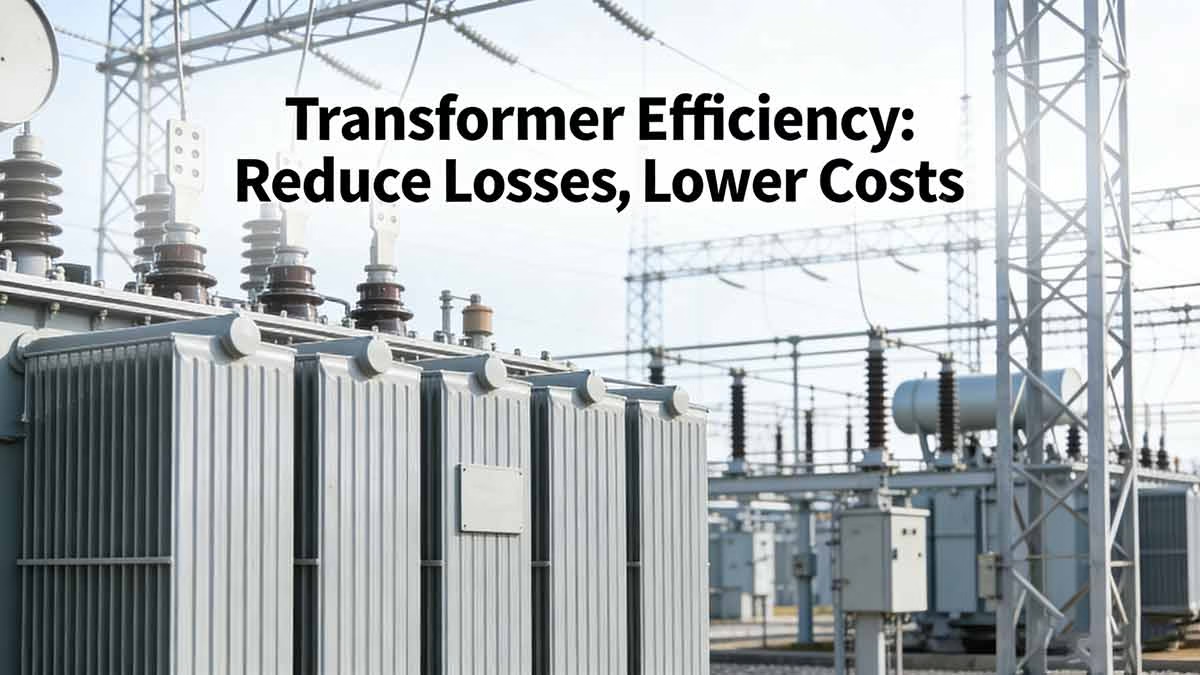
Transformer efficiency is the backbone of cost-effective power distribution—whether for utilities, industrial facilities, or commercial buildings. Every unit of energy lost in a transformer translates to higher bills, wasted resources, and reduced performance. To maximize transformer efficiency, you first need to identify the key losses that drain energy, then implement targeted solutions to minimize them. This article breaks down the most common transformer losses, explains how to detect them, and shares actionable tips to boost performance—all in simple, easy-to-understand terms, with real-world examples to guide you.
Contents
hide
Understanding Transformer Efficiency: What It Means & Why It Matters
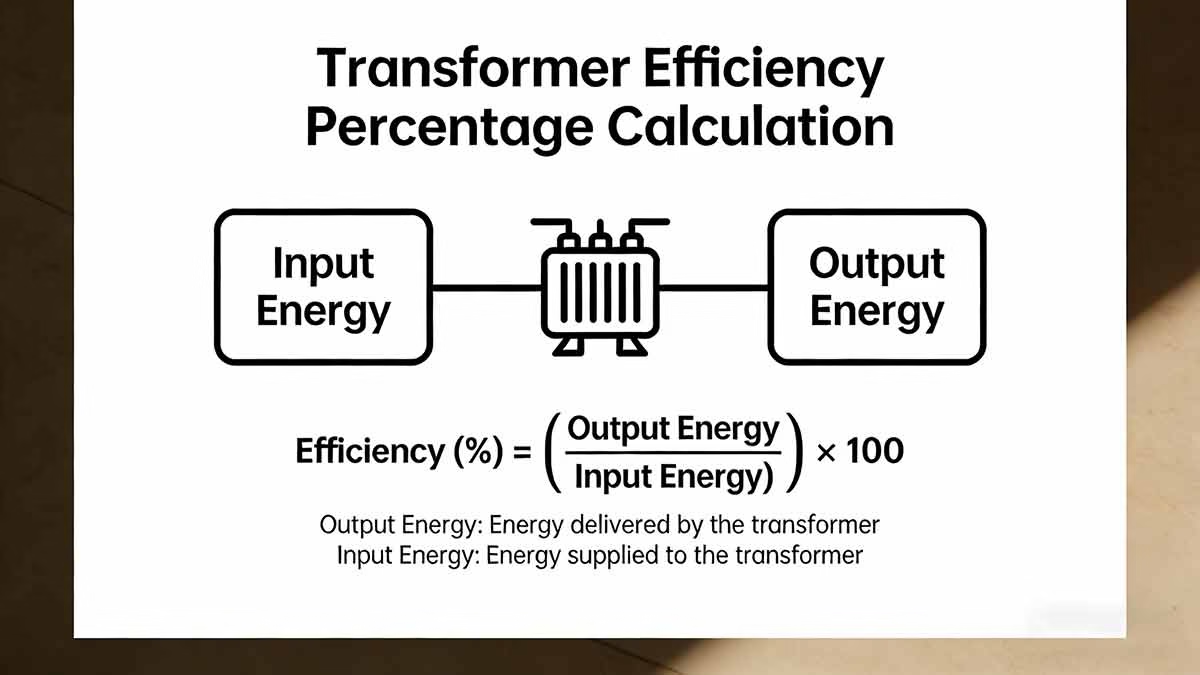
Transformer efficiency refers to how well a transformer converts input electrical energy to output energy, measured as a percentage. A high-efficiency transformer (typically 95–99% efficient) wastes very little energy, while a low-efficiency unit can lose 5–10% of input power, adding up to high costs over time. For businesses and utilities, maximizing transformer efficiency isn’t just about saving money; it also reduces environmental impact, extends equipment life, and ensures consistent power delivery.
Key Facts About Transformer Efficiency:
- Efficiency is highest at 75–100% of rated load; operating transformers below 50% load often leads to higher energy waste.
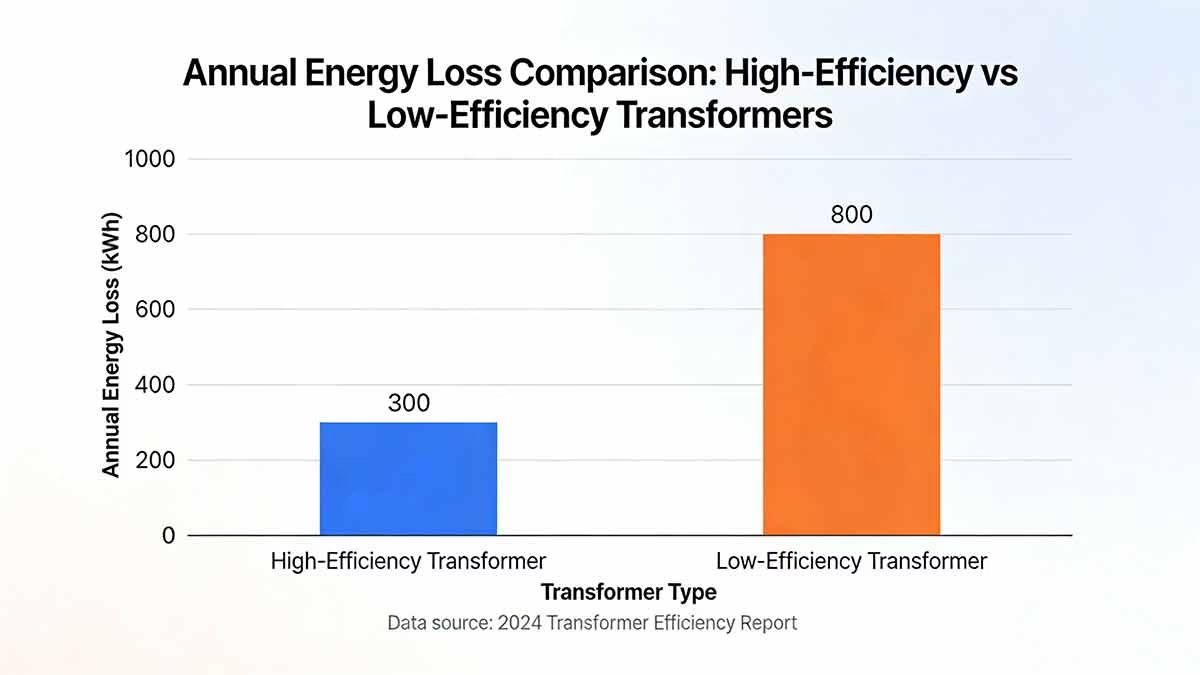
- Even a 1% increase in efficiency can save thousands of dollars annually for large transformers (e.g., 1000kVA units).
- Transformer losses are constant (core losses) or variable (load losses)—understanding the difference is critical to optimizing efficiency.
Common Question: Why does transformer efficiency matter for my business? For industrial facilities, inefficient transformers can increase energy bills by 10–15% annually. For utilities, losses across the distribution network add up to millions in wasted energy, which is passed on to customers. Boosting efficiency directly reduces costs and improves operational reliability.
Key Transformer Losses to Identify (And How They Impact Efficiency)
To maximize transformer efficiency, you must first pinpoint the losses that are draining energy. There are three main types of transformer losses: core losses, load losses, and stray losses. Each type occurs for different reasons and requires specific solutions to minimize. Below is a detailed breakdown of each, including how to detect them and their impact on performance.
Core Losses (Iron Losses): Constant Energy Drain
Core losses are constant losses that occur whenever a transformer is energized—even when it’s not carrying any load. They are caused by the magnetic field in the transformer’s core, which induces eddy currents and hysteresis (magnetic friction). These losses account for 20–30% of total transformer losses and are critical to address for long-term efficiency.
Types of Core Losses:
- Hysteresis Loss: Caused by the repeated magnetization and demagnetization of the core as the AC current alternates. This creates friction in the core material, generating heat and wasting energy.
- Eddy Current Loss: Induced currents that flow through the core material (typically iron or steel) due to the changing magnetic field. These currents circulate within the core, producing heat and energy waste.
How to Detect Core Losses:
- Measure no-load current: When a transformer is energized but not loaded, the current drawn (no-load current) is directly related to core losses. Higher no-load current indicates higher core losses.
- Monitor temperature: Core losses generate heat—unusually high temperature in an unloaded transformer may signal excessive core losses.
Case Study: A food processing plant noticed high energy bills from its 500kVA transformer, even during off-hours when the transformer was energized but not loaded. Testing revealed high no-load current, indicating excessive core losses. By upgrading to a transformer with a high-grade silicon steel core (which reduces hysteresis and eddy currents), the plant cut core losses by 40% and saved $8,000 annually in energy costs.
Load Losses (Copper Losses): Variable Losses That Increase With Usage
Load losses are variable losses that increase as the transformer’s load increases. They are caused by the resistance of the transformer’s windings (typically copper or aluminum) to the flow of electrical current. When current passes through the windings, resistance generates heat—wasting energy. Load losses account for 70–80% of total transformer losses at full load, making them a key target for efficiency improvements.
Factors That Increase Load Losses:
- High load levels: Load losses are proportional to the square of the load current—doubling the load current quadruples the load losses.
- Poor winding design: Windings with high resistance (e.g., small cross-sectional area, low-quality material) increase load losses.
- Winding damage: Corrosion, overheating, or loose connections in the windings can increase resistance and load losses over time.
Table: Load Loss vs. Load Level (Example: 1000kVA Transformer)
Load Level (%) | Load Loss (kW) | Energy Loss (kWh/Year, 8760 Hours) |
|---|---|---|
25% | 2.5 | 21,900 |
50% | 10 | 87,600 |
75% | 22.5 | 197,100 |
100% | 40 | 350,400 |
How to Detect Load Losses: Measure the temperature of the transformer’s windings (using a thermal camera or temperature sensor) during operation. Excessively hot windings indicate high load losses, often due to overloading or poor winding conditions.
Stray Losses: Hidden Losses That Are Often Overlooked
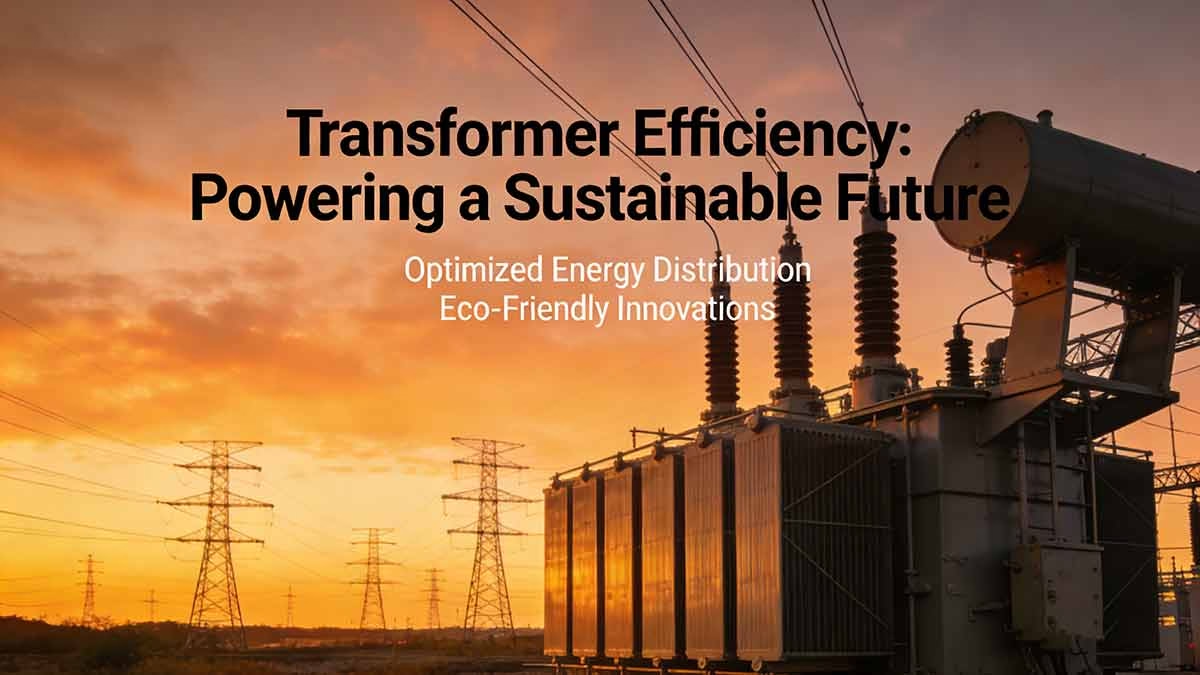
Stray losses are smaller, often hidden losses caused by leakage magnetic fields that induce currents in the transformer’s tank, frame, or nearby metal components. These losses account for 5–10% of total transformer losses but can add up over time, especially in large transformers. They are often overlooked but can be minimized with proper design and maintenance.
Causes of Stray Losses:
- Leakage magnetic fields from the windings, which induce eddy currents in the transformer’s tank and structural components.
- Poorly designed shielding around the windings, which fails to contain magnetic fields.
- Metal debris or nearby metal objects that interact with the transformer’s magnetic field, generating additional losses.
How to Detect Stray Losses: Look for unusual heating in the transformer’s tank or nearby metal components (e.g., brackets, conduits). A thermal camera can identify hot spots caused by stray eddy currents, indicating stray losses.
Practical Strategies to Maximize Transformer Efficiency & Boost Performance
Once you’ve identified the key transformer losses, the next step is to implement targeted strategies to minimize them. Below are actionable, easy-to-implement tips to boost transformer efficiency, reduce energy waste, and extend equipment life—suitable for utilities, industrial facilities, and commercial buildings.
Optimize Transformer Loading to Reduce Load Losses
As load losses increase with the square of the load current, optimizing loading is one of the most effective ways to boost efficiency. The goal is to operate transformers at 75–100% of their rated load, where efficiency is highest.
Strategies to Optimize Loading:
- Balance load across multiple transformers: If you have multiple transformers in your system, distribute the load evenly to avoid overloading one unit while others operate at low load.
- Decommission underutilized transformers: If a transformer operates below 50% load consistently, consider decommissioning it and shifting the load to other units to improve overall efficiency.
- Use load monitoring tools: Install smart meters or load monitoring devices to track transformer load in real time, allowing you to adjust load distribution as needed.
Example: A manufacturing facility with three 800kVA transformers was operating each at 40–50% load, leading to high load losses. By balancing the load to keep each transformer at 70–80% load, the facility reduced total load losses by 30% and cut energy costs by $12,000 annually.
Upgrade to High-Efficiency Transformer Components
Older transformers often use low-grade core and winding materials, leading to high core and load losses. Upgrading key components can significantly boost efficiency without replacing the entire transformer (in some cases).
Key Upgrades to Consider:
- High-grade core material: Replace standard iron cores with grain-oriented silicon steel cores, which reduce hysteresis and eddy current losses by 30–50%.
- Low-resistance windings: Upgrade to copper windings (instead of aluminum) or larger cross-sectional area windings to reduce load losses.
- Improved insulation: High-quality insulation reduces eddy current losses and prevents overheating, extending the transformer’s life.
Common Question: Is upgrading transformer components worth the cost? For most businesses, yes—upgrades typically pay for themselves within 2–3 years through energy savings. For example, upgrading a 1000kVA transformer’s core to silicon steel costs around $5,000 but can save $3,000–$4,000 annually in energy costs.
Implement Regular Maintenance to Prevent Losses
Neglecting maintenance is one of the biggest causes of increasing transformer losses over time. Regular maintenance keeps components in good condition, prevents damage, and ensures optimal efficiency.
Essential Maintenance Tasks:
- Oil testing and filtration (for oil immersed transformers): Contaminated or degraded oil increases core and load losses. Test oil quarterly and filter or replace it as needed.
- Clean windings and core: Dust, dirt, and debris on windings and core increase resistance and heat, leading to higher losses. Clean components annually to remove buildup.
- Check and tighten connections: Loose connections increase resistance, leading to higher load losses. Inspect connections quarterly and tighten as needed.
- Monitor temperature: Use thermal cameras or sensors to track core and winding temperature. Address overheating promptly to prevent damage and reduce losses.
Tip: Create a maintenance schedule and stick to it. Utilities that implement regular transformer maintenance reduce losses by 25–30% and extend equipment life by 10–15 years.
Improve Cooling Systems to Reduce Heat-Related Losses
Heat is a major contributor to transformer losses—overheating increases resistance in windings and degrades core material, leading to higher energy waste. Improving the transformer’s cooling system helps maintain optimal operating temperature, reducing losses and extending life.
Cooling System Improvements:
- Clean cooling radiators/fans: Dust and debris block airflow, reducing cooling efficiency. Clean radiators and fans quarterly to ensure proper heat dissipation.
- Upgrade to forced cooling: For high-load transformers, add forced air cooling (FAC) or forced oil cooling (FOC) systems to improve heat dissipation, allowing the transformer to operate at higher load without overheating.
- Ensure proper ventilation: For indoor transformers, ensure the room has adequate ventilation to prevent heat buildup. Install exhaust fans if necessary.
Real-World Success Stories: How Businesses Boosted Transformer Efficiency
To illustrate how these strategies work in practice, here are two real-world examples of businesses and utilities that maximized transformer efficiency, reduced losses, and cut costs.
Success Story 1: Utility Company Cuts Losses by 35%
A mid-sized utility company serving 300,000 customers struggled with high energy losses across its distribution network. After auditing its transformers, the company identified excessive core and load losses in older units (20+ years old).
Actions Taken:
- Replaced 50 older transformers with high-efficiency units featuring silicon steel cores and copper windings.
- Balanced load across the network to ensure transformers operated at 75–90% of rated load.
- Implemented a quarterly maintenance program, including oil testing, winding cleaning, and temperature monitoring.
Results: Total transformer losses reduced by 35%, saving the utility $400,000 annually in energy costs. Customer complaints about power fluctuations decreased by 20%, and transformer downtime was cut by 45%.
Success Story 2: Industrial Facility Saves $15,000 Annually
A chemical plant with four 600kVA transformers noticed rising energy bills and frequent transformer overheating. An audit revealed high load losses due to overloading and poor maintenance, plus stray losses from nearby metal equipment.
Actions Taken:
- Redistributed load across the four transformers to keep each at 70–80% load.
- Upgraded winding insulation and cleaned core components to reduce load and core losses.
- Installed shielding around transformers to minimize stray losses from nearby metal equipment.
- Implemented monthly temperature monitoring and quarterly oil testing.
Results: Transformer efficiency increased from 94% to 97.5%, cutting energy bills by $15,000 annually. Overheating issues were eliminated, and transformer service life was extended by 10 years.
Common Mistakes to Avoid When Maximizing Transformer Efficiency
Even with the best intentions, many businesses make mistakes that hinder transformer efficiency. Below are the most common mistakes to avoid, along with how to correct them.
Mistake 1: Overloading Transformers to Save Costs
Some businesses overload transformers to avoid purchasing additional units, but this leads to skyrocketing load losses, overheating, and premature equipment failure. The cost of replacing a damaged transformer far outweighs the savings from avoiding a new unit.
Correction: Monitor load levels and avoid exceeding 100% of rated load. If load consistently exceeds 80%, consider adding a second transformer or upgrading to a larger unit.
Mistake 2: Neglecting No-Load Losses
Many businesses focus only on load losses and ignore core losses, but core losses are constant and add up over time—especially for transformers that are energized 24/7. Neglecting core losses means missing out on significant energy savings.
Correction: Test no-load current regularly and upgrade to high-efficiency core materials if core losses are excessive.
Mistake 3: Using Generic Maintenance Schedules
Every transformer operates in different conditions (e.g., temperature, load, environment), so a one-size-fits-all maintenance schedule is ineffective. Generic schedules may miss critical issues or waste time on unnecessary tasks.
Correction: Create a customized maintenance schedule based on the transformer’s age, load, and operating environment. Consult the manufacturer’s guidelines for specific maintenance requirements.
Conclusion: Start Maximizing Transformer Efficiency Today
Maximizing transformer efficiency is a simple, cost-effective way to cut energy costs, reduce environmental impact, and extend equipment life. By identifying core, load, and stray losses, optimizing loading, upgrading components, and implementing regular maintenance, you can significantly boost transformer performance. The key is to take a proactive approach—small changes today can lead to big savings tomorrow.
Whether you’re a utility managing a large distribution network, an industrial facility with multiple transformers, or a commercial building owner looking to reduce energy bills, the strategies outlined in this article will help you maximize transformer efficiency. To learn more about how to identify losses in your transformers or find the right high-efficiency solutions for your needs, reach out to our team of transformer experts—we’re here to help you boost performance and cut costs.